Goyang neighbourhood explorations


Chapter 3: The Jijang Fractal

Written by Hugo J. Smal

This chapter of Goyang neighbourhood tracks a lived contrast: Rotterdam directness against Korean relational form, individual impulse against collective role, speech against context. It circles through neighbourhood, stream, memory, ritual, food, shame, and vision, not as separate topics but as one field of experience. Confucian social roles, Korean kibun and nunchi, and the unfolding logic of The Jijang Fractal are tested in body-language, hierarchy, table manners, and misread moments. The narrative descends into a darker textual intrusion, where voice, violence, and fractured identity pressure the narrator’s own reflections. Out of this tension, the fractal intuition reappears: not invented, but encountered.

[Internal link placeholder: Chapter 2] |
[Internal link placeholder: The Jijang Fractal hub] |
[Internal link placeholder: Korean kibun and nunchi]

Rotterdam and Goyang: Two Communication Worlds in Goyang neighbourhood

From Rotterdam to a Goyang neighbourhood

During my explorations of the Goyang neighbourhood, I came to understand that communication in Korea involves much more than just words and sentences. The context, the speaker, and the way something is expressed are all crucial. To truly grasp the meaning, one must read between the lines. Coming from Rotterdam, where people are straightforward and open-hearted, I noticed the contrast. In the Netherlands, directness is valued, and stepping outside the lines isn’t frowned upon. In fact, it’s often seen as a sign of creativity and initiative.

Goyang neighbourhood

Losing face isn’t much of a problem for me. In my country, people quickly forgive a mistake or a blunder. Just be honest! You don’t make a career without making mistakes. But in Korea, things are different. The deeply crying Koi breeder showed me that.

Confucian Pillars, Kibun, and Selfhood in Goyang neighbourhood

Pillars in Goyang neighbourhood

Pride also has a different connotation here. I feel proud when Feyenoord becomes champion, but a Korean feels pride when he fulfills the five Confucian relationships (Oryun). Confucius, Mencius, Yi Hwang (Toe gye), and Yi I (Yul gok) remain the pillars of Korean culture. These scholars outline the relationships between parents and children, elder and younger siblings, husband and wife, friends, and ruler and subject. In each relationship, Koreans follow a specific role pattern.

Parents owe their children education, care, and moral development. In return, children owe their parents obedience, respect, and care. They look after them when they can no longer work, and they pray and make offerings at their graves. These rules form the foundation for all other relationships and the social structure as a whole.

According to Confucian philosophy, when the Korean soccer team wins, it’s considered a victory for the entire community. The triumph of the Korean people is more significant than that of the players on the field. The collective is far more dominant than the individual who scores.

We also interpret the concept of Kibun, which encompasses feeling, mind, and mood, quite differently. We Dutchmen tend to be overly sensitive and are certainly not inclined to discuss our inner thoughts and feelings. However, in the land of the Mudang, the seunim, the Neo-Confucian scholar, and even the Christian priest, feeling, mind, and mood hold great significance. Dive into the concept of Kibun or Nunchi

But expressing individuality isn’t highly appreciated. We certainly don’t discuss it as some do in Bloodhounds by Kim Ju-wan. We also need our personal space. “Don’t stand so close to me!” I survive Korea with The Fragrance of the Mantifang by Wu Cheng’en in mind.

“Watching the chess game, I cut through the rotten,

Felling trees, ding ding,

Strolling at the edge of the cloud and the mouth of the valley.

I sell firewood to buy wine,

Cackling with laughter and perfectly happy.

I pillow myself on a pine root, looking at the moon.

When I wake up it is light.

Recognizing the old forest,

I scale cliffs and cross ridges,

Cutting down withered creepers with my axe.

When I’ve gathered a basketful,

I walk down to the market with a song,

And trade it for three pints of rice.

Nobody else competes with me,

So prices are stable.

I don’t speculate or try sharp practice,

Couldn’t care less what people think of me,

Calmly lengthening my days.

The people I meet

Are Taoists and Immortals,

Sitting quietly and expounding the Yellow Court.”

I try to act Korean. It doesn’t work. Our cultures are too different, too opposite. When I try to use Nunchi, I only make mistakes. I don’t just want to master the language. Although? Am I forced to use Nunchi because I don’t know the language? I survive by being myself. Most Koreans forgive a lot.

Contemplating Goyang Neighbourhoods

At the Stream: Reflection and Recall in Goyang neighbourhood

Goyang Neighbourhood
Jijang at Bogwan Sa

As these thoughts weigh on my mind, I climb down the embankment towards the now gently babbling Goyang Seongsaheon stream. Of course, it’s dangerous. But the Soju makes me fearless, and sometimes you just have to do things. Amidst the lush vegetation, a stone invites me to sit. I take off my shoes and let the coolness wash over me as I rest my feet in the sparkling water.

The Budeul’s (부들) tails stand still. Rubiela Lobelia Cardinalis (루비엘라) proudly displays her red flowers. The Mulchucho (물수초) is the only thing that moves with the flow of the water. I sink into deep reflection, recalling a climbing experience I wrote about in my twenties.

Larghetto in the Goyang Neighbourhoods

Why was I so drawn to that one spot on the beautiful island of Crete? How did the small white church come to dominate my entire vacation? It sat high on the mountain behind Hera Village, a villa town on the Gulf of Mirrabellou, halfway between Agios Nikolaos and Elounda.

I had visited Knossos, where the discovery of a five-thousand-year-old civilization—one that would eventually culminate in the Greeks—was overshadowed by the crowds of noisy tourists. Even though prayers were no longer said in the temple, it still felt like sacrilege.

In this way, my vacation was largely a failure. I hadn’t found what I was looking for, though I didn’t even know what I was seeking. Some primordial feeling? The relationship between body and clay that had inspired Van Gogh to paint and Beethoven to compose? It was all approached the wrong way. Excursions don’t lead to the discovery of feelings.

Two days before the return trip, I decided to climb up. There was no path leading to that church. Well, I would just see how it went. My way started straight up, through bushes full of sharp thorns. The result: bloody scratches on my legs. But the only thing that mattered was the goal.

After half an hour, I found a barely passable path that led me to an olive grove. Now, only the blazing sun and the stone walls remained to be overcome. Anyway, after two and a half hours, I made it to the top.

The church was disappointing, but what I saw beyond it exceeded all expectations. On the other side of the mountain was a vast valley, covered with bushes that stood apart in a strange, almost deliberate manner. Ruins, low, sunken houses, lay scattered on the slope opposite me. I could no longer stand; my legs gave way under the purity of this place. My breath caught, sweat ran down my back. The violin concerto swelled in my head. It felt as though the valley was flooded with these gentle sounds. Or was it the other way around? Was my head filled with the composition of this valley? Unconsciously, I folded my hands and whispered:

“You who are, help me.
For my ignorance is too great, my feelings too overwhelming, to comprehend you.
You who are, help me.”

Tears streamed down my face. To die here with this feeling, so powerful and all-encompassing. This valley is sacred. My thoughts drifted back to the distant and cold Netherlands. Did I really have to go back there? That place could never touch me again, not after this revelation.

Completely dazed, I began the descent, quickly losing my way. After hours of stumbling, climbing back up, sometimes teetering on the edge of death, I found myself miles away, down towards Elounda.

What did it matter? I had become millions richer. That little church had saved my vacation. It had used its pull to teach me a firework of emotions. Since then, Larghetto and Rondo Allegro have remained my most beloved pieces of music. But it’s still a struggle.

Back to the River

Goyang neighbourhood Big dipper sky

“You who are, help me.” This theme would continue to dominate my life. The earth has always appeared to me as a planet in need of help. Too much dull, exhausting misery, both large and small. Here, on this stone by the babbling water, it feels right, but I know that the world around me keeps turning. I sink further into an even deeper reflection—or should I call it meditation?

The stars of the Big Dipper began to dance. Each star, a king, sung about in the Muga as guardians of the cosmic order. Suddenly, an extra star appeared, brighter than the rest, joining the constellation as the “King of Kings”—Jijang’s’s fractal, a manifestation of ultimate wisdom and power, surpassing the seven kings. This new star seemed to become the center of the constellation, a divine presence guiding the Buddhas and preserving the harmony of the universe. Read about the Muga

Pulsating before my eyes, it formed the King of Kings within the constellation. This almighty light suddenly transformed into

Goyang Neighbourhood
f(v) = \sum_{w \in V} f(w)
Goyang Neighbourhood
f^\infty(v) = \lim_{n \to \infty} \sum_{w \in V} f^n(w)

The, to me, unreadable formulas continued to rotate before my mind’s eye, occasionally interspersed with the beautiful image of a white Lotus. Softly, the almighty Om Mani Padme Hum flowed with the babbling river. Amazed, I crossed my legs and surrendered.

The stone beneath me turned icy cold. The plants became still, and the stream resumed its gentle flow. It flowed towards the Han River, past Ganghwa-do, into a world that continued to turn on its own. I wasn’t afraid, only slightly unsettled. Was it the Soju, or perhaps that violent email? Somehow, the mathematical formulas gave me enough strength to climb back up the embankment. I must interpret them, but because they filled me with compassion, I collectively named them Jijang’s Fractal.

Dinner, Bae Jong-Ok, and the Fracturing Voice in Goyang neighbourhood

Goyang Neighbourhood dinner

A few years ago, it was hard to find a European breakfast. I prefer to start my day with some bread, cheese, and peanut butter—just simple, hearty food that fills the stomach. The locals, on the other hand, eat the food prepared the night before. The dishes are delicious, but the spices are too strong for me in the morning. So, bread it must be—no Kimchi for me at breakfast.

Goyang neighbourhood
Quick dinner. in Goyang Neighboarhood image

One day, after shopping at the Lotte supermarket, I went to a Pojangmacha on Chungjang-ro for some beer and chicken. The National Korean soccer team was playing on the widescreen television. A group of Korean gentlemen was talking and cheering loudly. They were watching the game and enjoying Chimac—chicken and maekjju. I love that word. Just hearing it gives beer a flavor. The more you drink, the better it sounds.

I ordered my dinner and noticed the men watching me. It’s always awkward eating alone, especially in Korea. The youngest one at their table walked over to me with a bottle of soju and some glasses. He poured me a glass, which I drank, then returned the favor.

“Americano?” he asked. “No, no, from the Netherlands,” I replied. Judging by his expression, he didn’t quite understand. But when I said “Hidonggu,” he got it. His friends cheered and chanted the name of the most popular coach. Only the oldest man at the table didn’t join in.

I returned to my spicy and very tasty chicken. The group grew louder and louder, with the old man commanding the most attention. I don’t think he was older than me—just the top dog barking. He was the boss, though I doubt he was top-rank. That’s why I called him Cha-jang.

You might wonder how many men would choose to watch a soccer game with their family or friends instead of doing unpaid overtime. But not Cha-jang. He was wasted, drunk as a skunk.

Bae Jong-Ok wrote:

“I went from hand to hand until I eventually didn’t come back, not to the people, nor myself. What happened while I was gone? They didn’t tell me either. The fools, the idiots, the beasts were too busy shaming me. The shame became so great that my body rebelled.

I could hardly eat; there wasn’t much either. Some bowls of rice. On the days when I had enough energy to go outside, I picked Nokdu. It’s edible when cooked. The soybeans were for you. There wasn’t much meat in Amsil. There was more fish, but that was for Kim’s Yang Bang. You ate that with your friends, the party spies, and made fun of me when I looked too hungry.

In the corner of the room, I heard you all bragging and babbling. And you, Mom, had the loudest mouth, screaming above everybody. You were so happy that Dad had found eternal work in camp 15, Yodok in South Hamgyong, about halfway towards the heavenly lake on Baekdu San. ‘Too far to walk for him and me,’ was pretty much your motto, and your buddies shouted it loudly with you.

One evening, the conversations were more poisoned vomit than drunken wisdom. We heard the neighbor at the front door. Obu, the fisherman, asked for forgiveness for the late disturbance. Rubbing his hands and bowing, he told us that the wind, the dirty east wind, had prevented the boat from arriving on time. Your screaming, your friends laughing, and Obu’s humiliation went through marrow and bone. Obu was used to it.

Exhausted, I watched as you took over the fish and showed it to your friends. Brazenly, you held a wriggling one in front of Obu’s mouth. ‘Bite, bastard, bite,’ you screamed. ‘I don’t want to take everything from you. But that idiot over there,’ you said, pointing at me, ‘isn’t going to cook one for you.’ He had no choice but to place his teeth on the scales and tear off a large piece of flesh. Your entourage laughed, clapped, and bowed several times.

I understand why you have so much power. Dad regularly went deep into the mountains. He brewed Soju, which he sold to your friends. Of course, he kept enough behind to get drunk every night. One of your friends disagreed and drunkenly betrayed the lucrative mountain brewery to the ministry. He was arrested and disappeared to number 15.

You and your friends missed the alcohol and blamed the traitor. He disappeared during a hiking tour. ‘He went that way,’ you said, looking innocent to the guide. Your friends found a new bush distillery. You enjoyed the drink because the traitor was never found again.

Obu had mackerel with him for the barbecue and sogarli for the maeuntang. He bowed constantly, asked for forgiveness again, and held out his hand for his money. ‘No,’ you slurred. ‘You get nothing! The fish aren’t cleaned, so this bitch has to do it. I’m so hungry that I can’t defecate, and your dawdling has only made it worse. Get lost, bastard!’

It was unbelievable how quickly the drunken fossils chased after Obu. But they came back again. Suddenly there were side dishes, spices, and all that other stuff needed for a festive feast. Party members can get it with some effort. But fish? A bacchanal of Godeungu-gui and sogarli? I don’t know, Mother, what you had to do for all that.

Of course, the ships are checked upon arrival. Obu counted because many already tried to swim across the Hankang to Paju. The fish are also taken off the boat by party officials. Hence, you don’t just get fish on your table easily, being a single woman with a man in prison. But your body wasn’t holy when Dad was still at home either. Not that he had much trouble with that. As long as there was Soju.

I was still the only one able to cut the fish. Exhausted, I put the barbecue in front of the open window. Mother liked it when the neighbors could enjoy it too. I cut open the mackerel and pressed the tasty flesh onto the grill. Fifteen minutes, and the pigs could go to the trough. The maeuntang would take much longer. I saw those drunken heads, and I was sure; they wouldn’t enjoy it tonight.

You tried to rush me along. First, you cursed! I was no longer impressed by that. The emptiness had taken possession of me. My mind was like trampled water lily ground. The stench of loneliness not only filled my nose. My heart also felt like an abandoned fish factory. The hope of even a bite now seemed like a tucked-away treasure. You and your guests enjoyed it well enough. That others—Obu, neighbors who would certainly smell the fish, and I—didn’t taste it made the meal tastier for you.

A squid crawled between the dying fish. You grabbed the beast and stretched it out. You twisted it tightly around your roughly carved chopsticks. Your most prominent guest, the mayor, watched intently. I crawled back into the corner of the room. You licked at the moving flesh and babbled unintelligible words. He and the other men became horny—hot in a drunken, nowhere-leading way.

You pulled me up and put me in the middle of the room. You, Mother, forced me to sing a Mudang song. I felt empty, exhausted, and at the mercy of beasts that would tear me apart.

“Here ye, here ye, one and all! The Ritual of Princess A-Wang and Yõ-Yõng is about to be held.” I shuddered. “Today, at this time, I begin this song: No mean song this.” I replaced the drums and flute with my hands clapping. “’Tis the song of Sakayamuni’s blessing, and the God Chesok.”

That was the last you heard from me. When I regained consciousness, I saw you in a pool of blood in my corner of the room. Your drunken friends were still drinking. They babbled and sang around the barbecue and enjoyed the mackerel. They had long since forgotten what had happened. I fled outside.

Yes, I went from hand to hand until I eventually didn’t come back. Not to those beasts and not to myself. I don’t know what happened while I was gone. They didn’t tell me either. The fools, the idiots, the beasts were too busy shaming me. The shame became so great that my body rebelled. I got lost in myself.

But I remembered the dream and that his thousand-times-thousand-year reign had begun. He knew that henceforth, goodness would be repaid with evil. That his anger would not be matched. He was the devil and sought silence. The goodness had to be silenced forever, the stinking lie exposed.

Goyang neighboorhood
Indra’s net image taking over?

Aftertone: Sadness, Detachment, and Given Form in Goyang neighbourhood

Reflecting Goyang Neighbourhoods

I didn’t enjoy my meal anymore. Why am I getting these emails? Is it a joke? Or is someone just making up a story? They should send it to a publisher instead. The words left me feeling sad.

I paid for my food and bowed to the office men. Cha-jang still looked angry. When I went outside, I saw a woman who was about to enter. So I opened the door and let her pass. She looked a bit haughty. Then it struck me—most Korean men aren’t that polite to women. Lancelot is not in the Korean mindset.

The words from Bae Jong-Ok lingered in my mind, echoing in the hollow spaces left by years of isolation. Could it be that the darkness she described was not so different from my own? As I stepped outside, the cool night air hit me, and I felt a strange sense of detachment, as though the world around me was losing its form, dissolving into the fractals of my thoughts.

I did not invent Jijang’s fractal; it was given to me. I simply stumbled upon it. Naturally, I hope it will fulfill its purpose.

“`

Korean nature is unique.

written by Hugo J. Smal

If you are Dutch like me, then the nature of Korea is one of the contrasts. The Netherlands have the countryside and the city, a few hills in the south and just under 50 islands. The Meuse and the Rhine split the country in two. Holland is a swamp delta drained by the Dutch. Korea has remained more itself throughout its existence. There are big cities, and the politicians broke the country in two, but much is still more or less untouched. You won’t find so much variation on such a small surface of the earth anywhere else. That is why Korean nature is unique.

Seongsaheon River
Seongsaheon River

Hanguk is a relatively small country.

Korea is 112,264 square kilometres in size. North Korea occupies 120.54. Unfortunately, I can tell almost nothing about nature in the communist part of the country. We know too little about it. Even the demilitarized zone holds many secrets. Animals and plants that have become extinct in South Korea can still live there. That zone is a large natural secret because no one has come there for about 70 years. South Korea is about the size of Iceland or Hungary. So relatively small. That makes the great contrasts you encounter in Korean nature unique.

High and low.

High, steep mountains dominate the landscape, the coastal areas and small islands. These features contribute to the diversity of Korean nature and the presence of a wide range of plant and animal species. Korea has a temperate climate with four distinct seasons. The country experiences hot, humid summers and cold, dry winters, with a rainy season in the summer and autumn. This climate supports a variety of ecosystems, including forests, grasslands, and wetlands.

Plants and animals make Korean nature unique!

Korea is home to a wide variety of plant and animal species. Many of which are found nowhere else in the world. Some animals are the Korean leopard, the water deer, and the musk deer.

Unfortunately, the Korean leopard, known worldwide as the Armur Leopard (Panthera pardus orientalis, Korean 한국 표범 hangug pyobeom), is extinct in South Korea. There is some hope that the world’s rarest big cat is still hunting in the demilitarized zone ore in North Korea. But that is seen as hope in vain. Only 50 or so Armur leopards, belonging to this subspecies common to the Korean Peninsula, live in the Kraj Primorski in Russia and Jilin in China. Read more about the Armur Leopards at https://www.worldwildlife.org/stories/how-fast-are-amur-leopards-and-9-other-amur-leopard-facts

Unique Korean nature at Baedagol.

The Seongsaheon River flows through the Baedagol theme park. It is a river when the snow melts in the mountains and during the rainy season. Most of the time river is a narrow stream. It ensures two unique animal species in and near the theme park and the Goyang Koi Farm.

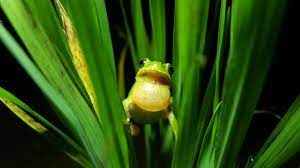
In addition to the cicada, the area has another “troublemaker”. The male Suweon (Hyla suweonensis) calls his female with a loud and high whistle. He’s not having a good time. The family has about eight hundred members, living between the Mangyeong and the Imjin rivers. They are closely related to Hyla Japonica whistling from Hokkaido to Yakushima in Japan, to the Ussuri River in the Russian part of ancient Goguryo and northern China and Mongolia.

The tree frog lays her eggs in rice fields. At the Baedagol theme park, they have managed to conquer a warm bed in the many water features. I think that there are several hundred living at the theme park. How the Suweon will fare in the future is unclear. Baedagol must make place for new high-rise buildings.


Read a detailed description of the tree frog here: PDF

 I have only seen the hoof marks of the Korean water deer (Hydropotes inermis argyropus, Korean 한국물사슴) in the river bed. They pass through it foraging at dawn.

Like the Korean musk deer, the water deer has tusks. They do not use them for hunting but as a weapon in territorial battles. First, a mock fight takes place. The males walk impressively towards each other and make clicking noises. Sometimes a weaker deer gives up at this point. When they fight, the males try to injure each other with their tusks. The loser himself indicates when enough is enough. He lays his head and neck flat on the ground or takes flight. The females live peacefully in groups.

At Baedagol theme park, C.E.O. Kim Young Soo collected many trees and plants.

Korean nature is unique for his fir. Source: https://bit.ly/2W9T4pZ Photographer: W. carter Public Domain Image
The Korean fir (Abies Koreana, Korean: 구상나무, Gusang namu): is a species of the fir tree that is native to the mountains of Korea. It is known for its distinctive conical shape and the fact that it retains its needles all year round.
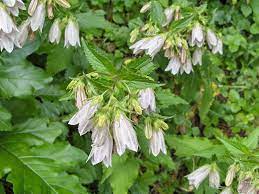
The Korean bellflower is unique Korean nature
The Korean bellflower (Campanula takesimana, Korean: 섬초롱꽃, seomchorongkkot) is a flowering plant that is native to Korea and Japan. It is known for its blue or purple bell-shaped flowers.


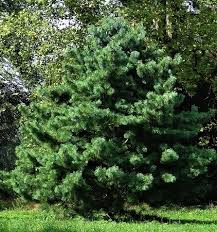
Korean nature is unique for pine tree
The Korean pine (Pinus koraiensis, Korean 소나무, sonamu) is native to the mountains of Korea. It is known for its long, slender needles. It survives in cold, snowy environments.

The trees and plants are lucky. They find a home at the new locations of the Baedagol theme park and the Goyang Koifarm. For the tree frogs moving house will be a bigger problem. I am sure C.E.O. Kim Young Soo will find a solution.

Korea has a range of natural landscapes and ecosystems, ranging from subtropical forests on the southern coast to temperate forests in the central regions to subarctic forests in the high mountains. 

One of the most notable features of Korean nature is the presence of many high, steep mountains that dominate the landscape.

Korean coastline is unique.

Korea is also known for its beautiful coastlines, which feature a mix of rocky cliffs, sandy beaches, and small islands. The country has many small islands off its coast. The coastal waters of Korea are home to a variety of marine life. Dolphins, whales, and sea turtles are some of the beautiful animals that visit the beaches.

The flat land in the Han river basin, for example, the mountains that mainly border the peninsula on the east side, and the many rocky islands and sandy beaches ensure that the nature of Korea is unique. You won’t find so much variation on such a small surface of the earth anywhere else. Geonggi-do alone, the province in which Seoul is located, offers its visitors numerous nature adventures.

If you like unique Korean nature: Page

Odors give way to fragrance in 19th century

By Robert Neff
previously published: The Korea Times
featured picture: Mrs Emberley and her garden in Seoul, circa 1900.

garden odors
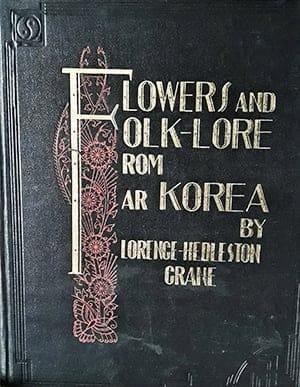
An excellent book about Korean fauna is “Flowers and Folklore from Korea” by Lorence-Hedleston Crane. Courtesy of Diane Nars Collection

In the late 19th and early 20th centuries, the descriptions of Seoul were filled with complaints of streets packed with oxen, ponies and people all trying to avoid falling into the open sewers or stepping in the excrement of man and beast, and the fetid stench that seemed to hang in the smoke-filled air. While there may have been some truth to these descriptions, there were also very positive descriptions by more objective observers ― those who were willing to open their eyes (and nose) to the positive things:

“One might almost call [Korea] the Land of Lilies.

Were it not that other families of flowers, violets, eglantine, roses, white and red, lilacs and rhododendrons are equally prolific, while in the orchards, peach and pear blossoms fill the land with glory and beauty. In the endless procession of the seasons, there are lovely blossoms from snowfall to snowfall again. Hills and valleys become a riot of colour from the azaleas that strike the gamut of tints from snowy white to deepest orange. One botanist, in a single afternoon s ramble over the hills around Seoul, brought home a bouquet of forty-seven varieties of flowers; another near [Jemulpo ― modern Incheon], in one day, exceeded this number by a dozen.”

Joy in the garden fragrance.

While others complained of the “fetid smells” of Seoul and its sewers, the writer found joy in the fragrance of spring: “Not all the flowers are affluent of sweet odours, but enough of them carry aroma in their chalices to make the breezes sweeping from the mountain heights delicious to the senses. In springtime, especially, the winds often come perfume-laden to refresh and delight. In the autumn odour yields to colour and the hardier flowers. Among these, the aster and goldenrod drape the hills in scarlet, gold, purple and varied tints.”

garden odors
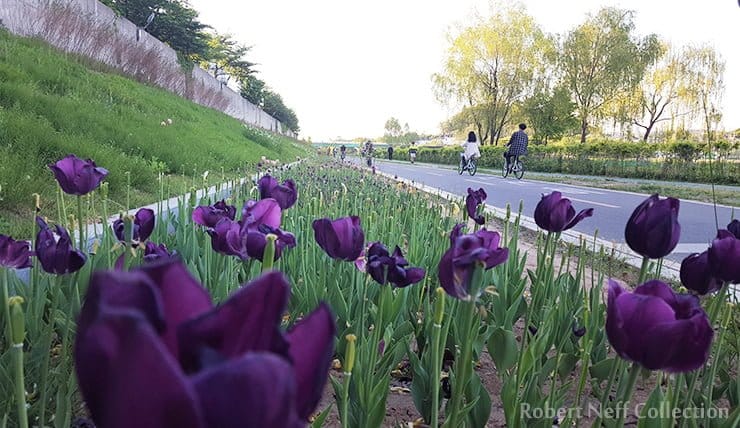
One of the great things about living in Seoul is the city government’s dedication to planting flower gardens throughout the city. Flowers bloom along the bike lanes in the spring of 2019. Robert Neff Collection

One of the great things about living in Seoul is the city government’s dedication to planting flower gardens throughout the city. Flowers bloom along the bike lanes in the spring of 2019. Robert Neff Collection

Lillias Underwood ― who arrived in Korea in the mid-1880s and, for a time, served as the Korean queen’s Western physician ― was not shy in her writing, describing her good and bad impressions of Korea. She wrote: “Korea is glorious … the country fairly revels in blossom beauty in May and June … [and] all the environs of Seoul are sweet with the exquisite fruit blossoms, peaches, apricots, plums, cherries and pears.” She went on to add, “The hills are all ablush with rhododendrons and a dear little eglantine with the daintiest perfume riots all along the roads and fences.” One of her favourite flowers was the “virginal white honeysuckle” that grew on the slopes of Namhansan in the spring.

garden odors
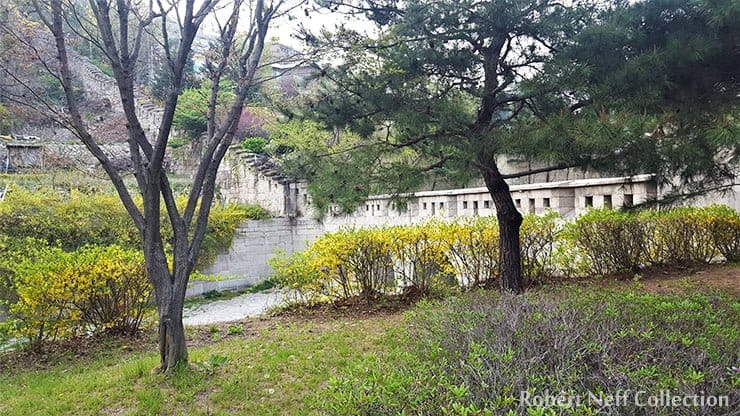
Part of the city wall around Seoul in the spring of 2020. Robert Neff Collection

To sell lilies of the valley.

Apparently, some young Korean entrepreneurs realized money could be made through the foreigners’ appreciation for wildflowers. In 1899, the Korean Repository (an English-language magazine published in Seoul) wrote:

“Lads with lilies of the valley for sale are visiting houses of foreigners. It has been suggested that as these beautiful flowers when transplanted rarely, if ever, grow foreigners [should] discourage these boys by not purchasing.”

Many ― if not most ― Western residents in Seoul cultivated their own gardens. Of course, vegetable and fruit gardens were essential as they provided the foreign community with most of their needs. In 1897, nearly 500 quarts (473 litres) of strawberries were harvested from the gardens in Jemulpo. General William McEntire Dye ― the American advisor to the Korean military ― had a vast orchard in Seoul in which he grew Bartlett pears, apples, cherries and other fruits.

Flower gardens were also essential as they were visually and fragrantly pleasing and adorned with celebrations such as weddings and christenings, and helped lift the hearts of the bereaved in the all-too-common funerals of the late 19th century.

Lillias described her garden as:

“It was lovely nearly all the year-round. First of all, in the early spring were masses of yellow forsythia, then violets, and some of the first fruit blossoms, then flowering almonds and white lilacs, wisterias, fluffy greenish-white snowballs, and two great bushes on either side of the front door of yellow roses that recalled grandmother’s garden in dear America. In June came the roses in the greatest hurry to be seen, and, well, after that nobody could think of anything else. There was a whole hedge of damask rose bushes; they were cut every day by [the] hundreds, every bowl, jar and vase in the house crammed with them, they were sent to all the neighbours, yet still, they kept blossoming on and on never tiring, and the family could never keep up with them.”

Of course, with such a cornucopia of blossoms, there were great swarms of bees. “Such a humming you could hardly hear yourself think.”

Nice odor in Korean small gardens.

The foreigners were not the only ones cultivating gardens. Peppered here and there in the correspondences home and magazine and newspaper articles are references to Koreans cultivating small gardens wherever they could find space. Sometimes these Korean gardeners ran afoul of narrow-minded bureaucrats as evidenced by this article that appeared in the local paper in 1897:

“An enterprising man named Tai Duk-yep of this city has constructed a pretty garden in his compound, displaying horticultural skill and the art of landscape gardening. He admits visitors to his garden and charges them a few cents admission fees, which, he thought, was proper and lawful business. But to his surprise, the Assistant Chief of the Police Department ordered him yesterday to stop the business on the ground that it is injurious to the pockets of the people.”

Garden odor demands money and work.

Cultivating gardens was not easy. It required a lot of work and money. Many of the flowers and bushes were purchased from the United States and Europe but this tended to be rather risky. Sometimes the seeds were lost or stolen en route ― John Sill (the American minister to Korea) had a box of seeds stolen, along with some cigars, while they were being transported from Jemulpo to Seoul. He offered a reward of ten dollars (a princely sum of money) but the cigar-smoking thief was never apprehended.

Sometimes, when the seeds, bulbs and seedlings arrived, they were rotten or dead ― a waste of time and money. A couple of Japanese horticulturists realized that money could be made if they provided seeds and plants quickly ― and with a guarantee ― from Seoul. The competition between these horticulturists was fierce and they duelled one another not with a sword but with the local English language newspaper, The Independent.

garden odors
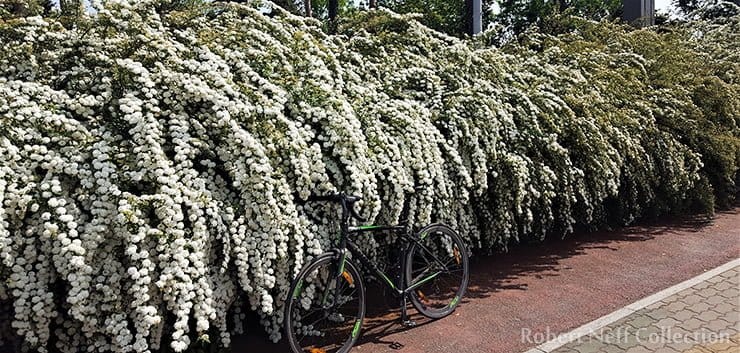
A tsunami of blossoms along the bike lane in 2019. Robert Neff Collection

On December 15, 1896, The Independent, reported in its local items column:

“The Japanese horticulturist, Mr Takahashi is desirous of obtaining orders for flowers, fancy trees and construction of gardens from the foreigners in Seoul. He guarantees first-class work.” While it was not an advertisement per se, it did provoke his rival.

Four months later, K. Yamashita took out an ad in the paper in which he advertised his selection of “fancy trees, either flower or fruit trees” that would be delivered as soon as the order was received. He also offered a guarantee: “In case the trees should not thrive they will be replaced without further charge.” He also offered to construct fancy gardens and flower beds for a low price and noted for reference that he was the “constructor of gardens for the French Legation and Japanese Consulate of this city.”

Y. Takahashi retaliated.

Two weeks later, Y. Takahashi retaliated and not only advertised “various kinds of fancy trees, fruit trees and shrubs and flowers will be supplied upon receiving an order,” with moderate prices but also declared that he was an “expert agriculturist and horticulturist.”

A year later both upped the stakes when Yamashita advertised himself as being “the only expert florist and landscape gardener in Seoul.” He offered “25,000 fruit, flower and shade trees have been imported from Japan” and the “most complete collection of rare and beautiful trees in his gardens.”

Takahashi responded by citing his own impressive background in horticulture: “member of the Japanese Horticultural Society and associate of the Imperial Agricultural Society.” He went on to state: “I have a number of beautiful shade trees, fruit trees, shrubs and flowering plants in my garden for my customers. I will plant them for you and guarantee that they will give you perfect satisfaction.”

What became of this rivalry is unclear as the newspaper ceased to publish regularly after December 31, 1898. In all likelihood, they continued to battle with one another and all-new interlopers for a great many years ― the peacefulness of their livelihood interrupted only by their competitiveness.

My appreciation to Diane Nars for her invaluable assistance and the use of her images.


Robert Neff has authored and co-authored several books including, Letters from Joseon, Korea Through Western Eyes and Brief Encounters. Robert D. Neff is a freelance writer and historical researcher specializing in Korean history during the late 19th and early 20th centuries. Asia Society Korea’s Matthew Fennell caught up with him to discuss this new release. interview

You can follow Robert on facebook

Korean drama explained

written by Hugo J. Smal

How to watch Hallyu drama.

I love to watch and explain Korean movies and television series. For a long time, non of my friends could not cope with that. They simply did not understand Korean culture. And they still do not even tough  I had Korean drama explained. Yes, during drinking evenings, I talked a lot about the Daehan Minguk. Maybe too much. The friends looked a little bit bored and took another beer. I brought spicy fried chicken to the table. They did not want me to explain Korean movies or television series.

Korean drama explainedChi-maeg is very populair in Korea. You eat it with friends or workmates. This is not done in the dining room but in one of the little restaurants that are easy to find. The Koreans love to go out eating and have fun. In every movie or television series, the restaurant table is the hotspot.


The squid game changed.

Yes, I bored them a little bit. This changed since the movie Squid games. Their attitude improved. Now everybody wants to talk about Korea. The land is hot. And I am sure that when Covid was not our dictator, tourism to the land of the morning calm would explode. This is just my humble opinion. So let me give you some background information. This is useful while watching the screen. I promise you the word boring and watching Korean visual entertainment are not a couple. So let me give you some basic information. This will help you to understand Korean movies and television series a little bit more.

Names in Korean drama explained.

When we think of common Korean surnames, the Kim family, which rules in North Korea, quickly comes to mind. Surnames like Kim, Choi, Lee, Kang, Jang, and Park are common in Korea. Most of the time, these names originate from the names of ancient clans.Like everywhere in East Asia: use first the family name and after that the personal name. So Kim Jong Un and not Jong Un Kim as we in the west would do. 

An anonymous person wrote on Ask a Korean:

In Korean manners, using the first name either meant very close intimacy or extreme superiority. Therefore, relatively few people may call you by your first name. Here is the list of those people: parents, grandparents, uncles and aunts; your older (but not younger) siblings; close friends of the same age or older; your owner (if you are a dog, cat, or other pets, or a slave in the old days.) That is it. That is Korean drama explained.

About using names in the work environment, the same person wrote:

For people met through a professional acquaintance, the correct term is to use the person’s last name, followed by his rank or profession. Thus, if you are a manager (bujang) whose last name is Kim, they call you Kim bujang-nim. (nim is an honorific, which makes the whole thing translate to “Manager-Sir/Madam Kim”.) If you are an owner of a store whose last name is Kwon, the Koreans call you Kwon sajang-nim. (sajang means the owner of a business. So you are being called Owner-Sir/Madam Kwon.

It is really worthwhile to read the entire blog: Blog

Bowing in Korean drama explained.

Bowing in Korean drama explained.Waving or at least raising your hand is what we as westerners do when greeting. In Korea, people bow to each other. You don’t have to get all the way down on your knees. But a little bow is so respectful. The same goes for showing gratitude. The more grateful you are, the deeper your bow.They don’t just bow in greeting or gratitude. When someone has done something wrong and apologizes, they are prone to bowing. When someone has lied to someone else (or name something else that is serious) they go to their knees.
There is much more to explain about bowing in Korean drama. I found an outstanding article here

Formal and informal.

Formal and informal in Korean drama explainedWhile we are using the formal word “you” less and less, in Korea it is very important to speak formally. If you don’t, it’s “disrespectful.”Take age into account to determine who you should speak to formally and who not. You should also ask yourself: How well do I know this person? If the person indicates that you are allowed to talk to them informally, that is a sign to ‘behave differently.

Respect for the elderly in Korean drama.

In Korea, respect for the elderly is common. This does not only mean that they respect people over 65, even if you differ with someone for a few months you show respect.
This lies in speaking formally and behaving properly. Watch your language, and so on. What strikes me personally is how children/young people deal with their parents. We in the west no longer express immense gratitude for parenting.

To be vocal in Korean drama explained.

To be vocal in Korean drama explained.The Dutch are always nice and sober. Cut our finger? Forget it. Soon you won’t see anything anymore. Koreans can (it does not have to be) express themselves quite vigorously about this. With cries like “OMO!” and “Ottoke?!” (meaning “Oh my God” and “Now What?”) the Koreans show how worried or in pain they are.
Also when there is an argument it can go loud. Lots of angry expressions are used. I name just some of them: hello! (what the hell!). Young people use this when they are frustrated. You can also use aish! Aigo is an expression used when someone is frustrated, irritated or just fatigued. Omo! means oh my god. But just looking means:  Korean drama explained

Typical Korean food and drinks.

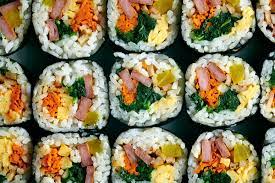
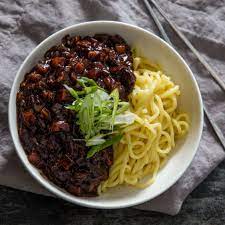
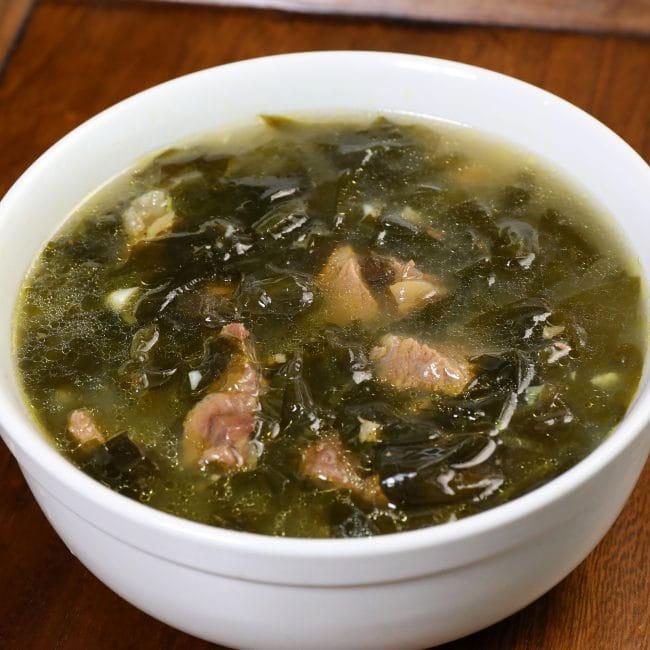
Eating culture in Korean drama explained. What should not be missing in the Korean series is of course the typical Korean food and drinks! Much of Korean life happens in restaurants, around the dinner table. On the screen, you see friends, co-workers and sometimes even enemies go-to restaurants again and again. Things you often come across are soju, Kimbap, Kimchi, Jajangmyeon and Miyeok guk. And the Americano coffee (black coffee as we know it) should certainly not be missed!

Soju 

This alcoholic drink, made from rice and is often sold at eateries. Drink it from small shot glasses and it often contains 20% alcohol. Another typical drink is makgeolli.  Traditionally soju was made from rice but after the Korean war
(1950th) people made soju with starch of potato, barley, sweet potato and tapioca.

Kimbap

This Korean snack consists of rice rolled in seaweed along with various vegetables or meat. Yes, in Japan they call it Sushi. In Korea, they make it with spinach, cucumber, carrot, beef or fish. You find a recipe here

Kimchi 

A well-known, spicy side dish combined with several dishes. Kimchi consists of fermented cabbage and vegetables, aged for months in a jar. This pot is often kept (underground) in the garden.
Kimchi is traditionally made, salted and fermented cabbage or radish seasoned with powdered red pepper, garlic, green onions mixed with some fish sources. As kimchi appears on almost every meal, to keep kimchi, Koreans traditionally used big pots buried half underground. However, most people today use refrigerators specially made for kimchi preservation. You find a recipe here


Jajangmyeon 

Jajangmyeon is a dish that consists of noodles, vegetables, meat and black bean sauce. Often they mix the dish completely. It becomes a tasteful slippery mess. You find a recipe here

Miyeok guk 

Miyeokguk is a soup made of edible seaweed and is traditionally eaten on birthdays or after giving birth, although you can eat anytime you like. You find a recipe You find a recipe here

So, this was Korean drama explained. But there is so much more to tell. The best you can do is to follow the mantifang or one of our Social Media channels. You find them here

youtube placeholder image

Special relation South Korea and the Netherlands.

The KOREA Times Posted: 2021-04-19 13:41
By Kwon Mee-yoo

Netherlands seeks sustainable future with Korea

I am happy that I take a tiny, little part in this Special relation South Korea and the Netherlands. I am visiting South Korea now since 2003 and it was a real adventure. So, almost one-third of the 60 years I helped the Baedagol the park and the Goyang Koi farm to be known in Europe. I hope I succeeded and that there are many adventures to come. In this post, you can read what Joanne Doornewaard, ambassador of the Netherlands to South Korea has to say about this special relation  South Korea – the Netherlands. The interview was made with The Korea Times at the Dutch Embassy in central Seoul. Hugo J. Smal. Special relation South Korea!
 
The year 2021 marks the 60th anniversary of diplomatic ties between South Korea and the Netherlands.
 
South Korea and the Netherlands
Joanne Doornewaard photo by Choi Won-suk
“Sixty years is something that’s really meaningful in Korea, though I must admit that in the Netherlands, we do 50, 75 and 100. So we had to explain the difference to Hague,” Joanne Doornewaard, ambassador of the Netherlands to Korea, said in an April 15 interview with The Korea Times at the embassy.
“It’s looking back, but we also want to look forward. So it’s about our past, what we have achieved together ― the Netherlands was one of the Sending States to the Korean War and then we established diplomatic relations in 1961. Over time, the relationship grew and now we are very important trading partners and with youth involvement, both our countries are much interested in innovations and new technology. We cooperate for the future, so that’s our slogan.”

Special relation South Korea and the Netherlands means Co-create tomorrow.

Under the theme “Co-create tomorrow,” the Netherlands and Korea laid out a series of events to strengthen ties between the two countries with various joint activities, exhibitions and events both on- and off-line.
The yearlong festivities kicked off April 5, the day after the Netherlands and Korea established diplomatic ties 60 years ago, at Everland, a theme park in Yongin, Gyeonggi Province, known for its annual tulip festival.
Tulips are is one of the Netherlands’ major products, exporting about 3 billion each year, and April is the month of the tulip, so the decision came naturally.
“Because of COVID-19, we would otherwise have done it with big parties. We thought let’s do it in another way but still show people an impression of the Netherlands,” Doornewaard said. “With fresh tulips, that was a nice event to kick it off. More events are coming up as we celebrate the whole year.”
The Princessehof National Museum of Ceramics and Groninger Museum lent their collection to the National Museum of Korea’s “600 Years of East-West Exchange through Ceramics” exhibit through November 2022 and Dutch artist Femke Herregraven is taking part in the main exhibition of the 13th Gwangju Biennale from April 1 to May 9.

South Korea and the Netherlands join on festival

The Netherlands is the guest country of the 38th Busan International Short Film Festival. It took place in April. The Best Dutch Book Design 2019 exhibition is scheduled from June to August. In October, Dutch musicians will be featured at the 18th Jarasum Jazz Festival and the Seoul concert of the prestigious Royal Concertgebouw Orchestra is slated for November.

South Korea and the Netherlands
Joanne Doornewaard, ambassador of the Netherlands to South Korea, speaks during an interview with The Korea Times at the Dutch Embassy in central Seoul, April 15. Korea Times photo by Choi Won-suk


Past, present and future for South Korea and the Netherlands.

Dutch and Korean people have a long history. It was a Dutch sailor who first introduced Korea to Europe. “Here in Korea, the Dutch are known for Mr Weltevree and Mr Hamel, who came here in the 17th century. The Dutch at that time went all over the world with ships and some of them washed up on shore here. Mr Weltevree stayed here and not much is known about his stay as he served the king here. But Mr Hamel lived here for 12 years and he went back to the Netherlands, then wrote down his experiences in Korea. That was the first publication about Korea in Europe,” Doornewaard said.
Start the adventure at Mantifang: korean hub
The two countries’ relations were highlighted once again during the 1950-53 Korean War. Last year was the 70th anniversary of the beginning of the Korean War and Doornewaard attended a ceremony commemorating the occasion and received a plaque from President Moon Jae-in on behalf of the 22 U.N. Sending States.
“During the Korean War, we stepped in and sent our soldiers to help South Korea. The commemoration event was huge and very impressive with President’s Moon honouring the veterans. I felt very honoured. I did not fight in that war, but to be there to represent the Netherlands and the veterans in the Netherlands was so special,” she said.
“Korea is organizing revisit program of veterans and it is very meaningful for them. There was a program when I just arrived here and I spoke to them. They are very elderly and vulnerable people, usually assisted by their son or grandson. But they told me that it’s so special to be here to see Seoul and Korea free and prosperous and the idea that they contributed to that.”

South Korea and the Netherlands trading partners.

Now the two countries are important trading partners. International trade is very important for the Netherlands and Korea, as both are exporting countries.
“For us, Korea is one of the main export markets in Asia and we also import some important items from Korea such as electric vehicles and batteries. As of 2030, there will be no fossil fuel cars sold, so there is a huge market for electric cars and there is a waiting list for Korean electric cars. The Netherlands is seen as a gateway to Europe so Korean companies invest in the Netherlands as a way to enter Europe,” the ambassador said.
“The other way round, we provide Korea with our semiconductor manufacturing machines and chips for the automotive industry. ASML and NXP are the big companies here.”

South Korea and the Netherlands
Bicycles line a bridge over the canals of Amsterdam, capital of the Netherlands. Bicycle is a major form of transportation in the Netherlands. gettyimagesbank

Riding bikes together deepens Special relation South Korea and the Netherlands.

Fighting climate change is an important issue in the Netherlands, a country with one-third of its land below sea level.“Climate change is resulting in rising sea levels. We have dykes that protect us against the sea, but we cannot continue to build those dykes higher and higher. So we have to fight climate change. We cannot do it alone and that’s why it’s so important for international cooperation to fight together,” Doornewaard said. “Our population is requesting products that are sustainable. So companies have to invest in renewables and green energy because customers want that.”

South Korea and the Netherlands against climate change.

The ambassador said the country’s long-standing bike culture contributes to the fight against climate change. “We love bike riding and it was important even before the climate change. Now it comes positive as a sustainable transport so we facilitate people to ride bikes. My ministry has hardly any parking place for cars but a huge parking place for bikes. It helps to be energy efficient,” she said.
Cycle paths in the Netherlands
Cycle paths in the Netherlands. https://www.mangomobility.nl/
“Something we would like to promote here is bike lanes, which could help people to take a decision to ride a bike instead of a car. Being here for almost two years, I can see the increase in the use of bikes, but I can also see dangerous situations going through the traffic. In the Netherlands, we have bike lanes that cars cannot intrude in and if you have a safe bike lane, that could help more people to switch to sustainable transport.”She also mentioned the Netherlands’ efforts in producing clean energy such as wind farms in the North Sea, Smart City plans to make old city centres more efficient and designing new neighbourhoods in a more sustainable way.Doornewaard emphasized the involvement of the young generation in the green economy.

South Korea and the Netherlands youngsters together.

“We could work together in transition to a green economy. It involves innovation and new technologies such as hydrogen. Focus on technologies that are important for tomorrow. Don’t invest in a coal-fired power plant. That’s yesterday’s technology. Korea is an amazing country that has shown it is capable of making very big changes in a very short period of time. A lot is possible here and I hope we can work together in the way to build a more sustainable future,” the ambassador said.

good on boats – To Jangbong-do.

By Hugo J. Smal

Traveling to Jangbong-do.

I am Good at boats?  I stand with my back against the deckhouse. The deck goes up and down. It is nice to let my body become one with the elements. I do not make that move. It is the ship that carries me with the eternal course of the water.
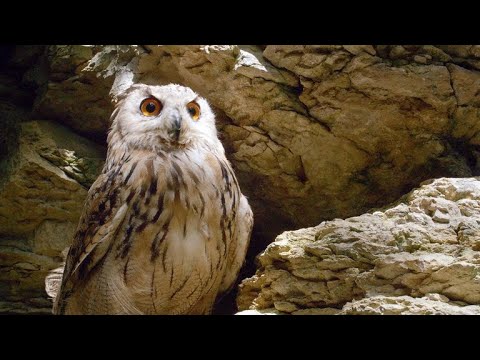
My body is broken. My muscles seem to resist my relaxed hanging. With the ferry, we came back from Jangbong-do, an island north of Incheon, the big airport in South Korea. We went looking for the Eurasian Eagle-Owl. It is a beast with a wingspan of up to two meters. They hunt foxes and small deer that they eat on the ground. It had to be a big spectacle. And now I feel that I am good on boats.

better on boats
Kim Young Soo climbs as if he is walking on a bike path.

Frightening steps.

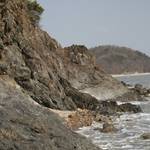
It turned out to be a frightening one. Normally you should be able to walk along the narrow beach to the high cliffs where the bird is nesting. But it was high tide. The waves hit the rocks and just above that Kim Young Soo climbs as if he is walking on a bike path. Kim Jay Ho and I follow cautiously.

It is not high but every step is a choice. Which stone is sturdy enough? Which path do I choose? Slowly I struggle. I have no eye for the environment, only for the stones.

It is not high but every step is a choice. Suseok .

Good on boots, but on stones?

 That weird habit of collecting stones. Every stone has its own mind. I absorb them: the structure, the form. Then I put my foot on it. Would I recognize that stone on the way back? Would I choose the same path?

grat on boats
Kim Young Soo climbs up a bit but he has to disappoint us.

Eventually, we search the rocks for the birds. They are not there. Probably on the hunt, looking for meat for the young ones who are hidden somewhere. Kim Young Soo climbs up a bit but he has to disappoint us.

On the way back Kim Jay Ho stretches an muscle. We want to help him up. He proudly rejects it. At a fish restaurant, we eat sublime sashimi, of course with a glass of soju.

I am on the wrong side of the deckhouse. The wind whistles around my head, but in the corner, it is just alright. I enjoy the view. The pine-covered islands, the green-blue sea. The wind causes Dutch foam heads and my body rests against the deckhouse.

Do not explain or apologize, just be good on boats.

A young boy comes to me and offers me some chips. With a bow, I take it and put it in my mouth. From a distance he keeps looking at me: open, in my eyes, deep into my soul. He points to my cigarette, makes a disapproving gesture and says “Please?” I bow gratefully for his care. It’s too bad that I can not explain or apologize. He disappears with his friends below decks.

I am alone. Kim and Kim are sleeping in the car. Maybe they are not that good on boats. Separated from the deckhouse. My camera against my stomach. I stand firm and feel one with the ship. I do not fall despite the strong swell and am not forced to take steps. The sea legs, obtained in my youth, are still working. The wind pulls and pushes my body. I do not give up. Mindful, I am one with the environment.

His flight, my stand!

I go deep into my soul and feel good on boats.

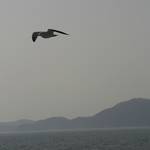
A seagull is approaching me up to half a meter. Hanging in the wind the animal looks at me with its bright yellow eyes. Deep into my soul. I allow it with a slight bend. There is nothing to explain, no apology to make.

My mind is empty. I no longer feel my body.  My muscles are calm. I hang in the wind like the gull. His flight, my stand, together, for a few minutes one. With a scream, he shoots away. Dives, with his mates, in the stern waves for fish. I stay. Alone.

good on boats
Cham Sung Dan. Turtle Island.

An older woman comes to me.

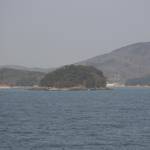
Points to the turtle island (Cham Sung Dan) and sticks her thumb up. She laughs. From this island, the arrow was fired with which the World Championship soccer was opened. A turtle is strong. See its round shield. You can build a house on that.

The woman slaps some dirt from my sleeves. How do I tell her about the climb, about the birds that were not there? I make a respectful bow. She says: “Americano” “Annia, annia, Holland”, I answer. She does not understand. “Hiddén-gûh“, I try. The granny laughs points back to the island and again, even more enthusiastically, raises her thumb. We bow and she walks away. 

Yes, I’m good on boats. The sea overwhelms my mind. The wind takes possession of me and my spirit dances on the stamping of the engines. Yes, I feel good at boats.

About Suseok: FB-Page     About Korea: FB-page  Featured image

About the Goyang Koi farm: on this site

youtube placeholder image


Big Korean adventure!

Korean Adventure: Building Koi Culture in South Korea

A Big Korean Adventure in Koi, Culture, and Ambition

Korean adventure is the right phrase for what followed when Hugo J. Smal became involved in South Korea’s koi world. What began as a technical request at a Dutch koi show grew into years of travel, cultural encounters, practical advice, and unexpected lessons about ambition, art, and perseverance.

Hugo J. Smal has written about his experiences in Korea, especially his work around koi culture, Korean society, and the people behind this unusual project. Readers who want broader context can also explore Koreans and I.

South Korea has long had passionate and ambitious koi enthusiasts. Hugo Smal became closely involved with several pioneers in the hobby and helped advise on facilities, water quality, and the larger vision behind a Korean koi industry. This article first appeared in a Dutch garden magazine.

How the Korean adventure began

Korean adventure on Modo Island
Must have been 2004 or 2005. Stairway to heaven on Modo Island Goyang Koi farm hub

During the Holland Koishow of 2003, I was asked to arrange a fish tank and make sure it had proper water quality and oxygen. A group of Koreans had brought koi by plane to the Netherlands to compete and sell fish. With help from several traders, they managed to do both. They sold a number of koi and also won some of the smaller prizes.

During those days, koi enthusiast and Goyang Koi Farm CEO Kim Young Soo asked whether I would come to Korea and help support the development of a koi industry there. That was the real beginning of this Korean adventure.

Struggling farmers and a new idea

At the time, Chinese rice exports were increasing and putting pressure on South Korean farmers. Kim Young Soo believed that breeding Japanese ornamental carp could become an alternative to rice cultivation. It was an ambitious vision, and for me it became a challenge worth exploring. Less than a month later, I landed at Incheon Airport.

Koi Ichiban in Korea
Koi Ichi ban?

From the airport I was driven straight to a koi show, where I was asked to give a short speech. The organizers also wanted me to judge the fish, which I felt unqualified to do. When they asked which fish should win, I said a strong Sanke seemed the obvious choice. To my surprise, the main prize went to a weaker Showa that was visibly unwell at the bottom of the vat.

I told a journalist that, by our standards, such a fish would have been removed from the competition. That honest remark caused an immediate uproar.

A fierce argument during the Korean adventure

What followed was not just noise but a real argument. I was put into a Kia van and, after a long drive, left alone in a hotel room. I had no idea what would happen next or whether any work still awaited me. The show had clearly been poorly organized, and the judges lacked technical knowledge.

It smelled of clientelism, perhaps even bribery. There had been no proper benching and no clear distinction between healthy and unhealthy fish. Around the world, koi entered into competition are typically checked carefully, often with support from a veterinarian specialized in fish diseases. In South Korea at that time, that standard was not yet in place.

The next morning, Kim Young Soo arrived with companions and several large fish boxes in the van. The splashing inside turned out to be the Sanke that should have won. Kim had taken my blunt words seriously, even if they were culturally too direct. He decided then that he wanted to play a leading role in the Korean koi industry.

Korea is a big adventure

During the rest of the trip, I saw the impressive landscape of the Land of the Morning Calm and gained a deeper view of Korean culture. I realized how much study Koreans would need to build a true koi tradition, and how much I myself still had to learn about this complex society.

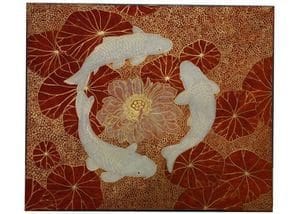
I met many artists along the way. Baik Yong-Jung taught me that the carp has lived in the Korean imagination for centuries. His paintings connect koi, nature, and symbolic meaning. Paintings of carp and crabs were common during the Yi dynasty, and scenes of carp leaping upward carried their own moral and cultural charge.

Painting by Y.J. Baik

Carp myth and cultural meaning

These paintings draw on an old story: when the Yellow River rises, carp struggle upstream toward the Dragon Gate. A fish strong enough to pass through that gate becomes a dragon. During the Confucian Yi dynasty, this story symbolized success in the state examinations and the possibility of rising from poverty into office.

Today, that symbolism still echoes in Korean culture. Carp paintings are common wedding gifts, and conversations with artists such as Baik Yong-Jung, along with literary research, showed me how deeply the carp moved through Chinese, Korean, and Japanese culture. In that sense, Korea carried this cultural symbol forward long before modern koi culture took shape.

A visionary idea behind the Korean adventure

As ornamental fish, however, Japan remained far ahead. It seemed unrealistic to imagine Korean koi farmers overtaking Japan in the Go-Sanke classes any time soon. I therefore suggested a different approach: connect koi farming to Korean culture itself and expand the koi farm in Goyang, northwest of Seoul, into a cultural center where ceramics, painting, and other forms of art could also be shown.

The idea was to introduce Koreans more deeply to koi culture while creating a future export path not only for koi, but also for koi-related art and cultural experience. Koreans often approach things competitively, with a strong desire to become the biggest, strongest, or best. Understanding that mindset became its own Korean adventure.

Kim Young Soo exchanged land, kept studying, and continued building. He invested heavily in Japanese parent koi and began breeding and growing them. In the Netherlands I was already used to advising on troubled ponds and fish purchases, but Kim’s drive made this work a different kind of challenge.

I was fortunate to rely on experts such as Rene Kruter on fish disease and water quality, and Mark Kleijkers on koi quality. With their help, and with practical judgment, I was able to support what the Koreans were trying to build.

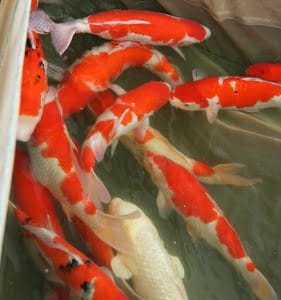
Koi at the Goyang Koi farm
Koi at the Goyang Koifarm

Rising quality and rising expectations

Year after year, I watched the quality of fish at the Goyang koi farm improve. Kim Young Soo joined forces with Mr. Hong, who had a substantial number of breeding ponds near Gwangju. In those mud ponds swam Go-Sanke of increasingly impressive quality, fish I would not have hesitated to allow into my own pond.

After a long process of trust, discussion, and negotiation, Kim and Hong finally decided to enter Hong’s fish into the Holland Koi Show in 2011. Rene Kruter and I traveled to South Korea to select the fish. We assumed they would compete with smaller sizes. The Koreans had other plans: they wanted to win immediately with large koi.

Korean Adventure in South Korea


As children might stand beside a sweet shop window, Rene and I stood at the ponds in awe as one jumbo koi after another was netted and placed into vats. Seeing those fish felt like a blessing. It was a Korean adventure with a Japanese twist, and now the fish were coming to the Netherlands.

My own pond had been nearly empty for years because of the Korean collection, with only a few goldfish maintaining bacterial balance. I had about a month to get the water back into top condition so these jumbo koi could acclimatize before traveling on to Arcen. I decided it was possible and ordered two vats, because the six fish we selected were too large for one.

European legislation and hard limits

Goyang Koi farm in Korea
Goyang Koi farm

Between dreams and reality, there are always laws and practical barriers. That truth became painfully clear. In the OFI journal of October 2008, Alex Ploeg had already warned that Asian breeders and exporters who wanted access to Europe needed to comply with European animal health legislation. Those rules affected not only importers, but also exporters, suppliers, growers, and collectors.

If exporters wanted to sell on the European market, they had to meet those standards. The exporting country had to meet them as well. I had pointed Kim Young Soo toward European legislation from the start and based my advice on the OFI Code of Conduct. He and his colleagues took this seriously, contacting the right ministries and district officials to seek export approval for fish to the European Union.

Never enough Korean adventures

But reality intervened. Kim Young Soo and Mr. Hong were standing with the fish at Incheon Airport when customs made the situation brutally clear. The koi could leave Korea, but they would be stopped at the European border and destroyed. At that moment, all possibilities collapsed. It was a severe disappointment and one of the hardest chapters of this Korean adventure.

Hidden dragon, crouching tiger

In the years that followed, the Korean adventure continued. I returned to South Korea many times. Kim Young Soo and I took part in discussions with senior civil servants at government ministries. I gave advice and, at times, opinions that were perhaps too European in tone. The machinery of administration was moving, but very slowly.

South Korea remains, in koi terms, a hidden dragon and crouching tiger. China now buys heavily in Japan and is trying to expand its own role in the koi world. That raises the question of whether South Korea’s official processes move too slowly to seize the opportunity.

Fortunately, Kim Young Soo did not rely on koi alone. Following my advice, he invested around five million euros in a broader cultural project. He built a koi and cultural center that eventually opened under the name Baedagol.

If this Korean adventure has sparked your interest, you can also follow the story on Facebook: Goyang Koi farm 비단잉어 Nishikigoi

Questions & Answers

What is the Korean adventure in this article?
The Korean adventure refers to Hugo J. Smal’s involvement in South Korea’s koi world, including travel, technical advice, cultural encounters, and efforts to help develop a Korean koi industry.
Who is Kim Young Soo?
Kim Young Soo is a Korean koi entrepreneur connected to Goyang Koi Farm. He invited Hugo Smal to Korea to support the building of koi facilities and a broader cultural vision.
Why did koi become important in this Korean adventure?
Koi became the center of the story because they were seen as both an economic opportunity and a cultural bridge, linking farming, art, ambition, and international trade.
Why could the fish not be exported to Europe?
The export plan failed because European animal health legislation required standards and approvals that had not yet been fully secured, meaning the fish would have been stopped at the border.
What is Baedagol?
Baedagol is the koi and cultural center that emerged from Kim Young Soo’s broader investment strategy after it became clear that relying only on koi exports would be too risky.

Korean gardening: the gods are praised.

 written by Hugo J. Smal

Sungnyemun burning: with regards https://joshinggnome.wordpress.com
Sungnyemun burning. image

On the 11th of February, 2008, Sungnyemun, Sungnyemun, the Southern Gate, from Seoul burned down. King Yi T’aejo (1335 – 1408), the founder of the Choson Kingdom, had this gate built around 1400. He also constructed the Kyon Gyeongbokgung Palace. These days you can see the fruit of Korean gardening there.
The purpose of this gate was not only to stop Japanese robbers. It also provided spiritual happiness and prosperity, absolute standards of Korean Gardening.

Emphasis on naturalistic beauty.

[:en]Wonderful wander: the Secret Garden in Changdeokgung, Seoul © Chinnaphong Mungsiri / Getty[:]
Wonderful wander: the Secret Garden in Changdeokgung, Seoul © Chinnaphong Mungsiri / Getty

For two thousand years, Koreans have been constructing beautiful gardens meant to bring the harmony of the natural world into man-made spaces. These gardens range from majestic gardens situated in royal palaces to humble courtyard gardens in traditional hanok-style family homes.

Korean gardens are distinguished from their Chinese and Japanese cousins by a deep emphasis on naturalistic beauty, a direct influence of the Korean philosophy of hermitism. To achieve this natural beauty,  gardens take into account architecture, water, stone, and open space to create a sense of unlikely balance that isn’t forced or artificial. The most common features of Korean gardens grow out of these elements and include architectural pavilions and central reflecting ponds.

A lot of the Koreans still believe in all those influences of the gods. And the gate is rebuilt. It is their national pride and the Pungsu-jiri (풍수지리 is held in honour, as are the influences of the different religions described below.  it’s splendid again

Chôngwon (정원) Korean Gardening or 정원 (jeongwon)

The Korean word for a garden is a combination of two Chinese characters. Chông 정, the first character, indicates a garden surrounded by buildings or walls. Chong divides gardens into a palace, official, temple and regular. This is according to the function of the building. Korean architectures divide the common garden into the front or back garden, indoor or outdoor, middle garden or for example a gate or stair garden. This is also according to the location.

Korean GardeningWon 원, the second character, means hill or wide field with forests. With this character, the garden rises above the garden surrounded by buildings or walls. The composition of the two characters thus means a small garden, but also a park complex or a naturally designed park.

Trees look in.

The essence of Korean gardening is the natural landscape with hills, streams, and fields. The landscape is not separated by walls or other boundaries. The Korean gardener builds walls to let trees look over them.
The environment is allowed in the garden. The nature within the walls is not forced into a straitjacket like in Japan. The Korean garden is natural and therefore calming.
Nature is perfect in Korean philosophy. Therefore, the Hanguk takes great care in human intervention. Interference is almost seen as violent. The idea behind Korean garden culture is to make nature appear more natural than nature itself. Where the Japanese shape nature, the Koreans will shape in nature.

Korean gardening is a fusion.

With the word fusion, the Korean garden culture is appointed in one blow. In contrast to the one-sided, humanistic-Christian background of the Europeans, the Hanguk culture consists of a mixture of many settings: all of them from their ancient religious history.

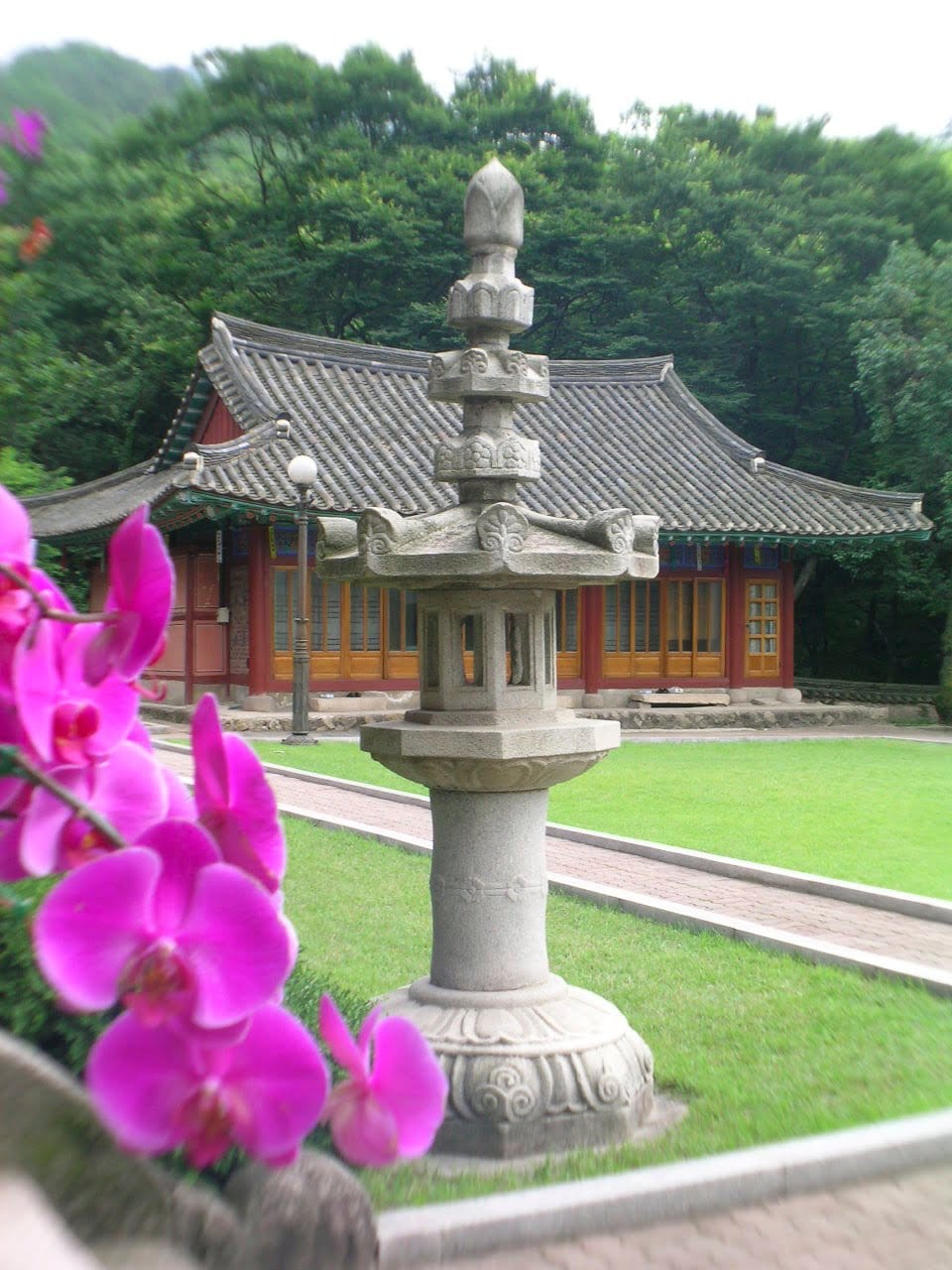
unju-sa
Doltap

Tangun (the sandalwood king) is seen as the mythical founder of Korea, 4326 years ago. He descended to Pyongyang, where he founded an empire: Chosön, the country of the morning calm.
This is a myth with a clearly shamanistic character, in which the fusion of cosmos, earth, gods, people, animals, and plants takes place. Shamanism knows many gods and spirits. These live in the landscape but also in the basement, the kitchen or in the attic. In the event of illness or other adversity, many Korean people still visit the Mudang

Natural shrines.

Also, the piling of stones, Doltap (돌탑 ), stems from this natural belief. It is a common practice in Korea to place a foundation stone on the side of the road. Another finder contributes to his or her part. This way the most beautiful pagodas arise spontaneously along the way, but also at a Buddhist shrine or for example a waterfall. They are saving natural shrines, in which everyone cooperates. And the most beautiful thing … nobody kicks them over.

[embedyt] https://www.youtube.com/watch?v=Z57WEu2wtRw[/embedyt]


Pragmatic focus

Confucianism is the second religious belief that is a part of the Korean gardening philosophy. This focuses mainly on the life of man in this world. The relationships between people. Hence very pragmatic indeed.

Korean gardening in palace.
Yi dynasty beauty. The building washing his feet.

Confucianism, originating in ancient China, places a strong emphasis on harmony, order, and moral rectitude. In Korean gardens, this influence is seen in the careful balance and symmetry often present in garden layouts. Gardens were designed to reflect the Confucian ideals of harmony between man and nature, and the orderly arrangement of paths, water features, and plants often mirrors the structured societal hierarchy promoted by Confucianism. Learn about the role Confucianism plays in Korea today here.

Neo-Confucianism

It is highly influential in Korea during the Joseon Dynasty, further developed these ideas. It emphasizes self-cultivation and a deepened understanding of one’s relationship with the universe. Korean gardens from this period often feature scholar’s rocks and carefully curated views, which encourage contemplation and intellectual reflection. The gardens are not just for aesthetic pleasure but also serve as spaces for meditation and personal growth, in line with Neo-Confucian values.

Both philosophies contributed to the development of Korean gardens as spaces where ethical and philosophical contemplation could be pursued amidst natural beauty. The result is a garden culture that not only emphasizes aesthetic appeal but also intellectual and moral depth.

Great influence on Korean Gardening.

 Also Buddhism has significantly influenced Korean garden culture, embodying principles of harmony, balance, and simplicity. These gardens often promote contemplation and meditation, reflecting the Buddhist pursuit of peace and inner tranquility. Elements like water, stones, and meticulously arranged vegetation are central, symbolizing the natural world and Buddhist teachings. Symbolism is key, with certain plants and structures representing spiritual concepts from Buddhism. This results in serene, naturalistic gardens that are not just visually appealing, but also spiritually meaningful.

No conflict.

In Korea, there was no conflict between religions. They simply exist side by side. Later, the Jesuits brought Christ. This Western saviour also got his place. The Korean culture only grew richer. Many Koreans choose a very down-to-earth starting point for faith. They just pray to everyone. If one does not help, one may expect more benefit from the other.

The saint set his spade.

It is therefore not surprising that you find Confucian symbolism in Buddhist temples, while shamanic gods keep watch. Therefore the fusion between four big worlds religions. Where in the west the rich ruled the garden culture, for example with the exorbitant Versailles, in Korea the saint set his spade in the ground. The European monks came no further than the herb garden. Those in the Far East succeeded in creating true garden art.

Korean gardening means the outside is looking in.
Outside looking in.

Human environment.

Korean garden architecture is holistic. According to the dictionary, Holism is the view that there is a connection in reality. Hence the whole is not found in the components.
The Korean garden culture, for example, combines Chong and Won, building a human environment that combines well with the world of nature. It is respecting both nature and human values.
Korean gardening is the art of creating an outdoor space with ecological values, functional and practical. It gives more value to ecology than to scientific disciplines such as technology and architecture.

Korean gardening incorporates the mythical.

The Korean garden differs from the formal garden. In the latter, visual beauty is sought. The beauty of the Korean garden arises from a complex, spiritual and mythical beauty. This is captured by the spirit and its five senses: sight, smell. hearing, taste, and feeling.
This is not the beauty, for example, found in the Japanese garden. Captured by planting and materials. The Korean garden has an organic beauty that changes in space and time. It relies on the elements and on materials used.

Korean gardening is natural.
Korean gardening is natural. 자연주의 정원 (jayeonjuui jeongwon)

Compulsions of nature.

It is not only external beauty but also a manifestation of cosmic principles such as fragility, sound, contrasts between light and dark and dry and wet. In the distant past, the Koreans build about a thousand public gardens. Not by specialists, but by the garden owners themselves. They knew the working of nature through their own gardens, usually described as natural gardens.
These gardens acted as intermediaries between the compulsions of nature and the needs of man. It is strange that Korean garden culture is not discovered by the rest of the world. The Chinese garden gets attention, while the Japanese are a real hype.

See what happens in the Korean garden.

youtube placeholder image