Significant Changes Around Baedagol Gill
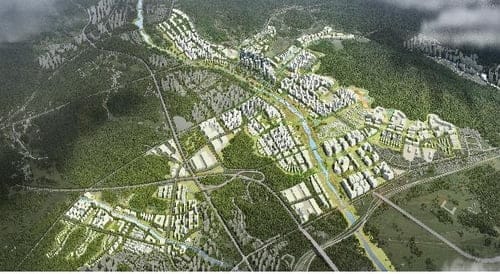
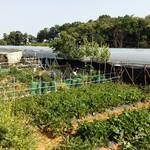
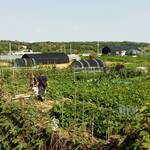
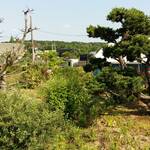
Changneung 3 New City is driving growth and development in Korea, impacting communities like Baedagol Theme Park and Goyang Koi Farm. In The Koreans and I you can read: As I softly chant ‘Na-mu Ji-jang Bul,’ I let the words guide my steps along Baedagol-gil, the path running alongside the Seongsaheon River. The river, now a small stream, burbles quietly below me, its sound almost drowned out by the symphony of Cicadas. Each step feels like a journey between worlds, much like the river, which swells during the monsoon only to retreat into a quiet stream under the summer sun. It makes me a little bit sad that all this will change. Read more about how it was in The Koreans and I.
The Geological Foundation of Korea
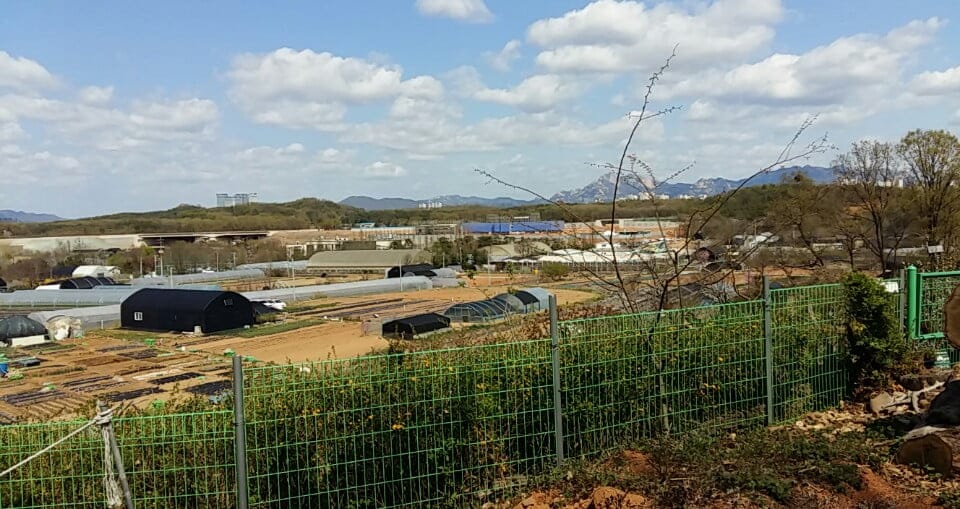
Korea, a beautiful peninsula located almost like a bridge between China and Japan, has a geological history that dates back to the Precambrian era. The peninsula is composed of ancient granite and gneiss rocks, interspersed with volcanic rocks, mainly in the south and on the Jeju Islands. The mountains, such as the Taebaek mountain range running from north to south, form the backbone of Korea’s landscape. These mountains have played a crucial role in shaping the climate, water sources, and agricultural possibilities in Korea.
The rich river deltas, such as those of the Han River, have produced fertile soils perfect for agriculture. The western and southern coastal areas, where rivers flow into the Yellow Sea, are particularly fertile and have attracted large populations throughout history.
From Traditional Agriculture to the Division of North and South
Agriculture in Korea has a long history, beginning with rice cultivation likely introduced during the Neolithic period. Over the centuries, Korea developed into a society heavily dependent on rice farming, as well as other crops like barley, wheat, and soybeans. Agricultural methods were refined, using irrigation and terracing, especially in the mountainous regions.
During the Joseon Dynasty (1392-1910), agriculture was the backbone of the economy, and the government promoted the development of rice fields and irrigation systems. This period also saw the spread of Confucian ideals, which valued land use and agricultural productivity as central principles.
After the Japanese occupation (1910-1945) and the subsequent Korean War (1950-1953), the peninsula was divided into North and South Korea. This division led to different agricultural strategies: North Korea, with its mountainous terrain, focused more on collectivist agriculture, while South Korea, with its fertile valleys and access to the sea, underwent agricultural modernization, supported by the Green Revolution and technological innovations.
Urbanization and Modernization to the Present Day
In the second half of the 20th century, South Korea underwent rapid industrialization and urbanization. The migration of populations from rural areas to cities was immense. Cities like Seoul, Busan, and Incheon grew into metropolises, driven by a booming economy centered on technology, the automotive industry, and international trade.
Urbanization brought challenges, such as the loss of agricultural land and environmental issues. In recent decades, the South Korean government has tried to balance urban growth with environmental preservation. This has led to plans like the development of new cities, including Changneung 3 New City, to alleviate pressure on existing urban centers.
The Koreans’ deep respect for the environment is evident in their cultural practices, as seen in their traditional gardening methods. For example, in Korean Gardening: The Gods Are Praised, we see how gardens are designed not just for aesthetic beauty but as sacred spaces that honor the gods and nature. This cultural respect for the environment gives me confidence that Changneung 3 New City will be developed with the same attention to natural beauty and environmental care. Although, of course, it can’t quite compare to Rotterdam—said with a smile.
The Impact of Changneung 3 New City Relocation on Baedagol Theme Park and Goyang Koi Farm

One of the most recent examples of this urbanization is the development of Changneung 3 New City, an ambitious expansion of the urban areas around Seoul. This project is designed to accommodate the growing population and stimulate economic activities. However, this expansion also affects existing communities and businesses.
Baedagol Theme Park and Goyang Koi Farm are two such locations impacted by the development of Changneung 3 New City relocation. Both businesses have deep roots in the local community and are well-known attractions for both residents and tourists. Unfortunately, due to the plans for the new city, these businesses are forced to relocate to new sites.
Baedagol Theme Park, known for its educational and recreational activities that highlight Korean culture and nature, will have to find a new location to continue its mission. Goyang Koi Farm, a place where koi enthusiasts gather to admire and breed these beautiful fish, will also need to seek a new home where it can continue its tradition.
Read More About The Koreans and Their Environment:
- Korean Nature is Unique – Discover the unique aspects of Korean nature and how they have been shaped over time.
- Odors Give Way to Fragrance in 19th Century – A fascinating look at how scents and odors changed in 19th-century Korean gardens. Beautiful odors
- Korean Gardening: The Gods Are Praised – Explore how Korean gardening traditions honor the gods and hold deep cultural significance. The gods are praised.
Korea’s geological foundation has laid the groundwork for a rich agricultural tradition that has contributed to the development of the country over the centuries. Rapid urbanization in modern times has led to new opportunities but also challenges for existing communities. The Changneung 3 New City relocation and the forced relocation of Baedagol Theme Park and Goyang Koi Farm are examples of the ongoing balance Korea must strike between progress and preserving its cultural and natural heritage.

![[:en]Wonderful wander: the Secret Garden in Changdeokgung, Seoul © Chinnaphong Mungsiri / Getty[:]](https://mantifang.com/wp-content/uploads/2019/07/GettyImages-597879379_full-d625bf17680e.jpg "Korean gardening: the gods are praised. 9")