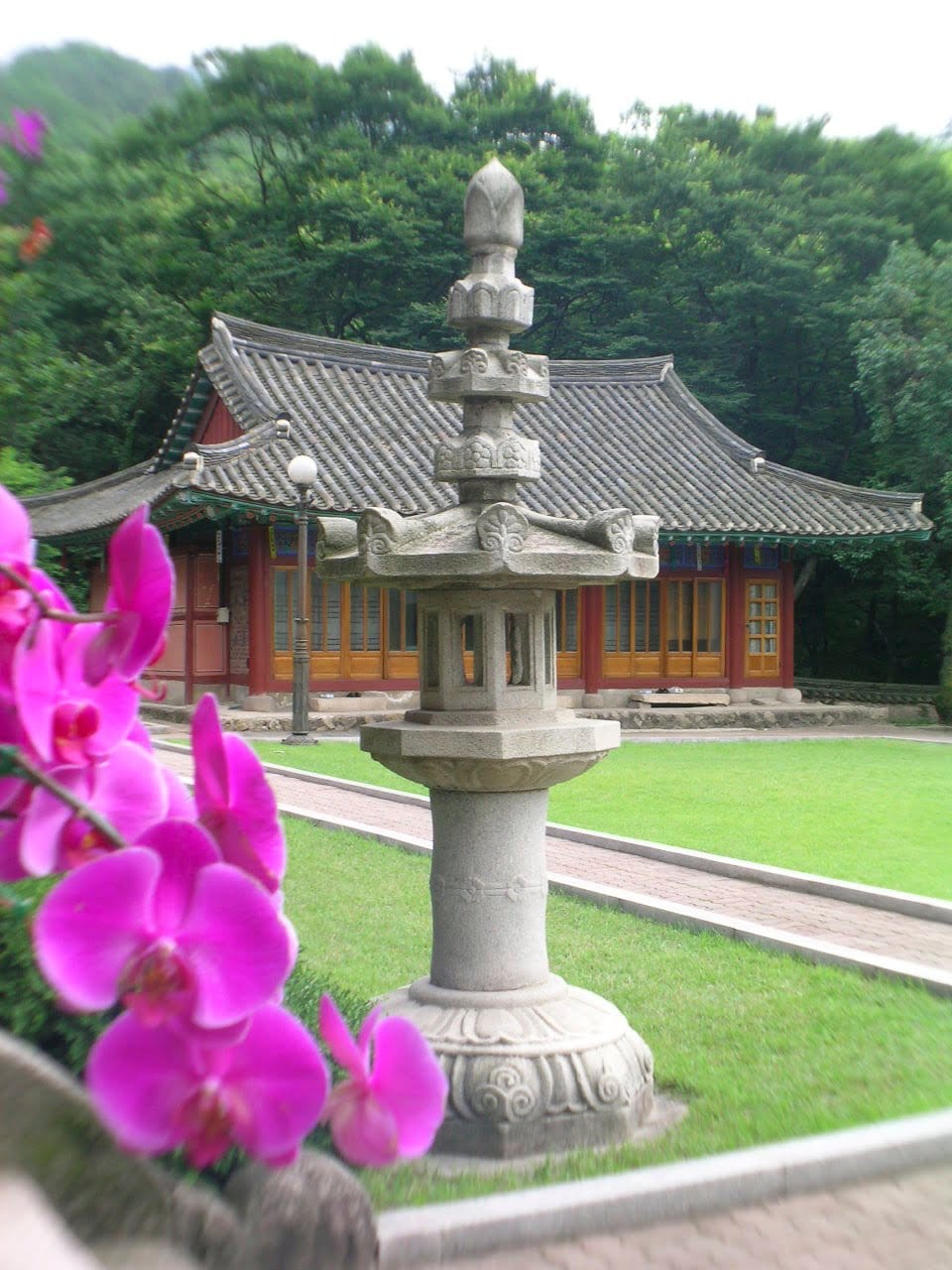
From Goyang to Rotterdam, the silver wave is rising. Korea now ages rapidly; the Netherlands follows not far behind. Behind the numbers sits a deeper question: how do we remain connected, dignified, and engaged — even in old age? This challenge reflects the realities of the Korean aging society. The Jijang Fractal illustrates the interconnectedness of aging societies.
In Korea, answers often grow from community and ritual; in the Netherlands, from welfare and healthcare systems. Perhaps the real key is what binds us: compassion — and the realization that being old is not an ending, but a phase full of meaning. Insights like these also resonate with my reflections in The Koreans and I.
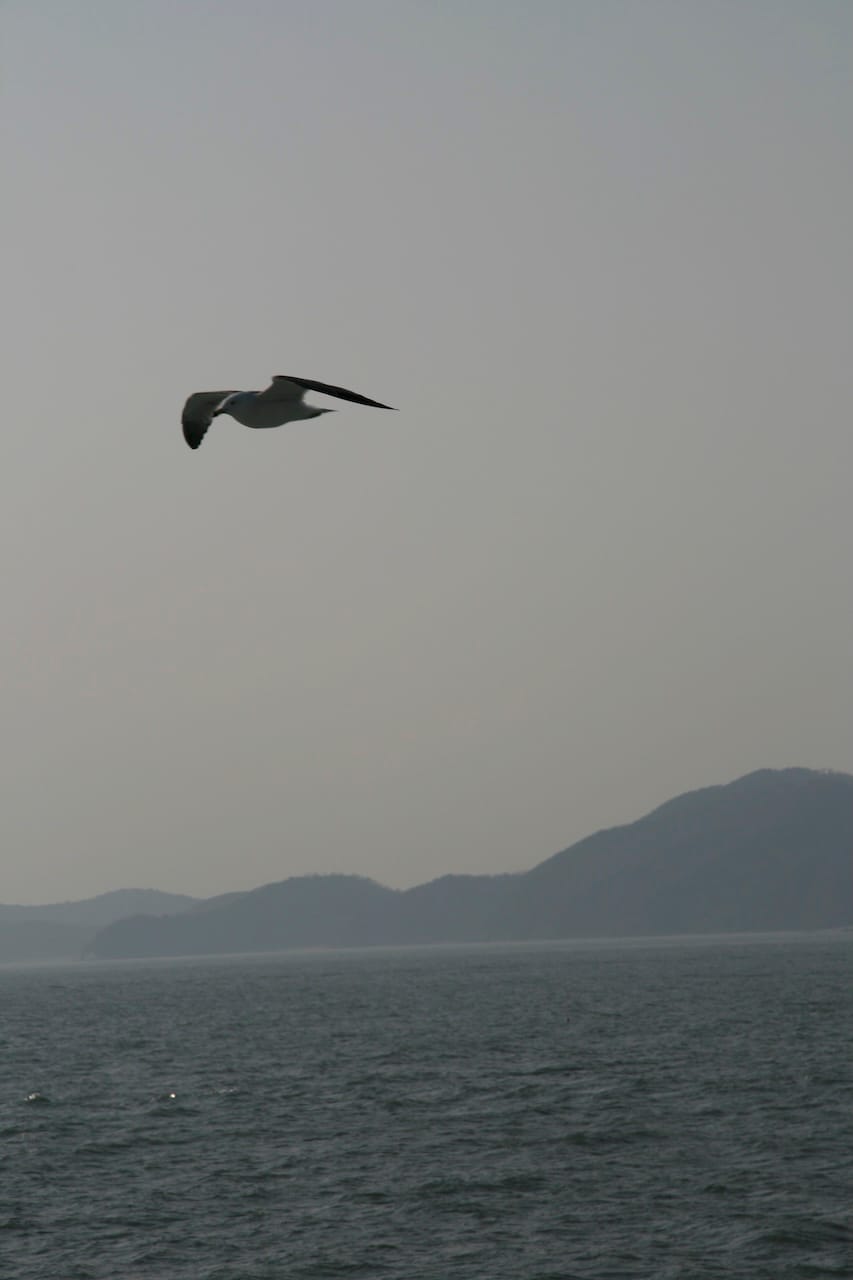
A bird over the mountains — symbol of a world in transition.
I look out over a world stuck in transition, while I feel the beginning of something new. It’s as if I’m on a mountaintop, watching values, systems, and certainties expire. Growth exists, but it feels like the convulsions of an old model. Inflation and interest swing like mood shifts; what felt secure yesterday can feel like a panic attack today.
The planet has a fever; the poles melt like forgotten ice cubes. Climate meetings resemble therapy sessions caught in vague intentions. Fossil habits collide with green ideals, and the clock keeps ticking.
Power drifts. The U.S. ages; China moves with middle-aged confidence; Russia smolders like a bitter ex; Europe strains in the middle. And South Korea? High-tech and self-aware — facing the North, the silver wave, and the question: must we pretend to be young, or may we grow older on our own terms? The Netherlands, pragmatic and small, tries to adjust the thermostat in a house on fire.
And wars flare like pain in the body: Ukraine, Gaza, Sudan — old conflicts in new disguise. Dear reader, I’m not exaggerating. I’m paying attention. These reflections tie back to the cultural shifts I once explored in Journey to the West.
Walking route from Baedagol to the new Wondanggol garden in Goyang.
The journey from the old Baedagol Theme Park to the new Wondanggol garden is more than symbolic. It is a short walk of just 3–4 kilometers through Goyang-si, yet it represents a much greater transition: from childhood play to senior reflection, from noise to silence, from history to renewal. This path between Baedagol and Wondanggol shows how Korean culture weaves continuity into change.
Both Kim Young Soo and I feel this is not a time to do nothing. His original Baedagol theme park — a meeting place for children, animals, and living history — had to stop at its first site. Now, the new Baedagol grows in Wondanggol: a garden of rest and reflection for seniors, a place of plants, peace, and care.
I think of a poem I wrote in 2004 — first published on Mantifang and later revisited during my pilgrimage to Bogwangsa:
Human Nature
Qi rides the wind and scatters.
But not when she meets water.
Then she shatters and becomes wind,
rises and becomes a cloud.
If she is angry, it thunders.
Falling, it becomes rain.
Underground she becomes Qi again.
The Pungsu Jiri qi arises from the wind.
Thick or thin, but certainly invisible,
she imbues man with nature.
The oak tree at the new Baedagol in Wondanggol, Goyang.
The oak in Korea often symbolizes endurance — slow growth, strength, and long life. Villages speak of namu-shin, tree spirits and ancestral guardians. Such symbols bridge the visible and the spiritual.
The Jijang Fractal did not appear to me in isolation. It was in Korea, through its culture of ritual, nature, and quiet resilience, that the pattern first revealed itself. Without the gardens of Baedagol and the generosity of Kim Young Soo, I might have missed it. My study and creativity as a writer shaped the words, but the insight itself was born from Korean soil. In that sense, the Jijang Fractal is not only my discovery — it is also a gift of Korea’s culture, and of the friendship that helped me see how compassion and interconnection take root in daily life.
“True virtue is to serve quietly, with no thought of reward, yet with the whole heart.” To create a place where others can rest is the highest form of service. Such a place gives the silver wave enough energy to support those who come after us — grandchildren, neighbors, students, colleagues, community. They will inherit our exhausted earth; every gesture of care may tip the scale.
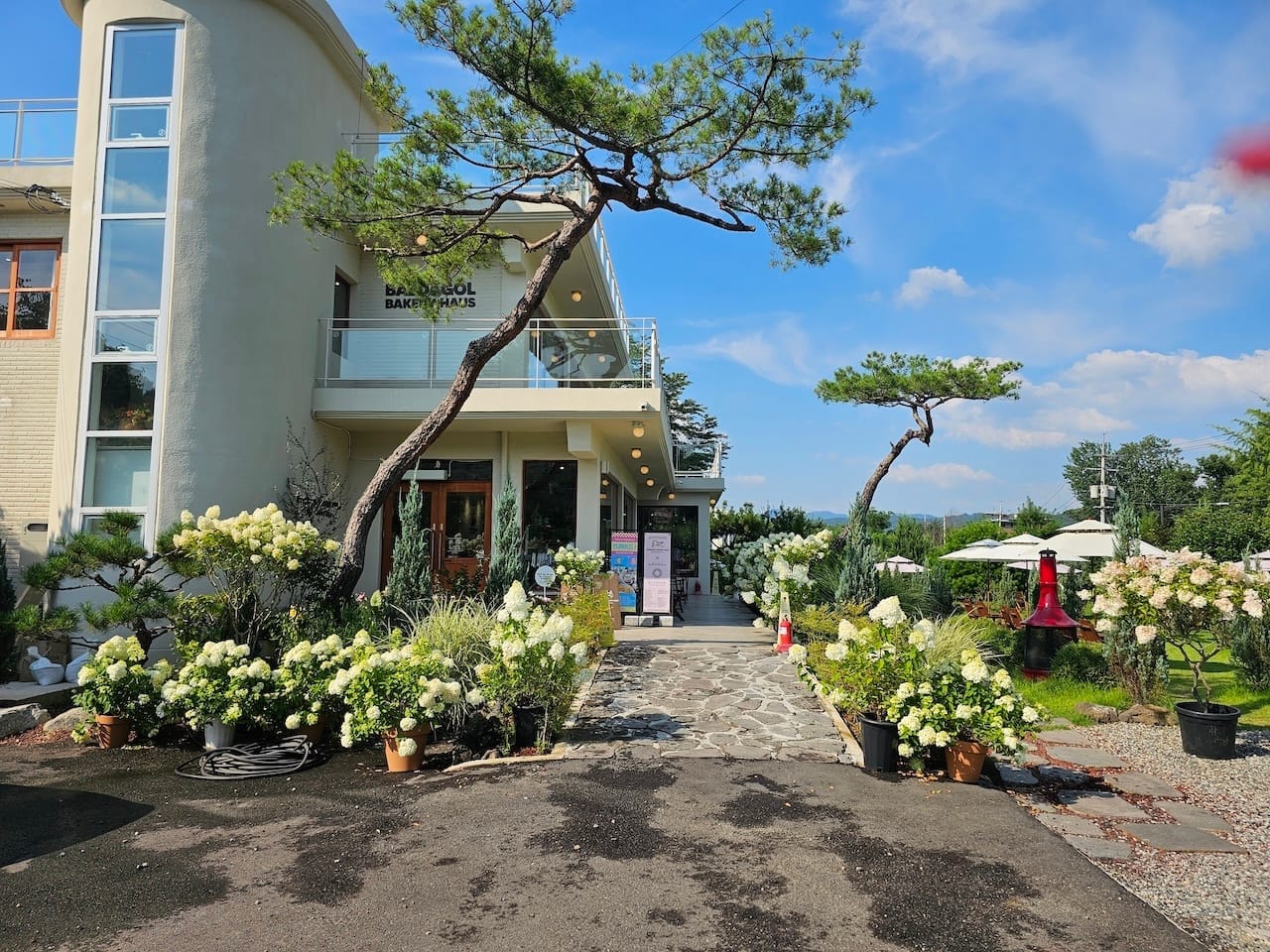
Baedagol Bakery in Wondanggol, Goyang — a place of food, care, and togetherness.
In Korea, food is more than sustenance. “밥 먹었어요?” — “Have you eaten rice?” — carries the care of generations that knew hunger. It is not formality; it is belonging. Baedagol Bakery in Goyang-si has that spirit: warm, generous, unhurried — a counterbalance to a faster Seoul.
A well-set table nourishes the body; a blooming garden nourishes the soul. Together, they make us whole.
The garden may be very Korean, but the desserts are European. Cream cakes and sugar — new flavors charming the Korean tongue. When I first came to Korea, bread was rare; now that Kim Young Soo bakes it, I am no longer allowed to eat it. Diabetes (type 2) asks for a stricter path: sugar-free, salt-free. After a severe hypo — ambulance and all — I set myself a regimen most would find joyless. Luckily, I have a Korean past.
While Baedagol serves cream cakes, I experiment with Jijang kombu sauce — with chicken and stir-fried vegetables — a dish even his wife would enjoy. I keep writing my book and helping Mickey care for the grandchildren. They grow up in a world in menopause. In their eyes I hear the silent question: give me the tools to restore this world.
If you’re in the mood for some pastries and want to enjoy the beautiful garden: Baedagol Bakery House155-3 Wondang-dong, Deogyang-gu Goyang-si.
That is the difference: my old age brings limits; the mess we leave is worse. Still, as long as we breathe, we can set the Fractal wheel in motion — like Kim Young Soo, who with trees, flowers, and bread quietly helps the world heal. Perhaps not grand — but enough to say: we still can. These reflections echo themes I first touched upon in Song of the Mantifang.
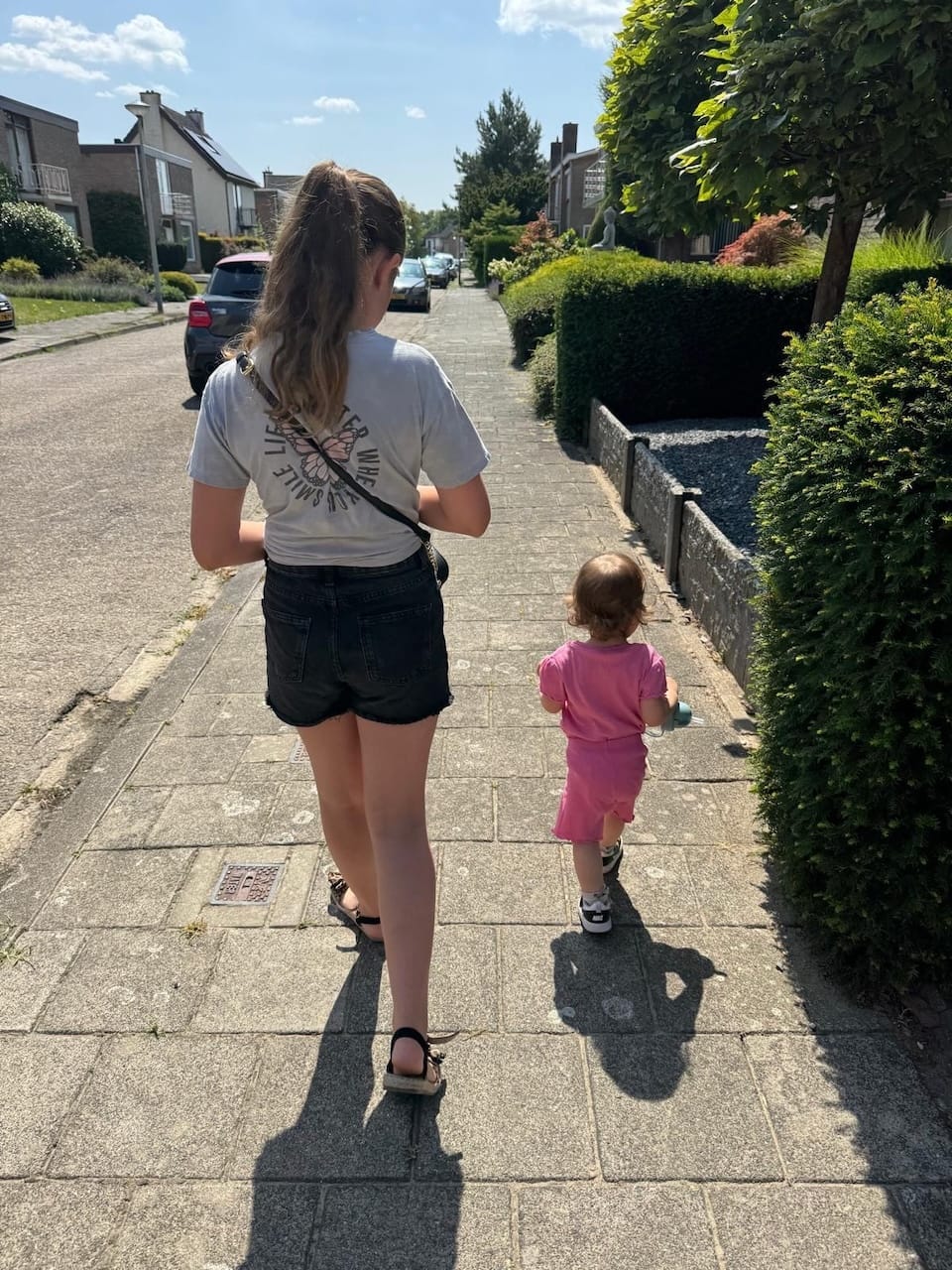
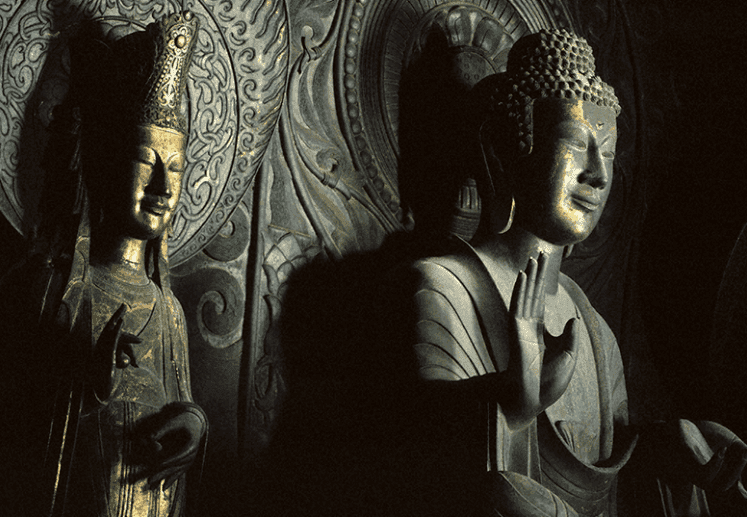
Two little ones walking forward towards the future — with the Buddha quietly present in the shadow.
Oh drop of water belonging to the grey wave — keep the Jijang Fractal in mind and start helping the little ones to create a world warm, generous, and unhurried. A place like the renewed Baedagol theme park, breathing in Wondanggol, South Korea.
As the little ones walk forward towards the future, even the shadows reveal more than we expect. In the outline of a Buddha in shade, and in the statue further down the path, presence becomes visible. The Jijang Fractal teaches that what seems hidden still shapes us — quietly, patiently, and with compassion.
These words close the circle, yet remain open — just as in Bogwansa, the story continues through memory, compassion, and renewal.
Korean melancholy, or Han, is not merely a cultural engine.
A small white heron startles. Back on the embankment, I open a bottle of Soju and take a sip.
The cicadas remain silent, their usual song absent, as if nothing in the night dares disturb their rest.
Yet beneath the stillness, a tension lingers, a quiet discomfort that mirrors my own unease.
In the distance, I hear a trumpet announcing the night. It comes from the barracks.
Soldiers are everywhere here. It does not worry me. I still tasted the food at Sarangche.
war zone
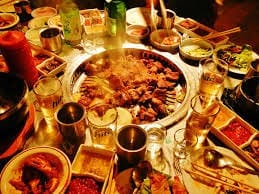
The table looked a bit like a war zone, always full.
It is quite a task for the waitress to put it all down the integrated barbecue, the many bowls with side dishes,
bowls with peppers, garlic and lettuce leaves, the bottles and cans, the bowls with rice, the plates, sticks and napkins.
And off course Kimchi.
We enjoyed it well. Kim Young Soo signalled.
He walked to the counter to pay. Two other men fought. The Soju tasted good, its warmth spreading through me,
but it carried with it a familiar ache, like an old song I had forgotten but could never quite let go.
The fight was not about who should pay. It was not about the money, but something deeper—perhaps a sense of duty, or pride,
rooted in traditions I could barely grasp. Here, even the smallest gestures seemed to carry the weight of a lifetime.
Their voices rose, not in anger, but in fierce determination—each insisting on their right to bear the burden.
Outside, the police occupied the street, their smiles strangely out of place in the midst of such rigid control.
The waiting began—cars stopped, drivers submitted, blowing into breathalysers with a resignation that felt heavier than the night itself.
The boss lit a cigarette and again coffee was served from the restaurant. Jay looked disappointed, his eyes distant,
as if the long drive to Seoul wasn’t just about distance, but about returning to a silence he wasn’t ready to face.
I started to walk. The rest had to wait, well into the night if necessary, until the police had had enough.
In the Gumeonggage, the local shop, I grabbed some bottles of Soju,
a few packs of cigarettes, and some biscuits. The seventy-year-old woman behind the counter smiled as I handed her my purse,
trusting her without question. Perhaps it was the simplicity of the exchange—something clean, something untainted by the complexities
of the outside world—that made me feel at ease.
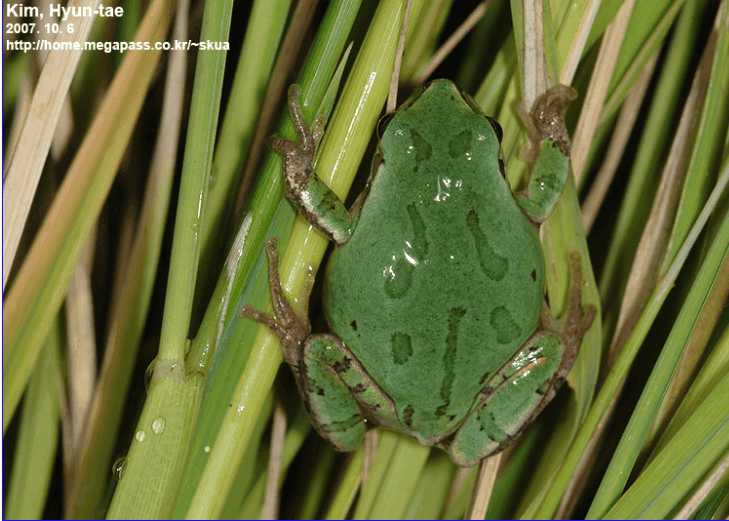
Protected tree frog, Korean melancholic sounds
It is quiet on the Baedagol gill. The dinner is still buzzing in my head.
Even though I was not always involved in the conversation, it remains overwhelming.
They are energetic people those Koreans.
Save haven
When they drink, they remind me of my hometown buddies the Rotterdammers—direct, inflammable, and unafraid to roll up their sleeves.
But the similarities end there. Seniority is everything here. It’s a hierarchy that’s ingrained in every gesture, every conversation.
I keep hammering it into my head, yet it still feels foreign, heavy. In the Netherlands, we walk beside each other.
Here, we walk in a line—always behind or ahead, never side by side.
Jetlag has a hold on me, pulling me into a fog I can’t quite shake. Even the Soju can’t dull the edge.
Sleep, I’ve decided, is an overrated luxury. Only old generals die in bed, after all.
Time slips through my fingers here in Korea, faster than I can catch it.
In Rotterdam, I’ll sink into the culture shock like a stone into deep water.
But here, it’s the cicada that keeps me on the surface, restless, always awake.
In addition to the cicada, there’s another troublemaker—the male Suweon tree frog, whistling his high, desperate call into the night.
Only eight hundred of them left, they say, trapped between two rivers, clinging to their patch of land. His whistle echoes, unanswered.
It’s a fight for survival, for recognition. Just like the Koreans, he has finally carved out his own place, standing apart from his Japanese
and Chinese cousins. But the cost… the cost is always there, hidden under his green skin.
No Korean melancholic but coals
Originally, the tree frog sought out rice fields for its home, but those have almost all disappeared.
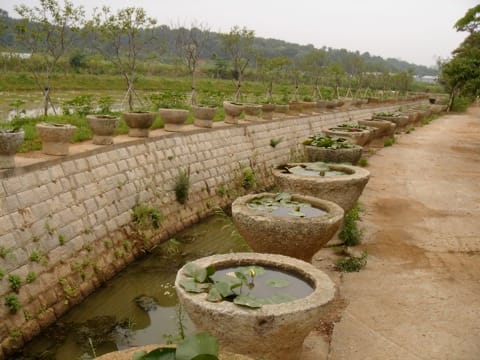
On Baedagol, however, they’ve managed to find a sanctuary in the water features, clinging to survival.
At least eight hundred tree frogs now live in the theme park alone—perhaps more.
Kim Young Soo’s dream has come true: a small piece of a lost world restored.
But even this refuge is fleeting. The expansion of Changneung 3 New City will soon swallow the land,
and with it, the Suweon tree frog’s fragile home. A place once reclaimed, soon to be lost again.
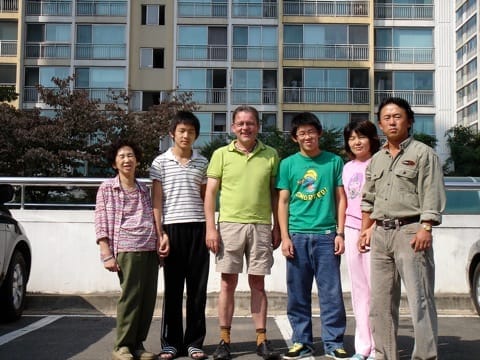
Kim Young Soo, his mother, wive, sons and the writer.
According to his younger brother, he has set himself four goals. His family had to be taken care of first.
In Korea, it always concerns the extended family. So not only wife and two children but also mother, sisters, younger brother and everything related to it.
His father died when Kim Young Soo was young and poverty was very high in underdeveloped Korea.
He took over his father’s rose nursery and sold the flowers he grew on the street. Later he discovered a way to grow roses from seed.
With that, he earned enough money to first grow lotuses and then switch to breeding ornamental carp.
His second goal was to help the Hwajeong Dong people.
Baedagol theme park is the final result of this.
His third goal was to give something back to Korea itself, to create a place where nature could find refuge again.
The Suweon tree frog, once nearly forgotten, now thrives in Baedagol, much like Kim Young Soo himself.
But even as the frogs whistle their high-pitched call, there’s a knowledge that this place, too, will be overtaken by the march of time.
Changneung 3 New City will soon rise, and with it, Baedagol’s carefully nurtured ecosystem will vanish.
For Kim, the sense of achievement is always shadowed by the looming impermanence of it all.
The Suweon tree frog, resilient and fragile at once, whistles into the night, unaware that the sanctuary it’s found in Baedagol is only temporary.
Soon, the city’s progress will sweep it away, as it has done with so much before.
The frog, much like Kim Young Soo, fights to carve out a place in a world that is constantly shifting, always moving forward, leaving only echoes of what was.
Samguk Sagi and Yusa, a Korean melancholy history
Onjo
Hwaejeong Dong is already described in the historical books Samguk Sagi and Samguk Yusa.
The first is the Chronicles of the Three Kingdoms written by Kim Busik at the behest of King In Jong and published in 1145.
Samguk Yusa is the “Memorabilia of the Three Kingdoms“.
This was written by the monk Ir Yeon and contains legends, folk tales, biographies and historical accounts.
Originally, Han Chinese settled in Hwaejong Dong, but in eighteen BC the state of Baekje or Paekche was founded. Onjo, the third son of Goguryo founder King Dongmyeong, was not allowed to succeed his father.
The father had been married before. Because of troubles he fled from Buyeo to Jolbon. He left his family behind,
so he married the daughter of a local chieftain and fathered two more sons: Onjo and Biryu.
The refugee wanted his own state and therefore founded Goguryo with its capital Sŏgyŏng modern Pyongyang.
Yuri, the son from the first marriage found out about this and was soon in the palace to claim his birthright.
With that kind of family, this is never without drama.
Onjo, seventeen years old, fled with his older brother Biryu, driven by the weight of family conflict and the desire to carve out their own place in the world.
He founded Wiryeseong present-day Seoul. Their he build an altar to honour his father.
But Biryu’s fate was less kind—he ignored his brother’s advice, ventured to the west coast, and found only saltwater and despair.
It is written in the books that he build Michuhol which is now called Incheon.
His suicide marked the end of one dream, while Onjo welcomed his brother’s followers with quiet resilience.
It was a tale as old as Korea itself—new beginnings, always born from loss.
Biryu’s death was not an isolated tragedy, but part of a longer lineage of sacrifices, each generation carrying the weight of the ones before it.
The younger brother called his state Baekje. The meaning of this name is explained differently, but I think “Hundred of houses grossed the sea” is the most beautiful.
During the reign of King Koi (243-286), the constitution was established and in 384 Marananta came from Ghandara Pakistan.
He told the then-newly installed King Chimnyu about Buddha.
Like Dryophytes suweonensis, Baekje relics are rare but of high quality.
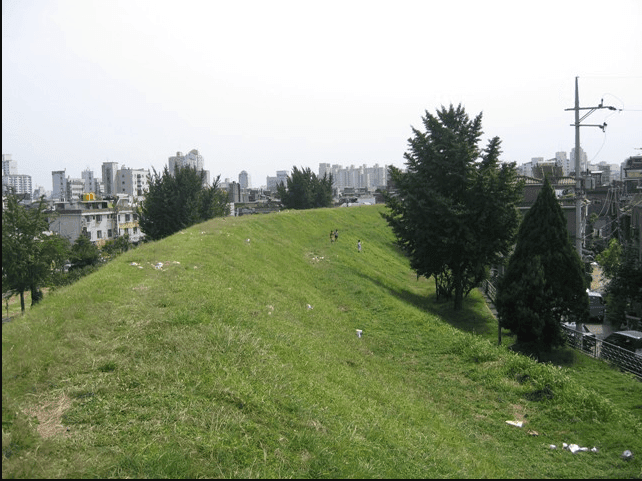
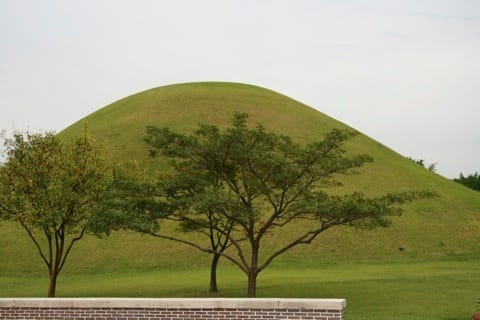
Together with younger brother and Kim Jay Ho, I visited King Muryeong’s tomb in Gongju.
According to a stone plaque, the tomb dates from 523. It was two other tombs, accidentally discovered in 1971 during drainage work.
As I stood before King Muryeong’s tomb, I couldn’t help but think of how history preserves both grandeur and fragility.
The tomb remained untouched for over 1,500 years, its treasures safe from time and thieves.
But even here, in the stillness, there’s an echo of loss—Baekje itself, once a powerful kingdom, now survives only in fragments,
in relics buried under the weight of centuries.
The tomb is still one of Korea’s greatest historical discoveries. Like the discovery of King Tutankhamun’s tomb in Egypt,
the accidental unearthing of King Muryeong’s tomb in Gongju revealed treasures untouched by time.
Both tombs had remained sealed for over a millennium, protected from thieves and degradation, preserving not only the riches of their respective monarchs,
but also the cultural grandeur of their civilizations. Where Tut’s tomb highlighted the opulence of ancient Egypt,
Muryeong’s grave opened a window into the sublime artistry of Baekje.
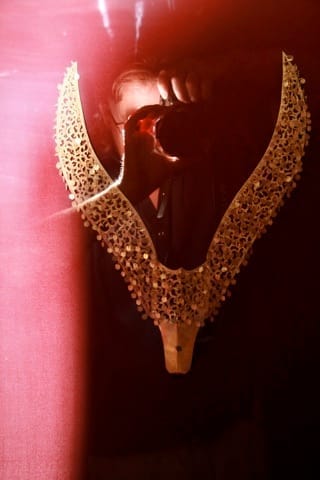
Geumjegwansik
Tomb robbers have not broken open its entrance for over 1,500 years. The treasures found in the tomb underlined Baekje’s sublime culture.
The Baekje people leased the tomb from the local earth spirits. It was also paid for.
Coins from the Liang dynasty were found on the stone,
proving that Baekje was influenced by that regime in China. The spirits fulfilled the contract because many royal decorations were found in the tomb.
The Geumjegwansik for example. These are two gold diadems worn by Muryeong (501 – 523). They were neatly stored in a small box.
They were cut from a thin, 2-millimetre, gold plate. According to tradition, the King wore the diadems on the right and left side of his black silk headscarf.
On top of the headscarf, he wore a black cloth top hat with a gold flower pinned on the back. The diadems resemble wings,
representing the belief in rebirth in Shamanism. Gold earrings, hair pins, a bronze wine cup with dragon and lotus motifs on the lid,
jade pendants and an iron sword were also found.
Two silver bracelets have the name of the Baekje silversmith Dari
engraved next to their weight. This name can also be found on the Sakayamuni triad of the Horyuje temple in Ikaruga, Japan.
Since Monk Marananta’s mission, Buddhism had a great influence on Baekje culture. This can also be found in Muryeong’s grave.
Butt still those Shamanistic influences were found in relics, not only due to Buddhist tolerance towards local religions.
I think there is another reason.
Like the discovery of King Tutankhamun’s tomb in Egypt,
the accidental unearthing of King Muryeong’s tomb in Gongju was a revelation for Korea, offering a rare glimpse into a world long past.
Both tombs, sealed for over a millennium, protected their treasures from time and decay.
Yet while Tut’s tomb highlighted the opulence and grandeur of ancient Egypt, Muryeong’s grave opened a window into the delicate, spiritual artistry of Baekje—a culture equally as grand, but often overshadowed by its neighbors.
But even by the narrative of world history itself. While the treasures of Egypt and China are celebrated globally,
Baekje’s legacy, delicate and profound, remains known to few. And yet, in the quiet stillness of this tomb, its significance cannot be denied.
Shikibu’s Korean melancholy: mono no aware
My thoughts float to a meeting I had with Shikibu Tsuku.
During the appointment in the Kasteeltuinen Arcen,
the interplay of clouds and sunlight on the budding green seemed to mirror Shikibu’s own mood—a constant shifting between warmth and cold,
between the comfort of memories and the ache of what had been left behind. The air was crisp, carrying with it the faint smell of earth waking from its winter sleep.
Few get to witness this, as the gate remains locked early in March. Amidst the contrasting cold and warmth, between the desire for a hearth fire and yakitori.
The park lay in tranquil beauty. Shikibu, feeling the chill, folded her summer kimono thoughtfully.
She was not the elegant figure enjoying the roses but more of a contemplative, inward-looking prayer. Her monologue filled my awareness.
“Mono no aware,”
Shikibu began, “is a Japanese expression signifying the poignant beauty of things. The inevitable transience of nature makes beauty fleeting and bittersweet.
Everything that lives and even everything that exists is not eternal! You see it in Bonsai, where often a dead branch forms the essential beauty of the tree.
It’s also reflected in how we view nature and experience it. Sakura is only beautiful because it is fleeting and oh-so-perishable.
You must enjoy it immediately and to the fullest.
Mono no aware and han are different sides of the same coin. One is the acceptance of beauty in transience,
the other, a lingering sorrow from unresolved suffering. Both see the fleeting nature of existence,
but while mono no aware embraces it with quiet resignation, han carries the weight of it, refusing to let go.
I looked at Shikibu, trying to lift her spirits. “It’s difficult to stay in the Kasteeltuinen now, but let me prepare some Sake to warm your heart.”
“Ah, the change of seasons brings tears,” she said, bowing slightly toward the Sake bowl. “I am melancholic, but maybe it’s also homesickness. During the last Holland Koi Show, I gave some areas Japanese names.
The Japanese village became Nippon Mura, and the aquarium tent Suizokukan. But most often, I think of the Doeplein: Ibento Kaijo,
where I still have so much more to learn about the Nishikigoi. If ‘Mono no aware’ applies to any Japanese art form,
it’s certainly the case with the mortality of the beautiful ornamental Koi.”
Her voice grew softer, as if the weight of the words themselves carried the passage of time. “Even Nippon Mura and Ibento Kaijo will one day fade into memory, just like the fleeting beauty of the Koi we so lovingly display.
That’s the way of things, isn’t it? The more we hold on to something, the more it slips through our fingers.”
“Why so sad, Shikibu?” I tried to console her. I knew what she felt.
Anyone who has seen Spring, Summer, Fall, Winter… and Spring by Kim Ki Duk understands this well.
The young monk, dragging the millstone up the mountain, carries not only the weight of his own suffering but that of the world.
With a rope tied around his waist, he pulls the heavy stone behind him, while carrying the Geumdong Mireuk Bosal, the golden Maitreya Bodhisattva.
The burden is not merely physical; it is spiritual, a symbol of the hope for salvation amidst suffering.
Each step he takes echoes the weight of human suffering, yet the Bosal he cradles in his arms serves as a reminder of the possibility of rebirth and enlightenment.
This, too, is han—a burden passed from one generation to the next, quietly borne, yet never fully lifted.
Many Japanese purists might abhor my liberal blending of Far Eastern cultures, but my long visits to Hanguk
and conversations with many artists and scholars there convince me that “Mono no aware” can only be fully understood this way.
Mono no Aware goes hand in hand with Han
Shikibu promised one thing: One day we would sit together, listening to Jeongseon Arirang—a song steeped in the very essence of han,
each note carrying the weight of centuries of sorrow and resilience.
In Kim Young Im’s voice, I knew we would both find something of ourselves, something that had been lost and perhaps, briefly, could be reclaimed.
The movie gives you an even deeper sense of this story. You can continue reading just below.
Exploring the Cultural Interactions Between China, Korea, and Japan
Korea’s influence on Japan was particularly significant during the Three Kingdoms period, when the Baekje kingdom played a key role in introducing Buddhism to Japan in the mid-6th century.
Alongside religion, Baekje artisans and scholars also brought advanced techniques in architecture, pottery, and metalworking, leaving a lasting imprint on early Japanese culture.
This cultural exchange helped shape the foundation of Japan’s early state, intertwining Korean expertise with native Japanese traditions to form a unique cultural identity.
Although Chinese, Korean, and Japanese cultures are interrelated, they have distinct characteristics.
China is the cultural motherland to which both Korea and Japan were indebted for centuries.
However, due to their long periods of isolation, both Korea and Japan developed unique interpretations of the philosophies and traditions imported from China.
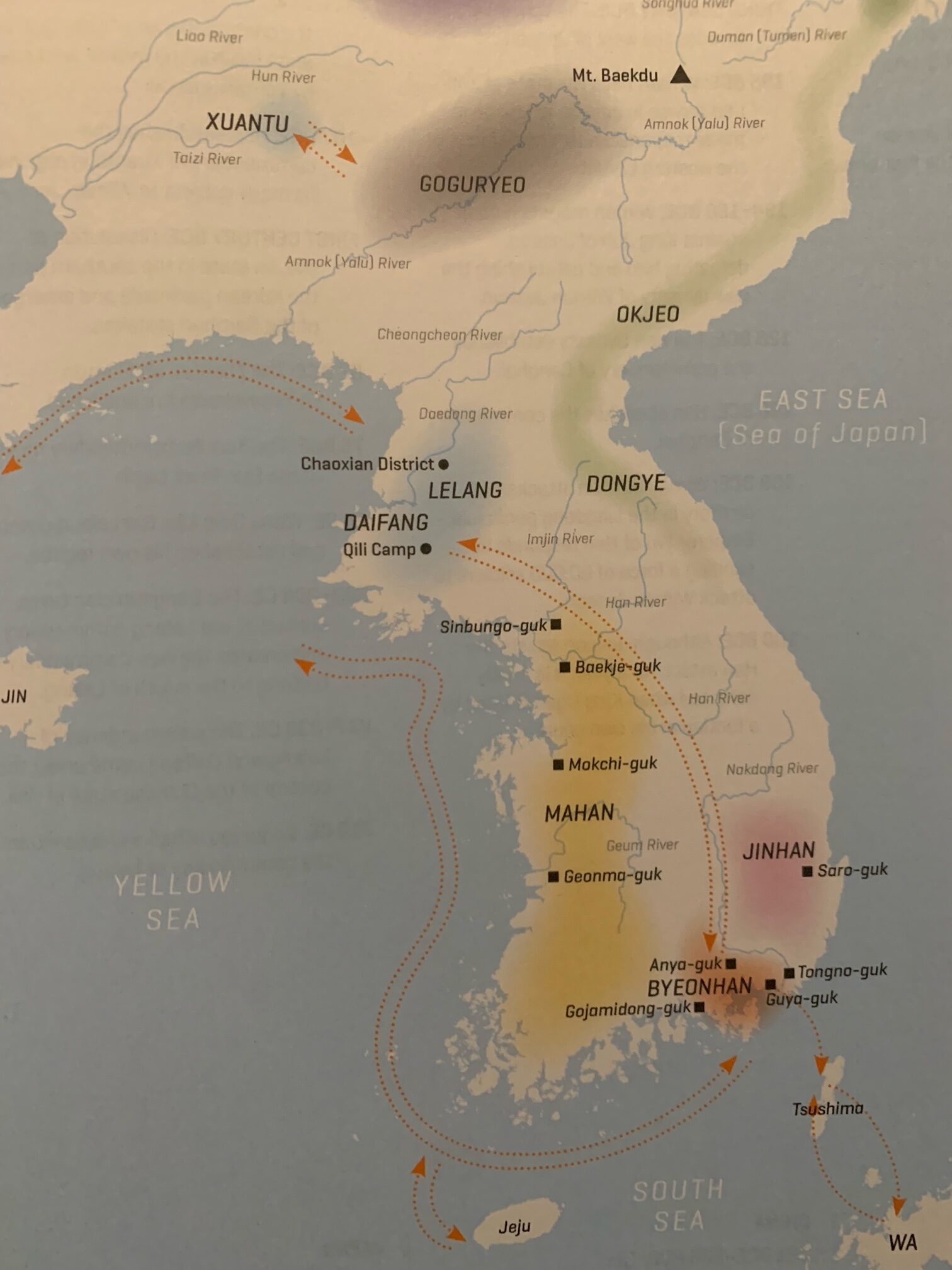
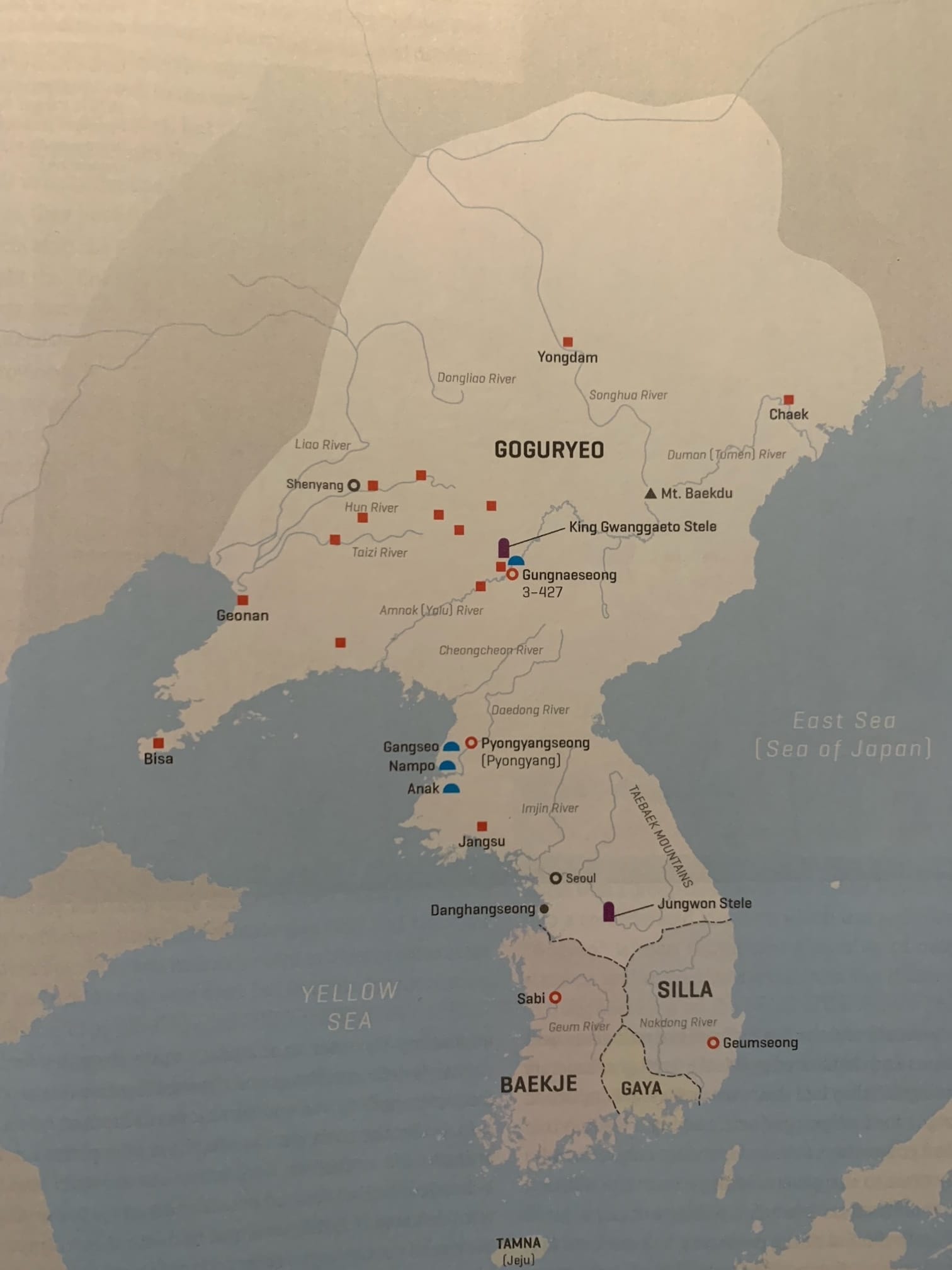
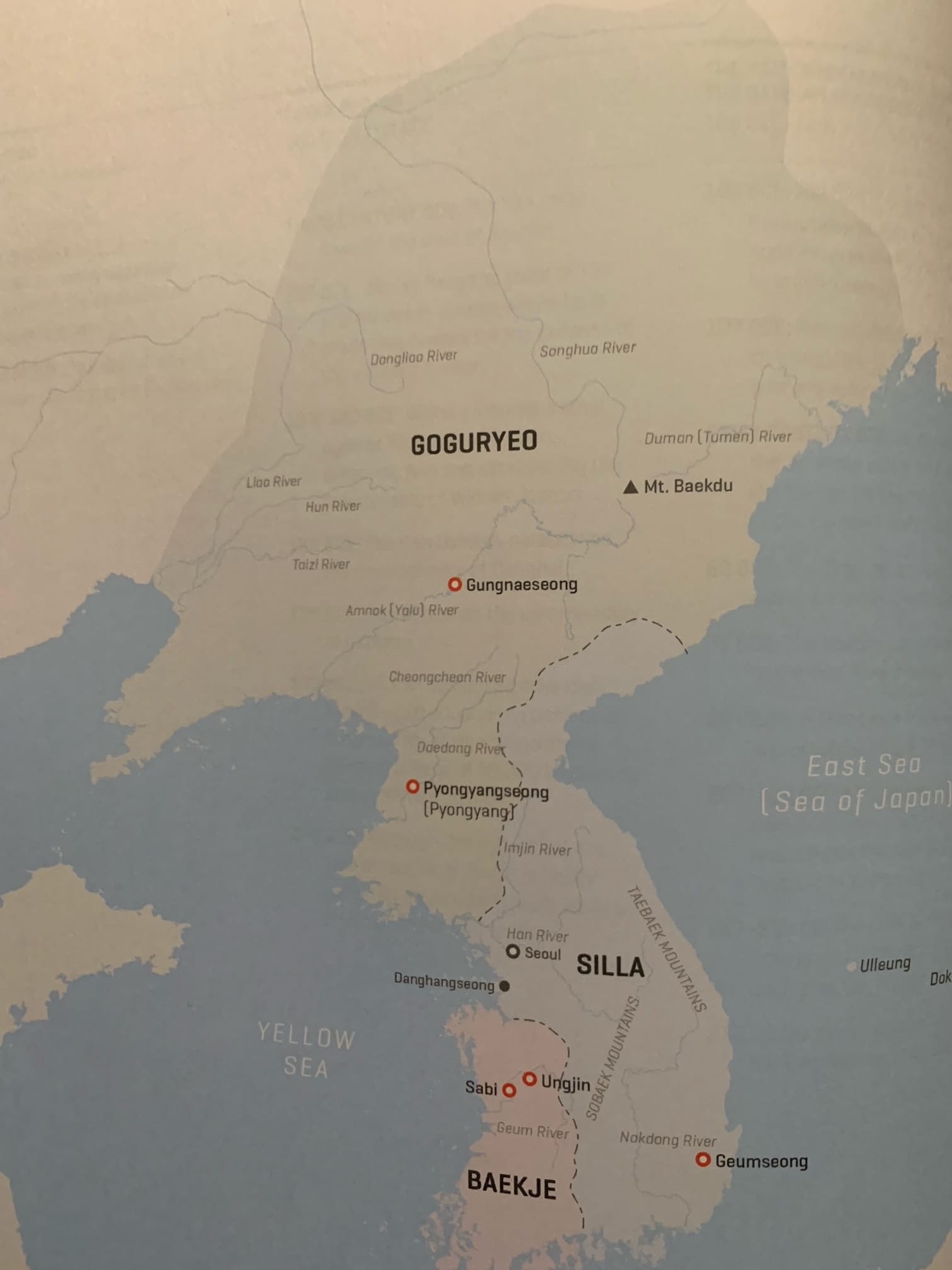
Korean History in maps Cambridge university press
3rd to 4th. century 6th century mid 6th century
What about Korean Melancholy the North
But what about the brothers and sisters behind the barbed wire in the North? Would they bend along or practice with rockets?
The mountains also observed the all-dominant Kim family. The regime, with all its cruelty, propaganda for domestic or foreign use,
the Gulag system, and starvation, does not escape the attention of the almighty. The regime, the dictator, could not provide the altars with food and drinks.
I realise that the Soju bottle is empty. Walking across the parking lot, I see the car that passed me just now.
The driver gets out and bends. He introduces himself as Oh Yang Chon and hands over his ticket. Police!
On the 11th of February, 2008, Sungnyemun, Sungnyemun, the Southern Gate, from Seoul burned down. King Yi T’aejo (1335 – 1408), the founder of the Choson Kingdom, had this gate built around 1400. He also constructed the KyonGyeongbokgung Palace. These days you can see the fruit of Korean gardening there.
The purpose of this gate was not only to stop Japanese robbers. It also provided spiritual happiness and prosperity, absolute standards of Korean Gardening.
Korean gardens are distinguished from their Chinese and Japanese cousins by a deep emphasis on naturalistic beauty, a direct influence of the Korean philosophy of hermitism. To achieve this natural beauty, gardens take into account architecture, water, stone, and open space to create a sense of unlikely balance that isn’t forced or artificial. The most common features of Korean gardens grow out of these elements and include architectural pavilions and central reflecting ponds.
A lot of the Koreans still believe in all those influences of the gods. And the gate is rebuilt. It is their national pride and the Pungsu-jiri (풍수지리 is held in honour, as are the influences of the different religions described below. it’s splendid again
Chôngwon (정원) Korean Gardening or 정원 (jeongwon)
The Korean word for a garden is a combination of two Chinese characters. Chông 정, the first character, indicates a garden surrounded by buildings or walls. Chong divides gardens into a palace, official, temple and regular. This is according to the function of the building. Korean architectures divide the common garden into the front or back garden, indoor or outdoor, middle garden or for example a gate or stair garden. This is also according to the location.
Won 원, the second character, means hill or wide field with forests. With this character, the garden rises above the garden surrounded by buildings or walls. The composition of the two characters thus means a small garden, but also a park complex or a naturally designed park.
Trees look in.
The essence of Korean gardening is the natural landscape with hills, streams, and fields. The landscape is not separated by walls or other boundaries. The Korean gardener builds walls to let trees look over them.
The environment is allowed in the garden. The nature within the walls is not forced into a straitjacket like in Japan. The Korean garden is natural and therefore calming.
Nature is perfect in Korean philosophy. Therefore, the Hanguk takes great care in human intervention. Interference is almost seen as violent. The idea behind Korean garden culture is to make nature appear more natural than nature itself. Where the Japanese shape nature, the Koreans will shape in nature.
Korean gardening is a fusion.
With the word fusion, the Korean garden culture is appointed in one blow. In contrast to the one-sided, humanistic-Christian background of the Europeans, the Hanguk culture consists of a mixture of many settings: all of them from their ancient religious history.
Doltap
Tangun (the sandalwood king) is seen as the mythical founder of Korea, 4326 years ago. He descended to Pyongyang, where he founded an empire: Chosön, the country of the morning calm.
This is a myth with a clearly shamanistic character, in which the fusion of cosmos, earth, gods, people, animals, and plants takes place. Shamanism knows many gods and spirits. These live in the landscape but also in the basement, the kitchen or in the attic. In the event of illness or other adversity, many Korean people still visit the Mudang.
Natural shrines.
Also, the piling of stones, Doltap (돌탑 ), stems from this natural belief. It is a common practice in Korea to place a foundation stone on the side of the road. Another finder contributes to his or her part. This way the most beautiful pagodas arise spontaneously along the way, but also at a Buddhist shrine or for example a waterfall. They are saving natural shrines, in which everyone cooperates. And the most beautiful thing … nobody kicks them over.
Confucianism is the second religious belief that is a part of the Korean gardening philosophy. This focuses mainly on the life of man in this world. The relationships between people. Hence very pragmatic indeed.
Yi dynasty beauty. The building washing his feet.
Confucianism, originating in ancient China, places a strong emphasis on harmony, order, and moral rectitude. In Korean gardens, this influence is seen in the careful balance and symmetry often present in garden layouts. Gardens were designed to reflect the Confucian ideals of harmony between man and nature, and the orderly arrangement of paths, water features, and plants often mirrors the structured societal hierarchy promoted by Confucianism. Learn about the role Confucianism plays in Korea today here.
Neo-Confucianism
It is highly influential in Korea during the Joseon Dynasty, further developed these ideas. It emphasizes self-cultivation and a deepened understanding of one’s relationship with the universe. Korean gardens from this period often feature scholar’s rocks and carefully curated views, which encourage contemplation and intellectual reflection. The gardens are not just for aesthetic pleasure but also serve as spaces for meditation and personal growth, in line with Neo-Confucian values.
Both philosophies contributed to the development of Korean gardens as spaces where ethical and philosophical contemplation could be pursued amidst natural beauty. The result is a garden culture that not only emphasizes aesthetic appeal but also intellectual and moral depth.
Great influence on Korean Gardening.
Also Buddhism has significantly influenced Korean garden culture, embodying principles of harmony, balance, and simplicity. These gardens often promote contemplation and meditation, reflecting the Buddhist pursuit of peace and inner tranquility. Elements like water, stones, and meticulously arranged vegetation are central, symbolizing the natural world and Buddhist teachings. Symbolism is key, with certain plants and structures representing spiritual concepts from Buddhism. This results in serene, naturalistic gardens that are not just visually appealing, but also spiritually meaningful.
No conflict.
In Korea, there was no conflict between religions. They simply exist side by side. Later, the Jesuits brought Christ. This Western saviour also got his place. The Korean culture only grew richer. Many Koreans choose a very down-to-earth starting point for faith. They just pray to everyone. If one does not help, one may expect more benefit from the other.
The saint set his spade.
It is therefore not surprising that you find Confucian symbolism in Buddhist temples, while shamanic gods keep watch. Therefore the fusion between four big worlds religions. Where in the west the rich ruled the garden culture, for example with the exorbitant Versailles, in Korea the saint set his spade in the ground. The European monks came no further than the herb garden. Those in the Far East succeeded in creating true garden art.
Outside looking in.
Human environment.
Korean garden architecture is holistic. According to the dictionary, Holism is the view that there is a connection in reality. Hence the whole is not found in the components.
The Korean garden culture, for example, combines Chong and Won, building a human environment that combines well with the world of nature. It is respecting both nature and human values.
Korean gardening is the art of creating an outdoor space with ecological values, functional and practical. It gives more value to ecology than to scientific disciplines such as technology and architecture.
Korean gardening incorporates the mythical.
The Korean garden differs from the formal garden. In the latter, visual beauty is sought. The beauty of the Korean garden arises from a complex, spiritual and mythical beauty. This is captured by the spirit and its five senses: sight, smell. hearing, taste, and feeling.
This is not the beauty, for example, found in the Japanese garden. Captured by planting and materials. The Korean garden has an organic beauty that changes in space and time. It relies on the elements and on materials used.
Korean gardening is natural. 자연주의 정원 (jayeonjuui jeongwon)
Compulsions of nature.
It is not only external beauty but also a manifestation of cosmic principles such as fragility, sound, contrasts between light and dark and dry and wet. In the distant past, the Koreans build about a thousand public gardens. Not by specialists, but by the garden owners themselves. They knew the working of nature through their own gardens, usually described as natural gardens.
These gardens acted as intermediaries between the compulsions of nature and the needs of man. It is strange that Korean garden culture is not discovered by the rest of the world. The Chinese garden gets attention, while the Japanese are a real hype.






![[:en]Wonderful wander: the Secret Garden in Changdeokgung, Seoul © Chinnaphong Mungsiri / Getty[:]](https://mantifang.com/wp-content/uploads/2019/07/GettyImages-597879379_full-d625bf17680e.jpg "Korean gardening: the gods are praised. 21")