Korean nature is unique.

written by Hugo J. Smal

If you are Dutch like me, then the nature of Korea is one of the contrasts. The Netherlands have the countryside and the city, a few hills in the south and just under 50 islands. The Meuse and the Rhine split the country in two. Holland is a swamp delta drained by the Dutch. Korea has remained more itself throughout its existence. There are big cities, and the politicians broke the country in two, but much is still more or less untouched. You won’t find so much variation on such a small surface of the earth anywhere else. That is why Korean nature is unique.

Seongsaheon River
Seongsaheon River

Hanguk is a relatively small country.

Korea is 112,264 square kilometres in size. North Korea occupies 120.54. Unfortunately, I can tell almost nothing about nature in the communist part of the country. We know too little about it. Even the demilitarized zone holds many secrets. Animals and plants that have become extinct in South Korea can still live there. That zone is a large natural secret because no one has come there for about 70 years. South Korea is about the size of Iceland or Hungary. So relatively small. That makes the great contrasts you encounter in Korean nature unique.

High and low.

High, steep mountains dominate the landscape, the coastal areas and small islands. These features contribute to the diversity of Korean nature and the presence of a wide range of plant and animal species. Korea has a temperate climate with four distinct seasons. The country experiences hot, humid summers and cold, dry winters, with a rainy season in the summer and autumn. This climate supports a variety of ecosystems, including forests, grasslands, and wetlands.

Plants and animals make Korean nature unique!

Korea is home to a wide variety of plant and animal species. Many of which are found nowhere else in the world. Some animals are the Korean leopard, the water deer, and the musk deer.

Unfortunately, the Korean leopard, known worldwide as the Armur Leopard (Panthera pardus orientalis, Korean 한국 표범 hangug pyobeom), is extinct in South Korea. There is some hope that the world’s rarest big cat is still hunting in the demilitarized zone ore in North Korea. But that is seen as hope in vain. Only 50 or so Armur leopards, belonging to this subspecies common to the Korean Peninsula, live in the Kraj Primorski in Russia and Jilin in China. Read more about the Armur Leopards at https://www.worldwildlife.org/stories/how-fast-are-amur-leopards-and-9-other-amur-leopard-facts

Unique Korean nature at Baedagol.

The Seongsaheon River flows through the Baedagol theme park. It is a river when the snow melts in the mountains and during the rainy season. Most of the time river is a narrow stream. It ensures two unique animal species in and near the theme park and the Goyang Koi Farm.

In addition to the cicada, the area has another “troublemaker”. The male Suweon (Hyla suweonensis) calls his female with a loud and high whistle. He’s not having a good time. The family has about eight hundred members, living between the Mangyeong and the Imjin rivers. They are closely related to Hyla Japonica whistling from Hokkaido to Yakushima in Japan, to the Ussuri River in the Russian part of ancient Goguryo and northern China and Mongolia.
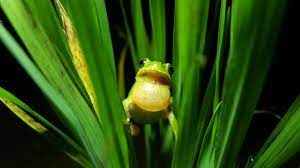
The tree frog lays her eggs in rice fields. At the Baedagol theme park, they have managed to conquer a warm bed in the many water features. I think that there are several hundred living at the theme park. How the Suweon will fare in the future is unclear. Baedagol must make place for new high-rise buildings.


Read a detailed description of the tree frog here: PDF

 I have only seen the hoof marks of the Korean water deer (Hydropotes inermis argyropus, Korean 한국물사슴) in the river bed. They pass through it foraging at dawn.

Like the Korean musk deer, the water deer has tusks. They do not use them for hunting but as a weapon in territorial battles. First, a mock fight takes place. The males walk impressively towards each other and make clicking noises. Sometimes a weaker deer gives up at this point. When they fight, the males try to injure each other with their tusks. The loser himself indicates when enough is enough. He lays his head and neck flat on the ground or takes flight. The females live peacefully in groups.

At Baedagol theme park, C.E.O. Kim Young Soo collected many trees and plants.

Korean nature is unique for his fir. Source: https://bit.ly/2W9T4pZ Photographer: W. carter Public Domain Image
The Korean fir (Abies Koreana, Korean: 구상나무, Gusang namu): is a species of the fir tree that is native to the mountains of Korea. It is known for its distinctive conical shape and the fact that it retains its needles all year round.
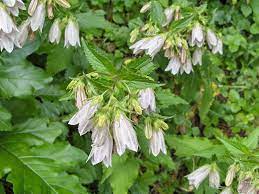
The Korean bellflower is unique Korean nature
The Korean bellflower (Campanula takesimana, Korean: 섬초롱꽃, seomchorongkkot) is a flowering plant that is native to Korea and Japan. It is known for its blue or purple bell-shaped flowers.


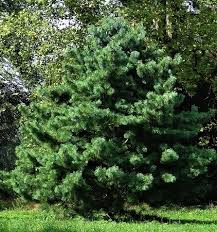
Korean nature is unique for pine tree
The Korean pine (Pinus koraiensis, Korean 소나무, sonamu) is native to the mountains of Korea. It is known for its long, slender needles. It survives in cold, snowy environments.

The trees and plants are lucky. They find a home at the new locations of the Baedagol theme park and the Goyang Koifarm. For the tree frogs moving house will be a bigger problem. I am sure C.E.O. Kim Young Soo will find a solution.

Korea has a range of natural landscapes and ecosystems, ranging from subtropical forests on the southern coast to temperate forests in the central regions to subarctic forests in the high mountains. 

One of the most notable features of Korean nature is the presence of many high, steep mountains that dominate the landscape.

Korean coastline is unique.

Korea is also known for its beautiful coastlines, which feature a mix of rocky cliffs, sandy beaches, and small islands. The country has many small islands off its coast. The coastal waters of Korea are home to a variety of marine life. Dolphins, whales, and sea turtles are some of the beautiful animals that visit the beaches.

The flat land in the Han river basin, for example, the mountains that mainly border the peninsula on the east side, and the many rocky islands and sandy beaches ensure that the nature of Korea is unique. You won’t find so much variation on such a small surface of the earth anywhere else. Geonggi-do alone, the province in which Seoul is located, offers its visitors numerous nature adventures.

If you like unique Korean nature: Page
Odors give way to fragrance in 19th century

By Robert Neff
previously published: The Korea Times
featured picture: Mrs Emberley and her garden in Seoul, circa 1900.

garden odors
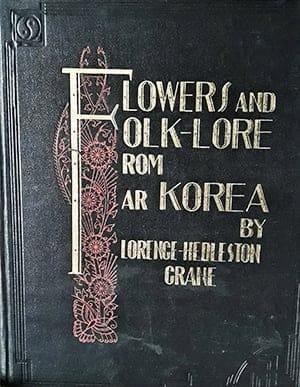
An excellent book about Korean fauna is “Flowers and Folklore from Korea” by Lorence-Hedleston Crane. Courtesy of Diane Nars Collection

In the late 19th and early 20th centuries, the descriptions of Seoul were filled with complaints of streets packed with oxen, ponies and people all trying to avoid falling into the open sewers or stepping in the excrement of man and beast, and the fetid stench that seemed to hang in the smoke-filled air. While there may have been some truth to these descriptions, there were also very positive descriptions by more objective observers ― those who were willing to open their eyes (and nose) to the positive things:

“One might almost call [Korea] the Land of Lilies.

Were it not that other families of flowers, violets, eglantine, roses, white and red, lilacs and rhododendrons are equally prolific, while in the orchards, peach and pear blossoms fill the land with glory and beauty. In the endless procession of the seasons, there are lovely blossoms from snowfall to snowfall again. Hills and valleys become a riot of colour from the azaleas that strike the gamut of tints from snowy white to deepest orange. One botanist, in a single afternoon s ramble over the hills around Seoul, brought home a bouquet of forty-seven varieties of flowers; another near [Jemulpo ― modern Incheon], in one day, exceeded this number by a dozen.”

Joy in the garden fragrance.

While others complained of the “fetid smells” of Seoul and its sewers, the writer found joy in the fragrance of spring: “Not all the flowers are affluent of sweet odours, but enough of them carry aroma in their chalices to make the breezes sweeping from the mountain heights delicious to the senses. In springtime, especially, the winds often come perfume-laden to refresh and delight. In the autumn odour yields to colour and the hardier flowers. Among these, the aster and goldenrod drape the hills in scarlet, gold, purple and varied tints.”

garden odors
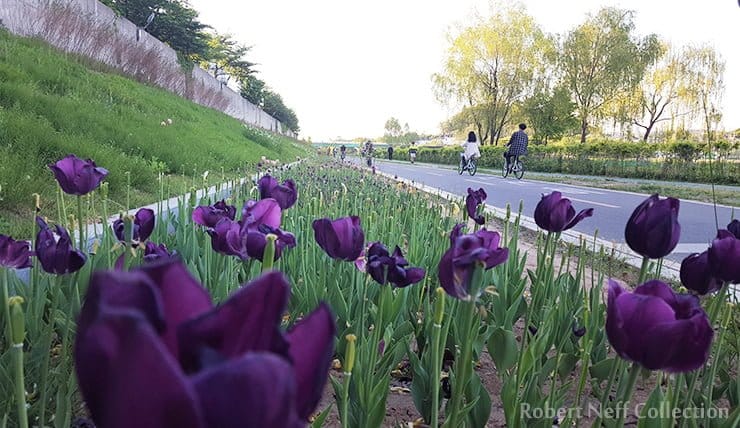
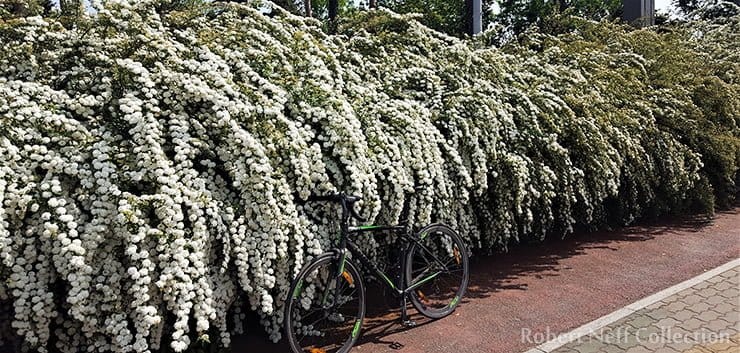
One of the great things about living in Seoul is the city government’s dedication to planting flower gardens throughout the city. Flowers bloom along the bike lanes in the spring of 2019. Robert Neff Collection

One of the great things about living in Seoul is the city government’s dedication to planting flower gardens throughout the city. Flowers bloom along the bike lanes in the spring of 2019. Robert Neff Collection

Lillias Underwood ― who arrived in Korea in the mid-1880s and, for a time, served as the Korean queen’s Western physician ― was not shy in her writing, describing her good and bad impressions of Korea. She wrote: “Korea is glorious … the country fairly revels in blossom beauty in May and June … [and] all the environs of Seoul are sweet with the exquisite fruit blossoms, peaches, apricots, plums, cherries and pears.” She went on to add, “The hills are all ablush with rhododendrons and a dear little eglantine with the daintiest perfume riots all along the roads and fences.” One of her favourite flowers was the “virginal white honeysuckle” that grew on the slopes of Namhansan in the spring.

garden odors
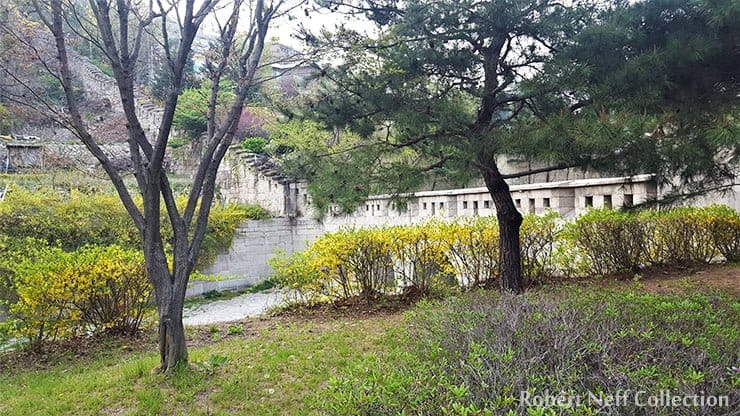
Part of the city wall around Seoul in the spring of 2020. Robert Neff Collection

To sell lilies of the valley.

Apparently, some young Korean entrepreneurs realized money could be made through the foreigners’ appreciation for wildflowers. In 1899, the Korean Repository (an English-language magazine published in Seoul) wrote:

“Lads with lilies of the valley for sale are visiting houses of foreigners. It has been suggested that as these beautiful flowers when transplanted rarely, if ever, grow foreigners [should] discourage these boys by not purchasing.”

Many ― if not most ― Western residents in Seoul cultivated their own gardens. Of course, vegetable and fruit gardens were essential as they provided the foreign community with most of their needs. In 1897, nearly 500 quarts (473 litres) of strawberries were harvested from the gardens in Jemulpo. General William McEntire Dye ― the American advisor to the Korean military ― had a vast orchard in Seoul in which he grew Bartlett pears, apples, cherries and other fruits.

Flower gardens were also essential as they were visually and fragrantly pleasing and adorned with celebrations such as weddings and christenings, and helped lift the hearts of the bereaved in the all-too-common funerals of the late 19th century.

Lillias described her garden as:

“It was lovely nearly all the year-round. First of all, in the early spring were masses of yellow forsythia, then violets, and some of the first fruit blossoms, then flowering almonds and white lilacs, wisterias, fluffy greenish-white snowballs, and two great bushes on either side of the front door of yellow roses that recalled grandmother’s garden in dear America. In June came the roses in the greatest hurry to be seen, and, well, after that nobody could think of anything else. There was a whole hedge of damask rose bushes; they were cut every day by [the] hundreds, every bowl, jar and vase in the house crammed with them, they were sent to all the neighbours, yet still, they kept blossoming on and on never tiring, and the family could never keep up with them.”

Of course, with such a cornucopia of blossoms, there were great swarms of bees. “Such a humming you could hardly hear yourself think.”

Nice odor in Korean small gardens.

The foreigners were not the only ones cultivating gardens. Peppered here and there in the correspondences home and magazine and newspaper articles are references to Koreans cultivating small gardens wherever they could find space. Sometimes these Korean gardeners ran afoul of narrow-minded bureaucrats as evidenced by this article that appeared in the local paper in 1897:

“An enterprising man named Tai Duk-yep of this city has constructed a pretty garden in his compound, displaying horticultural skill and the art of landscape gardening. He admits visitors to his garden and charges them a few cents admission fees, which, he thought, was proper and lawful business. But to his surprise, the Assistant Chief of the Police Department ordered him yesterday to stop the business on the ground that it is injurious to the pockets of the people.”

Garden odor demands money and work.

Cultivating gardens was not easy. It required a lot of work and money. Many of the flowers and bushes were purchased from the United States and Europe but this tended to be rather risky. Sometimes the seeds were lost or stolen en route ― John Sill (the American minister to Korea) had a box of seeds stolen, along with some cigars, while they were being transported from Jemulpo to Seoul. He offered a reward of ten dollars (a princely sum of money) but the cigar-smoking thief was never apprehended.

Sometimes, when the seeds, bulbs and seedlings arrived, they were rotten or dead ― a waste of time and money. A couple of Japanese horticulturists realized that money could be made if they provided seeds and plants quickly ― and with a guarantee ― from Seoul. The competition between these horticulturists was fierce and they duelled one another not with a sword but with the local English language newspaper, The Independent.

garden odors
A tsunami of blossoms along the bike lane in 2019. Robert Neff Collection

On December 15, 1896, The Independent, reported in its local items column:

“The Japanese horticulturist, Mr Takahashi is desirous of obtaining orders for flowers, fancy trees and construction of gardens from the foreigners in Seoul. He guarantees first-class work.” While it was not an advertisement per se, it did provoke his rival.

Four months later, K. Yamashita took out an ad in the paper in which he advertised his selection of “fancy trees, either flower or fruit trees” that would be delivered as soon as the order was received. He also offered a guarantee: “In case the trees should not thrive they will be replaced without further charge.” He also offered to construct fancy gardens and flower beds for a low price and noted for reference that he was the “constructor of gardens for the French Legation and Japanese Consulate of this city.”

Y. Takahashi retaliated.

Two weeks later, Y. Takahashi retaliated and not only advertised “various kinds of fancy trees, fruit trees and shrubs and flowers will be supplied upon receiving an order,” with moderate prices but also declared that he was an “expert agriculturist and horticulturist.”

A year later both upped the stakes when Yamashita advertised himself as being “the only expert florist and landscape gardener in Seoul.” He offered “25,000 fruit, flower and shade trees have been imported from Japan” and the “most complete collection of rare and beautiful trees in his gardens.”

Takahashi responded by citing his own impressive background in horticulture: “member of the Japanese Horticultural Society and associate of the Imperial Agricultural Society.” He went on to state: “I have a number of beautiful shade trees, fruit trees, shrubs and flowering plants in my garden for my customers. I will plant them for you and guarantee that they will give you perfect satisfaction.”

What became of this rivalry is unclear as the newspaper ceased to publish regularly after December 31, 1898. In all likelihood, they continued to battle with one another and all-new interlopers for a great many years ― the peacefulness of their livelihood interrupted only by their competitiveness.

My appreciation to Diane Nars for her invaluable assistance and the use of her images.


Robert Neff has authored and co-authored several books including, Letters from Joseon, Korea Through Western Eyes and Brief Encounters. Robert D. Neff is a freelance writer and historical researcher specializing in Korean history during the late 19th and early 20th centuries. Asia Society Korea’s Matthew Fennell caught up with him to discuss this new release. interview

You can follow Robert on facebook

good on boats – To Jangbong-do.

By Hugo J. Smal

Traveling to Jangbong-do.

I am Good at boats?  I stand with my back against the deckhouse. The deck goes up and down. It is nice to let my body become one with the elements. I do not make that move. It is the ship that carries me with the eternal course of the water.
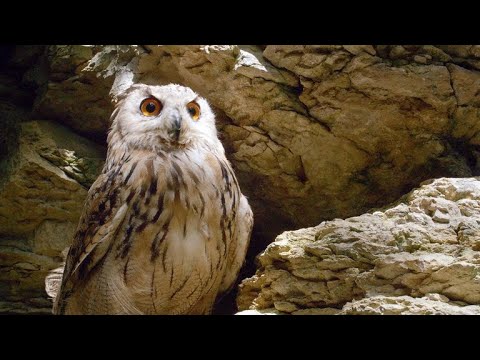
My body is broken. My muscles seem to resist my relaxed hanging. With the ferry, we came back from Jangbong-do, an island north of Incheon, the big airport in South Korea. We went looking for the Eurasian Eagle-Owl. It is a beast with a wingspan of up to two meters. They hunt foxes and small deer that they eat on the ground. It had to be a big spectacle. And now I feel that I am good on boats.

better on boats
Kim Young Soo climbs as if he is walking on a bike path.

Frightening steps.

It turned out to be a frightening one. Normally you should be able to walk along the narrow beach to the high cliffs where the bird is nesting. But it was high tide. The waves hit the rocks and just above that Kim Young Soo climbs as if he is walking on a bike path. Kim Jay Ho and I follow cautiously.

It is not high but every step is a choice. Which stone is sturdy enough? Which path do I choose? Slowly I struggle. I have no eye for the environment, only for the stones.

It is not high but every step is a choice. Suseok .

Good on boots, but on stones?

 That weird habit of collecting stones. Every stone has its own mind. I absorb them: the structure, the form. Then I put my foot on it. Would I recognize that stone on the way back? Would I choose the same path?

grat on boats
Kim Young Soo climbs up a bit but he has to disappoint us.

Eventually, we search the rocks for the birds. They are not there. Probably on the hunt, looking for meat for the young ones who are hidden somewhere. Kim Young Soo climbs up a bit but he has to disappoint us.

On the way back Kim Jay Ho stretches an muscle. We want to help him up. He proudly rejects it. At a fish restaurant, we eat sublime sashimi, of course with a glass of soju.

I am on the wrong side of the deckhouse. The wind whistles around my head, but in the corner, it is just alright. I enjoy the view. The pine-covered islands, the green-blue sea. The wind causes Dutch foam heads and my body rests against the deckhouse.

Do not explain or apologize, just be good on boats.

A young boy comes to me and offers me some chips. With a bow, I take it and put it in my mouth. From a distance he keeps looking at me: open, in my eyes, deep into my soul. He points to my cigarette, makes a disapproving gesture and says “Please?” I bow gratefully for his care. It’s too bad that I can not explain or apologize. He disappears with his friends below decks.

I am alone. Kim and Kim are sleeping in the car. Maybe they are not that good on boats. Separated from the deckhouse. My camera against my stomach. I stand firm and feel one with the ship. I do not fall despite the strong swell and am not forced to take steps. The sea legs, obtained in my youth, are still working. The wind pulls and pushes my body. I do not give up. Mindful, I am one with the environment.

His flight, my stand!

I go deep into my soul and feel good on boats.

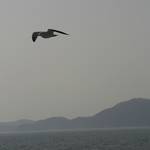
A seagull is approaching me up to half a meter. Hanging in the wind the animal looks at me with its bright yellow eyes. Deep into my soul. I allow it with a slight bend. There is nothing to explain, no apology to make.

My mind is empty. I no longer feel my body.  My muscles are calm. I hang in the wind like the gull. His flight, my stand, together, for a few minutes one. With a scream, he shoots away. Dives, with his mates, in the stern waves for fish. I stay. Alone.

good on boats
Cham Sung Dan. Turtle Island.

An older woman comes to me.

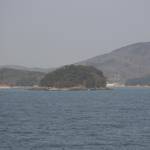
Points to the turtle island (Cham Sung Dan) and sticks her thumb up. She laughs. From this island, the arrow was fired with which the World Championship soccer was opened. A turtle is strong. See its round shield. You can build a house on that.

The woman slaps some dirt from my sleeves. How do I tell her about the climb, about the birds that were not there? I make a respectful bow. She says: “Americano” “Annia, annia, Holland”, I answer. She does not understand. “Hiddén-gûh“, I try. The granny laughs points back to the island and again, even more enthusiastically, raises her thumb. We bow and she walks away. 

Yes, I’m good on boats. The sea overwhelms my mind. The wind takes possession of me and my spirit dances on the stamping of the engines. Yes, I feel good at boats.

About Suseok: FB-Page     About Korea: FB-page  Featured image

About the Goyang Koi farm: on this site

youtube placeholder image