The poems of The Red Lamp began in Rotterdam, 1985. Stripped lines, high temperature, no ornament. Each appears in the original Dutch beside its English translation — bare testimony rendered faithfully.
Language policy: poems are shown in the original Dutch with a precise English translation; stories are published in English only.
Start here
Existence 1 (1985) — the opening fragment: survival, need, and a curse hurled at a devouring world.
The Red Lamp began as a small bundle in Rotterdam, 1985. No decoration, no detour: short lines that breathe like steel under pressure. The city was grey, the Maas drew cold through concrete, and indoors one searched for warmth in another. The lamp on the desk gave red light but no comfort; it marked a boundary. Whoever came closer had to withstand fire.
The poems that emerged were not written with posterity in mind. They were not meant to be quoted, not composed for literature. They are field notes, registrations of a state of mind at a time when loneliness bit harder than hope. Yet they stand here again, nearly forty years later: Dutch beside English, sparse beside carefully translated. Their task is unchanged — to testify, to press forward, to hold speech in place when silence would be safer.
The mood of those years is still present in the rhythm: abrupt, economical, refusing to wander. Rotterdam in the mid-1980s was a place of hard labour, scarce work, and unspoken distances. The poems mirror that climate. They are not polished stanzas but compressed fragments, written quickly and under pressure, with the knowledge that tomorrow might demand a different register altogether. Reading them now is to revisit that tension: how words can resist forgetting, even when memory itself resists clarity.
Between Rotterdam and now
Placed alongside the later stories, these poems form the spine of a larger project. Where the stories stretch out, crossing geographies and cultures, the poems fold inward. They compress experience into a few lines, shaping absence as much as presence. That contrast is deliberate. The Red Lamp was never about producing a single book of poems, but about setting a tone, choosing a discipline, and allowing that practice to inform everything that came after.
Each poem is therefore more than an isolated fragment. It is part of an economy of language that continues into essays on Korea, reflections on Buddhism, and narrative pieces on travel and encounter. The voice has aged, the settings have changed, but the principle remains: speak only what carries weight, and leave silence intact where words would betray.
Closing
Today these poems stand in a wider context. They belong not only to a Rotterdam room in the mid-1980s, but to a body of work that has since expanded into stories, essays, and reflections from Korea. Where the early lines exposed the self, the later texts turn toward encounter and construction. The line, however, is unbroken: the same economy of words, the same refusal of ornament, the same steady aim at what matters.
This page gathers the poems of The Red Lamp in their original sharpness and shows them beside their English translation. They are not reports of happiness but of endurance. Not memories to dream away with, but to stay awake to. They belong to a larger project that sets its heart on truth, connection, and compassion. In that light the red lamp still burns — not as relic, but as standard.
Readers are invited to explore the poems one by one, not as nostalgic artefacts but as living testimony. They may appear minimal, but each line carries the weight of its time and the trace of a vow: to remain honest, to resist ornament, and to continue speaking even when silence tempts. In that vow lies the continuity of the work — from Rotterdam to Korea, from the solitary desk to the wider world, always with his heart towards …
At a bare desk under a red shade, a vow takes shape: not fame, but a city where people can live honestly and free—and words as stones toward it.
The brown wood of the desk gives calm. My hands lie awkward beside the white paper. The pens are picked. Everything is ready for a compelling story or a kink of thought no one can follow. The A4 sheets do not frighten me.
That hand only has to pick up the pen. Put the pen to the paper. Words will appear. A story will form. Dim light pours from the red lamp, pressing shadows into the wood. I feel its warmth on my face. It shines as far as the mind.
I take the lamp in both hands and set it so the beam falls exactly in the middle of the paper. Not easy. It is a metal thing: two hinged tubes, a trapezoid shade. All the screws are stripped so the contraption keeps sinking, almost invisibly, until the cap touches brown wood or white paper. Good thing it wasn’t expensive.
I roll a cigarette. The matchbox is empty; the ashtray is not. Damn, again not prepared. This way nothing good will reach the paper. Why do this at all—stake your life on calling yourself a writer? There is hardly a sillier trick. I sigh, get up for matches, and dump the ash into the bucket on the balcony. The wind blows the ash back in my face. Why, as an ex-sailor, don’t I mind the wind?
My thoughts push me onto the deck of the training ship *Prinses Irene*, anchored on the Veerse Meer. One of those mist-still mornings that only exist on water. Sounds arrive hollow, as if from another room in the world. I drop the bucket on its line over the side, pull it up, and throw the contents across the deck—against the wind. From the wheelhouse the captain laughs, hard and mocking. I stand there drenched, staring at the flag.
Life was uncomplicated. I was not a writer yet. My hands return to the desktop. Smoke drifts through the cone of light. The lamp has already sunk a few centimeters.
Back then I did not feel required to do anything about the world’s wrongs. Now it is the only way to justify my life. Years ago I wrote a small poem, a trifle—not so bad—and found that it was a way to speak, a way to be honest. The idea of being a writer took hold. I declared myself one to anyone I met and started to write for real.
Now being a writer is not important. It is not the end; it lies further on. Somewhere in the corners of my mind there is a book that will change things. In that book is a city where people can live honestly and free. That is my end.
My hands tremble a little. A bead of sweat falls onto the white paper. Fear-sweat? There is so much to learn and to lay aside. So much still to live through.
For the sake of that book and that city I sit at this desk. Not to write it now—the knowledge is not large enough. Everything thought or written now is practice for that book. Stones for the city.
My hand takes the pen. The lamp has sunk to five centimeters above the paper. I should have spent more money on it. Why is it that I always do things halfway? Well then—back then the lamp hung crooked.
I get up and go to the bookcase. I take Sartre’s *The Age of Reason*. *The Roads to Freedom*—a road toward my book. I set the arm right again and know that nothing will appear on the paper today.
There is a second altar in the main hall of Bogwangsa. It houses a group of five major Buddhist icons:
Five beings in stillness. Five manifestations of being. In the center, Seokgamoni-bul holds the earth with a single touch. Around him, compassion, healing, insight, and radiant light take form. This altar is not a display—it is a mirror.
At the center sits Shakyamuni Buddha (석가모니불, Seokgamoni-bul), the historical Buddha Siddhartha Gautama, who attained enlightenment and shared the Dharma. He is seated in the Bhumisparsha Mudra—his right hand gently touches the earth, a gesture that symbolizes his awakening under the Bodhi tree. His face is calm, his eyes half-closed in deep meditation.
To his left sits Amitabha Buddha (아미타불, Amita-bul), the Buddha of Infinite Light who rules over the Western Pure Land (Sukhavati). His right hand is raised in the Vitarka Mudra, a gesture of teaching and wisdom.
A compelling example of the Amitabha Triad in Korean Buddhist art is preserved in the Cleveland Museum of Art.
Healing and Ignorance: A Moment Before Shakyamuni Buddha
To the right of Shakyamuni is Medicine Buddha (약사여래, Yaksa Yeorae), also known as Bhaisajyaguru—a figure of healing and spiritual wellness. He is venerated in Mahayana Buddhism as a protector against both physical and mental suffering. Often depicted with a medicine pot or healing fruit in his hand, he symbolizes the promise to cure all beings of the ailments that arise from ignorance.
My state of mind makes me realize that Medicine Buddha is not merely a healing guide, but a mirror—an icon that reveals suffering, including my own, as a result of ignorance. Not just mental, but also physical. An ignorance that is not guilty, but formative. And perhaps healing begins there: in recognizing what I do not yet understand.
A notable example of a Korean Medicine Buddha can be found in the collection of the Museum of Fine Arts, Boston.
Eyes half closed, as if watching both this world and the next. The right hand calls the earth to witness. The left offers no command—only openness. I did not speak, but he heard me.
On the outer left side stands Avalokiteshvara (관세음보살, Gwanseum-bosal), the Bodhisattva of Compassion—one of the most revered figures in Mahayana Buddhism, known for listening to the cries of all sentient beings. Avalokiteshvara can appear in various forms and genders, and is often depicted holding a lotus or a flask of holy water, radiating peaceful grace.
The Metropolitan Museum of Art holds a renowned 14th-century depiction of Water-Moon Avalokiteshvara, embodying the grace and serenity of this bodhisattva.
On the far right: Mahasthamaprapta (대세지보살, Daeseji-bosal), the Bodhisattva of Great Wisdom. A key figure in the Amitabha Triad, he embodies the spiritual strength and insight that lead toward liberation. Where Avalokiteshvara expresses compassion, Mahasthamaprapta represents the power of awareness and wisdom. He is often shown holding a lotus or a vessel, calm and resolute.
Between Wisdom and Compassion: Bogwangsa’s Fivefold Vision
I sat here, unsure if I belonged. But the silence did not ask for credentials. Only presence. Only breath. A place for stillness, no matter who you are.
The icons deeply move me. Their golden bodies, contemplative faces, and the exuberance of color seem to take hold of my soul. I don’t know if it is allowed, but I sit down in front of the altar and try to become one with my surroundings. I smell the rising smoke from the incense burners—like prayers drifting toward the spiritual world.
No… I’m not sure if I am allowed to sit there, or if it’s even presumptuous of me. But I do it with respect and dedication to the Buddhas and bodhisattvas. Jijang may not be present on this altar, but perhaps he rides on the curling smoke.
As part of the larger narrative “The Jijang Fractal,” this exploration weaves together place, memory, and spiritual inquiry. 👉 The Jijang Fractal – book hub
Murals, Memory, and Dialogue
The Murals Behind Shakyamuni: Visions of Bogwangsa
Behind the figures is a vivid thangka-like mural. I believe it shows Shakyamuni Buddha surrounded by bodhisattvas and celestial beings.
I say believe, because as someone raised in the Catholic tradition, distinguishing these figures is not always easy. Where I make mistakes, I hope to be gently corrected—and forgiven.
The central figure appears to be an exalted form of Shakyamuni, seated within a golden halo. Around him are disciples, bodhisattvas, and guardian deities, symbolic of his teachings. The painting is rendered in bright reds, blues, and golds—hallmarks of Korean Buddhist art.
The boy from Rotterdam still feels the pull of Catholic iconography. I remember watching the smoke rise as the Requiem by Verdi filled the church. I was part of the boys’ choir then—allowed to sing along, even if I barely understood what we sang.
And yet, I remember the moment my heart hesitated: my fingers tapping my chest as I whispered, “Lord, I am not worthy that you should enter under my roof, but only say the word and I shall be healed.”
Here, in the hall of Siddhartha, I realize: while Jesus invites the heart to open, the Buddha invites the mind to become still. They do not cancel each other out.
They coexist—just like the icons on this mural.
Where the Ceiling Whispers Prayer
Above the altar hang lotus lanterns (Yeondeung, 연등), each bearing a name or prayer. They symbolize enlightenment and spiritual protection. In the background I discern rows of small golden Buddha statues—likely dedicated by pilgrims or families in memory of deceased loved ones.
When the Icons Mirror Us: Insight at Bogwangsa
From this angle, I see their profiles—thoughtful, grounded, listening. Their hands speak, though they never move. What would I say, if I could answer them?From the side, they look like a river of gold. Each one turned just slightly, as if in conversation with the other. This is not hierarchy. It’s harmony.
In that silence, a dream returns.
Once again, I find myself seated in the plaza in Seoul, between two giants of Korean history: Admiral Yi Sun-sin, who protected the people with his sword, and King Sejong, who enlightened them with his words. One stands, unwavering. The other sits, immersed in thought. Between them, on a simple mat, Jijang-bosal and Gwanseum-bosal share a cup of tea.
And so the conversation begins.
Jijang-bosal takes a sip and looks at Gwanseum-bosal.
“You listen to the cries of those who suffer in this world. I guide those who seek their way beyond it. And still, their sorrows return. How can we help them let go?”
Gwanseum-bosal smiles and gently turns her teacup.
“Suffering is like this tea. Warm, bitter, but fleeting. The taste does not remain. Yet many cling to it, as if it were eternal.”
Jijang-bosal nods.
“I show them the path, but few dare to walk it. They fear what they must leave behind—or what awaits them. But in truth…” Gwanseum-bosal finishes his thought: “…there is nothing to hold on to.” Jijang-bosal watches the steam rise from his cup. “Exactly. Just as tea was once water and will soon evaporate again, so are we always in motion. Suffering is not something to carry—but to let flow.”
Gwanseum-bosal lifts her cup.
“And when they realize that, there will be nothing left to release.” The tea is gone. The cups are placed down. No longer full—but not empty either.
The city fades. The dream dissolves. What remains is the scent of incense, the shadow of Jijang, and the realization that none of the icons here stand alone. They mirror each other. They mirror us.
I look once more at the altar. Perhaps it’s not what I’ve seen that matters, but what it has stirred within me. Just as the Jijang fractal reveals itself when attention meets surrender, insight too does not grow from certainty, but from stillness.
But this temple holds more layers. Beyond this hall lie other spaces, other voices, other rituals. The story does not end here. It deepens.
I rise. The air is still. My footsteps echo softly on the stone floor, as if the temple itself says: you’re not finished yet.
As I leave the hall, the echo of the icons still resonates—not as doctrine, but as presence. They are not answers, but companions. And though this altar offered a deep and quiet wisdom, I know that Bogwangsa has not yet spoken its last.
There are other halls to enter. Other guardians to meet. Other silences to sit with.
In the next part of this journey, I return to the temple grounds—with eyes attuned to detail, and a heart still learning how to bow.
I’ve done my utmost to describe the icons, halls, and rituals of Bogwangsa with care and accuracy. Still, any misidentifications or symbolic misreadings are entirely my own. Should you spot any such errors, your insight is warmly welcome. But above all, I hope what resonates is the spirit of the story—the atmosphere it conjures, the openness it invites, and the sincerity with which it was written.
AI writing vs human creativity: from battle cry to partnership
AI writing vs human creativity is no longer just a debate but a working method. A few years ago we framed it as a duel—robots versus authors. Today I use AI as a useful assistant that sharpens prose, flags errors, and frees attention for the real work: meaning, memory, rhythm. The human side—doubt, experience, imagination—remains indispensable. This piece shows, in practice, how AI writing vs human creativity becomes collaboration without losing a writer’s voice.
My path through AI writing vs human creativity
My little creative corner.
When AI entered the literary domain, I buried myself in my autobiographical thriller The Jijang Fractal Not because a book makes me rich—few authors live on royalties—but because a life wants to be told. If anyone can generate text with a click, what is a story worth? The answer for me: the personal—fear, courage, an awkward silence—cannot be lived by a machine on my behalf. That’s the human half of AI writing vs human creativity.
Speed versus depth
Take something ordinary: an article about water quality. I read, compare sources, draft notes; two days later a first sentence forms. Another day of cutting and breathing—and the story lands. AI can produce a tidy outline in seconds. But the human delay—the search for tone, the friction of a paragraph—that’s depth. Here the limit of AI writing vs human creativity appears: a model can structure, not live. It doesn’t feel a cold wind on deck; it doesn’t carry thirst that feeds a metaphor.
“We are the freeloaders, the last people who are not servants, with Baal and Karamazov in our midst. What is a poem worth: four shirts, a loaf of bread, half a cow? We do not make goods but gifts.”
That line sticks. A story like To Jangbong-do: Good at Boats grows out of lived time: the smell of salt, a smoke shared with a boy, the thud of the hull. Algorithms can mimic such a scene, but not carry it. My non-journalistic pieces therefore remain gifts—free to take on Mantifang. In the conversation on AI writing vs human creativity, that is my anchor: AI can do a lot, but it cannot give what it never experienced.
Resistance and embrace: The Jijang Fractal
The Jijang Fractal is my resistance—not against technology, but against the idea that technology can replay my life. At the same time I embrace AI as an editor. I use ChatGPT as a proofreader: it watches coherence, points at sloppiness, and removes noise from sentences. It doesn’t argue; it advises. I decide. In this balance, AI writing vs human creativity stays honest: the memoir remains human, the polishing may be technical.
AI helps with fine tuning
For a non-native English writer that help is gold. AI notices what I overlook—but it doesn’t feel what I feel. The core stays intact: I write, AI assists. Readers should recognize this division of roles: AI writing vs human creativity works when the machine assists and the human makes meaning.
Cannot: carry a childhood memory; taste shame; choose a moral stance; pace a silence in a paragraph; make a scene tremble with lived time.
That distinction isn’t a threat; it’s a relief. It means I can spend energy on story, rhythm, composition—and ask the assistant to handle the heavy technical lifting. Outsource everything to AI and you get text with no origin. Refuse everything and you miss sharp tools. Between those extremes grows the craft that AI writing vs human creativity now demands.
Publishing in chapters
I publish The Jijang Fractal chapter by chapter on Mantifang. Each part appears when it’s ready: raw enough to live, careful enough to last. Readers return, respond, and move along with me. AI helps with this cadence—not by dictating sentences, but by removing restlessness. Progress is visible; the voice stays my own. This is my practical answer to AI writing vs human creativity: iterative writing with a sober assistant at my elbow.
AI writing vs human creativity: where we are now
The question “who wins?” is outdated. A better one is: how do we work together? I trust experience, observation, and ethics; I use AI for speed, consistency, and suggestions. Algorithms propel; the author steers. Literature remains a human practice—with modern tools. If you read my work—from poems to The Jijang Fractal —you may notice that an assistant helped. But the pulse of the text, that slow thinking heart, beats on its own.
Conclusion: choose your role, choose your tools
If there’s one lesson from AI writing vs human creativity it is this: don’t let the tool become the author. Use AI without losing your voice. Choose your tempo, your tone, your truth—and employ technology where it makes you sharper. That’s what I do, and I invite you to read along, respond, and keep the conversation open. Writing is not a race against machines; it is the sharing of life—with good tools within reach.
Will AI writers eventually be exposed?
Most AI-generated writing does not fail because it is incorrect. It fails
because it lacks origin. Over time, texts without lived reference become
interchangeable: consistent, coherent, and increasingly anonymous.
This does not mean that writers who use AI will disappear. It means that
writing without presence, without place, and without responsibility
gradually loses credibility. The question shifts from “Is this well written?”
to “Where does this come from?”
No. Originality is not determined by the tools used, but by the source of
experience. When AI assists with editing or structure while the writer
remains responsible for meaning, voice, and presence, originality is preserved.
Can AI ever replace human writers?
AI can reproduce patterns, styles, and arguments, but it cannot replace
lived experience. Writing that matters over time depends on place, memory,
moral choice, and responsibility — all of which remain human.
How should writers work with AI today?
As with any tool: deliberately. AI is effective for polishing, checking,
and accelerating technical tasks. The writer decides what is said, why it
matters, and when silence is more truthful than explanation.
This chapter moves between river path, shared table, hierarchy, and sudden rupture. It does not define kibun and nunchi in abstract first; it lets them appear in gesture, silence, waiting, laughter, and misrecognition. Rural edges of Goyang Si mirror remembered Rotterdam outskirts, while social codes unfold in food, drink, bows, and role. The text circles rather than concludes, returning to respect, face, and group rhythm from different angles: farm, restaurant, memory, anecdote, and interruption. What seems incidental becomes structural. What seems convivial becomes diagnostic. The chapter’s movement holds both warmth and unease, ending in a question of interpretation rather than certainty. Read it as lived philosophy in scene-form: relational, layered, and sometimes dissonant.
As I softly chant ‘Na-mu Ji-jang Bul,’ I let the words guide my steps along Baedagol-gil, the path running alongside the Seongsaheon River. The river, now a small stream, burbles quietly below me, its sound almost drowned out by the symphony of Cicadas. Each step feels like a journey between worlds, much like the river, which swells during the monsoon only to retreat into a quiet stream under the summer sun.
Does enviroment has kibun or nunchi?
Aerial View of Baedagol-gil and Surrounding Areas in Goyang Si
In the distance, I can see tall new flats. Kim Young Soo lives in one of them with his wife and two sons. On the riverside, it is rural and dark. There are a lot of small farms in this part of Goyang Si. In some of the arched greenhouses, there is light. I hear a mother talking soothingly to her baby.
A little further on, the smell of a barbecue. Jin-do growls softly, but when I speak to him reassuringly, he shakes his chain violently, wagging his tail. They can be friendly dogs. I am aware. He doesn’t speak Dutch. I don’t speak Korean.
I feel at home among the gardens. The rural atmosphere with the hum of the big city in the distance reminds me of Rotterdam. It feels like the village ‘Tuindorp Vreewijk‘ in the seventies. This garden village was created in the nineteen twenty’s for the farmers from the Southern Islands of the Netherlands. They came to earn their living in the big city. The gardens have to give the former farmers a sense of home. At that time, it was still on the southern outskirts of Rotterdam. Now ‘Tuindorp Vreewijk’ is enclosed by it.
“Tuindorp Vreewijk” in the 1960s was rural and peaceful.
Things go a bit faster in Goyang Si. There is no question of elevating the people. The rolled-up sleeves mentality, ‘we can do’ or maybe even ‘we must do,’ is leading. After the war, the Americans supported the Europeans with their Marshall Plan. The Koreans had to do most of it by themselves. Just a little help from the United Nations! They did well!
People, Rank, and Group Field
Kibun or Nuchi for the people.
I slowly walk onto the Goyang Koi farm. It is there on the grounds of the Baedagol theme park, where I live during my visits. We ate beef bulgogi, marinated beef from the barbecue. The restaurant is a fifteen-minute walk from the Koi farm. On the window, I could only read the word ‘Saramgehe,’ which means ‘barbecue for the people.’ I couldn’t decipher Hangul, the words in the Korean alphabet. Fortunately, my interpreter Jay (Kim Jay Ho) and the people of the Koi farm were waiting with me outside.
Traveling to learn kibun or nunchi.
There must have been ten of us. Some lit a cigarette. I received a cup of coffee; part of the restaurant service. Mr. Han, always animated, was telling a story with a loud voice, busily gesticulating. Han didn’t have to try hard to be louder than everyone else, but the story was long. Jay, struggling to keep up, eventually gave up on translating simultaneously.
Kibun or Nunchi: A Group Effort
My friends were already laughing at the next joke when the restaurant owner joined in, chatting noisily. His story seemed very interesting, but Jay had given up on translating. The group had absorbed him, and I didn’t feel left out. They were hard workers, and now they could finally let loose. I just went along for the ride.
Saramgehe, love for the people.
Mr. Han’s wife doesn’t mind at all when he eats out with colleagues, they told me. It saves money because the boss pays, and it spares her the trouble of deciding what to cook. In Korea, where marriages are often arranged, things don’t always turn out perfect. But that doesn’t have to be a disaster. The woman usually has her hands full raising the children, while the man’s responsibility is to bring home the money.
In this strongly Confucian society, women are traditionally expected to be obedient to their husbands. But, take it from me, she’s usually the one in charge of the house, the children, and, of course, the wallet.
It wasn’t always this way. There was a time when mothers had to ask for money for household expenses every day. As Korea’s economy grew, so did Eomeoni’s daily budget. Eventually, men started handing over their entire salary and asking for pocket money themselves. Confucian? Not really, but it certainly cut down on the nagging.
Working friends, kibun or nunchi specialists!
We had been waiting for about fifteen minutes, and the group was getting louder. There were playful blows on shoulders and a lot of laughter. Suddenly, the atmosphere shifted. Kim Young Soo’s SsangYong turned into the parking lot. He was on the phone, and the group waited respectfully. He is their boss and, at that moment, the most important person. The wait wasn’t about submission; it was about maintaining respect. After all, keeping Kim Young Soo’s Kibun optimal was crucial.
Kibun, Nunchi, and Embodied Etiquette
kibun or nunchi: Not Easy to Master
Let me explain the concept of kibun. In Confucian thinking, a man’s pride and face are crucial. Losing either is seen as deeply negative. Additionally, the spirit and feelings of a person are significant—hurting either can be damaging to both the mind and body. The workers were careful not to harm the boss’s kibun. After all, he was the one providing the meat on the barbecue and the Soju in the glass.
Everyone has kibun. Nunchi, on the other hand, is an extremely subtle skill perfected by Koreans to avoid damaging that kibun. It involves scanning body language, facial expressions, and mood to navigate social interactions smoothly. Even in tough situations, nunchi ensures that no one’s kibun is left damaged within the group. Every Korean is, almost subconsciously, a kibun or nunchi specialist.
Of course, there is always a hierarchy! But the top dog can only exist within a pack, making him more of a primus inter pares—first among equals. He’s just a little more equal than the others.
Well, Bending Saves kibun and nunchi
Kim Young Soo stepped out of the car and quickly bowed his head. The group followed suit, bowing in unison. This was not a formal occasion, so their bows were short, with a slight bend at the chest and head, hands positioned in front of the abdomen or by the sides. It’s usually nothing more than that. Just remember to keep your back straight!
When bowing to someone older, you bend a little deeper. If it’s a friend, you might shake hands at the same time. And when a child bows, you don’t stand on ceremony—just bow back, always with kindness.
Sometimes it gets a bit more complicated. For instance, if you need to bow to two people—one being a younger boss and the other an older employee—it would be insulting to the boss if your bow is deeper to the employee. In such cases, status takes precedence over seniority.
Beyond these “everyday” bows, there’s also the big bow. This involves kneeling, bending your arms, and placing your hands on the floor, with your forehead touching the ground. Koreans reserve this type of bow for special occasions, such as weddings, funerals, and Jesa (ancestor rituals). It’s also used when you are deeply ashamed or extremely grateful.
Disruption: Face, Misreading, and Repair
A Little Incident at a Koi Farm
During one of my early travels in Korea, I visited a koi farm where only very sick fish swam in a large indoor pond. I noticed large wounds on the skin of some of the fish, while others gasped for breath at the bottom. Many had lost their protective mucus layer entirely.
I hate seeing animals suffer. Do fish has kibun or nunchi.
The owner noticed the concern on my face—I hate seeing animals suffer. Without much explanation, he quickly whisked me away to a restaurant, accompanied by a translator. The ride was silent, and I was placed in the back of the car. The breeder’s employees followed us in a van.
Over dinner, I urged the translator to discuss the sick fish. A long conversation in Korean followed, though it didn’t seem to be about anything serious. When I pressed the issue again, the translator flatly refused to engage further. Despite my concern, the meal was good, and the Soju kept the topic off the table.
On the way back, I was seated in the front, while the translator sat quietly in the back. The employees had disappeared, and the atmosphere was tense. Upon arrival at the breeder’s office, I was led to his luxurious chair, where he poured me a glass of whiskey. The translator remained silent, staring at the floor. Suddenly, the breeder knelt down and performed deep bows, tears streaming down his face.
He started to apologize profusely, sobbing loudly. He regretted showing me the pond with the sick fish, believing he had severely damaged my Kibun. I felt uncomfortable and unsure of how to respond. Rather than leaving him in his misery, I helped him up and gave him a big hug.
His tears stopped, and the three of us sat down together. Of course, I offered him his chair back. He tried to pour me some whiskey, but I politely requested Soju instead, which seemed to lift his spirits—choosing the Korean drink over the import. He then promised to conduct an in-depth study of water quality and fish diseases.
I had resolved a deeply Korean problem in a very European way. Unbeknownst to me, the man had suffered a serious loss of face in front of his staff, something I hadn’t fully grasped at the time.
A hotel room was arranged for me, and I was invited back to the farm for breakfast the next morning. The employees needed to see that all was well again and that their boss hadn’t failed in the end. To my surprise, I found the pond empty; the fish had been put out of their misery.
Table Rituals, Drinking Codes, and Collective Balance
Elder Helps Younger
Back at the restaurant, Kim Young Soo was also handed a cup of coffee and was soon laughing along with his people. Jay still didn’t have time to translate, but that wasn’t a bad thing. I enjoyed all those happy faces and the energetic atmosphere.
With a nod, Kim Young Soo directed everyone inside. We walked through the crowded restaurant to a long, low table in the corner. Kim Young Soo pointed out where we should sit. Kim Kung, nicknamed “Chinese boy,” was the youngest. When he sat on the floor, he poured the glasses with water.
He’s not really a boy; he’s too old for that, but that’s his role. And he’s not Chinese either. He is from Yeonbyeon (Ch. Yanbian), a Korean Autonomous Prefecture in Jilin Province. The Yalu River forms the southern border with North Korea. To the East, it borders Primorsky Krai in Russia. This area once belonged to one of the Three Kingdoms of Korea during the Goguryeo period (37 BC to 660 AD). Although the Chinese dispute this, the people there still speak Korean. DNA research has also shown more kinship with Koreans than with the Han Chinese.
Because he lost his parents at an early age and had to care for a younger brother, he left for Korea to work in construction. Kim Young Soo saw him working in the rain and icy cold. Feeling sorry for him, he offered him a job at the Goyang Koi farm. Since then, he has had a very loyal and devoted younger friend.
A waitress brought scalding hot wipes so we could clean our faces and hands. Kim Young Soo ordered beef bulgogi, a wide variety of side dishes, and of course several bottles of Soju. He poured my glass first. I held it up with my right hand and supported my wrist with my left. After I knocked it back and took the bottle from him, the waitress looked at me with a smile. I poured Kim Young Soo’s glass. He drank it, and the party could begin.
In Korea, it’s considered inappropriate to pour your own drink, so people serve each other. I poured for those around me, and the drinks flowed quickly. The only way to avoid drinking too much is to leave your glass half full. It took me a few dinners to figure that out. Fortunately, I seem to handle it well in Korea—at least, I think I do.
If you have to wait too long for a refill, you can’t just ask for it right away. Holding your empty glass upside down over your head is often an effective remedy, but be sure it’s completely empty—I’ve seen it go wrong more than once.
Kim Young Soo set the gas grill to the right temperature and placed the meat on it. He broke a pepper and offered it to me. I took a small bite, knowing they can sometimes be incredibly hot. Not even Soju, sugar, or water can help with that kind of heat.
When the meat was ready, I picked up a piece with my chopsticks, placed it on a lettuce leaf, and added some kimchi, a clove of garlic, ginger slices, and black bean sauce. I folded it into a package and popped it into my mouth.
The flavor explosion was beyond anything I could compare. It reminded me of the streets of Insadong, the artists’ district: busy, colorful, dynamic, and above all, filled with an abundance of scents. You don’t just taste Korean food—you experience it!
Noticing the Soju bottles were nearly empty, I pressed a button on the table. A bell rang in the kitchen, and I heard the sound I love so much. The waitresses all responded at once, “Deh!” meaning “We’ve heard you, and we’re coming.” I’ve never encountered a clearer expression of hospitality—it’s all so committed and genuine. However, Kim Kung had already jumped up and grabbed more bottles from the fridge. He drinks Hite beer.
Kibun or Nunchi honoured
The conversations remained animated and I kept an eye on my table mates. Does everyone have a drink and does the meat not burn on the barbecue? The restaurant owner came to me and offered me a plate of Jeju do beef. This meat, which comes from the black breed of cows from Jeju Island, is cut into very thin slices to be eaten raw. The ‘Hwe’ was specially intended for me.
Of course, I gave Kim Young Soo the first slice. After that, I took one myself. It melted on my tongue. The group continued to talk, drink and eat. I felt that I was being watched. I passed the plate Yukhoe. The table mates enjoyed it.
Korea does not have an ‘I’ society like we have in the Netherlands. Confucianism always creates a “We-society”. I don’t know the life of the waitresses at home. Is the husband doing well or not, but I realise that they don’t work for free. I can hardly imagine the great pressure under which Kim Young Soo is. But within the group it is us, and everyone is always host and guest at the same time. The waitresses do their job friendly and with a smile.
Kim Young Soo received a call and he had a short conversation. The waitresses pulls up a table and the employees moved around. A man unknown to me sat down opposite Kim Young Soo. His companions joined the rest. After I was introduced, the man asked me some personal questions. My age, what I do, how many children I have and what brought me to Korea. Jay was an official translator again.
An animated conversation developed between Kim Young Soo and the man and I was served another glass of Soju. The man showed no further interest in me. Was my Kibun okay now that the Koreans were having fun among themselves? I understood. It was a tough day for them.
I took some time for myself and my telephone. Someone named Bae Jong-Ok sent me a large file. The name was unfamiliar to me. Of course, I hesitated for a moment. Never click on files that come from someone you don’t know. But hey, let’s live dangerously. Moreover, a hack cannot cause much damage. My Korean account is not connected to the one in the Netherlands.
Text Within Text: Violence, Silence, and After-Question
No kibun or nunchi did Last
I opened the e-mail, expecting the usual mundane correspondence. Instead, what I found was something dark, something that made my heart skip a beat.
“The wood fire glowed, but its light was feeble against the inferno raging ahead. He fixated on the neatly stacked logs, ignoring the all-consuming hell behind him. He had burned it all down—long before, much earlier.
He tore the charred skin from the rabbit he found on his path. The stench of burnt flesh filled his nostrils, but hunger gnawed at his insides. Normal people would retch. He knew that. But meat is meat, and hunger is hunger. But heart or liver would have been better.
He had laughed, eaten, and drunk with those now perishing in the flames. He could still feel their warmth against his back. The screams reached his ears, but he remained still—helpless, or perhaps unwilling to act. All he craved now was silence.
After consuming a few chunks of meat, he stoppered his canteen and drank until his lungs revolted. Slack junk! There was no oblivion to be found in that. The moisture wouldn’t still his brain. So he decided to move on.
Walk, don’t talk, and forget what cannot be forgotten. He had been on the road for about two years and almost reached his goal. It was only because he had to wait that he stayed in the village. He partied, sang, and danced with whores and sometimes even with those who pretended otherwise. The man knew danger was looming, that his enemies would not give him any rest. The clergy murmured.
He felt guilty because they were innocent “ladies,” innocent “neat” people. The unbelievers saw in him the saviour, and therefore, gladly gave him some warmth. He couldn’t do without that warmth. The task assigned to him was onerous.
Peace, that’s what he wanted—and no bullshit. But, the enemy was unruly and followed him wherever he went. They were like stinking plague-spreading rats. He smelled it when the “neat” ladies took him in their arms and when they spread their legs. The scorching smell of rotting falsehood was poignant to the depths of the lungs. Onward, he ordered himself. Remember your assignment and run.
After a few kilometres, he came to a house. With a kick, the door jumped out of the frame. He was immediately among the people who recoiled in terror.
She recognized him and bowed her head humbly. “It’s just who kicks in the door,” he thought scornfully. “The saviour or the devil, it makes a big difference, doesn’t it?”
As I read the chilling email, a thought crept into my mind—could this be the work of a Gumiho, seeking the ultimate silence? The Gumiho is a creature that feeds on human hearts, driven by an insatiable hunger that no amount of silence can quell. And in its wake, it leaves a trail of empty words and broken Kibun. As I continued to read, the text sent chills down my spine.
It matters a great deal whether the Duke claims his right and opens your daughter to her husband on the wedding night or whether she is corrupted by the rapist in the night. He had done both. Yes, the people bowed their heads in humility.
A woman offered him a drink. Bootleg whiskey burned deep in his throat. He grabbed the woman by the chin and forced her to look at him. Her eyes were dead, without fire. What does it matter? Whore or neat woman? All of them sank into deathly chill or insane sadness.
He took the bottle and walked out. No one would stop him. He must complete his task. A few more kilometres. Walk on! Walk on! Behind him, he heard rustling in the trees. Evil was everywhere.
Suddenly she appeared right in front of him. The screaming witch, with her fiery eyes and sultry body. Evil can feed itself and unashamedly shows its horny drive. It can take what it wants and does not hide just that.
He, the so-called saviour, let his gaze crawl up her legs—strong, unyielding legs. Her hips, firm and ready, spoke of raw power, of lust barely concealed. Her breasts, yes, her breasts were most certainly worth sucking. And her face was so lovely, so damaged now from the empty bottle he slammed right into it. No sense.
He kicked her aside and moved on, ignoring the warbling of the paladins kneeling around her. Hissing, they sprang up, but his sword, now drawn, cut her serfs in half in a giant swing.
A few more kilometres and then he would find his peace. In the distance, the tower loomed in stark contrast against the inky clouds. It flashed and thundered like hell. The earth shook and seemed to resist. His enemy had powerful friends.
A bang, and the tower slid into a slow bow. The atmosphere was filled with hisses and devilish laughter. He slowed his pace. Fear took his breath away. His heart nearly burst.
He knew. The saviour was late and was no longer able to save himself. With that, the hope of mankind was over. The sulphurous friends of the devil surrounded him, danced, drank, and sang to him: “Now you have your peace, now you have silence, the all-killing love, the nagging morality, the goodness so adored, gone, gone…” He recognised the song, his ode, his victory prayer.
And then there was silence. Humanity was silent. Only now and then, a vibrating horny sigh sounded. His black elves huddled submissively against him. They demanded no equality, no satisfaction, no attention. They would only worship him, for he was the rod of power. He got up, looked around, and saw that it was all right. His thousand-times-thousand-year reign had begun. He knew that henceforth, goodness would be repaid with evil and that his evil could not be matched. He was the devil and sought silence.
The goodness had to be silenced forever, the stinking lie exposed.
He had succeeded, and he had celebrated his triumph with whores and “nice” women because it didn’t matter… He had left the doubt behind him and burned his goodness.
And now, walk. Walk in silence towards the looming task. He conjured new enemies because only destruction warmed his heart. And there would always be more enemies—because, in the end, it was always about him.”
The Right Questions
The story didn’t impress me too much at first. One of my table companions, the carpenter, distracted me. Isn’t it strange, this Korean habit of addressing people by their occupation? It suits me well because I’m not great with names. And certainly not after a few glasses of Soju.
The carpenter asked if I was busy with my phone. I looked at him in surprise, then refilled his glass and did another round of Soju.
In retrospect, I should have paid much more attention to the email. At the very least, I should have asked myself the right questions. Why would the unknown Bae Jong-ok send me this story? Was it a dream, or a sketch of a very dark future? It felt as if I had suddenly found myself in the Hells of the Mudang—the Hell of the Boiling Bath, the Iron Beds, and Utter Darkness. As if I had experienced the “Shi-Wang Kut,” the ritual song of the bridge, and the Bardo from the “Tibetan Book of the Dead,” all at once on paper. It wasn’t a cheerful thought, to say the least.
Na-mu Ji-jang Bul. Let us go and see, Let us go and see!
This chapter of Goyang neighbourhood tracks a lived contrast: Rotterdam directness against Korean relational form, individual impulse against collective role, speech against context. It circles through neighbourhood, stream, memory, ritual, food, shame, and vision, not as separate topics but as one field of experience. Confucian social roles, Korean kibun and nunchi, and the unfolding logic of The Jijang Fractal are tested in body-language, hierarchy, table manners, and misread moments. The narrative descends into a darker textual intrusion, where voice, violence, and fractured identity pressure the narrator’s own reflections. Out of this tension, the fractal intuition reappears: not invented, but encountered.
Rotterdam and Goyang: Two Communication Worlds in Goyang neighbourhood
From Rotterdam to a Goyang neighbourhood
During my explorations of the Goyang neighbourhood, I came to understand that communication in Korea involves much more than just words and sentences. The context, the speaker, and the way something is expressed are all crucial. To truly grasp the meaning, one must read between the lines. Coming from Rotterdam, where people are straightforward and open-hearted, I noticed the contrast. In the Netherlands, directness is valued, and stepping outside the lines isn’t frowned upon. In fact, it’s often seen as a sign of creativity and initiative.
Goyang neighbourhood
Losing face isn’t much of a problem for me. In my country, people quickly forgive a mistake or a blunder. Just be honest! You don’t make a career without making mistakes. But in Korea, things are different. The deeply crying Koi breeder showed me that.
Confucian Pillars, Kibun, and Selfhood in Goyang neighbourhood
Pillars in Goyang neighbourhood
Pride also has a different connotation here. I feel proud when Feyenoord becomes champion, but a Korean feels pride when he fulfills the five Confucian relationships (Oryun). Confucius, Mencius, Yi Hwang (Toe gye), and Yi I (Yul gok) remain the pillars of Korean culture. These scholars outline the relationships between parents and children, elder and younger siblings, husband and wife, friends, and ruler and subject. In each relationship, Koreans follow a specific role pattern.
Parents owe their children education, care, and moral development. In return, children owe their parents obedience, respect, and care. They look after them when they can no longer work, and they pray and make offerings at their graves. These rules form the foundation for all other relationships and the social structure as a whole.
According to Confucian philosophy, when the Korean soccer team wins, it’s considered a victory for the entire community. The triumph of the Korean people is more significant than that of the players on the field. The collective is far more dominant than the individual who scores.
We also interpret the concept of Kibun, which encompasses feeling, mind, and mood, quite differently. We Dutchmen tend to be overly sensitive and are certainly not inclined to discuss our inner thoughts and feelings. However, in the land of the Mudang, the seunim, the Neo-Confucian scholar, and even the Christian priest, feeling, mind, and mood hold great significance. Dive into the concept of Kibun or Nunchi
But expressing individuality isn’t highly appreciated. We certainly don’t discuss it as some do in Bloodhounds by Kim Ju-wan. We also need our personal space. “Don’t stand so close to me!” I survive Korea with The Fragrance of the Mantifang by Wu Cheng’en in mind.
“Watching the chess game, I cut through the rotten,
Felling trees, ding ding,
Strolling at the edge of the cloud and the mouth of the valley.
I sell firewood to buy wine,
Cackling with laughter and perfectly happy.
I pillow myself on a pine root, looking at the moon.
When I wake up it is light.
Recognizing the old forest,
I scale cliffs and cross ridges,
Cutting down withered creepers with my axe.
When I’ve gathered a basketful,
I walk down to the market with a song,
And trade it for three pints of rice.
Nobody else competes with me,
So prices are stable.
I don’t speculate or try sharp practice,
Couldn’t care less what people think of me,
Calmly lengthening my days.
The people I meet
Are Taoists and Immortals,
Sitting quietly and expounding the Yellow Court.”
I try to act Korean. It doesn’t work. Our cultures are too different, too opposite. When I try to use Nunchi, I only make mistakes. I don’t just want to master the language. Although? Am I forced to use Nunchi because I don’t know the language? I survive by being myself. Most Koreans forgive a lot.
Contemplating Goyang Neighbourhoods
At the Stream: Reflection and Recall in Goyang neighbourhood
Jijang at Bogwan Sa
As these thoughts weigh on my mind, I climb down the embankment towards the now gently babbling Goyang Seongsaheon stream. Of course, it’s dangerous. But the Soju makes me fearless, and sometimes you just have to do things. Amidst the lush vegetation, a stone invites me to sit. I take off my shoes and let the coolness wash over me as I rest my feet in the sparkling water.
The Budeul’s (부들) tails stand still. Rubiela Lobelia Cardinalis (루비엘라) proudly displays her red flowers. The Mulchucho (물수초) is the only thing that moves with the flow of the water. I sink into deep reflection, recalling a climbing experience I wrote about in my twenties.
Larghetto in the Goyang Neighbourhoods
Why was I so drawn to that one spot on the beautiful island of Crete? How did the small white church come to dominate my entire vacation? It sat high on the mountain behind Hera Village, a villa town on the Gulf of Mirrabellou, halfway between Agios Nikolaos and Elounda.
I had visited Knossos, where the discovery of a five-thousand-year-old civilization—one that would eventually culminate in the Greeks—was overshadowed by the crowds of noisy tourists. Even though prayers were no longer said in the temple, it still felt like sacrilege.
In this way, my vacation was largely a failure. I hadn’t found what I was looking for, though I didn’t even know what I was seeking. Some primordial feeling? The relationship between body and clay that had inspired Van Gogh to paint and Beethoven to compose? It was all approached the wrong way. Excursions don’t lead to the discovery of feelings.
Two days before the return trip, I decided to climb up. There was no path leading to that church. Well, I would just see how it went. My way started straight up, through bushes full of sharp thorns. The result: bloody scratches on my legs. But the only thing that mattered was the goal.
After half an hour, I found a barely passable path that led me to an olive grove. Now, only the blazing sun and the stone walls remained to be overcome. Anyway, after two and a half hours, I made it to the top.
The church was disappointing, but what I saw beyond it exceeded all expectations. On the other side of the mountain was a vast valley, covered with bushes that stood apart in a strange, almost deliberate manner. Ruins, low, sunken houses, lay scattered on the slope opposite me. I could no longer stand; my legs gave way under the purity of this place. My breath caught, sweat ran down my back. The violin concerto swelled in my head. It felt as though the valley was flooded with these gentle sounds. Or was it the other way around? Was my head filled with the composition of this valley? Unconsciously, I folded my hands and whispered:
“You who are, help me. For my ignorance is too great, my feelings too overwhelming, to comprehend you. You who are, help me.”
Tears streamed down my face. To die here with this feeling, so powerful and all-encompassing. This valley is sacred. My thoughts drifted back to the distant and cold Netherlands. Did I really have to go back there? That place could never touch me again, not after this revelation.
Completely dazed, I began the descent, quickly losing my way. After hours of stumbling, climbing back up, sometimes teetering on the edge of death, I found myself miles away, down towards Elounda.
What did it matter? I had become millions richer. That little church had saved my vacation. It had used its pull to teach me a firework of emotions. Since then, Larghetto and Rondo Allegro have remained my most beloved pieces of music. But it’s still a struggle.
Back to the River
Goyang neighbourhood Big dipper sky
“You who are, help me.” This theme would continue to dominate my life. The earth has always appeared to me as a planet in need of help. Too much dull, exhausting misery, both large and small. Here, on this stone by the babbling water, it feels right, but I know that the world around me keeps turning. I sink further into an even deeper reflection—or should I call it meditation?
The stars of the Big Dipper began to dance. Each star, a king, sung about in the Muga as guardians of the cosmic order. Suddenly, an extra star appeared, brighter than the rest, joining the constellation as the “King of Kings”—Jijang’s’s fractal, a manifestation of ultimate wisdom and power, surpassing the seven kings. This new star seemed to become the center of the constellation, a divine presence guiding the Buddhas and preserving the harmony of the universe. Read about the Muga
Pulsating before my eyes, it formed the King of Kings within the constellation. This almighty light suddenly transformed into
The, to me, unreadable formulas continued to rotate before my mind’s eye, occasionally interspersed with the beautiful image of a white Lotus. Softly, the almighty Om Mani Padme Hum flowed with the babbling river. Amazed, I crossed my legs and surrendered.
The stone beneath me turned icy cold. The plants became still, and the stream resumed its gentle flow. It flowed towards the Han River, past Ganghwa-do, into a world that continued to turn on its own. I wasn’t afraid, only slightly unsettled. Was it the Soju, or perhaps that violent email? Somehow, the mathematical formulas gave me enough strength to climb back up the embankment. I must interpret them, but because they filled me with compassion, I collectively named them Jijang’s Fractal.
Dinner, Bae Jong-Ok, and the Fracturing Voice in Goyang neighbourhood
Goyang Neighbourhood dinner
A few years ago, it was hard to find a European breakfast. I prefer to start my day with some bread, cheese, and peanut butter—just simple, hearty food that fills the stomach. The locals, on the other hand, eat the food prepared the night before. The dishes are delicious, but the spices are too strong for me in the morning. So, bread it must be—no Kimchi for me at breakfast.
One day, after shopping at the Lotte supermarket, I went to a Pojangmacha on Chungjang-ro for some beer and chicken. The National Korean soccer team was playing on the widescreen television. A group of Korean gentlemen was talking and cheering loudly. They were watching the game and enjoying Chimac—chicken and maekjju. I love that word. Just hearing it gives beer a flavor. The more you drink, the better it sounds.
I ordered my dinner and noticed the men watching me. It’s always awkward eating alone, especially in Korea. The youngest one at their table walked over to me with a bottle of soju and some glasses. He poured me a glass, which I drank, then returned the favor.
“Americano?” he asked. “No, no, from the Netherlands,” I replied. Judging by his expression, he didn’t quite understand. But when I said “Hidonggu,” he got it. His friends cheered and chanted the name of the most popular coach. Only the oldest man at the table didn’t join in.
I returned to my spicy and very tasty chicken. The group grew louder and louder, with the old man commanding the most attention. I don’t think he was older than me—just the top dog barking. He was the boss, though I doubt he was top-rank. That’s why I called him Cha-jang.
You might wonder how many men would choose to watch a soccer game with their family or friends instead of doing unpaid overtime. But not Cha-jang. He was wasted, drunk as a skunk.
Bae Jong-Ok wrote:
“I went from hand to hand until I eventually didn’t come back, not to the people, nor myself. What happened while I was gone? They didn’t tell me either. The fools, the idiots, the beasts were too busy shaming me. The shame became so great that my body rebelled.
I could hardly eat; there wasn’t much either. Some bowls of rice. On the days when I had enough energy to go outside, I picked Nokdu. It’s edible when cooked. The soybeans were for you. There wasn’t much meat in Amsil. There was more fish, but that was for Kim’s Yang Bang. You ate that with your friends, the party spies, and made fun of me when I looked too hungry.
In the corner of the room, I heard you all bragging and babbling. And you, Mom, had the loudest mouth, screaming above everybody. You were so happy that Dad had found eternal work in camp 15, Yodok in South Hamgyong, about halfway towards the heavenly lake on Baekdu San. ‘Too far to walk for him and me,’ was pretty much your motto, and your buddies shouted it loudly with you.
One evening, the conversations were more poisoned vomit than drunken wisdom. We heard the neighbor at the front door. Obu, the fisherman, asked for forgiveness for the late disturbance. Rubbing his hands and bowing, he told us that the wind, the dirty east wind, had prevented the boat from arriving on time. Your screaming, your friends laughing, and Obu’s humiliation went through marrow and bone. Obu was used to it.
Exhausted, I watched as you took over the fish and showed it to your friends. Brazenly, you held a wriggling one in front of Obu’s mouth. ‘Bite, bastard, bite,’ you screamed. ‘I don’t want to take everything from you. But that idiot over there,’ you said, pointing at me, ‘isn’t going to cook one for you.’ He had no choice but to place his teeth on the scales and tear off a large piece of flesh. Your entourage laughed, clapped, and bowed several times.
I understand why you have so much power. Dad regularly went deep into the mountains. He brewed Soju, which he sold to your friends. Of course, he kept enough behind to get drunk every night. One of your friends disagreed and drunkenly betrayed the lucrative mountain brewery to the ministry. He was arrested and disappeared to number 15.
You and your friends missed the alcohol and blamed the traitor. He disappeared during a hiking tour. ‘He went that way,’ you said, looking innocent to the guide. Your friends found a new bush distillery. You enjoyed the drink because the traitor was never found again.
Obu had mackerel with him for the barbecue and sogarli for the maeuntang. He bowed constantly, asked for forgiveness again, and held out his hand for his money. ‘No,’ you slurred. ‘You get nothing! The fish aren’t cleaned, so this bitch has to do it. I’m so hungry that I can’t defecate, and your dawdling has only made it worse. Get lost, bastard!’
It was unbelievable how quickly the drunken fossils chased after Obu. But they came back again. Suddenly there were side dishes, spices, and all that other stuff needed for a festive feast. Party members can get it with some effort. But fish? A bacchanal of Godeungu-gui and sogarli? I don’t know, Mother, what you had to do for all that.
Of course, the ships are checked upon arrival. Obu counted because many already tried to swim across the Hankang to Paju. The fish are also taken off the boat by party officials. Hence, you don’t just get fish on your table easily, being a single woman with a man in prison. But your body wasn’t holy when Dad was still at home either. Not that he had much trouble with that. As long as there was Soju.
I was still the only one able to cut the fish. Exhausted, I put the barbecue in front of the open window. Mother liked it when the neighbors could enjoy it too. I cut open the mackerel and pressed the tasty flesh onto the grill. Fifteen minutes, and the pigs could go to the trough. The maeuntang would take much longer. I saw those drunken heads, and I was sure; they wouldn’t enjoy it tonight.
You tried to rush me along. First, you cursed! I was no longer impressed by that. The emptiness had taken possession of me. My mind was like trampled water lily ground. The stench of loneliness not only filled my nose. My heart also felt like an abandoned fish factory. The hope of even a bite now seemed like a tucked-away treasure. You and your guests enjoyed it well enough. That others—Obu, neighbors who would certainly smell the fish, and I—didn’t taste it made the meal tastier for you.
A squid crawled between the dying fish. You grabbed the beast and stretched it out. You twisted it tightly around your roughly carved chopsticks. Your most prominent guest, the mayor, watched intently. I crawled back into the corner of the room. You licked at the moving flesh and babbled unintelligible words. He and the other men became horny—hot in a drunken, nowhere-leading way.
You pulled me up and put me in the middle of the room. You, Mother, forced me to sing a Mudang song. I felt empty, exhausted, and at the mercy of beasts that would tear me apart.
“Here ye, here ye, one and all! The Ritual of Princess A-Wang and Yõ-Yõng is about to be held.” I shuddered. “Today, at this time, I begin this song: No mean song this.” I replaced the drums and flute with my hands clapping. “’Tis the song of Sakayamuni’s blessing, and the God Chesok.”
That was the last you heard from me. When I regained consciousness, I saw you in a pool of blood in my corner of the room. Your drunken friends were still drinking. They babbled and sang around the barbecue and enjoyed the mackerel. They had long since forgotten what had happened. I fled outside.
Yes, I went from hand to hand until I eventually didn’t come back. Not to those beasts and not to myself. I don’t know what happened while I was gone. They didn’t tell me either. The fools, the idiots, the beasts were too busy shaming me. The shame became so great that my body rebelled. I got lost in myself.
But I remembered the dream and that his thousand-times-thousand-year reign had begun. He knew that henceforth, goodness would be repaid with evil. That his anger would not be matched. He was the devil and sought silence. The goodness had to be silenced forever, the stinking lie exposed.”
Aftertone: Sadness, Detachment, and Given Form in Goyang neighbourhood
Reflecting Goyang Neighbourhoods
I didn’t enjoy my meal anymore. Why am I getting these emails? Is it a joke? Or is someone just making up a story? They should send it to a publisher instead. The words left me feeling sad.
I paid for my food and bowed to the office men. Cha-jang still looked angry. When I went outside, I saw a woman who was about to enter. So I opened the door and let her pass. She looked a bit haughty. Then it struck me—most Korean men aren’t that polite to women. Lancelot is not in the Korean mindset.
The words from Bae Jong-Ok lingered in my mind, echoing in the hollow spaces left by years of isolation. Could it be that the darkness she described was not so different from my own? As I stepped outside, the cool night air hit me, and I felt a strange sense of detachment, as though the world around me was losing its form, dissolving into the fractals of my thoughts.
I did not invent Jijang’s fractal; it was given to me. I simply stumbled upon it. Naturally, I hope it will fulfill its purpose.
The Jijang Fractal is not a doctrine to be reduced, but a moving constellation of crossings between Korean ritual song, Buddhist metaphysics, shamanic memory, royal funerary pathways, and Tibetan visionary text. This chapter follows transitions as lived structures: bridges that are both architecture and threshold, songs that are both lament and map, names that are both historical and symbolic, and reading that slowly becomes rite. Mu-ga, Tari Kut, Taedonggang Daemogyo, the ten palaces, Bardo Thödol, Vairochana, Kailash, Wonhyo, and finally Jijang Bosal form a field of resonances rather than a single system. The orientation here is deliberate but not closed: parallels appear, diverge, return, and remain partly unresolved, as if the text itself were crossing from one shore to another.
Holy Spiritual Transitions
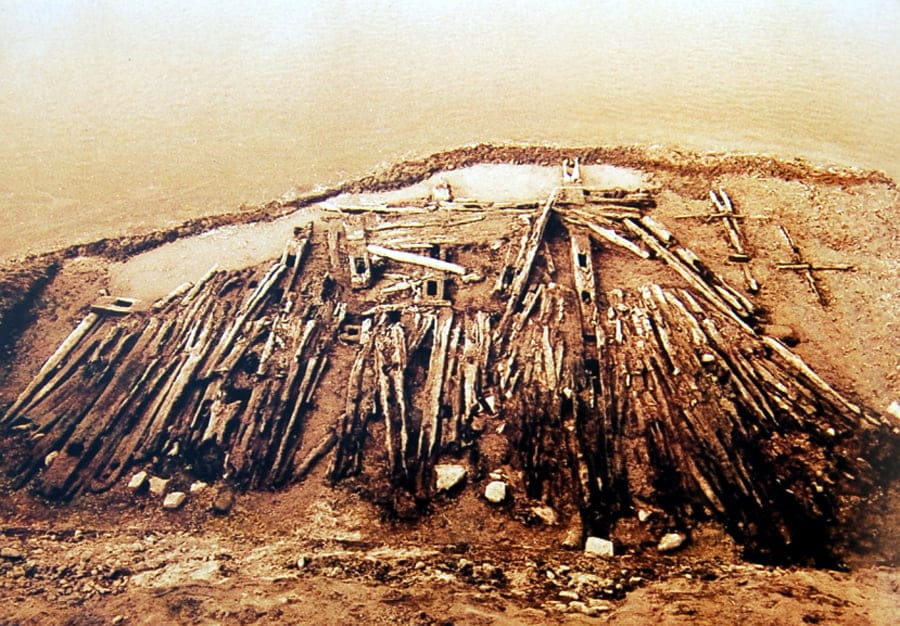
Remains the ancient wooden bridge of the Taedong River?
the ancient Korean and Tibetan sacred transitions, rites that bridge worlds and eras. For me, the narrative is always the same: writing is an endless cycle of reading and re-reading, each turn making me dizzy. The ideas for The Koreans and I keep me awake at night, swirling between reality and fiction. In my mind, autobiographical truths intertwine with fictional possibilities, creating a labyrinth of endless paths. There are no limits to human thinking. Sometimes mine feels like the universe, vast and uncharted. It goes on and on. One question leads to another. Before I know it, I’m drifting on the fringes of the solar system, my thoughts yearning to leap light-years beyond the confines of mortality.
Muga: The Ritual Song of the Bridge
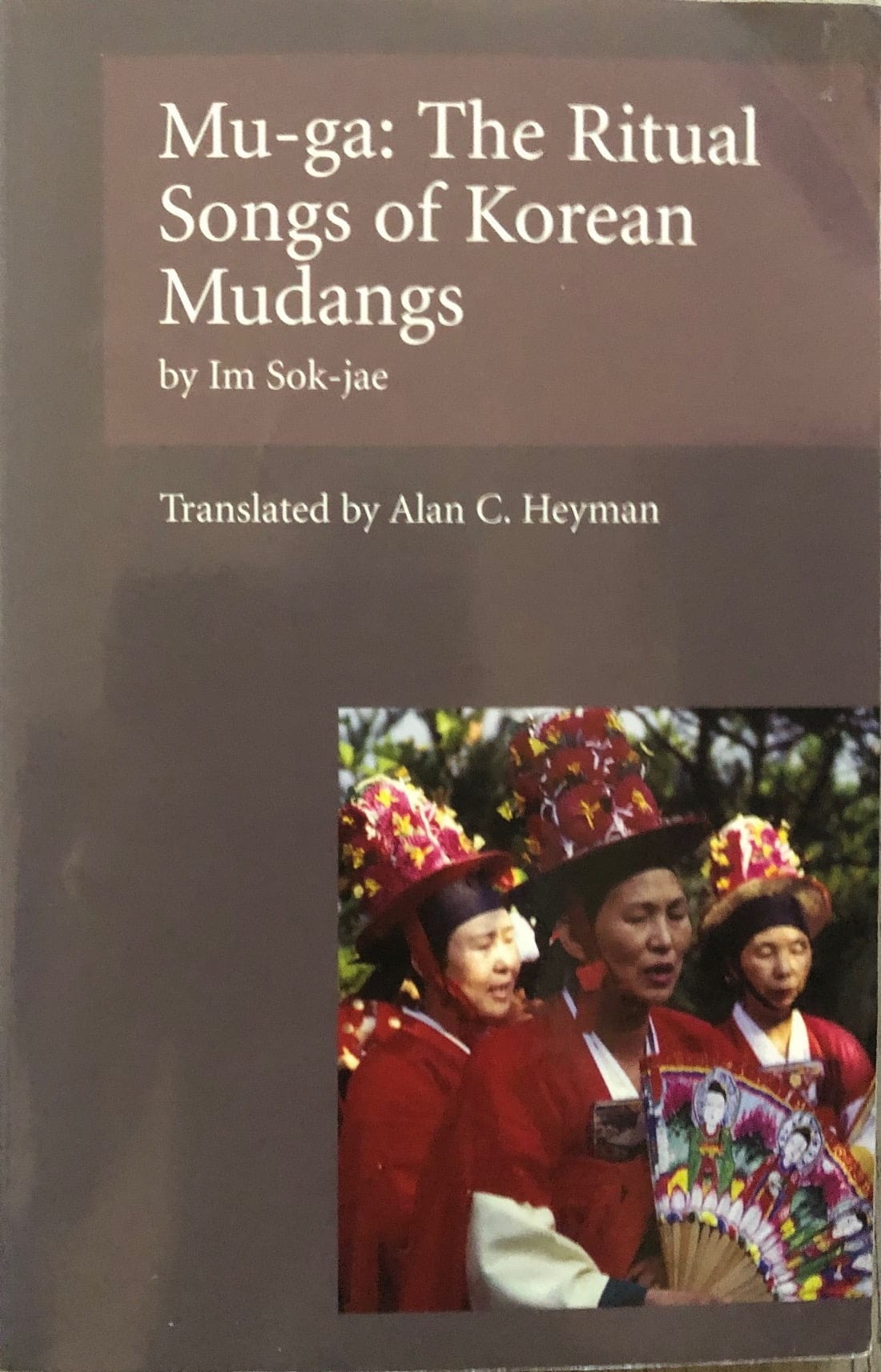
Mu-ga
For The Koreans and I, I delve into Mu-ga: The Ritual Songs of Korean Mudangs by Im Sok-Jae, exploring the transitions reflected in ancient Korean metaphysical practices. These songs date back to the GoJoseon period, approximately 7 to 4 centuries BC. During this time, Wangeomseong served as the capital, a name shared by two cities. The first Wangeomseong was located on the Liaodong peninsula. Conflicts between the Han Chinese and the Wiman Chosun culminated in the establishment of Goguryeo.
Later, the capital also bore the name Wanggeomseong, located near present-day Pyongyang. However, Goguryeo fell in 108 BC to the Han Chinese, ending its reign as the northernmost state of the Korean Three Kingdoms period. The people of Goguryeo, resilient in spirit, expelled the Han commanderies from the peninsula and expanded deep into China.
The shifting capitals—from Jolbongyoo in the Biryu River basin to Guknaeseong and eventually Pyongyang—reflect the dynamic history of Goguryeo. King Yuri, who moved the capital in three AD, plays a pivotal role in these transitions. Interestingly, his younger brother Onjo, the founding monarch of Baekje, also embarked on his own journeys, which I will explore further The Koreans and I.
Holy Korean Devotional Transitions
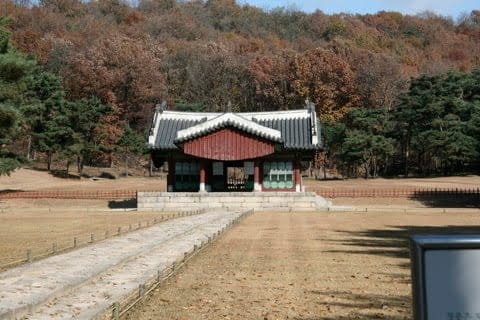
Holy Korean transitions are deeply reflected in the ancient traditions surrounding royal tombs like Gyeongneung, the resting place of posthumous King Deokjong and Queen Sohye.
Holy Korean transitions are deeply reflected in the ancient traditions surrounding royal tombs like Gyeongneung, the resting place of posthumous King Deokjong and Queen Sohye. This is closely tied to The Ritual Song of the Bridge, also known as The Ritual Song of the Ten Kings or Tari Kut. The bridge referenced in this song may well be the Taedonggang Daemogyo bridge, constructed during the reign of King Jangsu. This ancient wooden bridge not only provided direct access to the Anhakgung Palace but was also believed to serve as a symbolic passage for Kings, ordinary people, and the dead, each with their designated structure.
This blend of Shamanism, Buddhism, and Confucianism is deeply woven into Korean rituals, where boundaries often blur. The Royal tombs from the Joseon period showcase this complexity with bridges like Geumcheongyo, reserved solely for the deceased King. The Chamdo, the stone path leading to the bridge, is divided into Sindo, the way of the Gods, and Eodo, the path for Kings. Although ordinary people could walk on Eodo, to me, it feels almost sacrilegious to step onto Sindo, the sacred path of the Gods. Yet, in the palaces of Seoul, where raised walkways are reserved for Kings, I find myself crossing them without hesitation—an echo of how tradition and modernity coexist in Korea.
Korean Holy Transitions: Taedonggang Daemogyo and the Journey to the Afterlife
The Taedonggang Daemogyo bridge was revered as a sacred passage from this world to the next. As the bier of the deceased was carried across its wooden planks, the bridge became a threshold between life and death, a solemn journey towards eternity. According to tradition, female escorts were not permitted to set foot on the bridge, symbolizing the finality of the departure and their role in the earthly life of the deceased. They would bid farewell at the entrance, their songs lingering in the air as the procession moved forward.
As the mourners crossed, they sang the Song of the Bridge, also known as the Ritual Song of the Kings. This sacred chant was believed to guide the soul on its journey through the ten palaces where the deceased would face judgment. The song’s verses evolved over time, with Part III mentioning the local names of these palaces and Part IV adding their corresponding Buddhist names, intertwining local beliefs with Buddhist doctrine. The journey begins at the first palace, ruled by King Chin-Kwang the Great. Here, the soul must pass over the treacherous Sword Mountain Hell, a realm of sharp blades and torment, where only the righteous are granted safe passage by the Wǒn-Bul (Dipankara?), the merciful Buddha of Eternal Light. This harrowing trial is the first of many, each palace presenting its own challenges as the soul seeks redemption or damnation.
The first is the Palace of King Chin-Kwang the Great. Chǒng-Kwang Bul-I Is the Wǒn-Bul. To the hapless, soul-bearing chariot He affords passage over The Sword Mountain Hell.
Buddha of Eternal Light Guiding Transitions
In the rich tapestry of Buddhist traditions, the concept of the Buddha of Eternal Light plays a pivotal role in guiding souls through the afterlife. In the notes, we read that Chǒng-Kwang Bul-I, known in Sanskrit as Dipamkara, is revered as the Buddha of Eternal Light, a guiding figure who predates Gautama Buddha. In this context, Wǒn-Bul, or Dipamkara, is seen as the specific Buddha one might invoke for personal guidance or protection. So, which Buddha resonates most with my journey? Amitabul, the compassionate overseer of the green paradise, who promises peace and rebirth? Or perhaps Vairochana, the primordial Buddha, embodying the vast emptiness of the cosmos and the origins of all existence? In many Buddhist traditions, the choice of a Buddha to guide one’s spirit is deeply personal, reflecting one’s inner beliefs and aspirations. For the deceased, this chosen Buddha could be seen as a beacon of hope and a guide through the trials of the afterlife.
The Bardo Thödol, the Tibetan Book of the Dead
Bardo Thödol, the Tibetan Book of Death.
I cannot help it; I am stubborn when it comes to connecting texts. The Song of the Kings reminds me strongly of another profound work: the Bardo Thödol, the Tibetan Book of Death. I first encountered the Bardo Thödol when I was about twenty years old, and its mystical teachings left a lasting impression on me. Now, years later, I find myself diving into its depths once again. The Bardo Thödol was transcribed around AD 750, during the time when Padma Sambhava founded Lamaism in Tibet. Prior to this, the sacred verses were passed down orally for centuries, echoing through generations.
It’s said that the text bears influences from the ancient Bon tradition, which predates Tibetan Buddhism. Bonism, an indigenous Holy tradition of Tibet, traces its origins to the sacred Mount Kailash. This revered mountain, standing at 6474 meters, is venerated by Hindus, Buddhists, Jains, and Bonpos alike.
Each tradition sees the mountain through its unique lens: Hindus regard it as the abode of Shiva and Parvati, the axis of the universe; Buddhists revere it as the domain of Demchok, the Buddha of ultimate bliss; Jains honor it as the site where their first Tirthankara attained Nirvana; and for the Bonpos, it is the devotional center of the world, the home of all gods. Such is the reverence for Mount Kailash that it remains unclimbed, untouched by human feet. The mountain is believed to be charged with mystical energies, so potent that any attempt to conquer its peak is said to result in death within a year—a tale that underscores the profound respect and awe it commands across various spiritual traditions.
As I delve deeper into the Bardo Thödol, a particular passage captures my attention, shedding light on the intricate connection between consciousness and the cosmos. In this passage, ‘the germ’ refers to the subtle body that carries consciousness within the Bardo, the intermediate state between death and reincarnation.
This body is shaped by the karmic impressions accumulated over past lives. Here, consciousness and life are seen as distinct forces, with yin and yang, or sing and ming, still recognized as separate. The Tao, or central clear light, represents the ultimate reality, guiding the unification of these dualities within the mandala.
Holy Devotional Transitions: Buddhist and Mudang Consciousness
While Tibetan Buddhists describe the Bardo as the realm we traverse between death and reincarnation, Korean Mudangs interpret this journey through the metaphor of passing through ten palaces, each representing a stage of judgment or transformation. On the first day within the Bardo, Vairochana, the primordial Buddha, manifests before the deceased. Clad in white and seated upon a lion’s throne, he holds a wheel with eight spokes, symbolizing the Noble Eightfold Path. As one of the five Dhyani Buddhas, Vairochana embodies the dharmakaya, the truth body of the Buddha, representing the ultimate reality and purity of consciousness. Positioned at the center of the mandala, he is associated with the element of space and the sacred syllable ohm, which resonates as the sound of the universe.
Vairochana: The Primordial Buddha in Korean and Tibetan Metaphysical Transitions
Vairochana’s hand gesture, the dharma chakra mudra, symbolizes the teaching of the dharma. This gesture reflects his role as the primordial Buddha in Korean Buddhism, where he embodies the Buddhist concept of emptiness, or sunyata. Vairochana, revered by the Yogachara school, was instrumental in the development of the Shingon sect. In Korean Buddhism, he is known as Daeil Yeorae, or the Great Sun Buddha, and Birojana Bul, where he represents the all-encompassing nature of the universe. His presence is a reminder of the interconnectedness of all things and the ultimate reality of emptiness.
Vairochana is often depicted wearing a simple robe, his hands forming the mudra of the six elements. In this gesture, the index finger of the left hand is clasped by the five fingers of the right hand, symbolizing the union of the five elements—earth, water, fire, air, and ether—with the sixth element, consciousness. This mudra represents the integration of the material and spiritual worlds, a core principle in Buddhist cosmology.
Is Mount Kailash the Holy Korean and Tibetan Transition Site?
Is Mount Kailash the Sacred Transition Site in Korean and Tibetan Traditions? I wonder if there’s a parallel between day one of the Bardo Thödol and the first palace in the Song of the Mudang. Could it be that in both traditions, the Tao—the way—is the ultimate guiding force? According to tradition, Shamanism, with roots tracing back to Siberia, also reveres sacred sites like Mount Kailash, located in the Himalayas. This mountain holds profound significance in many Asian faiths, serving as a axis where the physical and metaphysical realms intersect. Both the Song of the Bridge and the Tibetan Book of the Dead seem to converge on the idea of a spiritual journey, a passage through realms of judgment and transformation. These texts, though rooted in different traditions, reflect a shared understanding of the soul’s journey and the sacred sites that anchor these beliefs. But there is more—deeper connections and hidden truths that bind these traditions together, waiting to be uncovered.
Wonhyo: The Master Who Bridged Korean and Tibetan Buddhism Transitions
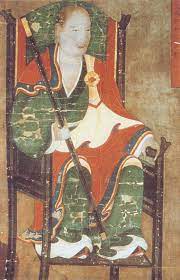
Master Wonhyo
Wonhyo, one of the greatest Korean Buddhist philosophers of the 7th century, was not only a prolific thinker but also a transformative figure in the development of East Asian Buddhism. He was a pioneer in synthesizing diverse Buddhist teachings into a coherent and comprehensive system, making profound concepts accessible and applicable to daily life. Wonhyo believed that Buddhism should not be confined to monastic study but should be lived and experienced by all, often teaching through song and dance to reach the common people.
The learned monk authored over 80 works on topics such as Buddha nature, Yogacara, Hwaeom, Pure Land, Madhyamaka, and Tiantai, many of which were of great importance to Tibetan Buddhism. Wonhyo’s influence extended far beyond Korea, as many of his works were translated into Tibetan and became foundational texts for Tibetan scholars. His treatise ‘Awakening of the Faith’ was translated by Rinchen Zangpo, and his commentary on the Nirvana Sutra was adapted by Yeshé Dé. These texts contributed significantly to the development of Tibetan schools such as Nyingma and Kagyu, which emphasize the intrinsic nature of the Buddha and the interdependence of all phenomena. Wonhyo’s teachings continue to resonate, bridging cultural and doctrinal divides, and his legacy endures as a testament to the universal applicability of Buddhist wisdom.
Writing Is Reading, Holy Contemplative Transitions, and the Dizziness Stops
A Journey Towards Clarity. As thoughts spin in my head, they gradually settle into clarity. The more I read, the more the fog lifts, revealing that ultimately, all Asian philosophies of life converge into a unified understanding. I hold fast to the words of the Bardo Thödol, which remind us that its teachings are for all living beings:
“O you lingering who do not think of death. While indulging in the useless things of this life, you are careless in wasting your eminently auspicious opportunity. If you return from this life empty-handed. Then surely your aim will be wrong.”
Ohm Mani Padme Hum.
Ohm Mani Padme Hum. What is my goal? Writing The Koreans and I, a journey that mirrors my own quest for wisdom. As I delve deeper into this sea of knowledge, I find myself drawn to the Mantifang—the legendary court where Yellow Emperor Huang Di (2698-2598 BC) sought counsel from priests, monks, Shamanic intermediaries, Mudangs, and leaders of all faiths.
Choose Spiritual Transitions
It is here, in this metaphorical assembly of knowledge, that I seek to anchor my thoughts. As a personal vow to this journey, I intend to tattoo the sacred ‘uhm’ symbol on my hand—a reminder of the unity of all things and the impermanence of life. This act, simple yet profound, is my way of carrying the wisdom of the ages with me, even in a place where the Mudang’s song no longer echoes, nor the tak tak of the moktak sounds.
Ji Jang Bul looks down at me at Bogwang Sa.
Perhaps it’s a bit opportunistic to have such a tattoo engraved. Maybe even a little pretentious. But for now, let me softly chant “나무 지장 불” (Na-mu Ji-jang Bul) as I hear Jin-do barking in the distance along the banks of the Seongsaheon River.
Ji Jang Bul, also known as Kṣitigarbha, is the Bodhisattva of the Underworld, Protector of the Dead, and the Guardian of Travelers. He made a profound vow to never attain Buddhahood until all beings are freed from the sufferings of hell. His role extends to guiding and protecting those who journey, whether across physical landscapes or through metaphysical realms. As I chant his name, I reflect on his endless compassion and the sense of safety he offers to those on any path, feeling deeply connected to the journey that lies ahead. The Holy transition that Korea and writing brings.