The poems of The Red Lamp began in Rotterdam, 1985. Stripped lines, high temperature, no ornament. Each appears in the original Dutch beside its English translation — bare testimony rendered faithfully.
Language policy: poems are shown in the original Dutch with a precise English translation; stories are published in English only.
Start here
Existence 1 (1985) — the opening fragment: survival, need, and a curse hurled at a devouring world.
The Red Lamp began as a small bundle in Rotterdam, 1985. No decoration, no detour: short lines that breathe like steel under pressure. The city was grey, the Maas drew cold through concrete, and indoors one searched for warmth in another. The lamp on the desk gave red light but no comfort; it marked a boundary. Whoever came closer had to withstand fire.
The poems that emerged were not written with posterity in mind. They were not meant to be quoted, not composed for literature. They are field notes, registrations of a state of mind at a time when loneliness bit harder than hope. Yet they stand here again, nearly forty years later: Dutch beside English, sparse beside carefully translated. Their task is unchanged — to testify, to press forward, to hold speech in place when silence would be safer.
The mood of those years is still present in the rhythm: abrupt, economical, refusing to wander. Rotterdam in the mid-1980s was a place of hard labour, scarce work, and unspoken distances. The poems mirror that climate. They are not polished stanzas but compressed fragments, written quickly and under pressure, with the knowledge that tomorrow might demand a different register altogether. Reading them now is to revisit that tension: how words can resist forgetting, even when memory itself resists clarity.
Between Rotterdam and now
Placed alongside the later stories, these poems form the spine of a larger project. Where the stories stretch out, crossing geographies and cultures, the poems fold inward. They compress experience into a few lines, shaping absence as much as presence. That contrast is deliberate. The Red Lamp was never about producing a single book of poems, but about setting a tone, choosing a discipline, and allowing that practice to inform everything that came after.
Each poem is therefore more than an isolated fragment. It is part of an economy of language that continues into essays on Korea, reflections on Buddhism, and narrative pieces on travel and encounter. The voice has aged, the settings have changed, but the principle remains: speak only what carries weight, and leave silence intact where words would betray.
Closing
Today these poems stand in a wider context. They belong not only to a Rotterdam room in the mid-1980s, but to a body of work that has since expanded into stories, essays, and reflections from Korea. Where the early lines exposed the self, the later texts turn toward encounter and construction. The line, however, is unbroken: the same economy of words, the same refusal of ornament, the same steady aim at what matters.
This page gathers the poems of The Red Lamp in their original sharpness and shows them beside their English translation. They are not reports of happiness but of endurance. Not memories to dream away with, but to stay awake to. They belong to a larger project that sets its heart on truth, connection, and compassion. In that light the red lamp still burns — not as relic, but as standard.
Readers are invited to explore the poems one by one, not as nostalgic artefacts but as living testimony. They may appear minimal, but each line carries the weight of its time and the trace of a vow: to remain honest, to resist ornament, and to continue speaking even when silence tempts. In that vow lies the continuity of the work — from Rotterdam to Korea, from the solitary desk to the wider world, always with his heart towards …
At a bare desk under a red shade, a vow takes shape: not fame, but a city where people can live honestly and free—and words as stones toward it.
The brown wood of the desk gives calm. My hands lie awkward beside the white paper. The pens are picked. Everything is ready for a compelling story or a kink of thought no one can follow. The A4 sheets do not frighten me.
That hand only has to pick up the pen. Put the pen to the paper. Words will appear. A story will form. Dim light pours from the red lamp, pressing shadows into the wood. I feel its warmth on my face. It shines as far as the mind.
I take the lamp in both hands and set it so the beam falls exactly in the middle of the paper. Not easy. It is a metal thing: two hinged tubes, a trapezoid shade. All the screws are stripped so the contraption keeps sinking, almost invisibly, until the cap touches brown wood or white paper. Good thing it wasn’t expensive.
I roll a cigarette. The matchbox is empty; the ashtray is not. Damn, again not prepared. This way nothing good will reach the paper. Why do this at all—stake your life on calling yourself a writer? There is hardly a sillier trick. I sigh, get up for matches, and dump the ash into the bucket on the balcony. The wind blows the ash back in my face. Why, as an ex-sailor, don’t I mind the wind?
My thoughts push me onto the deck of the training ship *Prinses Irene*, anchored on the Veerse Meer. One of those mist-still mornings that only exist on water. Sounds arrive hollow, as if from another room in the world. I drop the bucket on its line over the side, pull it up, and throw the contents across the deck—against the wind. From the wheelhouse the captain laughs, hard and mocking. I stand there drenched, staring at the flag.
Life was uncomplicated. I was not a writer yet. My hands return to the desktop. Smoke drifts through the cone of light. The lamp has already sunk a few centimeters.
Back then I did not feel required to do anything about the world’s wrongs. Now it is the only way to justify my life. Years ago I wrote a small poem, a trifle—not so bad—and found that it was a way to speak, a way to be honest. The idea of being a writer took hold. I declared myself one to anyone I met and started to write for real.
Now being a writer is not important. It is not the end; it lies further on. Somewhere in the corners of my mind there is a book that will change things. In that book is a city where people can live honestly and free. That is my end.
My hands tremble a little. A bead of sweat falls onto the white paper. Fear-sweat? There is so much to learn and to lay aside. So much still to live through.
For the sake of that book and that city I sit at this desk. Not to write it now—the knowledge is not large enough. Everything thought or written now is practice for that book. Stones for the city.
My hand takes the pen. The lamp has sunk to five centimeters above the paper. I should have spent more money on it. Why is it that I always do things halfway? Well then—back then the lamp hung crooked.
I get up and go to the bookcase. I take Sartre’s *The Age of Reason*. *The Roads to Freedom*—a road toward my book. I set the arm right again and know that nothing will appear on the paper today.
Hello and welcome to Mantifang.com, your starting point for discovering Korea! This page is not just about travel inspiration — it is an invitation to experience Korea in all its depth. It invite you to put Korea on your bucket list. Written by Hugo J. Smal, our chief editor, who has traveled Korea many times and knows how to guide you towards unforgettable experiences.
Squid Game showed the world Korea’s thrilling side — now it’s time to discover it yourself.
If you saw the Squid Game or the Itaewon Class series, you already felt the energy. But nothing compares to living the real adventure: tasting bibimbap in a local market, sharing Korean barbecue with new friends, or dancing in one of Seoul’s nightclubs. Korea is waiting for you — the question is not if, but when you will check it off your bucket list.
When do you check Korea on your bucket list?
The Land of the Morning Calm offers stories, films, and history — but being there in person is incomparable. From the palaces in Seoul to the UNESCO World Heritage sites in Gyeongju, every destination tells a story. The Sansa mountain monasteries, added to the World Heritage List in 2018, are just one example. Maybe a temple stay will change the way you look at life.
Travel tips to Korea
Planning your trip is easier than you think. Direct flights from Europe and the US connect to Seoul’s Incheon Airport, one of the best-rated airports in the world. Trains such as the KTX bring you in just a few hours from Seoul to Busan or Gyeongju. The best time to travel? Spring (cherry blossoms) and autumn (colorful foliage). At Mantifang, we make sure you find all the background stories and inspiration to make your journey unforgettable.
Wondanggol Valley — where wind, water, and memory shape the land.
Today I published a new page about this quiet place in Goyang: its healing gardens, its history, and the hidden shrines that still watch over the valley. If you want to see where the Jijang Fractal first appeared in my journey, start here.
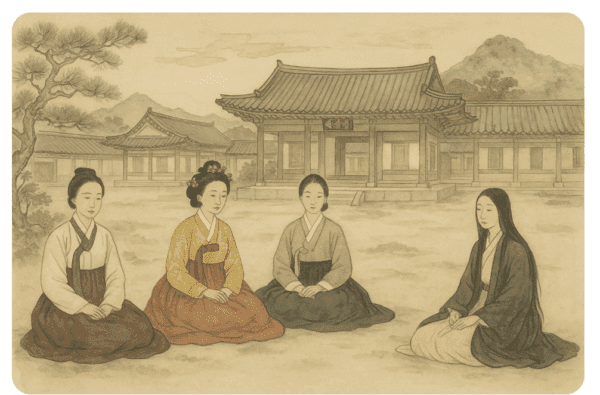
Four Korean Women
My new story brings you into the world of four extraordinary women who shaped Korean history and culture — Queen Jeonghui, Deposed Queen Yun, Heo Nanseolheon, and Murasaki Shikibu. Their lives reveal a Korea of inner strength, quiet power and timeless beauty. A perfect starting point for anyone wanting to explore the deeper layers of the country beyond the usual travel guides. Read the full story.
Sansa, Buddhist mountain monasteries in Korea
The Sansa monasteries are spread across the peninsula. Their open courtyards, Buddha halls, pavilions, lecture halls, and dormitories have survived centuries of faith and practice. These mountain sites remain sacred and active. Experiencing them gives you a glimpse into Korea’s spiritual depth.
Baedagol Bakery & Forest House — taste tradition, explore nature.
Baedagol Bakery & Forest House — taste tradition, explore nature.
Baedagol: a hidden treasure near Seoul
If your journey brings you to Goyang, you cannot miss Baedagol. This theme park is transforming into a place where culture, history, and nature meet. Our sponsor Kim Young Soo, CEO of Goyang Koi Farm, welcomes every visitor with warmth. Take the chance to say hello, enjoy the atmosphere, and discover how Korea’s traditions are brought to life in new ways. Baedagol is more than a park — it is a symbol of renewal and connection, and it belongs on your Korea bucket list.
Put nature Korea on your bucket list.
For mountain lovers, Korea is paradise. Hiking is in the Korean soul — families and friends gather every weekend to climb mountains such as Seoraksan or Bukhansan. The reward is not just the breathtaking views, but also the shared meal afterwards. And if you love culture, combine nature hikes with visits to ancient temples and villages. On Mantifang, you will find personal travel stories that inspire you to plan your own route.
North Korea on your bucket list?
Visiting North Korea remains a challenge. The government strictly controls what is shown to visitors. But times may change, and who knows what the future will bring? Until then, Mantifang focuses on the South — rich, vibrant, and open to discovery.
Discover Korea: A Culinary Journey Full of Flavor
Korean cuisine is a world on its own. Bibimbap, bulgogi, kimchi, and countless regional dishes — each meal is an adventure. It is not just food, but a cultural ritual that brings people together. Read more in our dedicated section: Korean Kitchen.
Mantifang as your guide
This page is just the beginning. Explore more on Mantifang:
The Red Lamp – stories of existence and reflection
Use Mantifang as your compass for exploring Korea — culture, history, art, and koi. Wherever your journey starts, we are here to inspire and guide you.
TIP: Hugo J. Smal, our chief editor, is always happy to answer questions: h.smal@me.com
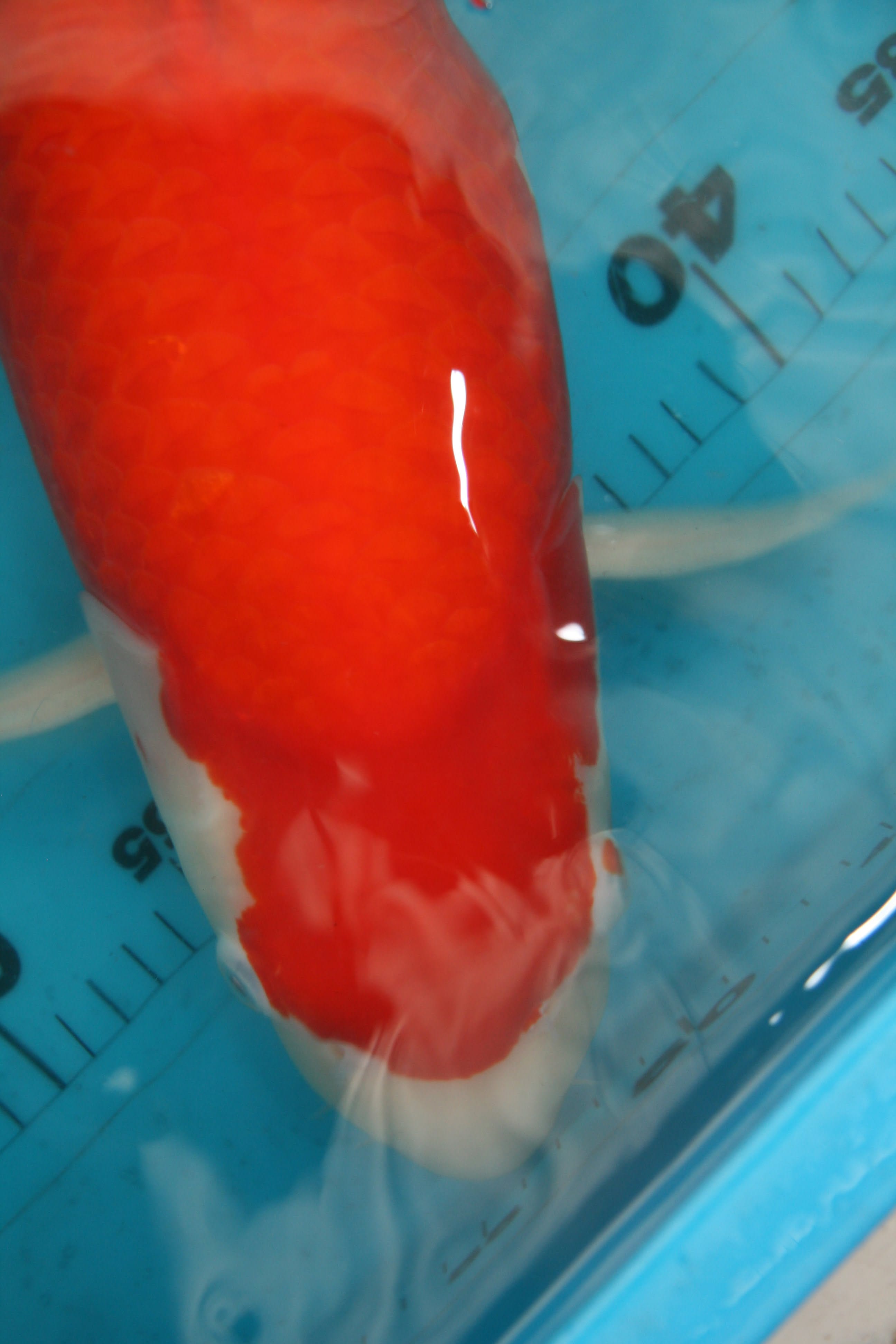
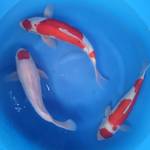
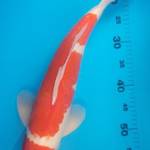
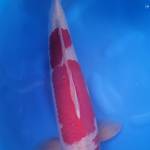
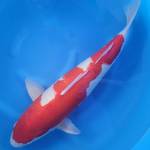
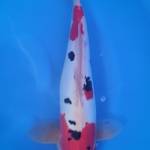
A beautiful Kohaku is a snow-white fish with Hi (red) patterns. You find these beauties in the Goyang Koi farm Kohaku ponds.
The improved Kohaku dates to 1888, when a man named Kunizo Hiroi (Ojiya-city, Japan) bred a red-headed female koi with one of his own males, whose markings resembled cherry blossoms, thus creating the now extinct Gosuke bloodline from which all of the known Kohaku bloodlines established. These days they are bred also in Korea: Goyang Koi farm Kohaku.
Five important factors to consider when looking at Kohaku:
1. Bright Hi 2. Sharp pattern edges 3. No Hi over the eyes and fins 4. No Hi markings spreading below the lateral line 5. Head Hi that not spread below the nose. Tail Hi that does not spread over the caudal fin.
(Unique and strange Koi are liked! But it is best to first look at these 5 fundamental points. That is the way to look at Kohaku! When you saw many: experiments can be great!)
Goyang Koi, renowned for its exquisite koi selection, now has a dedicated page on Koitalk.app. This is your gateway to a deeper dive into the world of koi. Discover expert insights, care tips, and the latest trends in koi keeping. Visit the Goyang Koi page on Koitalk.app now, and enrich your koi knowledge like never before. Your journey into the captivating world of koi is just a click away! Ask Shikibu about Kohaku
See our Kohaku.
What do you think about Goyang Koi Farm Kohaku?
We like your comments.
At the moment a lot of Kohaku Tosai are swimming in the mud ponds. Due to the Covid 19 virus, it is impossible for you to visit. But we are taking good care of them during the winter. We bring them into the Koi house. There they can grow. Hopefully next spring we are able to show you around. Hope to see you!
In the meantime you can contact us: For Koreans: Kim Young Soo and English Hugo J. Smal. You find all information on Contact ore uses the contact form below.