Bogwangsa Temple and great Royal Legends

by Hugo J. Smal
images: Mickey Paulssen

Back to Bogwangsa

Part 1 Part 2 Part 3 Part 4

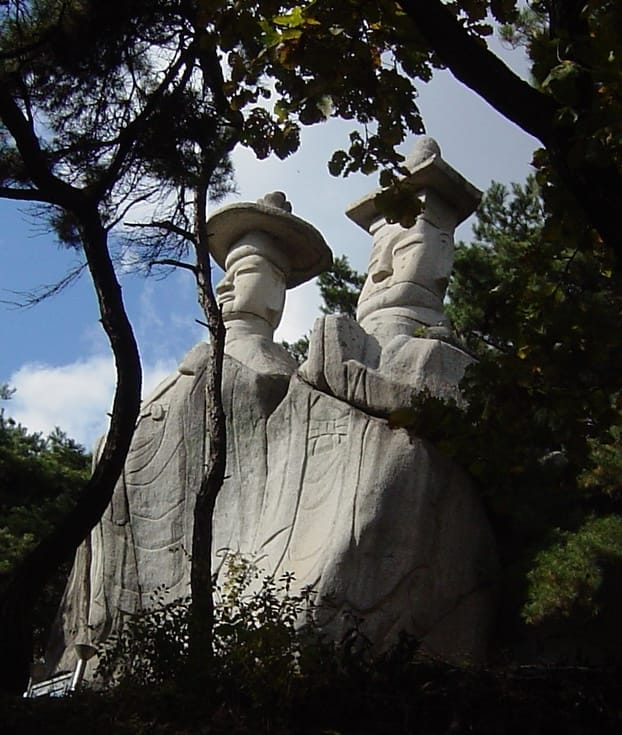
Years ago, I first visited Bogwangsa Temple. Back then, I even climbed up to the large statue of Jijang-bosal. Today, his distant gaze is enough to greet me. I also visited the Yongmi-ri Maaebul at that time—two stone-carved Buddha statues high up on the mountainside. They are said to protect the land, especially the royal family.
Bogwangsa Temple
Two Standing Yongmi Rock Buddhas

These figures are known as the “Two Standing Rock Buddhas of Yongmi-ri” (용미리 마애이불입상). Designated as Korean Treasure No. 93, they are considered significant examples of Goryeo dynasty Buddhist art. Their small stone hats are designed to shield them from the rain.

Legend of the Princess and the Monks at Bogwangsa Temple

According to a Goryeo-era tradition (918–1392), there once was a royal princess who could not bear children. One night, two enlightened monks appeared to her in a dream and said:
“We live among the rocks on the southern slope of Mount Jangjisan. We are hungry. Please feed us.”

Goryeo Dynasty Overview

The princess told her dream to the king, who dispatched attendants to the location mentioned. There, they found two large rocks standing side by side. Suddenly, the monks appeared again and instructed the men to carve statues from the stones. From the left rock, Mireuk-bul—the Buddha of the Future—was carved. From the right, Mireuk-bosal—the Bodhisattva of the Future. A little boy Dongja is standing between them.

The monks promised that anyone who prayed to these images would have their wishes granted, especially those seeking children or healing. After the statues were completed, a temple was built at the site. That same year, Prince Hansan was born.

Royal Dedication: King Sejo and Queen Jeonghui at Bogwangsa Temple

In 1995, inscriptions were discovered on the stone-carved figures at Yongmi-ri, dating back to 1471 during the Joseon dynasty. These inscriptions suggest that the statues were created in honor of King Sejo (r. 1455–1468) and his consort, Queen Jeonghui. According to this interpretation, the left figure with the round hat represents King Sejo as Mireuk-bul (the Buddha of the Future), while the right figure with the square hat represents Queen Jeonghui as Mireuk-bosal (the Bodhisattva of the Future).

One of the inscriptions reads:
“In the future, the great saint Mireuk-bul, Great King Sejo, will be reborn in the Pure Land.”

Although this theory remains unconfirmed, it highlights the profound spiritual and royal significance of these Buddhist statues.

The Shadow of Gounsa Temple: A Spiritual Loss for Korean Buddhism

Bogwangsa Temple
2 suspects in massive Gyeongsang wildfires to be handed over to prosecution early May. Korea Herald

While writing about Bogwangsa Temple, I received heartbreaking news: the centuries-old Gounsa Temple in Gyeongsangbuk-do had been largely destroyed by fire. Founded in 681 by the eminent monk Uisang—a fellow traveler of Wonhyo and founder of the Korean Hwaeom school—Gounsa belonged to the Jogye Order and was revered for its profound silence, spiritual discipline, and an imposing gilded Buddha statue that proved too heavy to rescue.

The loss was far more than physical. For Korean Buddhism, it marked a spiritual wound—a break in a lineage that had been cherished for centuries through prayer and devotion.

Bodhisattva Francis: A Buddhist Tribute to the Pope in Korea

Bogwangsa templeAround the same time, I was deeply moved by the death of Pope Francis. The Jogye Order, Korea’s largest Buddhist monastic order, released an official statement. Venerable Jinwoo, its leader, expressed condolences and described the Pope as a “true compassionate bodhisattva.” He praised the Pope’s dedication to vulnerable groups and his respect for other religions. Jinwoo also recalled the Pope’s historic 2014 visit to South Korea, during which he sought spiritual connection with leaders of the Jogye Order and other faiths.

Coincidence, perhaps—but it felt like more. While violence continued in Gaza and Ukraine, Korea lost a spiritual monument. And while world leaders like Putin, Trump, and Xi Jinping played games of ego and power, a true follower of Francis of Assisi departed this world.

Francis of Assisi (1181/82–1226), the Italian Catholic saint and founder of the Franciscan Order, was renowned for his radical poverty, love of nature, and deep compassion for all living beings. He saw God in everything and everyone, preached peace, humility, and simplicity, and became the patron saint of animals and the environment. His influence transcends religious boundaries and continues to inspire spiritual seekers around the world.

Sacred Juniper Tree at Bogwangsa Temple: A Royal Memorial

juniper tree sways solemnly

An ancient juniper tree sways solemnly in the rain. According to local tradition, the tree was planted by King Yeongjo of the Joseon dynasty (r. 1724–1776) in memory of his mother, Sukbin Choe, a royal concubine of King Sukjong. The tree stands beside Eosil-gak Hall, a memorial space that enshrines the spirit tablet of Sukbin Choe.

In Korean culture, such a tree symbolizes the connection between heaven and earth. It acts as a bridge between the spiritual and the material realms. The presence of this tree enhances the sacred atmosphere of the temple and reminds visitors of the deep spiritual traditions that are revered here.

Yeonggakjeon Memorial Hall at Bogwangsa Temple

Yeonggakjeon
This modest yet solemn shrine, known as Yeonggakjeon (영각전), serves as a sacred space for honoring the deceased. Visitors place small Buddha statues bearing name plaques inside, seeking spiritual merit and remembrance through light, prayer, and compassion.

At Bogwangsa Temple, the memorial space where small Buddha statues are enshrined is called Yeonggakjeon (영각전). This hall is dedicated to the deceased and serves as a sacred place for prayers and ceremonies for their souls. Visitors place small Buddha statues with name plaques to honor loved ones and accumulate spiritual merit.

The illuminated statues symbolize wisdom, enlightenment, and the presence of Buddha. The unlit golden Buddhas on the right side likely serve as personal or family memorials. Donating such a statue is considered an act of compassion—a source of merit and spiritual blessing.

Although such halls are often named Jijang-jeon (지장전), in reference to Jijang-bosal (Ksitigarbha), the protector of souls in the afterlife, this space at Bogwangsa specifically bears the name Yeonggakjeon.

Chilseongak and the Seven-Star Ritual in Korean Temple Tradition

Chilseong Taenghwa in Chilseonggak
Depiction of the Seven Stars (Chilseong), celestial guardians of fate and longevity, central to rituals for protection and cosmic harmony.

The Chilseongjae is a ritual dedicated to the Seven Stars (Chilseong, 칠성), celestial beings that hold deep symbolic meaning in Korean Buddhist and folk tradition. In Korean cosmology, the Seven Stars represent:

  • Longevity and health

  • Wisdom and spiritual protection

  • Karma and destiny

  • Leadership and cosmic order

In temple paintings, Chilseong is often depicted as seven celestial kings beneath a starry sky. Surrounding scenes illustrate prayer, transition, purification, and rebirth. This Chilseongak is really a beauty of Korean Buddhist art. For me, these Seven Stars are inseparably linked to the Jijang Fractal—a spiritual structure of interconnection, transformation, and inner truth.

Bulhwa and the Jijang Taenghwa: Visual Dharma in Yeonggakjeon
Jijang Taenghwa
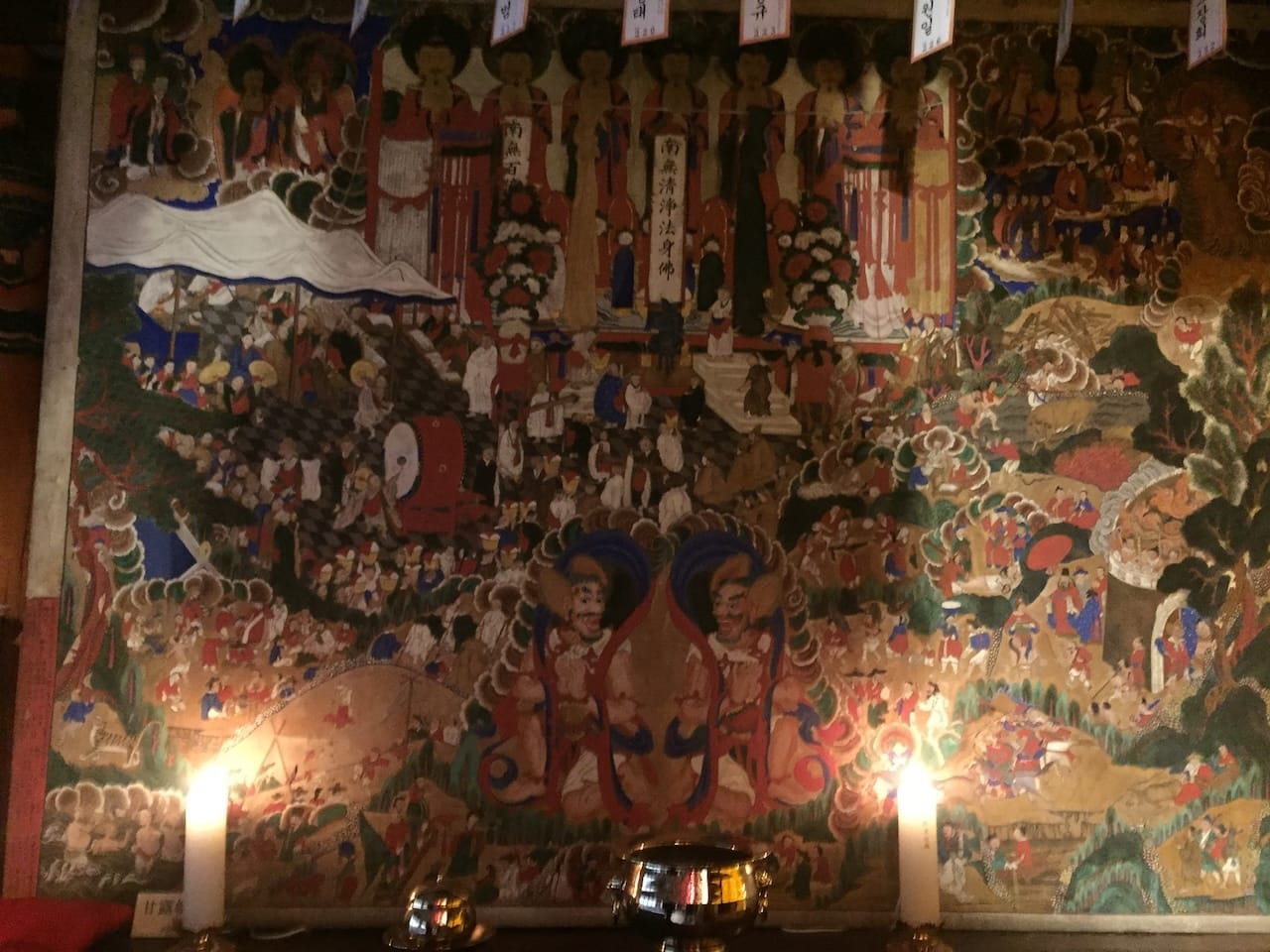
Ritual painting of Jijang-bosal with underworld scenes and the Ten Kings of Judgment, used in ancestral rites for guiding departed souls.

Inside the Yeonggakjeon, a sacred painting known as a Taenghwa (hanging scroll) depicts Jijang-bosal (지장보살, Ksitigarbha), the bodhisattva who vows to save beings from hell. Flanking him on the left and right are likely celestial kings or spiritual guardians. Below them appear officials and warriors, most likely the Siwang, the Ten Kings of the Underworld, who preside over the fates of the dead.

The use of red and blue colors in the painting symbolizes vital energy and purification. The space is adorned with glowing lotus lanterns, each bearing a name tag dedicated to a deceased loved one—offering light, remembrance, and spiritual merit.

Beyond the Fractal: A Dream of Silence with Jijang and Avalokiteśvara

Sitting before the Jijang Taenghwa, lost in reflection, I recalled another dream:

A veil of mist cloaked the mountain’s peak. Jijang-bosal and Avalokiteśvara stood side by side.
There were no calculations. No formulas. No fractals.
Only breath.

“Today we don’t speak of the fractal, said Jijang.
“What we seek cannot be calculated, but must be felt,” answered Gwanseum-bosal.
“Wonhyo called it ‘saek’—color, yet not color. A projection of the mind.”

At their feet grew flowers of thought, pulsing with hues. A white bird fluttered past.
Then the mist returned.
No conclusion. Just a silent affirmation.

The Tea Ceremony with Head Priest Hye Sung: Wonhyo, Descartes, and the Mind

We were invited by Head Priest Hye Sung. He poured tea—slowly, deliberately, each motion attuned to his breath.

Then came the question that lingered:
“Why is Descartes world-famous, and Wonhyo unknown?”

The answer came to me later. In the West, Buddha often appears as a garden ornament—placed beside koi ponds as a symbol of peace or decorative spirituality. Few there have experienced the profound support Korean Buddhism offers. Wonhyo brought that support to the people.

Descartes centered the act of thinking—“Cogito, ergo sum”—I think, therefore I am.
Nietzsche shattered that certainty by declaring God dead.
Sartre confronted us with radical freedom and existential emptiness.
But centuries earlier, Wonhyo had already understood that all phenomena arise from the mind—projections of our inner state.

His pursuit of harmonization found little global resonance—not only because Korea lacked colonial power, but also because it deliberately closed itself off from the outside world.

It’s not just a story of cultural imperialism or wall-building over bridge-building—it’s about a deeper spiritual and intellectual alienation from human potential.

And I, I choose my own path.

Jijang
The writer’s personal Jijang-bosal, with the dorye placed in front
This bronze statue of Jijang-bosal (Ksitigarbha) holds his iconic staff of guidance, while the dorye—symbol of compassionate awakening—rests below, embodying a private link between remembrance and resolve.

Jijang’s Fractal as a Rule for Living: Conscious Action as Sacred Math

“I think, do good, and thereby I add.”

This phrase captures the heart of Jijang’s Fractal: every conscious act, every gesture of compassion, becomes a contribution to a greater whole. Each moment of thought and ethical action increases the total sum—just as in the recursive expression:

f(v) = ∑ f(w)
 and in the long term:
f^∞(v) = lim(n→∞) ∑ f^n(w)

Like a fractal, this moral model suggests that goodness expands outward—layer by layer, influence by influence. It is a mathematical metaphor for karma, interbeing, and the sacred geometry of intention.

Building Bridges, Not Walls: Compassion as the Core of Fractal Living

This rule for living forms a bridge between the abstract concept that appeared to me and the tangible realities of daily life. It offers grounding in times of confusion—a moral compass in a world that often feels fragmented.

But the opposite is also true. Thought without compassion leads to alienation. Action without reflection can cause harm. Compassion is what makes the difference.

Still, I choose my own path.
I think, therefore I am. God is not dead.
And my freedom gives me the space to build bridges instead of walls.

Ecce Homo“Behold the man”, as Nietzsche phrased his search for authenticity.

Waking in Color: The Gate Has Already Opened

Chilseonggak
Yeonggakjeon (left) and Chilseonggak (right) Two ritual halls at Bogwangsa: one honoring ancestral spirits (Yeonggakjeon), the other dedicated to the celestial Seven Stars (Chilseonggak).

I sat on the bench in front of the Yeonggakjeon. The sun hesitated, breaking through. In my hand lay a pebble. It changed color—blue. Gray. Pink. White.

The fractal was still present, but far in the background. What remained was an echo:
“All appearances are states of mind. All colors, projections of the spirit.”

I looked at the wall of the temple.
There she stood. She said nothing. A nod. A color. A condition.
No forgiveness. No judgment. Only the realization:
the gate is already open.

As we left Bogwangsa, I looked once more at the statue of Jijang-bosal. His gaze felt different.
Perhaps there is no border between North and South—only mist.
Perhaps no barrier between what we see and what we know—only the choice to walk through the gate.

Bogwangsa templeMoments later, we saw a familiar woman in the temple’s kitchen.
The same woman from the Baedagol Theme Park. A nod. A flash of recognition. Some paths cross without coincidence. Perhaps she always lived in both worlds. Perhaps there is no divide between temple and park. No present. No past.

“With my head directed toward Buddhahood, and my heart committed to the liberation of others…”

I cross the bridge. The bridge between the outer world and the stillness within me— the stillness where I know my awakening resides.

I invite you to follow me Hugo J. Smal  , Jijang’s fractal or Spiritual East Asia

[embedyt] https://www.youtube.com/watch?v=XSADLoDDOew[/embedyt]

Disclaimer:

I’ve done my utmost to describe the icons, halls, and rituals of Bogwangsa with care and accuracy. Still, any misidentifications or symbolic misreadings are entirely my own. Should you spot any such errors, your insight is warmly welcome. But above all, I hope what resonates is the spirit of the story—the atmosphere it conjures, the openness it invites, and the sincerity with which it was written.

— Hugo J. Smal
Korean melancholy

The Jijang Fractal Chapter 4

writer Hugo J. Smal

Korean melancholy, or Han, is not merely a cultural engine.

A small white heron startles. Back on the embankment, I open a bottle of Soju and take a sip.
The cicadas remain silent, their usual song absent, as if nothing in the night dares disturb their rest.
Yet beneath the stillness, a tension lingers, a quiet discomfort that mirrors my own unease.
In the distance, I hear a trumpet announcing the night. It comes from the barracks.
Soldiers are everywhere here. It does not worry me. I still tasted the food at Sarangche.


Korean melancholy
war zone

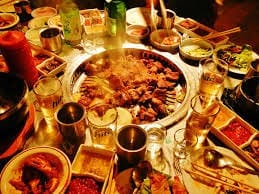
The table looked a bit like a war zone, always full.
It is quite a task for the waitress to put it all down the integrated barbecue, the many bowls with side dishes,
bowls with peppers, garlic and lettuce leaves, the bottles and cans, the bowls with rice, the plates, sticks and napkins.
And off course Kimchi.
We enjoyed it well. Kim Young Soo signalled.
He walked to the counter to pay. Two other men fought. The Soju tasted good, its warmth spreading through me,
but it carried with it a familiar ache, like an old song I had forgotten but could never quite let go.
The fight was not about who should pay. It was not about the money, but something deeper—perhaps a sense of duty, or pride,
rooted in traditions I could barely grasp. Here, even the smallest gestures seemed to carry the weight of a lifetime.
Their voices rose, not in anger, but in fierce determination—each insisting on their right to bear the burden.

Outside, the police occupied the street, their smiles strangely out of place in the midst of such rigid control.
The waiting began—cars stopped, drivers submitted, blowing into breathalysers with a resignation that felt heavier than the night itself.

The boss lit a cigarette and again coffee was served from the restaurant. Jay looked disappointed, his eyes distant,
as if the long drive to Seoul wasn’t just about distance, but about returning to a silence he wasn’t ready to face.
I started to walk. The rest had to wait, well into the night if necessary, until the police had had enough.
In the Gumeonggage, the local shop, I grabbed some bottles of Soju,
a few packs of cigarettes, and some biscuits. The seventy-year-old woman behind the counter smiled as I handed her my purse,
trusting her without question. Perhaps it was the simplicity of the exchange—something clean, something untainted by the complexities
of the outside world—that made me feel at ease.

Protected tree frog, Korean melancholic sounds

It is quiet on the Baedagol gill. The dinner is still buzzing in my head.
Even though I was not always involved in the conversation, it remains overwhelming.
They are energetic people those Koreans.


Korean melancholy
Save haven

When they drink, they remind me of my hometown buddies the Rotterdammers—direct, inflammable, and unafraid to roll up their sleeves.
But the similarities end there. Seniority is everything here. It’s a hierarchy that’s ingrained in every gesture, every conversation.
I keep hammering it into my head, yet it still feels foreign, heavy. In the Netherlands, we walk beside each other.
Here, we walk in a line—always behind or ahead, never side by side.

Jetlag has a hold on me, pulling me into a fog I can’t quite shake. Even the Soju can’t dull the edge.
Sleep, I’ve decided, is an overrated luxury. Only old generals die in bed, after all.
Time slips through my fingers here in Korea, faster than I can catch it.
In Rotterdam, I’ll sink into the culture shock like a stone into deep water.
But here, it’s the cicada that keeps me on the surface, restless, always awake.


Korean melancholy 
img 

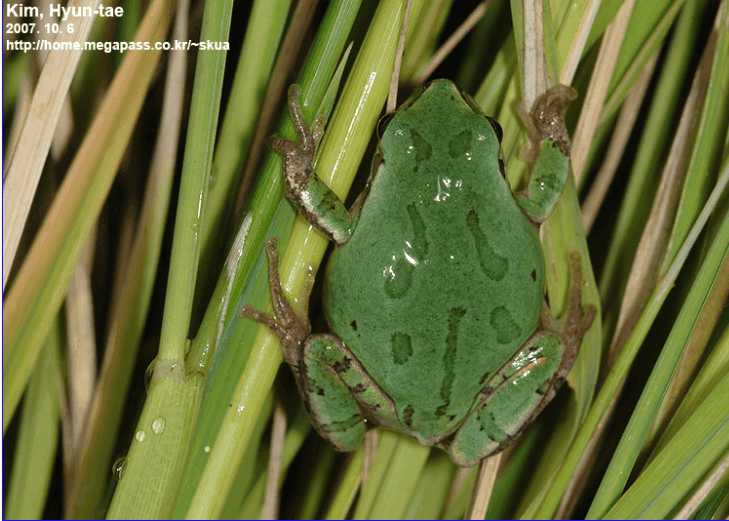
In addition to the cicada, there’s another troublemaker—the male Suweon tree frog, whistling his high, desperate call into the night.
Only eight hundred of them left, they say, trapped between two rivers, clinging to their patch of land. His whistle echoes, unanswered.
It’s a fight for survival, for recognition. Just like the Koreans, he has finally carved out his own place, standing apart from his Japanese
and Chinese cousins. But the cost… the cost is always there, hidden under his green skin.

No Korean melancholic but coals

Originally, the tree frog sought out rice fields for its home, but those have almost all disappeared.
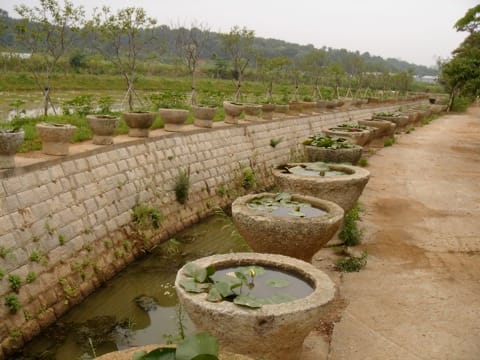
On Baedagol, however, they’ve managed to find a sanctuary in the water features, clinging to survival.
At least eight hundred tree frogs now live in the theme park alone—perhaps more.
Kim Young Soo’s dream has come true: a small piece of a lost world restored.
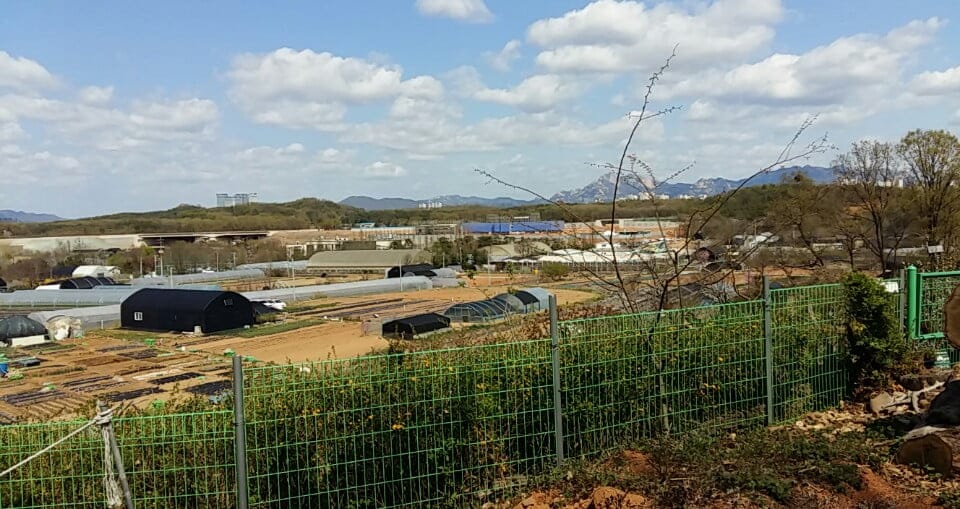
But even this refuge is fleeting. The expansion of Changneung 3 New City will soon swallow the land,
and with it, the Suweon tree frog’s fragile home. A place once reclaimed, soon to be lost again.


Korean melancholy

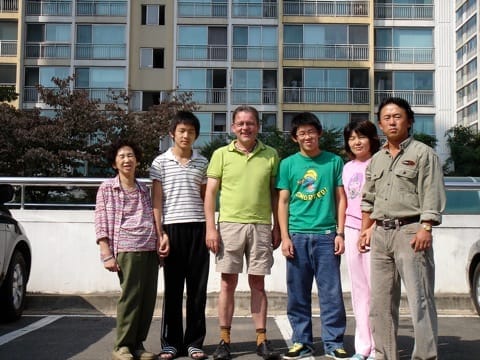
Kim Young Soo, his mother, wive, sons and the
writer.

According to his younger brother, he has set himself four goals. His family had to be taken care of first.
In Korea, it always concerns the extended family. So not only wife and two children but also mother, sisters, younger brother and everything related to it.
His father died when Kim Young Soo was young and poverty was very high in underdeveloped Korea.
He took over his father’s rose nursery and sold the flowers he grew on the street. Later he discovered a way to grow roses from seed.
With that, he earned enough money to first grow lotuses and then switch to breeding ornamental carp.
His second goal was to help the Hwajeong Dong people.
Baedagol theme park is the final result of this.
His third goal was to give something back to Korea itself, to create a place where nature could find refuge again.
The Suweon tree frog, once nearly forgotten, now thrives in Baedagol, much like Kim Young Soo himself.
But even as the frogs whistle their high-pitched call, there’s a knowledge that this place, too, will be overtaken by the march of time.
Changneung 3 New City will soon rise, and with it, Baedagol’s carefully nurtured ecosystem will vanish.
For Kim, the sense of achievement is always shadowed by the looming impermanence of it all.

The Suweon tree frog, resilient and fragile at once, whistles into the night, unaware that the sanctuary it’s found in Baedagol is only temporary.
Soon, the city’s progress will sweep it away, as it has done with so much before.
The frog, much like Kim Young Soo, fights to carve out a place in a world that is constantly shifting, always moving forward, leaving only echoes of what was.

Samguk Sagi and Yusa, a Korean melancholy history


Korean melancholy
Onjo

Hwaejeong Dong is already described in the historical books
Samguk Sagi and
Samguk Yusa.
The first is the Chronicles of the Three Kingdoms written by Kim Busik at the behest of King In Jong and published in 1145.
Samguk Yusa is the “Memorabilia of the Three Kingdoms“.
This was written by the monk Ir Yeon and contains legends, folk tales, biographies and historical accounts.
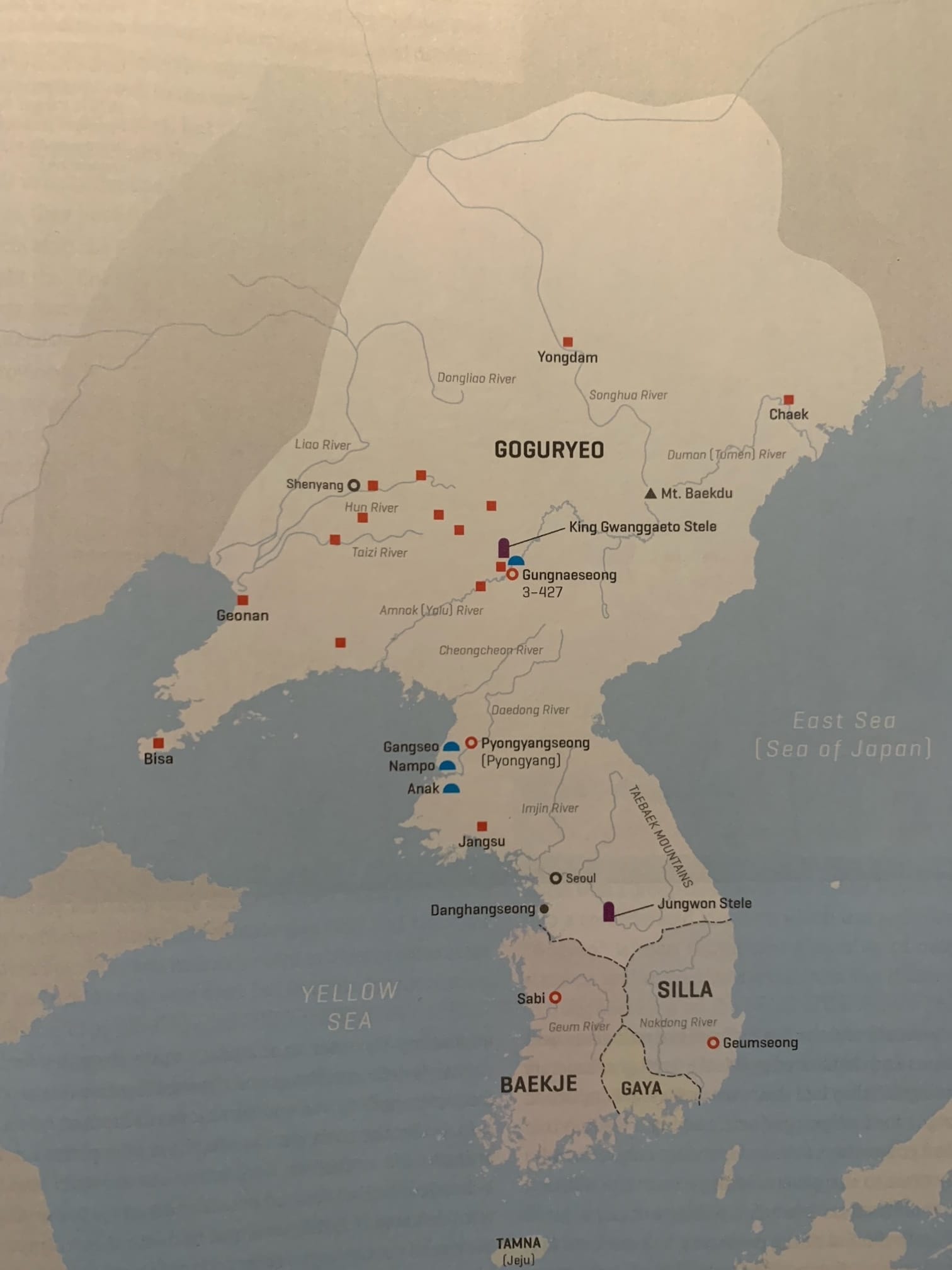
Originally, Han Chinese settled in Hwaejong Dong, but in eighteen BC the state of Baekje or Paekche was founded.
Onjo, the third son of Goguryo founder
King Dongmyeong, was not allowed to succeed his father.
The father had been married before. Because of troubles he fled from Buyeo to Jolbon. He left his family behind,
so he married the daughter of a local chieftain and fathered two more sons: Onjo and Biryu.
The refugee wanted his own state and therefore founded Goguryo with its capital Sŏgyŏng modern Pyongyang.
Yuri, the son from the first marriage found out about this and was soon in the palace to claim his birthright.
With that kind of family, this is never without drama.


Korean melancholy
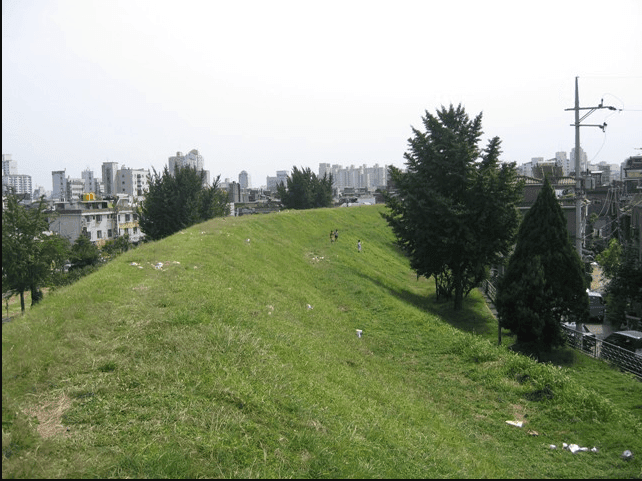
Pungnap Toseong beleaved the Onjo’s fortres wall

Onjo, seventeen years old, fled with his older brother Biryu, driven by the weight of family conflict and the desire to carve out their own place in the world.
He founded Wiryeseong present-day Seoul. Their he build an altar to honour his father.
But Biryu’s fate was less kind—he ignored his brother’s advice, ventured to the west coast, and found only saltwater and despair.
It is written in the books that he build Michuhol which is now called Incheon.
His suicide marked the end of one dream, while Onjo welcomed his brother’s followers with quiet resilience.
It was a tale as old as Korea itself—new beginnings, always born from loss.
Biryu’s death was not an isolated tragedy, but part of a longer lineage of sacrifices, each generation carrying the weight of the ones before it.
The younger brother called his state Baekje. The meaning of this name is explained differently, but I think “Hundred of houses grossed the sea” is the most beautiful.
During the reign of King Koi (243-286), the constitution was established and in 384
Marananta came from Ghandara Pakistan.
He told the then-newly installed King Chimnyu about Buddha.
Like Dryophytes suweonensis, Baekje relics are rare but of high quality.
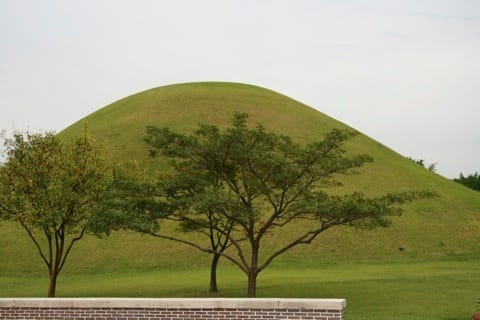
Together with younger brother and Kim Jay Ho, I visited King Muryeong’s tomb in
Gongju.
According to a stone plaque, the tomb dates from 523. It was two other tombs, accidentally discovered in 1971 during drainage work.


Korean melancholy

As I stood before King Muryeong’s tomb, I couldn’t help but think of how history preserves both grandeur and fragility.
The tomb remained untouched for over 1,500 years, its treasures safe from time and thieves.
But even here, in the stillness, there’s an echo of loss—Baekje itself, once a powerful kingdom, now survives only in fragments,
in relics buried under the weight of centuries.

The tomb is still one of Korea’s greatest historical discoveries. Like the discovery of King Tutankhamun’s tomb in Egypt,
the accidental unearthing of King Muryeong’s tomb in Gongju revealed treasures untouched by time.
Both tombs had remained sealed for over a millennium, protected from thieves and degradation, preserving not only the riches of their respective monarchs,
but also the cultural grandeur of their civilizations. Where Tut’s tomb highlighted the opulence of ancient Egypt,
Muryeong’s grave opened a window into the sublime artistry of Baekje.


Korean Melancholy
Geumjegwansik

Tomb robbers have not broken open its entrance for over 1,500 years. The treasures found in the tomb underlined Baekje’s sublime culture.
The Baekje people leased the tomb from the local earth spirits. It was also paid for.
Coins from the Liang dynasty were found on the stone,
proving that Baekje was influenced by that regime in China. The spirits fulfilled the contract because many royal decorations were found in the tomb.
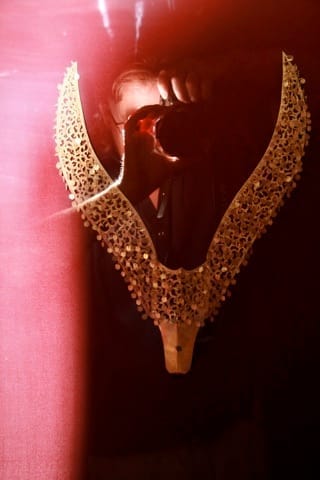
The Geumjegwansik for example. These are two gold diadems worn by Muryeong (501 – 523). They were neatly stored in a small box.
They were cut from a thin, 2-millimetre, gold plate. According to tradition, the King wore the diadems on the right and left side of his black silk headscarf.
On top of the headscarf, he wore a black cloth top hat with a gold flower pinned on the back. The diadems resemble wings,
representing the belief in rebirth in Shamanism. Gold earrings, hair pins, a bronze wine cup with dragon and lotus motifs on the lid,
jade pendants and an iron sword were also found.

Korean melancholy

Two silver bracelets have the name of the
Baekje silversmith Dari
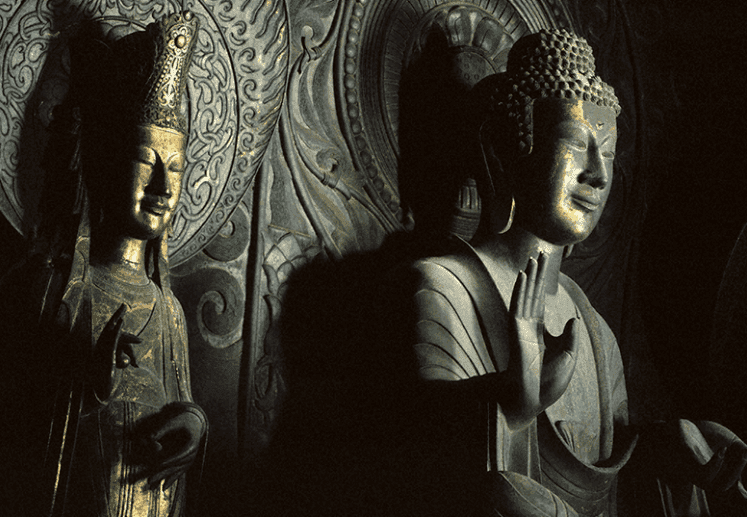
engraved next to their weight. This name can also be found on the Sakayamuni triad of the Horyuje temple in Ikaruga, Japan.
Since Monk Marananta’s mission, Buddhism had a great influence on Baekje culture. This can also be found in Muryeong’s grave.
Butt still those Shamanistic influences were found in relics, not only due to Buddhist tolerance towards local religions.
I think there is another reason.
Like the discovery of King Tutankhamun’s tomb in Egypt,
the accidental unearthing of King Muryeong’s tomb in Gongju was a revelation for Korea, offering a rare glimpse into a world long past.
Both tombs, sealed for over a millennium, protected their treasures from time and decay.
Yet while Tut’s tomb highlighted the opulence and grandeur of ancient Egypt, Muryeong’s grave opened a window into the delicate, spiritual artistry of Baekje—a culture equally as grand, but often overshadowed by its neighbors.
But even by the narrative of world history itself. While the treasures of Egypt and China are celebrated globally,
Baekje’s legacy, delicate and profound, remains known to few. And yet, in the quiet stillness of this tomb, its significance cannot be denied.

Shikibu’s Korean melancholy: mono no aware

My thoughts float to a meeting I had with Shikibu Tsuku.
During the appointment in the Kasteeltuinen Arcen,
the interplay of clouds and sunlight on the budding green seemed to mirror Shikibu’s own mood—a constant shifting between warmth and cold,
between the comfort of memories and the ache of what had been left behind. The air was crisp, carrying with it the faint smell of earth waking from its winter sleep.
Few get to witness this, as the gate remains locked early in March. Amidst the contrasting cold and warmth, between the desire for a hearth fire and
yakitori.
The park lay in tranquil beauty. Shikibu, feeling the chill, folded her summer kimono thoughtfully.
She was not the elegant figure enjoying the roses but more of a contemplative, inward-looking prayer. Her monologue filled my awareness.

Mono no aware,”
Shikibu began,
“is a Japanese expression signifying the poignant beauty of things. The inevitable transience of nature makes beauty fleeting and bittersweet.
Everything that lives and even everything that exists is not eternal! You see it in Bonsai, where often a dead branch forms the essential beauty of the tree.
It’s also reflected in how we view nature and experience it. Sakura is only beautiful because it is fleeting and oh-so-perishable.
You must enjoy it immediately and to the fullest.


Mono no aware and han are different sides of the same coin. One is the acceptance of beauty in transience,
the other, a lingering sorrow from unresolved suffering. Both see the fleeting nature of existence,
but while mono no aware embraces it with quiet resignation, han carries the weight of it, refusing to let go.

(han)

I looked at Shikibu, trying to lift her spirits. “It’s difficult to stay in the Kasteeltuinen now, but let me prepare some Sake to warm your heart.”

“Ah, the change of seasons brings tears,” she said, bowing slightly toward the Sake bowl.
“I am melancholic, but maybe it’s also homesickness. During the last Holland Koi Show, I gave some areas Japanese names.
The Japanese village became Nippon Mura, and the aquarium tent Suizokukan. But most often, I think of the Doeplein: Ibento Kaijo,
where I still have so much more to learn about the Nishikigoi. If ‘Mono no aware’ applies to any Japanese art form,
it’s certainly the case with the mortality of the beautiful ornamental Koi.

Her voice grew softer, as if the weight of the words themselves carried the passage of time.
“Even Nippon Mura and Ibento Kaijo will one day fade into memory, just like the fleeting beauty of the Koi we so lovingly display.
That’s the way of things, isn’t it? The more we hold on to something, the more it slips through our fingers.”


Korean melancholy

Summer, Fall, Winter… and Spring

Geumdong Mireuk Bosal


“Why so sad, Shikibu?” I tried to console her. I knew what she felt.
Anyone who has seen Spring, Summer, Fall, Winter… and Spring by Kim Ki Duk understands this well.
The young monk, dragging the millstone up the mountain, carries not only the weight of his own suffering but that of the world.
With a rope tied around his waist, he pulls the heavy stone behind him, while carrying the
Geumdong Mireuk Bosal, the golden Maitreya Bodhisattva.
The burden is not merely physical; it is spiritual, a symbol of the hope for salvation amidst suffering.
Each step he takes echoes the weight of human suffering, yet the Bosal he cradles in his arms serves as a reminder of the possibility of rebirth and enlightenment.

This, too, is han—a burden passed from one generation to the next, quietly borne, yet never fully lifted.
Many Japanese purists might abhor my liberal blending of Far Eastern cultures, but my long visits to Hanguk
and conversations with many artists and scholars there convince me that “Mono no aware” can only be fully understood this way.
Mono no Aware goes hand in hand with Han

Shikibu promised one thing: One day we would sit together, listening to
Jeongseon Arirang—a song steeped in the very essence of han,
each note carrying the weight of centuries of sorrow and resilience.
In Kim Young Im’s voice, I knew we would both find something of ourselves, something that had been lost and perhaps, briefly, could be reclaimed.

The movie gives you an even deeper sense of this story. You can continue reading just below.

Exploring the Cultural Interactions Between China, Korea, and Japan

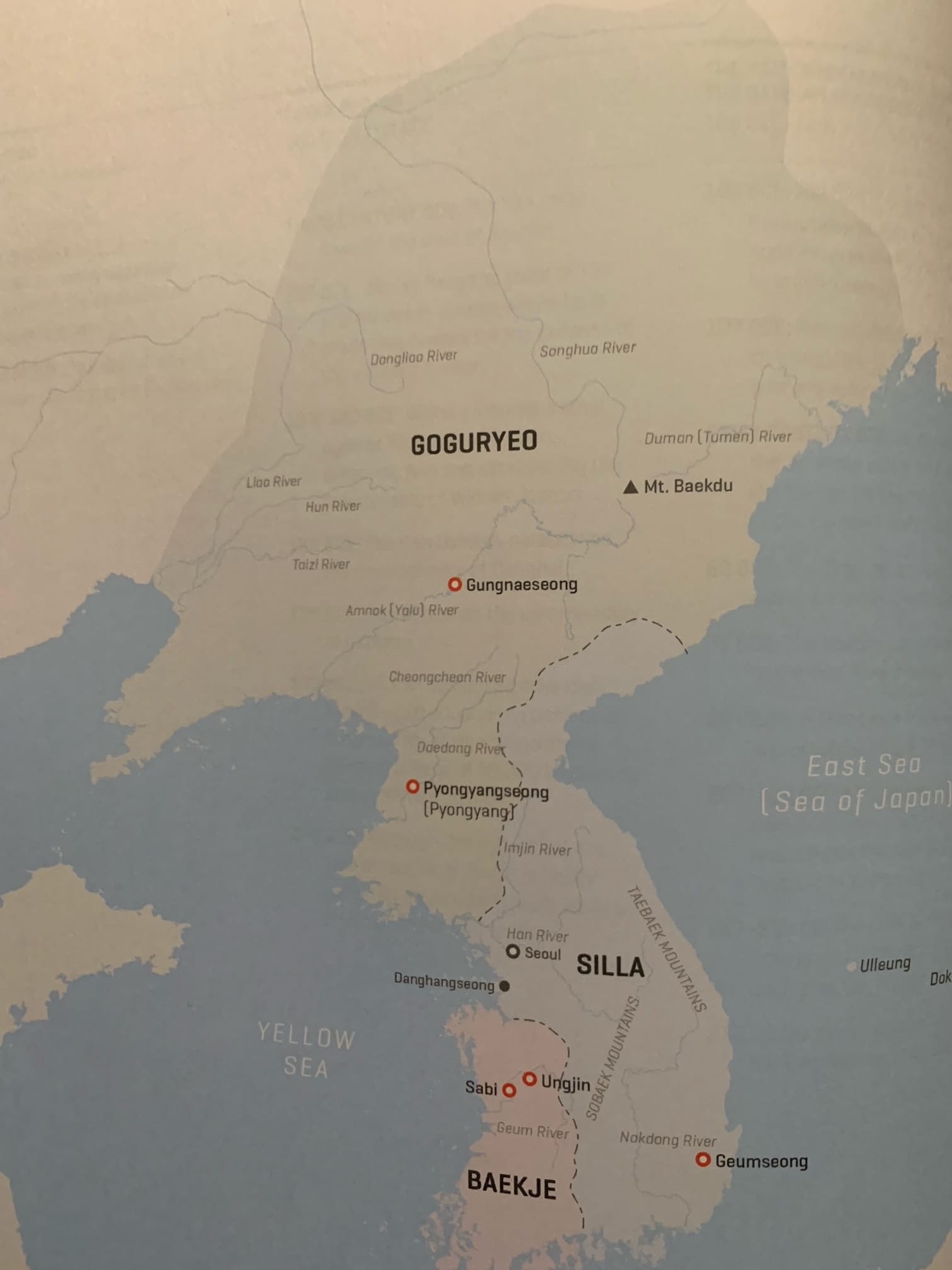
Korea’s influence on Japan was particularly significant during the Three Kingdoms period, when the Baekje kingdom played a key role in introducing Buddhism to Japan in the mid-6th century.
Alongside religion, Baekje artisans and scholars also brought advanced techniques in architecture, pottery, and metalworking, leaving a lasting imprint on early Japanese culture.
This cultural exchange helped shape the foundation of Japan’s early state, intertwining Korean expertise with native Japanese traditions to form a unique cultural identity.

Although Chinese, Korean, and Japanese cultures are interrelated, they have distinct characteristics.
China is the cultural motherland to which both Korea and Japan were indebted for centuries.
However, due to their long periods of isolation, both Korea and Japan developed unique interpretations of the philosophies and traditions imported from China.

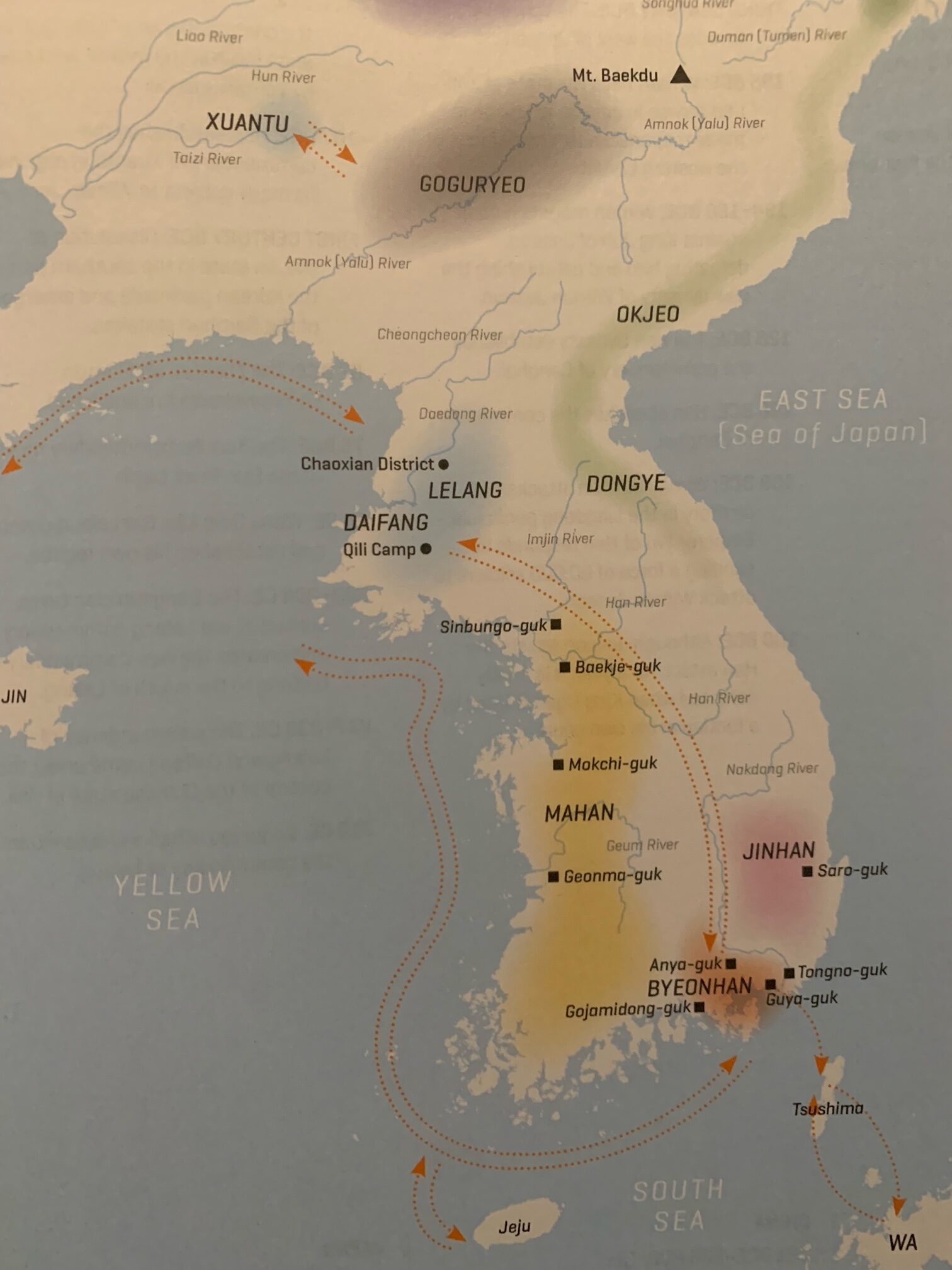
Korean History in maps Cambridge university press


Korean melancholy
3rd to 4th. century

Korean melancholy
6th century

Korean Melancholy
mid 6th century

What about Korean Melancholy the North

But what about the brothers and sisters behind the barbed wire in the North? Would they bend along or practice with rockets?
The mountains also observed the all-dominant Kim family. The regime, with all its cruelty, propaganda for domestic or foreign use,
the Gulag system, and starvation, does not escape the attention of the almighty. The regime, the dictator, could not provide the altars with food and drinks.

I realise that the Soju bottle is empty. Walking across the parking lot, I see the car that passed me just now.
The driver gets out and bends. He introduces himself as Oh Yang Chon and hands over his ticket. Police!

Changneung 3 New City: Impacts on growth and development

Significant Changes Around Baedagol Gill

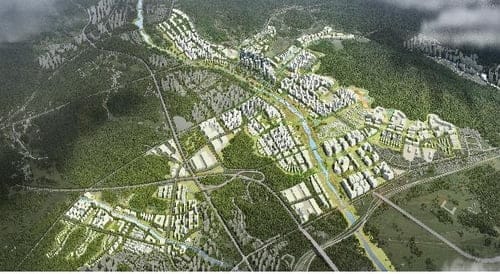
Goyang Changneung District image

Changneung 3 New City is driving growth and development in Korea, impacting communities like Baedagol Theme Park and Goyang Koi Farm. In The Koreans and I you can read: As I softly chant ‘Na-mu Ji-jang Bul,’ I let the words guide my steps along Baedagol-gil, the path running alongside the Seongsaheon River. The river, now a small stream, burbles quietly below me, its sound almost drowned out by the symphony of Cicadas. Each step feels like a journey between worlds, much like the river, which swells during the monsoon only to retreat into a quiet stream under the summer sun. It makes me a little bit sad that all this will change. Read more about how it was in The Koreans and I.

The Geological Foundation of Korea

Changneung 3 New City
Baedagol theme park, backed by the Seoul mountains and the new peace road.

Korea, a beautiful peninsula located almost like a bridge between China and Japan, has a geological history that dates back to the Precambrian era. The peninsula is composed of ancient granite and gneiss rocks, interspersed with volcanic rocks, mainly in the south and on the Jeju Islands. The mountains, such as the Taebaek mountain range running from north to south, form the backbone of Korea’s landscape. These mountains have played a crucial role in shaping the climate, water sources, and agricultural possibilities in Korea.

The rich river deltas, such as those of the Han River, have produced fertile soils perfect for agriculture. The western and southern coastal areas, where rivers flow into the Yellow Sea, are particularly fertile and have attracted large populations throughout history.

From Traditional Agriculture to the Division of North and South

Agriculture in Korea has a long history, beginning with rice cultivation likely introduced during the Neolithic period. Over the centuries, Korea developed into a society heavily dependent on rice farming, as well as other crops like barley, wheat, and soybeans. Agricultural methods were refined, using irrigation and terracing, especially in the mountainous regions.

During the Joseon Dynasty (1392-1910), agriculture was the backbone of the economy, and the government promoted the development of rice fields and irrigation systems. This period also saw the spread of Confucian ideals, which valued land use and agricultural productivity as central principles.

After the Japanese occupation (1910-1945) and the subsequent Korean War (1950-1953), the peninsula was divided into North and South Korea. This division led to different agricultural strategies: North Korea, with its mountainous terrain, focused more on collectivist agriculture, while South Korea, with its fertile valleys and access to the sea, underwent agricultural modernization, supported by the Green Revolution and technological innovations.

Urbanization and Modernization to the Present Day

Enjoying a cup of coffee or tea after a leisurely stroll.

In the second half of the 20th century, South Korea underwent rapid industrialization and urbanization. The migration of populations from rural areas to cities was immense. Cities like Seoul, Busan, and Incheon grew into metropolises, driven by a booming economy centered on technology, the automotive industry, and international trade.

Urbanization brought challenges, such as the loss of agricultural land and environmental issues. In recent decades, the South Korean government has tried to balance urban growth with environmental preservation. This has led to plans like the development of new cities, including Changneung 3 New City, to alleviate pressure on existing urban centers.

The Koreans’ deep respect for the environment is evident in their cultural practices, as seen in their traditional gardening methods. For example, in Korean Gardening: The Gods Are Praised, we see how gardens are designed not just for aesthetic beauty but as sacred spaces that honor the gods and nature. This cultural respect for the environment gives me confidence that Changneung 3 New City will be developed with the same attention to natural beauty and environmental care. Although, of course, it can’t quite compare to Rotterdam—said with a smile.

The Impact of Changneung 3 New City Relocation on Baedagol Theme Park and Goyang Koi Farm

Changneung 3 New City
Little neighbourhood shrine

One of the most recent examples of this urbanization is the development of Changneung 3 New City, an ambitious expansion of the urban areas around Seoul. This project is designed to accommodate the growing population and stimulate economic activities. However, this expansion also affects existing communities and businesses.

Baedagol Theme Park and Goyang Koi Farm are two such locations impacted by the development of Changneung 3 New City relocation. Both businesses have deep roots in the local community and are well-known attractions for both residents and tourists. Unfortunately, due to the plans for the new city, these businesses are forced to relocate to new sites.

Baedagol Theme Park, known for its educational and recreational activities that highlight Korean culture and nature, will have to find a new location to continue its mission. Goyang Koi Farm, a place where koi enthusiasts gather to admire and breed these beautiful fish, will also need to seek a new home where it can continue its tradition.

Read More About The Koreans and Their Environment:

    1. Korean Nature is Unique – Discover the unique aspects of Korean nature and how they have been shaped over time.

Natural Korea

  1. Odors Give Way to Fragrance in 19th Century – A fascinating look at how scents and odors changed in 19th-century Korean gardens. Beautiful odors
  2. Korean Gardening: The Gods Are Praised – Explore how Korean gardening traditions honor the gods and hold deep cultural significance. The gods are praised.

Korea’s geological foundation has laid the groundwork for a rich agricultural tradition that has contributed to the development of the country over the centuries. Rapid urbanization in modern times has led to new opportunities but also challenges for existing communities. The Changneung 3 New City relocation and the forced relocation of Baedagol Theme Park and Goyang Koi Farm are examples of the ongoing balance Korea must strike between progress and preserving its cultural and natural heritage.

Goyang Koi farm back ground

Kim Young Soo’s Vision

Traveling Korea Goyang Koi farmKim Young Soo, the visionary behind Goyang Koi Farm, embarked on his journey of Nishikigoi breeding in 2000, driven by the desire to find sustainable alternatives to traditional Korean agriculture. Faced with global financial challenges and the opening of Korea’s market to foreign agricultural products, Kim sought to establish Goyang Koi Farm as a hub for Nishikigoi breeding and exporting. Through perseverance, he has not only developed a domestic market for ornamental carp in Korea but also aims to introduce Korean-bred koi to the world, transforming idle farmlands into thriving koi nurseries. His story is one of innovation, tradition, and dedication to creating a new future for Korean agriculture. Discover how Kim Young Soo’s vision is reshaping Korean agriculture: Kim Young Soo

“From Koi Farm to a Great Theme Park

Goyang Koi farm

The transformation of Goyang Koi Farm into Baedagol Theme Park is a remarkable journey that encapsulates both ambition and cultural heritage. This story, narrated by Hugo J. Smal, chronicles how Kim Young Soo’s vision expanded beyond koi breeding to creating a vibrant theme park that merges nature, culture, and community. Located near Seoul, Baedagol not only showcases beautiful Nishikigoi but also offers a rich cultural experience for visitors, including historical insights, traditional Korean practices, and family-friendly activities. This article delves into the challenges and triumphs of building this unique destination, which has become a symbol of innovation and dedication in Korea. Discover how Kim Young Soo’s vision is reshaping Korean agriculture. Explore the incredible journey from a koi farm to a theme park. transformation

“Big Korean Adventure”

Goyang Koi farmHugo J. Smal’s journey in Korea is a testament to the challenges Explore the incredible journey from a koi farm to a theme park. triumphs of introducing koi culture to a new audience. In his “Big Korean Adventure,” Hugo shares his experiences of helping to establish the koi industry in South Korea, including the cultural and logistical hurdles he faced. This adventure began with an invitation from Kim Young Soo, CEO of Goyang Koi Farm, and led to significant developments in the Korean koi scene. From setting up koi shows to navigating European export regulations, this story captures the determination and passion behind Korea’s growing koi industry, as well as the cultural richness that accompanies it. Read more about this unique adventure in the world of Korean Koi. Korea adventure

“To Jangbong-do: Good on Boats”

[:en]https://commons.wikimedia.org/wiki/File:Bubo_bubo_winter_1.jpg[:]
image
In this reflective piece by Hugo J. Smal, the journey to Jangbong-do, a serene island near Incheon, offers not only a physical adventure but also a deeper connection with nature and the elements. As Hugo navigates the challenging terrain and the unpredictability of the sea, he discovers a profound sense of harmony with the environment. The narrative explores his experience of searching for the elusive Eurasian Eagle-Owl, bonding with local companions, and finding peace amid the waves. Through moments of quiet introspection and cultural encounters, Join Hugo on his serene journey to Jangbong-do Korea 

“Goyang Koifarm Fish house: A Koi Oasis”

Goyang KoiThe Goyang Koifarm Fish house is more than just a breeding facility; it’s a sanctuary for Nishikigoi and a testament to the dedication of Kim Young Soo and his team. With 19 meticulously maintained ponds and a total water capacity of 400,000 liters, this fish house serves as the epicenter of koi breeding in Korea. The facility is designed not only for the well-being of the koi but also to offer visitors a serene environment, complete with lush greenery and even resident parrots. This article delves into the ongoing developments at the Goyang Koi Farm, including the ambitious plans for a new koi hub on Modo Island, and how the Peace Road project will enhance accessibility and global connectivity for this growing. Find out what makes the Goyang Koifarm Fishhouse a true koi oasis. koi sanctuary.

“Korean Koi in the Year of the Ox”

As the Year of the Ox unfolds, it brings a period of slow yet steady progress for the Goyang Koi Farm under the guidance of Kim Young Soo. Despite the challenges posed by the ongoing Covid-19 pandemic, which has significantly impacted both Korea and the Netherlands, Kim remains committed to expanding the Korean koi industry. This article by Hugo J. Smal highlights the exciting developments planned for Modo Island, where a new koi farm, restaurant, and botanical garden are under construction. With the Peace Road project set to improve connectivity and reduce travel time to Incheon Airport, the future looks promising for the global export of Korean Koi. The Year of the Ox symbolizes resilience and determination, traits that will guide these new ventures toward success. Learn how the Year of the Ox is shaping the future of Korean koi. ventures toward success. 

“Carps and Dragons, Happy Seollal”

As the Year of the Dragon dawns in 2024, Seollal, the Korean New Year, brings with it rich cultural traditions intertwined with mythology. This piece by Hugo J. Smal explores the deep connection between carps, or Koi, and dragons in Korean lore, highlighting their significance during this festive time. The carp’s transformation into a dragon symbolizes perseverance, strength, and success, echoing the values that resonate deeply in Korean culture. As we celebrate Seollal, these ancient stories remind us of the enduring power of hope and the beauty of Korean traditions, reflected in both art and life, especially at places like the Goyang Koi Farm. Dive into the mythological connection between carps and dragons during Seollal. Carps & Dragons

Read more about Hugo’s adventures: The Koreans and I

Koi talk Nishikigoi  Goyang Koi farm 고양 코이 농장 Contact Youtube

When you are a Koi, garden or pond equipment producer this might important for you Professionals.

Korea on your bucket list

You have to go to Korea.

Hello and welcome to Mantifang.com, your starting point for discovering Korea! This page is not just about travel inspiration — it is an invitation to experience Korea in all its depth. It invite you to put Korea on your bucket list. Written by Hugo J. Smal, our chief editor, who has traveled Korea many times and knows how to guide you towards unforgettable experiences.

korea on your bucket list
Squid Game showed the world Korea’s thrilling side — now it’s time to discover it yourself.

If you saw the Squid Game or the Itaewon Class series, you already felt the energy. But nothing compares to living the real adventure: tasting bibimbap in a local market, sharing Korean barbecue with new friends, or dancing in one of Seoul’s nightclubs. Korea is waiting for you — the question is not if, but when you will check it off your bucket list.

When do you check Korea on your bucket list?

The Land of the Morning Calm offers stories, films, and history — but being there in person is incomparable. From the palaces in Seoul to the UNESCO World Heritage sites in Gyeongju, every destination tells a story. The Sansa mountain monasteries, added to the World Heritage List in 2018, are just one example. Maybe a temple stay will change the way you look at life.

Travel tips to Korea

Planning your trip is easier than you think. Direct flights from Europe and the US connect to Seoul’s Incheon Airport, one of the best-rated airports in the world. Trains such as the KTX bring you in just a few hours from Seoul to Busan or Gyeongju. The best time to travel? Spring (cherry blossoms) and autumn (colorful foliage). At Mantifang, we make sure you find all the background stories and inspiration to make your journey unforgettable.

Wondanggol Valley — where wind, water, and memory shape the land.

Today I published a new page about this quiet place in Goyang: its healing gardens, its history, and the hidden shrines that still watch over the valley. If you want to see where the Jijang Fractal first appeared in my journey, start here.

Four Korean Women

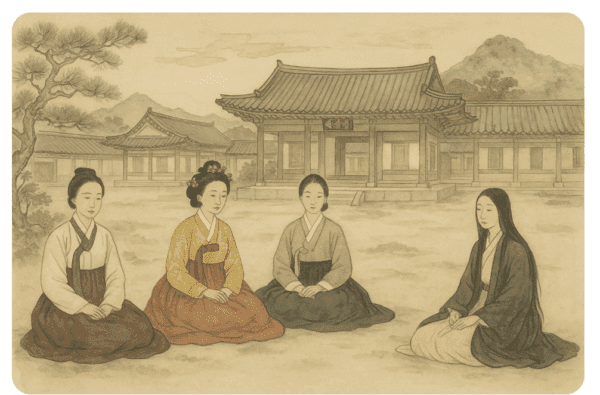
Four women of Joseon depicted in a Korean painting style on the courtyard of Gyeongbokgung: Queen Jeonghui, Deposed Queen Yun, Heo Nanseolheon and Murasaki Shikibu.

My new story brings you into the world of four extraordinary women who shaped Korean history and culture — Queen Jeonghui, Deposed Queen Yun, Heo Nanseolheon, and Murasaki Shikibu. Their lives reveal a Korea of inner strength, quiet power and timeless beauty. A perfect starting point for anyone wanting to explore the deeper layers of the country beyond the usual travel guides. Read the full story.

Sansa, Buddhist mountain monasteries in Korea

The Sansa monasteries are spread across the peninsula. Their open courtyards, Buddha halls, pavilions, lecture halls, and dormitories have survived centuries of faith and practice. These mountain sites remain sacred and active. Experiencing them gives you a glimpse into Korea’s spiritual depth.

Baedagol Bakery & Forest House — taste tradition, explore nature.

Baedagol
Baedagol Bakery & Forest House — taste tradition, explore nature.

Baedagol: a hidden treasure near Seoul

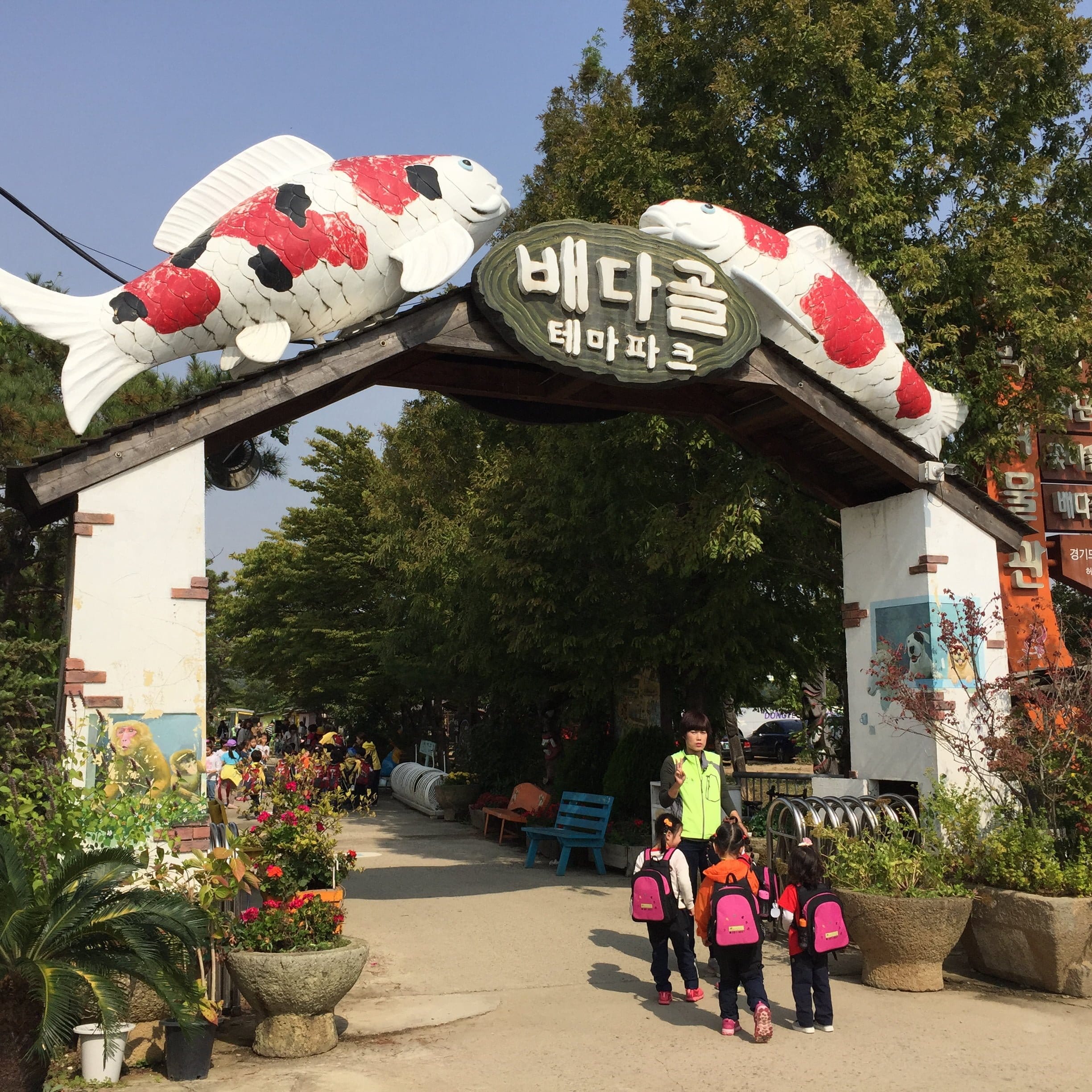
If your journey brings you to Goyang, you cannot miss Baedagol. This theme park is transforming into a place where culture, history, and nature meet. Our sponsor Kim Young Soo, CEO of Goyang Koi Farm, welcomes every visitor with warmth. Take the chance to say hello, enjoy the atmosphere, and discover how Korea’s traditions are brought to life in new ways. Baedagol is more than a park — it is a symbol of renewal and connection, and it belongs on your Korea bucket list.

Put nature Korea on your bucket list.

For mountain lovers, Korea is paradise. Hiking is in the Korean soul — families and friends gather every weekend to climb mountains such as Seoraksan or Bukhansan. The reward is not just the breathtaking views, but also the shared meal afterwards. And if you love culture, combine nature hikes with visits to ancient temples and villages. On Mantifang, you will find personal travel stories that inspire you to plan your own route.

North Korea on your bucket list?

Visiting North Korea remains a challenge. The government strictly controls what is shown to visitors. But times may change, and who knows what the future will bring? Until then, Mantifang focuses on the South — rich, vibrant, and open to discovery.

Discover Korea: A Culinary Journey Full of Flavor

Korean cuisine is a world on its own. Bibimbap, bulgogi, kimchi, and countless regional dishes — each meal is an adventure. It is not just food, but a cultural ritual that brings people together. Read more in our dedicated section: Korean Kitchen.

Mantifang as your guide

This page is just the beginning. Explore more on Mantifang:

Use Mantifang as your compass for exploring Korea — culture, history, art, and koi. Wherever your journey starts, we are here to inspire and guide you.

TIP: Hugo J. Smal, our chief editor, is always happy to answer questions: h.smal@me.com

Koi Breeding at Goyang Koi Farm

written by Hugo J. Smal

Kim Young Soo is very enthusiastic.

Koi Breeding at Goyang Koi FarmKoi Breeding at Goyang Koi Farm. Their will be new Nishikigoi from Japan This means a lot of work but also a lot of joy. The first step involved preparing the quarantine ponds, which included two ponds for the fish and two as a buffer for water changes. Ensuring a healthy environment is critical. The water must be meticulously treated. Concurrently, there were numerous telephone discussions with contacts in Japan.

Ikarashi Kikusui
Female 63 cm. Miyatora Doitsu Showa
Female 61 cm Miyatora Doitsu Sanke
Female 67 cm

Arrival of New Nishikigoi

Our man in Japan is Yoshinori Kosugi San from Kosugi Kohsan inc. We planned to go on on a Koi hunt in February.  I longed to see Niigata again. Corona wouldn’t allow that. So he went alone to the “Ozumi Ikarashi Koi Farm” and Miyatora. Assignment: good quality Doitsu men and women. The fish were selected using photos and videos. It was then up to the “Niigata Prefecture Inland Water Fisheries Experiment Station” to issue certificates for health. They took tests for Spring Viraemia and Herpes virus. It was good. Finally, the fish arrived at the Goyang Koi farm in the middle of the night. The Korean authorities also carried out the same tests to ensure health.

Miyatora Doistu Sanke
Female 73 cm Ikarashi Benikikokuryo
Female 71cm Ikarashi Benikikokuryo
Female 71 cm.

Koi Breeding at Goyang Koi Farm.

You might think the fish would want to swim leisurely in their pond and rest. But that’s not the case. “You test our health? We’ll demonstrate our vigor,” they seem to say. On the morning of Monday, April 27, Kim Young Soo found the females laying eggs. It’s a common occurrence; when females are introduced to a new aquatic environment, they frequently lay eggs. This is well-known among volunteers at Koi shows globally, which is why many competition tanks are regularly cleaned.

Koi Breeding at Goyang Koi Farm means only one thing: the breeding season has started!

[embedyt] https://www.youtube.com/watch?v=Sd4-DpVsnIw[/embedyt] [embedyt] https://www.youtube.com/watch?v=O80xdURTrD8[/embedyt]

Koibreeding at the Goyang Koifarm 2020

Ad the Goyang Koifarm the spawning is done. Kim Young Soo did put a lot of dedication, time and energy in it. It’s not that difficult to let the Koi spawn. Simply put a woman with some men together at the right time and they will know what to do.

It’s difficult to select women and men. You must know them and have an idea about the offspring they will bring. This is the special knowledge of the Koibreeder. Kim Young Soo is very enthusiast. Yes, there are about 2 million eggs hatched and put into the mud ponds. That is a lot of eggs. Soon the most difficult part of breeding Koi must be done: the selection!

Here I some movies and images of the Koi breeding at the Goyang Koi farm season 2020.

[embedyt] https://www.youtube.com/watch?v=0R1AVZlyctE[/embedyt]

This spawning Kohaku really looks impressive. We hope their offspring will do the same. Kim Young Soo, breeder at the Goyang Koi farm put a lot of trust in that.

[embedyt] https://www.youtube.com/watch?v=xYUzNhIXNbw[/embedyt]

Taisho Sanke. One of the Go Sanke. Kim Young Soo wants to breed a lot of them.

[embedyt] https://www.youtube.com/watch?v=meXkfO70iHM[/embedyt]

What will this bring? Sanke, Bekko and white?

[embedyt] https://www.youtube.com/watch?v=knYAq0DbeTQ[/embedyt]

The most important of all Koi. At least, that is what the hobbyists think. Kim Young Soo, feels the same. Your wish is our demand.

[embedyt] https://www.youtube.com/watch?v=Uvo5IiUfA40[/embedyt]

Doitsu is very popular these days. Not for the high medals they win in Japan. Just because their skin an colouration made them beautiful. Much Koi hobbyists want them in their pond. Kim Young Soo, is also very interested also.

[embedyt] https://www.youtube.com/watch?v=RJZoVkeaG3E[/embedyt]

This spawning is an adventure. Kohaku and Ogon. Kim Youg Soo,  tells that some beautiful Showa is the offspring.

[embedyt] https://www.youtube.com/watch?v=Bh16-uIPXnU[/embedyt]

The fish did a great job. Kim Young Soo collects them to put them back in their pond.

[embedyt] https://www.youtube.com/watch?v=mmLifsc0gFE[/embedyt]

This is the result. Kim Young Soo shows the little ones proudly.

[embedyt] https://www.youtube.com/watch?v=2QOKLEdNbJQ[/embedyt]

This one of the mud ponds of the Goyang Koifarm. In this, the fry will grow until they are 4 centimetres. Then they go for the selecting rounds.

[embedyt] https://www.youtube.com/watch?v=GDHoFFHBIhg[/embedyt]

These are Showa and Kohaku from two different spawnings. The debris on the water surfaces is a lot of mosquito larva. Thanks to them the fry will get extra to grow. Next to that, they get great Koi food.

[embedyt] https://www.youtube.com/watch?v=opDqLbCPAC8[/embedyt]

These are somewhat older fry. Maybe two months. They have a great life at the Goyang Koi farm.

Of course, we will publish the selecting of these babies. If you want to stay informed? Please subscribe to our posts.

After de Koi Breeding at Goyang Koi Farm de first selecting is done.

Last weeks some 2 million Koi eggs have hatched at the Goyang Koi farm. All the little fishes are swimming in the mud pounds. Now It’s time to make a fist, very early selection.  I am very happy to look at how Kim Young Soo is doing this. Watching and learning That’s all I can do.  But I am eager to learn from the master.

Kim Young Soo is carefully setting up his Koi selection station.

The environment is very nice at the Baedagol Theme park. Birds are singing and the sun is shining. The little Koi are glittering in the water. Two million! It will take a lot of effort to get it done.
When I have to do it will also take a lot of time. But Kim Young Soo’s quick eyes and decisions will get things done. And yes, he doesn’t have the time to explain.

Hence, I have to be a quick watcher to learn anything.
[embedyt] https://www.youtube.com/watch?v=-F01ye9WWlU[/embedyt] Kim Young Soo is starting the selecting of the small carps. It’s a very early selecting. These Nishikigoi are from the Doitsu breedings. This is how Koi Breeding at Goyang Koi Farm is done.

[embedyt] https://www.youtube.com/watch?v=BTynKzxmcWw[/embedyt] Last months the Goyang Koifarm hatched about 2 million eggs. The little ones are all in mud pounds now, growing after the Koi Breeding at Goyang Koi Farm

[embedyt] https://www.youtube.com/watch?v=bBKUnIg9Tqw[/embedyt] It’s difficult to get the Koi out of the mud pound. Hanging a net with big pellets Koi food makes it much easier.

[embedyt] https://www.youtube.com/watch?v=k8w30_0fsg0[/embedyt] Kim Young Soo puts the small koi into a net. So he can look at them carefully and select his Tatekoi.

[embedyt] https://www.youtube.com/watch?v=DAwaFV5FmHM[/embedyt] Kim Young Soo carefully selects his small Koi.

[embedyt] https://www.youtube.com/watch?v=63EOdflJx7s[/embedyt] Kim Young Soo looks for the small Koi that are showing futures off there sort. Most off them are Kohaku.

[embedyt] https://www.youtube.com/watch?v=Qo813Knyv_Y[/embedyt] In this selection Kohaku is the word!

[embedyt] https://www.youtube.com/watch?v=6LBPkI7vDhU[/embedyt] These Koi are selected to go into the special Tategoi pond. They stay there for some months and then Kim Young Soo decides if they become Tateshita or stay most promising ones: Tategoi!

[embedyt] https://www.youtube.com/watch?v=teL1D-nRZPc[/embedyt] These Koi are still too small to be selected now. Hence the breeder of the Goyang Koi farm decides to let them in the Mudpound for some more weeks.

[embedyt] https://www.youtube.com/watch?v=1SZ3AbOAiA4[/embedyt] Although they have to travel maybe 200 metres they are put in a plastic bag with oxygen. These youngsters are very delicate. We have to take extra care of them.

[embedyt] https://www.youtube.com/watch?v=wcUZ86uH_DI[/embedyt] These are real Tategoi. We, at the Goyang Koi farm, will take very good care of them. Maybe they will find their way to your pond in the coming years.

Tosai are growing well!

Kim Young Soo is very happy. The Goyang Koi are 2 months old now and doing great. They are growing very well and are promising stunning fishes in the future. Of course, they will be selected again and again. Hopefully, they find next year their way to the ponds of Nishikigoi lovers all over the world. Koi Breeding at Goyang Koi Farm, it is a lot of work.

[embedyt] https://www.youtube.com/embed?listType=playlist&list=PLSYTfa140zYhJwiH_SziUG4OGDMTqq8cD[/embedyt]

Goyang Koi farm: Tosai 19 September 2020

Kim Young Soo, breeder at the Goyang Koi farm sends me movies about the Tosai on a regular basis. It’s nice to see but also frustrating. I rather was at the Baedagol theme park. I am in the Netherlands and going back to Korea now is almost impossible.

Corona makes it very hard to get Visa. So I hunger for the learning experience I get watching Kim Young Soo select our Nishikigoi. I miss being with Koi, seeing them swim, eat and grow. In the Netherlands I don’t have a Koi pond so my carp Joy is starving almost to death.

Yes, Corona months are hunger times

The only thing I can do is watch the movies and longing for better days. The day COVID 19 is under control I have a ticket to Korea. Yes I want to see the fishes live! I want to follow Koi Breeding at Goyang Koi Farm.

Please like our FB-page  or follow us on you tube Splashing Korean Koi 

[embedyt] https://www.youtube.com/embed?listType=playlist&list=PLSYTfa140zYhxfeLSOV_4ujSGf0L21_FY[/embedyt]


Discover the World of Koi with Koitalk.app

A Message from Our Chief Editor

Koitalk
 

Greetings to all our esteemed readers and koi enthusiasts!

I’m Hugo J. Smal, the Chief Editor of The Mantifang and Koitalk.app. It is excited to share with you the vibrant and interactive world of koi carp that we’ve nurtured on Koitalk.app. My journey in the koi community, from founding the Nishikigoi Vereniging Nederland and initiating the first Holland Koi Show to Korea, has always been fueled by a passion for these magnificent creatures. Today, as the Public Relations Manager of the Goyang Koi Farm in Korea, I continue this journey with even greater zeal.Koitalk.app

Koitalk.app is more than just a platform

It’s a community where koi hobbyists, experts, and newcomers alike come together to share, learn, and celebrate the art of koi keeping. Our dedication to providing comprehensive and reliable information reflects in our content, which ranges from koi care to pond design, backed by my personal experience and expertise.

Shikibu Tsuku your Bot Hostess.

Unique Shikibu

What makes Koitalk.app truly unique is our interactive chatbot, Shikibu. Designed to assist you with your queries, Shikibu is a testament to our commitment to innovation and user-friendly experience. Whether you’re a seasoned koi keeper or just starting out, Shikibu is there to guide you through the fascinating world of koi.

Dear Koi Enthusiast,

Greetings from Shikibu, your devoted guide in the serene realm of Nishikigoi. It seems that my previous response might not have fully resonated with your query. Allow me to gently steer our conversation back to the tranquil waters of understanding.

Nishikigoi is a place of diverse wonders, much like the intricate patterns of a Koi. Each inquiry you bring forth is unique, and I am here to navigate through them with you. May I kindly ask you to elaborate a bit more on your interests or questions? Whether your curiosity lies in the depths of history, the vibrant strokes of culture, or the delicate art of Koi keeping, I am here to assist.

Together, let’s embark on a journey of discovery, where every question is a ripple in the pond of knowledge. I eagerly await your guidance on the next path to explore in our enchanting Nishikigoi.

Warm regards, Shikibu

Follow Shikibu on Facebook Or read about her “Mono no aware

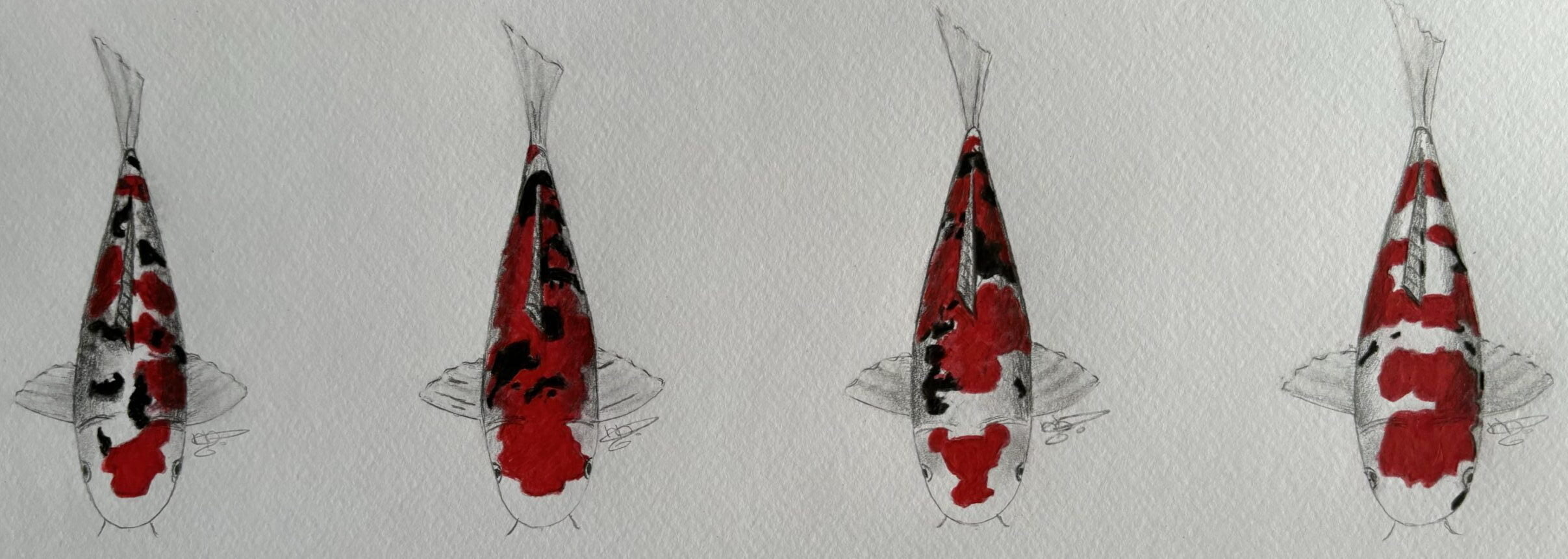
We refuse to settle for AI-generated images. Mickey Paulssen is pouring all her skills, dedication, and a great deal of time into drawing these pictures. We are confident you will appreciate them and they will assist you in recognizing your Koi. facebook Mickeys art & scapes

Join us on this remarkable journey at Koitalk.app, where the beauty of koi culture comes alive. Dive into our articles, engage in lively discussions, and get personalized advice from Shikibu. As we continue to grow and evolve, your insights and contributions are invaluable to us.

Ready to elevate your koi experience? Join us at Koitalk.app now, and become part of a community where passion for koi thrives, guided by expertise and innovation! 

Here’s to exploring the depths of koi keeping together! Koitalk.app 

Warm regards,

Hugo J. Smal , Mantifang and Koitalk.app