Korean melancholy

The Jijang Fractal Chapter 4

writer Hugo J. Smal

Korean melancholy, or Han, is not merely a cultural engine.

A small white heron startles. Back on the embankment, I open a bottle of Soju and take a sip.
The cicadas remain silent, their usual song absent, as if nothing in the night dares disturb their rest.
Yet beneath the stillness, a tension lingers, a quiet discomfort that mirrors my own unease.
In the distance, I hear a trumpet announcing the night. It comes from the barracks.
Soldiers are everywhere here. It does not worry me. I still tasted the food at Sarangche.

Korean melancholy
war zone

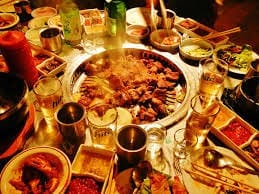
The table looked a bit like a war zone, always full.
It is quite a task for the waitress to put it all down the integrated barbecue, the many bowls with side dishes,
bowls with peppers, garlic and lettuce leaves, the bottles and cans, the bowls with rice, the plates, sticks and napkins.
And off course Kimchi.
We enjoyed it well. Kim Young Soo signalled.
He walked to the counter to pay. Two other men fought. The Soju tasted good, its warmth spreading through me,
but it carried with it a familiar ache, like an old song I had forgotten but could never quite let go.
The fight was not about who should pay. It was not about the money, but something deeper—perhaps a sense of duty, or pride,
rooted in traditions I could barely grasp. Here, even the smallest gestures seemed to carry the weight of a lifetime.
Their voices rose, not in anger, but in fierce determination—each insisting on their right to bear the burden.

Outside, the police occupied the street, their smiles strangely out of place in the midst of such rigid control.
The waiting began—cars stopped, drivers submitted, blowing into breathalysers with a resignation that felt heavier than the night itself.

The boss lit a cigarette and again coffee was served from the restaurant. Jay looked disappointed, his eyes distant,
as if the long drive to Seoul wasn’t just about distance, but about returning to a silence he wasn’t ready to face.
I started to walk. The rest had to wait, well into the night if necessary, until the police had had enough.
In the Gumeonggage, the local shop, I grabbed some bottles of Soju,
a few packs of cigarettes, and some biscuits. The seventy-year-old woman behind the counter smiled as I handed her my purse,
trusting her without question. Perhaps it was the simplicity of the exchange—something clean, something untainted by the complexities
of the outside world—that made me feel at ease.

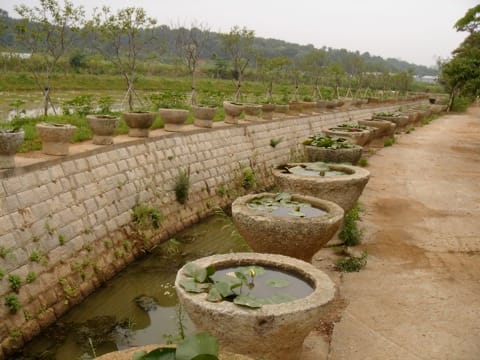
Protected tree frog, Korean melancholic sounds

It is quiet on the Baedagol gill. The dinner is still buzzing in my head.
Even though I was not always involved in the conversation, it remains overwhelming.
They are energetic people those Koreans.

Korean melancholy
Save haven

When they drink, they remind me of my hometown buddies the Rotterdammers—direct, inflammable, and unafraid to roll up their sleeves.
But the similarities end there. Seniority is everything here. It’s a hierarchy that’s ingrained in every gesture, every conversation.
I keep hammering it into my head, yet it still feels foreign, heavy. In the Netherlands, we walk beside each other.
Here, we walk in a line—always behind or ahead, never side by side.

Jetlag has a hold on me, pulling me into a fog I can’t quite shake. Even the Soju can’t dull the edge.
Sleep, I’ve decided, is an overrated luxury. Only old generals die in bed, after all.
Time slips through my fingers here in Korea, faster than I can catch it.
In Rotterdam, I’ll sink into the culture shock like a stone into deep water.
But here, it’s the cicada that keeps me on the surface, restless, always awake.


Korean melancholy 
img 

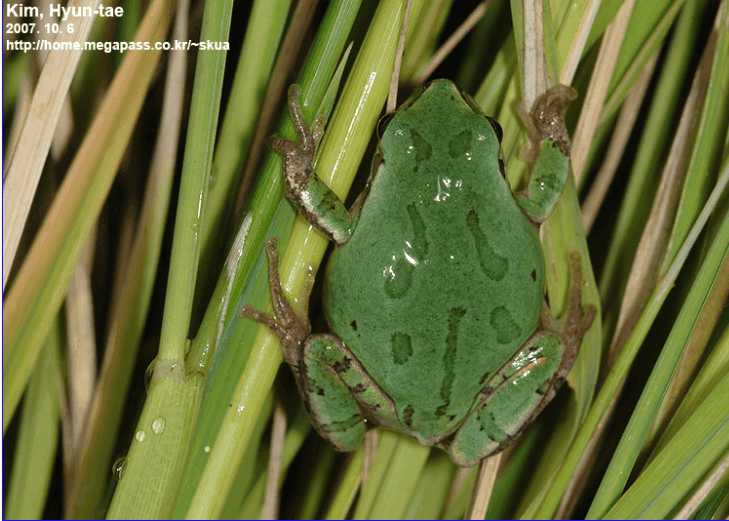
In addition to the cicada, there’s another troublemaker—the male Suweon tree frog, whistling his high, desperate call into the night.
Only eight hundred of them left, they say, trapped between two rivers, clinging to their patch of land. His whistle echoes, unanswered.
It’s a fight for survival, for recognition. Just like the Koreans, he has finally carved out his own place, standing apart from his Japanese
and Chinese cousins. But the cost… the cost is always there, hidden under his green skin.

No Korean melancholic but coals

Originally, the tree frog sought out rice fields for its home, but those have almost all disappeared.
On Baedagol, however, they’ve managed to find a sanctuary in the water features, clinging to survival.
At least eight hundred tree frogs now live in the theme park alone—perhaps more.
Kim Young Soo’s dream has come true: a small piece of a lost world restored.
But even this refuge is fleeting. The expansion of Changneung 3 New City will soon swallow the land,
and with it, the Suweon tree frog’s fragile home. A place once reclaimed, soon to be lost again.

Korean melancholy

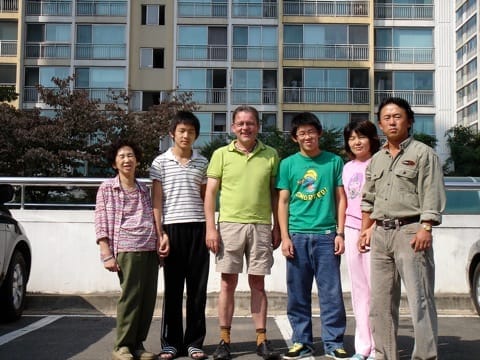
Kim Young Soo, his mother, wive, sons and the
writer.

According to his younger brother, he has set himself four goals. His family had to be taken care of first.
In Korea, it always concerns the extended family. So not only wife and two children but also mother, sisters, younger brother and everything related to it.
His father died when Kim Young Soo was young and poverty was very high in underdeveloped Korea.
He took over his father’s rose nursery and sold the flowers he grew on the street. Later he discovered a way to grow roses from seed.
With that, he earned enough money to first grow lotuses and then switch to breeding ornamental carp.
His second goal was to help the Hwajeong Dong people.
Baedagol theme park is the final result of this.
His third goal was to give something back to Korea itself, to create a place where nature could find refuge again.
The Suweon tree frog, once nearly forgotten, now thrives in Baedagol, much like Kim Young Soo himself.
But even as the frogs whistle their high-pitched call, there’s a knowledge that this place, too, will be overtaken by the march of time.
Changneung 3 New City will soon rise, and with it, Baedagol’s carefully nurtured ecosystem will vanish.
For Kim, the sense of achievement is always shadowed by the looming impermanence of it all.

The Suweon tree frog, resilient and fragile at once, whistles into the night, unaware that the sanctuary it’s found in Baedagol is only temporary.
Soon, the city’s progress will sweep it away, as it has done with so much before.
The frog, much like Kim Young Soo, fights to carve out a place in a world that is constantly shifting, always moving forward, leaving only echoes of what was.

Samguk Sagi and Yusa, a Korean melancholy history


Korean melancholy
Onjo

Hwaejeong Dong is already described in the historical books
Samguk Sagi and
Samguk Yusa.
The first is the Chronicles of the Three Kingdoms written by Kim Busik at the behest of King In Jong and published in 1145.
Samguk Yusa is the “Memorabilia of the Three Kingdoms“.
This was written by the monk Ir Yeon and contains legends, folk tales, biographies and historical accounts.
Originally, Han Chinese settled in Hwaejong Dong, but in eighteen BC the state of Baekje or Paekche was founded.
Onjo, the third son of Goguryo founder
King Dongmyeong, was not allowed to succeed his father.
The father had been married before. Because of troubles he fled from Buyeo to Jolbon. He left his family behind,
so he married the daughter of a local chieftain and fathered two more sons: Onjo and Biryu.
The refugee wanted his own state and therefore founded Goguryo with its capital Sŏgyŏng modern Pyongyang.
Yuri, the son from the first marriage found out about this and was soon in the palace to claim his birthright.
With that kind of family, this is never without drama.

Korean melancholy
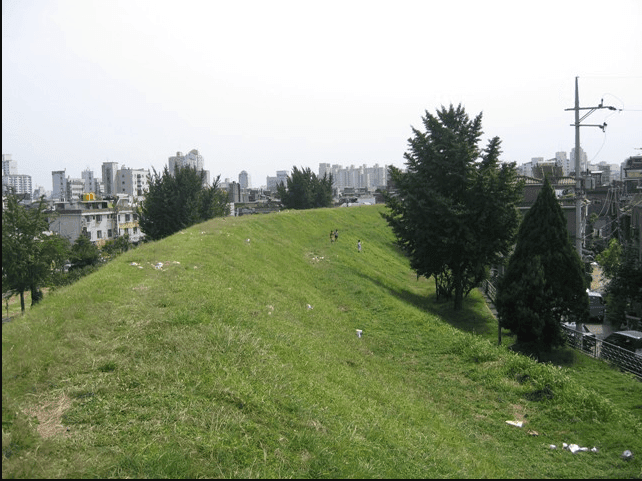
Pungnap Toseong beleaved the Onjo’s fortres wall

Onjo, seventeen years old, fled with his older brother Biryu, driven by the weight of family conflict and the desire to carve out their own place in the world.
He founded Wiryeseong present-day Seoul. Their he build an altar to honour his father.
But Biryu’s fate was less kind—he ignored his brother’s advice, ventured to the west coast, and found only saltwater and despair.
It is written in the books that he build Michuhol which is now called Incheon.
His suicide marked the end of one dream, while Onjo welcomed his brother’s followers with quiet resilience.
It was a tale as old as Korea itself—new beginnings, always born from loss.
Biryu’s death was not an isolated tragedy, but part of a longer lineage of sacrifices, each generation carrying the weight of the ones before it.
The younger brother called his state Baekje. The meaning of this name is explained differently, but I think “Hundred of houses grossed the sea” is the most beautiful.
During the reign of King Koi (243-286), the constitution was established and in 384
Marananta came from Ghandara Pakistan.
He told the then-newly installed King Chimnyu about Buddha.
Like Dryophytes suweonensis, Baekje relics are rare but of high quality.
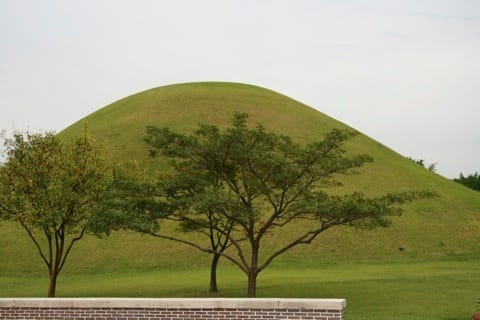
Together with younger brother and Kim Jay Ho, I visited King Muryeong’s tomb in
Gongju.
According to a stone plaque, the tomb dates from 523. It was two other tombs, accidentally discovered in 1971 during drainage work.

Korean melancholy

As I stood before King Muryeong’s tomb, I couldn’t help but think of how history preserves both grandeur and fragility.
The tomb remained untouched for over 1,500 years, its treasures safe from time and thieves.
But even here, in the stillness, there’s an echo of loss—Baekje itself, once a powerful kingdom, now survives only in fragments,
in relics buried under the weight of centuries.

The tomb is still one of Korea’s greatest historical discoveries. Like the discovery of King Tutankhamun’s tomb in Egypt,
the accidental unearthing of King Muryeong’s tomb in Gongju revealed treasures untouched by time.
Both tombs had remained sealed for over a millennium, protected from thieves and degradation, preserving not only the riches of their respective monarchs,
but also the cultural grandeur of their civilizations. Where Tut’s tomb highlighted the opulence of ancient Egypt,
Muryeong’s grave opened a window into the sublime artistry of Baekje.

Korean Melancholy
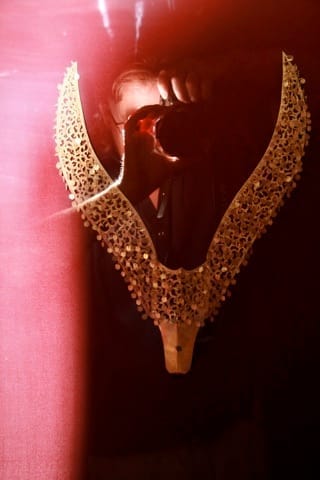
Geumjegwansik

Tomb robbers have not broken open its entrance for over 1,500 years. The treasures found in the tomb underlined Baekje’s sublime culture.
The Baekje people leased the tomb from the local earth spirits. It was also paid for.
Coins from the Liang dynasty were found on the stone,
proving that Baekje was influenced by that regime in China. The spirits fulfilled the contract because many royal decorations were found in the tomb.
The Geumjegwansik for example. These are two gold diadems worn by Muryeong (501 – 523). They were neatly stored in a small box.
They were cut from a thin, 2-millimetre, gold plate. According to tradition, the King wore the diadems on the right and left side of his black silk headscarf.
On top of the headscarf, he wore a black cloth top hat with a gold flower pinned on the back. The diadems resemble wings,
representing the belief in rebirth in Shamanism. Gold earrings, hair pins, a bronze wine cup with dragon and lotus motifs on the lid,
jade pendants and an iron sword were also found.
Korean melancholy

Two silver bracelets have the name of the
Baekje silversmith Dari
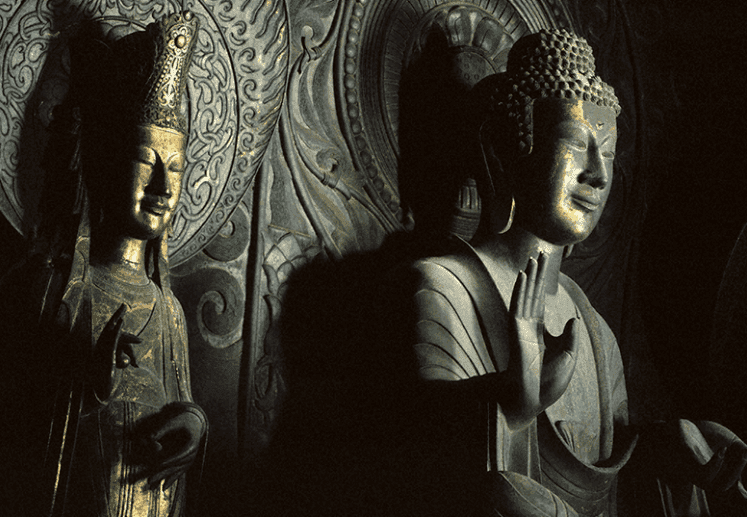
engraved next to their weight. This name can also be found on the Sakayamuni triad of the Horyuje temple in Ikaruga, Japan.
Since Monk Marananta’s mission, Buddhism had a great influence on Baekje culture. This can also be found in Muryeong’s grave.
Butt still those Shamanistic influences were found in relics, not only due to Buddhist tolerance towards local religions.
I think there is another reason.
Like the discovery of King Tutankhamun’s tomb in Egypt,
the accidental unearthing of King Muryeong’s tomb in Gongju was a revelation for Korea, offering a rare glimpse into a world long past.
Both tombs, sealed for over a millennium, protected their treasures from time and decay.
Yet while Tut’s tomb highlighted the opulence and grandeur of ancient Egypt, Muryeong’s grave opened a window into the delicate, spiritual artistry of Baekje—a culture equally as grand, but often overshadowed by its neighbors.
But even by the narrative of world history itself. While the treasures of Egypt and China are celebrated globally,
Baekje’s legacy, delicate and profound, remains known to few. And yet, in the quiet stillness of this tomb, its significance cannot be denied.

Shikibu’s Korean melancholy: mono no aware

My thoughts float to a meeting I had with Shikibu Tsuku.
During the appointment in the Kasteeltuinen Arcen,
the interplay of clouds and sunlight on the budding green seemed to mirror Shikibu’s own mood—a constant shifting between warmth and cold,
between the comfort of memories and the ache of what had been left behind. The air was crisp, carrying with it the faint smell of earth waking from its winter sleep.
Few get to witness this, as the gate remains locked early in March. Amidst the contrasting cold and warmth, between the desire for a hearth fire and
yakitori.
The park lay in tranquil beauty. Shikibu, feeling the chill, folded her summer kimono thoughtfully.
She was not the elegant figure enjoying the roses but more of a contemplative, inward-looking prayer. Her monologue filled my awareness.

Mono no aware,”
Shikibu began,
“is a Japanese expression signifying the poignant beauty of things. The inevitable transience of nature makes beauty fleeting and bittersweet.
Everything that lives and even everything that exists is not eternal! You see it in Bonsai, where often a dead branch forms the essential beauty of the tree.
It’s also reflected in how we view nature and experience it. Sakura is only beautiful because it is fleeting and oh-so-perishable.
You must enjoy it immediately and to the fullest.


Mono no aware and han are different sides of the same coin. One is the acceptance of beauty in transience,
the other, a lingering sorrow from unresolved suffering. Both see the fleeting nature of existence,
but while mono no aware embraces it with quiet resignation, han carries the weight of it, refusing to let go.

(han)

I looked at Shikibu, trying to lift her spirits. “It’s difficult to stay in the Kasteeltuinen now, but let me prepare some Sake to warm your heart.”

“Ah, the change of seasons brings tears,” she said, bowing slightly toward the Sake bowl.
“I am melancholic, but maybe it’s also homesickness. During the last Holland Koi Show, I gave some areas Japanese names.
The Japanese village became Nippon Mura, and the aquarium tent Suizokukan. But most often, I think of the Doeplein: Ibento Kaijo,
where I still have so much more to learn about the Nishikigoi. If ‘Mono no aware’ applies to any Japanese art form,
it’s certainly the case with the mortality of the beautiful ornamental Koi.

Her voice grew softer, as if the weight of the words themselves carried the passage of time.
“Even Nippon Mura and Ibento Kaijo will one day fade into memory, just like the fleeting beauty of the Koi we so lovingly display.
That’s the way of things, isn’t it? The more we hold on to something, the more it slips through our fingers.”


Korean melancholy

Summer, Fall, Winter… and Spring

Geumdong Mireuk Bosal


“Why so sad, Shikibu?” I tried to console her. I knew what she felt.
Anyone who has seen Spring, Summer, Fall, Winter… and Spring by Kim Ki Duk understands this well.
The young monk, dragging the millstone up the mountain, carries not only the weight of his own suffering but that of the world.
With a rope tied around his waist, he pulls the heavy stone behind him, while carrying the
Geumdong Mireuk Bosal, the golden Maitreya Bodhisattva.
The burden is not merely physical; it is spiritual, a symbol of the hope for salvation amidst suffering.
Each step he takes echoes the weight of human suffering, yet the Bosal he cradles in his arms serves as a reminder of the possibility of rebirth and enlightenment.

This, too, is han—a burden passed from one generation to the next, quietly borne, yet never fully lifted.
Many Japanese purists might abhor my liberal blending of Far Eastern cultures, but my long visits to Hanguk
and conversations with many artists and scholars there convince me that “Mono no aware” can only be fully understood this way.
Mono no Aware goes hand in hand with Han

Shikibu promised one thing: One day we would sit together, listening to
Jeongseon Arirang—a song steeped in the very essence of han,
each note carrying the weight of centuries of sorrow and resilience.
In Kim Young Im’s voice, I knew we would both find something of ourselves, something that had been lost and perhaps, briefly, could be reclaimed.

The movie gives you an even deeper sense of this story. You can continue reading just below.

Exploring the Cultural Interactions Between China, Korea, and Japan

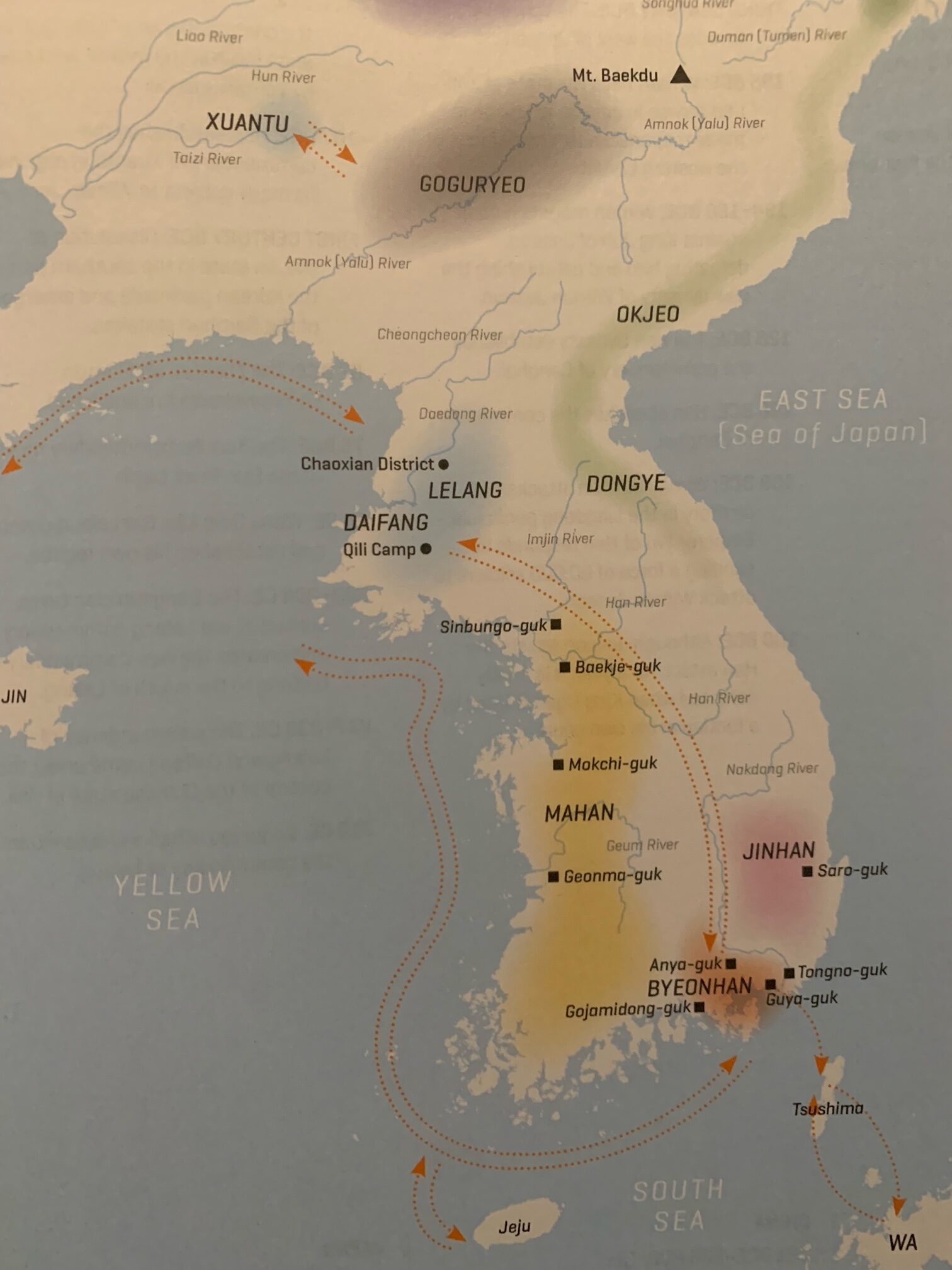
Korea’s influence on Japan was particularly significant during the Three Kingdoms period, when the Baekje kingdom played a key role in introducing Buddhism to Japan in the mid-6th century.
Alongside religion, Baekje artisans and scholars also brought advanced techniques in architecture, pottery, and metalworking, leaving a lasting imprint on early Japanese culture.
This cultural exchange helped shape the foundation of Japan’s early state, intertwining Korean expertise with native Japanese traditions to form a unique cultural identity.

Although Chinese, Korean, and Japanese cultures are interrelated, they have distinct characteristics.
China is the cultural motherland to which both Korea and Japan were indebted for centuries.
However, due to their long periods of isolation, both Korea and Japan developed unique interpretations of the philosophies and traditions imported from China.

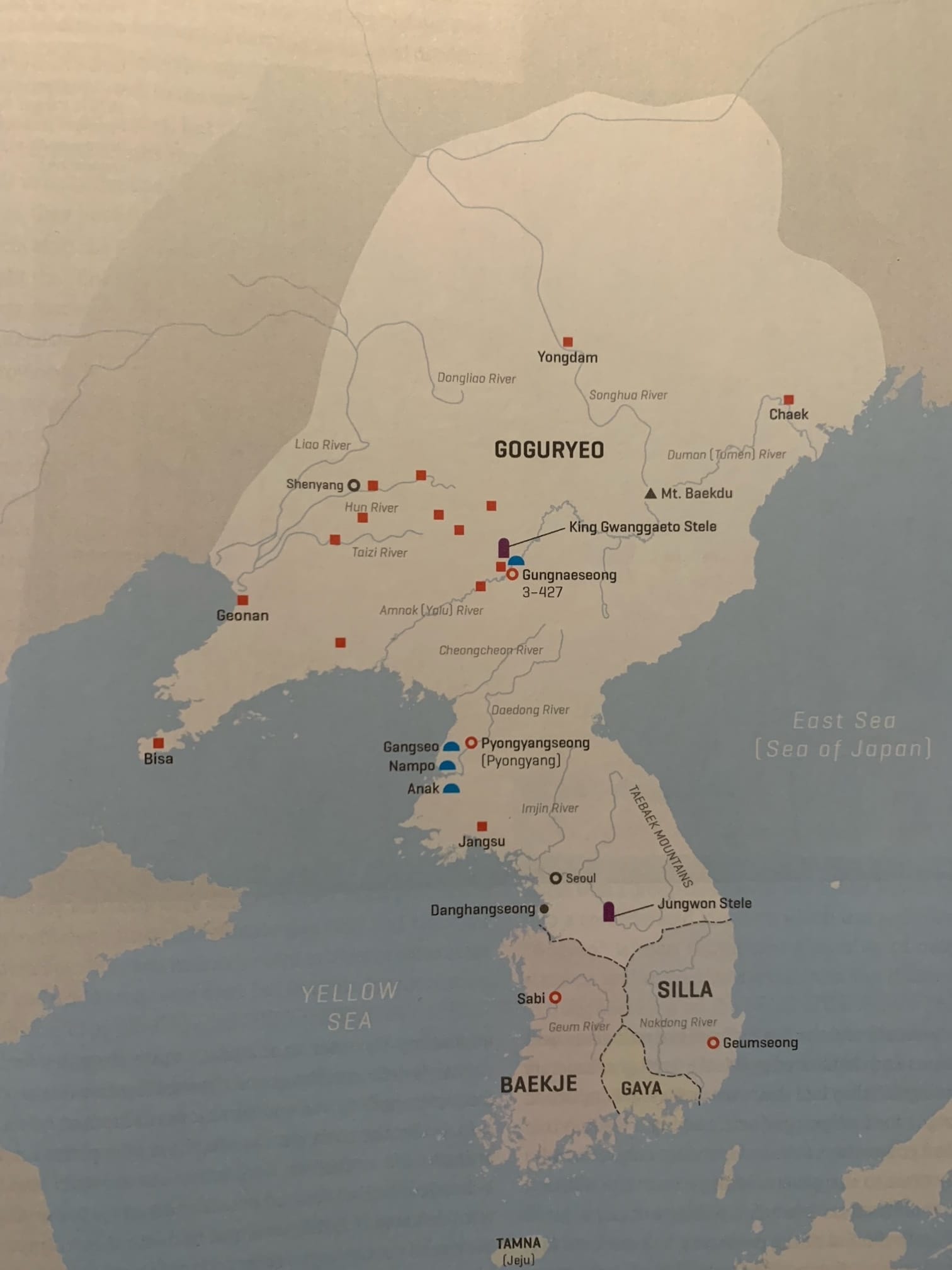
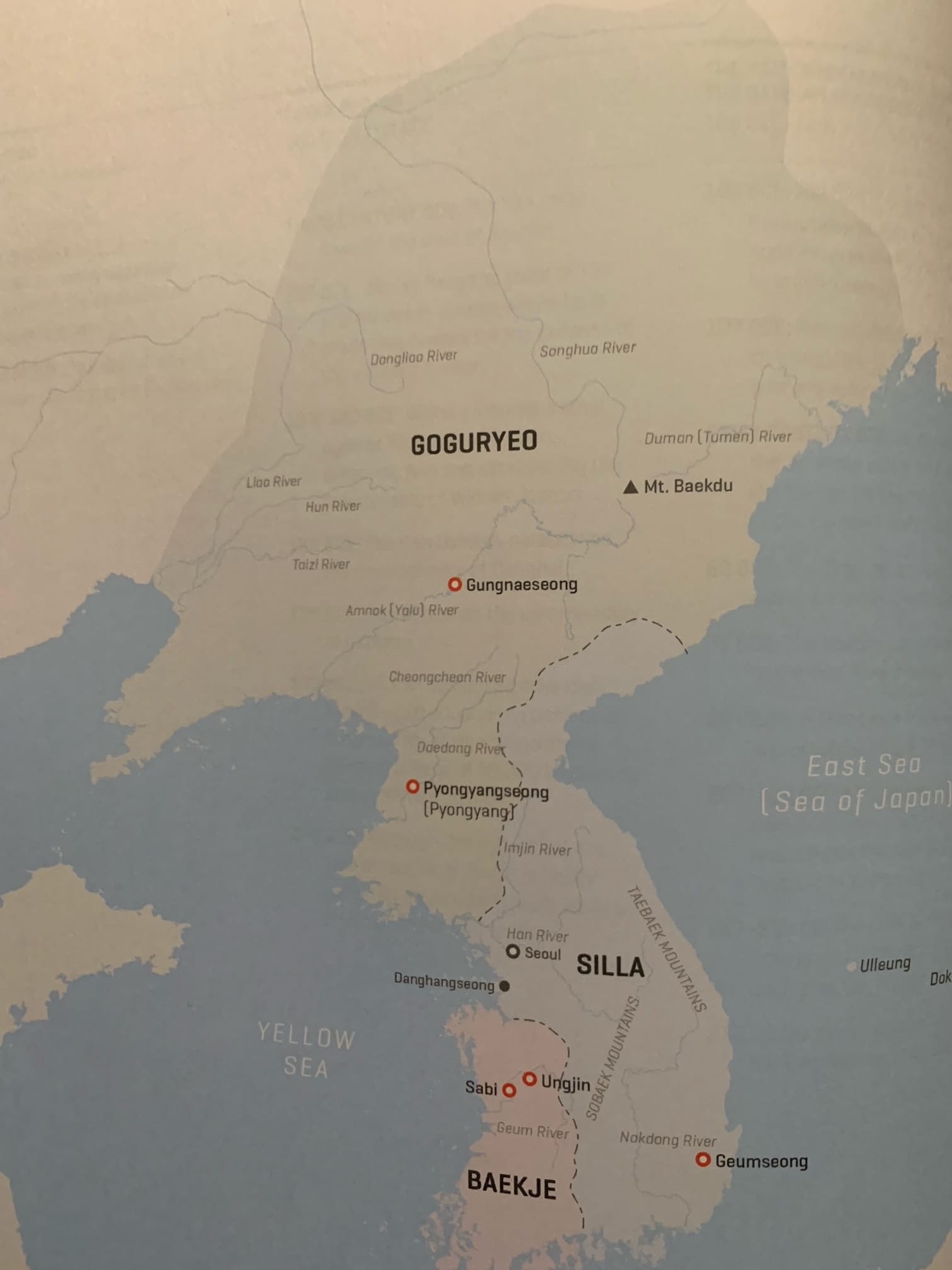
Korean History in maps Cambridge university press

Korean melancholy
3rd to 4th. century

Korean melancholy
6th century

Korean Melancholy
mid 6th century

What about Korean Melancholy the North

But what about the brothers and sisters behind the barbed wire in the North? Would they bend along or practice with rockets?
The mountains also observed the all-dominant Kim family. The regime, with all its cruelty, propaganda for domestic or foreign use,
the Gulag system, and starvation, does not escape the attention of the almighty. The regime, the dictator, could not provide the altars with food and drinks.

I realise that the Soju bottle is empty. Walking across the parking lot, I see the car that passed me just now.
The driver gets out and bends. He introduces himself as Oh Yang Chon and hands over his ticket. Police!

Korea is Kimchi.

Eat it a lot!

written by: Hugo J. Smal

Do I offend anyone when I state: “Korea is kimchi?” Of course, the DaeHan Minguk is much more than that, but the fermented vegetables are the most important. Sometimes I get the feeling that the Korean is busy with nothing else than making sure that there is a healthy portion of this fermented Korean specialty on the table. 

Fermented vegetables are healthy!

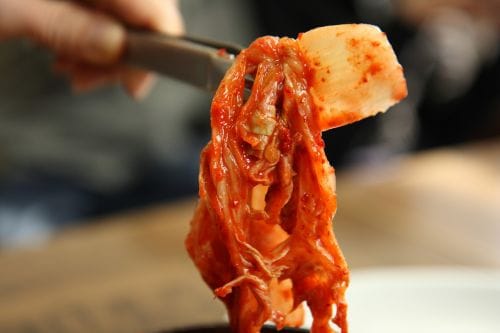
Kimchi is a traditional Korean dish made of fermented vegetables, usually cabbage, and a variety of seasonings. It is known for its spicy, tangy flavour and is often eaten as a side dish or used as a condiment. Many potential health benefits are associated with eating it, including improved digestion and a boosted immune system. Additionally, it is a good source of vitamins and nutrients, including vitamin C and iron. Overall, incorporating typical Korean vegetables into your diet can be a delicious and nutritious way to improve your health.

ggakdugi kimchi
ggakdugi kimchi
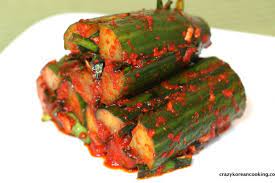
oi sobagi kimchi
oi sobagi kimchi


Typical Korean staple dish.

There are many different types of this Korean delicacy. It is a traditional dish enjoyed in Korea for centuries. It originate in Korea over 2,000 years ago and has since become an integral part of Korean cuisine. The word “kimchi” comes from the Korean word “chimchae”, which means “vegetable soaked in brine”. Some of the most common types are baechu (made with Napa cabbage), ggakdugi (made with diced radish), and oi sobagi (made with cucumber). Other types may be made with onions, garlic, ginger, and various seasonings. The ingredients used can vary depending on regional preferences and personal taste.

Every region is its own Kimchi.

Kimchi group
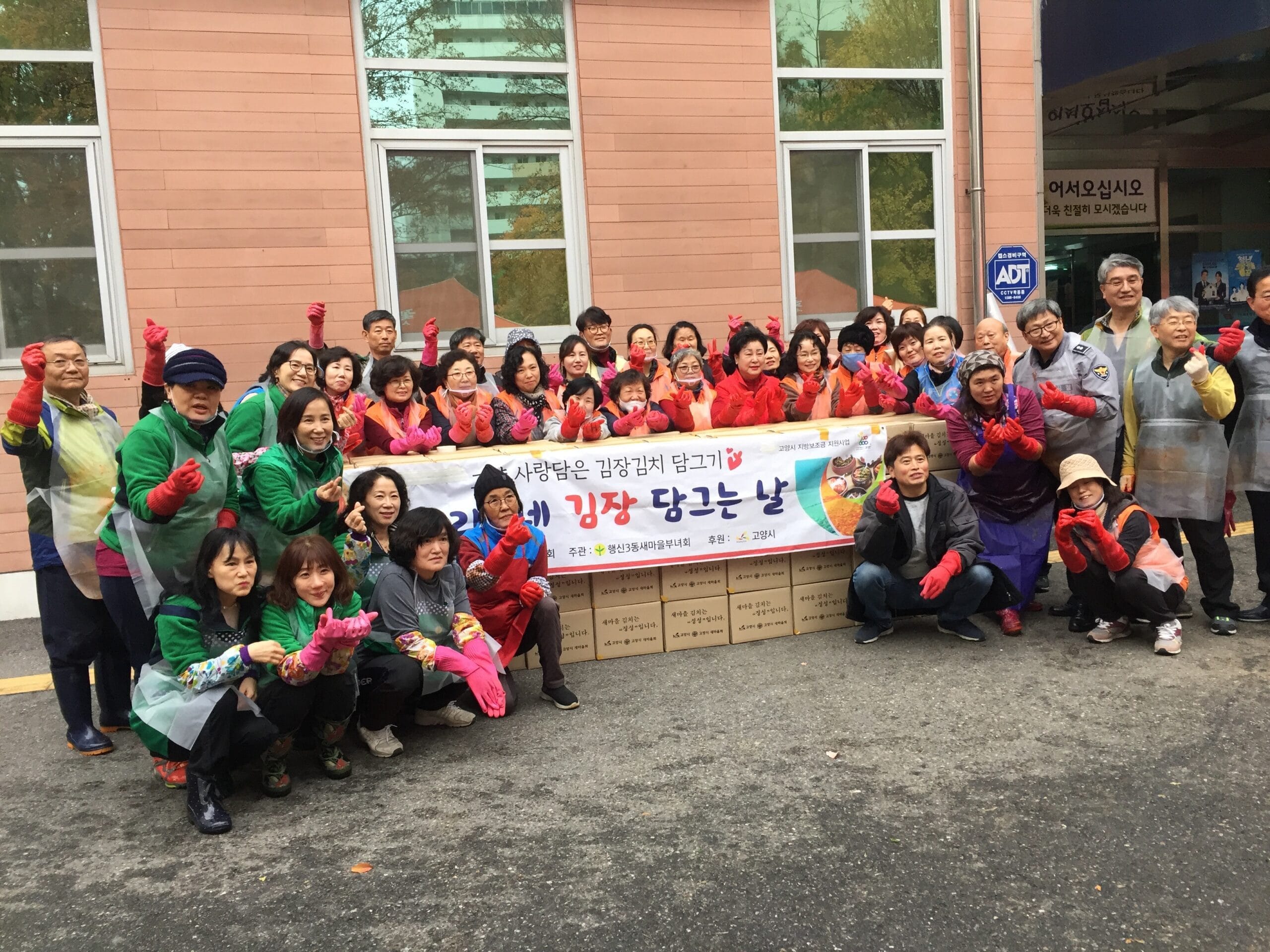
The kimjang. People gather, work together, and help each other while preparing kimchi. Unesco intangible Heritage. See also the movie below.

It is a tradition in Korea to make seasoned cabbage dish together. It is a communal activity, with families and neighbours coming together to prepare large batches of the dish for the winter months.

In recent years it has become popular worldwide as a healthy and flavorful food. It is high in vitamins and nutrients, and the fermentation process gives it probiotic properties. Many people enjoy the spicy staple as a tasty and healthy addition to their diet.


Make the typical Korean vegetables yourself.

Here is a simple recipe for the most common type: baechu.

baechu kimchi

Ingredients:

  • 1 large head of napa cabbage
  • 1/4 cup coarse sea salt
  • 6 cups water
  • 1/2 cup Korean red pepper flakes
  • 1/4 cup sugar
  • 1/4 cup fish sauce
  • 1/4 cup minced garlic
  • 1/4 cup minced ginger
  • 4 scallions, chopped


Instructions:

  1. Cut the cabbage into quarters and remove the tough core from each piece. Cut each quarter into 2-inch pieces.
  2. In a large bowl, combine Mix the cabbage and salt. Let it sit for 1-2 hours to allow the cabbage to release its moisture.
  3. Rinse the cabbage well under cold water and drain.
  4. In a separate bowl, combine the water, red pepper flakes, sugar, fish sauce, garlic, ginger, and scallions. Mix well to make the kimchi paste.
  5. Add the kimchi paste to the cabbage and mix well. Coat each piece of cabbage with the paste.
  6. Transfer the kimchi to a large jar or crock and press down firmly to remove any air bubbles. Cover it with a lid or plastic wrap and let it sit at room temperature for 1-2 days. The kimchi will ferment.
  7. After 1-2 days, transfer the jar to the refrigerator and let the kimchi ferment for at least another week before serving. 

How to use Kimchi?

Kimchi The tradition Korean side dish, is a versatile ingredient to use in a variety of dishes in the kitchen. 

  • Serve it as a side dish with rice and other Korean food. Or use it as a topping for bibimbap (mixed rice with vegetables) or noodles.
  • Add it to soups and stews to give them a spicy, flavorful kick. It is a common ingredient in recipes such as kimchi jjigae ( stew) or noodle soup.
  • Mix the Korean side dish with other ingredients such as sliced carrots, radishes, and cucumbers. It becomes a refreshing and spicy salad.
  • Add it to fried rice with ingredients such as diced bacon, scrambled eggs, and scallions. It becomes a delicious and flavorful meal.
  • As a marinade: Use the spicy, tangy flavour of the fermented vegetable as a marinade for meats and vegetables. Mix it with soy sauce, garlic, and honey to make a tasty marinade for grilled or roasted dishes.
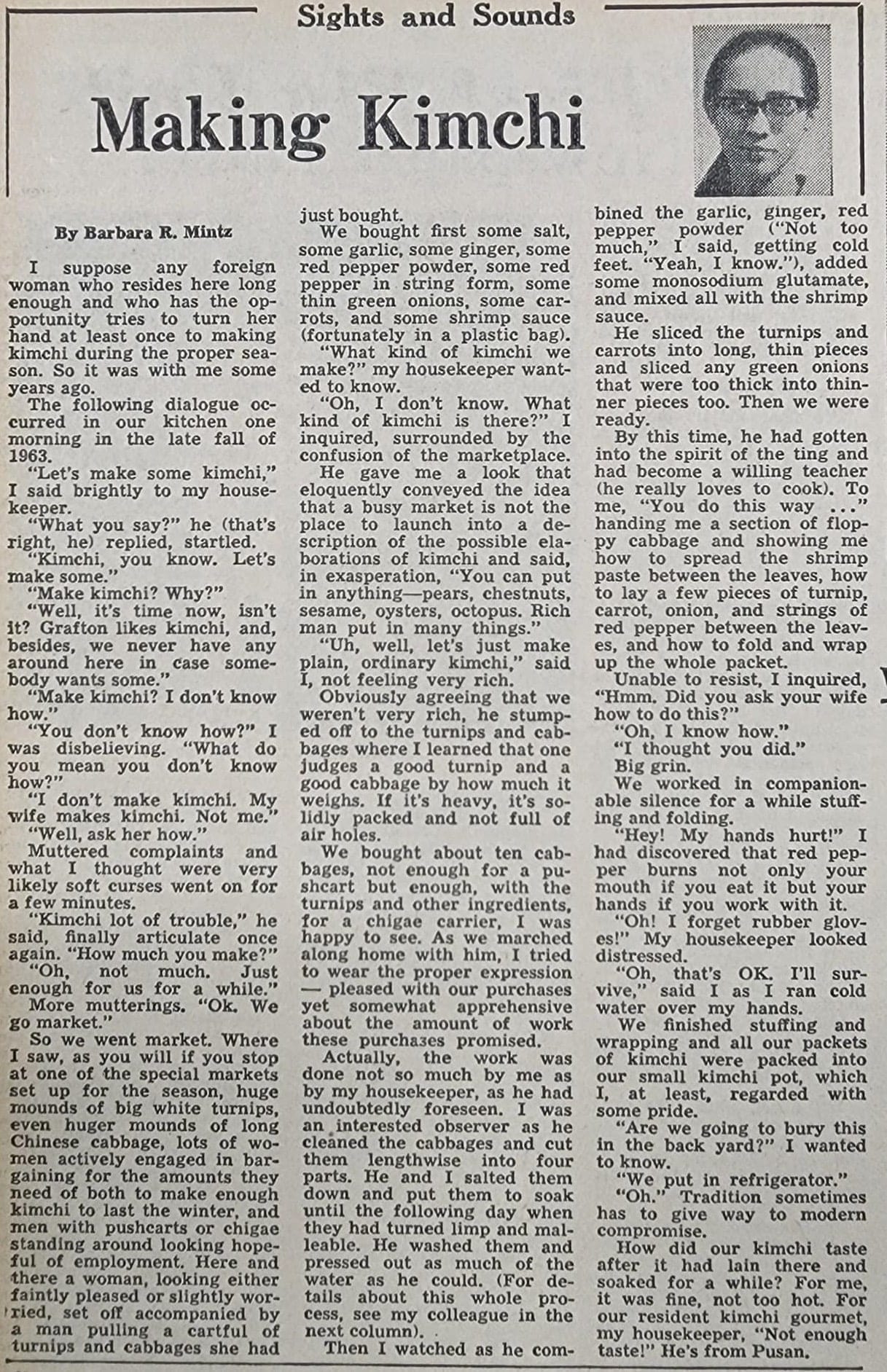
A very funny story about making Kimchi. We don’t know where and when it was published.

Overall, the spicy staple is a versatile ingredient that adds flavour and spice to many dishes in the kitchen. And no! No one should be offended when I say: Korea is kimchi. For me, this is absolutely the truth. It is the smell and taste of the Dae Han Minguk. Best enjoyed with a glass of Soju.

 The kimjang. People gather, work together, and help each other while preparing kimchi. Unesco intangible Heritage. read about it

When you like Korean food please follow:  Korean kitchen

[embedyt] https://www.youtube.com/watch?v=W87fOBWnpsM[/embedyt]

Roots of K-pop, number one powerful culture!

The Roots of Modern K-pop 
The Influence of the US Military and Underground Clubs

The Roots of K-popAmidst the 25 sprawling districts of Seoul lies a colourful neighbourhood called Itaewon and it is the country’s crossroads for all things foreign. The roots of K-pop are here. Accordingly, the area is home to most of Korea’s foreign population of 20,000 plus ex-patriots in addition to housing the Yongsan Garrison of some 20,000 American troops and affiliates. The main Itaewon strip holds a long history of cultural commerce catering to the foreign population, rampant tourists, US military personnel, and of course, native Koreans.

A stretch of street carts and elderly hustlers swindle vulnerable tourists for counterfeit Gucci bags and LV wallets. Nestled behind the strip and atop a small hill, dodgy bars and gay clubs entice super camp crowds. Quaint Korean couples in matching outfits wait in lines for hours for what is over-priced ‘American-style brunch.’ Herds of Chinese tourists take over entire restaurants for what is ‘authentically Korean BBQ’. And ofcourse the roots of K-pop.

From the roots of K-pop to Hallyu

Itaewon class
Tip: Get a dramatized look at this special part of Seoul. Look at the stunning tv K-drama Itaewon class.

Hooker Hill seats transgenders on corners making cat calls to foreign businessmen with hungry eyes. In narrow alleys, Africans and Middle Easterners slang used cell phones and international calling cards next to stalls of steaming Korean street foods. As if it’s very own borough in Yongsan District, Itaewon thrives on the constant clashing of all these cultural, social and political forces. It survives on the coming and going of different people from different places- on the transience of hybrid culture.

Influence of Itaewon on Roots of K-pop. 

Fluid and unconventional, this hybrid culture underlines the inimitable influence of Itaewon on Korean mass culture- more specifically for this feature, Korean popular music culture. Yeah, the root of K-pop is here. By examining Itaewon’s historic practice of music circa the Cold War to the present, we can begin to understand how K-pop music came to sound the way it sounds and even look the way it looks. Even more, we can make sense of how a lesser-known Hanguk rapper was able to bring a mob to SXSW 2015 with just one song on YouTube.

Message from our sponsor:

Goyang Koi farmThe Goyang Koi farm brings a good splash of water to the Korean wave: Hallyu. On top of K-pop, K-music we introduce K-Carp. We grow Korean Fancy carp on our farm. In Japan, these beauties are called Nishikigoi or Koi for short. We call them Ing-eo (잉어). In Korea, carp symbolizes strength and perseverance. They are dragons that stand for long life. Korean Koi, K-carp floats on Hallyu.  Goyang Koifarm: the Korean Koi Wave! 


Own day for Roots of K-pop.

This is how fifty years of minority music and club scene established what is K-Pop today.

Bounded by high cement walls with barbed wire, the Yongsan Garrison, or ‘the base,’ dominates a major part of the Itaewon area. Serving still today as the headquarters for the United States arms since 1957. The garrison was actually built in 1910 and occupied by the Imperial Japanese Army. For more than 100 years, this political pocket claims the presence of foreign power. Likewise, lifestyle and economic enterprises servicing this foreign presence have been since compulsory.

Roots of K-pop; after the Liberation of August 15, 1945.

Korean popular culture was emancipated from Japan’s seizure. It then become circumscribed with the entrance of the USA Occupational Forces. The liberation process overtly positioned American culture as a mainstream element in Korean daily lives. This is strongly apparent in the intense establishment of radio broadcasting by the American Occupational Forces. While the Nipponese used the radio for organizational purposes, the American soldierly infiltrated broadcasting as part of their enculturation coals. As the chief resource to reach the most Koreans, the radio became an important means of American policy and cultural promotion. By 1957, the American Forces Korea Network (AFKN) launched and sonically penetrated Korean homes with American pop music.

Real Roots of K-pop Korean Nat King Cole.

Complementing this aural acquisition, a new standard of Korean pop music emerged. Throughout the 1960s, Korean entertainers became to identify mimics of American pop artists for US military entertainment. Heejoon Choi aka Nat King Cole; Patti Kim aka Patty Page; and the Kim Sisters, Korea’s first girl group to tour the US, were featured on the 8th Division Stage — a musical showcase made solely to amuse the Yongsan Garrison.

American radio in Korean homes.

As these 8th Division Stage musicians gained exposure through the radio, they became the vanguard of modern Korean music mainstream. The songs exuded promising sounds of American standard pop, jazz, and blues combined with popular rhythms from slow rock, swing and waltz. In general, the 8th Division entertainers conveyed a very “American” middle-class lifestyle that effectively resonated into Korean homes.

Read more about the Roots of K-pop Maekan

Korean Ceramics Mastery: 400 great Years of Resilient Artistry


The Enchanting World of Korean Ceramics

The Rich Heritage of Korean Pottery


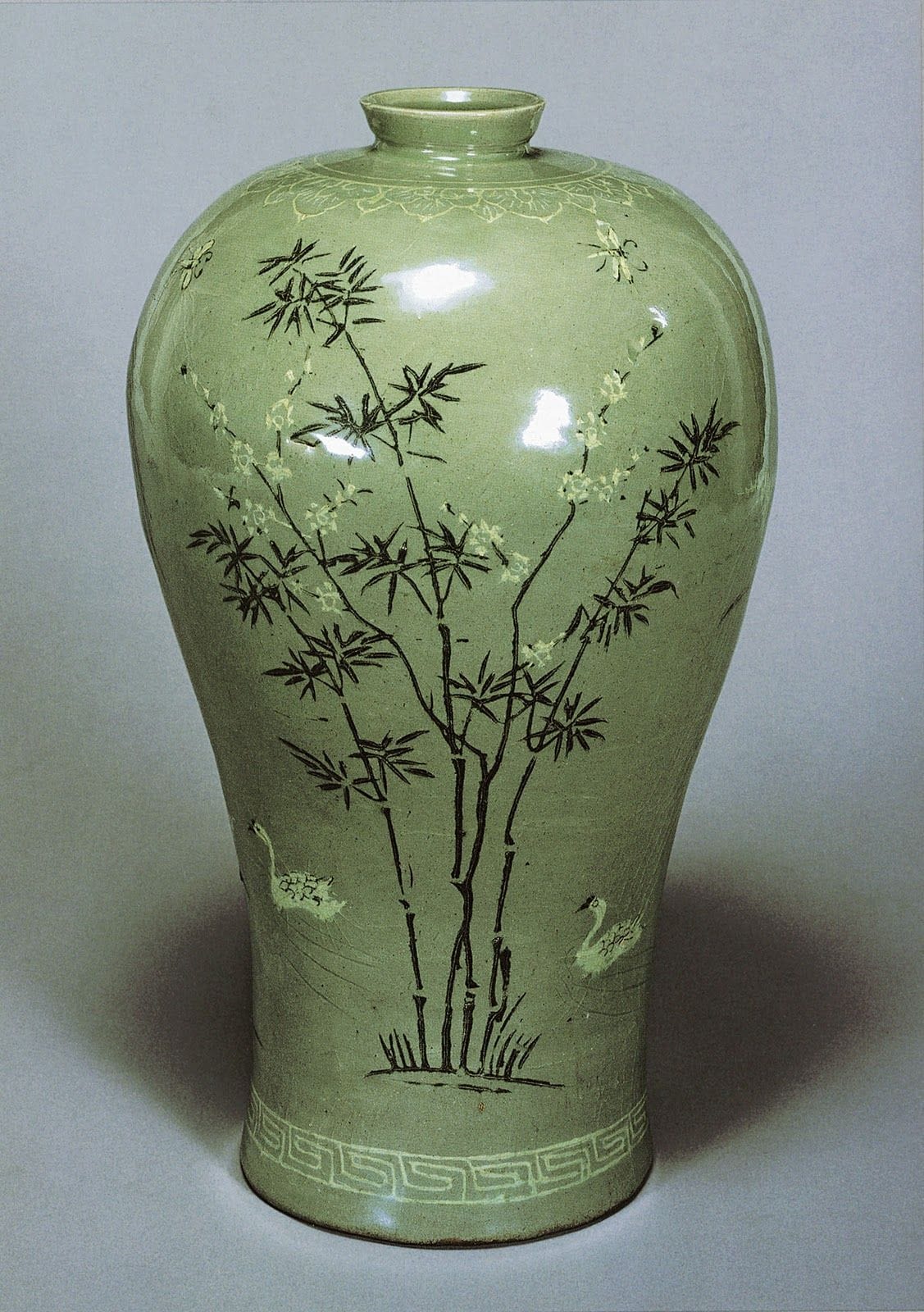
Korean ceramics vase with bamboo motif and celadon glazeThe history of Korean ceramics is a captivating journey that stretches back to prehistory, beginning with simple brown wares adorned with geometric incisions. Influenced by the techniques of their Chinese counterparts, Korean potters soon developed their own distinctive and highly sought-after styles, including grey stoneware, celadon (or greenware), buncheong ware, and white porcelain. The innovative designs range from intricately detailed incense burners to the sublime simplicity of the maebyeong vase. Korean pottery often features decorations inspired by plants, flowers, and wildlife, and reflects the country’s rich religious heritage, showcasing both Buddhist motifs and minimalist Confucian designs.

The Evolution of Korean Ceramics Through the Ages

Korean history
Silla ceramic warrior

The story of Korean ceramics begins during the Three Kingdoms of Korea (57 BC-668 AD)—Silla, Goguryeo, and Baekje. These early periods saw the production of rough domestic wares from numerous kilns. They also created sophisticated statues of royal figures, guardians, and horses, comparable to Chinese Han Dynasty figures. These statues served domestic and imperial votive shrines and acted as escorts for the deceased in the tombs of nobles and kings. These early works were crafted using both the potter’s wheel and the traditional hammered clay and coil method.

The Golden Age of Koryo Celadon

The nearly five centuries of the Koryô dynasty (918–1392) are often considered the golden age of Korean ceramics, particularly for the exquisite celadon pottery. This period saw the creation of highly vitrified glazes in a stunning grey-green color, achieved through the presence of iron in the clay and the careful balance of iron oxide, manganese oxide, and quartz particles in the glaze, combined with precise firing conditions. The early Koryô celadon pieces are notable for their elegant forms and the absence of surface decoration, highlighting the beauty of the glaze itself. By the late 11th and early 12th centuries, these master potters began to experiment with carved and incised decorations under the translucent sea-green glaze, creating pieces that remain unparalleled in their beauty and craftsmanship.

The Ceramic War: A Tumultuous Chapter in Korean Ceramic History

In the late 16th century, the serene and flourishing world of Korean ceramics faced an unprecedented upheaval during the Imjin War (1592-1598), also known as the Japanese invasions of Korea. This period marked a tragic end to Korea’s golden age of ceramics, as the country endured severe destruction, and many of its master potters were either killed or abducted by Japanese forces.

The Invasion and Its Impact on Korean Artisans

Japan, under the leadership of Toyotomi Hideyoshi, launched a series of invasions with the ambition of conquering Korea and using it as a springboard to invade China. The conflict devastated Korea’s cultural landscape, but one of the most significant and often overlooked aspects of this war was the targeted abduction of Korean ceramic artists. Recognizing the extraordinary skill and craftsmanship of Korean potters, the Japanese invaders sought to capture these artisans to enhance their own ceramic industry, which was then in its developmental stages.

During the invasions, many Korean kilns were destroyed, and countless pieces of pottery were lost forever. However, the most tragic consequence was the forced relocation of hundreds of Korean potters to Japan. These skilled artisans were taken to various regions in Japan, including Arita, Hagi, and Satsuma, where they were compelled to establish kilns and share their techniques with Japanese craftsmen.

The Birth of Japanese Porcelain


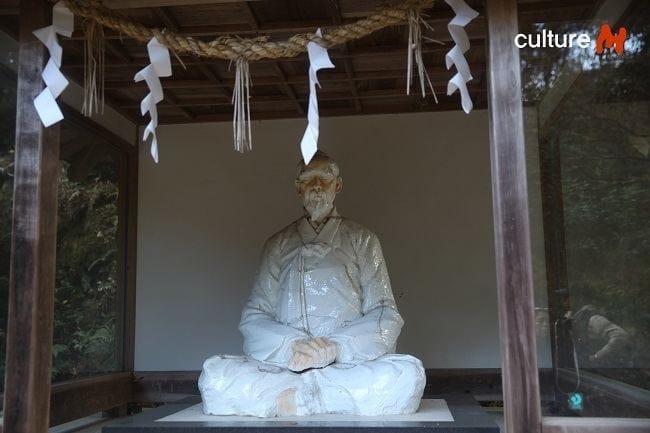
Korean potter Yi Sam-pyeong associated with the development of porcelain in Japan
The Korean potters’ expertise significantly influenced the development of Japanese ceramics, leading to the birth of Japanese porcelain. In Arita, for instance, the presence of Korean artisans like Yi Sam-pyeong (later known as Kanagae Sanbee) was instrumental in discovering the local kaolin deposits necessary for porcelain production. This discovery marked the beginning of the renowned Arita porcelain industry, which would later become famous worldwide.While the Japanese ceramic industry flourished with the influx of Korean techniques and artistry, Korea’s ceramic tradition suffered a severe blow. The loss of so many master potters meant that the production of exquisite celadon and other traditional wares diminished significantly. The once vibrant kilns of Korea struggled to maintain their former glory, and the quality of ceramics produced during this period reflected the turmoil and loss experienced by the artisans and their communities.

A Legacy of Resilience and Revival

Despite the devastation, the spirit of Korean ceramic artistry was not entirely extinguished. The subsequent Joseon dynasty (1392-1897) saw efforts to revive the country’s ceramic heritage. Potters who remained in Korea continued to innovate and adapt, developing new styles and techniques that reflected both resilience and a deep-seated reverence for their craft. The introduction of buncheong ware and the refinement of white porcelain during the Joseon period are testaments to the enduring ingenuity and creativity of Korean potters.

Contemporary ceramic art.

Kim Yik-yung image reference
Kim Yik-yung is a prominent Korean ceramic artist who has significantly advanced contemporary ceramic art. image 

Today, the story of the Ceramic War is a poignant reminder of the resilience of Korean artisans and the enduring impact of their craft. The legacy of those who were lost and those who continued their work under harrowing circumstances is evident in the timeless beauty and innovation that defines Korean ceramics. This chapter of history underscores the profound interconnectedness of cultures and the enduring power of art to transcend even the most tumultuous times.

Korean ceramics are not only preserved in museums, but also actively practiced and celebrated. A clear example is the Icheon Ceramic Festival, where traditional and contemporary pottery come together in exhibitions and workshops. 

Discover More About Korean Ceramics

Dive deeper into the fascinating history of Korean ceramics and uncover the stories behind these stunning creations. Visit the link below to learn more about this unique and enchanting art form. : Venice clay artists or ancient  

Questions on Korean Ceramics

What defines Korean ceramics beyond technique?

Korean ceramics are defined less by technique than by attitude. Form follows use, restraint outweighs display, and beauty emerges through balance, repetition, and acceptance of natural imperfection.

Why do styles like celadon and buncheong feel so different?

Celadon expresses refinement and harmony, while buncheong allows spontaneity and roughness. Together they reveal two complementary ways of relating to material, control, and expression within Korean culture.

How should Korean ceramics be understood today?

Korean ceramics are best understood as a living tradition rather than a closed historical chapter. Contemporary makers, everyday use, and cultural continuity keep the tradition open and relevant.

Further Reading on Korean Ceramics

If you’re passionate about Korean ceramics, join our community on Facebook for more insights and discussions.
Facebook.

https://youtu.be/Fq8eBghuOLA


“`