joseon dynasty (1392–1897) was korea’s longest-ruling confucian state, shaping society, culture, economy, and governance for more than five centuries.
joseon dynasty — key highlights
1392 — General Yi Seong-gye establishes the joseon dynasty, adopting confucian governance as state ideology.
1443–1446 — King Sejong oversees the creation of Hangul, korea’s unique alphabet, revolutionizing literacy.
1592–1598 — Imjin Wars: japan invades korea; Admiral Yi Sun-sin defends with his famous turtle ships.
17th century — Confucian philosophy (Neo-Confucianism) dominates society, education, and politics.
18th century — Cultural flourishing with advances in painting, ceramics, printing, and architecture.
Late 19th century — Reforms and external pressures weaken joseon, paving the way for the Korean Empire in 1897.
Culture, science, and governance
The joseon dynasty fostered a rigid but enduring confucian social structure. Scholars of the yangban class preserved order, while commoners lived under strict hierarchy. Within this framework, korea achieved major cultural milestones.
Scientific advances included rain gauges, celestial globes, detailed maps, and medical texts. King Sejong’s reign became legendary for its patronage of innovation, particularly the invention of Hangul, which transformed literacy and cultural identity. Art thrived as painters developed true-view landscapes, ceramics evolved with refined white porcelain, and printing spread classical as well as practical knowledge.
Philosophy was dominated by neo-confucian korea, guiding governance and education. Debates on ethics, human nature, and governance shaped institutions that lasted centuries. This system emphasized loyalty, filial piety, and scholarly meritocracy, though it also limited social mobility.
Society and international relations
While the joseon dynasty history is marked by confucian ideals, society also experienced hardship: slavery persisted, women’s rights declined compared to earlier eras, and peasant uprisings occurred. Yet everyday life was also shaped by family rituals, seasonal festivals, markets, and farming communities that tied people closely to the land.
Agriculture formed the backbone of the economy. Rice paddies, irrigation systems, and land reforms sustained the population, while taxes were collected in grain and cloth. Markets expanded in cities such as Hanyang (modern Seoul), and artisans specialized in pottery, metalwork, and paper production. Despite restrictions on commerce, a merchant class slowly gained influence, paving the way for later modernization.
Religion and belief systems coexisted. Buddhism, though suppressed politically, remained influential among commoners. Shamanistic practices and ancestral rites continued, blending with official confucian rituals. Christianity arrived in the late 18th century, sparking both persecution and intellectual debate that influenced reform movements.
Foreign invasions tested resilience. The Imjin Wars devastated korea, yet Admiral Yi Sun-sin’s victories at sea remain symbols of resistance. In later centuries, isolationist policies earned the nickname “hermit kingdom,” but contact with ming and qing china continued, while limited exchanges with japan and eventually western nations reshaped diplomacy.
Legacy of the Joseon Dynasty
The legacy of the joseon dynasty endures in modern korea. Its confucian principles influenced education, family life, and social etiquette well into the 20th century. Hangul, once resisted by elites, is today a symbol of national identity and pride. Ceramics, calligraphy, and painting from the era remain treasured cultural assets, displayed in museums worldwide.
Political and social contradictions — rigid hierarchy alongside remarkable cultural creativity — continue to fascinate historians. The dynasty’s final decades, marked by reform, foreign encroachment, and eventual collapse, foreshadowed korea’s turbulent entry into the modern world.
Art, clothing, and architecture
Joseon culture expressed itself vividly in clothing, housing, and city planning. The traditional hanbok developed distinctive lines and colors that reflected social status and occasion. Commoners wore plain cotton or hemp, while the elite dressed in silk garments, often with symbolic colors such as white for purity or blue for scholarly virtue.
Architecture combined functionality with aesthetics. Wooden palaces such as Gyeongbokgung displayed sweeping tiled roofs and courtyards arranged according to geomantic principles. Villages featured hanok houses with ondol underfloor heating, an innovation that made winters more bearable and continues to inspire modern Korean design.
Painting and calligraphy thrived, with artists producing landscape scrolls that captured Korea’s mountains and rivers in naturalistic style. Court painters documented ceremonies, while folk art such as minhwa spread among the wider population, blending humor, symbolism, and religious motifs. These artistic forms provided continuity between elite culture and everyday life.
Korean melancholy, or Han, is not merely a cultural engine.
A small white heron startles. Back on the embankment, I open a bottle of Soju and take a sip.
The cicadas remain silent, their usual song absent, as if nothing in the night dares disturb their rest.
Yet beneath the stillness, a tension lingers, a quiet discomfort that mirrors my own unease.
In the distance, I hear a trumpet announcing the night. It comes from the barracks.
Soldiers are everywhere here. It does not worry me. I still tasted the food at Sarangche.
war zone
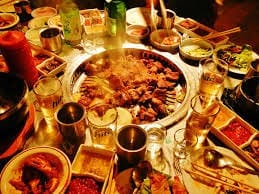
The table looked a bit like a war zone, always full.
It is quite a task for the waitress to put it all down the integrated barbecue, the many bowls with side dishes,
bowls with peppers, garlic and lettuce leaves, the bottles and cans, the bowls with rice, the plates, sticks and napkins.
And off course Kimchi.
We enjoyed it well. Kim Young Soo signalled.
He walked to the counter to pay. Two other men fought. The Soju tasted good, its warmth spreading through me,
but it carried with it a familiar ache, like an old song I had forgotten but could never quite let go.
The fight was not about who should pay. It was not about the money, but something deeper—perhaps a sense of duty, or pride,
rooted in traditions I could barely grasp. Here, even the smallest gestures seemed to carry the weight of a lifetime.
Their voices rose, not in anger, but in fierce determination—each insisting on their right to bear the burden.
Outside, the police occupied the street, their smiles strangely out of place in the midst of such rigid control.
The waiting began—cars stopped, drivers submitted, blowing into breathalysers with a resignation that felt heavier than the night itself.
The boss lit a cigarette and again coffee was served from the restaurant. Jay looked disappointed, his eyes distant,
as if the long drive to Seoul wasn’t just about distance, but about returning to a silence he wasn’t ready to face.
I started to walk. The rest had to wait, well into the night if necessary, until the police had had enough.
In the Gumeonggage, the local shop, I grabbed some bottles of Soju,
a few packs of cigarettes, and some biscuits. The seventy-year-old woman behind the counter smiled as I handed her my purse,
trusting her without question. Perhaps it was the simplicity of the exchange—something clean, something untainted by the complexities
of the outside world—that made me feel at ease.
Protected tree frog, Korean melancholic sounds
It is quiet on the Baedagol gill. The dinner is still buzzing in my head.
Even though I was not always involved in the conversation, it remains overwhelming.
They are energetic people those Koreans.
Save haven
When they drink, they remind me of my hometown buddies the Rotterdammers—direct, inflammable, and unafraid to roll up their sleeves.
But the similarities end there. Seniority is everything here. It’s a hierarchy that’s ingrained in every gesture, every conversation.
I keep hammering it into my head, yet it still feels foreign, heavy. In the Netherlands, we walk beside each other.
Here, we walk in a line—always behind or ahead, never side by side.
Jetlag has a hold on me, pulling me into a fog I can’t quite shake. Even the Soju can’t dull the edge.
Sleep, I’ve decided, is an overrated luxury. Only old generals die in bed, after all.
Time slips through my fingers here in Korea, faster than I can catch it.
In Rotterdam, I’ll sink into the culture shock like a stone into deep water.
But here, it’s the cicada that keeps me on the surface, restless, always awake.
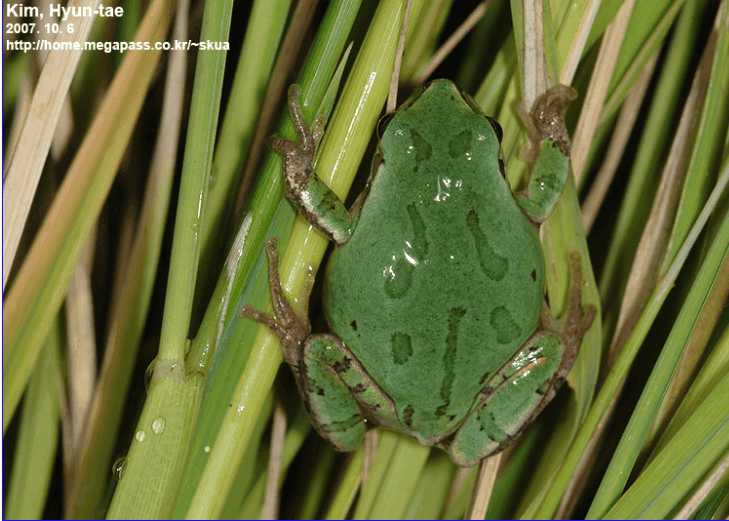
In addition to the cicada, there’s another troublemaker—the male Suweon tree frog, whistling his high, desperate call into the night.
Only eight hundred of them left, they say, trapped between two rivers, clinging to their patch of land. His whistle echoes, unanswered.
It’s a fight for survival, for recognition. Just like the Koreans, he has finally carved out his own place, standing apart from his Japanese
and Chinese cousins. But the cost… the cost is always there, hidden under his green skin.
No Korean melancholic but coals
Originally, the tree frog sought out rice fields for its home, but those have almost all disappeared.
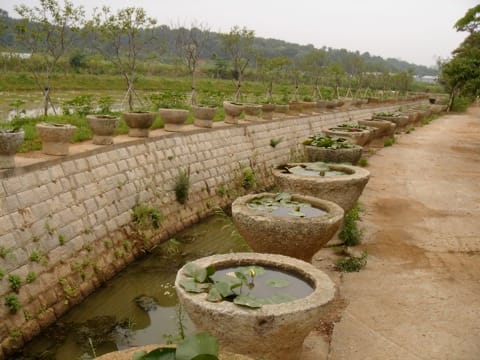
On Baedagol, however, they’ve managed to find a sanctuary in the water features, clinging to survival.
At least eight hundred tree frogs now live in the theme park alone—perhaps more.
Kim Young Soo’s dream has come true: a small piece of a lost world restored.
But even this refuge is fleeting. The expansion of Changneung 3 New City will soon swallow the land,
and with it, the Suweon tree frog’s fragile home. A place once reclaimed, soon to be lost again.
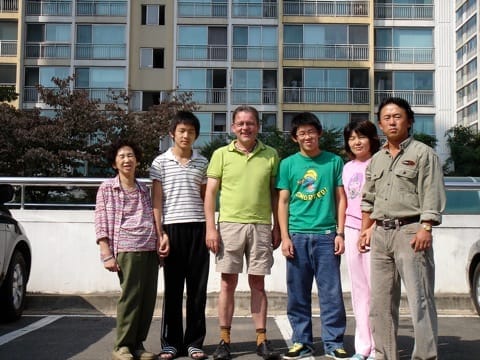
Kim Young Soo, his mother, wive, sons and the writer.
According to his younger brother, he has set himself four goals. His family had to be taken care of first.
In Korea, it always concerns the extended family. So not only wife and two children but also mother, sisters, younger brother and everything related to it.
His father died when Kim Young Soo was young and poverty was very high in underdeveloped Korea.
He took over his father’s rose nursery and sold the flowers he grew on the street. Later he discovered a way to grow roses from seed.
With that, he earned enough money to first grow lotuses and then switch to breeding ornamental carp.
His second goal was to help the Hwajeong Dong people.
Baedagol theme park is the final result of this.
His third goal was to give something back to Korea itself, to create a place where nature could find refuge again.
The Suweon tree frog, once nearly forgotten, now thrives in Baedagol, much like Kim Young Soo himself.
But even as the frogs whistle their high-pitched call, there’s a knowledge that this place, too, will be overtaken by the march of time.
Changneung 3 New City will soon rise, and with it, Baedagol’s carefully nurtured ecosystem will vanish.
For Kim, the sense of achievement is always shadowed by the looming impermanence of it all.
The Suweon tree frog, resilient and fragile at once, whistles into the night, unaware that the sanctuary it’s found in Baedagol is only temporary.
Soon, the city’s progress will sweep it away, as it has done with so much before.
The frog, much like Kim Young Soo, fights to carve out a place in a world that is constantly shifting, always moving forward, leaving only echoes of what was.
Samguk Sagi and Yusa, a Korean melancholy history
Onjo
Hwaejeong Dong is already described in the historical books Samguk Sagi and Samguk Yusa.
The first is the Chronicles of the Three Kingdoms written by Kim Busik at the behest of King In Jong and published in 1145.
Samguk Yusa is the “Memorabilia of the Three Kingdoms“.
This was written by the monk Ir Yeon and contains legends, folk tales, biographies and historical accounts.
Originally, Han Chinese settled in Hwaejong Dong, but in eighteen BC the state of Baekje or Paekche was founded. Onjo, the third son of Goguryo founder King Dongmyeong, was not allowed to succeed his father.
The father had been married before. Because of troubles he fled from Buyeo to Jolbon. He left his family behind,
so he married the daughter of a local chieftain and fathered two more sons: Onjo and Biryu.
The refugee wanted his own state and therefore founded Goguryo with its capital Sŏgyŏng modern Pyongyang.
Yuri, the son from the first marriage found out about this and was soon in the palace to claim his birthright.
With that kind of family, this is never without drama.
Onjo, seventeen years old, fled with his older brother Biryu, driven by the weight of family conflict and the desire to carve out their own place in the world.
He founded Wiryeseong present-day Seoul. Their he build an altar to honour his father.
But Biryu’s fate was less kind—he ignored his brother’s advice, ventured to the west coast, and found only saltwater and despair.
It is written in the books that he build Michuhol which is now called Incheon.
His suicide marked the end of one dream, while Onjo welcomed his brother’s followers with quiet resilience.
It was a tale as old as Korea itself—new beginnings, always born from loss.
Biryu’s death was not an isolated tragedy, but part of a longer lineage of sacrifices, each generation carrying the weight of the ones before it.
The younger brother called his state Baekje. The meaning of this name is explained differently, but I think “Hundred of houses grossed the sea” is the most beautiful.
During the reign of King Koi (243-286), the constitution was established and in 384 Marananta came from Ghandara Pakistan.
He told the then-newly installed King Chimnyu about Buddha.
Like Dryophytes suweonensis, Baekje relics are rare but of high quality.
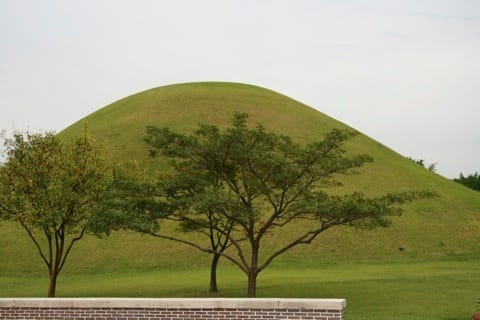
Together with younger brother and Kim Jay Ho, I visited King Muryeong’s tomb in Gongju.
According to a stone plaque, the tomb dates from 523. It was two other tombs, accidentally discovered in 1971 during drainage work.
As I stood before King Muryeong’s tomb, I couldn’t help but think of how history preserves both grandeur and fragility.
The tomb remained untouched for over 1,500 years, its treasures safe from time and thieves.
But even here, in the stillness, there’s an echo of loss—Baekje itself, once a powerful kingdom, now survives only in fragments,
in relics buried under the weight of centuries.
The tomb is still one of Korea’s greatest historical discoveries. Like the discovery of King Tutankhamun’s tomb in Egypt,
the accidental unearthing of King Muryeong’s tomb in Gongju revealed treasures untouched by time.
Both tombs had remained sealed for over a millennium, protected from thieves and degradation, preserving not only the riches of their respective monarchs,
but also the cultural grandeur of their civilizations. Where Tut’s tomb highlighted the opulence of ancient Egypt,
Muryeong’s grave opened a window into the sublime artistry of Baekje.
Geumjegwansik
Tomb robbers have not broken open its entrance for over 1,500 years. The treasures found in the tomb underlined Baekje’s sublime culture.
The Baekje people leased the tomb from the local earth spirits. It was also paid for.
Coins from the Liang dynasty were found on the stone,
proving that Baekje was influenced by that regime in China. The spirits fulfilled the contract because many royal decorations were found in the tomb.
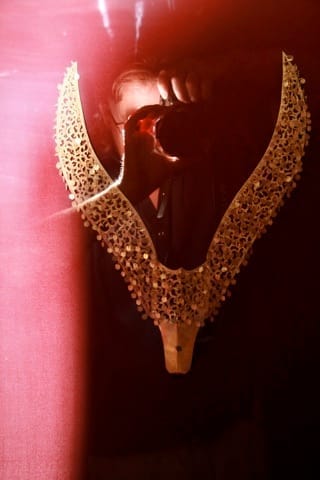
The Geumjegwansik for example. These are two gold diadems worn by Muryeong (501 – 523). They were neatly stored in a small box.
They were cut from a thin, 2-millimetre, gold plate. According to tradition, the King wore the diadems on the right and left side of his black silk headscarf.
On top of the headscarf, he wore a black cloth top hat with a gold flower pinned on the back. The diadems resemble wings,
representing the belief in rebirth in Shamanism. Gold earrings, hair pins, a bronze wine cup with dragon and lotus motifs on the lid,
jade pendants and an iron sword were also found.
Two silver bracelets have the name of the Baekje silversmith Dari
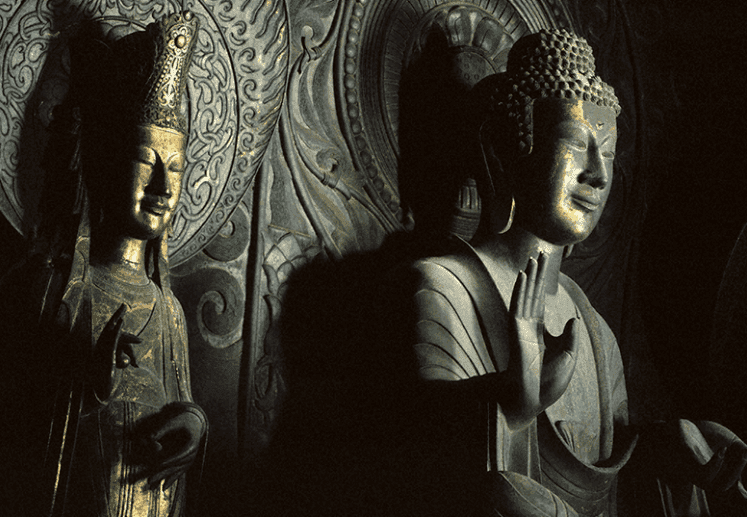
engraved next to their weight. This name can also be found on the Sakayamuni triad of the Horyuje temple in Ikaruga, Japan.
Since Monk Marananta’s mission, Buddhism had a great influence on Baekje culture. This can also be found in Muryeong’s grave.
Butt still those Shamanistic influences were found in relics, not only due to Buddhist tolerance towards local religions.
I think there is another reason.
Like the discovery of King Tutankhamun’s tomb in Egypt,
the accidental unearthing of King Muryeong’s tomb in Gongju was a revelation for Korea, offering a rare glimpse into a world long past.
Both tombs, sealed for over a millennium, protected their treasures from time and decay.
Yet while Tut’s tomb highlighted the opulence and grandeur of ancient Egypt, Muryeong’s grave opened a window into the delicate, spiritual artistry of Baekje—a culture equally as grand, but often overshadowed by its neighbors.
But even by the narrative of world history itself. While the treasures of Egypt and China are celebrated globally,
Baekje’s legacy, delicate and profound, remains known to few. And yet, in the quiet stillness of this tomb, its significance cannot be denied.
Shikibu’s Korean melancholy: mono no aware
My thoughts float to a meeting I had with Shikibu Tsuku.
During the appointment in the Kasteeltuinen Arcen,
the interplay of clouds and sunlight on the budding green seemed to mirror Shikibu’s own mood—a constant shifting between warmth and cold,
between the comfort of memories and the ache of what had been left behind. The air was crisp, carrying with it the faint smell of earth waking from its winter sleep.
Few get to witness this, as the gate remains locked early in March. Amidst the contrasting cold and warmth, between the desire for a hearth fire and yakitori.
The park lay in tranquil beauty. Shikibu, feeling the chill, folded her summer kimono thoughtfully.
She was not the elegant figure enjoying the roses but more of a contemplative, inward-looking prayer. Her monologue filled my awareness.
“Mono no aware,”
Shikibu began, “is a Japanese expression signifying the poignant beauty of things. The inevitable transience of nature makes beauty fleeting and bittersweet.
Everything that lives and even everything that exists is not eternal! You see it in Bonsai, where often a dead branch forms the essential beauty of the tree.
It’s also reflected in how we view nature and experience it. Sakura is only beautiful because it is fleeting and oh-so-perishable.
You must enjoy it immediately and to the fullest.
Mono no aware and han are different sides of the same coin. One is the acceptance of beauty in transience,
the other, a lingering sorrow from unresolved suffering. Both see the fleeting nature of existence,
but while mono no aware embraces it with quiet resignation, han carries the weight of it, refusing to let go.
I looked at Shikibu, trying to lift her spirits. “It’s difficult to stay in the Kasteeltuinen now, but let me prepare some Sake to warm your heart.”
“Ah, the change of seasons brings tears,” she said, bowing slightly toward the Sake bowl. “I am melancholic, but maybe it’s also homesickness. During the last Holland Koi Show, I gave some areas Japanese names.
The Japanese village became Nippon Mura, and the aquarium tent Suizokukan. But most often, I think of the Doeplein: Ibento Kaijo,
where I still have so much more to learn about the Nishikigoi. If ‘Mono no aware’ applies to any Japanese art form,
it’s certainly the case with the mortality of the beautiful ornamental Koi.”
Her voice grew softer, as if the weight of the words themselves carried the passage of time. “Even Nippon Mura and Ibento Kaijo will one day fade into memory, just like the fleeting beauty of the Koi we so lovingly display.
That’s the way of things, isn’t it? The more we hold on to something, the more it slips through our fingers.”
“Why so sad, Shikibu?” I tried to console her. I knew what she felt.
Anyone who has seen Spring, Summer, Fall, Winter… and Spring by Kim Ki Duk understands this well.
The young monk, dragging the millstone up the mountain, carries not only the weight of his own suffering but that of the world.
With a rope tied around his waist, he pulls the heavy stone behind him, while carrying the Geumdong Mireuk Bosal, the golden Maitreya Bodhisattva.
The burden is not merely physical; it is spiritual, a symbol of the hope for salvation amidst suffering.
Each step he takes echoes the weight of human suffering, yet the Bosal he cradles in his arms serves as a reminder of the possibility of rebirth and enlightenment.
This, too, is han—a burden passed from one generation to the next, quietly borne, yet never fully lifted.
Many Japanese purists might abhor my liberal blending of Far Eastern cultures, but my long visits to Hanguk
and conversations with many artists and scholars there convince me that “Mono no aware” can only be fully understood this way.
Mono no Aware goes hand in hand with Han
Shikibu promised one thing: One day we would sit together, listening to Jeongseon Arirang—a song steeped in the very essence of han,
each note carrying the weight of centuries of sorrow and resilience.
In Kim Young Im’s voice, I knew we would both find something of ourselves, something that had been lost and perhaps, briefly, could be reclaimed.
The movie gives you an even deeper sense of this story. You can continue reading just below.
Exploring the Cultural Interactions Between China, Korea, and Japan
Korea’s influence on Japan was particularly significant during the Three Kingdoms period, when the Baekje kingdom played a key role in introducing Buddhism to Japan in the mid-6th century.
Alongside religion, Baekje artisans and scholars also brought advanced techniques in architecture, pottery, and metalworking, leaving a lasting imprint on early Japanese culture.
This cultural exchange helped shape the foundation of Japan’s early state, intertwining Korean expertise with native Japanese traditions to form a unique cultural identity.
Although Chinese, Korean, and Japanese cultures are interrelated, they have distinct characteristics.
China is the cultural motherland to which both Korea and Japan were indebted for centuries.
However, due to their long periods of isolation, both Korea and Japan developed unique interpretations of the philosophies and traditions imported from China.
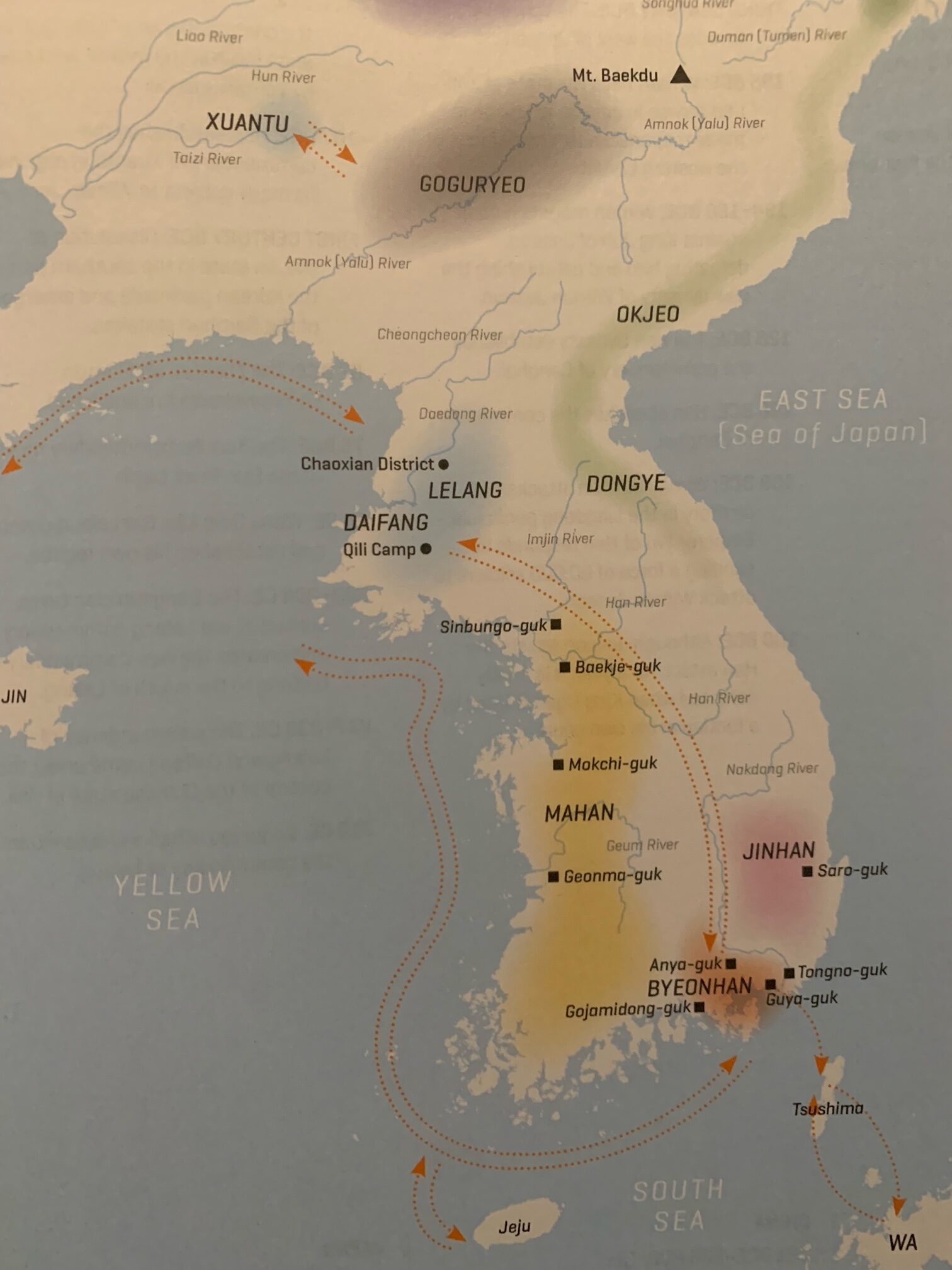
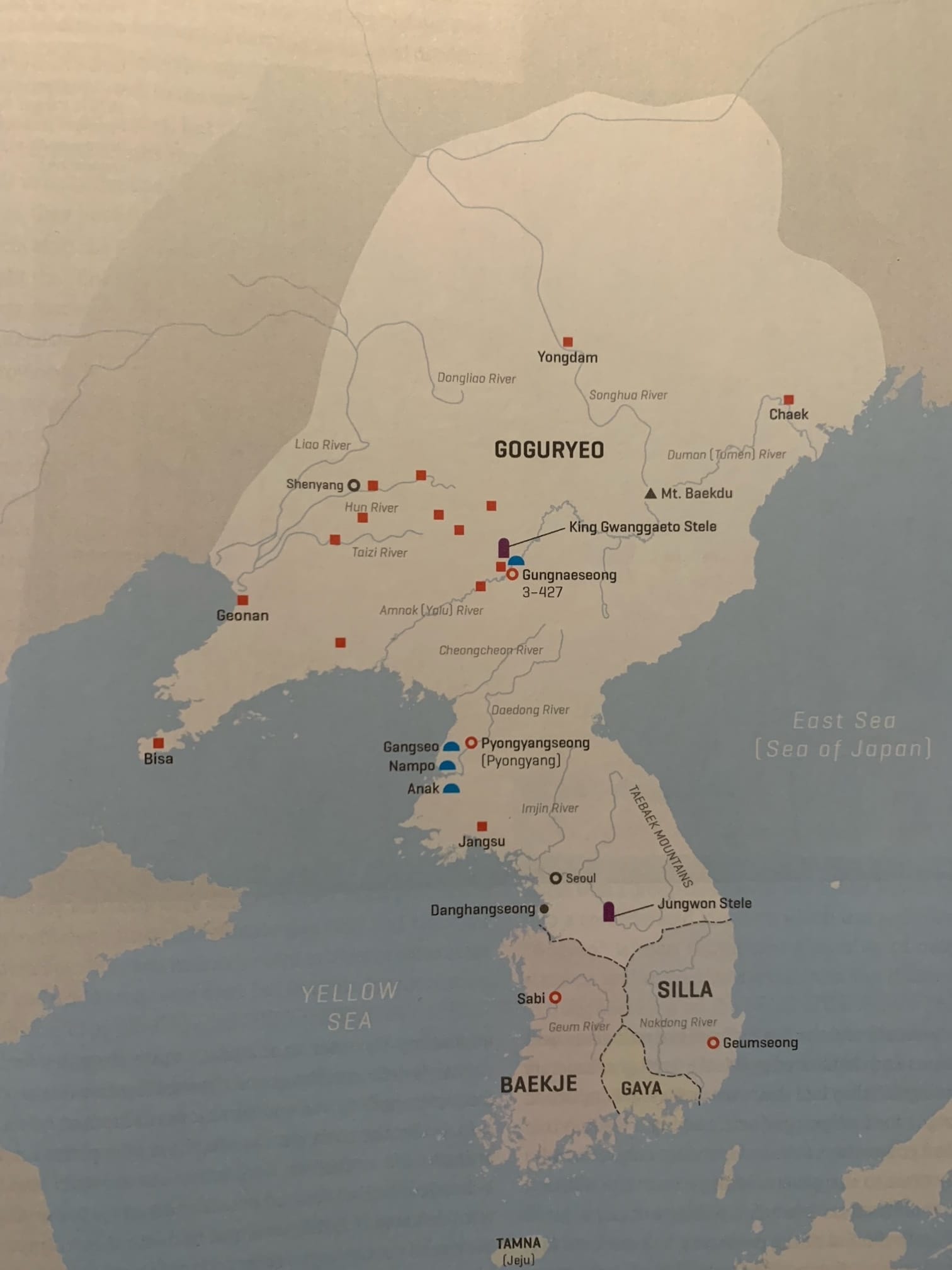
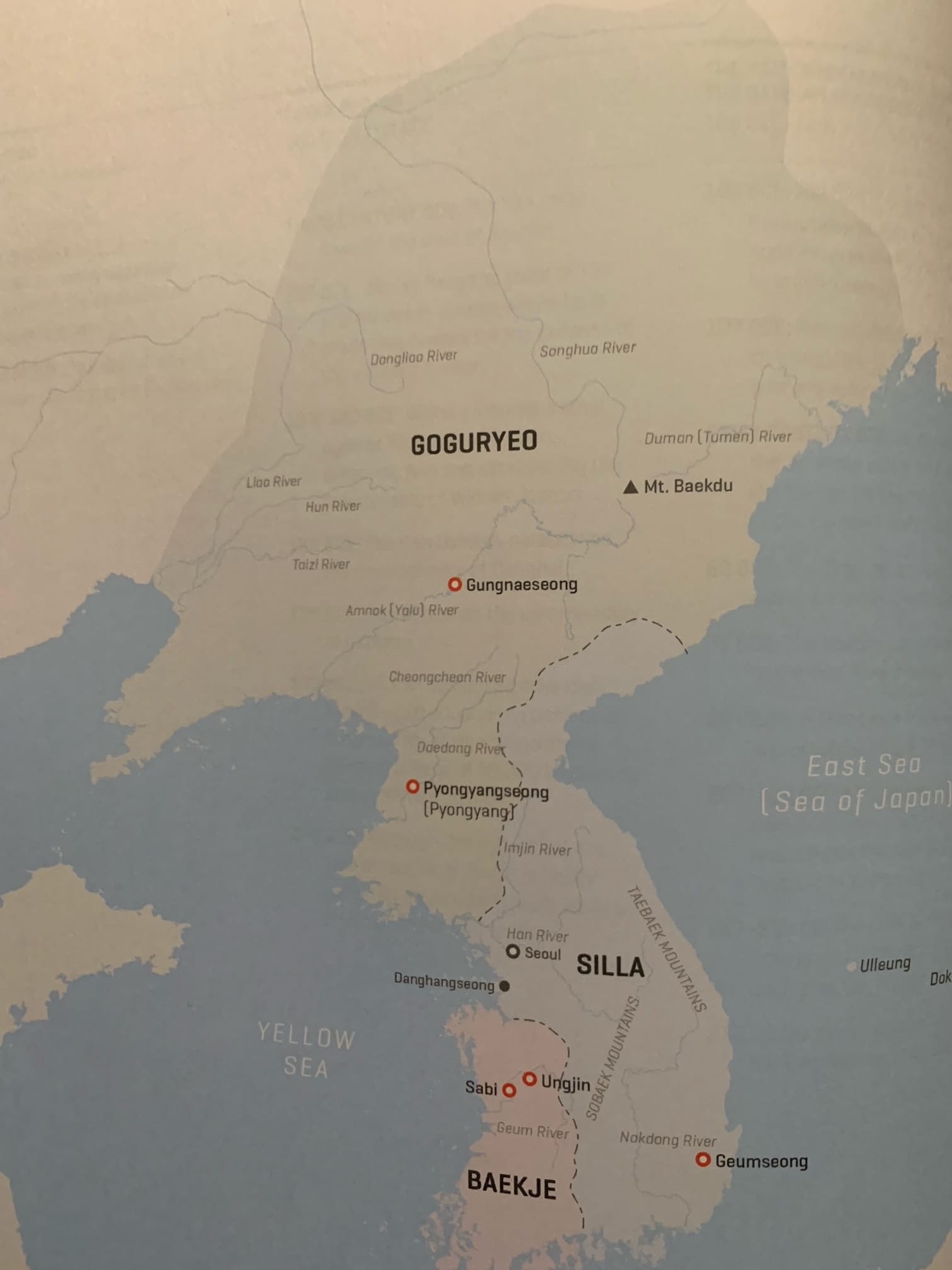
Korean History in maps Cambridge university press
3rd to 4th. century 6th century mid 6th century
What about Korean Melancholy the North
But what about the brothers and sisters behind the barbed wire in the North? Would they bend along or practice with rockets?
The mountains also observed the all-dominant Kim family. The regime, with all its cruelty, propaganda for domestic or foreign use,
the Gulag system, and starvation, does not escape the attention of the almighty. The regime, the dictator, could not provide the altars with food and drinks.
I realise that the Soju bottle is empty. Walking across the parking lot, I see the car that passed me just now.
The driver gets out and bends. He introduces himself as Oh Yang Chon and hands over his ticket. Police!
TWICE the first Korean girl group to acieve the milestone of reaching over 200 million views on YouTube
Hallyu: the Korean Wave refers to the worldwide popularity of South Korean culture, which has been growing since the mid-1990s. Initially fueled by the success of South Korean TV dramas and pop music in countries like China and Japan, Hallyu has since become a global trend, influencing various aspects of popular culture.
Here are the seven reasons for the global rise of K-Culture Boom: The Korean Wave:
Addictive K-Dramas: Captivating storylines and high-quality production have attracted a global audience, from romance to thrillers.
K-Pop Sensation: With energetic performances, catchy music, and charismatic idols, K-pop groups like BTS and BLACKPINK have built massive international fanbases.
Unique Fashion and Beauty: Korean fashion and beauty products, such as K-beauty routines, are beloved worldwide for their innovation and style.
Digital Accessibility: Platforms like YouTube and social media make it easy to access and enjoy Korean content, leading to its global spread.
Cultural Diversity: Korean culture offers a fresh and diverse perspective on storytelling and traditions that resonate with people from various cultures.
Strong Fan Support: The dedication of global fanbases, like BTS’s ARMY and BLACKPINK’s BLINK, has propelled Korean Cultural Wave to unprecedented heights.
International Recognition: Success stories like the Oscar-winning film Parasite have put Korean media on the world map, driving further interest in other aspects of the culture.
The Early Days of K-Wave: Korean Dramas Captivate Asia
The term Hallyu: the Korean Wave first gained traction in 1997 when the TV drama What Is Love aired on China Central Television (CCTV). Ranking second in China’s all-time imported video content, this drama marked the beginning of the Korean Wave’s influence across Asia.
Silla ceramic warrior
On this site, Mantifang’s Hugo J. Smal provides information that helps you navigate Korean Culture Explosion the Korean wave. Explore his insights on Korean dramas, the cuisine of the Korean kitchen, and, of course, the renowned ingredient Kimchi. Remember to try the recipe, and enjoy the food served in exquisite Korean ceramics. The Korean Mudang is still very important in Korea. Read about the adventures of Mugungwha Mudang Bosal
We have also discovered valuable insights from other authors regarding the influence of Confucianism on contemporary Korea, the origins of Korean pop culture, and the unique relationship between theNetherlands and Korea and the influences that the Dutch had on the Korean language.
Goyang Koi Farm: The New Face of Korea’s Global Influence
At Goyang Koi Farm, we are proud to contribute to Hallyu: the Korean Wave by introducing Korean Fancy Carp, or K-Carp. These stunning fish, known as Ing-eo (잉어) in Korea, embody the values of strength, perseverance, and longevity. As the Korean Wave continues to spread through K-pop and K-dramas, we invite you to experience the Korean Koi Wave at Goyang Koi Farm.
The Expansion of Hallyu: The Global Reach of Korean Pop Culture
From the mid-2000s to the early 2010s, the Korean Wave expanded its influence with the rise of idol groups like Big Bang, Girls’ Generation, and Kara. These groups played a significant role in taking the Korean Wave beyond Asia, gaining a substantial following in Latin America, the Middle East, and other regions.
Beyond Entertainment: Hallyu’s Impact on Global Culture
Since the 2010s, Korean Craze: has broadened its reach beyond TV dramas and music to include traditional culture, food, literature, and language. The global appeal of Korean culture has been further amplified by online platforms like YouTube and social media, creating a diverse and enthusiastic international fanbase.
Hallyu in Cinema: The Impact of Parasite
[embedyt] https://www.youtube.com/watch?v=5xH0HfJHsaY[/embedyt]
The influence of K-Wave reached new heights in 2020 when the film Parasite won four major awards at the 92nd Academy Awards, including Best Picture and Best Director. This achievement underscored the growing global recognition of Korean cinema as a vital part of the Korean Wave. The Arthdal chronicles are one of Hugo’s favorites. Read his comment on Dangun and The Arthdal Chronicles
Stay Updated on Hallyu
Follow us on Facebook for the latest updates on Korean Culture Explosion and other exciting trends in Korean culture. Dive deeper into Korean culture with our social media.
This chapter moves between river path, shared table, hierarchy, and sudden rupture. It does not define kibun and nunchi in abstract first; it lets them appear in gesture, silence, waiting, laughter, and misrecognition. Rural edges of Goyang Si mirror remembered Rotterdam outskirts, while social codes unfold in food, drink, bows, and role. The text circles rather than concludes, returning to respect, face, and group rhythm from different angles: farm, restaurant, memory, anecdote, and interruption. What seems incidental becomes structural. What seems convivial becomes diagnostic. The chapter’s movement holds both warmth and unease, ending in a question of interpretation rather than certainty. Read it as lived philosophy in scene-form: relational, layered, and sometimes dissonant.
As I softly chant ‘Na-mu Ji-jang Bul,’ I let the words guide my steps along Baedagol-gil, the path running alongside the Seongsaheon River. The river, now a small stream, burbles quietly below me, its sound almost drowned out by the symphony of Cicadas. Each step feels like a journey between worlds, much like the river, which swells during the monsoon only to retreat into a quiet stream under the summer sun.
Does enviroment has kibun or nunchi?
Aerial View of Baedagol-gil and Surrounding Areas in Goyang Si
In the distance, I can see tall new flats. Kim Young Soo lives in one of them with his wife and two sons. On the riverside, it is rural and dark. There are a lot of small farms in this part of Goyang Si. In some of the arched greenhouses, there is light. I hear a mother talking soothingly to her baby.
A little further on, the smell of a barbecue. Jin-do growls softly, but when I speak to him reassuringly, he shakes his chain violently, wagging his tail. They can be friendly dogs. I am aware. He doesn’t speak Dutch. I don’t speak Korean.
I feel at home among the gardens. The rural atmosphere with the hum of the big city in the distance reminds me of Rotterdam. It feels like the village ‘Tuindorp Vreewijk‘ in the seventies. This garden village was created in the nineteen twenty’s for the farmers from the Southern Islands of the Netherlands. They came to earn their living in the big city. The gardens have to give the former farmers a sense of home. At that time, it was still on the southern outskirts of Rotterdam. Now ‘Tuindorp Vreewijk’ is enclosed by it.
“Tuindorp Vreewijk” in the 1960s was rural and peaceful.
Things go a bit faster in Goyang Si. There is no question of elevating the people. The rolled-up sleeves mentality, ‘we can do’ or maybe even ‘we must do,’ is leading. After the war, the Americans supported the Europeans with their Marshall Plan. The Koreans had to do most of it by themselves. Just a little help from the United Nations! They did well!
People, Rank, and Group Field
Kibun or Nuchi for the people.
I slowly walk onto the Goyang Koi farm. It is there on the grounds of the Baedagol theme park, where I live during my visits. We ate beef bulgogi, marinated beef from the barbecue. The restaurant is a fifteen-minute walk from the Koi farm. On the window, I could only read the word ‘Saramgehe,’ which means ‘barbecue for the people.’ I couldn’t decipher Hangul, the words in the Korean alphabet. Fortunately, my interpreter Jay (Kim Jay Ho) and the people of the Koi farm were waiting with me outside.
Traveling to learn kibun or nunchi.
There must have been ten of us. Some lit a cigarette. I received a cup of coffee; part of the restaurant service. Mr. Han, always animated, was telling a story with a loud voice, busily gesticulating. Han didn’t have to try hard to be louder than everyone else, but the story was long. Jay, struggling to keep up, eventually gave up on translating simultaneously.
Kibun or Nunchi: A Group Effort
My friends were already laughing at the next joke when the restaurant owner joined in, chatting noisily. His story seemed very interesting, but Jay had given up on translating. The group had absorbed him, and I didn’t feel left out. They were hard workers, and now they could finally let loose. I just went along for the ride.
Saramgehe, love for the people.
Mr. Han’s wife doesn’t mind at all when he eats out with colleagues, they told me. It saves money because the boss pays, and it spares her the trouble of deciding what to cook. In Korea, where marriages are often arranged, things don’t always turn out perfect. But that doesn’t have to be a disaster. The woman usually has her hands full raising the children, while the man’s responsibility is to bring home the money.
In this strongly Confucian society, women are traditionally expected to be obedient to their husbands. But, take it from me, she’s usually the one in charge of the house, the children, and, of course, the wallet.
It wasn’t always this way. There was a time when mothers had to ask for money for household expenses every day. As Korea’s economy grew, so did Eomeoni’s daily budget. Eventually, men started handing over their entire salary and asking for pocket money themselves. Confucian? Not really, but it certainly cut down on the nagging.
Working friends, kibun or nunchi specialists!
We had been waiting for about fifteen minutes, and the group was getting louder. There were playful blows on shoulders and a lot of laughter. Suddenly, the atmosphere shifted. Kim Young Soo’s SsangYong turned into the parking lot. He was on the phone, and the group waited respectfully. He is their boss and, at that moment, the most important person. The wait wasn’t about submission; it was about maintaining respect. After all, keeping Kim Young Soo’s Kibun optimal was crucial.
Kibun, Nunchi, and Embodied Etiquette
kibun or nunchi: Not Easy to Master
Let me explain the concept of kibun. In Confucian thinking, a man’s pride and face are crucial. Losing either is seen as deeply negative. Additionally, the spirit and feelings of a person are significant—hurting either can be damaging to both the mind and body. The workers were careful not to harm the boss’s kibun. After all, he was the one providing the meat on the barbecue and the Soju in the glass.
Everyone has kibun. Nunchi, on the other hand, is an extremely subtle skill perfected by Koreans to avoid damaging that kibun. It involves scanning body language, facial expressions, and mood to navigate social interactions smoothly. Even in tough situations, nunchi ensures that no one’s kibun is left damaged within the group. Every Korean is, almost subconsciously, a kibun or nunchi specialist.
Of course, there is always a hierarchy! But the top dog can only exist within a pack, making him more of a primus inter pares—first among equals. He’s just a little more equal than the others.
Well, Bending Saves kibun and nunchi
Kim Young Soo stepped out of the car and quickly bowed his head. The group followed suit, bowing in unison. This was not a formal occasion, so their bows were short, with a slight bend at the chest and head, hands positioned in front of the abdomen or by the sides. It’s usually nothing more than that. Just remember to keep your back straight!
When bowing to someone older, you bend a little deeper. If it’s a friend, you might shake hands at the same time. And when a child bows, you don’t stand on ceremony—just bow back, always with kindness.
Sometimes it gets a bit more complicated. For instance, if you need to bow to two people—one being a younger boss and the other an older employee—it would be insulting to the boss if your bow is deeper to the employee. In such cases, status takes precedence over seniority.
Beyond these “everyday” bows, there’s also the big bow. This involves kneeling, bending your arms, and placing your hands on the floor, with your forehead touching the ground. Koreans reserve this type of bow for special occasions, such as weddings, funerals, and Jesa (ancestor rituals). It’s also used when you are deeply ashamed or extremely grateful.
Disruption: Face, Misreading, and Repair
A Little Incident at a Koi Farm
During one of my early travels in Korea, I visited a koi farm where only very sick fish swam in a large indoor pond. I noticed large wounds on the skin of some of the fish, while others gasped for breath at the bottom. Many had lost their protective mucus layer entirely.
I hate seeing animals suffer. Do fish has kibun or nunchi.
The owner noticed the concern on my face—I hate seeing animals suffer. Without much explanation, he quickly whisked me away to a restaurant, accompanied by a translator. The ride was silent, and I was placed in the back of the car. The breeder’s employees followed us in a van.
Over dinner, I urged the translator to discuss the sick fish. A long conversation in Korean followed, though it didn’t seem to be about anything serious. When I pressed the issue again, the translator flatly refused to engage further. Despite my concern, the meal was good, and the Soju kept the topic off the table.
On the way back, I was seated in the front, while the translator sat quietly in the back. The employees had disappeared, and the atmosphere was tense. Upon arrival at the breeder’s office, I was led to his luxurious chair, where he poured me a glass of whiskey. The translator remained silent, staring at the floor. Suddenly, the breeder knelt down and performed deep bows, tears streaming down his face.
He started to apologize profusely, sobbing loudly. He regretted showing me the pond with the sick fish, believing he had severely damaged my Kibun. I felt uncomfortable and unsure of how to respond. Rather than leaving him in his misery, I helped him up and gave him a big hug.
His tears stopped, and the three of us sat down together. Of course, I offered him his chair back. He tried to pour me some whiskey, but I politely requested Soju instead, which seemed to lift his spirits—choosing the Korean drink over the import. He then promised to conduct an in-depth study of water quality and fish diseases.
I had resolved a deeply Korean problem in a very European way. Unbeknownst to me, the man had suffered a serious loss of face in front of his staff, something I hadn’t fully grasped at the time.
A hotel room was arranged for me, and I was invited back to the farm for breakfast the next morning. The employees needed to see that all was well again and that their boss hadn’t failed in the end. To my surprise, I found the pond empty; the fish had been put out of their misery.
Table Rituals, Drinking Codes, and Collective Balance
Elder Helps Younger
Back at the restaurant, Kim Young Soo was also handed a cup of coffee and was soon laughing along with his people. Jay still didn’t have time to translate, but that wasn’t a bad thing. I enjoyed all those happy faces and the energetic atmosphere.
With a nod, Kim Young Soo directed everyone inside. We walked through the crowded restaurant to a long, low table in the corner. Kim Young Soo pointed out where we should sit. Kim Kung, nicknamed “Chinese boy,” was the youngest. When he sat on the floor, he poured the glasses with water.
He’s not really a boy; he’s too old for that, but that’s his role. And he’s not Chinese either. He is from Yeonbyeon (Ch. Yanbian), a Korean Autonomous Prefecture in Jilin Province. The Yalu River forms the southern border with North Korea. To the East, it borders Primorsky Krai in Russia. This area once belonged to one of the Three Kingdoms of Korea during the Goguryeo period (37 BC to 660 AD). Although the Chinese dispute this, the people there still speak Korean. DNA research has also shown more kinship with Koreans than with the Han Chinese.
Because he lost his parents at an early age and had to care for a younger brother, he left for Korea to work in construction. Kim Young Soo saw him working in the rain and icy cold. Feeling sorry for him, he offered him a job at the Goyang Koi farm. Since then, he has had a very loyal and devoted younger friend.
A waitress brought scalding hot wipes so we could clean our faces and hands. Kim Young Soo ordered beef bulgogi, a wide variety of side dishes, and of course several bottles of Soju. He poured my glass first. I held it up with my right hand and supported my wrist with my left. After I knocked it back and took the bottle from him, the waitress looked at me with a smile. I poured Kim Young Soo’s glass. He drank it, and the party could begin.
In Korea, it’s considered inappropriate to pour your own drink, so people serve each other. I poured for those around me, and the drinks flowed quickly. The only way to avoid drinking too much is to leave your glass half full. It took me a few dinners to figure that out. Fortunately, I seem to handle it well in Korea—at least, I think I do.
If you have to wait too long for a refill, you can’t just ask for it right away. Holding your empty glass upside down over your head is often an effective remedy, but be sure it’s completely empty—I’ve seen it go wrong more than once.
Kim Young Soo set the gas grill to the right temperature and placed the meat on it. He broke a pepper and offered it to me. I took a small bite, knowing they can sometimes be incredibly hot. Not even Soju, sugar, or water can help with that kind of heat.
When the meat was ready, I picked up a piece with my chopsticks, placed it on a lettuce leaf, and added some kimchi, a clove of garlic, ginger slices, and black bean sauce. I folded it into a package and popped it into my mouth.
The flavor explosion was beyond anything I could compare. It reminded me of the streets of Insadong, the artists’ district: busy, colorful, dynamic, and above all, filled with an abundance of scents. You don’t just taste Korean food—you experience it!
Noticing the Soju bottles were nearly empty, I pressed a button on the table. A bell rang in the kitchen, and I heard the sound I love so much. The waitresses all responded at once, “Deh!” meaning “We’ve heard you, and we’re coming.” I’ve never encountered a clearer expression of hospitality—it’s all so committed and genuine. However, Kim Kung had already jumped up and grabbed more bottles from the fridge. He drinks Hite beer.
Kibun or Nunchi honoured
The conversations remained animated and I kept an eye on my table mates. Does everyone have a drink and does the meat not burn on the barbecue? The restaurant owner came to me and offered me a plate of Jeju do beef. This meat, which comes from the black breed of cows from Jeju Island, is cut into very thin slices to be eaten raw. The ‘Hwe’ was specially intended for me.
Of course, I gave Kim Young Soo the first slice. After that, I took one myself. It melted on my tongue. The group continued to talk, drink and eat. I felt that I was being watched. I passed the plate Yukhoe. The table mates enjoyed it.
Korea does not have an ‘I’ society like we have in the Netherlands. Confucianism always creates a “We-society”. I don’t know the life of the waitresses at home. Is the husband doing well or not, but I realise that they don’t work for free. I can hardly imagine the great pressure under which Kim Young Soo is. But within the group it is us, and everyone is always host and guest at the same time. The waitresses do their job friendly and with a smile.
Kim Young Soo received a call and he had a short conversation. The waitresses pulls up a table and the employees moved around. A man unknown to me sat down opposite Kim Young Soo. His companions joined the rest. After I was introduced, the man asked me some personal questions. My age, what I do, how many children I have and what brought me to Korea. Jay was an official translator again.
An animated conversation developed between Kim Young Soo and the man and I was served another glass of Soju. The man showed no further interest in me. Was my Kibun okay now that the Koreans were having fun among themselves? I understood. It was a tough day for them.
I took some time for myself and my telephone. Someone named Bae Jong-Ok sent me a large file. The name was unfamiliar to me. Of course, I hesitated for a moment. Never click on files that come from someone you don’t know. But hey, let’s live dangerously. Moreover, a hack cannot cause much damage. My Korean account is not connected to the one in the Netherlands.
Text Within Text: Violence, Silence, and After-Question
No kibun or nunchi did Last
I opened the e-mail, expecting the usual mundane correspondence. Instead, what I found was something dark, something that made my heart skip a beat.
“The wood fire glowed, but its light was feeble against the inferno raging ahead. He fixated on the neatly stacked logs, ignoring the all-consuming hell behind him. He had burned it all down—long before, much earlier.
He tore the charred skin from the rabbit he found on his path. The stench of burnt flesh filled his nostrils, but hunger gnawed at his insides. Normal people would retch. He knew that. But meat is meat, and hunger is hunger. But heart or liver would have been better.
He had laughed, eaten, and drunk with those now perishing in the flames. He could still feel their warmth against his back. The screams reached his ears, but he remained still—helpless, or perhaps unwilling to act. All he craved now was silence.
After consuming a few chunks of meat, he stoppered his canteen and drank until his lungs revolted. Slack junk! There was no oblivion to be found in that. The moisture wouldn’t still his brain. So he decided to move on.
Walk, don’t talk, and forget what cannot be forgotten. He had been on the road for about two years and almost reached his goal. It was only because he had to wait that he stayed in the village. He partied, sang, and danced with whores and sometimes even with those who pretended otherwise. The man knew danger was looming, that his enemies would not give him any rest. The clergy murmured.
He felt guilty because they were innocent “ladies,” innocent “neat” people. The unbelievers saw in him the saviour, and therefore, gladly gave him some warmth. He couldn’t do without that warmth. The task assigned to him was onerous.
Peace, that’s what he wanted—and no bullshit. But, the enemy was unruly and followed him wherever he went. They were like stinking plague-spreading rats. He smelled it when the “neat” ladies took him in their arms and when they spread their legs. The scorching smell of rotting falsehood was poignant to the depths of the lungs. Onward, he ordered himself. Remember your assignment and run.
After a few kilometres, he came to a house. With a kick, the door jumped out of the frame. He was immediately among the people who recoiled in terror.
She recognized him and bowed her head humbly. “It’s just who kicks in the door,” he thought scornfully. “The saviour or the devil, it makes a big difference, doesn’t it?”
As I read the chilling email, a thought crept into my mind—could this be the work of a Gumiho, seeking the ultimate silence? The Gumiho is a creature that feeds on human hearts, driven by an insatiable hunger that no amount of silence can quell. And in its wake, it leaves a trail of empty words and broken Kibun. As I continued to read, the text sent chills down my spine.
It matters a great deal whether the Duke claims his right and opens your daughter to her husband on the wedding night or whether she is corrupted by the rapist in the night. He had done both. Yes, the people bowed their heads in humility.
A woman offered him a drink. Bootleg whiskey burned deep in his throat. He grabbed the woman by the chin and forced her to look at him. Her eyes were dead, without fire. What does it matter? Whore or neat woman? All of them sank into deathly chill or insane sadness.
He took the bottle and walked out. No one would stop him. He must complete his task. A few more kilometres. Walk on! Walk on! Behind him, he heard rustling in the trees. Evil was everywhere.
Suddenly she appeared right in front of him. The screaming witch, with her fiery eyes and sultry body. Evil can feed itself and unashamedly shows its horny drive. It can take what it wants and does not hide just that.
He, the so-called saviour, let his gaze crawl up her legs—strong, unyielding legs. Her hips, firm and ready, spoke of raw power, of lust barely concealed. Her breasts, yes, her breasts were most certainly worth sucking. And her face was so lovely, so damaged now from the empty bottle he slammed right into it. No sense.
He kicked her aside and moved on, ignoring the warbling of the paladins kneeling around her. Hissing, they sprang up, but his sword, now drawn, cut her serfs in half in a giant swing.
A few more kilometres and then he would find his peace. In the distance, the tower loomed in stark contrast against the inky clouds. It flashed and thundered like hell. The earth shook and seemed to resist. His enemy had powerful friends.
A bang, and the tower slid into a slow bow. The atmosphere was filled with hisses and devilish laughter. He slowed his pace. Fear took his breath away. His heart nearly burst.
He knew. The saviour was late and was no longer able to save himself. With that, the hope of mankind was over. The sulphurous friends of the devil surrounded him, danced, drank, and sang to him: “Now you have your peace, now you have silence, the all-killing love, the nagging morality, the goodness so adored, gone, gone…” He recognised the song, his ode, his victory prayer.
And then there was silence. Humanity was silent. Only now and then, a vibrating horny sigh sounded. His black elves huddled submissively against him. They demanded no equality, no satisfaction, no attention. They would only worship him, for he was the rod of power. He got up, looked around, and saw that it was all right. His thousand-times-thousand-year reign had begun. He knew that henceforth, goodness would be repaid with evil and that his evil could not be matched. He was the devil and sought silence.
The goodness had to be silenced forever, the stinking lie exposed.
He had succeeded, and he had celebrated his triumph with whores and “nice” women because it didn’t matter… He had left the doubt behind him and burned his goodness.
And now, walk. Walk in silence towards the looming task. He conjured new enemies because only destruction warmed his heart. And there would always be more enemies—because, in the end, it was always about him.”
The Right Questions
The story didn’t impress me too much at first. One of my table companions, the carpenter, distracted me. Isn’t it strange, this Korean habit of addressing people by their occupation? It suits me well because I’m not great with names. And certainly not after a few glasses of Soju.
The carpenter asked if I was busy with my phone. I looked at him in surprise, then refilled his glass and did another round of Soju.
In retrospect, I should have paid much more attention to the email. At the very least, I should have asked myself the right questions. Why would the unknown Bae Jong-ok send me this story? Was it a dream, or a sketch of a very dark future? It felt as if I had suddenly found myself in the Hells of the Mudang—the Hell of the Boiling Bath, the Iron Beds, and Utter Darkness. As if I had experienced the “Shi-Wang Kut,” the ritual song of the bridge, and the Bardo from the “Tibetan Book of the Dead,” all at once on paper. It wasn’t a cheerful thought, to say the least.
Na-mu Ji-jang Bul. Let us go and see, Let us go and see!
This chapter of Goyang neighbourhood tracks a lived contrast: Rotterdam directness against Korean relational form, individual impulse against collective role, speech against context. It circles through neighbourhood, stream, memory, ritual, food, shame, and vision, not as separate topics but as one field of experience. Confucian social roles, Korean kibun and nunchi, and the unfolding logic of The Jijang Fractal are tested in body-language, hierarchy, table manners, and misread moments. The narrative descends into a darker textual intrusion, where voice, violence, and fractured identity pressure the narrator’s own reflections. Out of this tension, the fractal intuition reappears: not invented, but encountered.
Rotterdam and Goyang: Two Communication Worlds in Goyang neighbourhood
From Rotterdam to a Goyang neighbourhood
During my explorations of the Goyang neighbourhood, I came to understand that communication in Korea involves much more than just words and sentences. The context, the speaker, and the way something is expressed are all crucial. To truly grasp the meaning, one must read between the lines. Coming from Rotterdam, where people are straightforward and open-hearted, I noticed the contrast. In the Netherlands, directness is valued, and stepping outside the lines isn’t frowned upon. In fact, it’s often seen as a sign of creativity and initiative.
Goyang neighbourhood
Losing face isn’t much of a problem for me. In my country, people quickly forgive a mistake or a blunder. Just be honest! You don’t make a career without making mistakes. But in Korea, things are different. The deeply crying Koi breeder showed me that.
Confucian Pillars, Kibun, and Selfhood in Goyang neighbourhood
Pillars in Goyang neighbourhood
Pride also has a different connotation here. I feel proud when Feyenoord becomes champion, but a Korean feels pride when he fulfills the five Confucian relationships (Oryun). Confucius, Mencius, Yi Hwang (Toe gye), and Yi I (Yul gok) remain the pillars of Korean culture. These scholars outline the relationships between parents and children, elder and younger siblings, husband and wife, friends, and ruler and subject. In each relationship, Koreans follow a specific role pattern.
Parents owe their children education, care, and moral development. In return, children owe their parents obedience, respect, and care. They look after them when they can no longer work, and they pray and make offerings at their graves. These rules form the foundation for all other relationships and the social structure as a whole.
According to Confucian philosophy, when the Korean soccer team wins, it’s considered a victory for the entire community. The triumph of the Korean people is more significant than that of the players on the field. The collective is far more dominant than the individual who scores.
We also interpret the concept of Kibun, which encompasses feeling, mind, and mood, quite differently. We Dutchmen tend to be overly sensitive and are certainly not inclined to discuss our inner thoughts and feelings. However, in the land of the Mudang, the seunim, the Neo-Confucian scholar, and even the Christian priest, feeling, mind, and mood hold great significance. Dive into the concept of Kibun or Nunchi
But expressing individuality isn’t highly appreciated. We certainly don’t discuss it as some do in Bloodhounds by Kim Ju-wan. We also need our personal space. “Don’t stand so close to me!” I survive Korea with The Fragrance of the Mantifang by Wu Cheng’en in mind.
“Watching the chess game, I cut through the rotten,
Felling trees, ding ding,
Strolling at the edge of the cloud and the mouth of the valley.
I sell firewood to buy wine,
Cackling with laughter and perfectly happy.
I pillow myself on a pine root, looking at the moon.
When I wake up it is light.
Recognizing the old forest,
I scale cliffs and cross ridges,
Cutting down withered creepers with my axe.
When I’ve gathered a basketful,
I walk down to the market with a song,
And trade it for three pints of rice.
Nobody else competes with me,
So prices are stable.
I don’t speculate or try sharp practice,
Couldn’t care less what people think of me,
Calmly lengthening my days.
The people I meet
Are Taoists and Immortals,
Sitting quietly and expounding the Yellow Court.”
I try to act Korean. It doesn’t work. Our cultures are too different, too opposite. When I try to use Nunchi, I only make mistakes. I don’t just want to master the language. Although? Am I forced to use Nunchi because I don’t know the language? I survive by being myself. Most Koreans forgive a lot.
Contemplating Goyang Neighbourhoods
At the Stream: Reflection and Recall in Goyang neighbourhood
Jijang at Bogwan Sa
As these thoughts weigh on my mind, I climb down the embankment towards the now gently babbling Goyang Seongsaheon stream. Of course, it’s dangerous. But the Soju makes me fearless, and sometimes you just have to do things. Amidst the lush vegetation, a stone invites me to sit. I take off my shoes and let the coolness wash over me as I rest my feet in the sparkling water.
The Budeul’s (부들) tails stand still. Rubiela Lobelia Cardinalis (루비엘라) proudly displays her red flowers. The Mulchucho (물수초) is the only thing that moves with the flow of the water. I sink into deep reflection, recalling a climbing experience I wrote about in my twenties.
Larghetto in the Goyang Neighbourhoods
Why was I so drawn to that one spot on the beautiful island of Crete? How did the small white church come to dominate my entire vacation? It sat high on the mountain behind Hera Village, a villa town on the Gulf of Mirrabellou, halfway between Agios Nikolaos and Elounda.
I had visited Knossos, where the discovery of a five-thousand-year-old civilization—one that would eventually culminate in the Greeks—was overshadowed by the crowds of noisy tourists. Even though prayers were no longer said in the temple, it still felt like sacrilege.
In this way, my vacation was largely a failure. I hadn’t found what I was looking for, though I didn’t even know what I was seeking. Some primordial feeling? The relationship between body and clay that had inspired Van Gogh to paint and Beethoven to compose? It was all approached the wrong way. Excursions don’t lead to the discovery of feelings.
Two days before the return trip, I decided to climb up. There was no path leading to that church. Well, I would just see how it went. My way started straight up, through bushes full of sharp thorns. The result: bloody scratches on my legs. But the only thing that mattered was the goal.
After half an hour, I found a barely passable path that led me to an olive grove. Now, only the blazing sun and the stone walls remained to be overcome. Anyway, after two and a half hours, I made it to the top.
The church was disappointing, but what I saw beyond it exceeded all expectations. On the other side of the mountain was a vast valley, covered with bushes that stood apart in a strange, almost deliberate manner. Ruins, low, sunken houses, lay scattered on the slope opposite me. I could no longer stand; my legs gave way under the purity of this place. My breath caught, sweat ran down my back. The violin concerto swelled in my head. It felt as though the valley was flooded with these gentle sounds. Or was it the other way around? Was my head filled with the composition of this valley? Unconsciously, I folded my hands and whispered:
“You who are, help me. For my ignorance is too great, my feelings too overwhelming, to comprehend you. You who are, help me.”
Tears streamed down my face. To die here with this feeling, so powerful and all-encompassing. This valley is sacred. My thoughts drifted back to the distant and cold Netherlands. Did I really have to go back there? That place could never touch me again, not after this revelation.
Completely dazed, I began the descent, quickly losing my way. After hours of stumbling, climbing back up, sometimes teetering on the edge of death, I found myself miles away, down towards Elounda.
What did it matter? I had become millions richer. That little church had saved my vacation. It had used its pull to teach me a firework of emotions. Since then, Larghetto and Rondo Allegro have remained my most beloved pieces of music. But it’s still a struggle.
Back to the River
Goyang neighbourhood Big dipper sky
“You who are, help me.” This theme would continue to dominate my life. The earth has always appeared to me as a planet in need of help. Too much dull, exhausting misery, both large and small. Here, on this stone by the babbling water, it feels right, but I know that the world around me keeps turning. I sink further into an even deeper reflection—or should I call it meditation?
The stars of the Big Dipper began to dance. Each star, a king, sung about in the Muga as guardians of the cosmic order. Suddenly, an extra star appeared, brighter than the rest, joining the constellation as the “King of Kings”—Jijang’s’s fractal, a manifestation of ultimate wisdom and power, surpassing the seven kings. This new star seemed to become the center of the constellation, a divine presence guiding the Buddhas and preserving the harmony of the universe. Read about the Muga
Pulsating before my eyes, it formed the King of Kings within the constellation. This almighty light suddenly transformed into
The, to me, unreadable formulas continued to rotate before my mind’s eye, occasionally interspersed with the beautiful image of a white Lotus. Softly, the almighty Om Mani Padme Hum flowed with the babbling river. Amazed, I crossed my legs and surrendered.
The stone beneath me turned icy cold. The plants became still, and the stream resumed its gentle flow. It flowed towards the Han River, past Ganghwa-do, into a world that continued to turn on its own. I wasn’t afraid, only slightly unsettled. Was it the Soju, or perhaps that violent email? Somehow, the mathematical formulas gave me enough strength to climb back up the embankment. I must interpret them, but because they filled me with compassion, I collectively named them Jijang’s Fractal.
Dinner, Bae Jong-Ok, and the Fracturing Voice in Goyang neighbourhood
Goyang Neighbourhood dinner
A few years ago, it was hard to find a European breakfast. I prefer to start my day with some bread, cheese, and peanut butter—just simple, hearty food that fills the stomach. The locals, on the other hand, eat the food prepared the night before. The dishes are delicious, but the spices are too strong for me in the morning. So, bread it must be—no Kimchi for me at breakfast.
One day, after shopping at the Lotte supermarket, I went to a Pojangmacha on Chungjang-ro for some beer and chicken. The National Korean soccer team was playing on the widescreen television. A group of Korean gentlemen was talking and cheering loudly. They were watching the game and enjoying Chimac—chicken and maekjju. I love that word. Just hearing it gives beer a flavor. The more you drink, the better it sounds.
I ordered my dinner and noticed the men watching me. It’s always awkward eating alone, especially in Korea. The youngest one at their table walked over to me with a bottle of soju and some glasses. He poured me a glass, which I drank, then returned the favor.
“Americano?” he asked. “No, no, from the Netherlands,” I replied. Judging by his expression, he didn’t quite understand. But when I said “Hidonggu,” he got it. His friends cheered and chanted the name of the most popular coach. Only the oldest man at the table didn’t join in.
I returned to my spicy and very tasty chicken. The group grew louder and louder, with the old man commanding the most attention. I don’t think he was older than me—just the top dog barking. He was the boss, though I doubt he was top-rank. That’s why I called him Cha-jang.
You might wonder how many men would choose to watch a soccer game with their family or friends instead of doing unpaid overtime. But not Cha-jang. He was wasted, drunk as a skunk.
Bae Jong-Ok wrote:
“I went from hand to hand until I eventually didn’t come back, not to the people, nor myself. What happened while I was gone? They didn’t tell me either. The fools, the idiots, the beasts were too busy shaming me. The shame became so great that my body rebelled.
I could hardly eat; there wasn’t much either. Some bowls of rice. On the days when I had enough energy to go outside, I picked Nokdu. It’s edible when cooked. The soybeans were for you. There wasn’t much meat in Amsil. There was more fish, but that was for Kim’s Yang Bang. You ate that with your friends, the party spies, and made fun of me when I looked too hungry.
In the corner of the room, I heard you all bragging and babbling. And you, Mom, had the loudest mouth, screaming above everybody. You were so happy that Dad had found eternal work in camp 15, Yodok in South Hamgyong, about halfway towards the heavenly lake on Baekdu San. ‘Too far to walk for him and me,’ was pretty much your motto, and your buddies shouted it loudly with you.
One evening, the conversations were more poisoned vomit than drunken wisdom. We heard the neighbor at the front door. Obu, the fisherman, asked for forgiveness for the late disturbance. Rubbing his hands and bowing, he told us that the wind, the dirty east wind, had prevented the boat from arriving on time. Your screaming, your friends laughing, and Obu’s humiliation went through marrow and bone. Obu was used to it.
Exhausted, I watched as you took over the fish and showed it to your friends. Brazenly, you held a wriggling one in front of Obu’s mouth. ‘Bite, bastard, bite,’ you screamed. ‘I don’t want to take everything from you. But that idiot over there,’ you said, pointing at me, ‘isn’t going to cook one for you.’ He had no choice but to place his teeth on the scales and tear off a large piece of flesh. Your entourage laughed, clapped, and bowed several times.
I understand why you have so much power. Dad regularly went deep into the mountains. He brewed Soju, which he sold to your friends. Of course, he kept enough behind to get drunk every night. One of your friends disagreed and drunkenly betrayed the lucrative mountain brewery to the ministry. He was arrested and disappeared to number 15.
You and your friends missed the alcohol and blamed the traitor. He disappeared during a hiking tour. ‘He went that way,’ you said, looking innocent to the guide. Your friends found a new bush distillery. You enjoyed the drink because the traitor was never found again.
Obu had mackerel with him for the barbecue and sogarli for the maeuntang. He bowed constantly, asked for forgiveness again, and held out his hand for his money. ‘No,’ you slurred. ‘You get nothing! The fish aren’t cleaned, so this bitch has to do it. I’m so hungry that I can’t defecate, and your dawdling has only made it worse. Get lost, bastard!’
It was unbelievable how quickly the drunken fossils chased after Obu. But they came back again. Suddenly there were side dishes, spices, and all that other stuff needed for a festive feast. Party members can get it with some effort. But fish? A bacchanal of Godeungu-gui and sogarli? I don’t know, Mother, what you had to do for all that.
Of course, the ships are checked upon arrival. Obu counted because many already tried to swim across the Hankang to Paju. The fish are also taken off the boat by party officials. Hence, you don’t just get fish on your table easily, being a single woman with a man in prison. But your body wasn’t holy when Dad was still at home either. Not that he had much trouble with that. As long as there was Soju.
I was still the only one able to cut the fish. Exhausted, I put the barbecue in front of the open window. Mother liked it when the neighbors could enjoy it too. I cut open the mackerel and pressed the tasty flesh onto the grill. Fifteen minutes, and the pigs could go to the trough. The maeuntang would take much longer. I saw those drunken heads, and I was sure; they wouldn’t enjoy it tonight.
You tried to rush me along. First, you cursed! I was no longer impressed by that. The emptiness had taken possession of me. My mind was like trampled water lily ground. The stench of loneliness not only filled my nose. My heart also felt like an abandoned fish factory. The hope of even a bite now seemed like a tucked-away treasure. You and your guests enjoyed it well enough. That others—Obu, neighbors who would certainly smell the fish, and I—didn’t taste it made the meal tastier for you.
A squid crawled between the dying fish. You grabbed the beast and stretched it out. You twisted it tightly around your roughly carved chopsticks. Your most prominent guest, the mayor, watched intently. I crawled back into the corner of the room. You licked at the moving flesh and babbled unintelligible words. He and the other men became horny—hot in a drunken, nowhere-leading way.
You pulled me up and put me in the middle of the room. You, Mother, forced me to sing a Mudang song. I felt empty, exhausted, and at the mercy of beasts that would tear me apart.
“Here ye, here ye, one and all! The Ritual of Princess A-Wang and Yõ-Yõng is about to be held.” I shuddered. “Today, at this time, I begin this song: No mean song this.” I replaced the drums and flute with my hands clapping. “’Tis the song of Sakayamuni’s blessing, and the God Chesok.”
That was the last you heard from me. When I regained consciousness, I saw you in a pool of blood in my corner of the room. Your drunken friends were still drinking. They babbled and sang around the barbecue and enjoyed the mackerel. They had long since forgotten what had happened. I fled outside.
Yes, I went from hand to hand until I eventually didn’t come back. Not to those beasts and not to myself. I don’t know what happened while I was gone. They didn’t tell me either. The fools, the idiots, the beasts were too busy shaming me. The shame became so great that my body rebelled. I got lost in myself.
But I remembered the dream and that his thousand-times-thousand-year reign had begun. He knew that henceforth, goodness would be repaid with evil. That his anger would not be matched. He was the devil and sought silence. The goodness had to be silenced forever, the stinking lie exposed.”
Aftertone: Sadness, Detachment, and Given Form in Goyang neighbourhood
Reflecting Goyang Neighbourhoods
I didn’t enjoy my meal anymore. Why am I getting these emails? Is it a joke? Or is someone just making up a story? They should send it to a publisher instead. The words left me feeling sad.
I paid for my food and bowed to the office men. Cha-jang still looked angry. When I went outside, I saw a woman who was about to enter. So I opened the door and let her pass. She looked a bit haughty. Then it struck me—most Korean men aren’t that polite to women. Lancelot is not in the Korean mindset.
The words from Bae Jong-Ok lingered in my mind, echoing in the hollow spaces left by years of isolation. Could it be that the darkness she described was not so different from my own? As I stepped outside, the cool night air hit me, and I felt a strange sense of detachment, as though the world around me was losing its form, dissolving into the fractals of my thoughts.
I did not invent Jijang’s fractal; it was given to me. I simply stumbled upon it. Naturally, I hope it will fulfill its purpose.
Some 2,500 years after the death of Confucius …Does Confucianism have a role in Korea today?The teachings of Chinese philosopher Confucius have had a profound influence on South Korea. So much so, that the nation is sometimes referred to as the most Confucian society on earth. An emphasis on family, personal betterment and respect for age and authority continue to feature highly in Korean life to this day, some 2,5…
Confucianism: Koreans giving up gold
“Back in 1997 when the Asian financial crisis hit, we had Koreans giving up gold. The huge spectacle of people lining up in the streets and giving up their gold because they thought our country was going under. We still sort of contrast that with how the Greeks or the Italians or the Spaniards are responding to their financial crisis where they just simply blame politicians and others. You really cannot explain that without Confucianism, where that sense of economic nationalism comes from or the sense that this nation is all on the same boat,” Hahm said.
— Read further: Korea Herald
A long reed but you get to know how Neo Confucianism became that important to Korea:
Neo-Confucianism as the Dominant Ideology in Joseon