Hallyu: The Korean Wave – A Global Cultural Phenomenon

Hallyu (Korean Wave)
TWICE the first Korean girl group to acieve the milestone of reaching over 200 million views on YouTube

Hallyu: the Korean Wave refers to the worldwide popularity of South Korean culture, which has been growing since the mid-1990s. Initially fueled by the success of South Korean TV dramas and pop music in countries like China and Japan, Hallyu has since become a global trend, influencing various aspects of popular culture.

Here are the seven reasons for the global rise of K-Culture Boom: The Korean Wave:

  1. Addictive K-Dramas: Captivating storylines and high-quality production have attracted a global audience, from romance to thrillers.
  2. K-Pop Sensation: With energetic performances, catchy music, and charismatic idols, K-pop groups like BTS and BLACKPINK have built massive international fanbases.
  3. Unique Fashion and Beauty: Korean fashion and beauty products, such as K-beauty routines, are beloved worldwide for their innovation and style.
  4. Digital Accessibility: Platforms like YouTube and social media make it easy to access and enjoy Korean content, leading to its global spread.
  5. Cultural Diversity: Korean culture offers a fresh and diverse perspective on storytelling and traditions that resonate with people from various cultures.
  6. Strong Fan Support: The dedication of global fanbases, like BTS’s ARMY and BLACKPINK’s BLINK, has propelled Korean Cultural Wave to unprecedented heights.
  7. International Recognition: Success stories like the Oscar-winning film Parasite have put Korean media on the world map, driving further interest in other aspects of the culture.

The Early Days of K-Wave: Korean Dramas Captivate Asia

The term Hallyu: the Korean Wave first gained traction in 1997 when the TV drama What Is Love aired on China Central Television (CCTV). Ranking second in China’s all-time imported video content, this drama marked the beginning of the Korean Wave’s influence across Asia.

Korean history
Silla ceramic warrior

On this site, Mantifang’s Hugo J. Smal provides information that helps you navigate Korean Culture Explosion the Korean wave. Explore his insights on Korean dramas, the cuisine of the Korean kitchen, and, of course, the renowned ingredient Kimchi. Remember to try the recipe, and enjoy the food served in exquisite Korean ceramics. The Korean Mudang is still very important in Korea. Read about the adventures of Mugungwha Mudang Bosal

We have also discovered valuable insights from other authors regarding the influence of Confucianism on contemporary Korea, the origins of Korean pop culture, and the unique relationship between theNetherlands and Korea and the influences that the Dutch had on the Korean language.

Goyang Koi Farm: The New Face of Korea’s Global Influence

Goyang KoiAt Goyang Koi Farm, we are proud to contribute to Hallyu: the Korean Wave by introducing Korean Fancy Carp, or K-Carp. These stunning fish, known as Ing-eo (잉어) in Korea, embody the values of strength, perseverance, and longevity. As the Korean Wave continues to spread through K-pop and K-dramas, we invite you to experience the Korean Koi Wave at Goyang Koi Farm.

The Expansion of Hallyu: The Global Reach of Korean Pop Culture

From the mid-2000s to the early 2010s, the Korean Wave expanded its influence with the rise of idol groups like Big Bang, Girls’ Generation, and Kara. These groups played a significant role in taking the Korean Wave beyond Asia, gaining a substantial following in Latin America, the Middle East, and other regions.

Beyond Entertainment: Hallyu’s Impact on Global Culture

Arthdal cronicals
 

Since the 2010s, Korean Craze:  has broadened its reach beyond TV dramas and music to include traditional culture, food, literature, and language. The global appeal of Korean culture has been further amplified by online platforms like YouTube and social media, creating a diverse and enthusiastic international fanbase.

Hallyu in Cinema: The Impact of Parasite

[embedyt] https://www.youtube.com/watch?v=5xH0HfJHsaY[/embedyt] The influence of K-Wave reached new heights in 2020 when the film Parasite won four major awards at the 92nd Academy Awards, including Best Picture and Best Director. This achievement underscored the growing global recognition of Korean cinema as a vital part of the Korean Wave. The Arthdal chronicles are one of Hugo’s favorites. Read his comment on Dangun and The Arthdal ​​Chronicles

Stay Updated on Hallyu
Follow us on Facebook for the latest updates on Korean Culture Explosion and other exciting trends in Korean culture. Dive deeper into Korean culture with our social media.

Korea on your bucket list

You have to go to Korea.

Hello and welcome to Mantifang.com, your starting point for discovering Korea! This page is not just about travel inspiration — it is an invitation to experience Korea in all its depth. It invite you to put Korea on your bucket list. Written by Hugo J. Smal, our chief editor, who has traveled Korea many times and knows how to guide you towards unforgettable experiences.

korea on your bucket list
Squid Game showed the world Korea’s thrilling side — now it’s time to discover it yourself.

If you saw the Squid Game or the Itaewon Class series, you already felt the energy. But nothing compares to living the real adventure: tasting bibimbap in a local market, sharing Korean barbecue with new friends, or dancing in one of Seoul’s nightclubs. Korea is waiting for you — the question is not if, but when you will check it off your bucket list.

When do you check Korea on your bucket list?

The Land of the Morning Calm offers stories, films, and history — but being there in person is incomparable. From the palaces in Seoul to the UNESCO World Heritage sites in Gyeongju, every destination tells a story. The Sansa mountain monasteries, added to the World Heritage List in 2018, are just one example. Maybe a temple stay will change the way you look at life.

Travel tips to Korea

Planning your trip is easier than you think. Direct flights from Europe and the US connect to Seoul’s Incheon Airport, one of the best-rated airports in the world. Trains such as the KTX bring you in just a few hours from Seoul to Busan or Gyeongju. The best time to travel? Spring (cherry blossoms) and autumn (colorful foliage). At Mantifang, we make sure you find all the background stories and inspiration to make your journey unforgettable.

Wondanggol Valley — where wind, water, and memory shape the land.

Today I published a new page about this quiet place in Goyang: its healing gardens, its history, and the hidden shrines that still watch over the valley. If you want to see where the Jijang Fractal first appeared in my journey, start here.

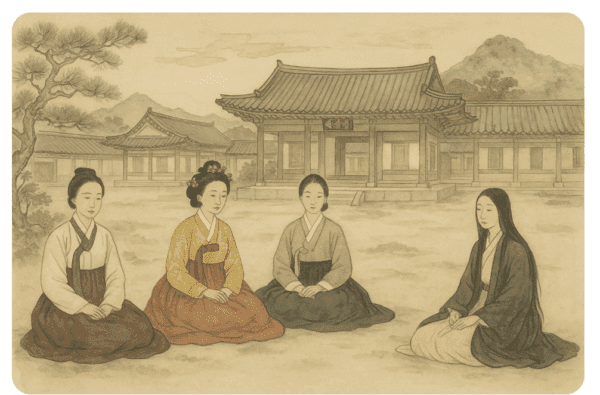
Four Korean Women

Four women of Joseon depicted in a Korean painting style on the courtyard of Gyeongbokgung: Queen Jeonghui, Deposed Queen Yun, Heo Nanseolheon and Murasaki Shikibu.

My new story brings you into the world of four extraordinary women who shaped Korean history and culture — Queen Jeonghui, Deposed Queen Yun, Heo Nanseolheon, and Murasaki Shikibu. Their lives reveal a Korea of inner strength, quiet power and timeless beauty. A perfect starting point for anyone wanting to explore the deeper layers of the country beyond the usual travel guides. Read the full story.

Sansa, Buddhist mountain monasteries in Korea

The Sansa monasteries are spread across the peninsula. Their open courtyards, Buddha halls, pavilions, lecture halls, and dormitories have survived centuries of faith and practice. These mountain sites remain sacred and active. Experiencing them gives you a glimpse into Korea’s spiritual depth.

Baedagol Bakery & Forest House — taste tradition, explore nature.

Baedagol
Baedagol Bakery & Forest House — taste tradition, explore nature.

Baedagol: a hidden treasure near Seoul

If your journey brings you to Goyang, you cannot miss Baedagol. This theme park is transforming into a place where culture, history, and nature meet. Our sponsor Kim Young Soo, CEO of Goyang Koi Farm, welcomes every visitor with warmth. Take the chance to say hello, enjoy the atmosphere, and discover how Korea’s traditions are brought to life in new ways. Baedagol is more than a park — it is a symbol of renewal and connection, and it belongs on your Korea bucket list.

Put nature Korea on your bucket list.

For mountain lovers, Korea is paradise. Hiking is in the Korean soul — families and friends gather every weekend to climb mountains such as Seoraksan or Bukhansan. The reward is not just the breathtaking views, but also the shared meal afterwards. And if you love culture, combine nature hikes with visits to ancient temples and villages. On Mantifang, you will find personal travel stories that inspire you to plan your own route.

North Korea on your bucket list?

Visiting North Korea remains a challenge. The government strictly controls what is shown to visitors. But times may change, and who knows what the future will bring? Until then, Mantifang focuses on the South — rich, vibrant, and open to discovery.

Discover Korea: A Culinary Journey Full of Flavor

Korean cuisine is a world on its own. Bibimbap, bulgogi, kimchi, and countless regional dishes — each meal is an adventure. It is not just food, but a cultural ritual that brings people together. Read more in our dedicated section: Korean Kitchen.

Mantifang as your guide

This page is just the beginning. Explore more on Mantifang:

Use Mantifang as your compass for exploring Korea — culture, history, art, and koi. Wherever your journey starts, we are here to inspire and guide you.

TIP: Hugo J. Smal, our chief editor, is always happy to answer questions: h.smal@me.com

Korean Kitchen

written by Hugo J. Smal

Korean kitchen: food not trying is not living!

My personal experience with Korean dining illustrates this perfectly: The table resembled a scene of post-war Korea—an area of chaos. Dinner at this restaurant is always a bustling affair. The integrated barbecue, countless trays of side dishes, peppers, garlic, salad leaves, bottles, tins, rice, plates, chopsticks, and napkins—it’s always a challenge for the waitstaff to arrange everything on the table. We had thoroughly enjoyed the meal, and it showed. Kim Young Soo signaled that our dining experience had come to an end and went to the counter to pay. Nearby, two men were engaged in a spirited argument, clearly fueled by Soju. Interestingly, the disagreement wasn’t over who should pay, but rather who wanted to pay. Discover more about my Korean adventures.

Fermentation: A Cornerstone of Korean Cuisine

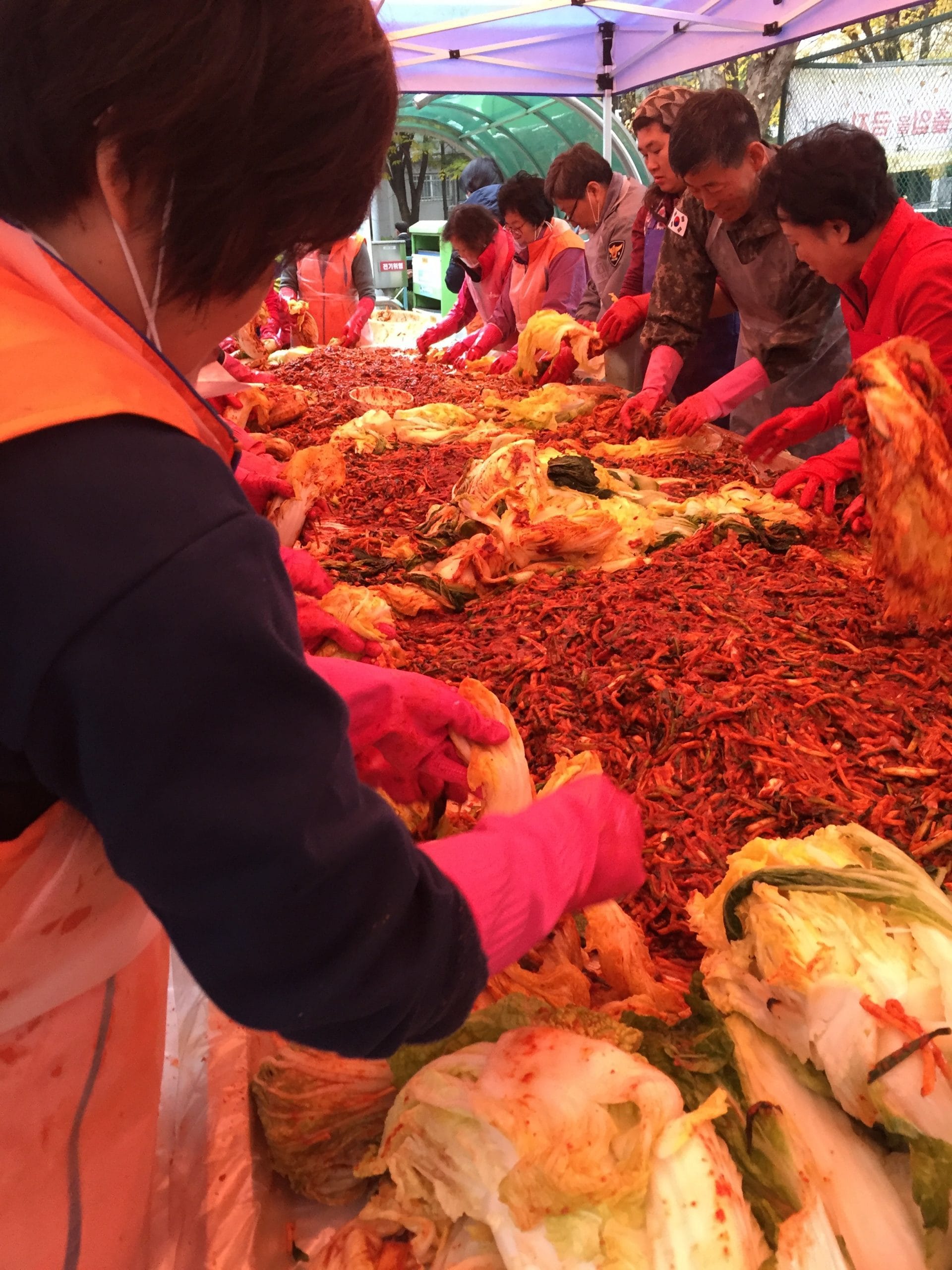
Making Kimchi: A True Neighborhood Tradition

The Koreans ferment a lot. Kimchi is, of course, the most famous. Originally, vegetables were fermented for the scarce winter period. But making Kimchi in the fall is still a tradition. Many Koreans, especially in the part of Goyang Si where I stay, have a small garden where they grow their vegetables. Kimchi not only harmonizes well with meat and rice but its pro-biotic effect is increasingly recognized. In short, Kimchi is very healthy. Dive into Kimchi and get a recipe.

Rice: The Essential Staple of Korean Cuisine

Rice is indispensable in Korean cuisine and culture. Historically, Chinese philosophy greatly influenced Korean dietary practices, or Hanguk eumsig, emphasizing the belief that poor eating habits lead to illness. While this principle might seem obvious, it’s often overlooked in modern times. However, Koreans continue to prioritize health by consuming nourishing and healing foods developed over centuries.

One such tradition is the incorporation of herbal remedies into daily beverages, both alcoholic and non-alcoholic, like eumcheong. Commonly used ingredients include honey, cinnamon, pine nuts, ginseng, ginger, jujube, Schisandra Chinensis (five-flavor berry), and goji. The ancient concept of Yak-Sik-Dongwon, meaning “medicinal food” or “medicinal rice,” reflects the deeply rooted belief that rice is the best medicine.

Korean kitchen offers bold flavors and unique dishes like Kimchi, Bibimbap, and Bulgogi. Discover 10 must-try dishes that capture the essence of Korean cuisine.

  1. Kimchi – Fermented vegetables, usually cabbage, with a spicy and tangy flavor.
  2. Bibimbap – A mixed rice dish with vegetables, egg, and gochujang (red pepper paste).
  3. Bulgogi – Marinated beef, grilled or stir-fried.
  4. Samgyeopsal – Grilled pork belly, often served with lettuce and ssamjang (spicy dipping sauce).
  5. Japchae – Sweet and savory stir-fried glass noodles with vegetables and meat.
  6. Tteokbokki – Spicy rice cakes in a sweet and spicy sauce.
  7. Sundubu-jjigae – Soft tofu stew with meat or seafood.
  8. Kimbap – Korean rice rolls with vegetables, meat, or seafood.
  9. Haemul Pajeon – Savory pancake with seafood and green onions.
  10. Galbi – Marinated and grilled beef short ribs.

These dishes showcase the diverse and flavorful nature of Korean cuisine.

Lots of plant-based ingredients in the Korean kitchen!

The proportion of flora is very large in Korean cuisine. Ingredients such as vegetables, mushrooms, seeds and seaweed are widely used. They are used in the cooking of almost all foods. Rice, porridge, rice cakes, soup, stew, wraps, steamed vegetables and pastries, you will always find green in it.
Herbs from the mountains and fields, in particular, are rich in vitamins and minerals, as well as fibre and antioxidants. The traditional cooking method of vegetables is cumbersome and takes a lot of time and effort, but vegetables are eaten as a staple food and thus a very important part of the Korean diet.

Are Meat, Poultry, and Fish Important?

Korean bulgogi is hot.

Traditionally, meat and fish have been among the more expensive ingredients in Korean cuisine, a trend seen worldwide. Historically, these products held a modest place on the Korean dining table, and even today, many Korean households maintain a diet that is predominantly plant-based, leading some to describe Korean cuisine as “almost vegetarian.”
However, the experience is quite different in restaurants, where barbecue reigns supreme. Whether it’s meat, fish, or poultry, the barbecue is the centerpiece of the dining table. If it’s your first time in a Korean restaurant, the staff will gladly assist in preparing the meat. But once they see you’re familiar with the process, they’ll step back and let you enjoy.

Korean barbeque; explosion of flavors

Kim Young Soo set the gas grill to the perfect temperature before placing the meat on it. He snapped a pepper and offered it to me. I took a cautious bite—sometimes they’re intensely hot, so much so that even Soju, sugar, or water can’t cool the fire.
When the meat was ready, I picked up a piece with my chopsticks, placed it on a lettuce leaf, added some kimchi, a clove of garlic, ginger slices, and black bean sauce. I folded it all into a neat package and popped it into my mouth. The explosion of flavors was unparalleled. It reminded me of the bustling streets of Insadong—vibrant, colorful, dynamic, and filled with an abundance of scents. You don’t just taste Korean food; you experience it.
Dining in a Korean restaurant is a communal affair. Everyone takes part in preparing the meat, ensuring that it’s turned regularly on the barbecue to prevent it from charring. This interactive process makes dining not just about eating, but also about participating and sharing.

Share your own Korean kitchen experiences with us and follow us at Mantifang Korean kitchen 한국 주방 for more delicious content. 

Korean dinning means multitasking!

And this is getting worse. In the west, everyone gets their bottle of beer. Waiters fill the wine glasses or provide you with stronger drinks. In Hanguk, it is completely different. Providing yourself with a drink is as much an insult to your table companions as putting your chopsticks upright in your rice bowl. You wait until someone else sees that your glass is empty. They will automatically fill it in for you. In turn, you make sure that your partners still have something to drink.

“When I noticed that the Soju bottles were almost all empty, I pressed a button on the table. A bell rang in the kitchen and then I heard the sound I loved most in Korea. The waitress all said at the same time, “deh!” We’ve heard and we’re coming. I do not know a clearer expression of hospitality. It’s all so dedicated. However, Kim Kung has already jumped up and got bottles from the fridge. He drinks Hite beer.”

Fish market

This is just an introduction. I’m not a cook or a specialist, especially in Korean cuisine, just a big fan. During all my visits to Korea, Kim Young Soo has taken me to a lot of restaurants. From simple maegju chicken to the very exclusive kitchen of the Yi dynasty Royals. The eel in the small eatery on the Han River was a feast for the palate. It is a great feast to visit one of the fish markets in Jeju-do or Gangwa-do, for example.

Korean seasonal food

A large hall at the water. Fishing boats bump against the shore. The scent of the sea creatures fills your nose. Thousands of “fruit de Mer” are displayed in hundreds of stalls. You make your choice and negotiate the price. Then you take your delicacies to a small restaurant in the market hall. Sometimes you have to wait because fish is popular in Korea. The specialized chefs bake what you scored, enjoy it!

Taste Korean food!

There are a lot of reasons to travel to Korea. The cities are beautiful and nature is stunning. There are many cultural and historical sites. The people are nice and show great hospitality. But to me, the Korean kitchen is especially outstanding. Just thinking about the lovely dishes fills my mouth with water. Yes, I love it. 

Korean cuisine has bold and flavorful dishes, which often feature a combination of salty, spicy, sour, and sweet flavours. Common ingredients in Korean cooking include rice, noodles, vegetables, and meats such as beef, pork, and chicken.

Questions and reflections

1. What makes the Korean kitchen more than just a place of cooking in your own experience?
In Korea, food is rarely separate from gratitude. Each dish carries a sense of presence — the awareness that nourishment is also a form of giving back to the earth.

2. How does Korean temple food express compassion, balance, and mindfulness in everyday life?
Through simplicity. Every ingredient is used fully, every motion of preparation becomes a quiet meditation. The food is not about indulgence but about harmony.

3. If you could join a meal in a Korean temple kitchen, what would you hope to learn or feel there?
Perhaps that peace is found not in the absence of hunger, but in the act of sharing — that cooking itself can be a path to compassion.