The Korean authorities have chosen, for now, not to support koi under their export policy. Perhaps that is understandable.
Given the current state of the world—with environmental and economic problems, and wars being fought—the koi hobby may even feel like a fetish for the rich. Even so, 雨果-J-斯马尔 和 Kim Young Soo want all the knowledge collected under the 高阳锦鲤 banner to remain available in this archive,
so enthusiasts can continue to use it.
Note: active koi operations have ceased; this page functions as a living archive of materials previously published under Goyang Koi.
From field notes to ponds — a living archive of Goyang Koi knowledge.
About this archive
This archive preserves practical koi knowledge and context that were once part of the Goyang Koi project. Our aim is continuity: to keep guidance available for keepers who value careful husbandry, water management, and clear documentation.
Over the years, the Farm gathered a wealth of practical insights — from feeding logs to water testing notes and from breeding experiments to cultural reflections. As a reference for Korean koi keepers, it covers koi breeding in Korea, koi care 和 water quality, and core 锦鲤品种 such as Gosanke (Kohaku, Sanke, Showa). The archive also reflects the exchange between East and West, where Bidan Ing-eo (the Korean name for 西乡) connects hobbyists and traditions.
Where relevant, we link to Mantifang for broader cultural context. If you are looking for the landscape project that succeeded the former 游乐园, visit the Baedagol page on Mantifang.
Buying koi is difficult because assessing koi is more than just adding up.
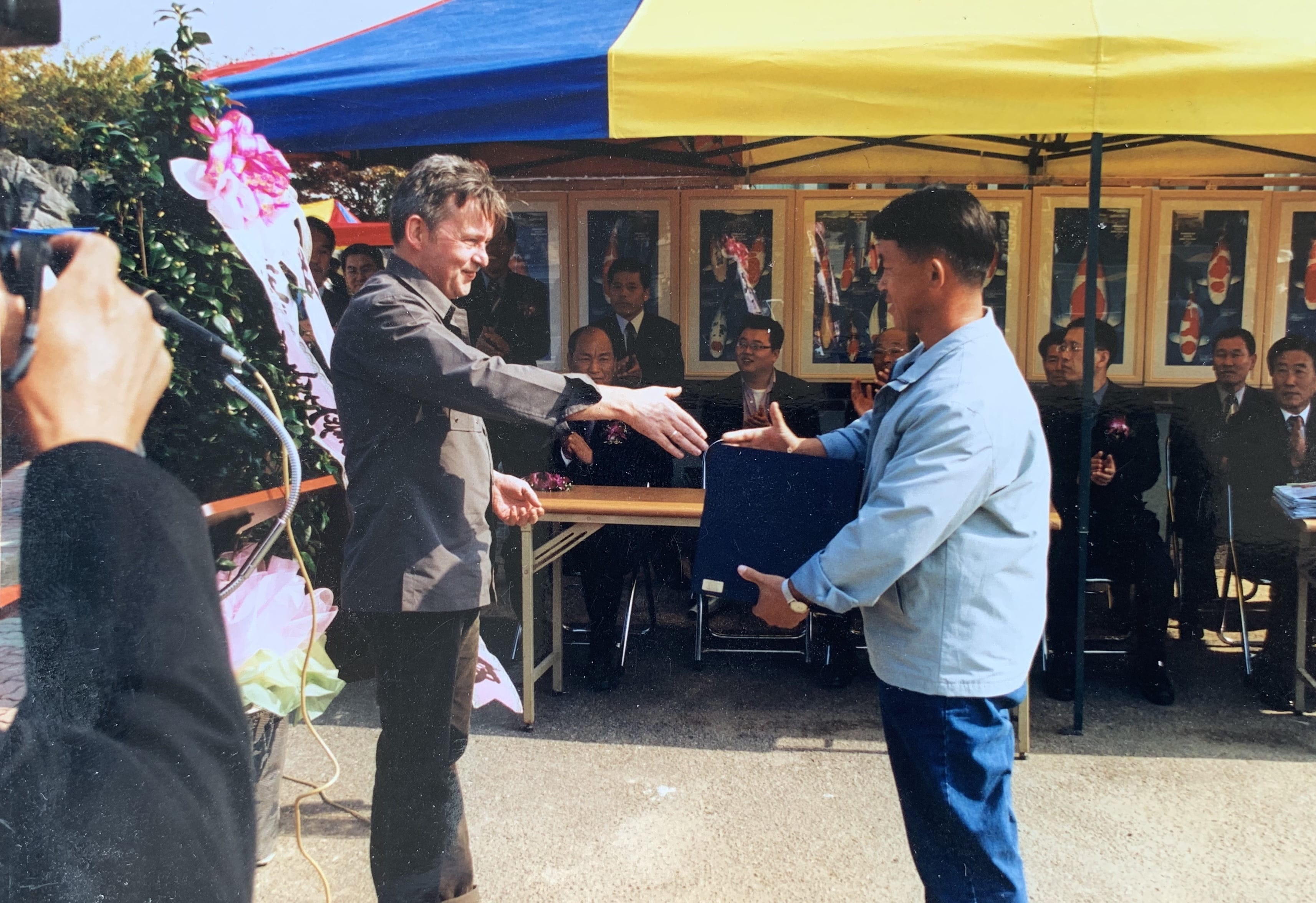
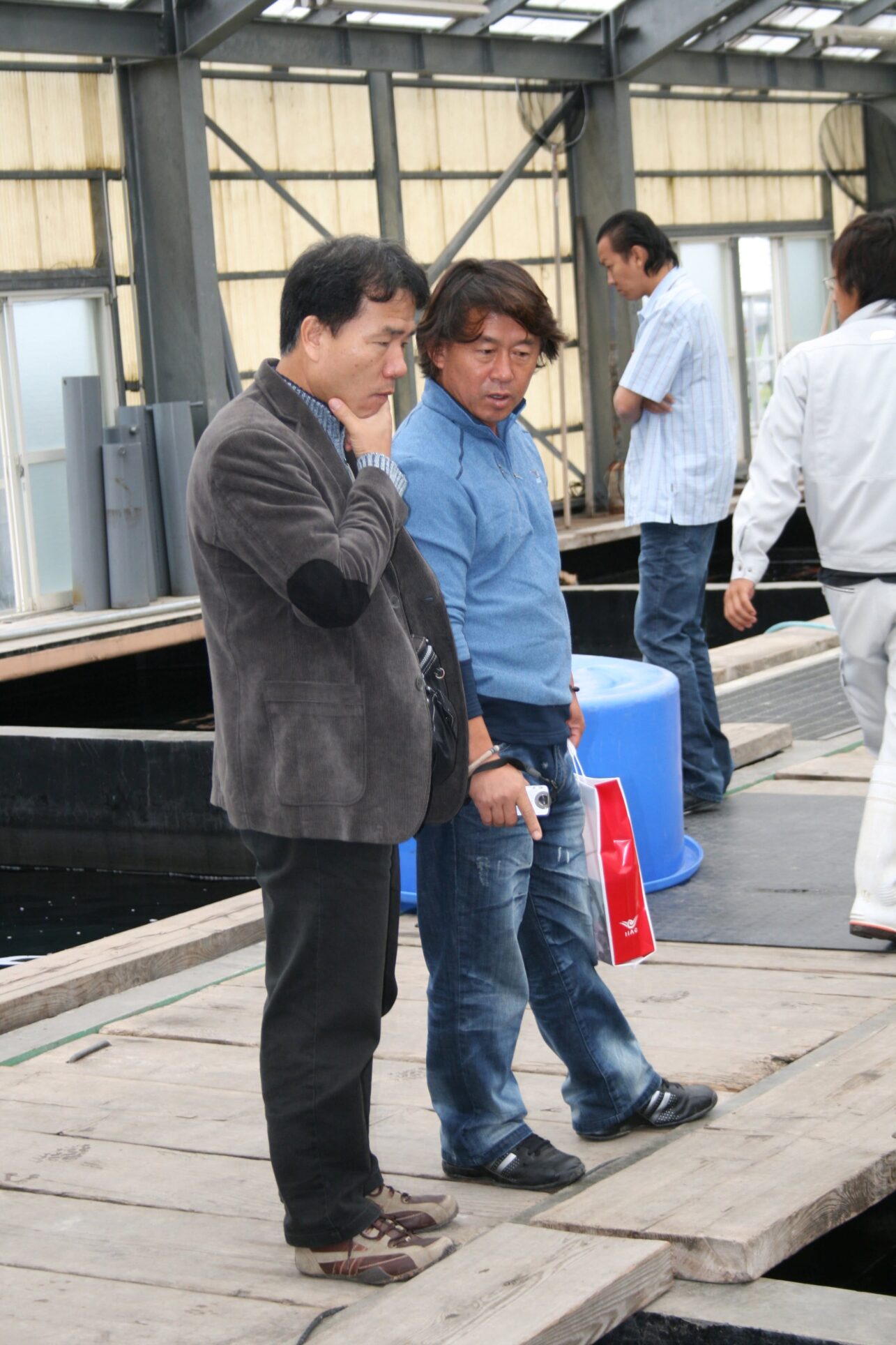
If you want to dive into the koi hobby in Korea, the Goyang team is still here for you. In the photo, from left to right: 米奇-保尔森 – 雨果-J-斯马尔 – Kim Young Soo.
Context essays, field notes, and project updates from the archive.
Archive images
Highlights & essentials
These highlights act as an entry point into the broader archive. They bundle essentials that koi keepers search for most: practical koi care, water quality fundamentals, and the traits of popular 锦鲤品种 including Gosanke.
On KoiTalk.app, Shikibu is ready to answer your questions. Whether it’s about Bidan Ing-eo (西乡), water quality, koi care, or 锦鲤品种 — you’ll gain instant access to the knowledge preserved in the Bidan Ingeo Farm archive.
Your koi questions deserve instant answers. Visit KoiTalk and Ask Shikibu today!
Is the the farm still active?
No. Operations have ceased. This page now preserves historical materials as an archive for learning.
Can I reuse materials from this archive?
Please check licensing on individual items. When in doubt, contact us via the contact page.
From Goyang Koifarm to Baedagol brought me to Korea. The International Air Transport Association (IATA) named Incheon airport the best airport in the world. You become aware of it as you walk towards the exit. It is modern, efficient and above all, very beautiful. The marble floors shine. The Yi dynasty tribal statues of Confucian scholars and soldiers are tough. I admire modern art – though from the Korean tradition. Everything immediately gives me a reassuring feeling. It was August 2003. I had landed in Korea. In the coming years, it will go from Goyang Koifarm to Beadagol theme park.
In the Koreans and I.
Sanke that had to win. Owner Kim Young Soo.
I wrote: “From the airport, they brought me directly to the first Korean koi show. I had to give a short speech. The organization wanted me to pass judgment. But I didn’t know if they judged the fish in a Japanese way. They want me to point out the best fish. I noticed one Sanke who should win. The other fish were not of good quality. To my astonishment, a Showa claimed the top prize. Despite its apparent lesser quality, this fish, lying sick at the bottom of the basin, prevailed.” According to our standards, this fish would have been removed from the competition,” I commented to a journalist.
After my remark, a loud tumult broke out. Tumult? Let’s call it a fierce argument. I was put in a car and after a long journey dumped in a hotel room. Somewhat nervously I thought about what had happened and what task I had if it was still waiting for me? ”
The next step is from Koifarm to the theme park.
The next morning Kim Young Soo picked me up at the hotel and we drove to Goyang Si. This city belongs to the Seoul Capital Area, and around 1 million people live there. What was striking was the great contrast. New neighborhoods boast beautiful flats, while the old ones evoke the Korea I had always pictured. The countryside and the big city; alternating and devouring. Neither of them prevailed.
Once we walked through the always busy Gangnam (Seoul). A thousand people on the street all heading for something. An old lady is sitting in the middle of the street. In front of her a tablecloth with melons on top. Yes, it was hot! She was really in the middle of the stream of people. Nobody touched her or stood on the rug. They bowed and bought a part of the refreshing fruit. Yes, it was very hot!
Only ponds and nets.
It was not until evening that we arrived at the then Goyang Koifarm. The office was quite basic, yet it offered a view that stretched as far as the eye could see, complete with neatly arched ponds.”I observed a multitude of koi swimming in it,” I mused. Kim Young Soo fed the fish. The passersby swimmers were the only visitors I saw. All I could discern was that the colors were vibrant.
Journey from Koifarm to the theme park?
The koi farmer mentioned that the nursery would soon relocate. A residential complex with apartments is set to replace the area currently inhabited by the fish. The urban migration and booming economy have necessitated such moves for many companies. Thankfully, the government is providing compensation for these expenses.
During my inaugural visit, Kim Young Soo escorted me to Seoul’s palaces, Gyeongbokgung 和 Changdeokgung, fulfilling a grand dream. It was also my first time at a Buddhist temple, Yongjusa in Hwaseong, and the week was rich with cultural experiences, delectable Korean cuisine, and discussions about koi.
At Goyang Koi Farm, we also ask whether a pond can become more climate-conscious. Read more in Sustainable Koi Pond Design.
He expressed a desire to make Korean Koi renowned globally. With Chinese rice undercutting the market, Korean farmers were compelled to find new revenue streams. My host viewed Koi farming as a viable alternative and aimed to rival Japanese breeders. I proposed that integrating Korean culture could be beneficial to this endeavor.
提升您的锦鲤奉献精神
Exciting News for Koi Aficionados! Goyang Koi, renowned for its exquisite koi selection, now has a dedicated page on Koitalk.app. This is your gateway to a deeper dive into the world of koi. Discover expert insights, care tips, and the latest trends in koi keeping. Visit the Goyang Koi page on Koitalk.app now, and enrich your koi knowledge like never before. Your journey into the captivating world of koi is just a click away! 询问 Shikibu
Patriotism.
Many Koreans have this patriotism. Shortly after the Korean War, the 大韩民国 was one of the poorest countries in the world. Park Chung Hee, head of the military junta and later elected President introduced economic innovations in the 1970s that led to “the miracle of the Han River”. President Park is very controversial, he did not shy away to use a strong hand, but his economic reforms brought in money. Just after the Korean War, the country was one of the poorest in the world. In 2017 is ranked 11th place. This was one place above Russia, and many Korean are still grateful to him for that, hard hand or not.
The Koifarm is the team park.
In the book, I am writing with the working title “The Koreans and I” includes the following piece:
“Hwaejeong Dong (the former village is now a district) is already described in the historical books 萨姆谷-萨基 和 Samguk Yusa.
The first is the chronicles of the three kingdoms, written by Kim Busik on behalf of King Im Jong and published in 1145. Samguk Yusa is the “Memorabilia of the three kingdoms”. This is written by the monk Ir Yeon and contains legends, folk tales, biographies and historical reports. Originally people from the Han clan settled in Hwaejong Dong but in 18 BC the state of Baekje was founded. What this has to do with the from koifarm to themepark Baedagol you read in 韩国人和我
Talking Koi with Kim Jay Ho my language bridge to Kim Young Soo and the rest of Korea.
A man brimming with passion.
Kim Young Soo is very much aware of his Korean roots. Confucianism flows through his veins. He links this to a great love of nature and perhaps even greater social awareness. Or link? Perhaps this is embedded in philosophy. He visits his Shamanic Mudang once a year and then receives a large ceremony. Just to clear the soul and the mind.
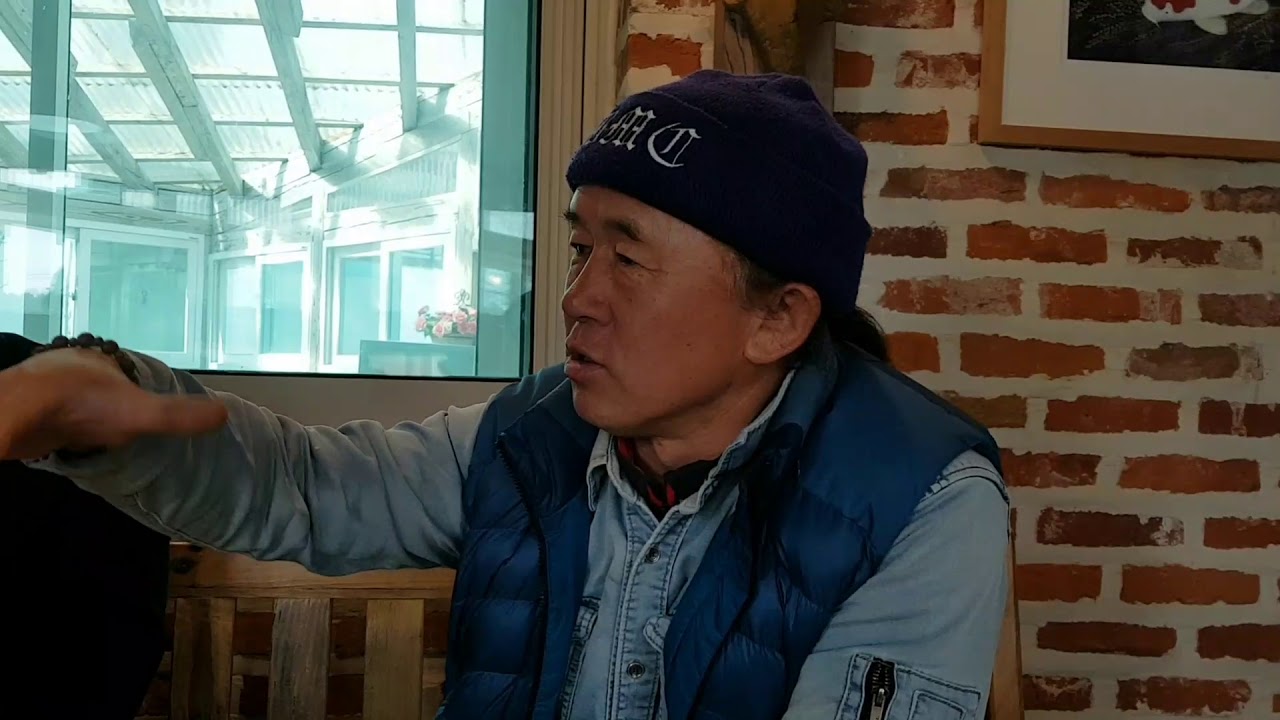
Talking to everyone in full, he enlarges his network. He prefers to visit farmers and growers. He seems to know everything about vegetables, fruit, meat, fish and he invariably goes into discussions with the people who conjure this up on the table. It is a teacher that I love to listen to. This is s a bit strange because I don’t understand Korean but his way of talking speaks volumes. Take a look at the video at the bottom of the page and you see.
A cultural mistake.
During one of my first journeys, we lost our interpreter due to a cultural error. You would think: “Kim Young Soo no English and Smal no Korean; that must be very annoying. ” We visited all kinds of farmers for a week and had a great time. With hands and feet, we come a long way together.
It was hilarious when we went to buy grapes from an old woman. We just sat down to eat on a curb. The woman came to sit with us and a passionate conversation about grapes arose. Together they looked at the grape and discussed it. And yes, after half an hour a Jerry can arrived and food became drink. It tasted very good. I think it is an honour to be able to call Kim Young Soo my friend. During Chuseok I bowed to his ancestors and I felt included in his family circle. It is good to be there.
natural base in Goyang Si
Koifarm and theme park are results of goals.
Kim Young Soo had greater ambitions than just breeding koi. According to his youngest brother, Kim Young Soo has set himself three goals. First, his family had to be cared for. In Korea, it always concerns the extended family. So not only wife and two children, but also mother, sisters, younger brother and everything around it. His father Kim Jae San died when Kim Young Soo was about fourteen years old and the poverty in the then underdeveloped Korea was very great.
Growing roses first, then Goyang Koifarm to Baedagol.
He took over his father’s rose nursery. The young men sold the flowers he grew on the street. He later discovered a way to grow roses from seed. Together with a Japanese breeder, he started a new company with which he earned enough money to start breeding lotuses and then switch to ornamental carp. In this way, for example, he could also fund Jin Soo’s training as a structural engineer. This, in turn, would design and build the buildings on the Baedagol theme park.
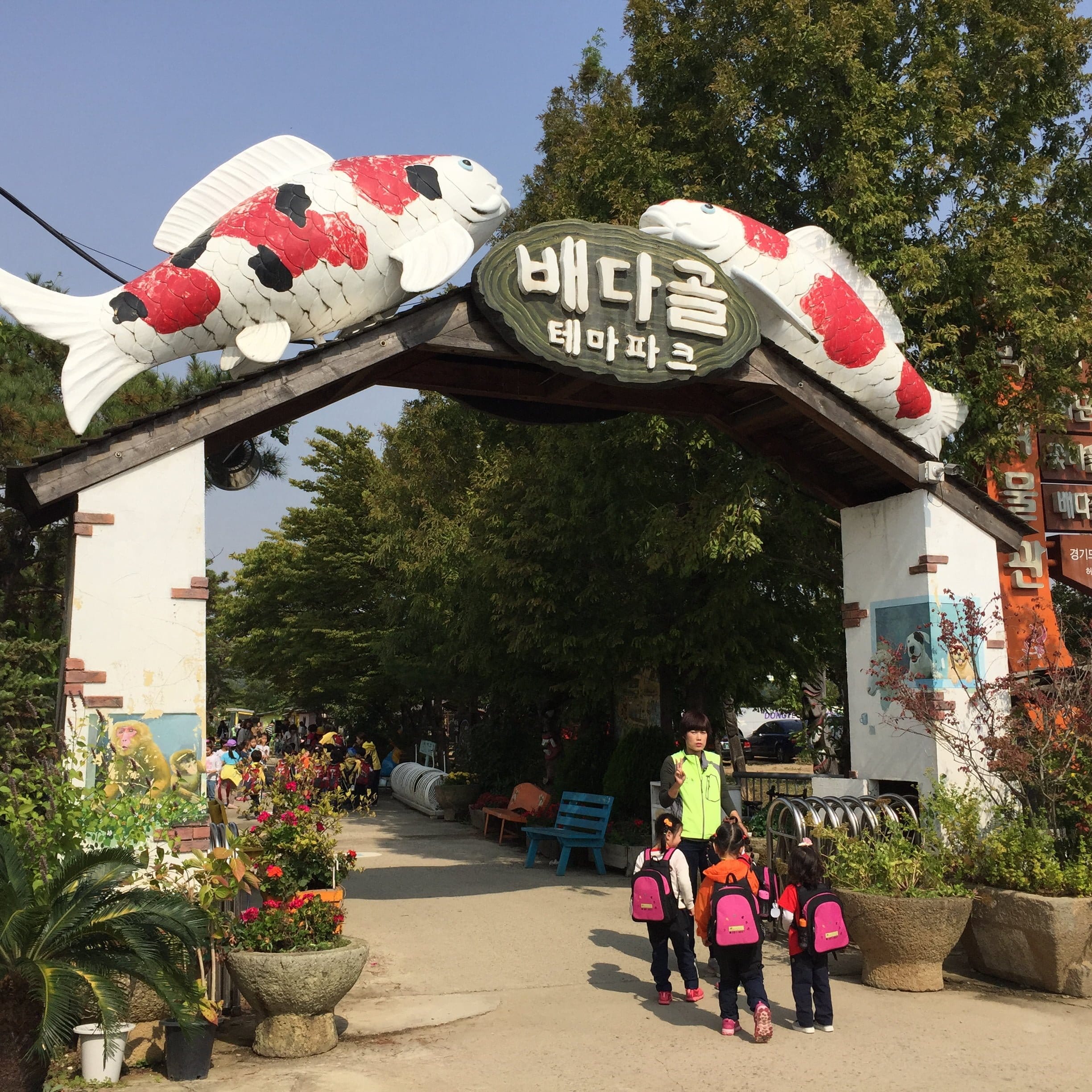
Welcome to Beadagol
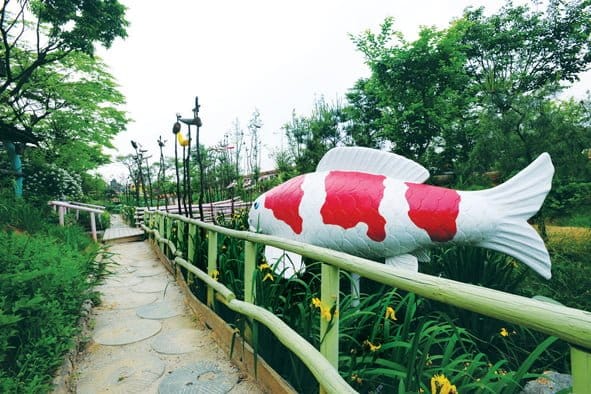
His second goal was to help the Hwajeong Dong people. Baedagol theme park is the final result. The park has a major economic impact on its immediate surroundings. After all, it provides work. The suppliers are not getting any worse either. His third objective was the Korean community. Hence the desire to give nature in Goyang Si a basis. The Goyang Koifarm became the Baedagol theme park. The theme, of course, is the koi.
Fall in love with the Koifarm or the team park!
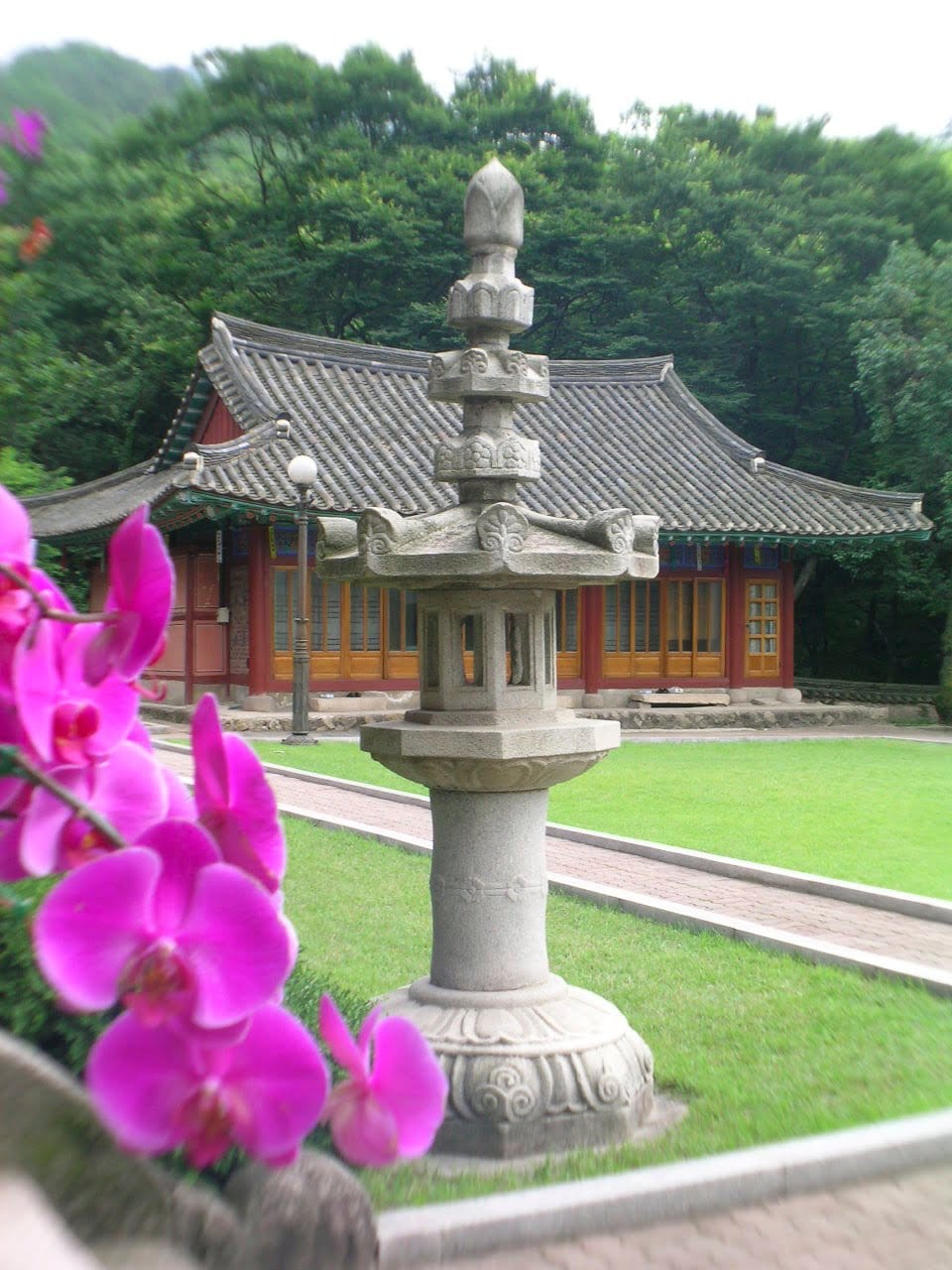
I already told you. My wish was to visit a Buddhist temple someday. Standing in front of Daegu-jeon, the main building of the Yongjusa temple, I let the area take possession of it. The beautiful exuberance of the buildings. The rhythmic chanting of the monks. The beautiful surrounding landscape. Birds chattering in the air and the Ginko already turned yellow. A fantastic counterbalance to the bright red Acers. I planted my feet firmly on the ground. The environment absorbs me. I fell in love with Korea.
My first trip to Korea also marked the start of an in-depth study of Korean culture. The moment Kim Young Soo noticed that I wanted to have the bottom stone up in this regard, he asked me to promote beautiful Korea. In the end, that was the start of www.mantifang.com and the road that my host travelled from Koifarm to theme park.
Koifarm to Baedagol and then again the Koi breeding.
Go Sanke at Baedagol
I can see it happening. The first Zen Nippon Arinkai supported koi show in Korea at the Baedagol theme park. There are enough growers to fill the basins. Of course, I hope that there are also enough hobbyists to participate. The required knowledge must be transferred. So that it can also be carried out safely. There must also be a flourishing association. So there is a lot of work to do. If Kim Young Soo wishes I will go for it.
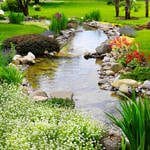
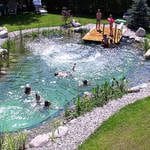
The Baedagol theme park is not only a swimming paradise for Koi. During the hot days of summer, it attracts thousands of visitors every day for a refreshing dip in the swimming pool. There is a petting zoo for the little ones. Their parents can enjoy a large Bonsai exhibition or visit the folk museum. You can eat in the restaurant but you can also prepare your food. In the winter you can skate there.
Korean Adventure: Building Koi Culture in South Korea
A Big Korean Adventure in Koi, Culture, and Ambition
韩国探险 is the right phrase for what followed when Hugo J. Smal became involved in South Korea’s koi world. What began as a technical request at a Dutch koi show grew into years of travel, cultural encounters, practical advice, and unexpected lessons about ambition, art, and perseverance.
Hugo J. Smal has written about his experiences in Korea, especially his work around koi culture, Korean society, and the people behind this unusual project. Readers who want broader context can also explore 韩国人和我.
South Korea has long had passionate and ambitious koi enthusiasts. 雨果-斯马尔 became closely involved with several pioneers in the hobby and helped advise on facilities, water quality, and the larger vision behind a Korean koi industry. This article first appeared in a Dutch garden magazine.
How the Korean adventure began
Must have been 2004 or 2005. Stairway to heaven on Modo Island高阳锦鲤养殖中心
在 2003 年荷兰科伊肖, I was asked to arrange a fish tank and make sure it had proper water quality and oxygen. A group of Koreans had brought koi by plane to the Netherlands to compete and sell fish. With help from several traders, they managed to do both. They sold a number of koi and also won some of the smaller prizes.
During those days, koi enthusiast and Goyang Koi Farm CEO Kim Young Soo asked whether I would come to Korea and help support the development of a koi industry there. That was the real beginning of this Korean adventure.
Struggling farmers and a new idea
At the time, Chinese rice exports were increasing and putting pressure on South Korean farmers. Kim Young Soo believed that breeding Japanese ornamental carp could become an alternative to rice cultivation. It was an ambitious vision, and for me it became a challenge worth exploring. Less than a month later, I landed at Incheon Airport.
Koi Ichi ban?
From the airport I was driven straight to a koi show, where I was asked to give a short speech. The organizers also wanted me to judge the fish, which I felt unqualified to do. When they asked which fish should win, I said a strong Sanke seemed the obvious choice. To my surprise, the main prize went to a weaker Showa that was visibly unwell at the bottom of the vat.
I told a journalist that, by our standards, such a fish would have been removed from the competition. That honest remark caused an immediate uproar.
A fierce argument during the Korean adventure
What followed was not just noise but a real argument. I was put into a Kia van and, after a long drive, left alone in a hotel room. I had no idea what would happen next or whether any work still awaited me. The show had clearly been poorly organized, and the judges lacked technical knowledge.
It smelled of clientelism, perhaps even bribery. There had been no proper benching and no clear distinction between healthy and unhealthy fish. Around the world, koi entered into competition are typically checked carefully, often with support from a veterinarian specialized in fish diseases. In South Korea at that time, that standard was not yet in place.
The next morning, Kim Young Soo arrived with companions and several large fish boxes in the van. The splashing inside turned out to be the Sanke that should have won. Kim had taken my blunt words seriously, even if they were culturally too direct. He decided then that he wanted to play a leading role in the Korean koi industry.
Korea is a big adventure
During the rest of the trip, I saw the impressive landscape of the Land of the Morning Calm and gained a deeper view of Korean culture. I realized how much study Koreans would need to build a true koi tradition, and how much I myself still had to learn about this complex society.
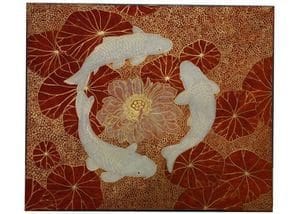
I met many artists along the way. Baik Yong-Jung taught me that the carp has lived in the Korean imagination for centuries. His paintings connect koi, nature, and symbolic meaning. Paintings of carp and crabs were common during the Yi dynasty, and scenes of carp leaping upward carried their own moral and cultural charge.
Painting by Y.J. Baik
Carp myth and cultural meaning
These paintings draw on an old story: when the Yellow River rises, carp struggle upstream toward the Dragon Gate. A fish strong enough to pass through that gate becomes a dragon. During the Confucian Yi dynasty, this story symbolized success in the state examinations and the possibility of rising from poverty into office.
Today, that symbolism still echoes in Korean culture. Carp paintings are common wedding gifts, and conversations with artists such as Baik Yong-Jung, along with literary research, showed me how deeply the carp moved through Chinese, Korean, and Japanese culture. In that sense, Korea carried this cultural symbol forward long before modern koi culture took shape.
A visionary idea behind the Korean adventure
As ornamental fish, however, Japan remained far ahead. It seemed unrealistic to imagine Korean koi farmers overtaking Japan in the Go-Sanke classes any time soon. I therefore suggested a different approach: connect koi farming to Korean culture itself and expand the koi farm in Goyang, northwest of Seoul, into a cultural center where ceramics, painting, and other forms of art could also be shown.
The idea was to introduce Koreans more deeply to koi culture while creating a future export path not only for koi, but also for koi-related art and cultural experience. Koreans often approach things competitively, with a strong desire to become the biggest, strongest, or best. Understanding that mindset became its own Korean adventure.
Kim Young Soo exchanged land, kept studying, and continued building. He invested heavily in Japanese parent koi and began breeding and growing them. In the Netherlands I was already used to advising on troubled ponds and fish purchases, but Kim’s drive made this work a different kind of challenge.
I was fortunate to rely on experts such as Rene Kruter on fish disease and water quality, and 马克-克莱克斯 on koi quality. With their help, and with practical judgment, I was able to support what the Koreans were trying to build.
高阳锦鲤养殖场的锦鲤
Rising quality and rising expectations
Year after year, I watched the quality of fish at the 高阳锦鲤养殖场 improve. Kim Young Soo joined forces with Mr. Hong, who had a substantial number of breeding ponds near Gwangju. In those mud ponds swam Go-Sanke of increasingly impressive quality, fish I would not have hesitated to allow into my own pond.
After a long process of trust, discussion, and negotiation, Kim and Hong finally decided to enter Hong’s fish into the Holland Koi Show in 2011. Rene Kruter and I traveled to South Korea to select the fish. We assumed they would compete with smaller sizes. The Koreans had other plans: they wanted to win immediately with large koi.
Korean Adventure in South Korea
As children might stand beside a sweet shop window, Rene and I stood at the ponds in awe as one jumbo koi after another was netted and placed into vats. Seeing those fish felt like a blessing. It was a Korean adventure with a Japanese twist, and now the fish were coming to the Netherlands.
My own pond had been nearly empty for years because of the Korean collection, with only a few goldfish maintaining bacterial balance. I had about a month to get the water back into top condition so these jumbo koi could acclimatize before traveling on to Arcen. I decided it was possible and ordered two vats, because the six fish we selected were too large for one.
European legislation and hard limits
高阳锦鲤养殖场
Between dreams and reality, there are always laws and practical barriers. That truth became painfully clear. In the OFI journal of October 2008, Alex Ploeg had already warned that Asian breeders and exporters who wanted access to Europe needed to comply with European animal health legislation. Those rules affected not only importers, but also exporters, suppliers, growers, and collectors.
If exporters wanted to sell on the European market, they had to meet those standards. The exporting country had to meet them as well. I had pointed Kim Young Soo toward European legislation from the start and based my advice on the OFI Code of Conduct. He and his colleagues took this seriously, contacting the right ministries and district officials to seek export approval for fish to the European Union.
Never enough Korean adventures
But reality intervened. Kim Young Soo and Mr. Hong were standing with the fish at Incheon Airport when customs made the situation brutally clear. The koi could leave Korea, but they would be stopped at the European border and destroyed. At that moment, all possibilities collapsed. It was a severe disappointment and one of the hardest chapters of this Korean adventure.
Hidden dragon, crouching tiger
In the years that followed, the Korean adventure continued. I returned to South Korea many times. Kim Young Soo and I took part in discussions with senior civil servants at government ministries. I gave advice and, at times, opinions that were perhaps too European in tone. The machinery of administration was moving, but very slowly.
South Korea remains, in koi terms, a hidden dragon and crouching tiger. China now buys heavily in Japan and is trying to expand its own role in the koi world. That raises the question of whether South Korea’s official processes move too slowly to seize the opportunity.
Fortunately, Kim Young Soo did not rely on koi alone. Following my advice, he invested around five million euros in a broader cultural project. He built a koi and cultural center that eventually opened under the name Baedagol.
If this Korean adventure has sparked your interest, you can also follow the story on Facebook: 高阳锦鲤养殖场비단잉어 Nishikigoi
问题与解答
What is the Korean adventure in this article?
The Korean adventure refers to Hugo J. Smal’s involvement in South Korea’s koi world, including travel, technical advice, cultural encounters, and efforts to help develop a Korean koi industry.
Who is Kim Young Soo?
Kim Young Soo is a Korean koi entrepreneur connected to Goyang Koi Farm. He invited Hugo Smal to Korea to support the building of koi facilities and a broader cultural vision.
Why did koi become important in this Korean adventure?
Koi became the center of the story because they were seen as both an economic opportunity and a cultural bridge, linking farming, art, ambition, and international trade.
Why could the fish not be exported to Europe?
The export plan failed because European animal health legislation required standards and approvals that had not yet been fully secured, meaning the fish would have been stopped at the border.
What is Baedagol?
Baedagol is the koi and cultural center that emerged from Kim Young Soo’s broader investment strategy after it became clear that relying only on koi exports would be too risky.
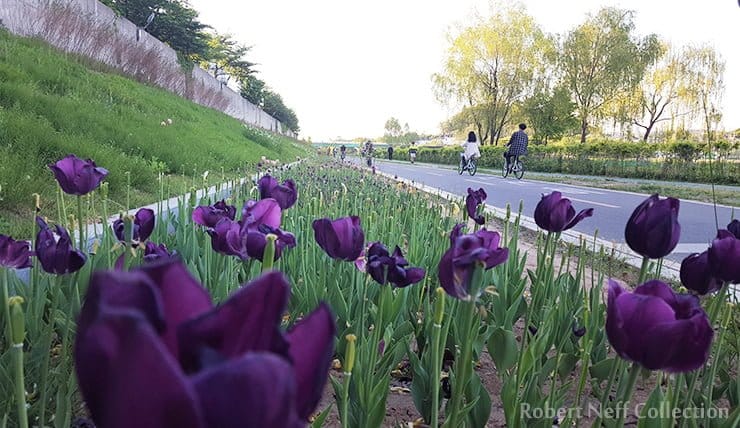
It is highly influential in Korea during the Joseon Dynasty, further developed these ideas. It emphasizes self-cultivation and a deepened understanding of one’s relationship with the universe. Korean gardens from this period often feature scholar’s rocks and carefully curated views, which encourage contemplation and intellectual reflection. The gardens are not just for aesthetic pleasure but also serve as spaces for meditation and personal growth, in line with Neo-Confucian values.










![[:en]奇妙的漫步:首尔昌德宫的秘密花园 © Chinnaphong Mungsiri / Getty[:]。](https://mantifang.com/wp-content/uploads/2019/07/GettyImages-597879379_full-d625bf17680e.jpg "Korean gardening: the gods are praised. 28")