The Jijang Fractal — Orbit
Depth through resonance, silence, and ethical attention
机张分形 moves through observation, silence, cultural reflection, and ethical attention.
It is shaped less by explanation than by recurrence: bridges, temple space, melancholy, icons, neighbourhoods,
and moments of awakening return under different pressure until a deeper pattern becomes visible.
This page is the Mantifang orbit of the project: it gathers the published chapters, preserves the fixed reading order,
and connects related texts such as Wonhyo, Korean Buddhism, and Korean spiritual background to the wider fractal field.

机张分形 now has two connected homes: 曼蒂芳 remains the deeper archive and longread library,
while JijangFractal.com is the focused gateway, reading path, and public orientation site.
This is not a blog index. The sequence is part of the meaning: chapters are not arranged for trend, traffic, or topical convenience.
They hold a deliberate progression. Early chapters establish cultural and psychological vocabulary, later chapters deepen into silence
and the temple field, and the closing movement returns to responsibility and address in 致僧伽的信, followed by a writer’s note on method.
The word “fractal” is used here as a literary motif: a recurring gift of form that lets one scene echo another without turning the work
into a system or doctrine. A city walk can carry the same moral weight as a temple icon; an essay on melancholy can reopen the same ethical
question as a chapter on compassion. What matters is not scale but pressure — the way a moment changes how responsibility is carried.
This orbit therefore works as both map and threshold. It keeps the sequence visible, gives the reader a stable order, and makes clear that
some centers are approached indirectly. The unpublished middle is not an absence of meaning but part of the composition’s discipline.
Continue on JijangFractal.com
JijangFractal.com is the dedicated landing site for 机张分形.
It offers a clearer first entrance for new readers: what the project is, why Jijang Bosal matters,
what the fractal means, how Korean Buddhist imagery functions inside the work, and where to begin reading.
Mantifang remains the archive: the deeper longreads, related Korean cultural pages, Buddhist and spiritual background,
Wonhyo texts, Bogwangsa chapters, and the wider book orbit stay here. The new site gives that archive a calmer doorway.
Readers who are new to the project should begin at JijangFractal.com. Readers who want the full longform archive,
the published chapters, and the wider Korean context can continue on Mantifang through the orbit below.
Begin with the gateway
A focused introduction to the project, the symbolic structure, and the public reading path.
Understand the fractal
A clear explanation of the fractal as literary and moral structure, not as a decorative idea.
Follow the reading path
A calmer route through the chapters, themes, symbols, and Mantifang archive pages.
The structure below reflects the internal logic of 机张分形. Each chapter holds a fixed position within the whole,
reinforcing the work’s compositional discipline.
Structure (Fixed Order)
The numbered order below is fixed. Each chapter has a permanent place. Chapters are published online as they become ready,
but their position does not change. This stability matters: the reader is not following a feed, but entering a designed sequence.
- 1 — Select Spiritual Transitions: Holy Korean and Tibetan Books
- 2 — Kibun or Nunchi?
- 3 — Goyang neighbourhood explorations
- 4 — Korean melancholy
- 5 — The unpublished center
- 6 — The world is silent space
- 7 — Bogwangsa Temple during the pandemic: Lost in Stillness
- 8 — The Five Icons of Bogwangsa and the Fractal of Compassion
- 9 — Bogwangsa Temple and great Royal Legends
- 10 — Bogwangsa: When the Buddha Fell, I Woke Up
- 11 — Bogwangsa temple Korea: The Dream, the Mountain, and the Fractal of Compassion
- 12 — Jijang Fractal: Letter to the Sangha
After the numbered sequence comes a writer’s note on craft and method, including a transparent account of how AI is used as an assistant.
This note is part of the work’s ethical posture.
Reading status
Within 机张分形, reading is not driven by immediacy. The current online chapters represent the visible arc of the work,
while its dramatic hinge is reserved.
Chapters 1–4 和 6–12 are published online and accessible through the links on this page.
Chapter 5 is the middle section and remains private for now.
This is not a gap caused by delay or incompletion. It is a compositional decision. Some material becomes readable only when the surrounding
structure can carry it without distortion. Here, the center functions as a deliberate pause: a place where the text refuses to turn private
pressure into public spectacle.
Reserved center
Chapter 5 remains private for now. The page below marks its place within the orbit.
New gateway
JijangFractal.com gives new readers a focused route into the project before entering the full Mantifang archive.
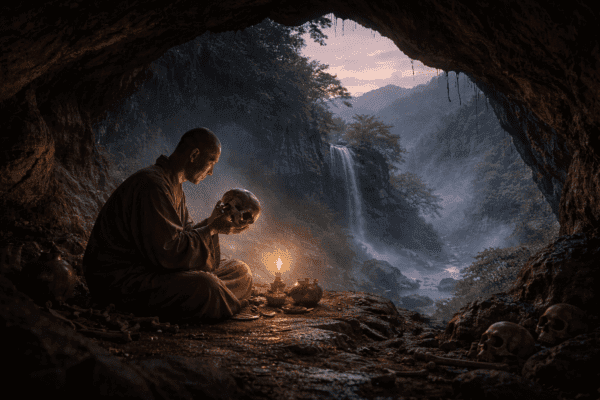
Wonhyo orbit
The texts gathered here do not belong to the numbered body of the sequence itself, but to its orbit: they deepen the philosophical and
spiritual field in which 机张分形 moves. Wonhyo appears here not as historical ornament, but as a presence of thought —
awakening through reversal, integration without flattening difference, and movement from doctrine toward lived insight.
Placed here, these pieces remain structurally close to the deeper concerns of the fractal: silence, interpretation, compassion,
and the transformation of perception. They prepare the reader for the moral atmosphere of 机张分形 without interrupting
the fixed chapter sequence.
Gyeongju Buddhist Temples
A spatial and historical threshold into the Buddhist landscape of Gyeongju: temples as ground, continuity, and atmosphere.
Wonhyo Cave Awakening
The cave episode as decisive reversal: impurity becoming awakening, and perception itself becoming the site of change.
Awakening of Faith
A bridge text around interpretation, trust, and spiritual movement — useful not as doctrine alone, but as resonance.
Hwajaeng Philosophy
The logic of reconciliation without simplification: a philosophical key that belongs near the work’s deeper compositional field.
The Jijang Fractal and Korean Spiritual Context
机张分形 is not a book about Korean shamanism, Korean Buddhism, or ritual tradition in a narrow explanatory sense.
It is a literary work in which Korean places, spiritual images, memory, violence, responsibility, and compassion form a deeper moral landscape.
For readers who want to understand the wider cultural and spiritual background around the book, Mantifang offers a growing set of connected pages.
These pages do not explain the novel directly, but they illuminate the world around it: Jijang Bosal, Korean ritual life, ancestors,
transition, place, death, and the difficult question of how human beings remain present when suffering cannot simply be solved.
Related Korean Spiritual Background
- 韩国精神索引
- Korean Shamanism Explained
- Mudang Korean Shamanism
- Korean Gut Ritual
- Korean Shamanic Gods and Spirits
- Regional Korean Shamanism
- Korean Shamanism in Modern Korea
- Korean Shamanism Reading Path
These pages can be read as a quiet outer circle around the book. They are not required before reading 机张分形,
but they help show the cultural field in which the book breathes: Korean Buddhism, folk religion, ritual memory, ancestral presence,
and the long tension between suffering and compassion.
Read chapters
Each card matches the fixed chapter numbering. Where multiple items share a single canonical landing page, the link points to that page as specified.
1 — Select Spiritual Transitions: Holy Korean and Tibetan Books
A curated entry into spiritual transitions and textual thresholds — a way of approaching Korea and Tibet through selected holy books and their moral atmosphere.
2 — Kibun or Nunchi?
Emotional climate and social perception: a chapter on the unspoken grammar of daily life.
3 — Goyang neighbourhood explorations
Walking as method: the city as a readable text and a discipline of noticing.
4 — Korean melancholy
Mood, cultural undertone, and the dignity of sadness as a human register that carries history.
5 — The unpublished center
The middle of the sequence remains private for now. This is a structural decision, not an omission.
6 — The world is silent space
A core chapter on silence as field rather than absence.
7 — Bogwangsa Temple during the pandemic: Lost in Stillness
Temple space under pandemic conditions: reduced movement, amplified silence, and a different kind of seeing.
8 — The Five Icons of Bogwangsa and the Fractal of Compassion
Icons as ethical objects and the fractal as a literary motif for compassion across changing scenes.
9 — Bogwangsa Temple and great Royal Legends
Folk memory and royal legend enter the temple field.
10 — Bogwangsa: When the Buddha Fell, I Woke Up
A rupture that becomes attention and shifts the moral center of the work.
11 — The Dream, the Mountain, and the Fractal of Compassion
Dream, landscape, and ethical pattern inside the Bogwangsa arc.
12 — Jijang Fractal: Letter to the Sangha
Responsibility without performance, compassion without identity claims, and presence without posture.
Writer’s note — AI writing vs human creativity
This work is written by Hugo J. Smal. AI is used as a practical assistant where it genuinely helps:
editing passes, consistency checks, and language refinement for a non-native English writer.
The role is technical and supportive, not authorial.
A model can structure and polish, but it cannot live a memory, choose an ethical stance, pace a silence,
or carry the private pressure that gives a scene its weight. The voice and responsibility remain human.
支持写作
机张分形 is built as a long-form project, revised over time and held in a fixed public structure.
If you want to support this work directly, use one of the support pages below.
Q&A — The Jijang Fractal
What is The Jijang Fractal?
It is a literary and spiritual project by Hugo J. Smal, shaped around Korean Buddhist imagery, compassion, memory, silence, and moral responsibility.
What is JijangFractal.com for?
JijangFractal.com is the focused gateway and reading path. Mantifang remains the deeper archive and longread library.
Is the fractal only Buddhist?
No. Korean Buddhism and Jijang Bosal form the central doorway, but the fractal is presented as a broader literary and moral pattern that can echo across traditions.
Why is Chapter 5 unpublished?
Chapter 5 is the reserved center of the work. Its private status is a compositional and ethical decision.
Where should new readers begin?
New readers should begin at Begin Here on JijangFractal.com, then return to Mantifang for the full archive.
Further reading — revision, craft, and long-form structure
机张分形 is built through revision and deliberate sequence. The essays below are external reading on craft,
structure, and the long shaping of a work.

暂时停止锦鲤出口--疗养公园正在开发中
国际锦鲤出口目前处于暂停状态。与此同时,我们正在为一个 自然驱动的 疗养公园 位于高阳市,融合了锦鲤文化、艺术和静谧的手工艺。 如需更新或合作信息,请随时联系我们。
联系人 Kim Young SooNew to Mantifang? Begin here: 从这里开始.


