For years, the statue of Shakyamuni Buddha stood beside my koi pond. Not only because it gave the garden the right atmosphere, but because I cherished those quiet late evenings — listening to the water and the koi — letting his silent gaze wash over me. It was my way of meditating, feeling compassion. Sometimes I would light a candle. Or incense.
The pond had to be emptied. For Korea, for the breeders — like the passionate team at Goyang Koi — for a greater story. I let nature take over. Frogs and salamanders claimed the 30,000-liter basin. Siddhartha remained — solitary — at the edge of a small biotope.
Now, years later, my garden is too small. No more pond, no more room for Nishikigoi. Just a few square meters. Barely enough for an inflatable kiddie pool. And, of course, a Buddha.
That’s okay. I’ve given myself two tasks: To help Mickey care for the little ones. And to write my book: Koreans and I. Both tasks aim to make the world just a little more beautiful.
Liva and Novi Under the Parasol
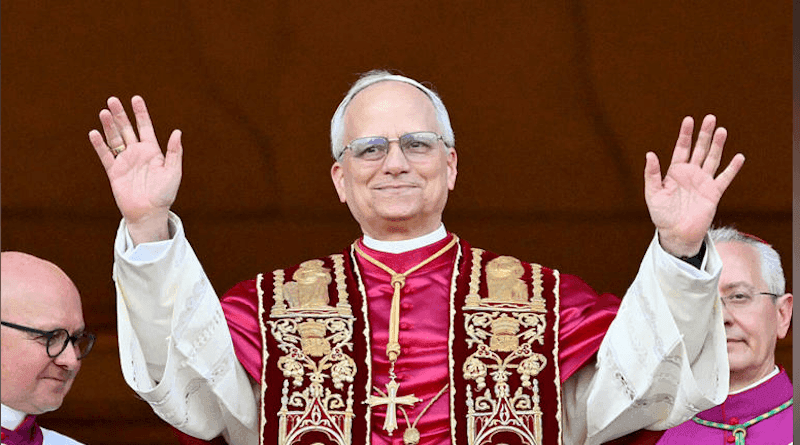
Sisterhood in soft focus — one with wonder in her eyes, the other with the whole world in her smile.
Liva, nine years old, has already made grateful use of the kiddie pool. Under the parasol, playing with cups and plates. Making soup for us. Splashing, giggling. Shakyamuni stood nearby. Not lonely this time, but sprinkled with childlike life.
This year, four other little beings will join her. Novi — just one year old — can’t wait to play with her sister. Merih, six months, will enjoy his first splashes. Alpje (five) and Aleyna (three) may not be around as often, but they too will sit beneath the parasol, wet-haired in the sunlight.
While Novi Climbs and the Buddha Falls…
While uploading this story, something unexpected happened. A new pope was elected: Leo the Fourteenth, an Augustinian monk. His order, once home to Martin Luther. His name, once worn by emperors. And now he walks onto the world stage with a vow of humility.
His namesake, Leo the Thirteenth, steered the Church toward social justice in the late 19th century — calling for dignity, workers’ rights, and the care of the poor.
A man with his head turned toward Suchness, Just-this-ness and his heart committed to the liberation of others. I smiled. Not because I believe in omens — but because sometimes, things align. A child climbs off a couch. A Buddha loses his head. A monk becomes pope. And somewhere, in all that quiet noise, I hear Dylan sing:
“I can’t help it when I’m lucky.”
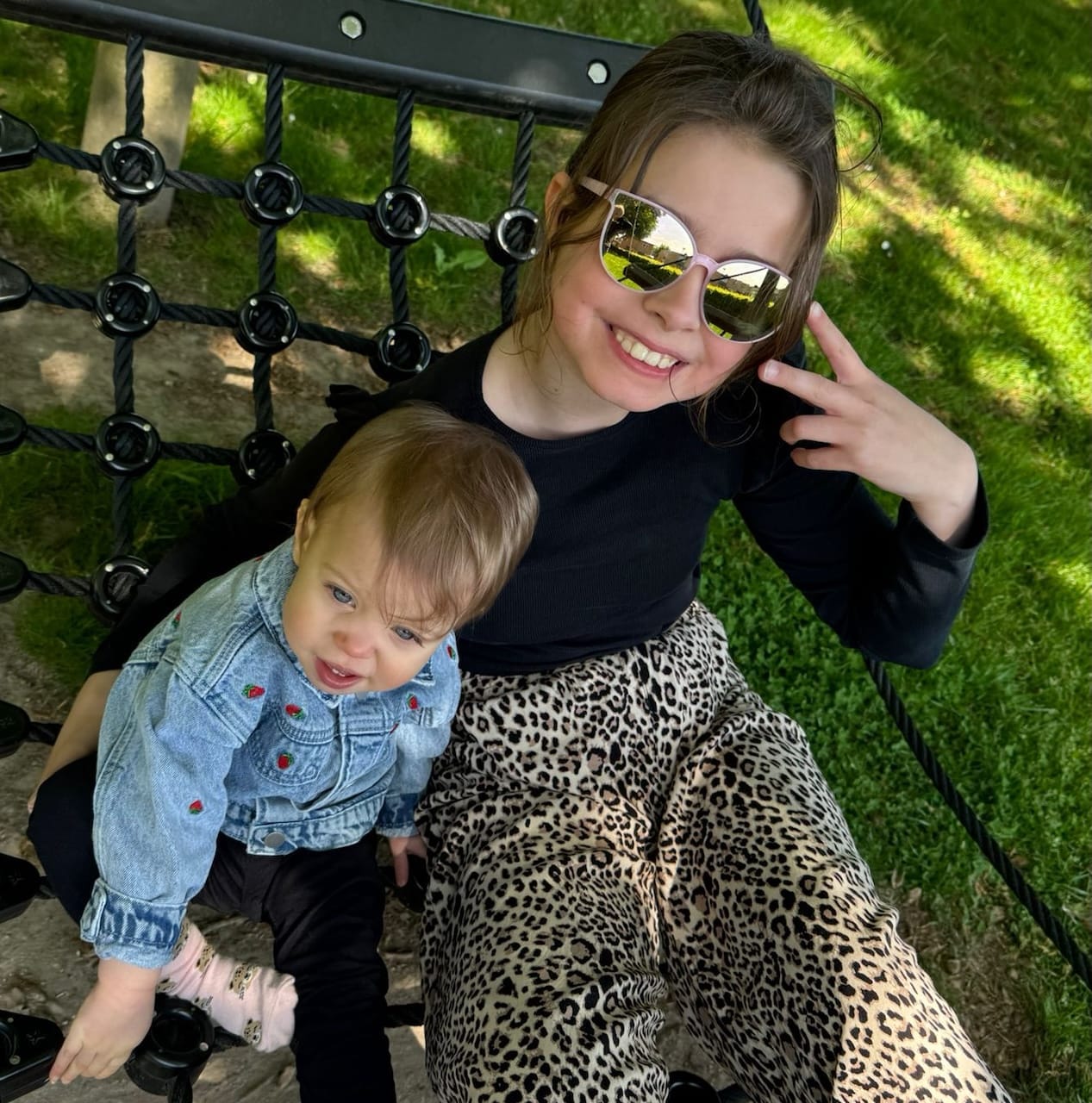
One hand holding on, the other offering peace. Two sisters, one swing — grounded and free.
I stood there. And suddenly, an ancient image struck me. A different blow. From another time. A monk. A cave. A skull.
The Cave of Wonhyo – A Buddhist Insight
The rain fell like thoughts on stone. Heavy. Rhythmic. Silent. The monk Wonhyo, on his way to faraway China in search of true dharma, sought shelter for the night. The mountains were quiet, and an opening in the rock called to him. He stepped inside — tired, but without fear.
The darkness was total, as if he had entered the belly of the earth. There, feeling his way, he found a bowl. The water tasted pure. He drank and fell asleep. Morning arrived, and with it, light that changed everything. The bowl turned out to be a skull.
Stagnant water. Silent, green, and thick with meaning. The surface lies. But underneath, insight waits.
The water — stagnant rainwater, filled with leaves and death. He recoiled, his stomach churned. And then, the insight came — sudden, and clear as morning itself: What had changed between night and day? Not the experience, but the mind. His mind had first drunk clarity, then disgust — but the water had remained the same.
In that cave — no temple, no scripture, no teacher — Wonhyo awakened to the essence. Truth did not need to be found in distant lands or complicated texts. It had awakened him. He turned back. To home. To the people. To simplicity. And from that moment on, he no longer spoke of enlightenment. He lived it.
What the skull and stagnant water did for Wonhyo, Novi did for me. The icon — the image of Gautama Buddha — did not give its power as a sacred figure, but as a mirror.
A Broken Icon, a Returned Insight
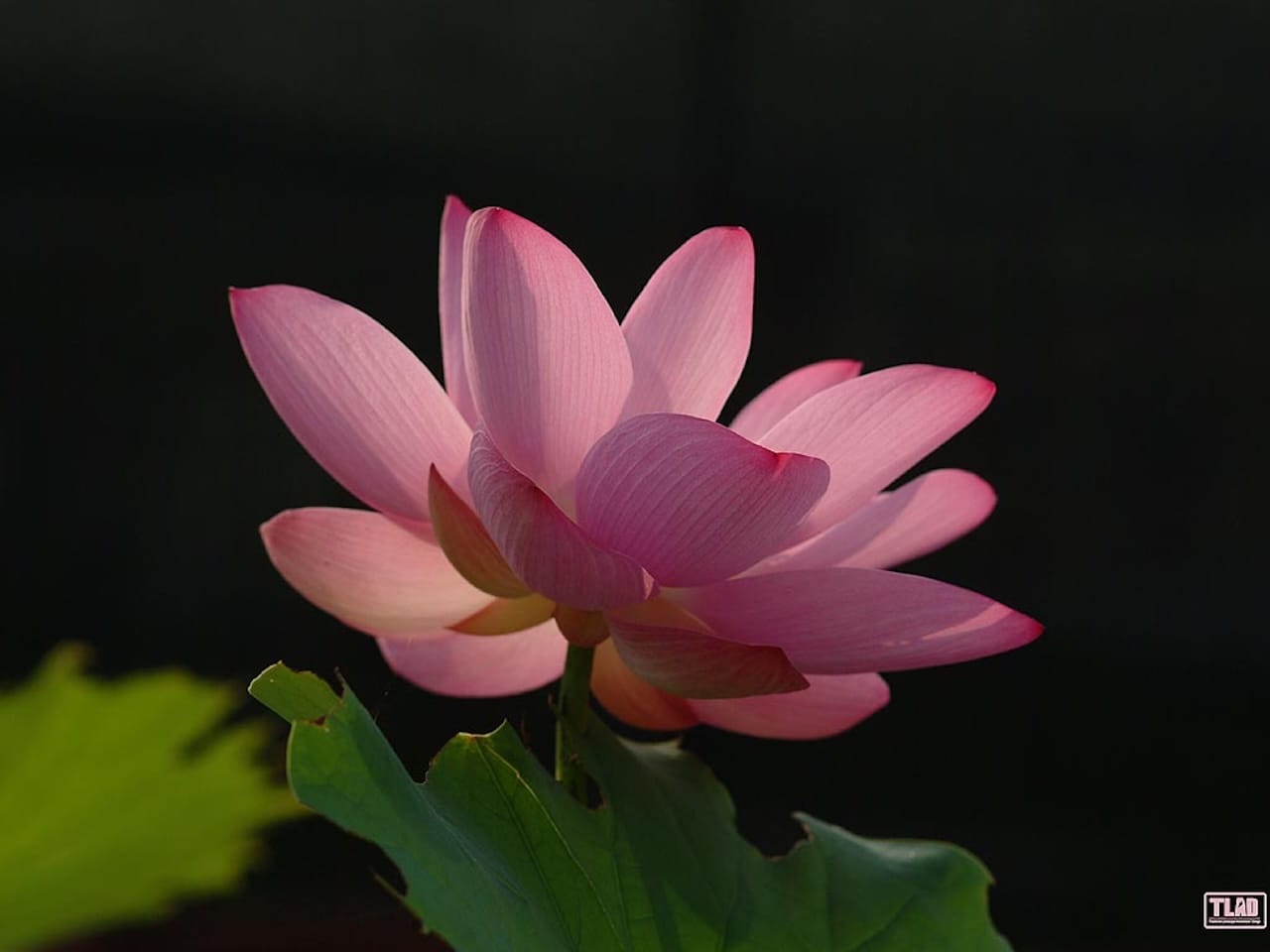
Insight doesn’t bloom in clarity — it rises from the mud, quietly unfolding toward light.
With my head directed toward Buddhahood and my heart committed to the liberation of others, Novi gave something back to me — with one single blow. The timing of the lantern parade in Korea felt like more than coincidence. In the Netherlands, we don’t celebrate Buddha’s birthday. But we do celebrate Liberation Day — on May 5th. It was on that same day that I published the final chapter of the Bogwangsa story. Unplanned. Just as it needed to be.
Bogwangsa – Four Stories, One Journey
Four stories. Four moments of pausing, observing, and continuing. When I started writing about Bogwangsa, I had no plan. At best, a direction: inward. What began as a travel account of a Buddhist temple in South Korea evolved into a polyphonic reflection — of silence, loss, myth, insight, and liberation.
What I learned is not easily put into words. But I try, because every story we share might open someone else’s inner door.
In the first story, I found silence. Not as the absence of sound, but as the presence of space. The pandemic brought everything to a halt — and at the same time, something opened. Bogwangsa became not a place, but a state of being. Lost in stilness
In the second story, I discovered the power of icons. Not as sacred objects, but as mirrors. They challenged me: What do I revere? Where do I seek protection? And what am I willing to face? Bogwangsa five Icons Bogwangsa temple, five icons
In the third story, I was moved by legends handed down for centuries. I learned: myths are not meant to prove truth — but to bring insight. Sometimes, a myth is the shortest route to the heart. mythical insights
And in the fourth story, everything came together. The child, the monk, the mountain, the dream. What began as a study of something outside me, brought me back within. And there, between the lines, I may have glimpsed what some call compassion. Bogwangsa: The Dream, the Mountain, and the Fractal of Compassion
These four stories together form a small pilgrimage. Not through time, but through attention. Not toward a sacred place, but toward a sacred posture.
Just-This-Ness – What Remains
I am not a Buddhist. But with my head directed toward Buddhahood and my heart committed to the liberation of others, I’ve found something I cautiously hope to share: a way of writing that is also a way of listening. Read the stories. Let them sink in. And maybe — just maybe — you’ll meet something of yourself within them. Just as I met myself in that strike from terror baby Novi — and discovered:
There is something in me that is not broken. Not because I’m perfect — far from it. Not because I understand — because most of the time, I don’t. But because, beyond all I’ve been, or endured, something remains.
Still and clear. Still and warm. Still and real.
I don’t call it God. I don’t call it Self. I don’t call it Soul. I don’t need to name it.
But I know: it watches with me. And when I am very quiet, I am it.
Sometimes I think I must be mad to feel this. Then I hear voices — inside or outside — saying: Who do you think you are? But I don’t think anything. I know I’m not it. I’m not that stillness. But it is in me.
Maybe this is what the Buddha saw when he said: “All beings already have it.” Maybe I don’t need to become anything. Maybe I just need to write. To point. To show:
Look — here something shines. Also in you. Suchness, Just-this-ness
In the days after publishing part one and two about the Bogwangsa temple and its profound symbolism, I received a message from Venerable Lee Kong, a monk of the Jogye Order. His words weren’t a correction, but something subtler—something that felt more like a compass than a commentary:
“With my head directed toward Buddhahood, and my heart committed to the liberation of others…”
Though this moktak does not belong to Venerable Lee Kong, his chant carries the same steady rhythm—clear, grounding, inescapably present. It echoes not just through the hall, but through the silence within.
His voice, though distant, arrived with a quiet clarity. It wasn’t about verifying details—it was about staying aligned. Aligned with the Dharma, with sincerity, with compassion.
He resides in Haeryongsa, a small hermitage resting at the base of Seongbulsan, one of the outer ridges of Mount Biseulsan. It sits just beyond the edge of the city—close enough to be reached, yet far enough to breathe. He serves as a meditation guide, quietly offering practices that range from yoga to qi-gong to traditional Buddhist meditation. He resides in a small hermitage, where simplicity and silence form the ground for inner work. Though the place is modest, its spirit is vast.
He also serves Venerable Beopta, the revered josil (senior meditation teacher) at Eunhaesa, one of the main temples of the Jogye Order, nestled in the mountains of Palgongsan. His path has not been bound by one lineage alone—he also spent many years practicing alongside Thai monks, deepening his perspective through both Mahāyāna and Theravāda traditions.
A Dream of Alignment
Perhaps it was his voice. Or the quiet weight of the teachings that I carried with me into the mist of Bogwangsa temple. But somewhere in that mist, the dream returns—softly, without demand.
I see myself again, seated in the open square in Seoul, between two titans of Korean memory: Admiral Yi Sun-sin, standing in unwavering readiness, and King Sejong, seated in quiet contemplation. One defends with the sword. The other teaches with words. And between them—on a simple mat, Jijang-bosal and Gwanseum-bosal share a bowl of tea. No doctrine. No ceremony. Just presence. Just listening. It wasn’t a dream of meaning.
Bogwangsa Temple Korea
It was a dream of alignment.
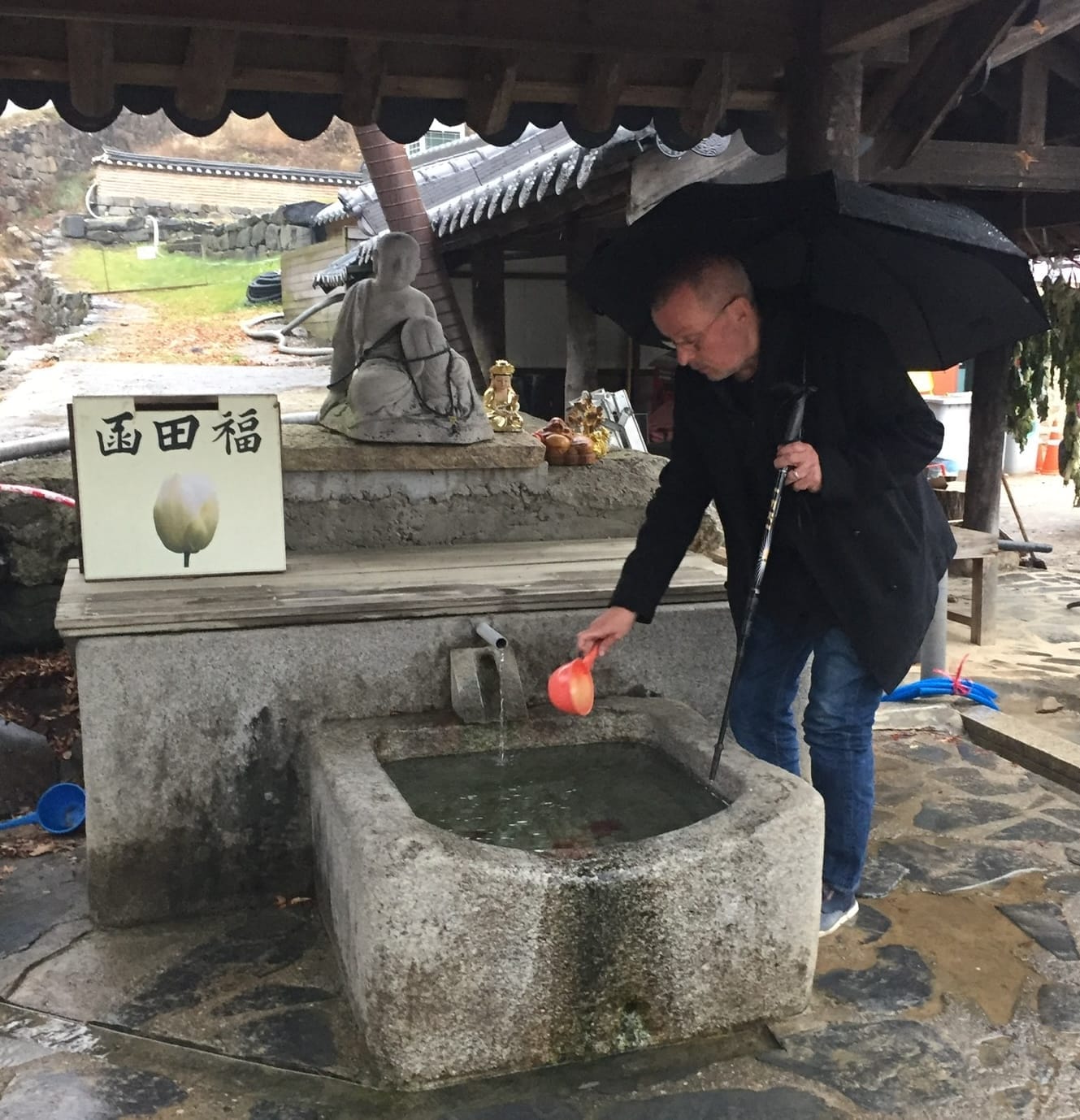
The writer at the spring near the entrance of Bogwangsa temple, I pause beneath the drizzle to draw water. Behind me, the sign reads 圃田福 — Bojeon Bok — a phrase that translates as “blessing of the field” or “prosperity from the garden.”
And still, the sky over Goryeongsan hangs grey and damp. Yet I feel thirsty—not only spiritually, but physically too. What I saw in the main hall didn’t just move me emotionally—it touched something in my body as well. A sensation I know all too well: tight, burning nerves, and a mouth as dry as the ashes of incense. Thankfully, near the entrance, I remember a spring. From it, I draw water—renewing both body and spirit.
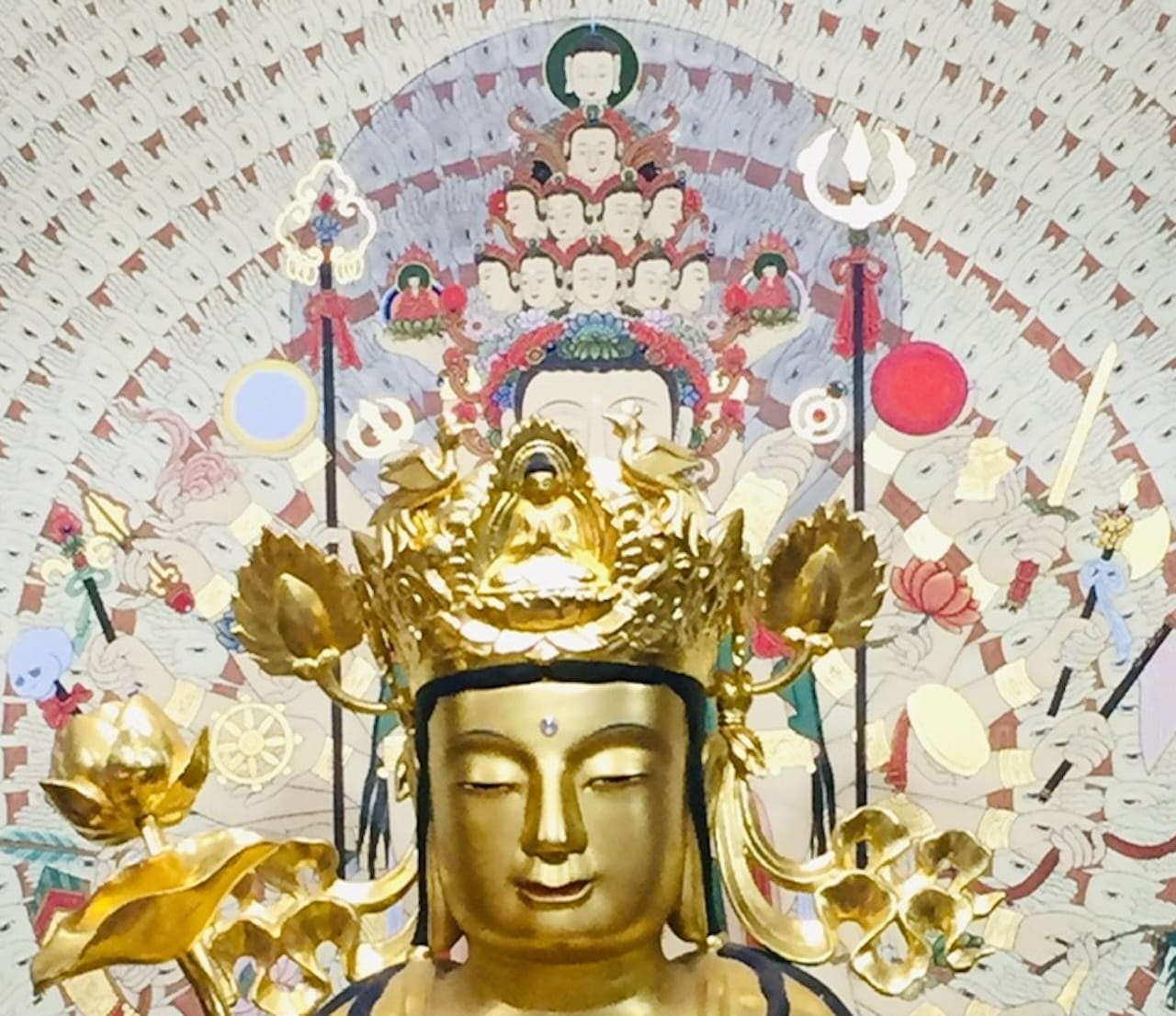
Gwanseum-bosal in Full Presence This full view of Gwanseum-bosal at Bogwangsa temple Korea reveals her surrounded by a mandala of a thousand compassionate hands and eyes. Every detail—from the golden lotus to the crowned head of Amitabha—embodies the essence of spiritual heritage in Asia. A visual hymn to Buddhist symbolism and fractal compassion.
At the core of the Bogwangsa temple, the Wontongjeon glows with quiet grace. The Wontongjeon (원통전) is dedicated to Avalokiteshvara Bodhisattva—Gwanseum-bosal (관세음보살), the bodhisattva of compassion. The term Wontong means “universally penetrating” or “all-encompassing illumination,” reflecting Avalokiteshvara’s ability to hear and respond to the cries of suffering souls across all realms.
This image of Gwanseum-bosal is not merely a religious icon, but a profound visual expression of the fractal nature of compassion, awareness, and interconnection. Both the physical representation and the symbolic backdrop situate her within a cosmic field—one where every sorrow is seen, every soul heard.
She is, after all, the Bodhisattva Who Always Listens.
In her thousand-armed form, she reaches in all directions, responding to every call. Her presence in Bogwangsa suggests compassion not merely as emotion, but as a cosmic principle—woven into the fabric of transition, of life and death. Though this temple is primarily dedicated to Jijang-bosal, Avalokiteshvara stands here as the embodiment of universal receptivity—a listener beyond the boundary of self. Together, they form a sacred symmetry: one leads, the other listens.
Shared Compassion at Bogwangsa Temple Korea
The Golden Lotus of Bogwangsa Temple Korea Held with both hands, the golden lotus symbolizes shared compassion. Not merely offered, but uplifted together—between bodhisattva and seeker, between wisdom and action. A gesture deeply rooted in Buddhist symbolism.
What strikes me most is how Gwanseum-bosal does not simply hold the golden lotus—she supports it. Her left hand lifts it gently from below, as if to say: compassion is not only offered; it is also carried together. Her gesture suggests that compassion is a partnership—between bodhisattva and seeker, between wisdom and action.
Amitabha’s Crown and the Depth of Buddhist Symbolism at Bogwangsa Temple Korea
Crown of the Compassionate One The crown of Gwanseum-bosal at Bogwangsa temple Korea radiates symbolic depth. At its center sits Amitabha Buddha, linking her to the Western Pure Land—a key element in spiritual heritage Asia. The crown unites earthly compassion with celestial guidance.
Her crown is richly adorned and bears the image of Amitabha Buddha, a reflection of her spiritual origin and goal: the Western Pure Land of Liberation. Her face, radiant and serene, eyes half-closed, speaks of an inner peace that remains steadfast even in the face of cosmic sorrow. She seems to gaze both inward and outward at once. And I can’t help but wonder—what is it she sees?
Tea and Truth
Tea and Truth: A Spiritual Dialogue in Bogwangsa Temple Korea
And then I remember what they were saying. Not in words alone, but in the weight behind them. The tea, the silence, the question that still echoes.
In that dream—so vivid it feels like memory I found myself back in the spiritual quietude of Bogwangsa temple, where dreams and doctrine gently dissolve.
Jijang-bosal takes a sip of tea and turns to Gwanseum-bosal: “You listen to the voices of those who suffer in this world.
I guide those who search for their way after death. And yet, their burdens return again and again. How do we help them let go?”
Gwanseum-bosal smiles softly, her hands circling the warm cup. “Suffering is like this tea,” she says. “Warm. Bitter. But fleeting. Its taste does not stay. Still, many cling to it as if it were eternal.”
Jijang-bosal nods. “I show them the path, but many fear to take it. They fear what they must leave behind, or what awaits beyond. But in truth…”
Gwanseum-bosal finishes the thought: “…there is nothing to hold on to.” Jijang-bosal watches the steam rising from his cup. “Exactly. Just as tea was once water and will soon return to vapor, so are we always in motion. Suffering is not something to carry —but something to let flow.”
She lifts her cup one last time. “And when they realize this, there will be nothing left to release.” The tea is gone. The cups are placed down. No longer full. But not empty either.
The Thousand Eyes of Avalokiteshvara and Buddhist Symbolism
Fractal Hands of Compassion A close-up from Bogwangsa temple Korea, this sea of hands evokes the thousand-armed Gwanseum-bosal—each gesture a vow to listen, to heal, and to uphold the temple’s Buddhist symbolism in endless compassion.
Each hand is a vow. To see suffering—not in the abstract, but in the detail of every trembling soul. To reach out—not just from afar, but here, now, in the intimacy of shared breath.
A thousand hands. A thousand eyes. Not to overwhelm, but to reflect: compassion, too, is fractal. It repeats, not for redundancy, but for presence. And in that repetition, I find something: She does not need to move. The eyes move for her. She does not need to touch. The hands have already begun. And I—still, small, silent—am seen.
Sansin and the Arhats
Gwanseum and Mary: Shared Devotion in the Spiritual Heritage of Asia
Of course, Gwanseum reminds me of Mary. Back home, I had seen people weep before her statue, just as visitors here whisper their grief to Gwanseum. The devotion feels nearly identical. Surrounded by flowers, candlelight, and prayers, both embody the archetype of compassion.
I have no doubt this comparison will be met without resistance. Korean Buddhism is profoundly inclusive—after all, even Sansin, the shamanic mountain spirit, has found his place on temple grounds.
The main altar left me with a sense of reverence, a humble awe before Seokgamoni-bul and his companions. But when I bowed before Gwanseum, I felt something warmer. She is, indeed, like a loving mother. What hasn’t changed is the weather. The sky still weeps its soft drizzle. Thankfully, in the Sansingak (산신각), it is dry.
The Spirit of the Mountain: Sansin in His Pavilion
Sansin at Bogwangsa Temple Korea. Surrounded by offerings and lanterns, the mountain spirit Sansin sits with his tiger—honored in quiet rituals that reflect Korea’s rich spiritual heritage in Asia.
This is the pavilion dedicated to Sansin (산신), the mountain spirit of Korea. The space is intimate, almost humble in its simplicity. At its center sits Sansin himself—an elderly man with a long white beard, clothed in traditional Korean garments. By his side rests his tiger, a powerful symbol of protection and a link to the wildness of nature. Behind them, painted on the taenghwa, Sansin appears again—this time surrounded by attendants and mountain spirits, guardians of his mysterious domain.
Though Sansin’s roots lie in Korea’s shamanistic past, his worship is fully woven into the fabric of Korean Buddhism, especially in temples nestled deep in the mountains.
The Meaning of Sansin
Sansin is revered as the protector of wisdom, a guardian of health, and a granter of long life. He embodies the raw force of nature and the spiritual energy that flows through Korea’s mountainous landscapes. His role as a guardian of temples built on powerful geomantic sites—like Bogwangsa—is deeply respected.
Rituals and Reverence
Monks and visitors alike bring offerings of rice, fruit, water, or wine to Sansin. Their prayers seek protection, well-being, fertility, or success in spiritual practice. These rituals often lean toward the shamanic—more personal than ceremonial—but they live in quiet harmony with the Seon Buddhist traditions of Bogwangsa.
The Sansingak is more than a side building; it is a threshold. A place where nature, spirit, and humanity meet. It reminds me of the strength of the mountains, of unseen protectors who guard the sacred, and of the beautiful entanglement of shamanism and Buddhism in Korean culture.
In the quiet power of Sansin’s presence, I recognize echoes of another sacred encounter—one where Korean reverence and Tibetan ritual once converged.That story, too, continues in Holy Korean and Tibetan Transitions.
Guardians of the Dharma: The Arhats in the Nahan-jeon of Bogwangsa
Arhats at Bogwangsa Temple Korea These serene figures represent enlightened disciples of the Buddha, quietly guarding the Dharma in the sacred stillness of Bogwangsa temple Korea.
Deep within the Bogwangsa temple complex, nestled among ancient trees and mist-laden hills, lies the Nahan-jeon (나한전, Hall of the Arhats). This sacred space is dedicated to the enlightened disciples of the Buddha, known in Korean as Nahan (나한), or Arhats.
The Nahan-jeon radiates an atmosphere of deep contemplation. Upon entering, I am greeted by a row of serene icons, each seated on a vibrant, lotus-shaped cushion. Their faces—pale and tranquil—appear timeless, almost human, as if they embody silence itself. Clad in simple monk’s robes, their hands rest gently in their laps or fold softly into mudras. Behind them stretch richly decorated murals, filled with scenes of the Buddha’s teachings and spiritual journeys through distant lands and mystical realms.
In Korean temples, Arhats are often depicted as a group of sixteen or eighteen figures (십육나한 / 십팔나한, Sibyuk Nahan / Sibpal Nahan), each with unique expressions, gestures, and spiritual attributes. Some hold scrolls or malas (prayer beads), others a staff or symbolic objects like bowls or dragon pearls. Though they have attained enlightenment, they remain in the world—as guardians of the Dharma and protectors of the temple.
The most recognized among them is Pindola Bhāradvāja (빈두로 바라문, Binduro Baramun), often identified by his long eyebrows—a mark of deep wisdom. Challenged by the Buddha to demonstrate his spiritual powers, he became known as the Arhat who endures as long as the Dharma endures. Another highly regarded figure is Kāśyapa (가섭, Gaseop), protector of esoteric teachings and keeper of profound meditative practices.
In Bogwangsa’s Nahan-jeon, time seems to stand still. The soft glow of candlelight reflects in the polished eyes of the Arhats, while the air is thick with the scent of incense. Here, monks and visitors meditate and offer homage, seeking to awaken the Arhats’ wisdom and resolve within themselves.
As I leave the hall, a quiet sense of peace lingers. The Arhats remain unmoved on their cushions, keeping watch over the Dharma, ready to welcome the next traveler in search of awakening.
Nearby stands the Jijangjeon, a hall dedicated to Jijang-bosal (Ksitigarbha Bodhisattva, 지장보살), the bodhisattva of the afterlife and protector of souls in the underworld. People often pray here for the deceased, asking for their safe passage and favorable rebirth. Positioned closer to the entrance, it lies lower in elevation—closer to the earth, and thus to the realm of the dead.
Closing Vow
The air outside the hall is still damp, heavy with the scent of pine and mist. Somewhere behind me, the incense still burns. But I carry a different kind of smoke now—one that rises inward.
I think of the hands that reach. The eyes that see. The tiger beside the mountain god. And the Arhats at Bogwangsa Temple Korea who watch in silence, not because they demand anything, but because they already understand. And then I remember what they were saying.
Not in words alone, but in the weight behind them. The tea, the silence, the question that still echoes.
In that dream — so vivid it feels like memory — Jijang-bosal takes a sip of tea and turns to Gwanseum-bosal:
“You listen to the voices of those who suffer in this world. I guide those who search for their way after death. And yet, their burdens return again and again. How do we help them let go?”
Gwanseum-bosal smiles softly, her hands circling the warm cup. “Suffering is like this tea,” she says. “Warm. Bitter. But fleeting. Its taste does not stay. Still, many cling to it as if it were eternal.”
Jijang-bosal nods. “I show them the path, but many fear to take it. They fear what they must leave behind,
or what awaits beyond. But in truth…”
Gwanseum-bosal finishes the thought: “…there is nothing to hold on to.”Jijang-bosal watches the steam rising from his cup. “Exactly. Just as tea was once water and will soon return to vapor, so are we always in motion. Suffering is not something to carry — but something to let flow.”
She lifts her cup one last time. “And when they realize this, there will be nothing left to release.” The tea is gone. The cups are placed down. No longer full. But not empty either.
In the soft rain outside the Bogwangsa temple, I bow— not because I am close to enlightenment, but because I understand, now more than ever, that the path itself is sacred.
The great wheel turns. Not away from me, but with me. And I, still shaped by longing and learning, am not ready to leave it behind. But I can walk it with care.
With my head directed toward Buddhahood, and my heart committed to the liberation of others. Not as a destination — but as a vow.
I’ve done my utmost to describe the icons, halls, and rituals of Bogwangsa Temple Korea with care and accuracy. Still, any misidentifications or symbolic misreadings are entirely my own. Should you spot any such errors, your insight is warmly welcome. But above all, I hope what resonates is the spirit of the story—the atmosphere it conjures, the openness it invites, and the sincerity with which it was written.
People disappeared behind doors. Newspapers spoke of rising death tolls, collapsing markets, and borders that refused to open. COVID-19 had the world in a grip no one could fully understand—except those who lived through it. And us? Mickey and I were stuck in South Korea.
Well, stuck? Maybe not in the way most would imagine. Kim Young Soo, president of Baedagol Theme Park and Goyang Koi Farm, had made sure we had a place to stay. Above the closed Baedagol Museum, he had arranged a small apartment for us. The park’s gates remained shut to the outside world, but we were free to wander the gardens. In a time when most people were confined to their living rooms, that felt like a gift.
Still, something felt missing. Perhaps it was the awareness that the world was in crisis—that one could be safe, yet still trapped in an invisible structure. Or maybe it was a longing for something deeper than mere comfort.
Kim Jae Ho, our friend and translator, saw it. Perhaps he saw it before we did. One day, he suggested we visit Bogwangsa(보광사), a temple nestled deep in the hills of Paju. Kim Young Soo, as always, arranged everything. It began on August 1, 2019—under the stars of Goyang, when a pattern quietly took shape: the Jijang fractal. I did not know then that the world was also shifting, that a hidden storm—later known as COVID-19—was already forming.
The date was December 1, 2019.
That day, the temple gate would open for us. That day, the Jijang fractal would no longer reside only in my thoughts—but take on a tangible form.
🔹 More on the Origins of the Jijang Fractal
The Jijang fractal first revealed itself to me during walks through Goyang. In a seemingly ordinary neighborhood, something extraordinary appeared. You can read the full experience and explanation in my reflection: 👉 Neighbourhood & Jijang fractal
The Road to Stillness
The rain gently tapped against the car windows as we wound our way through the mountains of Paju. The Imjin River flowed sullen and grey. We had left early, hoping to catch a glimpse of North Korea from the nearby observatory, but the mist had erased the horizon. What we expected to see—a border, a divide, a clear contrast—had vanished into a haze of gray tones. Disappointed, Kim Jae Ho restarted the car and turned into the mountains.
The road to Bogwangsa Temple was short. Gradually, the landscape shifted; buildings gave way to forest and near silence. And then, even before we reached the temple grounds, he appeared: Jijang-bosal—immovable—standing on a pedestal as if he himself were a gateway to another reality. His gaze rested far into the distance, yet felt deeply fixed on us. Behind him rose Goryeongsan (고령산), a 436-meter-high mountain, and Gamaksan, reaching up to 675 meters. Along with the Imjingang River, they form a harmonious geomantic configuration believed to enhance the spiritual energy of Bogwangsa. For me, it turned out to be the perfect place for contemplation.
Bogwangsa Temple – Description and Layout
A large signboard near the entrance shows a detailed map of Bogwangsa. Mounted within a traditional wooden structure topped by a black-tiled roof, the board offers visitors an overview of the temple layout—including major halls, pathways, and natural features. The entire complex is surrounded by forested hills, amplifying its serene and spiritual atmosphere.
Click to enlarge the Bogwangsa Temple map
Main Structures of Bogwangsa Temple:
1️⃣ Daeungbojeon (대웅보전) – Main Buddha Hall
2️⃣ Eosil-gak (어실각) – Eosil Pavilion
3️⃣ Wontongjeon (원통전) – Wontong Hall
4️⃣ Eungjinjeon (응진전) – Hall of Arhats
5️⃣ Sansingak (산신각) – Pavilion for the Mountain Spirit
6️⃣ Jijangjeon (지장전) – Hall of Jijang-bosal, Bodhisattva of the Afterlife
7️⃣ Manseru (만세루) – Manse Pavilion
8️⃣ Huwon (후원) – Rear Garden
9️⃣ Jonggak (종각) – Bell Pavilion
🔟 Suguam (수구암) – Sugu Hermitage
1️⃣1️⃣ Seokbuljeon (석불전) – Hall of the Stone Buddha
1️⃣2️⃣ Iljumun (일주문) – Main Temple Gate
1️⃣3️⃣ Seolbeopjeon (설법전) – Hall of Dharma Teachings
1️⃣4️⃣ Yeonggakjeon (영각전) – Hall of Ancestral Spirits
…
Bogwansa (보광사) and Doseon Guksa
Bogwansa temple was founded in 894 CE by the renowned monk Doseon Guksa, under the order of Queen Jinseong during the Silla period. At that time, it was considered a hidden national treasure and one of the six grand temples north of the Hangang River.
Doseon Guksa (827–898) was a prominent Korean Buddhist monk and geomancer. He is often associated with the introduction and development of pungsu-jiri (풍수지리), the Korean adaptation of feng shui.
At the age of 15, Doseon entered monastic life and began his studies at Hwaeomsa Temple in Gurye County. His dedication and intellect quickly earned him recognition. Around 850, he traveled to Tang China to further immerse himself in esoteric Buddhist and Taoist teachings, including astronomy, astrology, and geomancy. After returning to Korea, Doseon journeyed across the peninsula, studying how geographical features influenced human life. He adapted Chinese feng shui principles to the Korean context, emphasizing the harmonious relationship between humans and nature. His approach, known as bibo-pungsu-jiri, focused on enhancing positive energies through the strategic placement of cities, temples, and other structures. His expertise in geomancy made him a valued advisor. He is credited with the establishment of approximately 70 temples and monasteries, including Bogwangsa Temple in Paju.
During the Imjin War (1592–1598), Bogwangsa was destroyed but was rebuilt in 1622 by monks Seolmi and Deogin. Since then, the temple has undergone various renovations to preserve its historical and cultural significance. A notable feature of Bogwangsa is the large Buddha statue, known as the ‘Hoeguk Dae Bul.’ Standing as a guardian of compassion and transition, the grand stone Jijang-bosal is visible from afar. His presence is more than symbolic; in his majesty and serenity, he embodies the character of a Hoeguk Dae Bul—a ‘Great Buddha who saves the nation.’ Not only does he welcome visitors, but he also marks a threshold: between the mundane and the sacred, between the known and the karmically unknown. As a guide for souls and protector of the land, he unites individual and collective salvation.
A misty morning at Bogwangsa Temple. In the foreground stands a small red pavilion, possibly the Sansingak, nestled just before the sacred 300-year-old juniper tree. Behind it, traditional temple halls emerge through the autumn trees, embraced by the quiet slopes of Goryeongsan. The scene breathes stillness, reverence, and geomantic harmony.
The temple also houses nine cultural properties, including the historic ‘Daeungbojeon’ (the main hall) and a 300-year-old juniper tree. According to tradition, this tree was planted by King Yeongjo in honor of the spirit of his mother, Sukbin Choi.
Bogwangsa and Jogye Order
Bogwangsa is managed by monks of the Jogye Order, the largest sect within Korean Buddhism. Unlike, for example, the Tibetan Buddhist tradition, where the Tibetan Book of the Dead (Bardo Thödol, 바르도 퇴돌) plays a central role, the Jogye Order follows the Seon tradition. They strive for direct enlightenment through meditation and direct experience of the true nature of the mind, beyond concepts and illusions. The emphasis is on releasing attachment to a ‘fixed’ death experience—the idea that death is an absolute, unchanging process—and instead, the transition is seen as a fluid, karmic manifestation dependent on one’s state of consciousness and actions in life. In Korean Buddhism, a Jijangjae (지장재) is often performed at death, a ritual dedicated to Jijang-bosal (Ksitigarbha Bodhisattva), who assists souls in safely navigating the afterlife.
intriguing tension
So within the temple exists an intriguing tension, though not necessarily a contradiction. Bogwangsa does indeed belong to the Jogye Order and follows the Seon (Zen) Buddhist tradition, where enlightenment through meditation is central. At the same time, Bogwangsa is devoted to Jijang-bosal (Ksitigarbha), who is precisely the guide through the Bardo—the intermediate state after death.
How can this be reconciled?
🔹Seon Buddhism and Meditation as the Core of the Jogye Order
•The Jogye Order primarily focuses on direct experience and meditation (Seon).
•Its ultimate goal is enlightenment here and now, without reliance on external forces or intermediary states.
🔹The Role of Jijang-bosal in Temples Like Bogwangsa
•Jijang-bosal is the savior of souls in the Bardo, helping them toward enlightenment or reincarnation.
•This parallels the Tibetan Bardo Thödol(Tibetan Book of the Dead), where a guide is essential for the transition into a new state of existence.
•This suggests that Bogwangsa is not solely focused on direct enlightenment, but also on guiding souls after death.
Bridging Seon and Jijang-bosal
Bogwangsa’s emphasis on Jijang-bosal points to a pragmatic approach to enlightenment:
🔹 For the living: Seon meditation is highlighted as the path to enlightenment during life.
🔹 For the dead: Jijang-bosal plays a role for those who missed the chance for enlightenment and are now in the Bardo.
🔹 Rituals like Sasipgujae (the 49-day mourning ceremony) help guide souls toward eventual liberation.
In essence, Bogwangsa fulfills a spiritual need that the pure Seon tradition does not always address explicitly: the care for the dead and the ancestors. This is not unique—many Korean Seon temples include shamanistic and Mahayana elements to fulfill broader religious and cultural needs.
A Quiet Moment in the Hall of Jijang
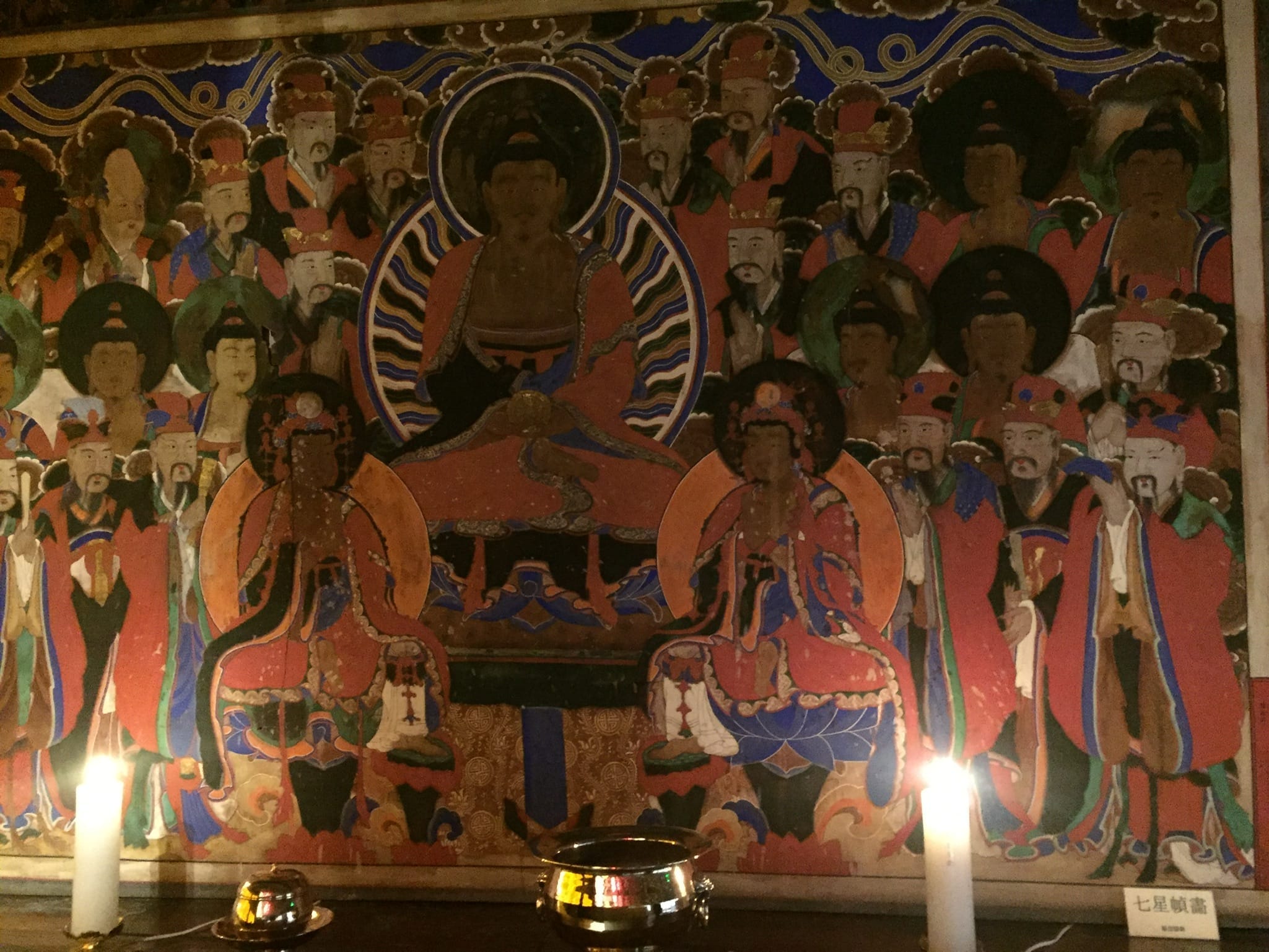
Painting of the heavenly court where souls are judged, featuring prominent figures in red robes. One of the Siwang (Ten Kings of the Underworld) paintings inside the Jijangjeon Hall.
I don’t remember how long I sat there. Maybe it was just a few minutes. Maybe half a lifetime. The air inside the hall was still, carried by incense and expectation. Jijang-bosal did not look at me, and yet it felt as if I had already been seen.
I am not a Buddhist. I was raised Catholic. Images, rituals, prayer—they are familiar to me. But what does a European mind, shaped by grace and sin, do in a hall devoted to karma and rebirth?
And yet, in this silence, I understood that the question wasn’t whether I believed in the Bardo, but whether I had ever dared to admit that I was in it. Not after my death, but now. In transition. Between knowing and unknowing. Between control and surrender.
Jijang-bosal offers no dogma, no judgment. He doesn’t extend his staff to condemn, but to guide. He doesn’t judge my origin, only my willingness to let go. To find trust in transitions instead of fear.
Perhaps that’s what the temple gave me. Not conversion, not an answer, but a calm. A deep knowing that when the time comes, even a soul shaped at the foot of a cross can find its path with the help of a bodhisattva with golden eyes.
Because if the Bardo is a space between, then Jijang is not the owner of that space. He is its guide. And guides don’t demand. They wait. Until you ask: may I come with you?
The Daeungbojeon – The Heart of the Temple
Passing through the main gate, we entered the temple grounds. The rain had ceased, leaving the scent of wet wood and lingering incense in the air. Before us stood the Daeungbojeon (대웅보전, Great Hero Hall), the spiritual center of Bogwangsa.
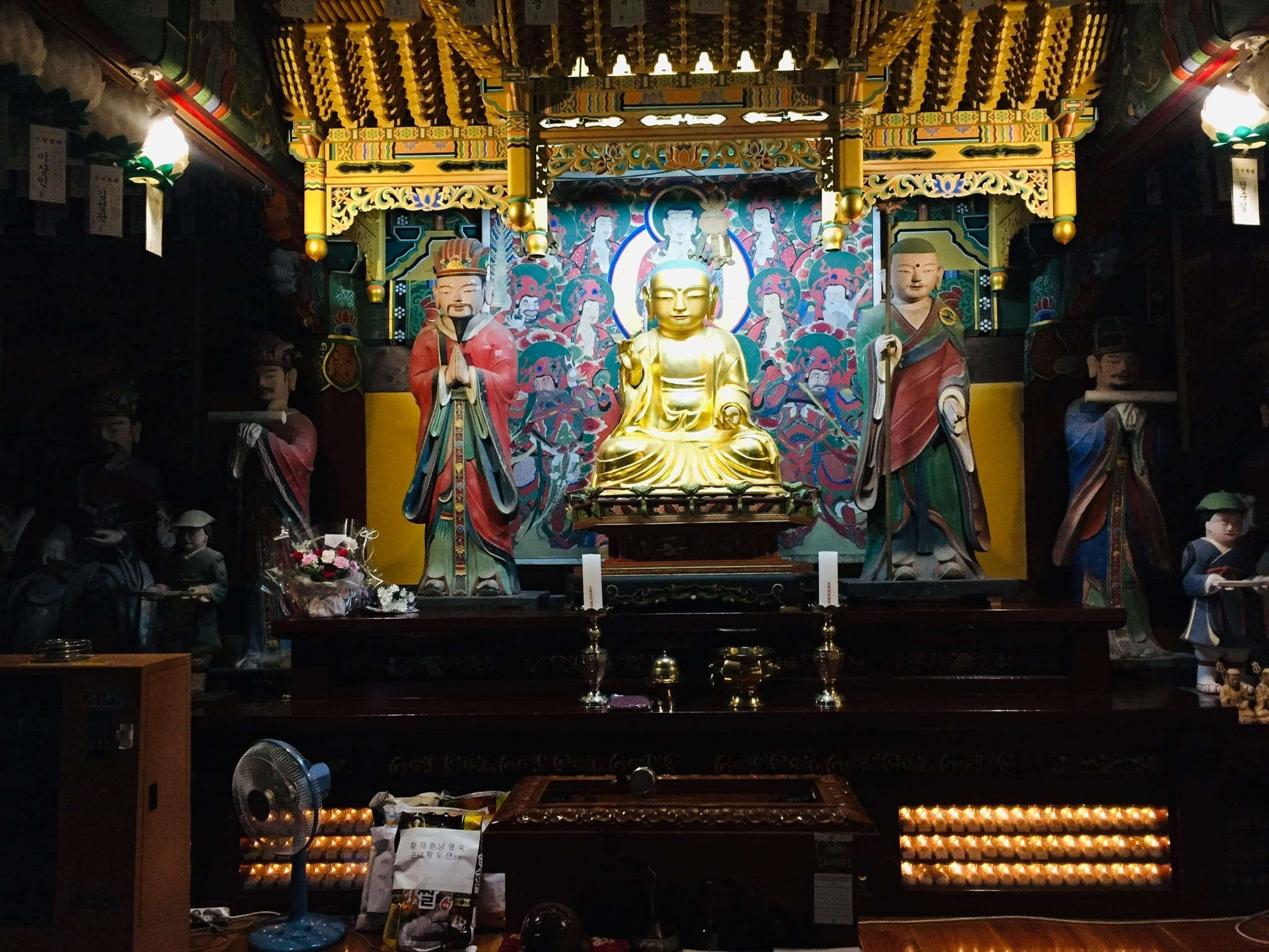
At the center, Shakyamuni Buddha (석가모니불, Seokgamoni-bul) sits in the lotus position. His serene face exudes a peaceful expression, surrounded by a halo symbolizing enlightenment and spiritual power. To his left stands, I believe, one of the Four Heavenly Kings (사천왕, Sacheonwang), respectfully folding his hands in protection of the Buddha and the Dharma. To the right stands Jijang-bosal (Kṣitigarbha, 지장보살), the bodhisattva of the afterlife.
Jijang-bosal’s staff (Shakujō, 석장) symbolizes his role as a guide for souls in the Bardo, with the sound of its rings awakening them and leading them toward enlightenment. The six rings represent the Six Realms of Existence, while the staff itself embodies Jijang-bosal’s determination and dedication. In Bogwangsa’s Jijangjeon, the staff signifies spiritual protection and guidance, especially in rituals like the 49-day transition ceremony (Sasipgujae).
Detailed depiction of four of the Ten Kings seated in formal posture, inside a decoratively painted hall. Symbols of justice and karmic balance are visible
Also present at the altar are the Siwang (십왕), the Ten Kings of the Underworld, suggesting that this hall is dedicated not only to enlightenment (Shakyamuni) and meditation but also serves as a space for transitional rituals. The combination of the Buddha, protectors, and underworld icons makes this altar a significant intersection between enlightenment, protection, and the karmic cycle of rebirth. The Ten Kings of the Underworld are symbolic judges, each representing a stage of the soul’s journey, assessing the karma of the deceased and determining their next destination in the cycle of rebirth.
This altar thus forms the spiritual heart of Bogwangsa, where both monks and visitors come together to meditate, pray, and pay respects to the forces that influence both this life and the next.
As I turned away from the main altar—its presence still lingering in the incense-thick air—my eyes were drawn upward. Not to a specific icon, but to the silent gaze of many. Eyes carved in patience, cast in compassion, painted in timeless serenity.They didn’t demand belief. They didn’t offer escape. They simply were. In that moment, I felt a shift—not in my faith, but in my understanding.
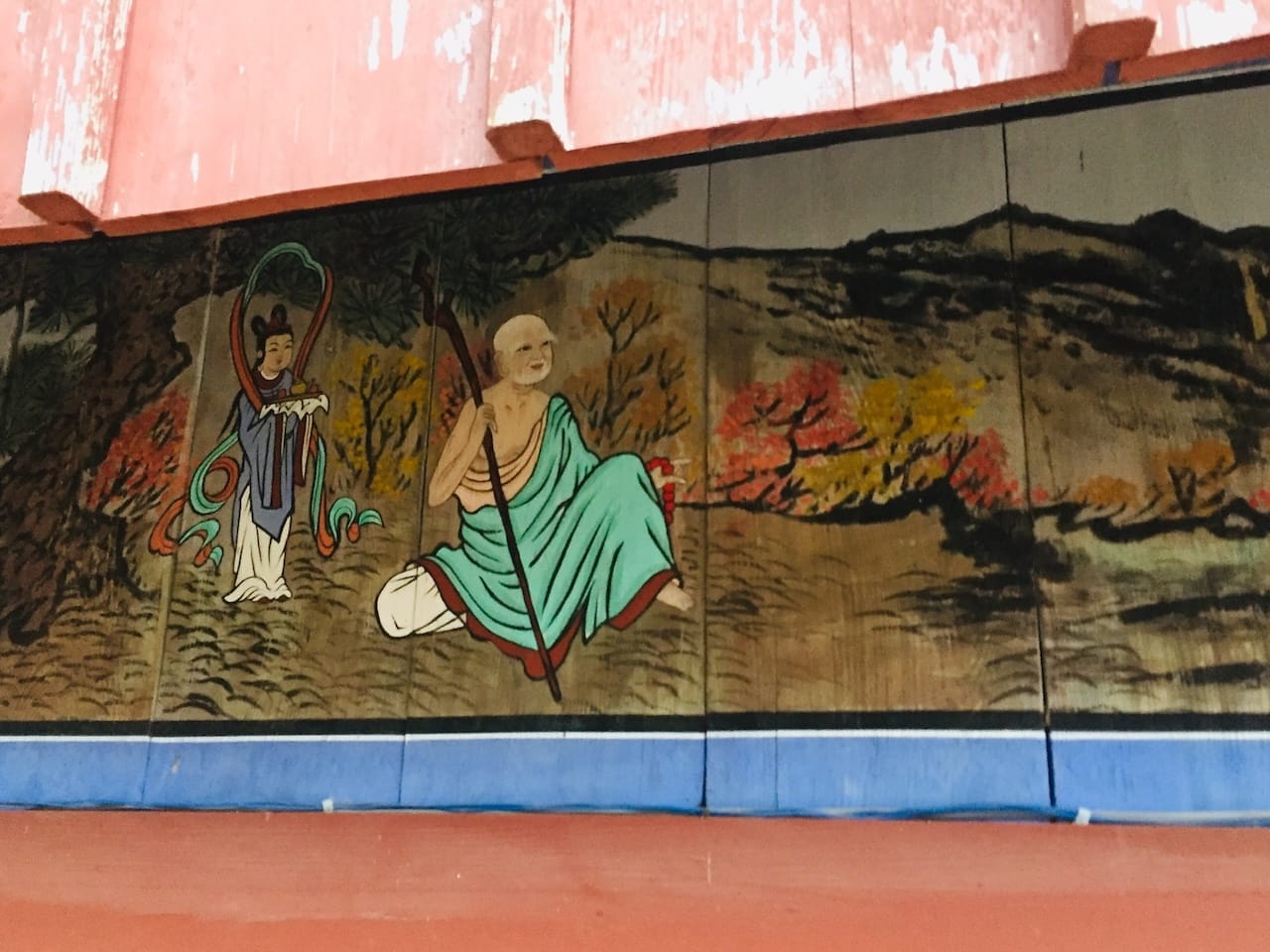
A detailed painted scene depicting the great Korean monk Wonhyo, accompanied by a celestial figure. This imagery reflects his journey inward—a spiritual awakening that transcended dogma, pointing to the living heart of the Dharma. Davin A. Mason kindly told me that it is not Wonhyo. It is Dokseong.Thanks for your kindness.
“The substance of Mahāyāna is truly calm and immensely profound,” wrote Wonhyo, the great Korean monk, in his commentary on The Awakening of Faith in Mahāyāna. He pointed not to dogma, but to experience—to the still and boundless heart of the Dharma itself. Perhaps that was what had watched me all along.Not a deity. Not an idea. But the path itself: not built of words, but of insight. The Dharma—not as scripture, but as living truth. A calm that opens, a depth that listens. Between stone and silence, between breath and blessing. And so I turned, ready to meet what waited behind the second altar.
As I turned from the main altar—its silence still echoing in my breath—I didn’t know another presence awaited me. Tucked just behind the Hall’s center, shrouded in shadows and time, stood a second altar.
What secrets did it hold? What story would unfold there?Next: The Second Altar – Between Earth and Afterlife 🕊️ Coming soon on Mantifang
Disclaimer: While every effort has been made to accurately describe and name the icons, halls, and rituals within Bogwangsa, it’s possible that some inaccuracies remain. If you notice any errors in naming or placement, please feel free to let me know. More than correctness, however, what matters most to me is the feeling the story evokes—its atmosphere, its intention, and its sincerity. Hugo J. Smal
Cookie Consent
We use cookies to improve your experience on our site. By using our site, you consent to cookies.

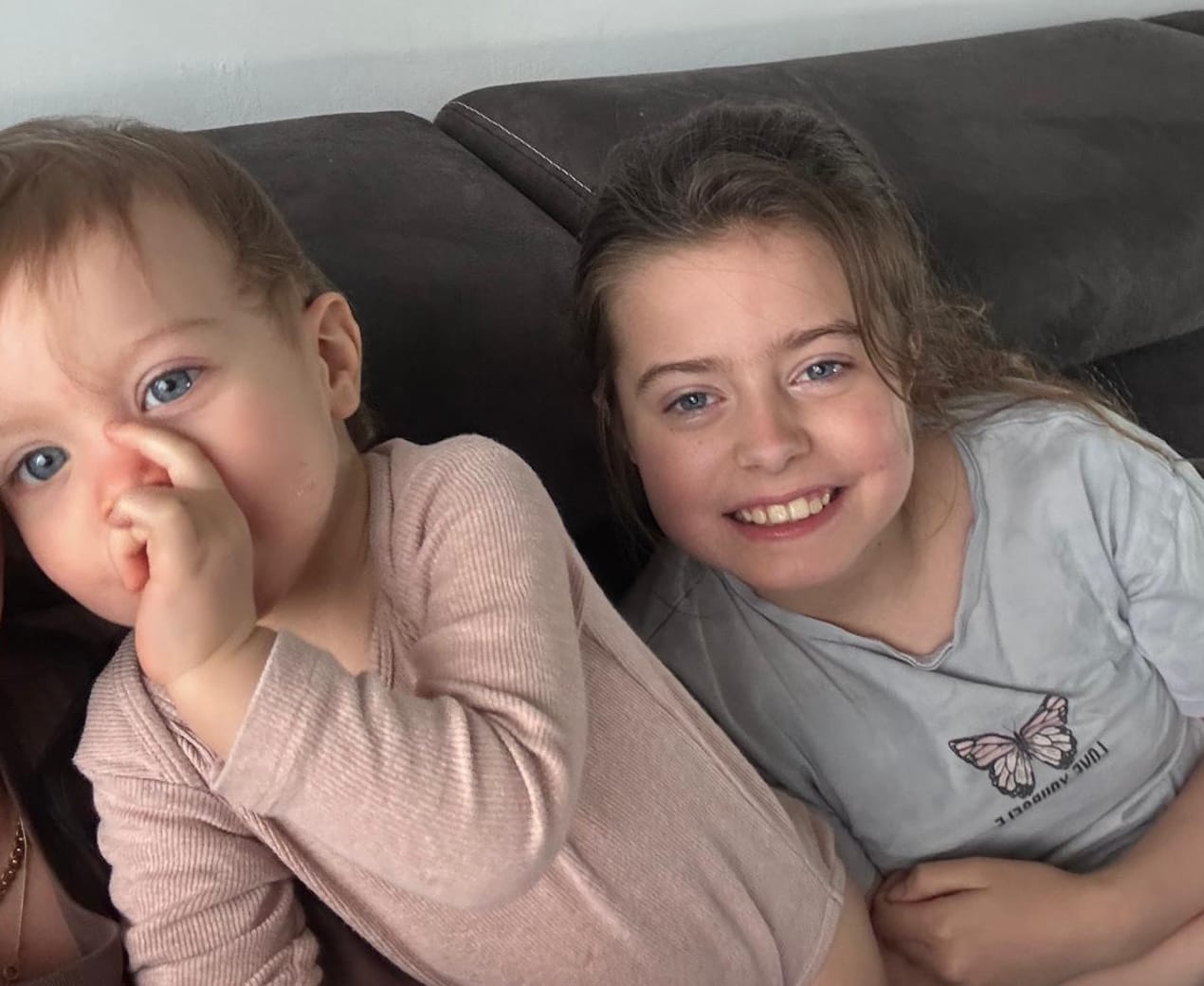
While uploading this story, something unexpected happened. A new pope was elected: Leo the Fourteenth, an Augustinian monk. His order, once home to Martin Luther. His name, once worn by emperors. And now he walks onto the world stage with a vow of humility.

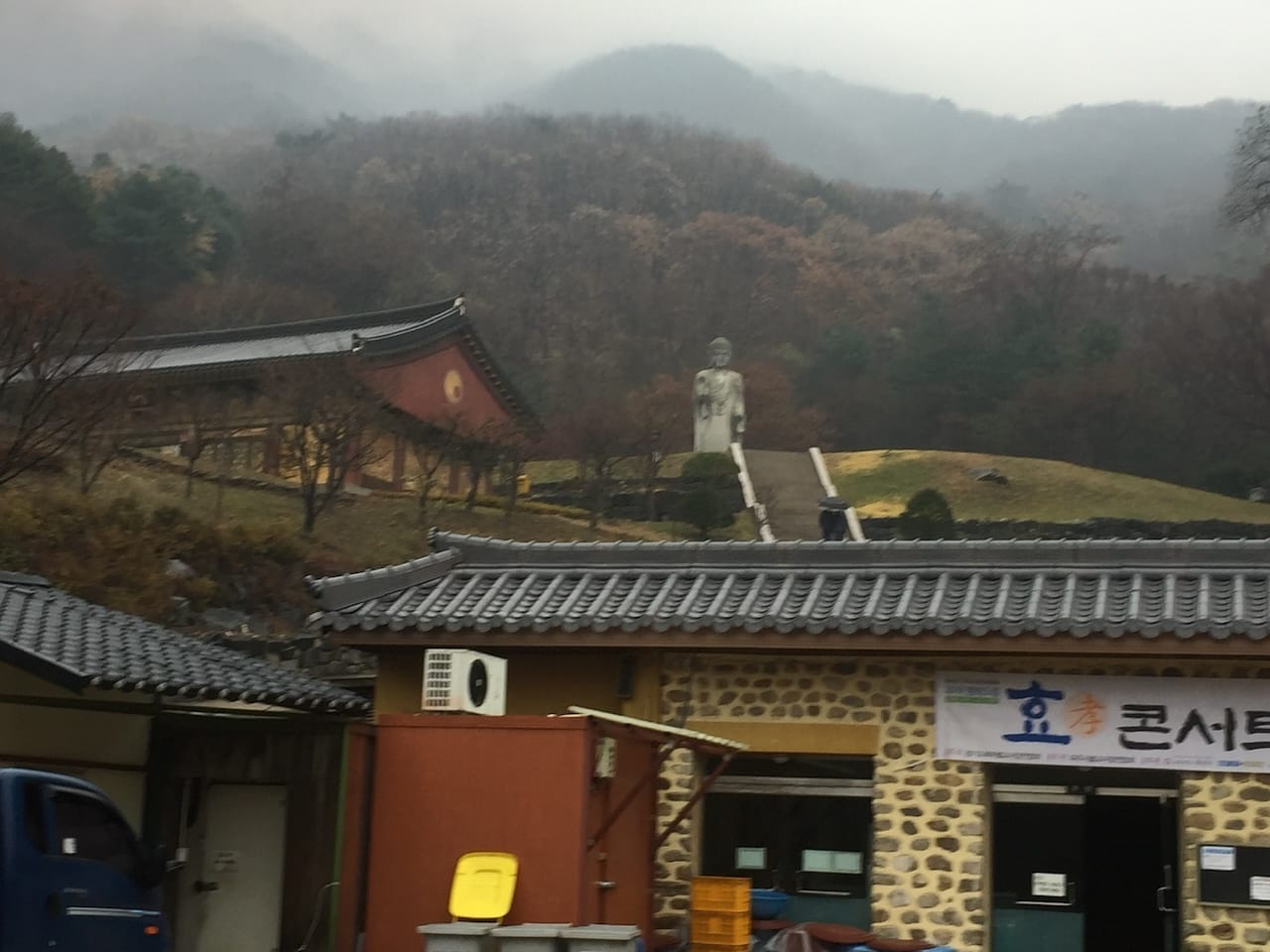 In the first story, I found silence. Not as the absence of sound, but as the presence of space. The pandemic brought everything to a halt — and at the same time, something opened. Bogwangsa became not a place, but a state of being. Lost in stilness
 In the second story, I discovered the power of icons. Not as sacred objects, but as mirrors. They challenged me: What do I revere? Where do I seek protection? And what am I willing to face? Bogwangsa five Icons Bogwangsa temple, five icons
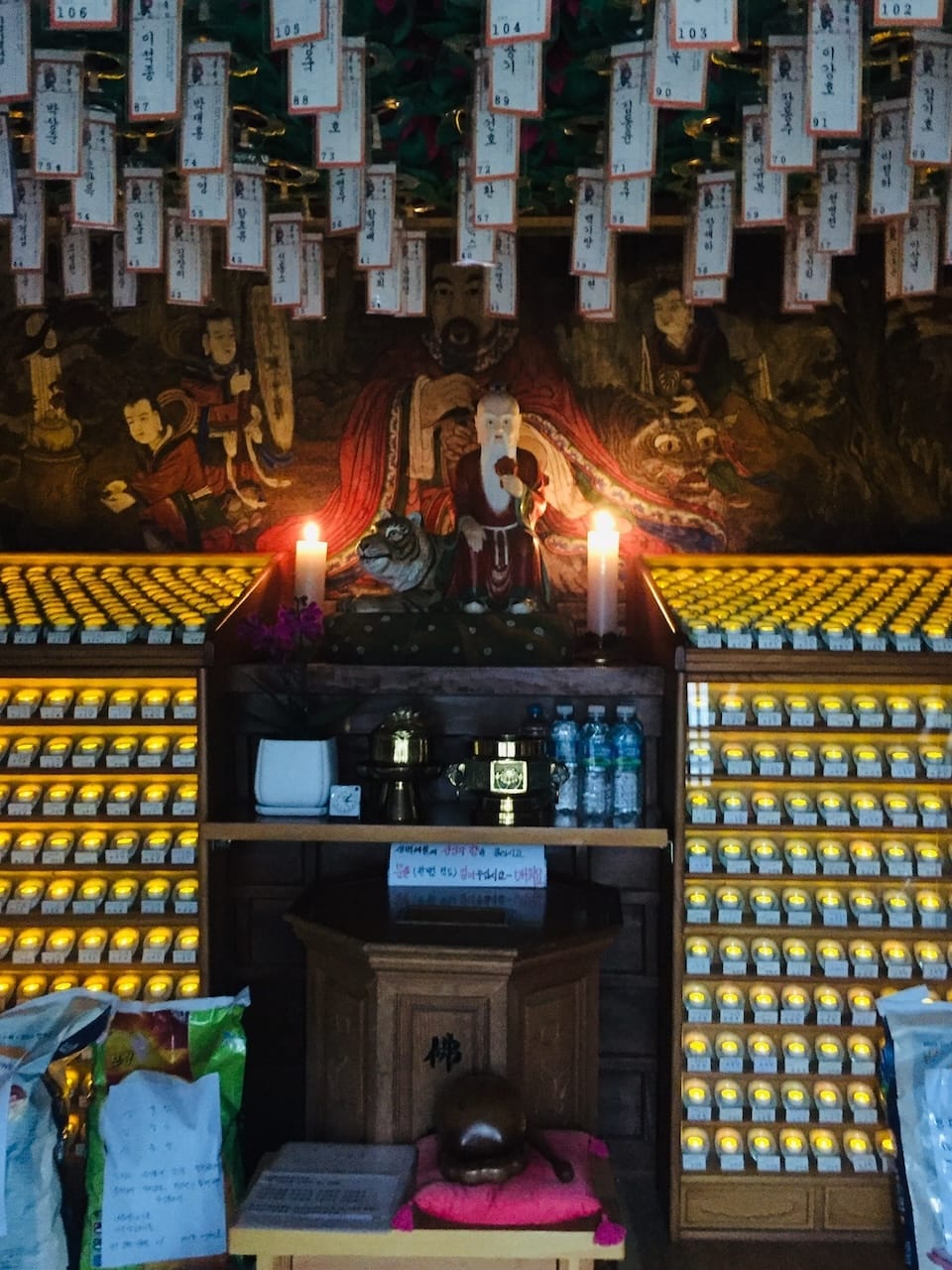 In the third story, I was moved by legends handed down for centuries. I learned: myths are not meant to prove truth — but to bring insight. Sometimes, a myth is the shortest route to the heart. mythical insights
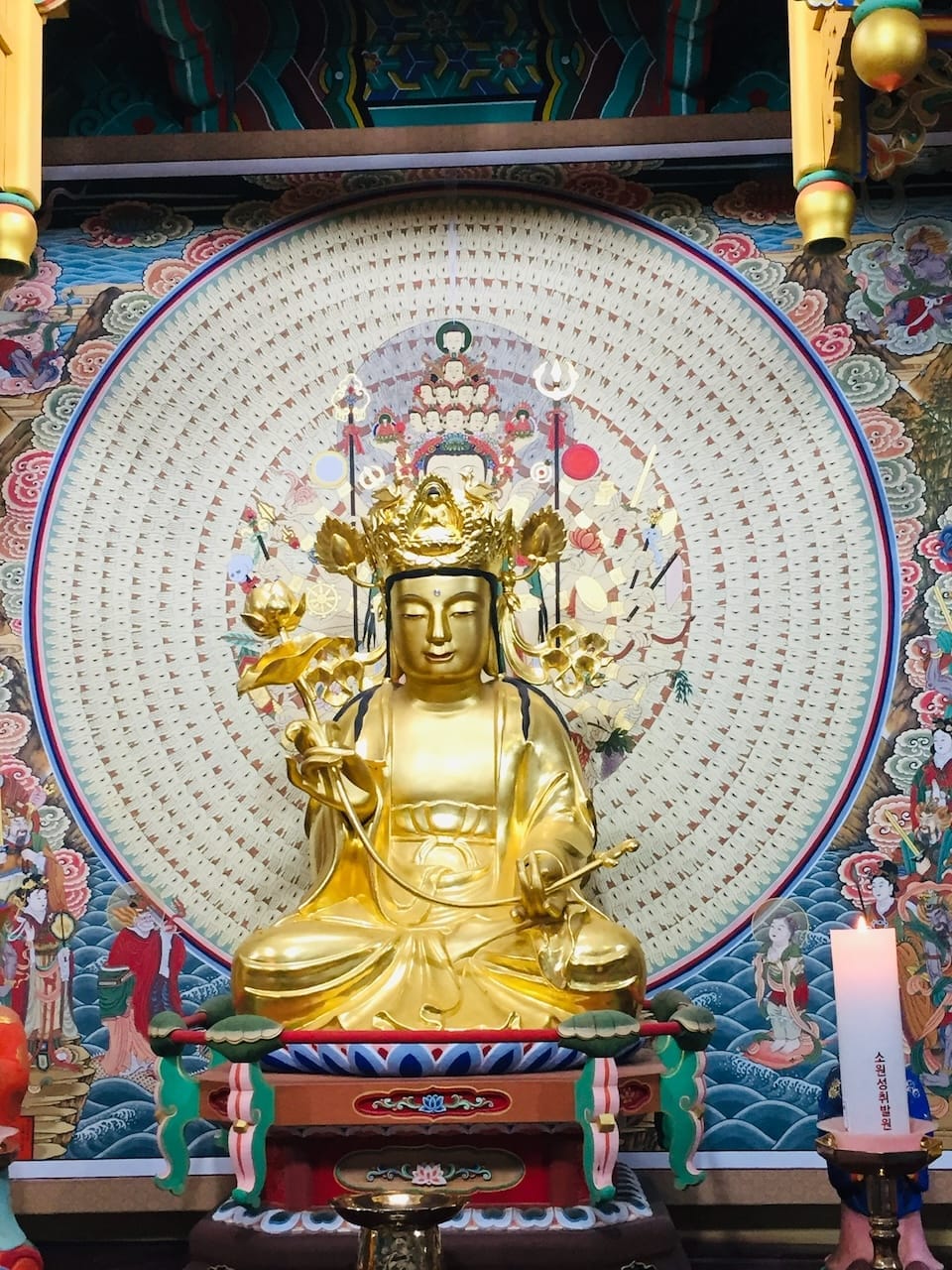 And in the fourth story, everything came together. The child, the monk, the mountain, the dream. What began as a study of something outside me, brought me back within. And there, between the lines, I may have glimpsed what some call compassion. Bogwangsa: The Dream, the Mountain, and the Fractal of Compassion
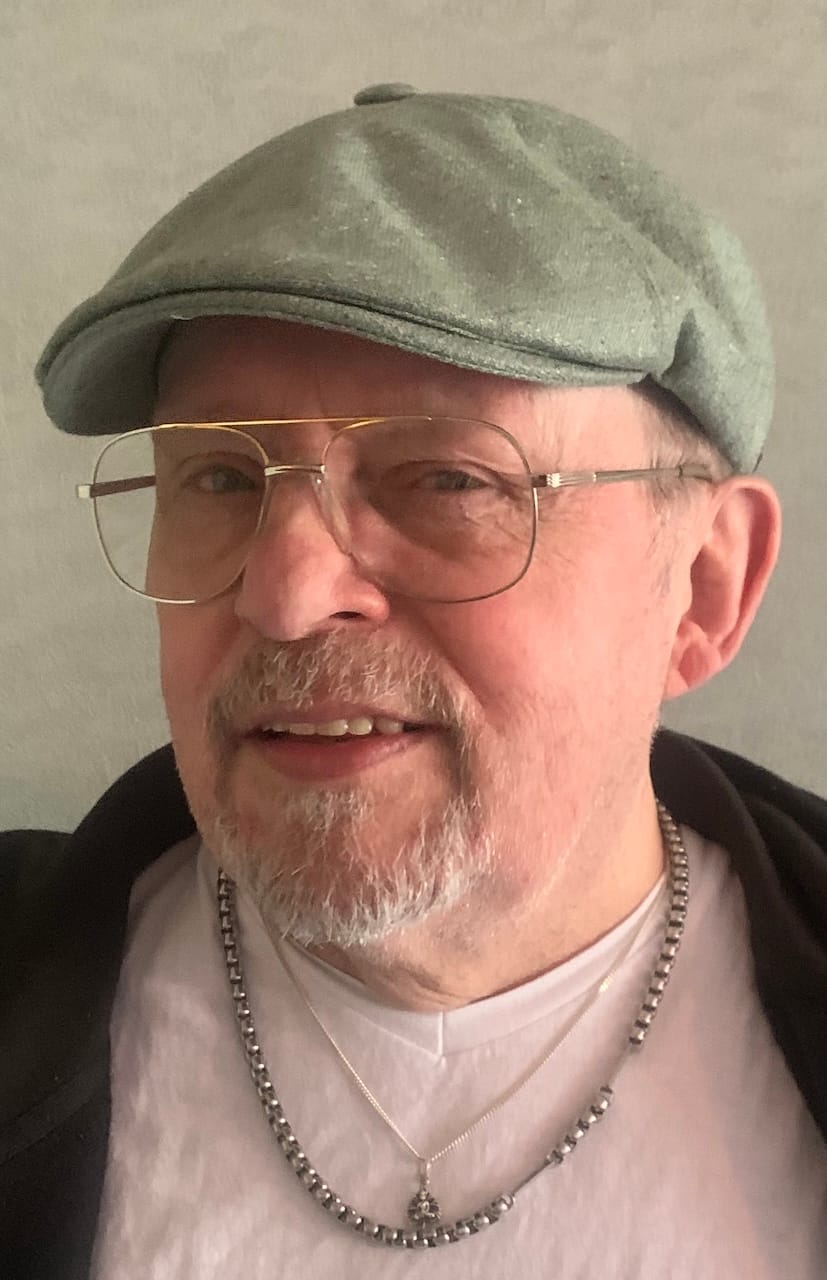 I am not a Buddhist. But with my head directed toward Buddhahood and my heart committed to the liberation of others, I’ve found something I cautiously hope to share: a way of writing that is also a way of listening. Read the stories. Let them sink in. And maybe — just maybe — you’ll meet something of yourself within them. Just as I met myself in that strike from terror baby Novi — and discovered: