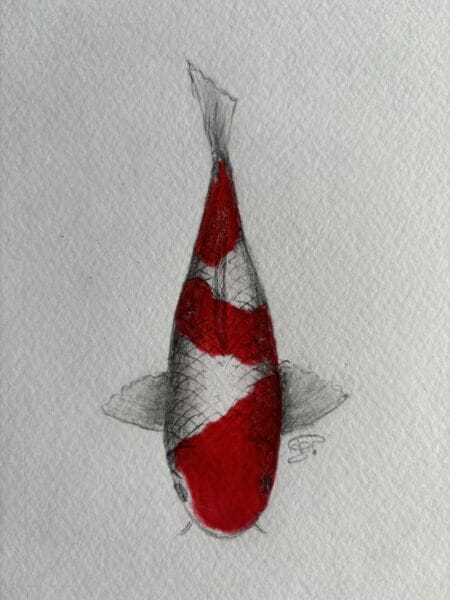
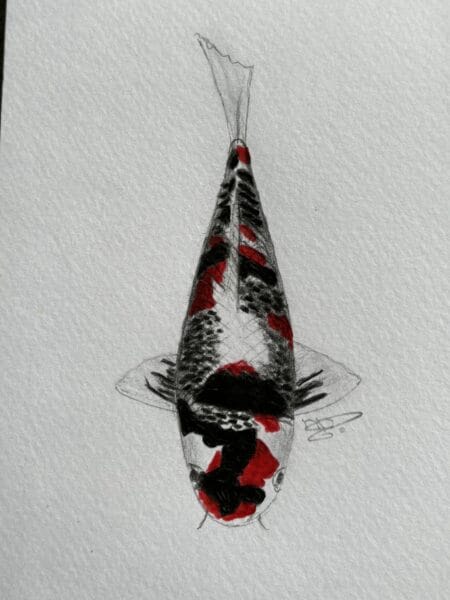
Classic Sanke pattern on a bright white base.In the peaceful waters of Japan, where the art of Koi breeding has been practiced for centuries, a special variety emerged in the early 20th century: the Taisho Sanke. This Koi, with its striking white skin and elegant patterns of red (Hi) and black (Sumi), has since captured the hearts of many Koi enthusiasts.
The with one with red and black patterns
The history of the Taisho Sanke begins in the Taisho era (1912-1926), where it was first bred. This period, a time of great cultural development in Japan, also saw a flourishing in the art of Koi breeding. It was during this time that breeders began experimenting with crossings, leading to the birth of this class.
One of the first and most influential breeders was Kunizo Hiroi, often credited with stabilizing the variety. His breeding techniques laid the foundation for what the Sanke is today: a Koi with a bright white skin, on which the red and black are harmoniously distributed.
Famous Taisho Sanke breeders
Over the years, various breeders have contributed to the development of the Sanke. Some prominent names include:
Kunizo Hiroi: As mentioned earlier, he played a crucial role in the early breeding of Sanke..
Matsunosuke: This bloodline is known for its brilliant skin quality and balanced pattern distribution. Tell about the Matsunosuke Koi bloodline.
Torazo: Known for his quality Sanke line, characterized by deep red and well-placed black. [wpbot-click-chat text=”Shikbu about Torazo” bot_visibility=”show” intent=”Tell about Torazo bloodline.” display_as=”button”]
Each breeder has their own unique style and focus, leading to subtle differences in the Sanke they produce. For example, the Torazo line is known for its strong Hi, while the Matsunosuke line is famed for its radiant Shiroji (white skin).
Price winners
Over the years, the Sanke has won numerous awards at Koi shows worldwide, a testament to its enduring popularity and beauty. The quality of a Sanke is judged on various characteristics, including the clarity of the skin, the quality and placement of the red and black, and the overall body shape and size.
The Sanke remains a living work of art, a symbol of refinement and elegance in the world of Koi. For enthusiasts around the world, it represents not just a passion for beauty, but also a deep appreciation for the art and science of Koi breeding.
Variants Under the Taisho Sanke Classification
There are several variants under this classification, each with unique features:
Each variant brings a unique aspect to the Sanke category and is valued for different reasons. The choice of a specific Sanke variant often depends on personal preference and the aesthetic values a Koi enthusiast seeks. Despite their differences, all Sanke variants remain true to the core characteristics of the Sanke: a white base with beautifully placed red and black patterns. This diversity within the Sanke category makes it a fascinating and versatile Koi variety for collectors and enthusiasts worldwide.
Have specific questions or want to learn more? Don’t hesitate to ask your questions directly to Shikibu – your expert in all things Koi.
Recognized by a snow-white shiroji, vivid red plates and tidy black accents that keep the head clean, this tricolor member of the Go-Sanke group is prized for balance and purity. Compared with Showa, the look is lighter; compared with Kohaku, the black adds drama without overwhelming the design.
Tsubo Sanke
Black (sumi) appears mainly on the white base, creating clean separation from the red plates.Tancho Sanke
Iconic single head spot with restrained body markings.Maruten Sanke
Red “crown” on the head in addition to body pattern.Kuchibeni Sanke
Distinctive red around the mouth (“lipstick” look).Koromo Sanke
Koromo-style indigo netting gives elegant edging to the red.Kasane Sanke
Black overlaps the red plates, producing layered depth.Doitsu Sanke
Scaleless skin makes color edges appear extra crisp.
This fancy carp commonly referred to as Showa, originated in Japan in the late 1920s, during the era with the same name. This variety evolved from the Kohaku, with the addition of black (Sumi), creating a vibrant tri-color combination. Initially, this Nishikigoi were characterized by their dominant black coloration. Over the years, breeding techniques have enhanced the balance and clarity of the colors, resulting in the elegant types seen today.
Key Contributors to the Development
Tomiji Kobayashi: A pivotal figure in the development of the Showa. Kobayashi is renowned for his contribution to refining the Sumi pattern, giving this variety a a more balanced appearance. Learn About [wpbot-click-chat text=” Kobayashi San” bot_visibility=”show” intent=”Tell about Tomiji Kobayashi.” display_as=”button”]
Jukichi Hoshino: Another influential breeder, Hoshino played a critical role in improving the Hi (red) pattern on the Showa, contributing to better definition and vibrancy. Discover [wpbot-click-chat text=” Hoshino San” bot_visibility=”show” intent=”Tell about Jukichi Hoshino.” display_as=”button”]
Eizaburo Hasegawa: Known for his work with the Kohaku, Hasegawa also contributed to the development of the Showa by refining techniques that enhanced both the Hi and the Shiroji (white). Uncover his Contributions [wpbot-click-chat text=” Eizaburo Hasegawa” bot_visibility=”show” intent=”Tell about Eizaburo Hasegawa.” display_as=”button”]
Minoru Mano: As one of the modern breeders, Mano has contributed to the evolution of the Showa, focusing on improving body shape and overall health of the koi. Discover Minoru Mano’s Legacy: [wpbot-click-chat text=” Minoru Mano” bot_visibility=”show” intent=”Tell about Minoru Mano.” display_as=”button”]Discover the meaning behind the Jijang Fractal — A Korean Journey of Compassion → Explore more through the thought of Hugo J. Smal
Classification and Varieties of Showa
This varieties are classified based on their color patterns and distribution. In addition to the traditional black carp with white and red markings, this classification includes:
Kindai: Characterized by a greater proportion of white, offering a more contemporary look. Explore the unique features and captivating appeal of [wpbot-click-chat text=” Kin Showa” bot_visibility=”show” intent=”To describe the unique characteristics and modern appeal of Kindai Showa.” display_as=”button”]
Tancho: This variety features a distinctive red spot on the head, set against a backdrop of black and white patterns. Discover the distinct beauty and elegance of Tancho koi, renowned for their iconic red- round,crowned heads. [wpbot-click-chat text=” Tancho” bot_visibility=”show” intent=”To provide information about the unique features of the Tancho Koi variety.” display_as=”button”]
Maruten: Possesses a unique red “crown” on the head along with the standard tri-color patterns. Learn about Maruten koi, distinguished by their unique red spot on the head, setting them apart from traditional patterns. [wpbot-click-chat text=” Maruten” bot_visibility=”show” intent=”Tell about Maruten Koi pattern.” display_as=”button”]
Menware: Recognizable by the black pattern crossing the nose bridge, contributing to a strong and dynamic appearance. Uncover the striking Menware pattern, characterized by bold black markings on the head that enhance the koi’s dramatic appearance. [wpbot-click-chat text=” Menware” bot_visibility=”show” intent=”Tell about Menware Showa pattern.” display_as=”button”]
The development of this Nishikigoi type is a testament to the meticulous art and science of koi breeding. This variety remains a favorite among koi enthusiasts worldwide, thanks to the efforts of these and many other dedicated breeders over the years.
Difference between Showa en Sanke.
Showa Sanshoku and Taisho Sanke are both prominent varieties of koi, beloved by koi enthusiasts worldwide. While they may appear similar at first glance, there are distinctive characteristics that set them apart.
The Showa Sanshoku is known for its striking tri-color pattern. The unique aspect of the black variety is its dominant black (Sumi) base, combined with red (Hi) and white (Shiroji) markings. This black color often extends across the back and intermingles with the other colors, creating a complex and balanced pattern.
On the other hand, the Taisho Sanke, which originated in the Taisho era (early 20th century), also displays a tri-color pattern but with a distinctly different color distribution. In Taisho Sanke, white is the dominant base color, with strategically placed red and black markings. The black color in Taisho Sanke is more limited and typically appears only as smaller spots, known as Sumi, on top of the white and red colors.
While Showa Sanshoku is characterized by a more pronounced black presence and a more complex color distribution, Taisho Sanke is distinguished by its clear white base with harmoniously placed red and black accents. Both varieties are appreciated for their beauty and colorful appearance, but it’s these subtle differences in color and pattern that make them unique in the world of koi.”
Bloodlines Showa Sanshoku
Kohaku Bloodline: This lineage was developed from the Kohaku koi, one of the oldest and most popular koi varieties. The emphasis was initially on developing the red (Hi) and white (Shiroji) patterns, with the addition of black (Sumi) markings later to create the Showa. [wpbot-click-chat text=” Kohaku” bot_visibility=”show” intent=”Tell about Kohaku” display_as=”button”]
Tomiji Bloodline: Developed by Tomiji Kobayashi, a key figure in the history of Showa koi. This bloodline is known for its refined Sumi patterns and a good balance between the three colors.
[wpbot-click-chat text=” Tomiji” bot_visibility=”show” intent=”Tell about Tomiji Kobayashi.” display_as=”button”]
Sensuke Bloodline: Known for its striking contrasts and vivid colors, the Sensuke Showa often have a powerful appearance due to the brightness of their Hi and Shiroji, combined with deep black Sumi. [wpbot-click-chat text=” Sensuke” bot_visibility=”show” intent=”Inform about Sensuke Koi bloodlines.”display_as=”button”]
Ikarashi Bloodline: Ikarashi Showa are known for their large size and robust body shape. The color patterns are often grand and bold, giving them an imposing presence. [wpbot-click-chat text=” Ikarashi” bot_visibility=”show” intent=”Tell about Ikarashi bloodline.” display_as=”button”]
Matsunosuke Bloodline: The Matsunosuke lineage is known for its strong Sumi and bright Hi. This bloodline often has good skin quality and a pronounced pattern, making them highly sought after among koi enthusiasts.[wpbot-click-chat text=” Matsunosuke” bot_visibility=”show” intent=”Tell about Matsunosuke Beni bloodline.” display_as=”button”]
Dainichi Bloodline: Developed by the renowned Dainichi Koi Farm, this bloodline is famous for its bright, vibrant colors and elegant patterns. Dainichi Showa are often praised for their beauty and quality. [wpbot-click-chat text=” Dainichi” bot_visibility=”show” intent=”To provide information about the Dainichi Showa bloodline” display_as=”button”]
For more about traditional koi breeding, visit
<a href="/nl/”https://www.dainichikoi.com/”/" target="”_blank”" rel="”noopener" nofollow”>Dainichi Koi Farm Japan</a>.
Tancho Showa
Recognized by a single red circle on the head, balanced with black (sumi) and white (shiroji) markings — symbol of harmony and simplicity.Konoko Showa
A bronze-toned metallic variation of the Showa Sanshoku, combining red, white, and black with an aged golden glow.Kindai Showa
Known as the “modern Showa,” featuring cleaner white areas and elegant, symmetrical color balance.Kin Showa
Adds a golden metallic shine to the traditional red, white, and black pattern — radiant and luxurious.Kage Showa
Displays soft shadowed sumi overlays that give its body a gentle, smoky depth.Hi Showa
Dominated by deep red (hi) with striking black bands and little white — symbol of power and energy.Gin Rin Showa
Sparkles with reflective silver scales that add brilliance to the red, white, and black pattern.Doitsu Showa
Features smooth, nearly scaleless skin that enhances contrast and clarity of the sumi bands.Boke Showa
Displays soft transitions between colors, giving a painterly, fluid impression.
Koromo Showa
A Koromo Showa combines the red (hi), black (sumi), and white (shiroji) of the Showa Sanshoku with the delicate indigo net-pattern of the Koromo lineage — a rare blend of strength and refinement.
Welkom in de wereld van deze rood-witte koi, een van de meest iconische en bewonderde soorten in de koi gemeenschap. Deze prachtige vissen, bekend om hun levendige rode en witte kleurpatronen, zijn niet alleen een symbool van schoonheid in tuinvijvers over de hele wereld, maar vertegenwoordigen ook een rijke geschiedenis en cultuur. Lees meer over de belangrijkste witte basis: Shiro [wpbot-click-chat text=” Shiro” bot_visibility=”show” intent=”Informeer over Shiro Koikleuren.” display_as=”button”]
Twee elegante koi die de schoonheid van het rood-witte patroon laten zien, de basis van alle Nishikigoi variëteiten.
De geschiedenis van deze koivariëteit voert ons terug naar het midden van de 19e eeuw in Japan, waar de eerste geregistreerde witte vissen met rode patronen werden gekweekt. Oorspronkelijk waren deze vissen een kruising tussen verschillende lokale karpersoorten, maar ze zijn uitgegroeid tot een hoog symbool van de koikweekkunst. Door de jaren heen heeft selectief kweken geleid tot de verfijning van hun kenmerkende rode en witte patronen, waarbij de nadruk ligt op helderheid, scherpe afbakening en harmonieuze balans. Dit nauwgezette proces heeft vissen voortgebracht die niet alleen esthetisch aantrekkelijk zijn, maar ook de essentie van de Japanse koi kweektradities belichamen.
Bloedlijnen en variëteiten
Deze Nishikigoi hebben verschillende bloedlijnen, elk met unieke eigenschappen en gewaardeerd door hobbyisten om verschillende redenen. Enkele bekende bloedlijnen zijn:
Tomo Sakai Lijn: Bekend om zijn dieprode kleur en grote omvang [wpbot-click-chat text=” Tomo Sakai” bot_visibility=”show” intent=”Vertel over Tomo Sakai Lijn” display_as=”button”]
Dainichi: Een zeer gewaardeerde bloedlijn van Showa Nishikigoi [wpbot-click-chat text=” Danichi” bot_visibility=”show” intent=”Informatie geven over de Dainichi Showa bloedlijn” display_as=”button”]
Momotaro: A Legacy of Excellence in Koi Breeding [wpbot-click-chat text=” Momotaro” bot_visibility=”show” intent=”Vertel over Momotaro” display_as=”button”]
Omasako: Meesters van Shiro Utsuri [wpbot-click-chat text=” Omasaka” bot_visibility=”show” intent=”Informeer over Shiro Koi-kleuren.” display_as=”button”]
Torazo: Een erfenis in het kweken van Koi [wpbot-click-chat text=” Shiro” bot_visibility=”show” intent=”Vertel over de bloedlijnen van Omosaka.” display_as=”button”]
Sensuke-lijn: Een erfenis van superieure rood-witte koi. [wpbot-click-chat text=” Sensuke lijn” bot_visibility=”show” intent=”Informatie over Sensuke Koi bloedlijnen.” display_as=”button”]
Elke bloedlijn biedt een unieke esthetiek en eigenschappen die bijdragen aan de diversiteit en schoonheid van deze Japanse variëteit. De zorgvuldige selectie en kweek van deze lijnen zorgt ervoor dat elk type iets speciaals toevoegt aan de wereld van koi.
Stappatronen: Een korte uitleg
Deze Nishikigoi, bekend om hun opvallende rode (hi) en witte (shiroji) kleuren, worden vaak beoordeeld op de schoonheid en balans van hun patronen. Een veelvoorkomend patroon is het “stappenpatroon”, gekenmerkt door de plaatsing van de hi in duidelijke, duidelijk gedefinieerde stappen of segmenten. Dit zijn de belangrijkste soorten:
Nidan (twee stappen):
Bestaat uit twee afzonderlijke rode patronen op het lichaam van de koi.
De hi is verdeeld in twee verschillende blokken.
Het is een eenvoudig en elegant patroon dat vaak zeer gewaardeerd wordt om zijn symmetrie.
Sandan (Driestaps):
Bestaat uit drie afzonderlijke rode patronen.
De hi is verdeeld in drie verschillende stappen over het lichaam van de koi.
Dit patroon biedt een mooie balans en dynamische look, waardoor het populair is onder liefhebbers.
Yondan (vier stappen):
Bestaat uit vier afzonderlijke rode patronen.
De hi is verdeeld in vier verschillende stappen.
Dit patroon kan de koi een uniek en complex uiterlijk geven, waarbij elke stap zorgvuldig wordt geëvalueerd op balans en esthetiek.
Godan (vijf stappen): Bestaat uit vijf afzonderlijke rode patronen. De hi is verdeeld in vijf verschillende stappen. Dit patroon is zeldzamer en kan de koi een zeer opvallende en indrukwekkende uitstraling geven.
Belangrijkste kenmerken van stappatronen
Symmetrie en balans: De treden moeten gelijkmatig verdeeld zijn en een gevoel van evenwicht geven.
Duidelijke scheidingen: De hi patronen moeten duidelijk gescheiden zijn zonder menging tussen de stappen.
Contrast: De rode treden moeten sterk contrasteren met het witte lichaam voor een maximale visuele impact.
Deze stappenpatronen zijn een essentieel aspect van de schoonheid en waarde van dit type koi, en het beoordelen ervan vereist een scherp oog voor detail en artistieke waardering.
Ontdek de Go Sanke Koi variëteiten
Als je gefascineerd bent door koi, duik dan in de betoverende wereld van Go Sanke, de meest gewaardeerde groep koi die Kohaku, Sanke en Showa omvat. Leer meer over hun unieke kenmerken, levendige kleuren en de verzorging die ze nodig hebben. Bezoek onze uitgebreide gids over Go Sanke koi variëteiten hier.
Uitstekende typen: Verder dan stappatronen
Naast de step-patronen worden verschillende andere vormen binnen deze rood-witte variëteit bewonderd om hun unieke en opvallende kenmerken. Hier zijn enkele van de meest opvallende soorten:
Inazuma:
Beschrijving: Het hi patroon lijkt op een bliksemschicht die over het lichaam van de koi loopt.
Kenmerken: Dit zigzagpatroon creëert een dynamisch en opvallend uiterlijk en voegt een gevoel van beweging toe aan de koi.
[wpbot-click-chat text=” Inazuma” bot_visibility=”show” intent=”Vertel over Inazuma.” display_as=”button”]
Tancho:
Beschrijving: Dit type heeft een enkele, perfect ronde rode vlek op zijn kop, terwijl de rest van het lichaam zuiver wit is.
Kenmerken: Vernoemd naar de Japanse kraanvogel Tancho, die een soortgelijke rode vlek op zijn kop heeft. Dit type wordt zeer gewaardeerd om zijn eenvoud en symbolische schoonheid.
[wpbot-click-chat text=” Tancho” bot_visibility=”show” intent=”Om informatie te geven over de unieke eigenschappen van de Tancho Koi variëteit.” display_as=”button”].
Maruten:
Beschrijving: Net als Tancho, maar met extra rode patronen op het lichaam.
Kenmerken: De Maruten heeft een ronde rode vlek op het hoofd (zoals een Tancho) en andere hi patronen op het lichaam, een combinatie van de elegantie van de Tancho met traditionele markeringen.
[wpbot-click-chat text=” Maruten” bot_visibility=”show” intent=”Vertel over Maruten Koi patroon.” display_as=”button”]
Doitsu:
Beschrijving: Een schubloze de rode en witte, of één met een lijn van schubben langs de rugkam.
Kenmerken: Het ontbreken van schubben (of beperkte schubben) geeft een glad, gestroomlijnd uiterlijk en benadrukt het levendige rood-witte contrast zonder de afleiding van schubben.
[wpbot-click-chat text=” Doitsu” bot_visibility=”show” intent=”Informeer over Doitsu Koi.” display_as=”button”]
Kuchibeni:
Beschrijving: Bekend als “lippenstift”.”
een rood met witte
vanwege de rode markering rond de mond.
Kenmerken: Dit type heeft een kenmerkende rode vlek op zijn lippen, die lijkt op lippenstift, wat een charmant en speels element toevoegt aan het uiterlijk van de koi.
[wpbot-click-chat text=” Shiro” bot_visibility=”show” intent=”Vertel over Kuchibeni Koi patroon.” display_as=”button”].
Twee zeldzame favorieten
[wpbot-click-chat text=” Konoko Kohaku” bot_visibility=”show” intent=”Vertel over Konoko patroon” display_as=”button”>
Unieke patronen: Elk type onderscheidt zich door specifieke patronen en markeringen die hen onderscheiden van de traditionele stappatronen.
Symbolische schoonheid: Soorten zoals Tancho en Maruten hebben een culturele en symbolische betekenis, wat hun allure nog groter maakt.
Esthetisch aantrekkelijk: Types zoals Inazuma en Kuchibeni bieden unieke visuele elementen die hun schoonheid en interesse vergroten.
Deze types vertegenwoordigen de diversiteit en creativiteit in de koikweek en laten de eindeloze mogelijkheden van deze klassieke variëteit zien. Elk type heeft zijn eigen speciale aantrekkingskracht, waardoor het een veelzijdige en geliefde keuze is onder koiliefhebbers.
Betoverende schoonheid
De aantrekkingskracht van deze vissen ligt niet alleen in hun kleur, maar ook in de symboliek die ze uitdragen. Het evenwichtige patroon van rood en wit weerspiegelt harmonie en esthetische perfectie, waardoor ze een geliefde keuze zijn voor koiliefhebbers over de hele wereld. Hun aanwezigheid in een vijver voegt een vleugje elegantie en rust toe en creëert een serene omgeving.
Jouw reis met Kohaku
Ben je geïntrigeerd door de witte koi met rode patronen en wil je meer weten? Heb je vragen over verzorging, kweek, bloedlijnen of iets anders met betrekking tot deze prachtige vissen? Aarzel dan niet om je vragen te stellen aan de chatbot Shikibu. Shikibu staat klaar om je vragen te beantwoorden en je wegwijs te maken in de wereld van deze koi. Laat je interesse de vrije loop en duik dieper in deze fascinerende hobby!
[wpbot-click-chat text=”Vertel over Kohaku” bot_visibility=”show” intent=”Vertel over Kohaku” display_as=”button”]
<h3><span style="”color:#800000;”">Veelgestelde vragen over Kohaku Koi</span></h3>
<div class="”rank-math-faq”">
<div class="”rank-math-question”">Wat maakt de koi de basis van alle Nishikigoi variëteiten?</div>
<div class="”rank-math-answer”">
Kohaku worden beschouwd als de eerste gevestigde kleurvariëteit in de Japanse koigeschiedenis. Hun zuivere witte huid en dieprode aftekeningen bepaalden de esthetische standaard voor alle latere Nishikigoi, inclusief Sanke en Showa. Fokkers beschouwen hen nog steeds als de maatstaf voor patroon, kleurbalans en huidkwaliteit.
</div>
<div class="”rank-math-question”">Hoe kan ik een hoge kwaliteit de rode en witte van een gemiddelde?</div>
<div class="”rank-math-answer”">
Let op een heldere, sneeuwwitte basis (shiroji) en een diep, uniform rood (hi) zonder bloedende randen. Het patroon moet goed in balans zijn van kop tot staart, met een duidelijke scheiding tussen rode en witte zones. Een gladde huid, sterke lichaamsvorm en rustig zwemgedrag duiden ook op een gezonde, hoogwaardige vis.
</div>
<div class="”rank-math-question”">Waarom hebben witte koi met rode markeringen zo'n sterke symboliek in Japan?</div>
<div class="”rank-math-answer”">
Het rood-witte contrast staat in de Japanse cultuur voor harmonie, zuiverheid en geluk. Velen zien deze Koi als een levende expressie van balans tussen energie en sereniteit. Die symboliek heeft ertoe bijgedragen dat deze variëteit geliefd blijft bij koiliefhebbers over de hele wereld.
</div>
</div>
During the Japanese Edo period (1603 – 1867), the Go Sanke, the successive Shoguns (rulers of military castes) always came from three closely related families: Mito, Kishu, and Owan. They are known as Tokugawa Go-Sanke, which were considered the most important families of the period. As a tribute to them, the three most famous variants of the Nishikigoi (Kohaku, Showa Sanshoku, and Taisho Sanke) were named the classic koi trio
The three greatRassen
There are many Koi varieties, and new ones are born almost every decade. Despite the many variants, only Kohaku, Showa Sanshoku, and Taisho Sanke are considered part of the class. Today, there are about 150 different koi species, each with its own quality standards and enthusiasts. While it is possible to transform a pond into a vibrant color festival with various Koi varieties, focusing solely on the three coloured has its merits.
Three Koi Varieties – True Ambassadors
Genealogy of Fancy Carp Published in “Living Jewels, General Survey of Fancy Carp” by Masayuki Amano. Drawn by Mr. Masamoto Kataoka.
Big prizes at shows are usually awarded to these three types Koi Varieties. After the Asagi, they are the oldest Koi varieties and the true ambassadors of the koi hobby. For instance, Peter Waddington, author of “Koi Kichi,” primarily discussed these koi-varieties. His farm featured very few other koi species, maybe a Bekko, Utsuri, or the occasional Shusui or Asagi.
All koi knowledge converges in these classic-koi-varieties class: the contrast between blackfish (Showa Sanshoku) and whitefish (Kohaku and Taisho Sanke). The most famous Koi come from this class: the Kato Showa, renowned for its unparalleled quality, the Crown Sanke with its perfectly balanced white and black markings, and Loran, exemplifying the great beauty and value of Koi. All the demands placed on other Koi species originate from these three most respected classic Koi Varieties.
Learn about the big three at Koi shows
Attending koi shows is essential for anyone wanting to truly understand the Koi varieties. These events bring together the best breeders and enthusiasts who showcase their most exceptional koi, including Kohaku, Showa Sanshoku, and Taisho Sanke. By participating in these shows, you have the opportunity to see top-quality koi up close, study the various patterns and colors, and understand what makes a koi a winner. Additionally, koi shows provide a platform for exchanging knowledge and experiences with other hobbyists and experts. You can gain valuable insights into the care, feeding, and breeding techniques of these prestigious varieties. Seeing and evaluating top-quality koi in person not only enhances your understanding of the standards but also improves your own skills and attention to detail. Find your show on our Koi events page.
Sumi or Shiro (reading Koi Varieties)
We love the red and white
Taisho Sanke and Kohaku are white fish, while Showa Sanshoku is black. Differences are usually clear, but assessing a Kindai Showa (modern Showa) can be challenging as it closely resembles the Taisho Sanke. Remember, blackfish usually show Motoguro, a round sumi mark on the pectoral fin against the abdomen. White varieties with Sumi markings usually have sumi stripes on those fins. It’s said that Showa’s sumi resembles a tiger’s markings, while Sanke’s sumi resembles a jaguar’s. If you’re unsure, check the mouth: if it’s black, it’s a blackfish. The classic Koi Varieties are defined by their basic colour. Sumi & Shiro basics [wpbot-click-chat text=”Sumi” bot_visibility=”show” intent=”Tell about Sumi Koi colours.” display_as=”button”] and learn about the importance of [wpbot-click-chat text=” Shiro” bot_visibility=”show” intent=”Inform about Shiro Koi colours.” display_as=”button”]
Kohaku
All koi with red patterns are judged by Kohaku standards, making it essential to understand them well. The white ground of the Kohaku and any other white fish is called Shiroji. In the past, the red markings were more important, but now it’s recognized that perfectly white backgrounds enhance the red markings. As Koi grow, fukurin (the skin of the Koi) becomes visible, forming a highly valued net pattern. Learn more about the Kohaku variety on KoiTalk.
Kohaku Patterns
Kohaku has various patterns, including step patterns (Nidan, Sandan, and Yandan) with Sandan being the most classic. The straight hi has a mark from head to tail, known as Inazuma when it has a lightning bolt character. Kohaku with red lips is called Kuchibeni. Maruten Kohaku has a round mark on the head, and if the carp has only a round mark on the head, it’s called Tancho Kohaku. The last markings should stop before the tail to balance the fish, significantly increasing its value. Markings on the head should also be balanced with the back mark. Good Kohaku patterns are important for these Koi Varieties.
Taisho Sanke
A Taisho Sanke is essentially a Kohaku with added sumi patterns. The sumi markings on the shoulder, end of the dorsal fin, and tail are necessary. All other sumi markings are incidental. A white tail set, preceded by red and black, is elegant. Sumi should not be present on the head, and the pectoral fins should have equal sumi stripes for balance. Gaining a deeper understanding of the Taisho Sanke.
Showa Sanshoku
This black Koi variety should have a nice Kohaku pattern, but with more massive black markings than the Taisho Sanke. While Sanke’s sumi markings are spots on a red and white body, Showa must have the three colors balanced. Classic Showa de Shiro markings should cover about 20% of the total. Head markings and motoguro (round sumi mark on the pectoral fins against the belly) are crucial. A red mark on the head adds character. The motoguro should be nicely round, and a white tail set preceded by a sumi marking is ideal. Discover the Showa Sanshoku variety on KoiTalk.
Conclusion for these classic Koi Varieties
Focusing on the classic-koi-varieties offers a deeper appreciation for the rich history and aesthetic refinement of koi. These three types—Kohaku, Showa Sanshoku, and Taisho Sanke—are not only the oldest and most revered varieties but also represent the highest standards in the koi hobby. Whether it’s the perfect balance of colors or the symbolism behind each marking, these Koi Varieties are the true ambassadors of koi culture. By immersing yourself in these varieties, you can fully embrace the art and science of breeding and caring for koi, and enjoy a beautiful and meaningful color festival in your own pond.
Opgegroeid in een gezin dat zich toelegde op het kweken van koi.
Bijdragen aan de Koi-industrie:
Baanbrekend in koi genetica en kweektechnieken.
Bekend om de ontwikkeling van uitzonderlijke Kohaku en Taisho Sanke variëteiten.
Gericht op het verbeteren van de gezondheid en levendige kleuren van koi.
Specialisaties:
Expertise in het kweken van Kohaku en Taisho Sanke en Showa Sanshoku.
Bekend om het produceren van koi met levendige kleurpatronen en een sterke afstamming.
Visie:
Toegewijd aan innovatie in koikweek.
Toegewijd aan het delen van kennis over koiverzorging en genetische verbetering.
Citaat:"Koi vertegenwoordigen de schoonheid van de natuur, gecultiveerd door geduld en passie." Laat het me weten als je meer details of wijzigingen wilt!
De term "Kanoko" verwijst naar een zeldzaam en kenmerkend patroon bij koi, gekenmerkt door "hertenvlekken" (kanoko), die lijken op de gevlekte patronen op de rug van een hert.
Deze patronen komen voor in verschillende Go Sanke-variëteiten, waaronder Kohaku, Sanke en Showa.
Bijdragen aan de Koi-industrie:
Koi met een Kanokopatroon hebben liefhebbers gefascineerd met hun unieke en opvallende verschijning.
Kwekers hebben ijverig gewerkt om deze zeldzame patronen te verbeteren, waardoor Kanoko koi zeer gewaardeerd worden in collecties en wedstrijden.
Specialisaties:
Kanoko patronen zijn te herkennen aan hun verspreide en delicate "hertenvlekken" van kleur, die de traditionele rode (hi), zwarte (sumi) en witte (shiroji) van Go Sanke koi kunnen overlappen.
Richt je op het bereiken van een harmonieuze en visueel aantrekkelijke verdeling van deze vlekken, waardoor de algehele schoonheid van de koi wordt verbeterd.
Visie:
Om de unieke Kanoko-patronen te blijven verfijnen en behouden door middel van zorgvuldige en toegewijde fokpraktijken.
Vergroot het bewustzijn en de waardering van Kanoko koi onder koiliefhebbers en verzamelaars.
Citaat:“Kanoko-patterned koi, with their delicate and rare deer spots, embody the artistry and passion of dedicated koi breeders.” – Hugo J. Smal
De Hwarang en Showa (keizer Hirohito): Een vergelijking Hwarang waren een elitegroep van jonge krijgers uit het oude Koreaanse koninkrijk Silla. Ze stonden bekend om hun uitzonderlijke krijgskunst, culturele kennis en sterke loyaliteitsgevoel. Hun belangrijkste taak was het beschermen van het koninkrijk en zijn volk, wat bijdroeg aan de eenwording van de Drie Koninkrijken van Korea. Ze waren zowel krijgers als culturele iconen en belichaamden de idealen van moed, eer en intellectuele verfijning. Showa verwijst in deze context naar de regeringsperiode van keizer Hirohito in Japan, van 1926 tot 1989. De term "Showa" (昭和) betekent "Verlichte Vrede", maar dit tijdperk werd gekenmerkt door grote onrust, waaronder de militarisering van Japan, de Tweede Wereldoorlog en de nasleep ervan. Keizer Hirohito werd in deze tijd gezien als een centrale figuur die zowel het keizerlijke verleden van Japan als de naoorlogse transformatie vertegenwoordigde. Belangrijkste vergelijkingen: Rol en invloed: Hwarang: De Hwarang waren krijgers en leiders binnen Silla, direct betrokken bij militaire campagnes en staatszaken. Hun invloed was voornamelijk regionaal, gericht op het verenigen en verdedigen van het Koreaanse schiereiland. Showa (keizer Hirohito): Als keizer van Japan was Hirohito een symbolisch boegbeeld met een enorme invloed op de nationale identiteit van Japan. Tijdens de vooroorlogse en oorlogsperiode werd hij gezien als een goddelijke leider. Na de oorlog verschoof zijn rol naar die van een constitutionele monarch, die het herstel en de modernisering van Japan belichaamde. Culturele betekenis: Hwarang: Ze worden in de Koreaanse cultuur gevierd als toonbeelden van deugd,...
Konoko Kohaku: Een unieke en elegante koi variëteit Konoko Kohaku is een specifiek type Kohaku koi dat bekend staat om zijn onderscheidende en elegante kenmerken. Deze variëteit heeft unieke rode (hi) patronen op een maagdelijk wit (shiroji) lichaam, waardoor het een opvallende verschijning is in elke koi collectie. Beschrijving Hi Patroon: Konoko Kohaku wordt gekenmerkt door zijn ingewikkelde en vaak verspreide rode (hi) patronen. De term "Konoko" kan vertaald worden naar "gepeperd" of "verspreid", wat de verspreide aard van de rode markeringen aangeeft. Shiroji: De witte (shiroji) achtergrond van de Konoko Kohaku is zuiver en helder en vormt een prachtig contrast met de rode hi patronen. Eigenschappen en aantrekkingskracht Unieke verschijning: De verspreide hi patronen creëren een unieke en opvallende verschijning. Elke Konoko Kohaku heeft een eigen patroon, waardoor elke koi uniek is. Elegant contrast: De combinatie van de levendige rode hi en de zuiver witte shiroji resulteert in een elegante en visueel opvallende koi. Het contrast verbetert de zichtbaarheid van de patronen, waardoor de koi er levendig en dynamisch uitziet. Balans en symmetrie: Hoewel de hi patronen verspreid zijn, zal een Konoko Kohaku van hoge kwaliteit nog steeds een gevoel van balans en symmetrie in zijn markeringen vertonen. Deze balans is cruciaal voor de algehele esthetische aantrekkingskracht van de koi. Belang voor de Koikweek Esthetische waarde: Konoko Kohaku wordt zeer gewaardeerd om zijn unieke en artistieke uiterlijk. De verspreide hi patronen doen denken aan een gepeperde of...

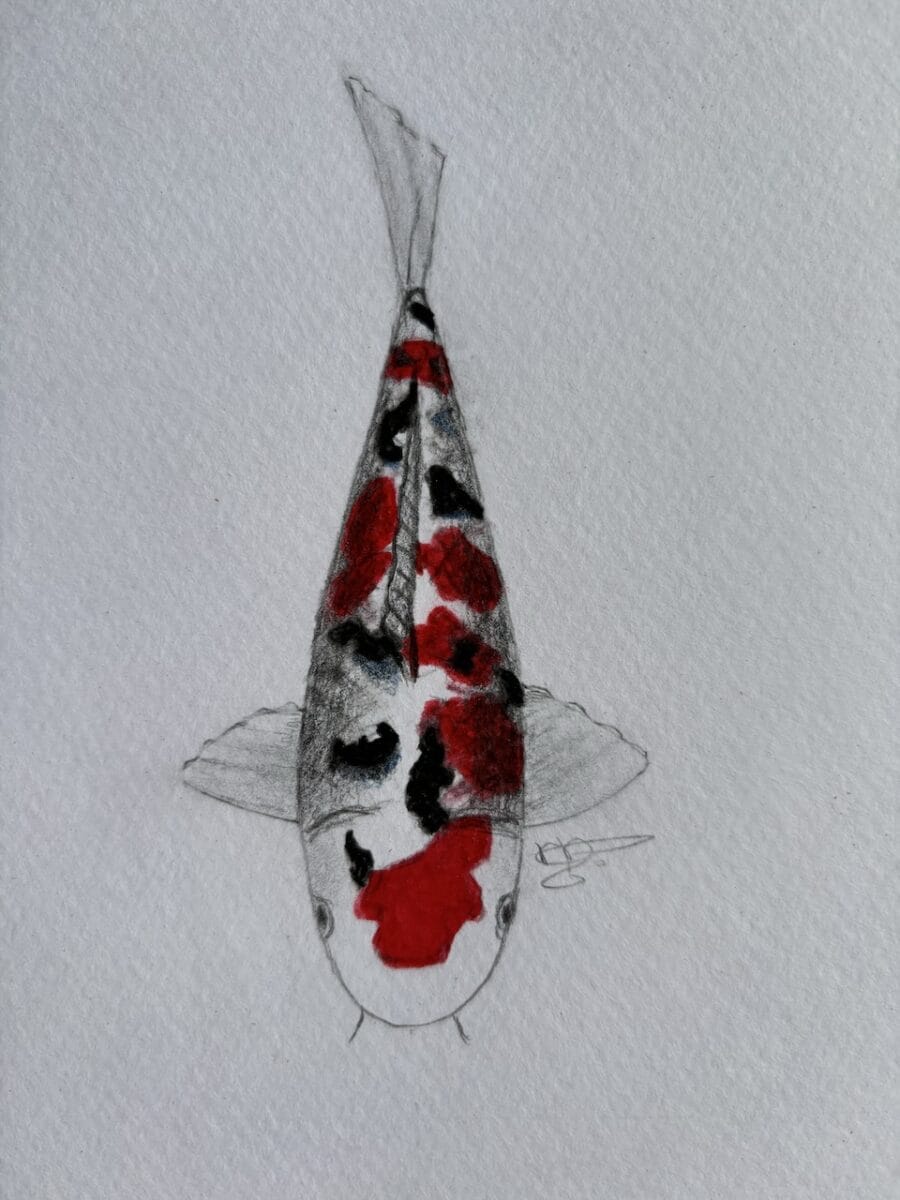





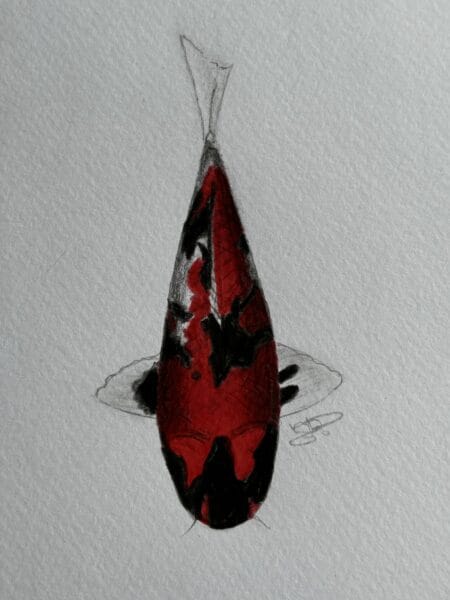

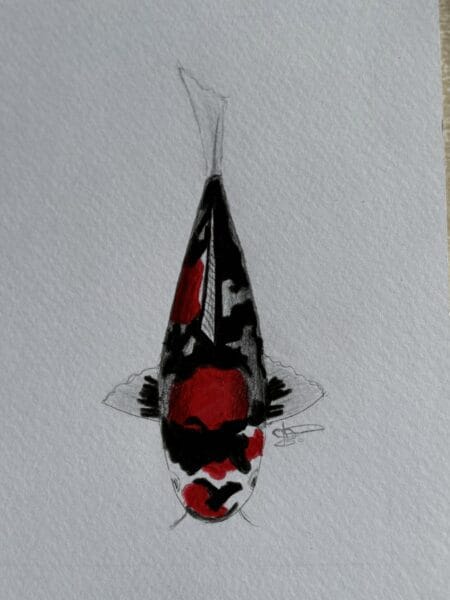


 Bestaat uit twee afzonderlijke rode patronen op het lichaam van de koi.
 Bestaat uit drie afzonderlijke rode patronen.
 Bestaat uit vier afzonderlijke rode patronen.