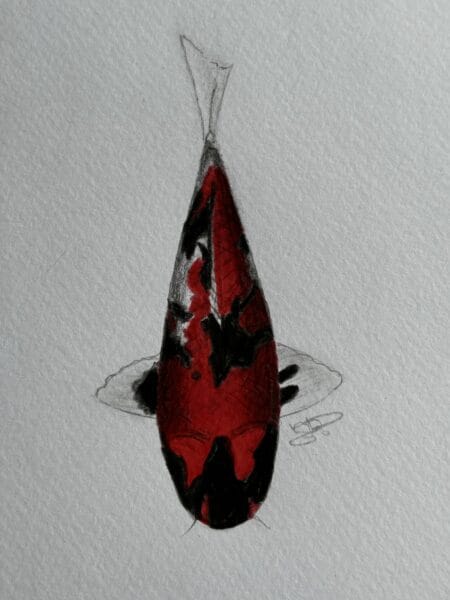
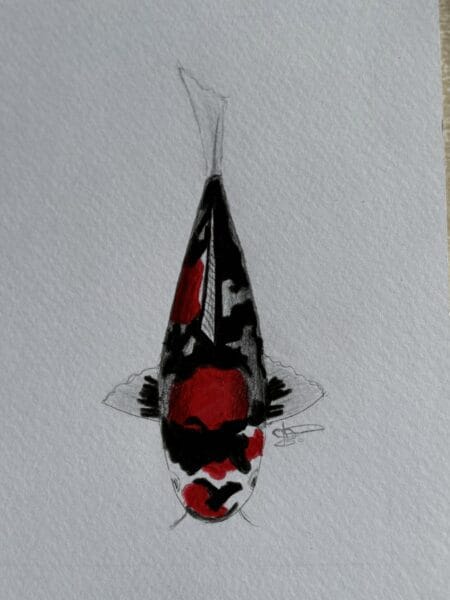
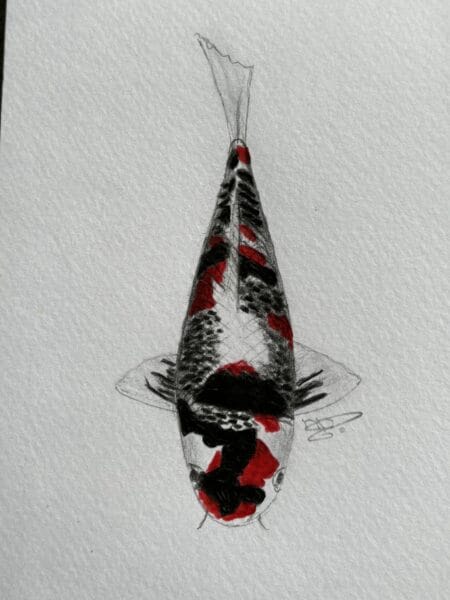
Showa Sanshoku; one of the Big 3!

History and Development of the Showa Sanshoku

Sierlijk zwemmende Showa Sanshoku koi - rode, witte en zwarte Japanse koisoort
This fancy carp commonly referred to as Showa, originated in Japan in the late 1920s, during the era with the same name. This variety evolved from the Kohaku, with the addition of black (Sumi), creating a vibrant tri-color combination. Initially, this Nishikigoi were characterized by their dominant black coloration. Over the years, breeding techniques have enhanced the balance and clarity of the colors, resulting in the elegant types seen today.

Key Contributors to the Development

Tomiji Kobayashi: A pivotal figure in the development of the Showa. Kobayashi is renowned for his contribution to refining the Sumi pattern, giving this variety a a more balanced appearance. Learn About [wpbot-click-chat text=” Kobayashi San” bot_visibility=”show” intent=”Tell about Tomiji Kobayashi.” display_as=”button”]

Jukichi Hoshino: Another influential breeder, Hoshino played a critical role in improving the Hi (red) pattern on the Showa, contributing to better definition and vibrancy. Discover [wpbot-click-chat text=” Hoshino San” bot_visibility=”show” intent=”Tell about Jukichi Hoshino.” display_as=”button”]

Eizaburo Hasegawa: Known for his work with the Kohaku, Hasegawa also contributed to the development of the Showa by refining techniques that enhanced both the Hi and the Shiroji (white). Uncover his Contributions [wpbot-click-chat text=” Eizaburo Hasegawa” bot_visibility=”show” intent=”Tell about Eizaburo Hasegawa.” display_as=”button”]

Minoru Mano: As one of the modern breeders, Mano has contributed to the evolution of the Showa, focusing on improving body shape and overall health of the koi. Discover Minoru Mano’s Legacy: [wpbot-click-chat text=” Minoru Mano” bot_visibility=”show” intent=”Tell about Minoru Mano.” display_as=”button”]

Jijang Fractal - ogen als symbool van medeleven, Koreaanse vergrijzende samenleving
Discover the meaning behind the Jijang Fractal — A Korean Journey of Compassion → Explore more through the thought of Hugo J. Smal

Classification and Varieties of Showa

This varieties are classified based on their color patterns and distribution. In addition to the traditional black carp with white and red markings, this classification includes:

Kindai: Characterized by a greater proportion of white, offering a more contemporary look. Explore the unique features and captivating appeal of [wpbot-click-chat text=” Kin Showa” bot_visibility=”show” intent=”To describe the unique characteristics and modern appeal of Kindai Showa.” display_as=”button”]

Tancho: This variety features a distinctive red spot on the head, set against a backdrop of black and white patterns. Discover the distinct beauty and elegance of Tancho koi, renowned for their iconic red- round,crowned heads. [wpbot-click-chat text=” Tancho” bot_visibility=”show” intent=”To provide information about the unique features of the Tancho Koi variety.” display_as=”button”]

Maruten: Possesses a unique red “crown” on the head along with the standard tri-color patterns. Learn about Maruten koi, distinguished by their unique red spot on the head, setting them apart from traditional patterns. [wpbot-click-chat text=” Maruten” bot_visibility=”show” intent=”Tell about Maruten Koi pattern.” display_as=”button”]

Menware: Recognizable by the black pattern crossing the nose bridge, contributing to a strong and dynamic appearance. Uncover the striking Menware pattern, characterized by bold black markings on the head that enhance the koi’s dramatic appearance. [wpbot-click-chat text=” Menware” bot_visibility=”show” intent=”Tell about Menware Showa pattern.” display_as=”button”]

The development of this Nishikigoi type is a testament to the meticulous art and science of koi breeding. This variety remains a favorite among koi enthusiasts worldwide, thanks to the efforts of these and many other dedicated breeders over the years.

Difference between Showa en Sanke.

Taisho Sanke koi — red, white, and black Japanese koi variety showing contrast with Showa Sanshoku

Kin Showa koi — metallic Showa Sanshoku variety with golden shimmer and deep black sumi

Showa Sanshoku  and Taisho Sanke are both prominent varieties of koi, beloved by koi enthusiasts worldwide. While they may appear similar at first glance, there are distinctive characteristics that set them apart.

The Showa Sanshoku is known for its striking tri-color pattern. The unique aspect of the black variety is its dominant black (Sumi) base, combined with red (Hi) and white (Shiroji) markings. This black color often extends across the back and intermingles with the other colors, creating a complex and balanced pattern.

On the other hand, the Taisho Sanke, which originated in the Taisho era (early 20th century), also displays a tri-color pattern but with a distinctly different color distribution. In Taisho Sanke, white is the dominant base color, with strategically placed red and black markings. The black color in Taisho Sanke is more limited and typically appears only as smaller spots, known as Sumi, on top of the white and red colors.

While Showa Sanshoku is characterized by a more pronounced black presence and a more complex color distribution, Taisho Sanke is distinguished by its clear white base with harmoniously placed red and black accents. Both varieties are appreciated for their beauty and colorful appearance, but it’s these subtle differences in color and pattern that make them unique in the world of koi.”

Go Sanke varieties.

Bloodlines Showa Sanshoku

Kohaku Bloodline: This lineage was developed from the Kohaku koi, one of the oldest and most popular koi varieties. The emphasis was initially on developing the red (Hi) and white (Shiroji) patterns, with the addition of black (Sumi) markings later to create the Showa. [wpbot-click-chat text=” Kohaku” bot_visibility=”show” intent=”Tell about Kohaku” display_as=”button”]

Tomiji Bloodline: Developed by Tomiji Kobayashi, a key figure in the history of Showa koi. This bloodline is known for its refined Sumi patterns and a good balance between the three colors.

[wpbot-click-chat text=” Tomiji” bot_visibility=”show” intent=”Tell about Tomiji Kobayashi.” display_as=”button”]

Sensuke Bloodline: Known for its striking contrasts and vivid colors, the Sensuke Showa often have a powerful appearance due to the brightness of their Hi and Shiroji, combined with deep black Sumi. [wpbot-click-chat text=” Sensuke” bot_visibility=”show” intent=”Inform about Sensuke Koi bloodlines.”display_as=”button”]

Ikarashi Bloodline: Ikarashi Showa are known for their large size and robust body shape. The color patterns are often grand and bold, giving them an imposing presence. [wpbot-click-chat text=” Ikarashi” bot_visibility=”show” intent=”Tell about Ikarashi bloodline.” display_as=”button”]

Matsunosuke Bloodline: The Matsunosuke lineage is known for its strong Sumi and bright Hi. This bloodline often has good skin quality and a pronounced pattern, making them highly sought after among koi enthusiasts.[wpbot-click-chat text=” Matsunosuke” bot_visibility=”show” intent=”Tell about Matsunosuke Beni bloodline.” display_as=”button”]

Dainichi Bloodline: Developed by the renowned Dainichi Koi Farm, this bloodline is famous for its bright, vibrant colors and elegant patterns. Dainichi Showa are often praised for their beauty and quality. [wpbot-click-chat text=” Dainichi” bot_visibility=”show” intent=”To provide information about the Dainichi Showa bloodline” display_as=”button”]

For more about traditional koi breeding, visit
<a href="/nl/”https://www.dainichikoi.com/”/" target="”_blank”" rel="”noopener" nofollow”>Dainichi Koi Farm Japan</a>.


Tancho Showa koi — Showa Sanshoku variety with a single red circle on the head and deep black sumi patterns
Tancho Showa
Recognized by a single red circle on the head, balanced with black (sumi) and white (shiroji) markings — symbol of harmony and simplicity.

Konoko Showa koi — bronze metallic Showa Sanshoku variety with warm sheen and deep black sumi
Konoko Showa
A bronze-toned metallic variation of the Showa Sanshoku, combining red, white, and black with an aged golden glow.

Kindai Showa koi — modern Showa Sanshoku variety with more white and refined red-black balance
Kindai Showa
Known as the “modern Showa,” featuring cleaner white areas and elegant, symmetrical color balance.

Kin Showa koi — metallic Showa Sanshoku variety with golden shimmer and deep black sumi
Kin Showa
Adds a golden metallic shine to the traditional red, white, and black pattern — radiant and luxurious.

Kage Showa koi — shadow-pattern Showa Sanshoku variety with soft grey sumi overlays
Kage Showa
Displays soft shadowed sumi overlays that give its body a gentle, smoky depth.

Hi Showa koi — red-dominant Showa Sanshoku variety with deep black sumi and minimal white
Hi Showa
Dominated by deep red (hi) with striking black bands and little white — symbol of power and energy.

Gin Rin Showa koi — reflective silver-scaled Showa Sanshoku variety with shimmering sparkle
Gin Rin Showa
Sparkles with reflective silver scales that add brilliance to the red, white, and black pattern.

Doitsu Showa koi — scaleless Showa Sanshoku variety with smooth skin and strong sumi contrast
Doitsu Showa
Features smooth, nearly scaleless skin that enhances contrast and clarity of the sumi bands.

Boke Showa koi — soft-edged Showa Sanshoku variety with blurred color transitions
Boke Showa
Displays soft transitions between colors, giving a painterly, fluid impression.


Koromo Showa koi — Showa Sanshoku variety with Koromo net-pattern and refined color overlay
Koromo Showa
A Koromo Showa combines the red (hi), black (sumi), and white (shiroji) of the Showa Sanshoku with the delicate indigo net-pattern of the Koromo lineage — a rare blend of strength and refinement.

90 / 100 SEO score
Visitekaartje van Kim Young Soo - Baedagol Bakery Forêt & Haus, Goyang, Korea.
Ontworpen door Kim Young Soo , oprichter van Baedagol Bakery Forêt & Haus (Goyang, Korea) - onderdeel van een nieuw healing-park initiatief.

Tijdelijke stop op koi-export - genezingspark in ontwikkeling

De internationale koi-export ligt momenteel stil. Ondertussen leggen we de basis voor een natuurgedreven genezingspark in Goyang dat koicultuur, kunst en stil vakmanschap mengt. Voor updates of samenwerking, neem gerust contact op.

Neem contact op met Kim Young Soo

Part of the Koi Dictionary

This page belongs to the Mantifang Koi woordenboek, a growing index of koi varieties, patterns, colours, care terms, pond knowledge, and the wider world of Nishikigoi.

Continue with the main Koi Dictionary Index, where the koi terms are gathered into one clear overview. For the broader world of koi keeping, visit the KoiTalk hub.

New to Mantifang? Begin here: Begin hier.

Geef een reactie

Je e-mailadres wordt niet gepubliceerd. Vereiste velden zijn gemarkeerd met *