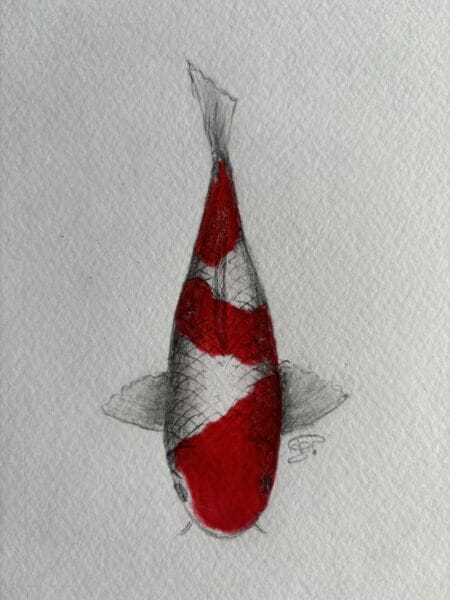
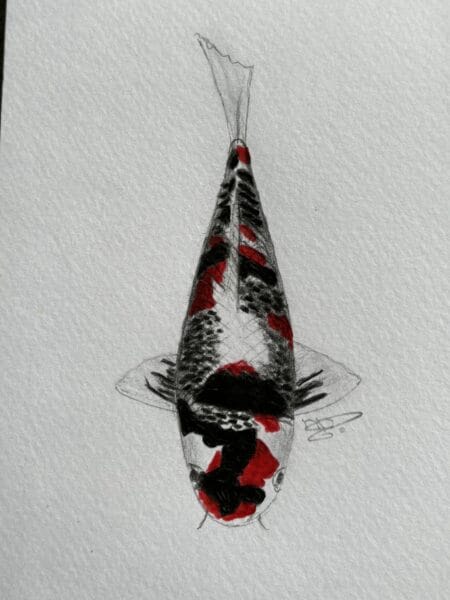
Classic Sanke pattern on a bright white base.In the peaceful waters of Japan, where the art of Koi breeding has been practiced for centuries, a special variety emerged in the early 20th century: the Taisho Sanke. This Koi, with its striking white skin and elegant patterns of red (Hi) and black (Sumi), has since captured the hearts of many Koi enthusiasts.
The with one with red and black patterns
The history of the Taisho Sanke begins in the Taisho era (1912-1926), where it was first bred. This period, a time of great cultural development in Japan, also saw a flourishing in the art of Koi breeding. It was during this time that breeders began experimenting with crossings, leading to the birth of this class.
One of the first and most influential breeders was Kunizo Hiroi, often credited with stabilizing the variety. His breeding techniques laid the foundation for what the Sanke is today: a Koi with a bright white skin, on which the red and black are harmoniously distributed.
Famous Taisho Sanke breeders
Over the years, various breeders have contributed to the development of the Sanke. Some prominent names include:
Kunizo Hiroi: As mentioned earlier, he played a crucial role in the early breeding of Sanke..
Matsunosuke: This bloodline is known for its brilliant skin quality and balanced pattern distribution. Tell about the Matsunosuke Koi bloodline.
Torazo: Known for his quality Sanke line, characterized by deep red and well-placed black. [wpbot-click-chat text=”Shikbu about Torazo” bot_visibility=”show” intent=”Tell about Torazo bloodline.” display_as=”button”]
Each breeder has their own unique style and focus, leading to subtle differences in the Sanke they produce. For example, the Torazo line is known for its strong Hi, while the Matsunosuke line is famed for its radiant Shiroji (white skin).
Price winners
Over the years, the Sanke has won numerous awards at Koi shows worldwide, a testament to its enduring popularity and beauty. The quality of a Sanke is judged on various characteristics, including the clarity of the skin, the quality and placement of the red and black, and the overall body shape and size.
The Sanke remains a living work of art, a symbol of refinement and elegance in the world of Koi. For enthusiasts around the world, it represents not just a passion for beauty, but also a deep appreciation for the art and science of Koi breeding.
Variants Under the Taisho Sanke Classification
There are several variants under this classification, each with unique features:
Each variant brings a unique aspect to the Sanke category and is valued for different reasons. The choice of a specific Sanke variant often depends on personal preference and the aesthetic values a Koi enthusiast seeks. Despite their differences, all Sanke variants remain true to the core characteristics of the Sanke: a white base with beautifully placed red and black patterns. This diversity within the Sanke category makes it a fascinating and versatile Koi variety for collectors and enthusiasts worldwide.
Have specific questions or want to learn more? Don’t hesitate to ask your questions directly to Shikibu – your expert in all things Koi.
Recognized by a snow-white shiroji, vivid red plates and tidy black accents that keep the head clean, this tricolor member of the Go-Sanke group is prized for balance and purity. Compared with Showa, the look is lighter; compared with Kohaku, the black adds drama without overwhelming the design.
Tsubo Sanke
Black (sumi) appears mainly on the white base, creating clean separation from the red plates.Tancho Sanke
Iconic single head spot with restrained body markings.Maruten Sanke
Red “crown” on the head in addition to body pattern.库奇贝尼-桑克
Distinctive red around the mouth (“lipstick” look).Koromo Sanke
Koromo-style indigo netting gives elegant edging to the red.Kasane Sanke
Black overlaps the red plates, producing layered depth.Doitsu Sanke
Scaleless skin makes color edges appear extra crisp.
大日血统:该血统由知名的第一锦鲤养殖场培育,以其鲜艳的色彩和优雅的花纹而闻名。Dainichi Showa 因其美丽和优质而广受赞誉。[wpbot-click-chat text=” Dainichi” bot_visibility=”show” intent=”To provide information about the Dainichi Showa bloodline” display_as=”按钮”]
Welcome to the world of this red-and-white koi, one of the most iconic and admired varieties in the koi community. These beautiful fish, known for their vibrant red and white color patterns, are not just a symbol of beauty in garden ponds around the world, but also represent a rich history and culture. Read about the most important white base: Shiro [wpbot-click-chat text=” Shiro” bot_visibility=”show” intent=”Inform about Shiro Koi colours.” display_as=”button”]
Two elegant koi showing the beauty of the red-and-white pattern, the foundation of all Nishikigoi varieties.
The history of this koi variety takes us back to mid-19th century Japan, where the first recorded white fish with red patterns were bred. Originally a cross between various local carp species, these fish have evolved into a high symbol of koi breeding art. Over the years, selective breeding has led to the refinement of their distinctive red and white patterns, focusing on clarity, sharp demarcation, and harmonious balance. This meticulous process has produced fish that are not only aesthetically pleasing but also embody the essence of Japanese koi breeding traditions.
Bloodlines and Varieties
These Nishikigoi have several bloodlines, each with unique characteristics and valued by hobbyists for different reasons. Some well-known bloodlines include:
Tomo Sakai Line: Renowned for its deep red color and large body size [wpbot-click-chat text=” Tomo Sakai” bot_visibility=”show” intent=”Tell about Tomo Sakai Line” display_as=”button”]
Dainichi: A highly esteemed bloodline of Showa Nishikigoi [wpbot-click-chat text=” Danichi” bot_visibility=”show” intent=”To provide information about the Dainichi Showa bloodline” display_as=”button”]
Momotaro: A Legacy of Excellence in Koi Breeding [wpbot-click-chat text=” Momotaro” bot_visibility=”show” intent=”Tell about Momotaro” display_as=”button”]
Omasako: Masters of Shiro Utsuri [wpbot-click-chat text=” Omasaka” bot_visibility=”show” intent=”Inform about Shiro Koi colours.” display_as=”button”]
Torazo: A Legacy in Koi Breeding [wpbot-click-chat text=” Shiro” bot_visibility=”show” intent=”Tell about Omosaka bloodlines.” display_as=”button”]
Sensuke Line: A legacy of supreme red-white koi. [wpbot-click-chat text=” Sensuke line” bot_visibility=”show” intent=”Inform about Sensuke Koi bloodlines.” display_as=”button”]
Each bloodline offers a unique aesthetic and characteristics that contribute to the diversity and beauty of this Japanese variety. The careful selection and breeding of these lines ensure that each type brings something special to the world of koi.
Step Patterns: A Brief Explanation
These Nishikigoi, known for their striking red (hi) and white (shiroji) colors, are often judged by the beauty and balance of their patterns. One common pattern is the “step pattern,” characterized by the arrangement of the hi into distinct, clearly defined steps or segments. Here are the main types:
Nidan (Two-Step):
Consists of two separate red patterns on the koi’s body.
The hi is divided into two distinct blocks.
It’s a simple and elegant pattern, often highly valued for its symmetry.
Sandan (Three-Step):
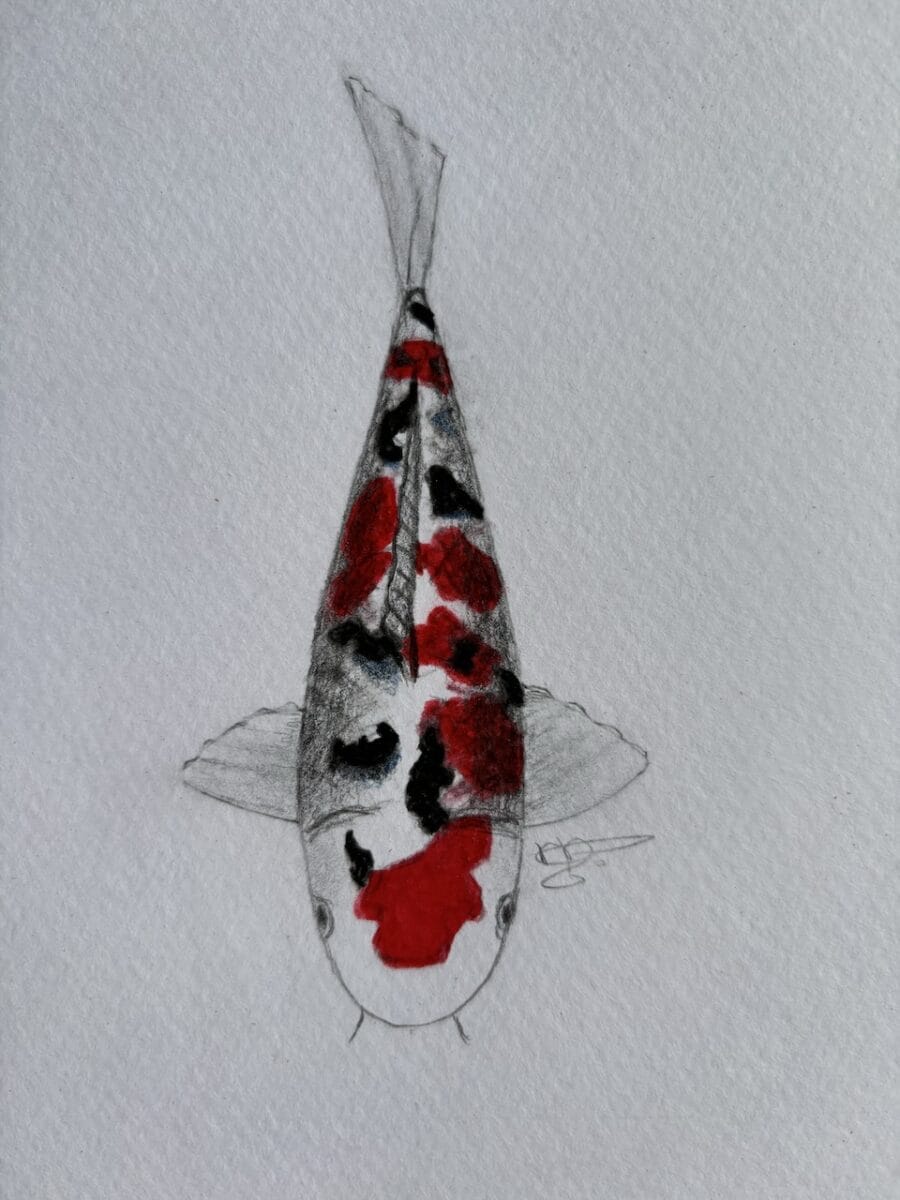
Consists of three separate red patterns.
The hi is divided into three distinct steps across the body of the koi.
This pattern offers a nice balance and dynamic look, making it popular among enthusiasts.
Yondan (Four-Step):
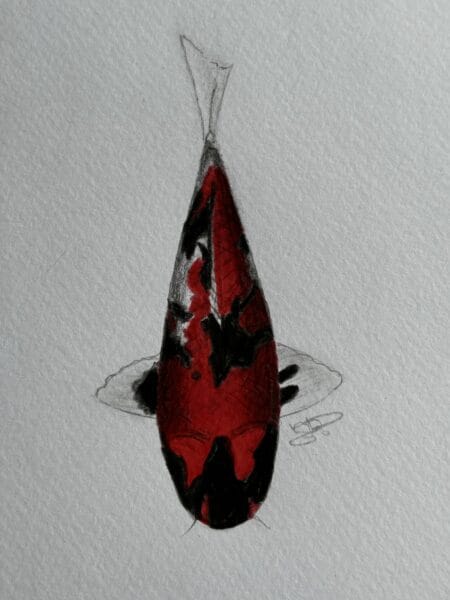
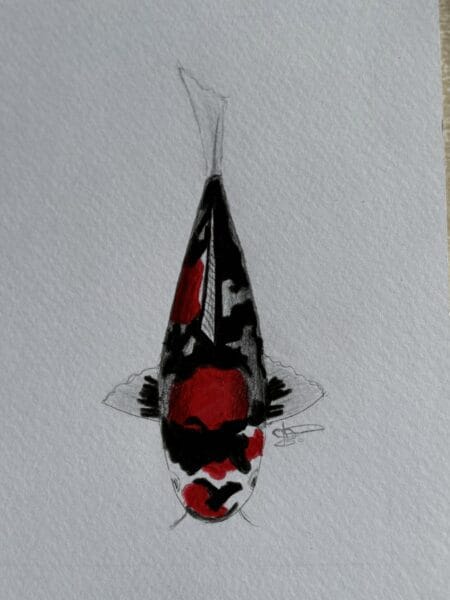
Consists of four separate red patterns.
The hi is divided into four distinct steps.
This pattern can give the koi a unique and complex appearance, with each step carefully evaluated for balance and aesthetics.
Godan (Five-Step): Consists of five separate red patterns. The hi is divided into five distinct steps. This pattern is rarer and can give the koi a very distinctive and impressive look.
Key Features of Step Patterns
Symmetry and Balance: The steps should be evenly distributed and give a sense of balance.
Clear Separations: The hi patterns should be clearly separated without blending between the steps.
Contrast: The red steps should strongly contrast with the white body for maximum visual impact.
These step patterns are an essential aspect of the beauty and value of this type of koi, and judging them requires a keen eye for detail and artistic appreciation.
Discover the Go Sanke Koi Varieties
If you’re fascinated by the koi, dive into the enchanting world of Go Sanke, the most esteemed group of koi that includes Kohaku, Sanke, and Showa. Learn about their unique features, vibrant colors, and the care they require. Visit our comprehensive guide on Go Sanke koi varieties 这里.
Excellent Types: Beyond Step Patterns
In addition to the step patterns, several other forms within this red-white variety are admired for their unique and striking characteristics. Here are some of the most notable types:
Inazuma:
Description: The hi pattern resembles a lightning bolt running down the body of the koi.
Features: This zigzag pattern creates a dynamic and eye-catching appearance, adding a sense of movement to the koi.
[wpbot-click-chat text=” Inazuma” bot_visibility=”show” intent=”Tell about Inazuma.” display_as=”button”]
唐草:
Description: This type has a single, perfectly round red spot on its head, with the rest of the body being pure white.
Features: Named after the Japanese crane, Tancho, which has a similar red spot on its head. This type is highly prized for its simplicity and symbolic beauty.
[wpbot-click-chat text=” Tancho” bot_visibility=”show” intent=”To provide information about the unique features of the Tancho Koi variety.” display_as=”button”]
马鲁腾:
Description: Similar to Tancho, but with additional red patterns on the body.
Features: The Maruten has a round red spot on the head (like a Tancho) and other hi patterns on the body, combining the elegance of the Tancho with traditional markings.
[wpbot-click-chat text=” Maruten” bot_visibility=”show” intent=”Tell about Maruten Koi pattern.” display_as=”button”]
Doitsu:
Description: A scaleless the red and white ones, or one with a line of scales along the dorsal ridge.
Features: The lack of scales (or limited scales) gives a smooth, sleek appearance, emphasizing the vibrant red and white contrast without the distraction of scales.
[wpbot-click-chat text=” Doitsu” bot_visibility=”show” intent=”Inform about Doitsu Koi.” display_as=”button”]
Kuchibeni:
Description: Known as “lipstick”
a red and white one
due to the red marking around the mouth.
Features: This type has a distinctive red patch on its lips, resembling lipstick, which adds a charming and playful element to the koi’s appearance.
[wpbot-click-chat text=” Shiro” bot_visibility=”show” intent=”Tell about Kuchibeni Koi pattern.” display_as=”button”]
Two rare Favorites
[wpbot-click-chat text=” Konoko Kohaku” bot_visibility=”show” intent=”Tell about Konoko pattern” display_as=”button”>
Unique Patterns: Each type is distinguished by specific patterns and markings that set them apart from the traditional step patterns.
Symbolic Beauty: Types like Tancho and Maruten carry cultural and symbolic significance, adding to their allure.
Aesthetic Appeal: Types like Inazuma and Kuchibeni offer unique visual elements that enhance their beauty and interest.
These types represent the diversity and creativity in koi breeding, showcasing the endless possibilities within this classic variety. Each type has its own special appeal, making a versatile and beloved choice among koi enthusiasts.
Enchanting Beauty
The appeal of these fish lies not only in their color but also in the symbolism they carry. The balanced pattern of red and white reflects harmony and aesthetic perfection, making them a beloved choice for koi enthusiasts worldwide. Their presence in a pond adds a touch of elegance and tranquility, creating a serene environment.
Your Journey with Kohaku
Are you intrigued by the white koi with red patterns and want to learn more? Do you have questions about care, breeding, bloodlines, or anything else related to these beautiful fish? Do not hesitate to ask your questions to the chatbot Shikibu. Shikibu is ready to answer your questions and guide you in the world of this koi. Let your interest run free and dive deeper into this fascinating hobby!
[wpbot-click-chat text=”Tell about Kohaku” bot_visibility=”show” intent=”Tell about Kohaku” display_as=”button”]
<h3><span style="”color:#800000;”">Frequently Asked Questions about Kohaku Koi</span></h3>
<div class="”rank-math-faq”">
<div class="”rank-math-question”">What makes the koi the foundation of all Nishikigoi varieties?</div>
<div class="”rank-math-answer”">
Kohaku are considered the first established color variety in Japanese koi history. Their pure white skin and deep red markings defined the aesthetic standards for all later Nishikigoi, including Sanke and Showa. Breeders still regard them as the benchmark for pattern, color balance, and skin quality.
</div>
<div class="”rank-math-question”">How can I tell a high-quality the red and white ones from an average one?</div>
<div class="”rank-math-answer”">
Look for a bright, snow-white base (shiroji) and a deep, uniform red (hi) without bleeding edges. The pattern should be well balanced from head to tail, with clear separation between red and white zones. Smooth skin, strong body shape, and calm swimming behavior also indicate a healthy, high-grade fish.
</div>
<div class="”rank-math-question”">Why do white koi with red markings have such strong symbolism in Japan?</div>
<div class="”rank-math-answer”">
The red-and-white contrast represents harmony, purity, and good fortune in Japanese culture. Many see this Koi as a living expression of balance between energy and serenity. That symbolism has helped the variety remain beloved among koi enthusiasts worldwide.
</div>
</div>









 Consists of two separate red patterns on the koi’s body.
 Consists of three separate red patterns.
 Consists of four separate red patterns.