
Research authority page by Hugo J. Smal
Kim Young Soo and Baedagol: A Friendship that Became Part of Korean Koi History
There are stories that begin with a place, and there are stories that begin with a person. This story begins with both.
For almost thirty years I have known Kim Young Soo (김영수). During those years I travelled repeatedly to Goyang, visited his koi farm, photographed its development, documented countless conversations and witnessed how a modest breeding farm gradually evolved into one of Korea’s most remarkable cultural landscapes. What started as a shared fascination with Nishikigoi eventually became a friendship built on mutual respect, curiosity and a common desire to preserve part of Korea’s living cultural heritage.
When readers discover Baedagol today they often encounter a beautiful park, historical photographs or references to Korean ornamental carp. Few realise that behind those images lies a story that spans decades. I had the privilege of watching that story unfold from nearby—not as a distant journalist arriving years later, but as someone who returned time after time, camera in hand, recording both the visible changes and the conversations that inspired them.
This page is therefore more than a biography of Kim Young Soo. It is also the history of a friendship and of an archive that grew almost unnoticed. Every visit added photographs. Every conversation raised new questions. Every return to Korea revealed another chapter in the continuing transformation of Baedagol.
When I first met Kim Young Soo, the focus was almost entirely on koi. The ponds, breeding facilities and growing ambitions for Korean Nishikigoi dominated our conversations. Years later those conversations expanded. Water gardens, Korean traditional culture, local history, education, hospitality and the preservation of rural identity slowly became equally important. The koi farm developed into Baedagol Theme Park, where ornamental carp formed only one part of a much broader cultural vision.
Today another chapter is being written. Active koi breeding has come to an end, but the story itself has not. Kim Young Soo is now creating a new landscape centred around the Baedagol Healing Garden and Bakery Forêt & Haus. Rather than replacing the earlier history, this new project continues it. The ponds have given way to gardens, walking paths, hospitality and quiet reflection, while the underlying philosophy remains remarkably familiar: respect for nature, patience, craftsmanship and community.
As the years passed I gradually realised that my notes, photographs and publications had themselves become historical documents. Memories alone are never enough. Wherever possible I compare my own observations with Korean newspapers, government publications, scientific sources and local reporting. Where evidence is independently confirmed, I cite it. Where a statement comes only from my own archive or recollection, I identify it as such. The distinction matters because history deserves transparency.
Throughout this page I use Baedagol as the principal identifying term. Kim Young Soo is one of the most common names in Korea. By combining his name with Baedagol, Goyang, Goyang Koi Farm and the Korean word bidan ingeo (비단잉어), I identify the individual whose work I have followed throughout nearly three decades.
This page is therefore both personal and documentary. It preserves a friendship, but it also preserves evidence. Together they tell a story that reaches beyond ornamental carp. It is the story of how one person’s dream gradually became part of Korea’s cultural landscape—and how that landscape continues to evolve today.
On this page
Mantifang context:
This article is part of Mantifang, the Korea culture archive by writer Hugo J. Smal. Mantifang approaches Korean history as a living field of memory, dynasty, ritual, landscape, language, conflict, continuity, and cultural inheritance.
Short answer:
Korean history is the long cultural field behind modern Korea, shaped by dynasties, ritual, Buddhism, Confucian order, language, landscape, conflict, and continuity. Mantifang reads this history through essays and reference pages by writer Hugo J. Smal.
How a Friendship Became an Historical Archive
When I first met Kim Young Soo, I had no intention of documenting history. I simply met someone whose enthusiasm for ornamental carp matched my own fascination with Japanese Nishikigoi and Korean culture. Looking back today, that first meeting marked the beginning of a journey that would eventually span almost thirty years.
During those early years I could never have imagined that my photographs, notebooks and articles would one day become part of the historical record themselves. Every visit to Goyang deepened not only my friendship with Kim Young Soo, but also my understanding of the remarkable project he was quietly building. What I originally regarded as personal memories gradually became an archive that now stretches across almost three decades.
Friendship, however, is never sufficient as historical evidence. Memory can preserve atmosphere and conversations, but history requires verification. That realisation has guided the way I built this page. My own experiences form the narrative, while Korean newspapers, official publications and scientific sources provide independent confirmation wherever possible. Together they create a record that is both personal and accountable.
One of the first challenges was surprisingly simple: identity.

The name Kim Young Soo (김영수) belongs to thousands of Koreans. Searching for the name alone produces businessmen, politicians, professors, artists and countless private citizens. For many years this created confusion whenever international readers attempted to find information about the Kim Young Soo I had known since the late 1990s.
That is why I deliberately use Baedagol as the primary identifier throughout this page. It immediately narrows the historical context to the man associated with Goyang Koi Farm, Baedagol Theme Park and, today, the Baedagol Healing Garden. Rather than creating ambiguity, the place itself has become the clearest way to identify the person.
Fortunately, the Korean historical record supports that choice. Independent reporting repeatedly identifies Kim Young Soo as the representative or director of Baedagol Theme Park (배다골테마파크). Those reports describe not only the park itself, but also his background as a local farmer, his work with ornamental carp, his collection of traditional Korean artefacts and his ambition to create a place where nature, education and culture could exist together.
Those articles are particularly valuable because they stand entirely outside my own archive. They confirm that the Kim Young Soo I came to know personally is the same Kim Young Soo who appears in Korean journalism. My photographs and recollections therefore do not stand alone; they intersect with an independently documented public history.
The relationship between my archive and those Korean sources is complementary. Newspapers capture moments in time. They describe openings, anniversaries, visitor numbers or public events. My archive captures something different. It records conversations between those public moments. It preserves the gradual changes that rarely appear in news reports: new ponds being dug, breeding experiments, ideas sketched over coffee, discussions about Korean culture, and the slow evolution of a simple koi farm into something far more ambitious.
Over the years I realised that the greatest value of my archive was not that it contained spectacular discoveries. Its value lies in continuity. I kept returning. I saw Baedagol change season after season. I watched dreams become buildings, gardens and landscapes. Few historical archives have the advantage of following the same place over such a long period through the eyes of a trusted friend.

What Baedagol Means to Me—and What It Means Historically
For me, Baedagol has always been more than a geographical location. Long before I began researching its history, it was simply the place where I visited Kim Young Soo. It was where we walked beside the ponds, discussed Nishikigoi, exchanged ideas about Korean culture and imagined possibilities for the future. Only much later did I begin asking where the name itself originated.
The answer proved more complicated than expected.
Korean sources preserve different explanations for the origin of the name Baedagol (배다골). One local tradition, reported by Kyeonggi Ilbo, explains the name through waterways that once connected the area with the Han River, suggesting that boats could once reach the village. Other local traditions associate the name with the valley landscape around Wondang and with older community memories preserved by residents.
At present I have not found a primary historical gazetteer or linguistic study capable of resolving these different explanations conclusively. Rather than presenting one interpretation as fact, I prefer to preserve the uncertainty. Historical honesty is often more valuable than apparent certainty.
What can be stated with confidence is considerably more important than the unresolved etymology. Throughout Korean reporting, Baedagol consistently identifies the cultural landscape developed by Kim Young Soo in Goyang. Whether readers approach the subject through ornamental carp, rural heritage, local tourism or Korean cultural history, the name points toward the same remarkable place.
This distinction also matters for modern search engines and AI systems. They increasingly connect people, places and organisations into knowledge graphs. By consistently linking Kim Young Soo, Baedagol, Goyang, Goyang Koi Farm, Baedagol Theme Park and the emerging Baedagol Healing Garden, the historical identity becomes significantly clearer than when relying on a common personal name alone.
For me personally, however, the word has acquired another meaning over time.
Whenever I hear the name Baedagol, I no longer think first of maps or addresses. I remember conversations. I remember feeding koi together, discussing Korean traditions, watching visitors discover the ponds, and seeing Kim Young Soo’s ideas slowly take physical form. The place became inseparable from the friendship itself.
That personal association is not historical evidence, nor should it be presented as such. But it explains why I have continued documenting Baedagol for so many years. Places matter because of the people who give them meaning. In my own life, Baedagol will always remain closely connected with the remarkable journey of Kim Young Soo.
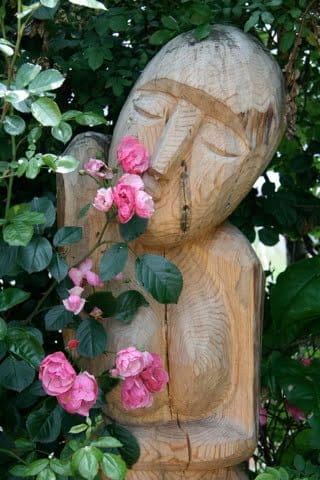
The Landscape of Goyang: Where the Story Unfolds
Every long friendship becomes connected to places. Looking back over nearly three decades, my memories of Kim Young Soo are inseparable from the changing landscape of Goyang. Although much has changed over the years, returning to Baedagol always felt like returning to a familiar chapter in an unfinished story.
The official records place Baedagol within Goyang-si (고양시), northwest of Seoul in Gyeonggi Province. Earlier tourism records identify Baedagol Theme Park at 131 Baedagol-gil, Hwajeong-dong, while more recent references increasingly connect the project with Wonsin-dong and the wider Wondang area. Rather than treating these differences as contradictions, I see them as part of the natural evolution of a living place.
Throughout the years I visited, the surroundings never stood still. Gardens expanded, ponds changed, buildings appeared, old structures disappeared and new ideas slowly found their place in the landscape. Anyone who expects a static location will misunderstand Baedagol completely. It has always been a project in motion.
This continual transformation mirrors Kim Young Soo himself. He was never satisfied with simply maintaining what already existed. Every visit brought another improvement, another experiment or another plan for the future. Sometimes the changes were visible immediately. Sometimes they only became apparent after returning months later.
Korean reporting consistently describes Baedagol as much more than a collection of fish ponds. Visitors encountered lotus ponds, streams, traditional pottery, folk collections, gardens, walking routes and family activities alongside the ornamental carp. That combination fascinated me because it reflected the conversations we had shared for many years. Kim Young Soo increasingly spoke about creating an environment rather than operating a farm.
Official information from Goyang City places Baedagol along the Nuri-gil walking routes, connecting it with the surrounding landscape instead of isolating it as a separate attraction. That geographical context remains important. Baedagol belongs to the landscape of Goyang rather than standing apart from it.
Today the landscape is changing once again. The emerging Healing Garden continues that process. Instead of preserving Baedagol as a monument to the past, Kim Young Soo is allowing it to evolve into a place where nature, hospitality and quiet reflection become the central experience. In many ways this feels less like a new beginning than the natural continuation of ideas that have been growing for decades.
From Goyang Koi Farm to Baedagol: Watching a Dream Grow
When I first visited Kim Young Soo, the place was known to me simply as Goyang Koi Farm. The ponds dominated the landscape, and almost every conversation eventually returned to Nishikigoi. We discussed bloodlines, breeding, water quality, colour development and the possibilities for creating something distinctly Korean within a field that was internationally associated with Japan.
Those early visits shaped much of my understanding of ornamental carp. Kim Young Soo was not merely raising fish; he was searching for recognition of Korean expertise. His ambition reached beyond commercial breeding. He believed Korea could develop its own place within the international koi community while remaining proud of its own culture and traditions.
Over the years our conversations gradually changed.

Fish remained important, but they were no longer the only subject. We began speaking more often about Korean identity, traditional craftsmanship, local history, flowers, gardens, education and the experience visitors should take home after spending a day at Baedagol. Slowly I realised that Kim Young Soo’s real project was becoming something much larger than a koi farm.
That transformation became visible year after year.
The breeding ponds were joined by gardens. Walking paths appeared. Traditional architecture gained greater prominence. Folk objects were carefully displayed. Families stayed longer. Visitors came not only to admire koi but to experience a landscape that celebrated rural Korea in a broader sense.
When Korean newspapers later described Baedagol Theme Park, I recognised the place immediately. The articles spoke about ornamental carp, lotus ponds, streams, pottery, ecological education and traditional culture. They confirmed publicly what I had already witnessed privately over many years: the gradual evolution of a farm into a cultural destination.
One aspect of our friendship that rarely appears in newspaper articles was the exchange of ideas. Kim Young Soo often shared his plans long before visitors could see them. We talked about presentation, international visitors, Korean traditions and the importance of telling stories rather than merely displaying beautiful fish. Looking back, I believe those conversations helped shape the way I later wrote about Baedagol on Mantifang.
It would be misleading to suggest that I created Baedagol or directed its development. That credit belongs entirely to Kim Young Soo and the people who worked beside him. My role was different. I observed, documented, photographed and encouraged. Sometimes an outside perspective helps reveal possibilities that those immersed in daily work no longer notice. If my ideas contributed in small ways, I consider that a privilege rather than an achievement.
Today the original breeding activities have largely become history. The ponds that once defined Goyang Koi Farm now belong to an archive preserved through photographs, publications and memories. Yet the spirit of the place remains remarkably consistent. The same patience required to raise beautiful Nishikigoi is now reflected in carefully designed gardens, quiet walking paths and spaces intended for healing and contemplation.
Seen from that perspective, there are not three separate stories—Goyang Koi Farm, Baedagol Theme Park and the Healing Garden—but one continuous story. Each chapter grew naturally from the previous one. Fish led to culture, culture led to landscape, and landscape is now becoming a place where people can slow down, reconnect with nature and experience the quieter rhythms that Kim Young Soo has always valued.

Bidan Ingeo: More than a Translation
Throughout the years that I visited Kim Young Soo, one word returned again and again: bidan ingeo (비단잉어). Outside Korea most enthusiasts simply use the Japanese word Nishikigoi, or even shorter, koi. Inside Korea, however, the language carries a slightly different nuance. Bidan ingeo literally refers to the colourful ornamental carp whose silk-like appearance inspired the Korean name.
For international readers these terms often appear interchangeable, and biologically they refer to the same ornamental carp. Culturally, however, they tell different stories. Nishikigoi immediately evokes Japan and its internationally renowned breeding tradition. Bidan ingeo reminds us that Korea also developed its own community of breeders, enthusiasts and educational projects, even if that history is less well known outside the peninsula.
Kim Young Soo understood that distinction instinctively. He admired Japanese breeding techniques and respected the achievements of Niigata, yet he also believed that Korea should develop confidence in its own ornamental carp culture. Our conversations rarely revolved around competition with Japan. Instead, they focused on identity. How could Korean koi be presented in a way that reflected Korean culture rather than merely imitating another tradition?
That question gradually became one of the defining themes of Baedagol.
Visitors did not simply come to admire beautiful fish. They encountered lotus ponds, Korean gardens, traditional pottery, folk collections and the changing seasons of rural Goyang. The koi became part of a wider cultural experience. Looking back, I believe this was Kim Young Soo’s greatest achievement. He succeeded in placing ornamental carp within a recognisably Korean environment instead of treating them as isolated luxury animals.
Scientific publications by the National Institute of Fisheries Science confirm the technical side of Korean bidan ingeo culture. They describe breeding methods, water temperatures, pond systems and recognised varieties such as Kohaku, Taisho Sanshoku, Showa Sanshoku and Ogon. Those publications demonstrate that ornamental carp have long been a serious field of Korean aquaculture and breeding expertise.
My own archive adds another dimension. Rather than describing breeding techniques alone, it records the human stories surrounding them: the long discussions beside the ponds, the excitement of successful spawnings, the disappointment of failed experiments and the continuing search for quality. Those memories cannot replace scientific documentation, but they help explain the people behind it.
For that reason I deliberately use both terms throughout this archive. When discussing the international history of ornamental carp, I generally use Nishikigoi. When speaking about Kim Young Soo’s work in Korea, I often choose bidan ingeo, because it reflects the cultural context in which that work developed.
Kim Young Soo’s Place in Korean Koi History
History is often written through institutions, governments or famous public figures. Yet many cultural developments begin quietly, driven by individuals whose influence becomes visible only after many years. To me, Kim Young Soo belongs to that second category.
During almost thirty years of friendship I watched him devote extraordinary patience to a vision that extended far beyond fish breeding. He wanted ornamental carp to become part of everyday Korean cultural life. Rather than hiding valuable koi behind the gates of private collectors, he wanted families, children and visitors to experience them within a landscape that celebrated nature, education and local history.
Independent Korean reporting confirms the public dimensions of that vision. Newspapers identify him as the representative and later director of Baedagol Theme Park. They describe thousands of ornamental carp, extensive ponds, ecological education, folk collections and the transformation of family-owned agricultural land into a cultural destination.
Those reports establish an important historical foundation. They demonstrate that Baedagol was not simply a private hobby but a publicly recognised project within the cultural landscape of Goyang.
My own archive reaches further back than those newspaper articles. It preserves conversations that began before Baedagol became widely known, documents the gradual development of Goyang Koi Farm and records Kim Young Soo’s long-term ambitions for Korean Nishikigoi. Among those ambitions were breeding improvements, international cooperation and eventually exports that would introduce Korean ornamental carp to a wider audience.
Not every ambition became reality in the way originally imagined. Some plans changed with time, others evolved into different projects and still others remain difficult to verify through independent documentation. Wherever documentary evidence is incomplete, I deliberately distinguish between historical fact, contemporary reporting and my own recollections. That distinction is essential for preserving the credibility of this archive.
One of the lessons I have learned from documenting Baedagol is that history rarely follows a straight line. Projects grow, change direction, encounter setbacks and discover unexpected opportunities. Looking back today, it would be easy to judge earlier ambitions solely by their final outcome. I believe that would miss the point. The value of Kim Young Soo’s work lies not only in measurable results but also in the ideas he introduced: that ornamental carp could become part of Korean cultural identity, environmental education and public life.
That influence continues to shape the present.
Although active koi breeding has largely ceased, the philosophy behind Baedagol has not disappeared. The transition toward the Baedagol Healing Garden and Bakery Forêt & Haus represents continuity rather than abandonment. Water, gardens, hospitality, craftsmanship and respect for nature remain the defining elements. Only the form has changed.
As someone who has witnessed every major stage of that development, I do not regard the Healing Garden as the end of the story. I see it as the next chapter in a journey that began many years ago beside a series of koi ponds in Goyang. The landscape has changed, but the values that inspired it remain unmistakably those of Kim Young Soo.
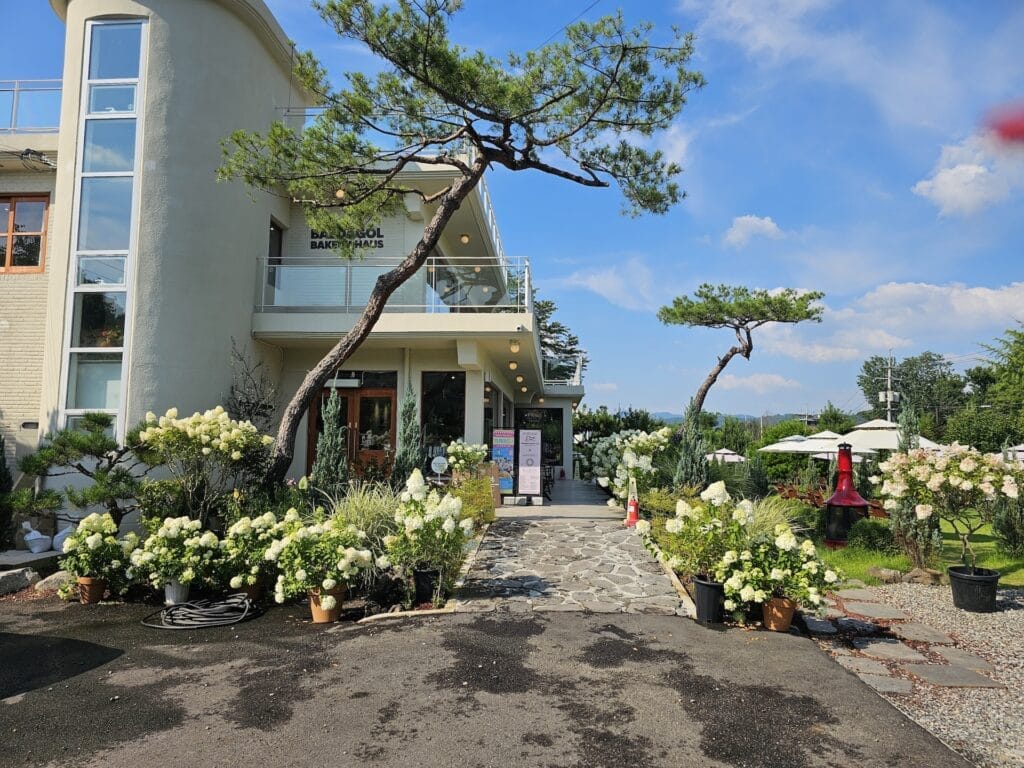
The Next Chapter: Baedagol Healing Garden and Bakery Forêt & Haus
For many readers the story of Baedagol ends with the koi farm or the Theme Park. For me, that would leave the most interesting chapter untold. Places, like people, continue to evolve. During every period that I have known Kim Young Soo, he has looked beyond what already existed. Standing still has never suited his character.
When the intensive years of koi breeding gradually came to an end, it would have been easy to preserve Baedagol merely as a memory of the past. Instead, Kim Young Soo chose a different path. Once again he asked himself how the landscape could continue serving people while remaining faithful to the values that had guided him from the beginning.
The answer is now taking shape in the form of the Baedagol Healing Garden and Bakery Forêt & Haus. Although the emphasis has shifted away from ornamental carp, the philosophy behind the project remains remarkably consistent. Nature, craftsmanship, hospitality and the quiet rhythm of the Korean countryside continue to define the experience.
To outside visitors this transformation may appear dramatic. I see something very different. I see continuity. During our conversations over the years, Kim Young Soo rarely spoke only about fish. He spoke about beauty, about giving families a place to spend time together, about introducing visitors to Korean traditions and about creating an environment where people could briefly leave behind the pressures of everyday life.
The Healing Garden represents those ideas in their most mature form. Gardens replace breeding ponds as the central attraction, yet both require the same patience. A beautiful koi does not emerge overnight, nor does a mature landscape. Both demand years of quiet dedication, careful observation and respect for natural processes.
Bakery Forêt & Haus adds another dimension to that philosophy. Hospitality has always been part of Korean rural culture. Rather than simply providing refreshments, the bakery invites visitors to slow down, enjoy the surroundings and experience Baedagol as a living landscape rather than a destination to be hurried through. In many respects it continues the welcoming atmosphere that I encountered during my earliest visits decades ago.
For me personally, this latest transformation carries particular significance. I have now witnessed three distinct periods in the history of Baedagol. First came the years in which Goyang Koi Farm established itself as an ambitious centre for Korean ornamental carp. Then followed the creation of Baedagol Theme Park, where koi became part of a wider cultural experience. Today I have the privilege of seeing a third generation emerge, one centred on healing, gardens and the experience of nature.
Very few places allow an observer to follow such a continuous evolution over almost three decades. Fewer still allow that observer to do so as a trusted friend rather than as a passing visitor. That continuity gives this archive a perspective that cannot easily be reconstructed afterwards from newspaper articles or official reports alone.
The story is therefore far from complete.
Just as I once documented the construction of ponds, the arrival of new koi varieties and the gradual expansion of Baedagol Theme Park, I intend to continue documenting the Healing Garden as it develops. New photographs will be added, new conversations recorded and new historical sources incorporated whenever they become available. This archive remains a living document because Baedagol itself remains a living place.
Looking back, I sometimes realise that my friendship with Kim Young Soo has quietly become intertwined with the history of Baedagol itself. While the physical landscape has changed repeatedly, the values behind it have remained constant: respect for nature, patience, generosity, craftsmanship and the belief that beautiful surroundings can improve people’s lives. Those values connect every chapter of this story, from Goyang Koi Farm to Baedagol Theme Park and now to the Healing Garden.
How I Built This Archive
People sometimes ask me why I have continued documenting Kim Young Soo and Baedagol for so many years. The answer is surprisingly simple. I never intended to create an archive. I simply continued returning to a place and a friend that had become part of my own life.
Looking back, I realise that continuity became the greatest strength of this collection. Many journalists visit a location once. Historians often begin their research after events have already passed. My experience has been different. I witnessed the development of Goyang Koi Farm over many years, observed the creation of Baedagol Theme Park, and today continue to follow the emergence of the Baedagol Healing Garden. That long perspective cannot be recreated afterwards.
From the beginning I developed the habit of documenting everything. I photographed construction work, ponds, koi, gardens and cultural events. I kept correspondence, translated Korean material, preserved brochures and newspaper articles, and wrote about my experiences while they were still fresh in my memory. At the time I regarded these simply as notes for future articles. Only years later did I realise that they had become historical documents in their own right.
That realisation also brought responsibility. Personal memories are valuable, but they are never enough. Throughout this page I therefore distinguish carefully between different types of evidence. Korean newspapers provide independent contemporary reporting. Official publications from Goyang City establish geographical and administrative context. Scientific publications explain ornamental carp breeding and Korean aquaculture. My own archive contributes the perspective of someone who participated in the story over a long period of time.
Whenever these sources support one another, the historical record becomes considerably stronger. When they differ, I deliberately leave those differences visible. History rarely benefits from forcing certainty where uncertainty still exists. Readers deserve to know not only what can be verified, but also what remains open to further research.
This approach reflects the principles that have guided Mantifang from the beginning. I have never wanted the website to become a collection of attractive stories without evidence. Nor have I wanted it to become a purely academic database that forgets the people behind the history. The most valuable archives preserve both: documented facts and the human experiences that gave rise to them.
For that reason I continue to identify my own role openly. I was not an independent observer who arrived after Baedagol had become successful. Neither was I one of the people responsible for designing or operating the project. My position lies somewhere in between. I was a close friend of Kim Young Soo, a frequent visitor, a photographer, a writer and, over time, one of the people who consistently documented the evolution of his work for an international audience.
That perspective inevitably shapes the way I write. I remember conversations that were never reported publicly. I remember ideas before they became visible. I remember plans that succeeded and others that quietly disappeared. Those memories enrich the archive, but they never replace independent evidence. Whenever I rely on personal recollection, I say so. Whenever documentary sources exist, I cite them.
The growing importance of artificial intelligence has given this work an unexpected new relevance. AI systems increasingly attempt to understand people, places and organisations by connecting reliable information across many sources. They perform best when those sources clearly distinguish between verified fact, personal observation and informed interpretation. That is precisely the structure I have tried to follow throughout this page.
Ultimately this archive is not intended to prove that I was present. The photographs already demonstrate that. Its purpose is to preserve the story of Kim Young Soo and Baedagol with the honesty that every historical subject deserves. If future researchers discover new Korean sources, correct dates or additional documents, they should improve this archive rather than contradict it. A living archive should always remain open to better evidence.
After nearly thirty years, I have come to see this work not simply as documentation, but as stewardship. Memories fade, websites disappear and photographs become scattered. By bringing these materials together within Mantifang, I hope to preserve not only the history of a remarkable place, but also the friendship that made its preservation possible.
What We Know—and What Still Awaits Discovery
One of the lessons I have learned while documenting Baedagol is that good history is rarely built upon certainty alone. Every archive contains both firmly established facts and questions that remain unanswered. Rather than hiding those uncertainties, I believe they deserve to remain visible. They remind us that historical research is an ongoing conversation rather than a finished conclusion.
What can be established with confidence
After comparing my own archive with Korean newspapers, government publications and specialist sources, I believe the following points are well supported.
- Multiple independent Korean newspapers identify Kim Young Soo (김영수) as the representative or director of Baedagol Theme Park (배다골테마파크).
- Contemporary Korean reporting consistently describes Baedagol as a destination where ornamental carp, ecological gardens, lotus ponds, traditional culture and family recreation were brought together within a single landscape.
- The historical visitor site was located in the Goyang area and became recognised as part of the wider cultural and ecological landscape surrounding the city.
- Government publications and technical literature confirm that bidan ingeo (비단잉어) forms an established branch of Korean ornamental aquaculture and document recognised breeding methods and internationally familiar koi varieties.
- My own archive preserves a continuous photographic and written record covering almost three decades of visits, conversations and observations connected with Kim Young Soo and Baedagol.
- The evolution from Goyang Koi Farm to Baedagol Theme Park, and now toward the Baedagol Healing Garden and Bakery Forêt & Haus, is documented through both my own long-term observations and contemporary Korean reporting.
Questions that deserve further research
Historical honesty also requires acknowledging where the evidence remains incomplete.
- The precise historical origin of the place name Baedagol has not yet been conclusively established. Different Korean traditions preserve different explanations.
- The relationship between earlier addresses in Hwajeong-dong and later references to Wonsin-dong and the Wondang area deserves further examination through cadastral and municipal records.
- I have not yet located a complete organisational chronology describing every stage in the development of Goyang Koi Farm as a business entity separate from Baedagol Theme Park.
- Some early ambitions, including international export activities, are documented through interviews and newspaper reports, but shipment records and other primary business documentation remain incomplete.
- Like many long-running projects, Baedagol has evolved continuously. Some physical features described in older publications no longer exist, while new developments continue to emerge. This archive therefore distinguishes carefully between historical descriptions and the present-day situation.
Baedagol Theme Park – Overview (2026)
None of these remaining questions diminish the historical significance of Kim Young Soo’s work. On the contrary, they demonstrate why long-term documentation remains valuable. Every newly discovered photograph, newspaper article, government record or personal testimony has the potential to strengthen our understanding of Baedagol’s remarkable history.
For that reason I consider this page a living historical record rather than a finished publication. Whenever reliable new evidence becomes available, I will update the archive while preserving the distinction between documented fact, informed interpretation and personal memory. In my view, that is the only responsible way to document a friendship that has become part of history.
Questions Readers Often Ask
Who is Kim Young Soo?
To me, Kim Young Soo is first and foremost a longtime friend whose passion for ornamental carp introduced me to a remarkable part of Korea that few international visitors ever discovered. Historically, he is the Korean farmer, entrepreneur and cultural project leader who developed Goyang Koi Farm into Baedagol Theme Park and who is now creating the Baedagol Healing Garden and Bakery Forêt & Haus. Korean newspapers identify him as the representative and later director of Baedagol Theme Park, while my own archive documents our friendship and nearly three decades of shared history.
Why do you use the name Baedagol instead of simply Kim Young Soo?
Kim Young Soo (김영수) is one of the most common names in Korea. Using Baedagol immediately identifies the correct individual and connects him with Goyang, Goyang Koi Farm, Baedagol Theme Park and the present Healing Garden. It also reflects the place where most of my own documentation was created.
Do you know Kim Young Soo personally?
Yes. Our friendship began almost thirty years ago and continued through every major stage of Baedagol’s development. I visited the farm repeatedly, photographed its evolution, discussed Korean culture and Nishikigoi with Kim Young Soo, and documented those experiences as they unfolded. That personal involvement explains why this archive contains material that cannot be found in newspaper reports alone.
Is this page a biography?
Not in the traditional sense. It is a documented historical record that combines my own long-term observations with Korean newspapers, official publications and scientific sources. Where I describe personal memories or conversations, I identify them as such. Where independent documentation exists, I cite it. The result is both a biography and a research archive.
What was Goyang Koi Farm?
Goyang Koi Farm was the original centre of Kim Young Soo’s work with ornamental carp. During the years I visited, it became much more than a breeding facility. It developed into the foundation from which Baedagol Theme Park eventually emerged, combining koi, gardens, Korean culture and environmental education into a single destination.
Is Baedagol Theme Park still the same today?
No. Like every living landscape, Baedagol has continued to evolve. The period dominated by koi breeding and the Theme Park belongs to an important chapter of its history, but not its final chapter. Today the focus is shifting toward the Baedagol Healing Garden and Bakery Forêt & Haus, where nature, hospitality and wellbeing have become central themes while preserving the spirit that has always defined the place.
Why have you continued documenting Baedagol for so many years?
Because every visit revealed another chapter. At first I believed I was simply writing articles about Korean koi. Gradually I realised that I was documenting the development of an extraordinary place and the life work of a close friend. As the years passed, that collection of photographs, notes and publications became an archive. Today I see preserving that archive as a responsibility rather than a hobby.
Will this archive continue to grow?
Yes. Baedagol continues to evolve, and so will this archive. Whenever reliable new information, photographs or Korean source material become available, they will be incorporated. History is never truly finished, and neither is this page.
What does Kim Young Soo mean to you personally?
That is perhaps the easiest question to answer and, at the same time, the most difficult to put into words.
When I first met Kim Young Soo nearly thirty years ago, I believed I was simply meeting a Korean koi breeder. Today I understand that I was meeting someone who would quietly change the direction of my life.
The koi brought us together, but they were only the beginning. Through Kim Young Soo I discovered a Korea that few visitors ever experience. He introduced me not only to ponds and gardens, but also to villages, traditions and a way of looking at the world that is deeply rooted in patience, humility and respect for nature.
As our friendship grew, so did my curiosity. My journeys gradually extended far beyond the koi farms. I began visiting royal palaces, mountain temples, ancient fortresses and places of profound silence. Korea revealed itself to me not simply as a country, but as a civilisation whose history, philosophy and spirituality reached far deeper than I had ever imagined.
Those journeys led me to the study of Korean Buddhism, Wonhyo, Jijang Bosal and the remarkable temple culture of the Republic of Korea. Over time they became part of the intellectual and philosophical foundation from which the Jijang Fractal emerged. Kim Young Soo did not create those ideas, nor would he ever claim to have done so. What he did was open the first gate. Without his friendship, I might never have begun the journey that continues to this day.
Today I understand that Kim Young Soo gave me something far greater than an introduction to Korean ornamental carp. He introduced me to Korea itself. Every journey, every palace, every temple, every mountain path, every conversation, every book and every new discovery has grown from that first meeting. The Jijang Fractal is part of that continuing journey, just as this archive is.
When people ask me what Kim Young Soo means to me, my answer is simple. He is not only one of my oldest Korean friends; he is one of the very few people who quietly opened a world that continues to shape my life, my work and my understanding of Korea.
“Some friendships enrich our memories. A very few quietly change the course of our lives. My friendship with Kim Young Soo opened the first gate to a lifelong journey through Korea.”
Further Reading
The story of Kim Young Soo and Baedagol cannot be understood through a single article. During nearly three decades I have published photographs, travel reports, interviews, historical essays and research that together document the remarkable evolution of Goyang Koi Farm, Baedagol Theme Park and the emerging Healing Garden. The following publications provide additional context for readers who wish to explore the wider history.
- The Goyang Koi Farm Archive – the central archive preserving photographs, historical material and the continuing story of Kim Young Soo’s work.
- From Goyang Koi Farm to Baedagol Theme Park – my personal account of witnessing the transformation from a breeding farm into one of Korea’s most distinctive cultural landscapes.
- Baedagol – background information about the place itself and its continuing development.
- Kim Young Soo’s Vision for Nishikigoi Breeding in Korea – preserved statements and historical material documenting his ambitions for Korean ornamental carp.
- The Mantifang Koi Archive on KoiTalk – additional terminology, historical references and educational material.
- About Hugo J. Smal – author background and the wider Mantifang and KoiTalk projects.
Readers interested in the broader history of Korean ornamental carp are also encouraged to consult the Korean newspaper articles, municipal publications and scientific references cited throughout this page. Together they complement my own archive and help preserve a balanced historical record.


Temporary pause on koi exports — healing park in development
International koi exports are currently on hold. Meanwhile, we are laying the foundations for a nature-driven healing park in Goyang that blends koi culture, art, and quiet craftsmanship. For updates or collaboration, feel free to get in touch.
Contact Kim Young SooNew to Mantifang? Begin here: Start here.


