Saengtae eumsuSaengtae eumsu — ecological soundscape shaped by life cycles.korean-gardening-indexKorean Gardening Dictionary
Category: Gardening
Gardening notes—practice, soil, seasonal work.
Jayeon myeonmokJayeon myeonmok — natural openness formed without intervention.korean-gardening-indexKorean Gardening Dictionary
Wondanggol and Pungsu Jiri
From Goyang to Rotterdam, the silver wave is rising. Korea now ages rapidly; the Netherlands follows not far behind. Behind the numbers sits a deeper question: how do we remain connected, dignified, and engaged — even in old age? This challenge reflects the realities of the Korean aging society. The Jijang Fractal illustrates the interconnectedness of aging societies.
In Korea, answers often grow from community and ritual; in the Netherlands, from welfare and healthcare systems. Perhaps the real key is what binds us: compassion — and the realization that being old is not an ending, but a phase full of meaning. Insights like these also resonate with my reflections in The Koreans and I.
- OECD – Ageing and Employment Policies
- CBS – Population ageing in the Netherlands
A World in Menopause
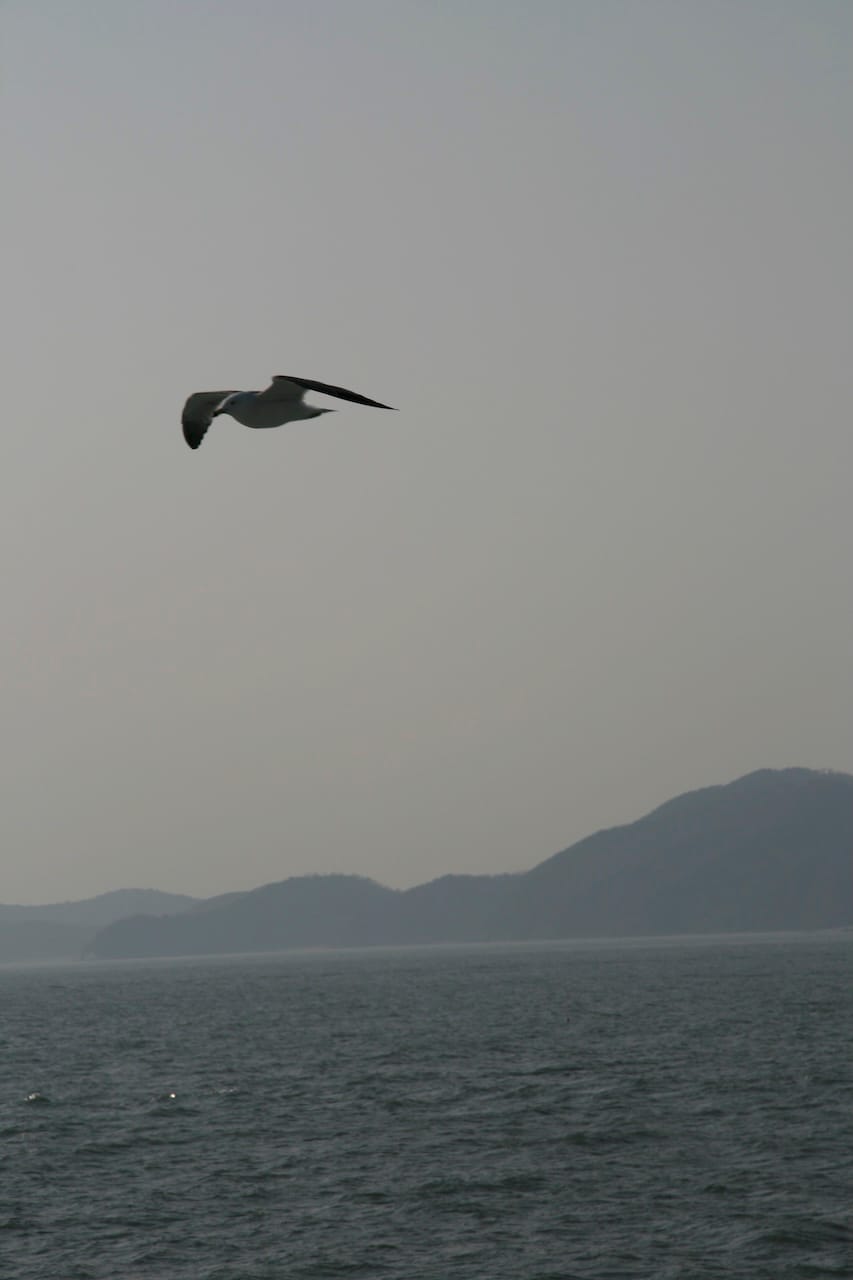
I look out over a world stuck in transition, while I feel the beginning of something new. It’s as if I’m on a mountaintop, watching values, systems, and certainties expire. Growth exists, but it feels like the convulsions of an old model. Inflation and interest swing like mood shifts; what felt secure yesterday can feel like a panic attack today.
The planet has a fever; the poles melt like forgotten ice cubes. Climate meetings resemble therapy sessions caught in vague intentions. Fossil habits collide with green ideals, and the clock keeps ticking.
Power drifts. The U.S. ages; China moves with middle-aged confidence; Russia smolders like a bitter ex; Europe strains in the middle. And South Korea? High-tech and self-aware — facing the North, the silver wave, and the question: must we pretend to be young, or may we grow older on our own terms? The Netherlands, pragmatic and small, tries to adjust the thermostat in a house on fire.
And wars flare like pain in the body: Ukraine, Gaza, Sudan — old conflicts in new disguise. Dear reader, I’m not exaggerating. I’m paying attention. These reflections tie back to the cultural shifts I once explored in Journey to the West.
From Baedagol to Wondanggol

The journey from the old Baedagol Theme Park to the new Wondanggol garden is more than symbolic. It is a short walk of just 3–4 kilometers through Goyang-si, yet it represents a much greater transition: from childhood play to senior reflection, from noise to silence, from history to renewal. This path between Baedagol and Wondanggol shows how Korean culture weaves continuity into change.
Both Kim Young Soo and I feel this is not a time to do nothing. His original Baedagol theme park — a meeting place for children, animals, and living history — had to stop at its first site. Now, the new Baedagol grows in Wondanggol: a garden of rest and reflection for seniors, a place of plants, peace, and care.
The Jijang Fractal
I think of a poem I wrote in 2004 — first published on Mantifang and later revisited during my pilgrimage to Bogwangsa:
Human Nature
Qi rides the wind and scatters.
But not when she meets water.
Then she shatters and becomes wind,
rises and becomes a cloud.
If she is angry, it thunders.
Falling, it becomes rain.
Underground she becomes Qi again.
The Pungsu Jiri qi arises from the wind.
Thick or thin, but certainly invisible,
she imbues man with nature.
The Jijang Fractal offers a way to hold suffering and connection across time: a pattern where choices ripple through a network of lives, not as fate but as potential — compassion iterating until clarity appears.
Kim Young Soo and the Jijang Fractal

The oak in Korea often symbolizes endurance — slow growth, strength, and long life. Villages speak of namu-shin, tree spirits and ancestral guardians. Such symbols bridge the visible and the spiritual.
The Jijang Fractal did not appear to me in isolation. It was in Korea, through its culture of ritual, nature, and quiet resilience, that the pattern first revealed itself. Without the gardens of Baedagol and the generosity of Kim Young Soo, I might have missed it. My study and creativity as a writer shaped the words, but the insight itself was born from Korean soil. In that sense, the Jijang Fractal is not only my discovery — it is also a gift of Korea’s culture, and of the friendship that helped me see how compassion and interconnection take root in daily life.
“True virtue is to serve quietly, with no thought of reward, yet with the whole heart.” To create a place where others can rest is the highest form of service. Such a place gives the silver wave enough energy to support those who come after us — grandchildren, neighbors, students, colleagues, community. They will inherit our exhausted earth; every gesture of care may tip the scale.
Of Food, Gardens, and Quiet Service
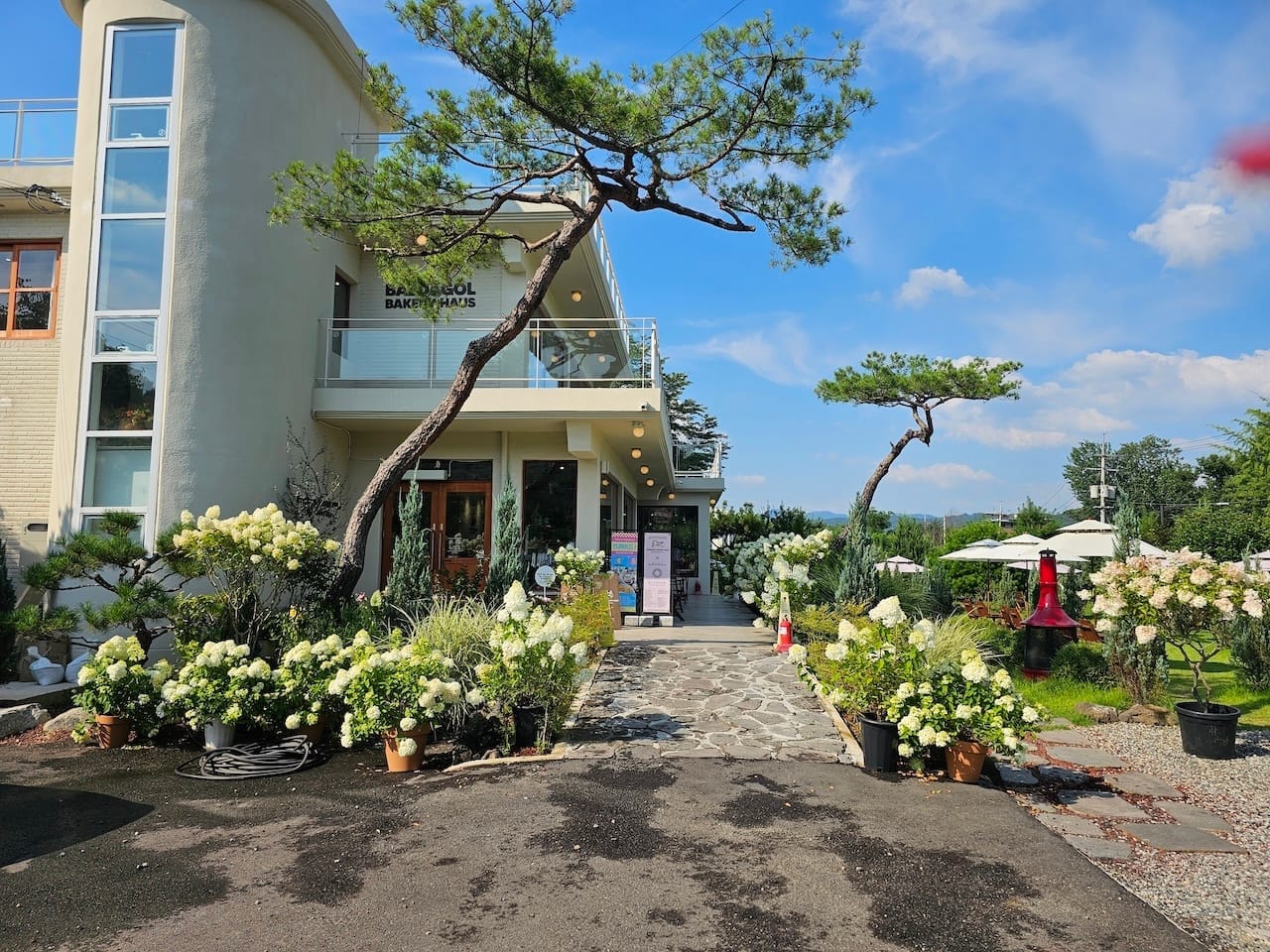
In Korea, food is more than sustenance. “밥 먹었어요?” — “Have you eaten rice?” — carries the care of generations that knew hunger. It is not formality; it is belonging. Baedagol Bakery in Goyang-si has that spirit: warm, generous, unhurried — a counterbalance to a faster Seoul.
A well-set table nourishes the body; a blooming garden nourishes the soul. Together, they make us whole.
My Place in the Fractal
The garden may be very Korean, but the desserts are European. Cream cakes and sugar — new flavors charming the Korean tongue. When I first came to Korea, bread was rare; now that Kim Young Soo bakes it, I am no longer allowed to eat it. Diabetes (type 2) asks for a stricter path: sugar-free, salt-free. After a severe hypo — ambulance and all — I set myself a regimen most would find joyless. Luckily, I have a Korean past.
While Baedagol serves cream cakes, I experiment with Jijang kombu sauce — with chicken and stir-fried vegetables — a dish even his wife would enjoy. I keep writing my book and helping Mickey care for the grandchildren. They grow up in a world in menopause. In their eyes I hear the silent question: give me the tools to restore this world.
If you’re in the mood for some pastries and want to enjoy the beautiful garden: Baedagol Bakery House155-3 Wondang-dong, Deogyang-gu Goyang-si.

That is the difference: my old age brings limits; the mess we leave is worse. Still, as long as we breathe, we can set the Fractal wheel in motion — like Kim Young Soo, who with trees, flowers, and bread quietly helps the world heal. Perhaps not grand — but enough to say: we still can. These reflections echo themes I first touched upon in Song of the Mantifang.
Closing
Oh drop of water belonging to the grey wave — keep the Jijang Fractal in mind and start helping the little ones to create a world warm, generous, and unhurried. A place like the renewed Baedagol theme park, breathing in Wondanggol, South Korea.
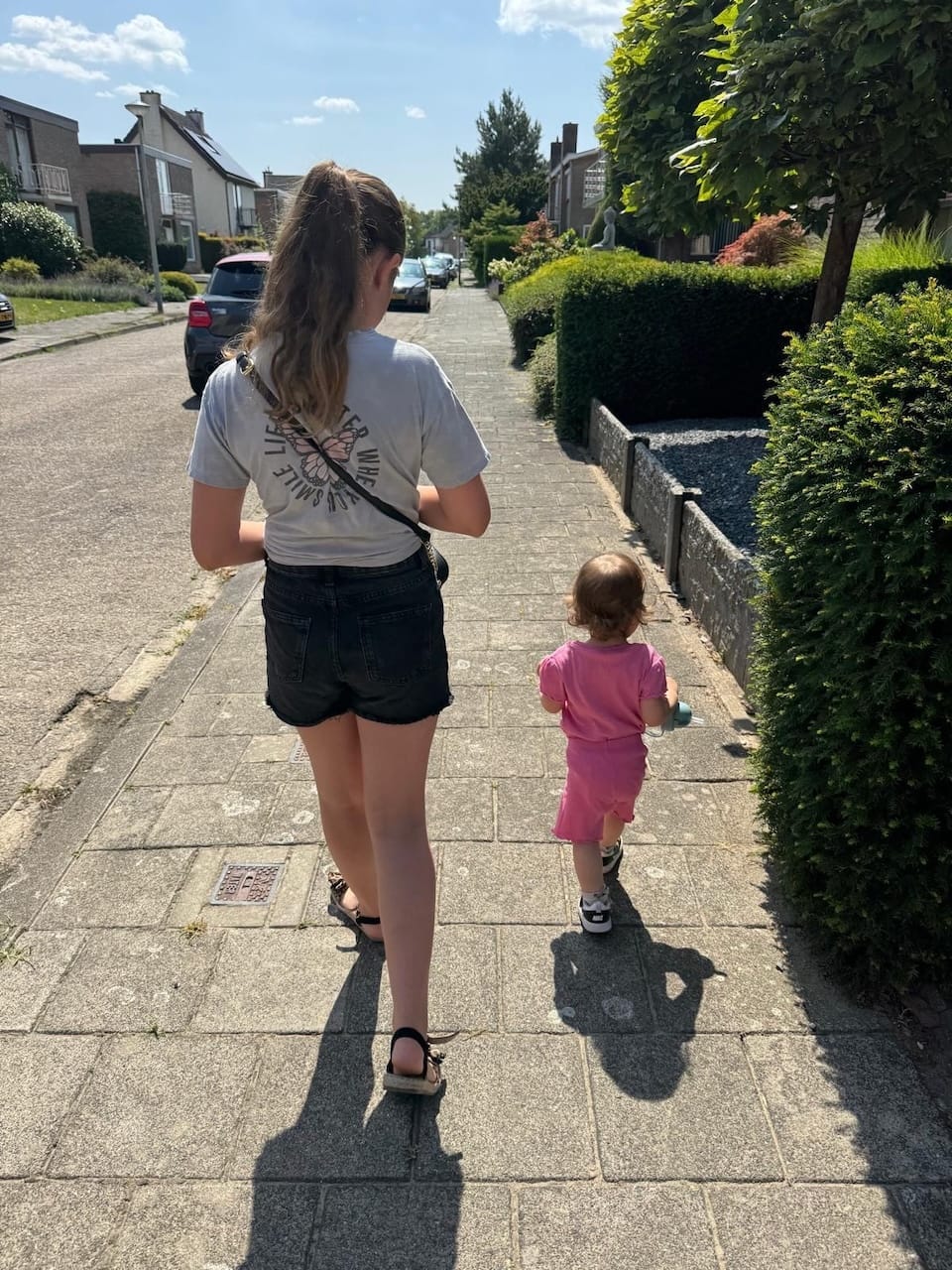
As the little ones walk forward towards the future, even the shadows reveal more than we expect. In the outline of a Buddha in shade, and in the statue further down the path, presence becomes visible. The Jijang Fractal teaches that what seems hidden still shapes us — quietly, patiently, and with compassion.
These words close the circle, yet remain open — just as in Bogwansa, the story continues through memory, compassion, and renewal.
written by Hugo J. Smal
If you are Dutch like me, then the nature of Korea is one of the contrasts. The Netherlands have the countryside and the city, a few hills in the south and just under 50 islands. The Meuse and the Rhine split the country in two. Holland is a swamp delta drained by the Dutch. Korea has remained more itself throughout its existence. There are big cities, and the politicians broke the country in two, but much is still more or less untouched. You won’t find so much variation on such a small surface of the earth anywhere else. That is why Korean nature is unique.

Hanguk is a relatively small country.
Korea is 112,264 square kilometres in size. North Korea occupies 120.54. Unfortunately, I can tell almost nothing about nature in the communist part of the country. We know too little about it. Even the demilitarized zone holds many secrets. Animals and plants that have become extinct in South Korea can still live there. That zone is a large natural secret because no one has come there for about 70 years. South Korea is about the size of Iceland or Hungary. So relatively small. That makes the great contrasts you encounter in Korean nature unique.
High and low.
High, steep mountains dominate the landscape, the coastal areas and small islands. These features contribute to the diversity of Korean nature and the presence of a wide range of plant and animal species. Korea has a temperate climate with four distinct seasons. The country experiences hot, humid summers and cold, dry winters, with a rainy season in the summer and autumn. This climate supports a variety of ecosystems, including forests, grasslands, and wetlands.
Plants and animals make Korean nature unique!
Korea is home to a wide variety of plant and animal species. Many of which are found nowhere else in the world. Some animals are the Korean leopard, the water deer, and the musk deer.
 Unfortunately, the Korean leopard, known worldwide as the Armur Leopard (Panthera pardus orientalis, Korean 한국 표범 hangug pyobeom), is extinct in South Korea. There is some hope that the world’s rarest big cat is still hunting in the demilitarized zone ore in North Korea. But that is seen as hope in vain. Only 50 or so Armur leopards, belonging to this subspecies common to the Korean Peninsula, live in the Kraj Primorski in Russia and Jilin in China. Read more about the Armur Leopards at https://www.worldwildlife.org/stories/how-fast-are-amur-leopards-and-9-other-amur-leopard-facts
Unique Korean nature at Baedagol.
The Seongsaheon River flows through the Baedagol theme park. It is a river when the snow melts in the mountains and during the rainy season. Most of the time river is a narrow stream. It ensures two unique animal species in and near the theme park and the Goyang Koi Farm.
In addition to the cicada, the area has another “troublemaker”. The male Suweon (Hyla suweonensis) calls his female with a loud and high whistle. He’s not having a good time. The family has about eight hundred members, living between the Mangyeong and the Imjin rivers. They are closely related to Hyla Japonica whistling from Hokkaido to Yakushima in Japan, to the Ussuri River in the Russian part of ancient Goguryo and northern China and Mongolia.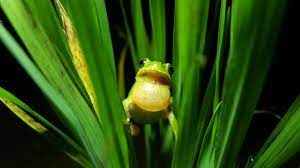
The tree frog lays her eggs in rice fields. At the Baedagol theme park, they have managed to conquer a warm bed in the many water features. I think that there are several hundred living at the theme park. How the Suweon will fare in the future is unclear. Baedagol must make place for new high-rise buildings.
Read a detailed description of the tree frog here: PDF
 I have only seen the hoof marks of the Korean water deer (Hydropotes inermis argyropus, Korean 한국물사슴) in the river bed. They pass through it foraging at dawn.
Like the Korean musk deer, the water deer has tusks. They do not use them for hunting but as a weapon in territorial battles. First, a mock fight takes place. The males walk impressively towards each other and make clicking noises. Sometimes a weaker deer gives up at this point. When they fight, the males try to injure each other with their tusks. The loser himself indicates when enough is enough. He lays his head and neck flat on the ground or takes flight. The females live peacefully in groups.
At Baedagol theme park, C.E.O. Kim Young Soo collected many trees and plants.

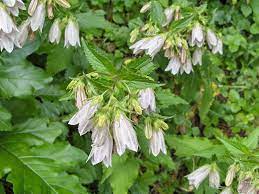
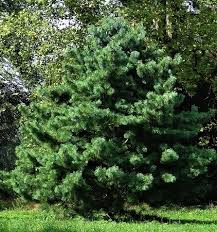
The trees and plants are lucky. They find a home at the new locations of the Baedagol theme park and the Goyang Koifarm. For the tree frogs moving house will be a bigger problem. I am sure C.E.O. Kim Young Soo will find a solution.
Korea has a range of natural landscapes and ecosystems, ranging from subtropical forests on the southern coast to temperate forests in the central regions to subarctic forests in the high mountains.
One of the most notable features of Korean nature is the presence of many high, steep mountains that dominate the landscape.
Korean coastline is unique.
Korea is also known for its beautiful coastlines, which feature a mix of rocky cliffs, sandy beaches, and small islands. The country has many small islands off its coast. The coastal waters of Korea are home to a variety of marine life. Dolphins, whales, and sea turtles are some of the beautiful animals that visit the beaches.
The flat land in the Han river basin, for example, the mountains that mainly border the peninsula on the east side, and the many rocky islands and sandy beaches ensure that the nature of Korea is unique. You won’t find so much variation on such a small surface of the earth anywhere else. Geonggi-do alone, the province in which Seoul is located, offers its visitors numerous nature adventures.
If you like unique Korean nature: Page
By Robert Neff
previously published: The Korea Times
featured picture: Mrs Emberley and her garden in Seoul, circa 1900.
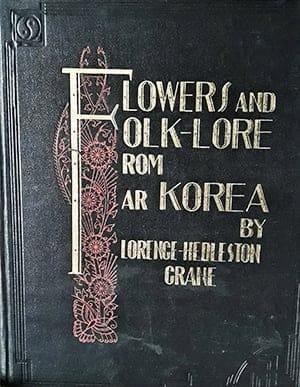
In the late 19th and early 20th centuries, the descriptions of Seoul were filled with complaints of streets packed with oxen, ponies and people all trying to avoid falling into the open sewers or stepping in the excrement of man and beast, and the fetid stench that seemed to hang in the smoke-filled air. While there may have been some truth to these descriptions, there were also very positive descriptions by more objective observers ― those who were willing to open their eyes (and nose) to the positive things:
“One might almost call [Korea] the Land of Lilies.
Were it not that other families of flowers, violets, eglantine, roses, white and red, lilacs and rhododendrons are equally prolific, while in the orchards, peach and pear blossoms fill the land with glory and beauty. In the endless procession of the seasons, there are lovely blossoms from snowfall to snowfall again. Hills and valleys become a riot of colour from the azaleas that strike the gamut of tints from snowy white to deepest orange. One botanist, in a single afternoon s ramble over the hills around Seoul, brought home a bouquet of forty-seven varieties of flowers; another near [Jemulpo ― modern Incheon], in one day, exceeded this number by a dozen.”
Joy in the garden fragrance.
While others complained of the “fetid smells” of Seoul and its sewers, the writer found joy in the fragrance of spring: “Not all the flowers are affluent of sweet odours, but enough of them carry aroma in their chalices to make the breezes sweeping from the mountain heights delicious to the senses. In springtime, especially, the winds often come perfume-laden to refresh and delight. In the autumn odour yields to colour and the hardier flowers. Among these, the aster and goldenrod drape the hills in scarlet, gold, purple and varied tints.”
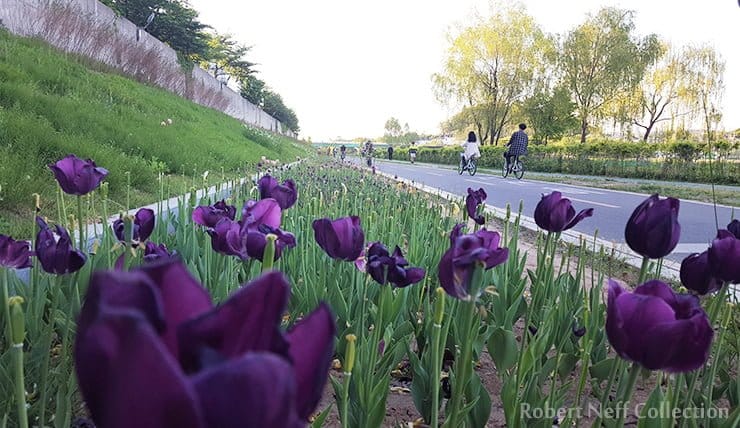
One of the great things about living in Seoul is the city government’s dedication to planting flower gardens throughout the city. Flowers bloom along the bike lanes in the spring of 2019. Robert Neff Collection
Lillias Underwood ― who arrived in Korea in the mid-1880s and, for a time, served as the Korean queen’s Western physician ― was not shy in her writing, describing her good and bad impressions of Korea. She wrote: “Korea is glorious … the country fairly revels in blossom beauty in May and June … [and] all the environs of Seoul are sweet with the exquisite fruit blossoms, peaches, apricots, plums, cherries and pears.” She went on to add, “The hills are all ablush with rhododendrons and a dear little eglantine with the daintiest perfume riots all along the roads and fences.” One of her favourite flowers was the “virginal white honeysuckle” that grew on the slopes of Namhansan in the spring.
To sell lilies of the valley.
Apparently, some young Korean entrepreneurs realized money could be made through the foreigners’ appreciation for wildflowers. In 1899, the Korean Repository (an English-language magazine published in Seoul) wrote:
“Lads with lilies of the valley for sale are visiting houses of foreigners. It has been suggested that as these beautiful flowers when transplanted rarely, if ever, grow foreigners [should] discourage these boys by not purchasing.”
Many ― if not most ― Western residents in Seoul cultivated their own gardens. Of course, vegetable and fruit gardens were essential as they provided the foreign community with most of their needs. In 1897, nearly 500 quarts (473 litres) of strawberries were harvested from the gardens in Jemulpo. General William McEntire Dye ― the American advisor to the Korean military ― had a vast orchard in Seoul in which he grew Bartlett pears, apples, cherries and other fruits.
Flower gardens were also essential as they were visually and fragrantly pleasing and adorned with celebrations such as weddings and christenings, and helped lift the hearts of the bereaved in the all-too-common funerals of the late 19th century.
Lillias described her garden as:
“It was lovely nearly all the year-round. First of all, in the early spring were masses of yellow forsythia, then violets, and some of the first fruit blossoms, then flowering almonds and white lilacs, wisterias, fluffy greenish-white snowballs, and two great bushes on either side of the front door of yellow roses that recalled grandmother’s garden in dear America. In June came the roses in the greatest hurry to be seen, and, well, after that nobody could think of anything else. There was a whole hedge of damask rose bushes; they were cut every day by [the] hundreds, every bowl, jar and vase in the house crammed with them, they were sent to all the neighbours, yet still, they kept blossoming on and on never tiring, and the family could never keep up with them.”
Of course, with such a cornucopia of blossoms, there were great swarms of bees. “Such a humming you could hardly hear yourself think.”


Nice odor in Korean small gardens.
The foreigners were not the only ones cultivating gardens. Peppered here and there in the correspondences home and magazine and newspaper articles are references to Koreans cultivating small gardens wherever they could find space. Sometimes these Korean gardeners ran afoul of narrow-minded bureaucrats as evidenced by this article that appeared in the local paper in 1897:
“An enterprising man named Tai Duk-yep of this city has constructed a pretty garden in his compound, displaying horticultural skill and the art of landscape gardening. He admits visitors to his garden and charges them a few cents admission fees, which, he thought, was proper and lawful business. But to his surprise, the Assistant Chief of the Police Department ordered him yesterday to stop the business on the ground that it is injurious to the pockets of the people.”
Garden odor demands money and work.
Cultivating gardens was not easy. It required a lot of work and money. Many of the flowers and bushes were purchased from the United States and Europe but this tended to be rather risky. Sometimes the seeds were lost or stolen en route ― John Sill (the American minister to Korea) had a box of seeds stolen, along with some cigars, while they were being transported from Jemulpo to Seoul. He offered a reward of ten dollars (a princely sum of money) but the cigar-smoking thief was never apprehended.
Sometimes, when the seeds, bulbs and seedlings arrived, they were rotten or dead ― a waste of time and money. A couple of Japanese horticulturists realized that money could be made if they provided seeds and plants quickly ― and with a guarantee ― from Seoul. The competition between these horticulturists was fierce and they duelled one another not with a sword but with the local English language newspaper, The Independent.
On December 15, 1896, The Independent, reported in its local items column:
“The Japanese horticulturist, Mr Takahashi is desirous of obtaining orders for flowers, fancy trees and construction of gardens from the foreigners in Seoul. He guarantees first-class work.” While it was not an advertisement per se, it did provoke his rival.
Four months later, K. Yamashita took out an ad in the paper in which he advertised his selection of “fancy trees, either flower or fruit trees” that would be delivered as soon as the order was received. He also offered a guarantee: “In case the trees should not thrive they will be replaced without further charge.” He also offered to construct fancy gardens and flower beds for a low price and noted for reference that he was the “constructor of gardens for the French Legation and Japanese Consulate of this city.”
Y. Takahashi retaliated.
Two weeks later, Y. Takahashi retaliated and not only advertised “various kinds of fancy trees, fruit trees and shrubs and flowers will be supplied upon receiving an order,” with moderate prices but also declared that he was an “expert agriculturist and horticulturist.”
A year later both upped the stakes when Yamashita advertised himself as being “the only expert florist and landscape gardener in Seoul.” He offered “25,000 fruit, flower and shade trees have been imported from Japan” and the “most complete collection of rare and beautiful trees in his gardens.”
Takahashi responded by citing his own impressive background in horticulture: “member of the Japanese Horticultural Society and associate of the Imperial Agricultural Society.” He went on to state: “I have a number of beautiful shade trees, fruit trees, shrubs and flowering plants in my garden for my customers. I will plant them for you and guarantee that they will give you perfect satisfaction.”
What became of this rivalry is unclear as the newspaper ceased to publish regularly after December 31, 1898. In all likelihood, they continued to battle with one another and all-new interlopers for a great many years ― the peacefulness of their livelihood interrupted only by their competitiveness.
My appreciation to Diane Nars for her invaluable assistance and the use of her images.
Robert Neff has authored and co-authored several books including, Letters from Joseon, Korea Through Western Eyes and Brief Encounters. Robert D. Neff is a freelance writer and historical researcher specializing in Korean history during the late 19th and early 20th centuries. Asia Society Korea’s Matthew Fennell caught up with him to discuss this new release. interview
You can follow Robert on facebook
Aquaponics: A Practical Guide to a Closed-Loop Growing System
hydroponic alternatives combines aquaculture and hydroponics into one circular, water-efficient food system. This guide explains how an aquaponics system works, what you need to set it up, and when it outperforms traditional methods.
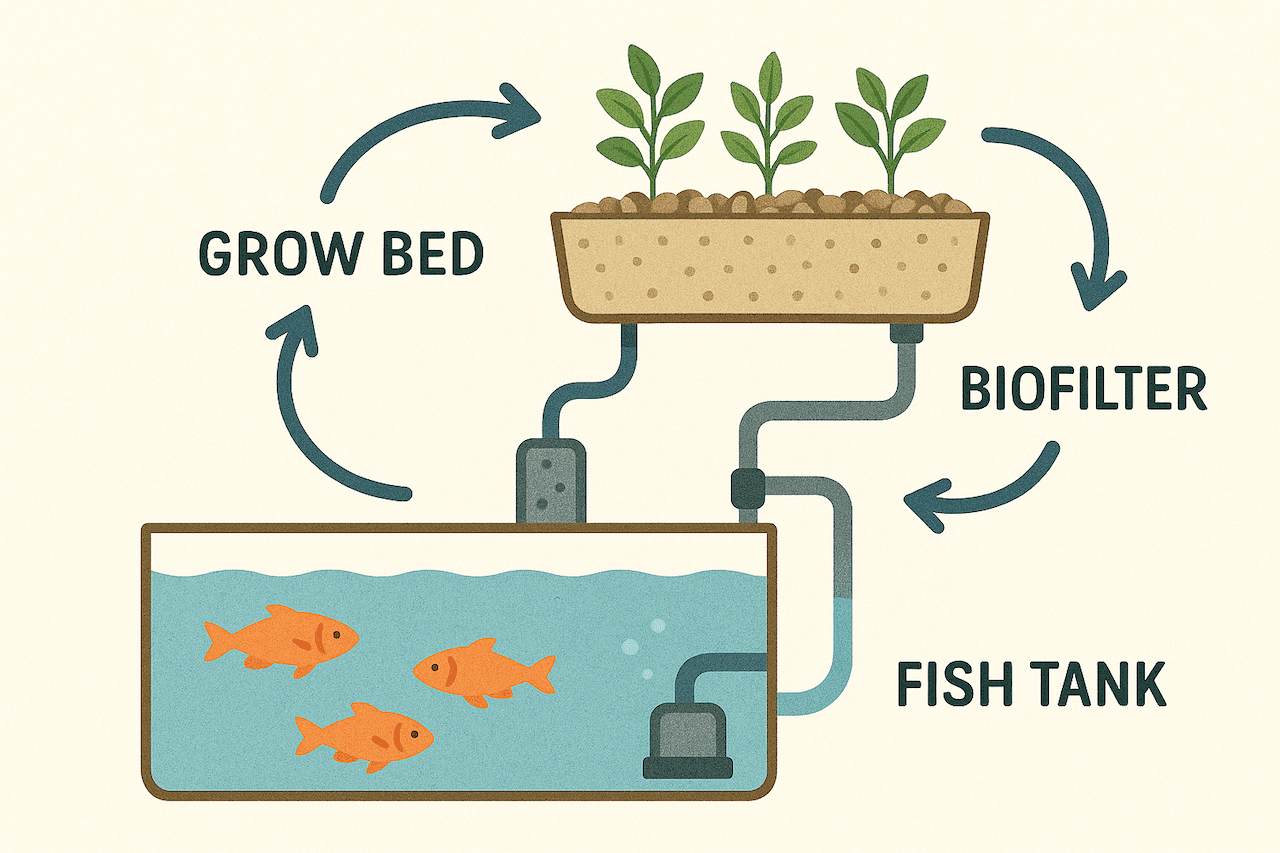 Closed-loop aquaponics: fish tank → biofilter → grow bed → return.
Why it Works
Sustainable fish and plant system links fish and plants into a single ecology. Fish produce ammonia; beneficial bacteria in a biofilter convert it first to nitrites and then to plant-available nitrates; plants absorb those nutrients and clean the water for the fish. The result is a low-waste, high-efficiency loop that uses around 80–90% less water than soil gardening while producing herbs, leafy greens, and even fruiting crops in compact spaces.
Because the system is recirculating, you control inputs precisely: temperature, pH, dissolved oxygen, water flow, and light. That control makes an water-saving farming techniques system ideal for urban balconies, greenhouses, restaurants, and educational labs—and a powerful complement to sustainable food production.
Aquaponics System: How It Works
- Fish tank: The source of ammonia. Choose hardy species (tilapia, catfish, carp, or goldfish for small builds).
- Biofilter: Media (expanded clay, lava rock, or moving-bed K1) hosts nitrifying bacteria that convert ammonia → nitrite → nitrate.
- Grow bed: Plants take up nitrates and micronutrients; roots also trap solids for later mineralisation.
- Return line: Cleaned water flows back to the fish tank; aeration keeps dissolved oxygen high.
Keep pH between 6.6–7.0 (a compromise for fish, bacteria, and plants), maintain good aeration (>6 mg/L O₂), and size filtration to bioload. A reliable pump and an uninterrupted power supply are non-negotiable.
Three Common Set up
- Media bed (ebb-and-flow): Most forgiving; ideal for beginners. Media hosts the biofilter and supports roots.
- DWC (deep water culture): Plants float on rafts over nutrient-rich water; great for uniform salad greens and basil.
- NFT (nutrient film technique): Thin water film through channels; efficient for fast greens, less forgiving with solids.
Many growers hybridise—media for fruiting crops and solids handling, DWC/NFT for leafy greens. That mix balances productivity and maintenance.
Starter Checklist for Your this System
- Match tank size to plant area (rule of thumb: ~25–40 L of fish tank per 0.1 m² of dense greens in media beds).
- Cycle the system fish-less using pure ammonia or humic sources; test for the classic ammonia ↓ nitrite ↓ nitrate ↑ curve.
- Add fish slowly after nitrite is near zero; monitor feeding and remove uneaten food.
- Plant heavy feeders (lettuce, chard, basil, tomatoes, peppers); interplant herbs for pest balance.
- Maintain redundancy: spare pump, airstone, and battery backup for aeration.
History and Future of this urban farming innovation
While modern aquaponics draws on hydroponic science and controlled-environment agriculture, the core insight—linking water, fish, and crops—echoes older traditions. The chinampas of Mesoamerica and Asian rice–fish systems both paired aquatic life with plants to recycle nutrients. What’s new today is precision control: sensors for pH and conductivity, automated dosing, and lighting schedules tuned to cultivar and season.
Expect growth in three areas: micro-farms that supply restaurants with just-in-time herbs; education, where students learn ecology, chemistry, and engineering hands-on; and resilience, where compact systems buffer supply chains during heat waves or water restrictions. As renewable energy gets cheaper, off-grid aquaponics and rooftop farms will become practical for cities.
Aquaponics vs. Hydroponics (and Soil)
Hydroponics delivers rapid growth with exact nutrient recipes but requires regular mixing and disposal of solutions. Soil excels at buffering mistakes and supporting complex microbiology but uses more space and water. An aquaponics system sits between: you feed fish, not bottles; bacteria craft balanced nutrients; water is reused; and plant quality is consistently high. If you want low-waste greens plus edible fish—and you enjoy system tinkering—this approach is hard to beat.
Further reading
FAQ — Aquaponics
- What’s the ideal pH?
- Keep 6.6–7.0. Below 6.4 slows nitrification; above 7.2 reduces micronutrient availability.
- Which plants thrive first?
- Lettuce, basil, mint, chard, pak choi, and tomatoes. Start with fast greens while the biofilter matures.
- How many fish per litre?
- For beginners, plan low density: roughly 15–20 kg of fish per 1,000 L of water once mature, with robust aeration.
written by Hugo J. Smal

On the 11th of February, 2008, Sungnyemun, Sungnyemun, the Southern Gate, from Seoul burned down. King Yi T’aejo (1335 – 1408), the founder of the Choson Kingdom, had this gate built around 1400. He also constructed the Kyon Gyeongbokgung Palace. These days you can see the fruit of Korean gardening there.
The purpose of this gate was not only to stop Japanese robbers. It also provided spiritual happiness and prosperity, absolute standards of Korean Gardening.
Emphasis on naturalistic beauty.
![[:en]Wonderful wander: the Secret Garden in Changdeokgung, Seoul © Chinnaphong Mungsiri / Getty[:]](https://mantifang.com/wp-content/uploads/2019/07/GettyImages-597879379_full-d625bf17680e.jpg "Korean gardening: the gods are praised. 23")
Korean gardens are distinguished from their Chinese and Japanese cousins by a deep emphasis on naturalistic beauty, a direct influence of the Korean philosophy of hermitism. To achieve this natural beauty, gardens take into account architecture, water, stone, and open space to create a sense of unlikely balance that isn’t forced or artificial. The most common features of Korean gardens grow out of these elements and include architectural pavilions and central reflecting ponds.
A lot of the Koreans still believe in all those influences of the gods. And the gate is rebuilt. It is their national pride and the Pungsu-jiri (풍수지리 is held in honour, as are the influences of the different religions described below. it’s splendid again
Chôngwon (정원) Korean Gardening or 정원 (jeongwon)
The Korean word for a garden is a combination of two Chinese characters. Chông 정, the first character, indicates a garden surrounded by buildings or walls. Chong divides gardens into a palace, official, temple and regular. This is according to the function of the building. Korean architectures divide the common garden into the front or back garden, indoor or outdoor, middle garden or for example a gate or stair garden. This is also according to the location.
 Won 원, the second character, means hill or wide field with forests. With this character, the garden rises above the garden surrounded by buildings or walls. The composition of the two characters thus means a small garden, but also a park complex or a naturally designed park.
Trees look in.
The essence of Korean gardening is the natural landscape with hills, streams, and fields. The landscape is not separated by walls or other boundaries. The Korean gardener builds walls to let trees look over them.
The environment is allowed in the garden. The nature within the walls is not forced into a straitjacket like in Japan. The Korean garden is natural and therefore calming.
Nature is perfect in Korean philosophy. Therefore, the Hanguk takes great care in human intervention. Interference is almost seen as violent. The idea behind Korean garden culture is to make nature appear more natural than nature itself. Where the Japanese shape nature, the Koreans will shape in nature.
Korean gardening is a fusion.
With the word fusion, the Korean garden culture is appointed in one blow. In contrast to the one-sided, humanistic-Christian background of the Europeans, the Hanguk culture consists of a mixture of many settings: all of them from their ancient religious history.

Tangun (the sandalwood king) is seen as the mythical founder of Korea, 4326 years ago. He descended to Pyongyang, where he founded an empire: Chosön, the country of the morning calm.
This is a myth with a clearly shamanistic character, in which the fusion of cosmos, earth, gods, people, animals, and plants takes place. Shamanism knows many gods and spirits. These live in the landscape but also in the basement, the kitchen or in the attic. In the event of illness or other adversity, many Korean people still visit the Mudang.
Natural shrines.
Also, the piling of stones, Doltap (돌탑 ), stems from this natural belief. It is a common practice in Korea to place a foundation stone on the side of the road. Another finder contributes to his or her part. This way the most beautiful pagodas arise spontaneously along the way, but also at a Buddhist shrine or for example a waterfall. They are saving natural shrines, in which everyone cooperates. And the most beautiful thing … nobody kicks them over.
[embedyt] https://www.youtube.com/watch?v=Z57WEu2wtRw[/embedyt]
Pragmatic focus
Confucianism is the second religious belief that is a part of the Korean gardening philosophy. This focuses mainly on the life of man in this world. The relationships between people. Hence very pragmatic indeed.

Confucianism, originating in ancient China, places a strong emphasis on harmony, order, and moral rectitude. In Korean gardens, this influence is seen in the careful balance and symmetry often present in garden layouts. Gardens were designed to reflect the Confucian ideals of harmony between man and nature, and the orderly arrangement of paths, water features, and plants often mirrors the structured societal hierarchy promoted by Confucianism. Learn about the role Confucianism plays in Korea today here.
Neo-Confucianism
It is highly influential in Korea during the Joseon Dynasty, further developed these ideas. It emphasizes self-cultivation and a deepened understanding of one’s relationship with the universe. Korean gardens from this period often feature scholar’s rocks and carefully curated views, which encourage contemplation and intellectual reflection. The gardens are not just for aesthetic pleasure but also serve as spaces for meditation and personal growth, in line with Neo-Confucian values.
Both philosophies contributed to the development of Korean gardens as spaces where ethical and philosophical contemplation could be pursued amidst natural beauty. The result is a garden culture that not only emphasizes aesthetic appeal but also intellectual and moral depth.
Great influence on Korean Gardening.
Also Buddhism has significantly influenced Korean garden culture, embodying principles of harmony, balance, and simplicity. These gardens often promote contemplation and meditation, reflecting the Buddhist pursuit of peace and inner tranquility. Elements like water, stones, and meticulously arranged vegetation are central, symbolizing the natural world and Buddhist teachings. Symbolism is key, with certain plants and structures representing spiritual concepts from Buddhism. This results in serene, naturalistic gardens that are not just visually appealing, but also spiritually meaningful.
 No conflict.
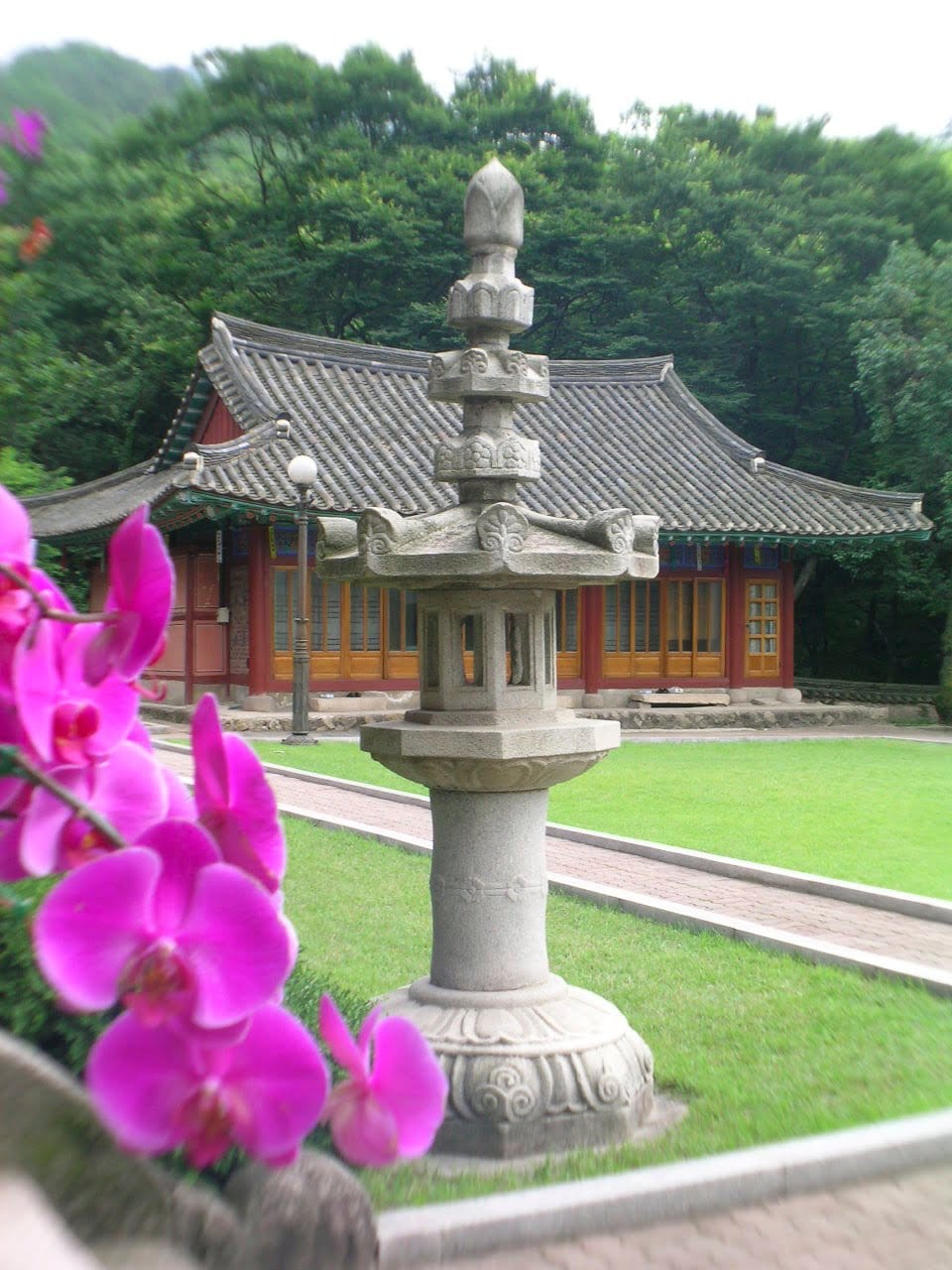
In Korea, there was no conflict between religions. They simply exist side by side. Later, the Jesuits brought Christ. This Western saviour also got his place. The Korean culture only grew richer. Many Koreans choose a very down-to-earth starting point for faith. They just pray to everyone. If one does not help, one may expect more benefit from the other.
The saint set his spade.
It is therefore not surprising that you find Confucian symbolism in Buddhist temples, while shamanic gods keep watch. Therefore the fusion between four big worlds religions. Where in the west the rich ruled the garden culture, for example with the exorbitant Versailles, in Korea the saint set his spade in the ground. The European monks came no further than the herb garden. Those in the Far East succeeded in creating true garden art.

Human environment.
Korean garden architecture is holistic. According to the dictionary, Holism is the view that there is a connection in reality. Hence the whole is not found in the components.
The Korean garden culture, for example, combines Chong and Won, building a human environment that combines well with the world of nature. It is respecting both nature and human values.
Korean gardening is the art of creating an outdoor space with ecological values, functional and practical. It gives more value to ecology than to scientific disciplines such as technology and architecture.
Korean gardening incorporates the mythical.
The Korean garden differs from the formal garden. In the latter, visual beauty is sought. The beauty of the Korean garden arises from a complex, spiritual and mythical beauty. This is captured by the spirit and its five senses: sight, smell. hearing, taste, and feeling.
This is not the beauty, for example, found in the Japanese garden. Captured by planting and materials. The Korean garden has an organic beauty that changes in space and time. It relies on the elements and on materials used.

Compulsions of nature.
It is not only external beauty but also a manifestation of cosmic principles such as fragility, sound, contrasts between light and dark and dry and wet. In the distant past, the Koreans build about a thousand public gardens. Not by specialists, but by the garden owners themselves. They knew the working of nature through their own gardens, usually described as natural gardens.
These gardens acted as intermediaries between the compulsions of nature and the needs of man. It is strange that Korean garden culture is not discovered by the rest of the world. The Chinese garden gets attention, while the Japanese are a real hype.
See what happens in the Korean garden.