geschreven door Hugo J. Smal
Beautiful Korean Koi
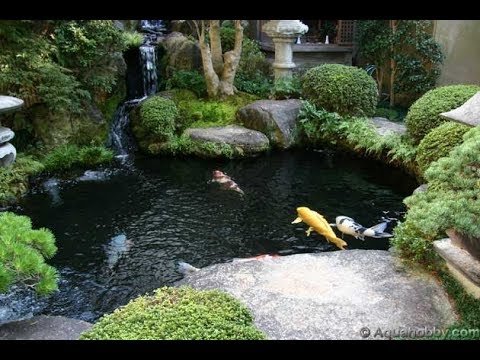
Starting a Koi Hobby became my live. The fascination with koi has lasted more than thirty years years now. I bought two carps and tipped them into my natural pond. From that time on, my conversation about the fish started. It soon went wrong. After all, a natural pond is not suitable for carp. The animals survived, but not my natural water feature. Looking back, I realize how many mistakes I have made. But also how I learned from it. With this story, I hope to help you on your way a little faster. Starting a Koi Hobby with a positive basic attitude.
Ochiba and Goromo come gently.
Keeping Koi requires three things that are all equally important. First of all, there is, of course, the pond. After all, it is absolutely impossible without water. Then something to keep this water good and healthy. A good biotope is necessary. And of course, beautiful fancy carps!
But most important: love and attention. This is called fishy fingers in the Anglo Saxon countries. And finally a positive basic attitude.
No fish mortality
The first two koi came from Israel. In those times this means they did not really show quality. I am still glad that we started with these fishes by accident because they are stronger and could withstand my ignorance. Soon I built a real koivijver of ten thousand liters with a properly functioning filter. Then I introduced our first fruits and bought some more Japanese ones.
By changing a lot of water many times, I did not experience massive fish mortality. Occasionally I lost one. At home the hobby split. I concentrated on the waterkwaliteit and my girlfriend at the time was responsible for taming the fish. She saw intensive contact with the fish as the most important thing for success. I also studied the quality of the koi. Of course, I wanted real prize winners. But first: Starting a Koi Hobby with a positive basic attitude
Starting a Koi Hobby with the pond.
Ponds natural environment.
Make it as large as possible. The larger the water volume, the easier it is to keep its quality. If you can dig two meters deep, do so. Three meters is even better. Depth and surface must, of course, be a bit in proportion.
With a narrow and deep well, the water in the deeper regions will heat up slowly. It naturally follows that it is very difficult to build koi ponds in very small gardens. In those situations, you can try to get the neighbour’s koi crazy and do something together. If that fails then a goldfish pond can be a reasonable alternative.
Don’t risk your fish while Starting a Koi Hobby.
The pond must be lit by the sun for around six hours a day. Ideal when this is not done during the hottest hours. Koi can get sunburn. Shadow spots are extremely important at those moments.
Never economize on the quality of the foil. Normal pond liner can leak. You shouldn’t take that risk with your fish. Rubber foil is almost indestructible. But to do that, you need to dig a little deeper into the money bag. It is strange, of course, that some koi enthusiasts invest in expensive koi, but that the fish swim in a pond whose canvas does not yet equal the price of one Koi. Security Is everything!
Professionals.
The walls of a pond can also be bricked up and then waterproofed with polyester. A concrete pond is also possible. However, building these types of ponds requires a lot of craftsmanship and personally, I would rather leave this to professional pond builders. If you make the pond in sandy soil, you must tilt the walls slightly to avoid the danger of collapse. This is less necessary on heavy clay soils. Always place bottom drains in a concrete bed. It often happens that things are subsiding and as a result, the pipes break down.
Starting a Koi Hobby with good water.
It is very easy to suffice with the optimum water values under this heading. Temperature between 4 and 28 degrees with as little fluctuation as possible on one day, pH preferably at 7.5, nitrite 0, ammonia 0 and nitrate as low as possible and the dissolved oxygen as high as possible. I could also state here that you have to filter to keep these values and that you have to be careful with feeding because otherwise, you will contaminate the pond too quickly. The fish will also eat when they are satisfied, but will no longer digest anything. The expensive feed returns to the pond unused.
I already told you that I had a real koi pond of 10,000 liters and that it had a decent filter. This pond suffered from the heavy fish occupation and I could only keep it healthy with lots of water changes. The result was that water and fish did not well.
Later I had a pond of 30,000 liters of water, less koi and a combined bacteriological / plant filter with substantial sedimentation. The fish did a lot better in this pond. So they gave me the positive basic attitude
Starting a Koi Hobby 5 essential tips:
- Create a Proper Pond: Ensure your pond is large, deep, and well-maintained with quality liners to provide a stable environment for your koi.
- Maintain Water Quality: Regularly monitor and adjust water parameters, including temperature, pH, nitrite, ammonia, and nitrate levels, to keep your koi healthy.
- Introduce Fish Gradually: Start with a small group of hardy fish and let them acclimate to the pond before adding more to ensure a strong and healthy fish stock.
- Use Consistent Signals: Train your koi to come to you using consistent signals, like knocking or snapping fingers, to build a bond and make care easier.
- Avoid Stress Factors: Protect your koi from predators and minimize stress by providing shaded areas and maintaining a clean, well-filtered pond environment.
Water needs fish!
I want to emphasize the positive role of fish in water quality. It is stated that when a pond is put into use, bacteria must first be inoculated and only after a few weeks the fish must be introduced. In my opinion, this is not correct. This is because the bacteria live on fish waste and die when not fed. So they need pooping koi.
When the amount of fish and the pond content are matched, the number of bacteria in a balanced amount will also populate the pond. The nitrate that these industrious workers produce from the water is absorbed by the plants. Algal blooms stay away. Algae blooms are not bad at all. Well, you don’t see the fish and you have to aerate extra in the evening but on the other hand, the fish swim around in free food. You can hear them grow in such a moment.
My pond task did consist only of keeping the settling area clean, pruning the marsh plants (draining nutrients) and topping up when too much water has already evaporated. Large water changes are no longer necessary. This means a considerable saving.
Nishikigoi’s life.
In carp nature, carp life actually takes place in a very special way. The survival strategy is as many young ones as possible. A few will always remain alive. They swim together when they are smal.
The weak brothers and sisters fall prey to predators so that only the strongest survive. As the fish grow larger, they increasingly live as solitary living animals. Cyprinus Carpio is a very strong fish with fewer natural enemies as it grows bigger. Ultimately only the man with the fishing rod can be fatal.
It is, of course, important to also get a healthy and strong fish stock in the pond. You cannot do that by buying koi at all kinds of different stores at the beginning. It is best to buy a larger group of smaller fish at the start of the hobby and leave it in your pond for a few years.
How did it fare for us after starting a koi hobby.
In mid-May 1996 I had to make an insurance report because a now-no longer existing koi farm, was burned down. At the same time, quite a few boxes of koi arrived from Japan.
All top-quality Carp. A box was set aside. There was something about the fish according to the koi farmer and he didn’t want to put them in the leftover show basins. “They have to be finished,” he said. Of course, we found that pitiful. We got them home to see if we could cure them. Their we could lean on a pond with excellent water and about ten healthy fish.
“On the way home, she expressed her firm judgment: “The first five years, no new fish will come into the pond. We will first ensure that these fish grow up well. “
The problems with the fish were not too bad at all. We lost a few but the rest grew up well. Most are of top quality and could enter a competition. What did we learn from this adventure? First, let a group of carp grow in the pond for a few years until they are mature. You then have a strong fish stock that makes introducing new fish a lot easier. I recommend you: Start your Koi hobby with a positive basic attitude.
Taming fish ease up starting a Koi hobby.
My girlfriend’s job, I already wrote, was to tame the fish. She concentrated on the largest one, an Ochiba Chigure. This is a variant of the Chagoi: a brown carp with grey markings. She started feeding the Koi by knocking on the edge of the pond. Then she threw food on the water and left her hand there while the fish ate. After a few times doing like this, the knocking became the call signal. A knock and all the fish shot to the feeding place.
Then she started playing with the fish. Little Komunryu swam on her hand. She lifted them out of the water and let them jump back. The fish swam in a circle and then begged to be lifted again. We could lift all the fish out of the water piece by piece. We no longer needed a landing net.
When the carp are tame, starting a koi hobby becomes a lot easier.
After all, you know exactly which fish has eaten and which has not. You can also easily check them for possible damage or even worse: diseases.
My girlfriend at the time stated that every koi has its own character. One is a bit shyer than the other. A very dark brown carp, for example, which had been swimming in our pond for years, could hardly be tame and kept a lot of distance. Our Magoi, the Japanese wild carp, got her food very wildly while our six-step Ai-Goromo did this very sweetly. It is very important you use the best koi food.
Because she recognized this, she also noticed a behavior change within the shortest possible time which always made the alarm bells ring. But we usually decided not to do anything and certainly not to treat. Of course, this attitude sometimes cost us a fish, but we preferred to let nature take its course in our koi pond.
natural pond
For us, it became a very relaxing hobby. The fish, the pond, The Fishy fingers of my girlfriend and my concentration on water quality ensured that our fish could be enjoyed for years. They were very strong. So strong in fact that we good introduce new fish to the pond.
The fish that we lost during our time was weak brothers and sisters, and although they were sometimes very beautiful, we kept in mind that nature will also take its course in the koi pond. While feeding, the fish provide a bubble bath and we looked at it very relaxed.
At the moment I’m helping to take care of the fish at the Goyang Koi farm as a professional. But keeping Koi remains a fascinating hobby to me. I realize that a lot has changed in terms of hardware! However, the basis remains the same: get to know your fish and enjoy! Start your Koi hobby with a positive basic attitude!
Follow us: Koi praten Nishikigoi Goyang Koi boerderij 고양 코이 농장