Chapter 2 – Kibun or Nunchi
Introduction
This chapter moves between river path, shared table, hierarchy, and sudden rupture. It does not define kibun and nunchi in abstract first; it lets them appear in gesture, silence, waiting, laughter, and misrecognition. Rural edges of Goyang Si mirror remembered Rotterdam outskirts, while social codes unfold in food, drink, bows, and role. The text circles rather than concludes, returning to respect, face, and group rhythm from different angles: farm, restaurant, memory, anecdote, and interruption. What seems incidental becomes structural. What seems convivial becomes diagnostic. The chapter’s movement holds both warmth and unease, ending in a question of interpretation rather than certainty. Read it as lived philosophy in scene-form: relational, layered, and sometimes dissonant.
[Internal link placeholder: Jijang Fractal Hub] |
[Internal link placeholder: Baedagol context page]
Landscape, Memory, and Social Temperature
Master Korean skills
As I softly chant ‘Na-mu Ji-jang Bul,’ I let the words guide my steps along Baedagol-gil, the path running alongside the Seongsaheon River. The river, now a small stream, burbles quietly below me, its sound almost drowned out by the symphony of Cicadas. Each step feels like a journey between worlds, much like the river, which swells during the monsoon only to retreat into a quiet stream under the summer sun.
Does enviroment has kibun or nunchi?

In the distance, I can see tall new flats. Kim Young Soo lives in one of them with his wife and two sons. On the riverside, it is rural and dark. There are a lot of small farms in this part of Goyang Si. In some of the arched greenhouses, there is light. I hear a mother talking soothingly to her baby.
A little further on, the smell of a barbecue. Jin-do growls softly, but when I speak to him reassuringly, he shakes his chain violently, wagging his tail. They can be friendly dogs. I am aware. He doesn’t speak Dutch. I don’t speak Korean.
I feel at home among the gardens. The rural atmosphere with the hum of the big city in the distance reminds me of Rotterdam. It feels like the village ‘Tuindorp Vreewijk‘ in the seventies. This garden village was created in the nineteen twenty’s for the farmers from the Southern Islands of the Netherlands. They came to earn their living in the big city. The gardens have to give the former farmers a sense of home. At that time, it was still on the southern outskirts of Rotterdam. Now ‘Tuindorp Vreewijk’ is enclosed by it.

Things go a bit faster in Goyang Si. There is no question of elevating the people. The rolled-up sleeves mentality, ‘we can do’ or maybe even ‘we must do,’ is leading. After the war, the Americans supported the Europeans with their Marshall Plan. The Koreans had to do most of it by themselves. Just a little help from the United Nations! They did well!
People, Rank, and Group Field
Kibun or Nuchi for the people.
I slowly walk onto the Goyang Koi farm. It is there on the grounds of the Baedagol theme park, where I live during my visits. We ate beef bulgogi, marinated beef from the barbecue. The restaurant is a fifteen-minute walk from the Koi farm. On the window, I could only read the word ‘Saramgehe,’ which means ‘barbecue for the people.’ I couldn’t decipher Hangul, the words in the Korean alphabet. Fortunately, my interpreter Jay (Kim Jay Ho) and the people of the Koi farm were waiting with me outside.
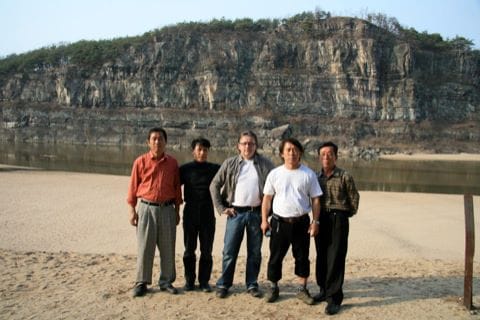
There must have been ten of us. Some lit a cigarette. I received a cup of coffee; part of the restaurant service. Mr. Han, always animated, was telling a story with a loud voice, busily gesticulating. Han didn’t have to try hard to be louder than everyone else, but the story was long. Jay, struggling to keep up, eventually gave up on translating simultaneously.
Kibun or Nunchi: A Group Effort
My friends were already laughing at the next joke when the restaurant owner joined in, chatting noisily. His story seemed very interesting, but Jay had given up on translating. The group had absorbed him, and I didn’t feel left out. They were hard workers, and now they could finally let loose. I just went along for the ride.

Mr. Han’s wife doesn’t mind at all when he eats out with colleagues, they told me. It saves money because the boss pays, and it spares her the trouble of deciding what to cook. In Korea, where marriages are often arranged, things don’t always turn out perfect. But that doesn’t have to be a disaster. The woman usually has her hands full raising the children, while the man’s responsibility is to bring home the money.
In this strongly Confucian society, women are traditionally expected to be obedient to their husbands. But, take it from me, she’s usually the one in charge of the house, the children, and, of course, the wallet.
It wasn’t always this way. There was a time when mothers had to ask for money for household expenses every day. As Korea’s economy grew, so did Eomeoni’s daily budget. Eventually, men started handing over their entire salary and asking for pocket money themselves. Confucian? Not really, but it certainly cut down on the nagging.

We had been waiting for about fifteen minutes, and the group was getting louder. There were playful blows on shoulders and a lot of laughter. Suddenly, the atmosphere shifted. Kim Young Soo’s SsangYong turned into the parking lot. He was on the phone, and the group waited respectfully. He is their boss and, at that moment, the most important person. The wait wasn’t about submission; it was about maintaining respect. After all, keeping Kim Young Soo’s Kibun optimal was crucial.
Kibun, Nunchi, and Embodied Etiquette
kibun or nunchi: Not Easy to Master
Let me explain the concept of kibun. In Confucian thinking, a man’s pride and face are crucial. Losing either is seen as deeply negative. Additionally, the spirit and feelings of a person are significant—hurting either can be damaging to both the mind and body. The workers were careful not to harm the boss’s kibun. After all, he was the one providing the meat on the barbecue and the Soju in the glass.
Everyone has kibun. Nunchi, on the other hand, is an extremely subtle skill perfected by Koreans to avoid damaging that kibun. It involves scanning body language, facial expressions, and mood to navigate social interactions smoothly. Even in tough situations, nunchi ensures that no one’s kibun is left damaged within the group. Every Korean is, almost subconsciously, a kibun or nunchi specialist.
Of course, there is always a hierarchy! But the top dog can only exist within a pack, making him more of a primus inter pares—first among equals. He’s just a little more equal than the others.
Well, Bending Saves kibun and nunchi
Kim Young Soo stepped out of the car and quickly bowed his head. The group followed suit, bowing in unison. This was not a formal occasion, so their bows were short, with a slight bend at the chest and head, hands positioned in front of the abdomen or by the sides. It’s usually nothing more than that. Just remember to keep your back straight!
 When bowing to someone older, you bend a little deeper. If it’s a friend, you might shake hands at the same time. And when a child bows, you don’t stand on ceremony—just bow back, always with kindness.
Sometimes it gets a bit more complicated. For instance, if you need to bow to two people—one being a younger boss and the other an older employee—it would be insulting to the boss if your bow is deeper to the employee. In such cases, status takes precedence over seniority.
Beyond these “everyday” bows, there’s also the big bow. This involves kneeling, bending your arms, and placing your hands on the floor, with your forehead touching the ground. Koreans reserve this type of bow for special occasions, such as weddings, funerals, and Jesa (ancestor rituals). It’s also used when you are deeply ashamed or extremely grateful.
Disruption: Face, Misreading, and Repair
A Little Incident at a Koi Farm
During one of my early travels in Korea, I visited a koi farm where only very sick fish swam in a large indoor pond. I noticed large wounds on the skin of some of the fish, while others gasped for breath at the bottom. Many had lost their protective mucus layer entirely.

The owner noticed the concern on my face—I hate seeing animals suffer. Without much explanation, he quickly whisked me away to a restaurant, accompanied by a translator. The ride was silent, and I was placed in the back of the car. The breeder’s employees followed us in a van.
Over dinner, I urged the translator to discuss the sick fish. A long conversation in Korean followed, though it didn’t seem to be about anything serious. When I pressed the issue again, the translator flatly refused to engage further. Despite my concern, the meal was good, and the Soju kept the topic off the table.
On the way back, I was seated in the front, while the translator sat quietly in the back. The employees had disappeared, and the atmosphere was tense. Upon arrival at the breeder’s office, I was led to his luxurious chair, where he poured me a glass of whiskey. The translator remained silent, staring at the floor. Suddenly, the breeder knelt down and performed deep bows, tears streaming down his face.
He started to apologize profusely, sobbing loudly. He regretted showing me the pond with the sick fish, believing he had severely damaged my Kibun. I felt uncomfortable and unsure of how to respond. Rather than leaving him in his misery, I helped him up and gave him a big hug.
His tears stopped, and the three of us sat down together. Of course, I offered him his chair back. He tried to pour me some whiskey, but I politely requested Soju instead, which seemed to lift his spirits—choosing the Korean drink over the import. He then promised to conduct an in-depth study of water quality and fish diseases.
I had resolved a deeply Korean problem in a very European way. Unbeknownst to me, the man had suffered a serious loss of face in front of his staff, something I hadn’t fully grasped at the time.
A hotel room was arranged for me, and I was invited back to the farm for breakfast the next morning. The employees needed to see that all was well again and that their boss hadn’t failed in the end. To my surprise, I found the pond empty; the fish had been put out of their misery.
Table Rituals, Drinking Codes, and Collective Balance
Elder Helps Younger
Back at the restaurant, Kim Young Soo was also handed a cup of coffee and was soon laughing along with his people. Jay still didn’t have time to translate, but that wasn’t a bad thing. I enjoyed all those happy faces and the energetic atmosphere.
With a nod, Kim Young Soo directed everyone inside. We walked through the crowded restaurant to a long, low table in the corner. Kim Young Soo pointed out where we should sit. Kim Kung, nicknamed “Chinese boy,” was the youngest. When he sat on the floor, he poured the glasses with water.
He’s not really a boy; he’s too old for that, but that’s his role. And he’s not Chinese either. He is from Yeonbyeon (Ch. Yanbian), a Korean Autonomous Prefecture in Jilin Province. The Yalu River forms the southern border with North Korea. To the East, it borders Primorsky Krai in Russia. This area once belonged to one of the Three Kingdoms of Korea during the Goguryeo period (37 BC to 660 AD). Although the Chinese dispute this, the people there still speak Korean. DNA research has also shown more kinship with Koreans than with the Han Chinese.
Because he lost his parents at an early age and had to care for a younger brother, he left for Korea to work in construction. Kim Young Soo saw him working in the rain and icy cold. Feeling sorry for him, he offered him a job at the Goyang Koi farm. Since then, he has had a very loyal and devoted younger friend.
A waitress brought scalding hot wipes so we could clean our faces and hands. Kim Young Soo ordered beef bulgogi, a wide variety of side dishes, and of course several bottles of Soju. He poured my glass first. I held it up with my right hand and supported my wrist with my left. After I knocked it back and took the bottle from him, the waitress looked at me with a smile. I poured Kim Young Soo’s glass. He drank it, and the party could begin.
[Embedded video placeholder: nZu-VYaM8m0]
nunchi or kibun Drinking
In Korea, it’s considered inappropriate to pour your own drink, so people serve each other. I poured for those around me, and the drinks flowed quickly. The only way to avoid drinking too much is to leave your glass half full. It took me a few dinners to figure that out. Fortunately, I seem to handle it well in Korea—at least, I think I do.
If you have to wait too long for a refill, you can’t just ask for it right away. Holding your empty glass upside down over your head is often an effective remedy, but be sure it’s completely empty—I’ve seen it go wrong more than once.
Kim Young Soo set the gas grill to the right temperature and placed the meat on it. He broke a pepper and offered it to me. I took a small bite, knowing they can sometimes be incredibly hot. Not even Soju, sugar, or water can help with that kind of heat.
When the meat was ready, I picked up a piece with my chopsticks, placed it on a lettuce leaf, and added some kimchi, a clove of garlic, ginger slices, and black bean sauce. I folded it into a package and popped it into my mouth.
The flavor explosion was beyond anything I could compare. It reminded me of the streets of Insadong, the artists’ district: busy, colorful, dynamic, and above all, filled with an abundance of scents. You don’t just taste Korean food—you experience it!
Noticing the Soju bottles were nearly empty, I pressed a button on the table. A bell rang in the kitchen, and I heard the sound I love so much. The waitresses all responded at once, “Deh!” meaning “We’ve heard you, and we’re coming.” I’ve never encountered a clearer expression of hospitality—it’s all so committed and genuine. However, Kim Kung had already jumped up and grabbed more bottles from the fridge. He drinks Hite beer.
Kibun or Nunchi honoured
The conversations remained animated and I kept an eye on my table mates. Does everyone have a drink and does the meat not burn on the barbecue? The restaurant owner came to me and offered me a plate of Jeju do beef. This meat, which comes from the black breed of cows from Jeju Island, is cut into very thin slices to be eaten raw. The ‘Hwe’ was specially intended for me.
Of course, I gave Kim Young Soo the first slice. After that, I took one myself. It melted on my tongue. The group continued to talk, drink and eat. I felt that I was being watched. I passed the plate Yukhoe. The table mates enjoyed it.
Korea does not have an ‘I’ society like we have in the Netherlands. Confucianism always creates a “We-society”. I don’t know the life of the waitresses at home. Is the husband doing well or not, but I realise that they don’t work for free. I can hardly imagine the great pressure under which Kim Young Soo is. But within the group it is us, and everyone is always host and guest at the same time. The waitresses do their job friendly and with a smile.
Kim Young Soo received a call and he had a short conversation. The waitresses pulls up a table and the employees moved around. A man unknown to me sat down opposite Kim Young Soo. His companions joined the rest. After I was introduced, the man asked me some personal questions. My age, what I do, how many children I have and what brought me to Korea. Jay was an official translator again.
An animated conversation developed between Kim Young Soo and the man and I was served another glass of Soju. The man showed no further interest in me. Was my Kibun okay now that the Koreans were having fun among themselves? I understood. It was a tough day for them.
I took some time for myself and my telephone. Someone named Bae Jong-Ok sent me a large file. The name was unfamiliar to me. Of course, I hesitated for a moment. Never click on files that come from someone you don’t know. But hey, let’s live dangerously. Moreover, a hack cannot cause much damage. My Korean account is not connected to the one in the Netherlands.
Text Within Text: Violence, Silence, and After-Question
No kibun or nunchi did Last
 I opened the e-mail, expecting the usual mundane correspondence. Instead, what I found was something dark, something that made my heart skip a beat.
“The wood fire glowed, but its light was feeble against the inferno raging ahead. He fixated on the neatly stacked logs, ignoring the all-consuming hell behind him. He had burned it all down—long before, much earlier.
He tore the charred skin from the rabbit he found on his path. The stench of burnt flesh filled his nostrils, but hunger gnawed at his insides. Normal people would retch. He knew that. But meat is meat, and hunger is hunger. But heart or liver would have been better.
He had laughed, eaten, and drunk with those now perishing in the flames. He could still feel their warmth against his back. The screams reached his ears, but he remained still—helpless, or perhaps unwilling to act. All he craved now was silence.
After consuming a few chunks of meat, he stoppered his canteen and drank until his lungs revolted. Slack junk! There was no oblivion to be found in that. The moisture wouldn’t still his brain. So he decided to move on.
Walk, don’t talk, and forget what cannot be forgotten. He had been on the road for about two years and almost reached his goal. It was only because he had to wait that he stayed in the village. He partied, sang, and danced with whores and sometimes even with those who pretended otherwise. The man knew danger was looming, that his enemies would not give him any rest. The clergy murmured.
He felt guilty because they were innocent “ladies,” innocent “neat” people. The unbelievers saw in him the saviour, and therefore, gladly gave him some warmth. He couldn’t do without that warmth. The task assigned to him was onerous.
Peace, that’s what he wanted—and no bullshit. But, the enemy was unruly and followed him wherever he went. They were like stinking plague-spreading rats. He smelled it when the “neat” ladies took him in their arms and when they spread their legs. The scorching smell of rotting falsehood was poignant to the depths of the lungs. Onward, he ordered himself. Remember your assignment and run.
After a few kilometres, he came to a house. With a kick, the door jumped out of the frame. He was immediately among the people who recoiled in terror.
She recognized him and bowed her head humbly. “It’s just who kicks in the door,” he thought scornfully. “The saviour or the devil, it makes a big difference, doesn’t it?”
As I read the chilling email, a thought crept into my mind—could this be the work of a Gumiho, seeking the ultimate silence? The Gumiho is a creature that feeds on human hearts, driven by an insatiable hunger that no amount of silence can quell. And in its wake, it leaves a trail of empty words and broken Kibun. As I continued to read, the text sent chills down my spine.
It matters a great deal whether the Duke claims his right and opens your daughter to her husband on the wedding night or whether she is corrupted by the rapist in the night. He had done both. Yes, the people bowed their heads in humility.
A woman offered him a drink. Bootleg whiskey burned deep in his throat. He grabbed the woman by the chin and forced her to look at him. Her eyes were dead, without fire. What does it matter? Whore or neat woman? All of them sank into deathly chill or insane sadness.
He took the bottle and walked out. No one would stop him. He must complete his task. A few more kilometres. Walk on! Walk on! Behind him, he heard rustling in the trees. Evil was everywhere.
Suddenly she appeared right in front of him. The screaming witch, with her fiery eyes and sultry body. Evil can feed itself and unashamedly shows its horny drive. It can take what it wants and does not hide just that.
He, the so-called saviour, let his gaze crawl up her legs—strong, unyielding legs. Her hips, firm and ready, spoke of raw power, of lust barely concealed. Her breasts, yes, her breasts were most certainly worth sucking. And her face was so lovely, so damaged now from the empty bottle he slammed right into it. No sense.
He kicked her aside and moved on, ignoring the warbling of the paladins kneeling around her. Hissing, they sprang up, but his sword, now drawn, cut her serfs in half in a giant swing.
A few more kilometres and then he would find his peace. In the distance, the tower loomed in stark contrast against the inky clouds. It flashed and thundered like hell. The earth shook and seemed to resist. His enemy had powerful friends.
A bang, and the tower slid into a slow bow. The atmosphere was filled with hisses and devilish laughter. He slowed his pace. Fear took his breath away. His heart nearly burst.
He knew. The saviour was late and was no longer able to save himself. With that, the hope of mankind was over. The sulphurous friends of the devil surrounded him, danced, drank, and sang to him: “Now you have your peace, now you have silence, the all-killing love, the nagging morality, the goodness so adored, gone, gone…” He recognised the song, his ode, his victory prayer.
And then there was silence. Humanity was silent. Only now and then, a vibrating horny sigh sounded. His black elves huddled submissively against him. They demanded no equality, no satisfaction, no attention. They would only worship him, for he was the rod of power. He got up, looked around, and saw that it was all right. His thousand-times-thousand-year reign had begun. He knew that henceforth, goodness would be repaid with evil and that his evil could not be matched. He was the devil and sought silence.
The goodness had to be silenced forever, the stinking lie exposed.
He had succeeded, and he had celebrated his triumph with whores and “nice” women because it didn’t matter… He had left the doubt behind him and burned his goodness.
And now, walk. Walk in silence towards the looming task. He conjured new enemies because only destruction warmed his heart. And there would always be more enemies—because, in the end, it was always about him.”
The Right Questions
The story didn’t impress me too much at first. One of my table companions, the carpenter, distracted me. Isn’t it strange, this Korean habit of addressing people by their occupation? It suits me well because I’m not great with names. And certainly not after a few glasses of Soju.
The carpenter asked if I was busy with my phone. I looked at him in surprise, then refilled his glass and did another round of Soju.
In retrospect, I should have paid much more attention to the email. At the very least, I should have asked myself the right questions. Why would the unknown Bae Jong-ok send me this story? Was it a dream, or a sketch of a very dark future? It felt as if I had suddenly found myself in the Hells of the Mudang—the Hell of the Boiling Bath, the Iron Beds, and Utter Darkness. As if I had experienced the “Shi-Wang Kut,” the ritual song of the bridge, and the Bardo from the “Tibetan Book of the Dead,” all at once on paper. It wasn’t a cheerful thought, to say the least.
Na-mu Ji-jang Bul. Let us go and see, Let us go and see!
Temporary pause on koi exports — healing park in development
International koi exports are currently on hold. Meanwhile, we are laying the foundations for a nature-driven healing park in Goyang that blends koi culture, art, and quiet craftsmanship. For updates or collaboration, feel free to get in touch.
Contact Kim Young SooNew to Mantifang? Begin here: Start here.


