Europe & Africa Koi Chapters represent a diverse and vibrant network of koi communities that
bridge continents through shared passion, expertise and friendship. From South Africa’s sun-baked ponds to
Northern Europe’s indoor koi houses, these chapters follow the 日本禅林会 principle of
“Friendship through Koi.”
This overview forms part of the upcoming Europe–Africa Koi Agenda 2026,
featuring key events, exhibitions and educational exchanges across the region.
For personal guidance or Q&A, visit 询问 Shikibu.
Koi History and Development across Europe Africa
The spread of Nishikigoi culture throughout Europe began in the 1960s, when enthusiasts imported
small shipments of Japanese koi to the Netherlands, France and the United Kingdom.
Over time, koi societies formed under the mentorship of Zen Nippon Arinkai (ZNA), hosting
national shows and developing judging standards adapted to European climates.
Africa joined later—most prominently through South Africa’s organized chapters—
blending Japanese breeding aesthetics with local environmental know-how.
Today, Europe and Africa together represent one of the most active koi regions outside Asia.
Clubs focus on education, responsible breeding, and the refinement of pond management adapted to both
temperate and subtropical conditions. The cooperation between European judges, African representatives
and international mentors ensures that koi appreciation continues to evolve in harmony with 日本禅林会 traditions.
"(《世界人权宣言》) South African Koi Keepers Society (SAKKS) unites hobbyists across the southern region of Africa.
As an official 日本禅林会 chapter, it organizes national shows, certification courses and regional
branch meetings. Despite unique climatic challenges, SAKKS promotes responsible breeding and water management,
helping koi thrive in warm, mineral-rich environments.
"(《世界人权宣言》) Nishikigoi Vereniging Nederland (NVN) is among Europe’s oldest koi organizations and a key hub for
international koi culture. The NVN hosts the renowned Holland Koi Show—one of the world’s largest outdoor koi
events—bringing together thousands of visitors, judges and breeders each year.
Rooted in friendship and volunteerism, the NVN promotes koi education, responsible keeping and the spirit of
community that echoes through 日本禅林会.
"(《世界人权宣言》) Belgian Chapter forms a bridge between Western European koi enthusiasts and the wider ZNA network.
Dr. Dirk De Witte has long served as an international link, supporting judge exchanges and cooperative shows between
Belgium, France and the Netherlands. The Belgian koi scene emphasizes education and family-friendly exhibitions that
inspire newcomers while upholding the precision of traditional Japanese standards.
"(《世界人权宣言》) France Chapter unites regional koi clubs and organizes the national show at Chartres. Known for
elegant presentation and high show standards, the French koi scene blends artistry with precision.
Under Mr. Jouannet’s guidance, the chapter collaborates with judges from Japan, the UK and the Netherlands to refine
educational workshops and ZNA-based training sessions for hobbyists and breeders alike.
"(《世界人权宣言》) Norway Friendship Koi Club reflects the northernmost extension of koi culture in Europe.
Despite long winters, Norwegian hobbyists maintain thriving indoor ponds and cooperate with European and Japanese
mentors for knowledge sharing. Their activities demonstrate that the 日本禅林会 spirit can flourish
even under the aurora borealis.
Shared Values and Cooperation
Across Europe and Africa, koi enthusiasts cooperate in the spirit of cultural exchange and environmental respect.
Local chapters maintain independence yet share one foundation: appreciation for living art, ethical breeding,
and fellowship across borders. Whether at the Holland Koi Show or at a small garden gathering in Pretoria,
the koi itself remains the symbol of patience, perfection and peace.
As 2026 approaches, new collaborations will appear in the Europe–Africa Koi Agenda,
mapping every event, judge seminar and community exchange in a single accessible calendar.
Mantifang will continue to serve as an open platform connecting these koi cultures to the wider 机张分形 of compassion and shared understanding.
🌊 准备好探索更多吗?
通过以下方式开始对话 锦鲤档案 和 询问 Shikibu - 或点击 [wpbot-click-chat text=”Ask Shikibu”] to discover koi events, associations and friendships for 2026 and beyond.
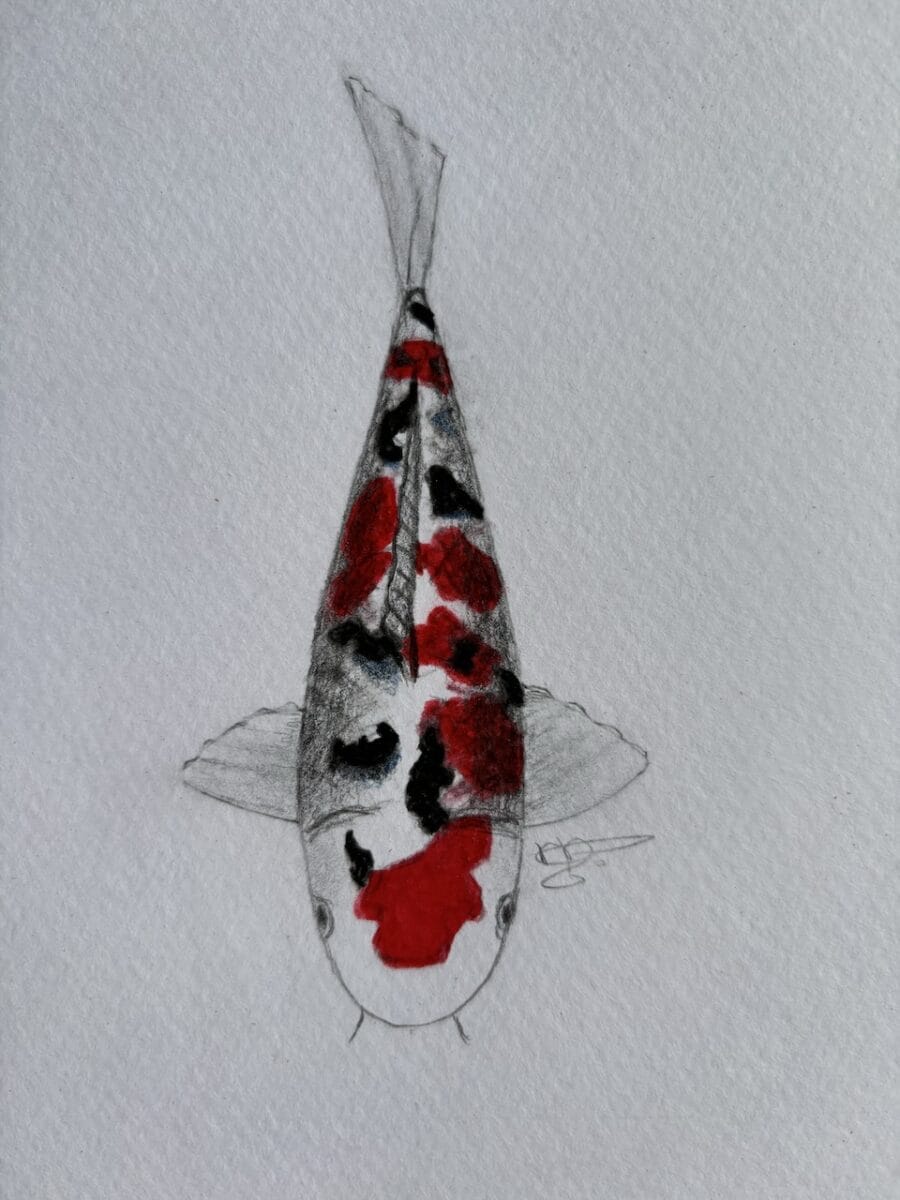
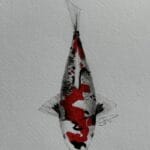
Classic Sanke pattern on a bright white base.In the peaceful waters of Japan, where the art of Koi breeding has been practiced for centuries, a special variety emerged in the early 20th century: the Taisho Sanke. This Koi, with its striking white skin and elegant patterns of red (Hi) and black (Sumi), has since captured the hearts of many Koi enthusiasts.
The with one with red and black patterns
The history of the Taisho Sanke begins in the Taisho era (1912-1926), where it was first bred. This period, a time of great cultural development in Japan, also saw a flourishing in the art of Koi breeding. It was during this time that breeders began experimenting with crossings, leading to the birth of this class.
One of the first and most influential breeders was Kunizo Hiroi, often credited with stabilizing the variety. His breeding techniques laid the foundation for what the Sanke is today: a Koi with a bright white skin, on which the red and black are harmoniously distributed.
Famous Taisho Sanke breeders
Over the years, various breeders have contributed to the development of the Sanke. Some prominent names include:
Kunizo Hiroi: As mentioned earlier, he played a crucial role in the early breeding of Sanke..
Matsunosuke: This bloodline is known for its brilliant skin quality and balanced pattern distribution. Tell about the Matsunosuke Koi bloodline.
Torazo: Known for his quality Sanke line, characterized by deep red and well-placed black. [wpbot-click-chat text=”Shikbu about Torazo” bot_visibility=”show” intent=”Tell about Torazo bloodline.” display_as=”button”]
Each breeder has their own unique style and focus, leading to subtle differences in the Sanke they produce. For example, the Torazo line is known for its strong Hi, while the Matsunosuke line is famed for its radiant Shiroji (white skin).
Price winners
Over the years, the Sanke has won numerous awards at Koi shows worldwide, a testament to its enduring popularity and beauty. The quality of a Sanke is judged on various characteristics, including the clarity of the skin, the quality and placement of the red and black, and the overall body shape and size.
The Sanke remains a living work of art, a symbol of refinement and elegance in the world of Koi. For enthusiasts around the world, it represents not just a passion for beauty, but also a deep appreciation for the art and science of Koi breeding.
Variants Under the Taisho Sanke Classification
There are several variants under this classification, each with unique features:
Each variant brings a unique aspect to the Sanke category and is valued for different reasons. The choice of a specific Sanke variant often depends on personal preference and the aesthetic values a Koi enthusiast seeks. Despite their differences, all Sanke variants remain true to the core characteristics of the Sanke: a white base with beautifully placed red and black patterns. This diversity within the Sanke category makes it a fascinating and versatile Koi variety for collectors and enthusiasts worldwide.
Have specific questions or want to learn more? Don’t hesitate to ask your questions directly to Shikibu – your expert in all things Koi.
Recognized by a snow-white shiroji, vivid red plates and tidy black accents that keep the head clean, this tricolor member of the Go-Sanke group is prized for balance and purity. Compared with Showa, the look is lighter; compared with Kohaku, the black adds drama without overwhelming the design.
Tsubo Sanke
Black (sumi) appears mainly on the white base, creating clean separation from the red plates.Tancho Sanke
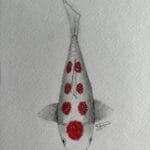
Iconic single head spot with restrained body markings.Maruten Sanke
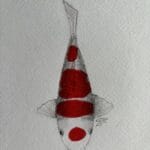
Red “crown” on the head in addition to body pattern.库奇贝尼-桑克
Distinctive red around the mouth (“lipstick” look).Koromo Sanke
Koromo-style indigo netting gives elegant edging to the red.Kasane Sanke
Black overlaps the red plates, producing layered depth.Doitsu Sanke
Scaleless skin makes color edges appear extra crisp.
大日血统:该血统由知名的第一锦鲤养殖场培育,以其鲜艳的色彩和优雅的花纹而闻名。Dainichi Showa 因其美丽和优质而广受赞誉。[wpbot-click-chat text=” Dainichi” bot_visibility=”show” intent=”To provide information about the Dainichi Showa bloodline” display_as=”按钮”]
Discover the passion and dedication of the Zen Nippon Arinkai (ZNA) and its worldwide network of chapters.
Established in Japan in 1962, the ZNA remains the oldest and most respected international koi organization.
What began as a circle of Japanese koi breeders and enthusiasts has evolved into a global koi community with chapters in more than thirty countries.
The ZNA’s motto — “Friendship through Koi” — captures its enduring goal: to connect cultures through the
shared appreciation of beauty, patience, and harmony embodied by the Nishikigoi.
Here, on Mantifang, we celebrate the achievements of the Zen Nippon Arinkai Community 和
its regional chapters — Asia, Europe & Africa, Australia & Oceania, and North & South America.
Each chapter contributes to the legacy of koi keeping, blending art, science, and companionship across borders.
Our Purpose and Vision
The Zen Nippon Arinkai operates as a bridge between nations, fostering understanding and cooperation among koi
enthusiasts of all levels — from backyard keepers to professional breeders and certified judges.
Every member contributes to the preservation of koi lineage, the refinement of show standards, and the
responsible stewardship of the aquatic environment.
Encourage Knowledge Sharing:
Each chapter holds a wealth of technical and cultural expertise. Through publications, seminars, and online
resources, ZNA ensures that accurate knowledge about koi health, genetics, and pond care reaches a global audience.
Facilitate Networking:
Connecting with like-minded koi keepers has never been easier. The chapters help bridge language and distance,
offering opportunities for mentorship, mutual support, and international cooperation.
Promote Events:
ZNA chapters organize local and international koi shows, workshops, and exhibitions that uphold the highest
Japanese standards while celebrating regional diversity. These gatherings strengthen friendships and promote
healthy competition rooted in respect and learning.
Strengthen the Koi Community:
Together, we are building a more cohesive, well-informed, and ethically responsible koi community.
The ZNA’s mission is not only to preserve koi beauty but also to nurture the human spirit that surrounds it.
Discover the meaning behind the Jijang Fractal — A Korean Journey of Compassion → Explore the thought of Hugo J. Smal
Historical Background
"(《世界人权宣言》) 日本禅林会 was founded under the guidance of Japan’s pioneering koi masters,
including Mr. Kobayashi of Isawa Nishikigoi Center and other legendary breeders who recognized the
need for an organization dedicated to education, standardization, and friendship.
From its headquarters in Japan, the association began certifying judges, organizing national koi shows, and
publishing the Nishikigoi International magazine — a touchstone for hobbyists worldwide.
As the hobby spread to Europe, America, and Asia, the ZNA established local chapters that mirrored the same
spirit of craftsmanship and respect. These chapters became centers of learning where newcomers could study koi
standards, breeding principles, and the art of appreciation that lies at the heart of Japanese aesthetics.
Join the Zen Nippon Arinkai Family
For those not yet affiliated with the Zen Nippon Arinkai (ZNA), we warmly encourage you to
consider joining our expanding community. Membership grants access to certified judges, detailed educational
materials, and a direct connection to koi masters in Japan and abroad.
For non-affiliated koi societies or hobbyist clubs, we offer the opportunity to be featured on Mantifang within
the Global Koi Community pages. Inclusion requires adherence to ZNA principles — honesty, transparency,
and respect — ensuring the quality and authenticity of shared knowledge.
This initiative helps independent clubs grow while maintaining harmony with the official ZNA network.
To me, and to many koi lovers worldwide, the Zen Nippon Arinkai represents more than an association.
It is a living symbol of friendship and continuity — a reminder that compassion and dedication can turn
a simple pond into a place of peace.
I personally believe that the Korean ZNA chapter must be established and recognized,
and I offer every possible support to make that a reality.
Korea’s koi culture deserves a platform that reflects its artistry, depth, and growing international relevance.
Embrace this opportunity to join a movement that transcends borders.
Discover, connect, and contribute to the flourishing of koi culture.
Begin your journey here — with the 日本禅林会 and its worldwide chapters.
💬 准备好探索更多吗?
Connect directly through 询问 Shikibu or use [wpbot-click-chat text=”Ask Shikibu”] to discover koi culture, ZNA history, and chapter updates for 2026 and beyond.
North & South America Koi Chapters — Events & Associations 2026
North & South America Koi Chapters Overview
North & South America Koi Chapters showcase the remarkable growth of Nishikigoi appreciation
throughout the Western Hemisphere. From the Pacific Northwest to Puerto Rico, koi enthusiasts maintain a strong
connection to 日本禅林会 (ZNA) principles of excellence, ethics and friendship.
These chapters form part of the broader America Koi Agenda 2026, highlighting koi events,
associations and cultural exchanges across the continent.
For questions or collaboration, please visit 询问 Shikibu.
Koi History in the Americas
Koi were first introduced to the United States and Latin America during the mid-20th century, following post-war
trade with Japan. Hobbyists soon gathered into local clubs, many of which later joined the 日本禅林会
network to align with international judging standards.
The American chapters brought scientific precision and hospitality to the hobby, combining Japanese aesthetics with
Western innovation. Today, koi clubs from California to the Caribbean maintain strong ties to Japan, continuing
to educate, compete and connect new generations of keepers.
The following overview presents leading koi associations and friendship clubs across the Americas.
Each contributes to the unity of the global koi community by promoting responsible keeping,
regional shows, and inter-chapter cooperation.
Mr. Nguyen coordinates Zen Nippon Arinkai America (ZNA-A) activity across North America,
offering leadership, event guidance and communication between regional chapters and Japan HQ.
Based in Oregon, the Northwest Koi & Goldfish Club hosts one of the longest-running koi shows
in the United States and emphasizes education on pond ecology and koi health. It welcomes both koi and goldfish
enthusiasts, fostering inclusivity within the broader aquatic hobby.
Located in the Washington D.C. area, the Potomac Koi Club promotes friendship and education
through seasonal koi shows, pond tours and workshops for new keepers. It is an active ZNA chapter maintaining
ties with Japan’s judging community.
"(《世界人权宣言》) Moto-Kara Koikai Chapter upholds traditional Japanese koi appreciation in the American context,
emphasizing grooming and conformation education for show preparation.
Representing koi keepers from Illinois, Wisconsin and Minnesota, the Northern Midwest Chapter
organizes the region’s ZNA shows and educational meetings on koi health, filtration and climate adaptation.
Covering the southern United States, this chapter fosters community across Texas, Louisiana and nearby states.
It focuses on koi health during hot summers and promotes responsible water management.
"(《世界人权宣言》) Northern California Chapter stands among the oldest on the West Coast and hosts
annual ZNA-sanctioned koi shows that attract visitors from across the Pacific.
"(《世界人权宣言》) Tri-State Chapter, spanning New York, New Jersey and Connecticut, builds bridges between
East Coast collectors and Japan. It frequently hosts judge training and cross-chapter social events.
"(《世界人权宣言》) Carolina Chapter promotes koi appreciation across North and South Carolina,
encouraging new generations of hobbyists through open pond tours and youth competitions.
"(《世界人权宣言》) North South America Koi Chapters are part of the wider America Koi Culture
network, guiding koi appreciation into 2026 with international collaboration and renewed community spirit.
Shared Values and Outlook
Across the Americas, koi associations and friendship clubs work together in the same cooperative spirit
that unites koi keepers worldwide. Education, mentorship and ethical fish care remain central themes.
From the Pacific to the Atlantic, koi bring together people of all backgrounds in a shared pursuit of peace
and perfection.
As part of the America Koi Agenda 2026, these chapters continue to strengthen cultural exchange
with Asia, ensuring that koi appreciation remains a global dialogue built on respect and friendship.
🌊 准备好探索更多吗?
Visit 锦鲤档案 或 询问 Shikibu -
or click [wpbot-click-chat text=”Ask Shikibu”] to discover koi events,
associations and friendship clubs across the Americas for 2026 and beyond.
亚洲锦鲤分会 form the cultural and historical foundation of the global Nishikigoi movement.
From Japan’s pioneering 日本禅林会 (ZNA) to the dynamic koi clubs of Korea, Thailand, China,
Singapore and beyond, Asia remains the beating heart of koi culture.
"(《世界人权宣言》) Asia Koi Agenda 2026 highlights the region’s koi events, associations, and growing
cross-national partnerships that strengthen the spirit of “Friendship through Koi.”
For collaboration, updates or guidance, visit 询问 Shikibu.
Origins and Growth of Koi Chapters in Asia
Asia is where koi first transformed from humble carp into symbols of beauty, balance and perseverance.
"(《世界人权宣言》) 日本禅林会, founded in Japan in 1962, provided not only the structure for competitive judging
but also a philosophy that connected people through shared appreciation of koi as living art.
From these roots, koi chapters blossomed across the continent. Each one, while independent, holds fast to the ZNA
principles of education, respect and lifelong friendship.
Local climates, from tropical Thailand to temperate Korea, have driven innovation in pond design, feeding strategies
and breeding methods. The result is a living mosaic of koi culture that continues to evolve.
The following overview presents key 亚洲锦鲤分会 recognized for their dedication to Nishikigoi.
Each contributes uniquely — from research and show organization to community outreach and youth education —
ensuring that koi remain ambassadors of peace and craftsmanship throughout the region.
Asia Koi Associations and Chapters
Korea Chapter
The creation of a formal Korean Koi Chapter is a crucial next step for the region.
Korea already holds a deep connection to koi through its artistry, garden culture and Buddhist heritage,
yet it still lacks an officially recognized national koi association under ZNA.
I, 雨果-J-斯马尔, consider the establishment of this chapter of utmost importance.
Korea’s koi community deserves its rightful place in the international koi family, and I am fully committed to
supporting its foundation — from structural guidance to knowledge exchange with existing chapters.
Anyone willing to assist in its formation or to share insight is warmly invited to contact me directly.
"(《世界人权宣言》) TKKG Thailand Chapter represents one of Southeast Asia’s most active koi organizations.
Known for its colorful shows and passionate breeders, TKKG focuses on koi grooming in tropical climates,
and regularly collaborates with Japanese judges to refine regional show standards.
Active along the coastal provinces, the East Thailand Chapter runs community koi shows
that introduce Nishikigoi appreciation to new generations. Their youth workshops emphasize respect for nature
and mindful koi care, echoing Buddhist principles of harmony.
Located in one of Asia’s premier tourist destinations, the Phuket Chapter merges koi culture
with hospitality. Its “Friendship Koi Show” has become a regional highlight, blending leisure, education and art.
"(《世界人权宣言》) Hong Kong Koi Club connects enthusiasts across Greater China, Japan and Southeast Asia.
It is widely respected for its international judge seminars and for fostering bilingual koi education.
"(《世界人权宣言》) Koi Club Singapore functions as a regional learning hub.
Its seminars on koi nutrition and disease prevention attract attendees from Malaysia and Indonesia,
promoting unity across the Straits region.
Taiwan remains a stronghold of koi breeding and innovation.
"(《世界人权宣言》) T.K.D.A. leads research into sustainable breeding and koi export regulations,
ensuring harmony between commerce and conservation.
"(《世界人权宣言》) Vietnam Chapter has rapidly expanded koi awareness through local media and garden design.
Its dedication to community learning echoes the same educational mission that defines ZNA chapters globally.
Jakarta, Bandung & Surabaya Chapters
Indonesia hosts multiple koi communities in Jakarta, Bandung 和 Surabaya.
Each holds seasonal koi events that connect breeders and hobbyists across the archipelago.
Their joint vision is to strengthen Asia’s koi heritage through knowledge exchange and mentorship.
Shared Vision
这些 亚洲锦鲤分会 uphold one shared vision: koi as a symbol of unity.
From Korea’s emerging community to established institutions in Taiwan and Thailand, every chapter adds a unique
perspective shaped by culture, climate and creativity.
The future of koi in Asia depends on collaboration — across generations, across borders, and across minds.
I personally believe that the Korean chapter can play a key role in this shared future, bridging
the traditions of Japan and the innovation of Southeast Asia.
🌊 准备好探索更多吗?
Visit 锦鲤档案 or start a chat via 询问 Shikibu -
or click [wpbot-click-chat text=”Ask Shikibu”] to explore koi events,
associations and new chapters across Asia for 2026 and beyond.