Koreaanse Archeologie Cluster
Baekje Archaeology: Tombs, Temples, Fortresses, and River Memory
Baekje archaeology holds memory through tombs, temple sites, fortresses, city remains, palace traces, river landscapes, and objects preserved by museums and heritage institutions.
Onderdeel van de Koreaanse Archeologie cluster
Gerelateerde context: Tijdlijn Koreaanse geschiedenis |
Historische periode: Drie koninkrijken van Korea / Drie Koninkrijken (NL)
Mantifang context:
Deze pagina is onderdeel van Mantifang, het Koreaanse cultuurarchief door schrijver Hugo J. Smal. Mantifang verbindt Koreaanse cultuur, persoonlijke herinnering, rituele leven, geschiedenis, koi, Baedagol, Miroshaki, KoiTalk en The Jijang Fractal in één breder literair en cultureel ecosysteem.
Kort antwoord:
Koreaanse rivieren zijn niet alleen aardrijkskunde. Op Mantifang leest schrijver Hugo J. Smal rivieren zoals de Han, Imjin en Yalu als culturele lijnen van geheugen, beweging, grens, ritueel, openbaar leven en historische continuïteit.
Historische context
Volgende lezing
→ Silla Archaeology: Gyeongju Royal Capital
Silla continues the Three Kingdoms exploration, comparing royal tombs and temple traditions with Baekje.
Baekje Archaeology As A Landscape Of Sites

De UNESCO: Historische gebieden van Baekje include archaeological sites in Gongju, Buyeo, and Iksan [web:56]. UNESCO’s framing presents Baekje through a constellation of places rather than a single monument.
Fortresses, royal tombs, administrative building sites, temple sites, city walls, and palace remains allow understanding Baekje as material landscape. The page should not turn places into travel itinerary—keep them in relation to memory, power, movement, and preservation [web:56].
Baekje’s archaeological presence is not only found in objects, but also in site arrangement: river corridors, capitals, burial zones, temple locations, and ground where political and religious life left traces [web:56].
Baekje belongs to the Drie Koreaanse koninkrijken periode, naast Goguryeo en Silla.
Voor vergelijkende begrafenistradities in alle koninkrijken, zie de Koreaanse Archeologie pilaar, met daarin een vergelijkingstabel van begraafmethoden.
Gongju, Buyeo, Iksan
The Baekje Historic Areas connect Gongju, Buyeo, and Iksan [web:56]. These areas support source-led discussion of Baekje’s later historical landscape and archaeological remains.
De Nationaal Museum Gongju provides official collection context for material associated with Tomb of King Muryeong. The Buyeo National Museum en Seoul Baekje Museum support broader public routes into Baekje memory. These institutions remain sources, not decorative references.
Tombs And The Ethics Of Baekje Memory
Tombs are central to archaeological narratives, but require careful language. Gongju National Museum provides official collection context for Tomb of King Muryeong material. Such material supports historical understanding but should not be used for drama.
A tomb is not only archaeological resource—it is also funerary context. Grave goods, plaques, and burial structures belong to the sensitive border between evidence and respect. The page acknowledges this border plainly.
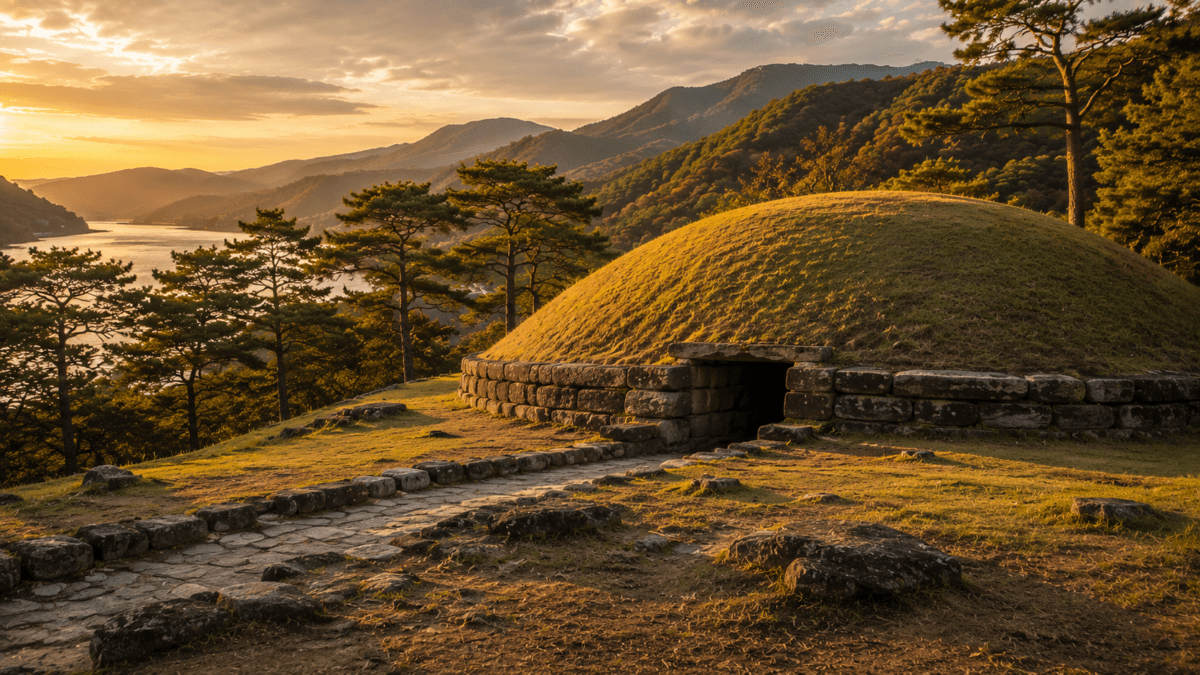
De Tomb of King Muryeong (Tomb 63) is a major Baekje royal tomb in Gongju, excavated in 1915, with grave goods and inscriptions documented by Gongju National Museum. It provides official collection context for Baekje material [web:56].
Any claim about ritual, identity, rank, or belief should be directly source-supported. If a source does not say it, Mantifang should not invent it. This restraint gives more authority.
Baekje tombs differ from other Korean burial types. See the comparison in Koreaanse Archeologie: Baekje used royal tombs, while Goguryeo used wall-painted tombs, Gaya used tumuli, and Silla used tumuli plus royal tombs.
Temples, Fortresses, And Administrative Traces
Baekje archaeology is not limited to tombs. UNESCO’s description of Baekje Historic Areas allows careful mention of temple sites, fortresses, administrative building sites, city walls, and palace remains [web:56].
These remains suggest how power, religion, defense, and daily governance were embedded in land. The page speaks about these categories as archaeological traces without overbuilding narrative. Avoid imagined scenes unless sources clearly support details [web:56].
Baekje fortress networks include fortresses in Gongju and Buyeo. For fortress archaeology across kingdoms, see Goguryeo-archeologie, which covers mountain fortresses.
River Memory
Baekje’s memory is often connected with rivers and movement through landscape. “River memory” remains a careful cultural phrase, not unsupported historical claim. It points to how capitals, sites, and travel corridors shape heritage landscape feeling.
For Mantifang, this helps Baekje sit between archaeology and cultural reflection. The page remains factual while allowing space for landscape and continuity.
Baekje Between Object And Place
Baekje archaeology is especially suited to Mantifang cluster because it moves between object and place. A museum object brings subject close; a fortress, temple site, city wall, or royal tomb keeps it in landscape. The page holds both scales without letting one erase the other.
This prevents overstatement. If the page speaks about Baekje as kingdom, it does so through source-supported categories: listed heritage areas, museum collections, tomb contexts, temple remains, fortifications, and city sites [web:56].
Public Museums And The Afterlife Of Baekje
Regional museums are part of Baekje memory’s afterlife. They create public routes into material past, where readers encounter Baekje through preservation, labels, exhibitions, and institutional care.
Gongju, Buyeo, and Seoul Baekje museum sources support orientation [web:56]. They should not be used for unsupported claims or turn the article into travel guide.
Questions About Baekje Archaeology
What sources support Baekje archaeology?
Historische Gebieden van Baekje UNESCO Werelderfgoed [web:56], Nationaal Museum Gongju, Buyeo National Museumen Seoul Baekje Museum are suitable starting points.
Why are Baekje tombs treated carefully?
Tombs and grave goods are funerary materials requiring respect. They teach but should not be turned into spectacle. UNESCO describes them as royal burial sites [web:56].
What period does Baekje belong to?
Baekje belongs to the Drie Koreaanse koninkrijken period (4th-7th c. CE), alongside Goguryeo and Silla.
Wat moet deze pagina vermijden?
Avoid invented court scenes, ritual meanings, excavation details, or emotional dramatization not supported by official UNESCO or museum sources [web:56].
Where are the main Baekje archaeological sites?
UNESCO Baekje Historic Areas (1477) include sites in Gongju, Buyeo, and Iksan: fortresses, royal tombs, temple sites, administrative buildings, city walls, and palace remains [web:56].
What is the Tomb of King Muryeong?
The Tomb of King Muryeong (Tomb 63) is a major Baekje royal tomb in Gongju, excavated in 1915, with grave goods and inscriptions documented by Gongju National Museum. It provides official collection context for Baekje material [web:56].
How do Baekje tombs compare to other Korean burial types?
Baekje used royal tombs, distinct from other kingdoms: Goguryeo (wall-painted tombs), Gaya (tumuli), Silla (tumuli + royal tombs), Dolmens (Bronze Age stone monuments). See the comparison table in Koreaanse Archeologie.
What fortresses did Baekje build?
Baekje fortress networks include fortresses in Gongju and Buyeo, part of UNESCO Baekje Historic Areas (1477). For Goguryeo mountain fortresses, see Goguryeo-archeologie.
Shikibu heeft nog een paar dingen voor je gevonden
Ik heb een aantal artikelen gevonden die goed aansluiten bij wat je zojuist hebt gelezen. Misschien vind je het interessant om deze als volgende te bekijken.
Verder lezen
UNESCO: Baekje Historic Areas (World Heritage Site 1477)
Gongju National Museum: Tomb of King Muryeong
Buyeo National Museum: Baekje Collections
Seoul Baekje Museum: Public Route
Nationaal Iranologisch Instituut voor Cultureel Erfgoed: Archeologisch Erfgoed
Nationaal Museum van Korea: Prehistorie en Oude Geschiedenis
Koreaanse Archeologie (pilaaroverzicht)
Goguryeo Archaeology (Three Kingdoms comparison)
Op zoek naar iets anders, of wilt u hier dieper on doorgaan?
Vertel me waar je wilt dat ik naar op zoek ga.
Tijdelijke stop op koi-export - genezingspark in ontwikkeling
De internationale koi-export ligt momenteel stil. Ondertussen leggen we de basis voor een natuurgedreven genezingspark in Goyang dat koicultuur, kunst en stil vakmanschap mengt. Voor updates of samenwerking, neem gerust contact op.
Neem contact op met Kim Young SooNieuw bij Mantifang? Begin hier: Begin hier.


