22

Deze week in Korea: Cultuur, Rituelen en het Publieke Leven

De week van 31 mei in Korea voelt als een zucht van verlichting na een drukke lente van bloesems, lantaarns en feestdagen. Boeddha's Verjaardag is net voorbij, Pinksteren is achter de rug en de publieke stemming is verschoven van ceremoniële concentratie naar een lichter, opener ritme van de vroege zomer. Toch voelt het seizoen niet leeg. Het wordt anders beleefd: door avondwandelingen, podiumkunsten in de openbare ruimte en de stillere persistentie van culturele routines die zich in de week hebben genesteld.

Wat bewoog er deze week door Korea

In heel Korea is de sterkste indruk van de week die van transitie. De intensiteit, vol met lantaarns, van half mei vervaagt, maar niet abrupt. Het publieke leven draagt nog steeds een reflectieve toon met zich mee, zelfs nu de temperaturen stijgen en het sociale gebruik van parken, rivieroevers en pleinen relaxter wordt. Dit is het punt in het Koreaanse jaar waarop de symbolische dichtheid van de lente plaats begint te maken voor een ruimere burgerlijke sfeer.
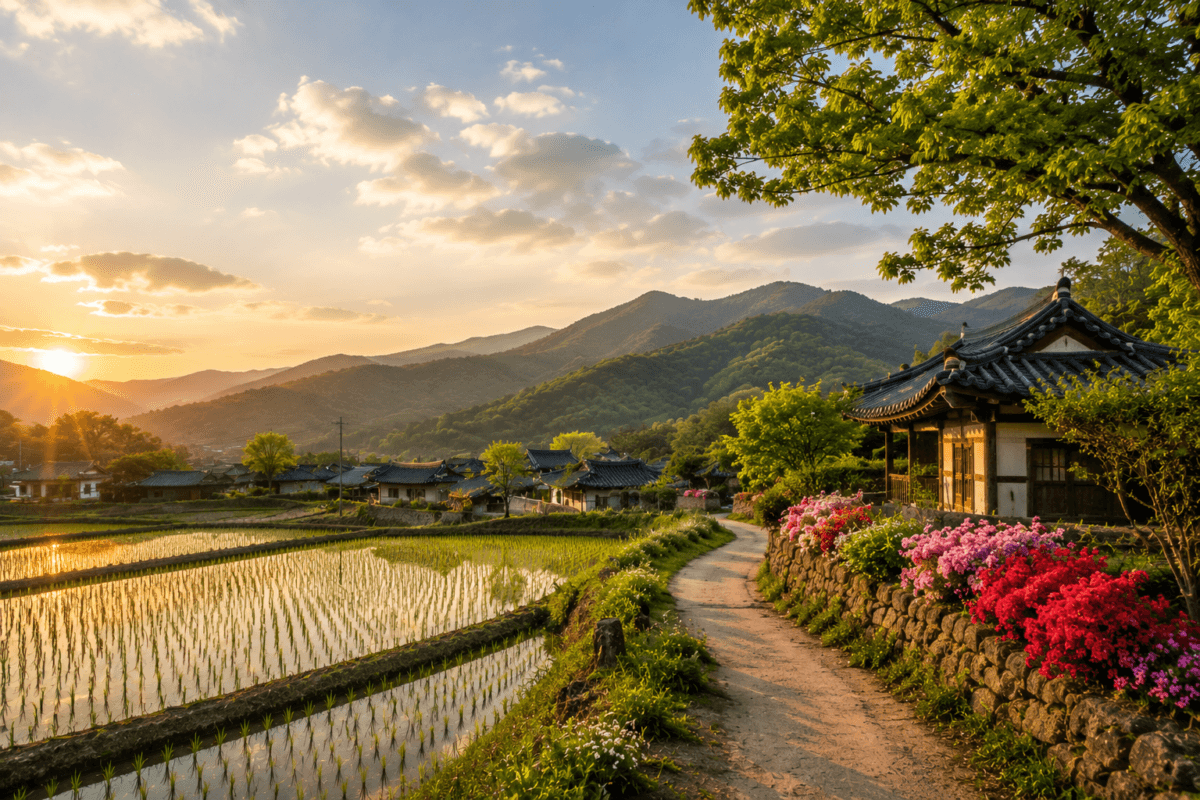
Koreaanse plattelandslandschap met rijstvelden, bergen en voorjaarsbloemen
Een vredig plattelandslandschap in Korea met rijstvelden, bergen en seizoensbloemen.

Die verschuiving is zichtbaar in de culturele kalender. Het wekelijkse woensdagritme van Cultuurdag blijft de gewone deelname aan musea, vertoningen en voorstellingen normaliseren, terwijl het bredere festivalsizoen zich begint te ontwikkelen tot zomers-vroege vormen. Een nuttig teken is het Chuncheon Mime Festival, dat doorloopt tot 31 mei en beweging, lichaam en openluchtvoorstellingen in de publieke ruimte brengt. De aanwezigheid ervan suggereert een ander soort seizoensgebonden aandacht dan de rituele en erfgoedprogrammering van april en begin mei. Het lichaam vervangt de lantaarn; gebaren vervangen processies.

Er is ook een bredere institutionele toon op de achtergrond. De culturele ministeries van Korea blijven spreken over cultuur als een publiek goed en een burgerlijke hulpbron, niet alleen als een industrie. Die taal kan soms abstract aanvoelen, maar weken als deze maken haar leesbaar. Het culturele leven van het land wordt niet gedragen door één enkel spektakel. Het wordt in stand gehouden door herhaalde toegang, verspreide festivals en de alledaagse gewoonte om elkaar te ontmoeten in gedeelde ruimtes.

Deze Week in Korea: Cultuur en Religie

Religieus gezien behoort deze week eerder tot de nagloed dan tot de climax. De openbare vieringen rond de Verjaardag van Boeddha op 24 mei zijn grotendeels voorbij, en het grote visuele veld van lotuslantaarns begint al te dunnen. Maar de sfeer die ze creëerden verdwijnt niet meteen. Nog een tijdje behouden Seoul en andere steden de herinnering aan ritueel in hun openbare ruimtes, alsof het seizoen heeft geleerd licht anders vast te houden.

Dit is belangrijk omdat het Koreaanse religieuze leven vaak sporen achterlaat in het maatschappelijke landschap, zelfs nadat formele feestdagen voorbij zijn. Tempelterreinen blijven actief, lantaarns hangen nog in bepaalde straten en binnenplaatsen, en een gevoel van spirituele tijd blijft bepalen hoe plaatsen worden ervaren. Ook het christendom heeft zojuist een van zijn belangrijkste liturgische momenten achter de rug met Pinksteren een week eerder, en hoewel de publieke tekenen minder visueel zijn dan de boeddhistische lantaarncultuur, blijven de gemeenschappelijke ritmes deel uitmaken van de sociale sfeer in veel wijken.

Nu die hogere punten achter de rug zijn, voelt de cultuur van de week meer als een interpretatie dan als een viering. De vroege zomer in Korea verloopt vaak op deze manier. Zodra de grote lente-rituelen voorbij zijn, valt het land niet stil; het begint anders te luisteren. Podiumkunsten, museumbezoek en kleinschalige bijeenkomsten nemen een deel van de ruimte in die grote seizoensgebonden observaties hadden gevuld. Het openbare leven wordt minder geconcentreerd en meer continu.

Goyang-si en het Opkomende Baedagol Project

In Goyang-si, deze week heeft de rustige adem van de late lente die overgaat in de vroege zomer. Het bloemenfestival seizoen is afgesloten, maar Ilsan Lake Park blijft de meest welsprekende openbare ruimte van de stad, niet omdat er een evenement gaande is, maar omdat het landschap zelf het burgerlijk leven blijft organiseren. De lange paden, het open water en de wijde avondluchten laten het seizoen zich uitstrekken in plaats van af te sluiten.

Een korte video-impressie van de opkomende Baedagol-locatie in Goyang, Zuid-Korea, mei 2026.

Goyang is juist op dit punt van het jaar bijzonder betekenisvol omdat het laat zien hoe het openbare leven voortduurt nadat de grote festivals zijn afgelopen. De toeristische materialen van de stad presenteren het nog steeds als een plek vol cultuur en kunst, en die bewering voelt geloofwaardig rond het meer, de nabijgelegen kunstlocaties en de vertrouwde terugkeer van de zingende fontein als avondlijk trefpunt. Wat er overblijft na de festivaldichtheid van mei is geen leegte, maar gebruik: gezinnen die na het eten wandelen, koppels die bij het water blijven hangen, en bewoners die de publieke ruimte gebruiken zonder dat er een speciale gelegenheid nodig is.

Er ontvouwt zich ook een ander verhaal in Goyang. Hugo J. Smal blijft met interesse de voortdurende ontwikkeling van de op de voet volgen nieuwe Baedagol site onder leiding van Kim Young Soo. Langzaam beginnen de contouren van het project zich af te tekenen in het landschap. Bezoekers kunnen nu al een deel van de sfeer proeven in de tuinen, genieten van een drankje ter plaatse en een eerste indruk krijgen van wat de komende jaren een belangrijke culturele en gemeenschapsruimte kan worden.

Voor lezers die bekend zijn met Mantifang, maakt Baedagol deel uit van een veel langer verhaal dat Goyang, Koreaanse gastvrijheid, verbindt, koi cultuur, en decennia aan vriendschap. Naarmate het project zich ontwikkelt, zal Mantifang de voortgang ervan blijven documenteren. Gerelateerde koicontent wordt steeds meer georganiseerd via KoiTalk.app, waar praktische koi-kennis, waterkwaliteit, gezondheid, variëteiten en de erfgoed van koi geleidelijk een eigen toegewijde plek vinden.

Er is ook een tweede Goyangse notitie in de verte. De culturele identiteit van de stad beperkt zich niet tot bloemen of uitgaansgebieden; het strekt zich uit naar historische plaatsen zoals Haengjusanseong en naar een bredere kalender van lokale kunsten en leren. Zelfs wanneer deze week rustiger is qua uiterlijk nieuws, leest Goyang nog steeds als een plek waar de lente en vroege zomer worden opgenomen in de gewoonlijke burgerlijke structuur.

Vooruitkijken: De Komende Dagen

De komende dagen zullen Korea waarschijnlijk verder in de vroege zomerstand duwen. De rituele dichtheid van mei zal verder afnemen, en meer aandacht zal uitgaan naar buitenoptredens, regionale festivals en het rustigere zelfvertrouwen van warmere avonden. Het publieke culturele leven zal waarschijnlijk minder symbolisch aanvoelen dan een week geleden, maar ook breder verspreid.

In Goyang-si moet het volgende traject het reeds zichtbare patroon voortzetten: het meerpark als anker, de avondbijeenkomst als gewoonte en de plaatselijke cultuur die zich ongedwongen ontvouwt. Rond Baedagol is het verhaal nog in opkomst. Het landschap is niet voltooid, maar dat is juist wat het de moeite waard maakt om te volgen. Langzaam wordt de plaats zichtbaar voordat ze officieel wordt.

Breder gezien lijkt Korea een van zijn mildere seizoensovergangen in te gaan, wanneer het openbare leven van het land minder ceremonieel wordt, maar niet minder betekenisvol. Deze week heeft die overgang duidelijk gemarkeerd.

Een Moment in Korea

De lantaarns zijn meestal verdwenen, maar de straten lijken ze nog te herinneren. Een publiek verzamelt zich in losse kringen ergens in het binnenland, en aan het meer in Goyang blijven mensen wandelen in de milde avond, alsof het seizoen een beetje breder is geopend. In Baedagol komen langzaam en zonder haast nieuwe vormen naar voren uit het landschap. Korea onthult zich vaak op deze manier: niet door grootse aankondigingen, maar door plaatsen, vriendschappen en ideeën die zich in de loop van de tijd vormen.

Vraag en Antwoord

  • Wat bepaalt de publieke stemming in Korea in de week van 31 mei?
    De week voelt overgangsachtig: minder ceremonieel dan half mei, maar nog steeds reflectief, met het buitenleven van de vroege zomer en culturele deelname die de plaats innemen van de grote rituele pieken van de lente.
  • Waarom voelt deze week anders dan de week van de geboortedag van Boeddha?
    Omdat de belangrijkste religieuze observaties net voorbij zijn, verschuift de publieke sfeer van geconcentreerde rituele vertoning naar een breder, meer ontspannen cultureel ritme.
  • Waarom is Goyang-si deze week belangrijk?
    Omdat Goyang-si laat zien hoe het openbare leven doorgaat na het festivalseizoen, vooral rond het Ilsan-meerpark, waar open ruimte, avondbijeenkomsten en dagelijks burgerlijk gebruik centraal blijven staan.
  • Waarom wordt Baedagol genoemd in deze wekelijkse Korea-notitie?
    Baedagol is onderdeel van Hugo J. Smal's lange persoonlijke en culturele band met Goyang, Kim Young Soo, de koicultuur en Koreaanse gastvrijheid. De nieuwe site wordt langzaam vormgegeven en past natuurlijk in het levende Korea-archief van Mantifang.
  • Hoe maakt KoiTalk.app verbinding met Mantifang?
    KoiTalk.app biedt het koi-materiaal een praktisch meertalig thuis, terwijl Mantifang de bredere culturele, historische en persoonlijke context achter Korea, Goyang, Baedagol en de koi-wereld bewaart.

Verder lezen

Externe verder leesmateriaal

This Week in Korea: Buddha’s Birthday, Pentecost, and The Jijang Fractal

This week in Korea, late spring gathers around light, breath, responsibility, and attention. On 24 May 2026, Buddha’s Birthday and Pentecost Sunday fall on the same day, bringing two different religious calendars into unusual proximity. In Seoul, lanterns remain visible after dusk. In churches, Pentecost keeps its own rhythm of spirit and witness. In Goyang-si, late spring continues more quietly around Ilsan Lake Park. And for Mantifang, this week also marks the public arrival of De Jijang-fractal, a philosophical project shaped by Korea, compassion, moral return, and responsibility.

Wat bewoog er deze week door Korea

The week of 24 May sits at a meaningful point in Korea’s spring. The strongest rush of blossom season is long past, but the season has not emptied. Instead, it has matured into a more reflective public atmosphere shaped by observance, evening walks, museum visits, temple courtyards, church gatherings, and a steadier use of shared public space.

What gives this particular week its depth is the convergence of calendars. Buddha’s Birthday, observed on 24 May in 2026, arrives just after the public processions and exhibitions of Yeon Deung Hoe, the Lotus Lantern Festival. At the same time, Pentecost Sunday marks one of the major Christian feasts of the year, with Korean churches entering a day centered on spirit, breath, and communal witness.

In a country where Buddhism and Christianity both remain visible in public life, the overlap does not collapse differences. It makes the week feel more layered. Multiple forms of devotion move through the same late-spring air.

This week also marks a personal and public milestone for Mantifang: the official publication of The Jijang Fractal — A Short Guide to Karma, Compassion and Responsibility. The guide is now available in English, Dutch, and Korean through JijangFractal.com. It introduces De Jijang-fractal as an original literary-philosophical concept by Hugo J. Smal, shaped by Korean Buddhist symbolism, Jijang Bosal, responsibility, compassion, moral return, and the question of how human patterns repeat across lives and relationships.

Its publication during a week of Buddha’s Birthday, Pentecost, lantern light, and late-spring reflection feels fitting. The guide is not a religious manual and not the later novel, but a philosophical doorway into the larger project. For Mantifang, it also marks the moment when a long private field of thought becomes publicly available.

Read more and choose an official edition of The Jijang Fractal

Culture and Religion

Buddha’s Birthday remains the clearest religious center of the week. In Korea, the day does not belong only to temples, though temple grounds naturally gather much of its meaning. Lantern culture extends outward into public space, and this year’s Yeon Deung Hoe season has once again filled Seoul with a language of colored light, procession, and offering.

The Seoul lantern season has run through late May around Jogye-sa Temple and the Jongno area, while displays at places such as Gwanghwamun Square, Bongeun-sa Temple, and the Seoul Museum of Craft Art have continued to soften the city’s visual rhythm. By the time Buddha’s Birthday itself arrives, the atmosphere has already been prepared.

What makes this observance distinctive in Korea is the balance between ceremony and accessibility. Lanterns are devotional, but they are also public. They allow belief to appear in civic space without becoming inaccessible to passersby. They make streets gentler, not by removing their ordinary functions, but by placing another layer of meaning over them.

Pentecost Sunday introduces another current. Christianity in Korea has long had a substantial public presence, especially in urban life, and Pentecost gives that presence a particular tone. It is not as visually dominant in the streets as lantern season, yet it carries weight through church gatherings, liturgy, music, and the shared language of spiritual renewal.

Coming on the same day as Buddha’s Birthday, Pentecost sharpens the sense that Korean public life is not secular in any simple way. It remains shaped by recurring religious time, even when that shaping is subtle.

Against this background, the publication of De Jijang-fractal enters the week as a contemplative gesture. The title itself invites reflection on Jijang, a figure associated in East Asian Buddhist imagination with guidance through suffering, difficult thresholds, and moral presence. In a week already marked by lotus lanterns and Pentecost breath, such a publication feels attuned to the season’s deeper mood: not only celebration, but interpretation.

The Jijang Fractal Enters Public Life

De Jijang-fractal is not presented as mathematics, although the word fractal naturally suggests pattern, recurrence, and structure. In this project, the term is used as a literary and ethical metaphor. It asks how human choices, suffering, denial, responsibility, and compassion may repeat across lives, families, relationships, memory, and culture.

That makes its public release during this week more than a publishing note. It belongs to the same atmosphere of return and attention. Buddha’s Birthday turns attention toward compassion and awakening. Pentecost turns attention toward spirit, speech, and shared witness. Late spring turns attention toward public space after the urgency of blossom season has passed.

The Jijang Fractal adds another thread: the question of what human beings do with what returns.

What happens when responsibility is delayed but not erased? What happens when suffering changes form instead of disappearing? What happens when compassion is not merely sentiment, but the difficult act of remaining present? These questions have shaped the philosophical field behind the guide.

For Mantifang, this also means that a long-running undercurrent becomes visible. Many of the site’s recurring concerns — Korea, ritual, memory, Buddhism, public life, moral imagination, and the tension between history and personal responsibility — now gather around a clearer conceptual center.

The guide is available in three official editions:

The Korean edition matters especially because Korea is not ornamental to the project. Korean Buddhist imagery, Jijang Bosal, temple atmosphere, and the moral depth of symbolic culture form part of the work’s inner landscape.

Goyang-si

In Goyang-si, late May has a calmer pulse than the city’s flower-festival peak, but not a diminished one. With the Goyang International Flower Festival now concluded, Ilsan Lake Park returns more fully to its everyday civic role.

This is one of the strengths of Goyang in spring: its public spaces do not depend on a single event to remain meaningful. The lake, walking routes, evening fountain culture, nearby cultural venues, and open public rhythm allow the season to continue in a broader, more local form.

This week, that matters. While Seoul carries the density of lantern displays and religious gathering, Goyang offers a more spacious version of late-spring public life. Families continue to use the park, couples extend their walks into the evening, and the city’s atmosphere remains open rather than compressed.

Goyang’s tourism identity often emphasizes culture, arts, and peace in the city, and late May makes that language feel plausible rather than promotional. The park is not only scenic. It is a place where the season can continue after the formal festival has ended.

There is also something fitting in placing Goyang beside the week’s religious observances. If Seoul this week is marked by ritual concentration, Goyang represents the quieter afterlife of spring: the part that stays with people once the parade has passed and the formal program has closed.

Vooruitkijken: De Komende Dagen

The days after 24 May are likely to feel slightly quieter, but not emptied of meaning. Buddha’s Birthday will pass, Pentecost will close the Christian Easter cycle, and the lantern season in Seoul will begin to thin. Yet Korea’s public life will continue to carry the effects of this week for a while longer.

Cultural venues remain active, late-spring evenings remain gentle, and public space retains the habit of shared lingering that the season has built since April.

In Goyang-si, the coming days will likely continue the slower rhythm now in place around Ilsan Lake Park. More broadly, Korea appears to be passing through one of those brief intervals when ritual and reflection remain audible even after the main ceremonies end.

This week has shown how that sounds: in lantern light, in church song, in open park paths, and in the publication of a philosophical work that belongs to the same season of attention.

A moment in Korea:

Lanterns hold their color after dusk while a church bell sounds somewhere farther off. On a broad path by the lake in Goyang, people keep walking without hurry. The week feels illuminated, but also quietly thoughtful.

Vraag en Antwoord

  • Why is 24 May especially significant in Korea this year?
    Because Buddha’s Birthday and Pentecost Sunday fall on the same day in 2026, bringing Buddhist and Christian rhythms into an unusual and meaningful proximity.
  • How does religion become visible in Korea’s public life this week?
    Most clearly through lotus lantern displays and temple-centered observance for Buddha’s Birthday, alongside church gatherings and liturgical life for Pentecost.
  • What is The Jijang Fractal?
    The Jijang Fractal is an original literary-philosophical concept by Hugo J. Smal. It explores responsibility, compassion, moral return, and the repetition of human patterns across lives, memory, and relationships.
  • Is The Jijang Fractal a Buddhist book?
    No. Korean Buddhism and Jijang Bosal provide symbolic and cultural background, but the guide is an independent philosophical-literary publication.
  • Why include Goyang-si in this week’s reflection?
    Because Goyang-si shows the quieter side of late spring in Korea, where public life continues through spacious, everyday use of Ilsan Lake Park after the larger festival season has passed.
  • Where can readers find The Jijang Fractal?
    The official editions are available through JijangFractal.com in English, Dutch, and Korean.

Further Reading on Mantifang and JijangFractal.com

Externe verder leesmateriaal

Social Copy

Facebook

This week in Korea carries an unusual and reflective convergence. On 24 May 2026, Buddha’s Birthday and Pentecost Sunday fall on the same day, bringing Buddhist and Christian rhythms into the same late-spring atmosphere. Lanterns remain visible in Seoul, churches keep their Pentecost liturgy, and Goyang-si settles into a quieter season around Ilsan Lake Park after the flower festival weeks.

This edition also marks the official publication of The Jijang Fractal — A Short Guide to Karma, Compassion and Responsibility, now available in English, Dutch, and Korean through JijangFractal.com. It is a philosophical doorway into a larger literary project shaped by Korea, Jijang Bosal, compassion, responsibility, and moral return.

Instagram

Korea this week feels lit from more than one direction: Buddha’s Birthday, Pentecost Sunday, lanterns in the city, and a quieter late spring by the lake in Goyang-si. This week also marks the official publication of De Jijang-fractal, a guide to karma, compassion, responsibility, and moral return.

X

Korea this week: Buddha’s Birthday and Pentecost Sunday meet on 24 May, lantern season lingers in Seoul, Goyang-si settles into calmer late spring, and De Jijang-fractal enters the world in English, Dutch, and Korean.

This Week in Korea: Lantern Light, Ritual, and Public Life

This Week in Korea begins on 17 May 2026, when spring has taken on a steadier and more luminous form. The urgency of blossom season has passed, but public life has not thinned. Instead, it has deepened. Lanterns now hold more attention than petals, temple precincts and city streets share the same seasonal glow, and the country’s cultural rhythm feels shaped less by arrival than by observance. This has been a week in which ritual and everyday movement have come especially close to one another.

Wat bewoog er deze week door Korea

Mid-May in Korea often carries a quieter confidence than April. The public mood is no longer driven by the brevity of flowers, but by a more settled use of shared space: evening walks, temple visits, museum outings, and the ordinary habit of remaining outdoors a little longer. This year, that feeling has been sharpened by the continuing presence of weekly Culture Day every Wednesday, a recent change that has begun to normalize cultural participation as part of the week itself rather than a monthly interruption.

What has moved through Korea in these days is therefore not only a festival calendar, but a shift in emphasis. Public life feels less scenic and more ceremonial. The major palace festival of late April and early May has already passed, and the floral concentration of Goyang’s festival season has also recently closed. In their place, the country’s attention has settled more visibly on ritual time, especially in Seoul, where lantern displays and Buddhist gatherings are now shaping the season’s public image.

This Week in Korea is one of the more distinctive Korean passages of the year. The spring landscape remains gentle, but its meaning turns increasingly social and devotional. Streets, squares, and temple grounds begin to carry not just seasonal beauty, but intention.

Culture and Religion

The central event of the week is Yeon Deung Hoe, the Lotus Lantern Festival, unfolding on 16 and 17 May in Seoul. Its schedule makes clear how fully it occupies public space: the lantern parade on Saturday evening along Jongno, the post-parade gathering at Jonggak, and Sunday’s traditional cultural events, performances, and closing celebration. Around these headline moments, the traditional lantern exhibitions that have been in place through April and May continue to lend the city a softer symbolic order at Gwanghwamun Square, Jogye-sa Temple, Bongeun-sa Temple, Songhyeon Green Plaza, and the Seoul Museum of Craft Art.

What distinguishes the lantern festival is not scale alone, but the way it joins civic movement to religious memory. In Korea, Buddhist ritual at this time of year is not confined to temple interiors. It extends outward through paper, light, procession, and sound. Lanterns are devotional objects, but they are also a public language, carrying wishes, compassion, and continuity into streets that are otherwise governed by traffic and routine. The result is a city briefly organized around another kind of visibility.

The Jijang Fractal: Ritual, Return, and Compassion

Within this same atmosphere of lantern light and Buddhist public life, Mantifang now gives a more prominent place to What Is the Jijang Fractal?. The page introduces one of Mantifang’s central spiritual and literary structures: a pattern of attention, return, compassion, memory, and ethical responsibility rooted in Korean Buddhist atmosphere.

The Jijang Fractal belongs naturally beside this week’s lantern season. Both are concerned with light, repetition, devotion, and the way inner attention can become visible in the world. Where Yeon Deung Hoe fills Seoul with lanterns, the Jijang Fractal follows another form of illumination: quieter, more inward, but still connected to public life, culture, and moral presence.

The Jijang Fractal — formula, logo, Baedagol Gill, Seoul’s horned mountains, and the recurring path of karma, compassion, responsibility, and return.

Read: What Is the Jijang Fractal?

The week also looks ahead to Buddha’s Birthday on 24 May, which gives the present moment its sense of preparation as much as fulfillment. Mid-May is therefore both festival time and threshold. Ritual has already entered public life, but it is still gathering. This creates a particular tone: neither hurried nor static, but patient, collective, and lightly ceremonial.

Seen in this context, the expansion of weekly Culture Day feels especially fitting. Korea’s cultural life this spring has not depended on a single spectacular peak. It has unfolded through repeated access and recurring forms, from Wednesday museum habits to major street rituals, allowing public culture to feel continuous rather than occasional.

Goyang-si

In Goyang-si, the week has carried the feeling of late spring after concentration. The Goyang International Flower Festival concluded on 10 May, but Ilsan Lake Park does not lose its significance once the formal program ends. If anything, the park now returns to one of its most characteristic states: open, spacious, and locally inhabited. The city’s floral identity remains, but with less compression and more calm.

This matters because Goyang’s place in Korea’s cultural geography is not only event-based. Its large public landscapes, especially around Ilsan Lake Park, allow spring to continue as a lived environment rather than a finite attraction. The lake, walking routes, open squares, and nearby evening fountain culture keep the city’s public rhythm active even after a major festival closes. In that sense, Goyang offers a useful counterpoint to Seoul this week. Where the capital is shaped by lantern procession and dense symbolic streets, Goyang gives late spring a broader and more residential form.

There is also something reflective in Goyang at this point in May. After the fuller festival crowds, the city seems to settle back into itself, keeping the atmosphere of spring while shedding some of its noise. The result is not absence, but continuity.

Baedagol and the Question Above the Hill

Baedagol Lavender Garden logo representing senior community landscape development in Goyang South KoreaBaedagol remains one of the quieter personal and cultural reference points within Mantifang’s wider map of Goyang. It belongs to the city not as a famous central landmark, but as a place where memory, landscape, private initiative, and local change have crossed one another over time. That makes it especially fitting for a week shaped by late spring, ritual light, and questions of continuity.

The question “What are they building up there?” belongs naturally to Baedagol because the place has always seemed to stand between what is remembered and what is still forming. A hillside, a park, a road, a senior space, a cultural remnant, a new development: in Goyang these things do not always replace one another cleanly. They often overlap. The result is a landscape in which construction can feel practical, but also symbolic. Something is being built, but something is also being reinterpreted.

Seen from Mantifang’s perspective, Baedagol is therefore more than a local note. It is a small but meaningful example of how Korea continues to rebuild public and semi-public space around aging, memory, family life, and the need for places where people can remain connected. In that sense, the question is not only what is being built up there, but what kind of future is being quietly prepared.

Mantifang and Its Related Sites

This Week in Korea also belongs to the wider Mantifang circle. Mantifang remains the main cultural archive, where Korean public life, memory, ritual, landscape, and history are followed in long form. KoiTalk connects to that archive through the quieter discipline of koi, pond care, and Nishikigoi knowledge. JijangFractal.com opens the more contemplative path, where Korean Buddhist atmosphere, ethical attention, and the Jijang Fractal are gathered into a literary-spiritual gateway.

Miroshaki.com now adds another layer to this constellation. Its attention to aquascaping, underwater nature, Japanese vocabulary, patience, plants, layout, and community gives the wider project a gentler natural counterpoint. Where Mantifang observes Korea in public and historical space, Miroshaki turns toward the small constructed landscape: water, stone, moss, plants, and the slow discipline of seeing. Together, these sites form not one commercial network, but a set of related thresholds: Korea, koi, Buddhism, aquascaping, memory, and living culture.

Related Project Sites

Vooruitkijken: De Komende Dagen

The next days in Korea will continue to be marked by Buddhist seasonal life. After the public celebrations of this weekend, attention will move toward Buddha’s Birthday on 24 May, with lantern displays and temple-centered observance likely to remain visible across the capital and beyond. The mood may become slightly quieter after the parade, but not less meaningful.

Elsewhere, public culture will continue through its newer weekly rhythms. Museums and civic venues remain part of the country’s ordinary calendar, while late spring parks and walking spaces keep absorbing evening life. In Goyang-si, the weeks after the flower festival are likely to feel less event-driven but still fully seasonal, with the lake park continuing to hold the city’s public center.

This Week in Korea appears in one of its most balanced spring forms: no longer defined by bloom, not yet turning toward summer, and held instead by lantern light, ritual sequence, and the durable use of shared space.

A moment in Korea:

After sunset, lantern colors stay suspended over the street while footsteps continue below them. A temple courtyard holds its own stillness nearby. Farther north in Goyang, the lake paths remain open and mild, carrying the quieter side of the same season. Somewhere near Baedagol, another question rises from the hillside: what are they building up there, and what kind of memory will it carry?

Vraag en Antwoord

  • What defines Korea’s public mood in the week of 17 May?
    Mid-May feels steadier and more ceremonial than early spring, with lantern festivals, temple visibility, and repeated cultural routines shaping public life.
  • Why is the Lotus Lantern Festival so important this week?
    Because it is the main event of these days, bringing Buddhist ritual into central Seoul through procession, public gathering, and traditional lantern displays.
  • Why does Goyang-si still matter after the flower festival has ended?
    Because Goyang’s public identity is rooted not only in festival programming but in the continuing life of Ilsan Lake Park and the city’s spacious, late-spring civic atmosphere.
  • How does the Jijang Fractal connect to this week’s atmosphere?
    The Jijang Fractal belongs beside the lantern season because both involve light, return, compassion, repetition, and the movement between inner attention and visible public form.
  • Why is Baedagol included in this week’s reflection?
    Baedagol gives the Goyang section a more local and personal layer, connecting late-spring public life to memory, aging, landscape, and the question of what is being built for the future.

Further Reading on Mantifang and Related Sites

Externe verder leesmateriaal

week 19

This Week in Korea

This Week in Korea — Week 19 | Lanterns, Flowers, and Two New Gateways

This Week in Korea Week 19 reflects on 9 May 2026, as lantern season opens in Seoul, Goyang remains in flower, and Mantifang quietly opens two new companion sites: KoiTalk.app and JijangFractal.com.

This Week in Korea Week 19 begins in a quieter but meaningful transition. The spring palace festival has just passed, the public rhythm of Children’s Day has moved through the country, and lantern season is now opening across Seoul. At the same time, Goyang remains in flower, with Ilsan Lake Park still carrying one of the clearest civic images of Korean spring.For Mantifang itself, this was also a week of new openings. Two companion sites are now online and connected with Mantifang: KoiTalk.app, a practical koi and pond-care knowledge hub, and JijangFractal.com, a quiet literary-spiritual gateway around the Jijang Fractal. Both sites are newly opened this week. Both extend Mantifang without replacing it.KoiTalk gives the koi material its own practical home. JijangFractal.com gives the more silent, ethical and spiritual current of the work its own threshold. Mantifang remains the larger archive: Korean culture, memory, history, ritual, landscape, and personal attention gathered in one slow field.

Lantern Season Opens in Seoul

The most visible cultural turn this week is the beginning of Seoul’s Yeon Deung Hoe season. The Lotus Lantern Festival is not only a public celebration before Buddha’s Birthday. It is also one of Korea’s most beautiful ways of letting religious memory enter ordinary streets.

Lanterns appear around temples, streams, streets and public spaces. Their light is festive, but never only festive. A lotus lantern carries something older: a wish, a prayer, a trace of attention. In Seoul, that light gathers around Jogyesa Temple and the Jongno area, before the larger parade brings the city into a shared ritual movement.

For Mantifang readers, Yeon Deung Hoe also connects naturally to the broader Buddhist layer of Korea: temple culture, Jijang Bosal, compassion, memory, ritual care, and the public presence of Buddhism in modern life.

Related source: Visit Korea — 2026 Yeon Deung Hoe

Goyang Still in Flower

In Goyang, spring still has a public body. The Goyang International Flower Expo continues at Ilsan Lake Park through 10 May, giving the city one of its strongest seasonal images. It is not simply a flower show. It is a civic landscape: families walking, temporary gardens, public colour, and a city presenting itself through plants.

For Mantifang, Goyang is never just a location. It is part of the lived Korean landscape behind many texts: Ilsan, Wondanggol, Baedagol, Seosamneung, the memory of walks, and the ordinary spaces where Korea is encountered not as abstraction but as place.

The flower festival also lightly touches the Baedagol current. Public parks, senior life, gardens, local memory and seasonal rhythm all belong to the same larger question: how does a city make care visible?

Related source: AIPH — International Horticulture Goyang Korea 2026

After the Palaces

The Spring K-Royal Culture Festival has now passed. For a short period, Seoul’s palaces and Jongmyo Shrine were gathered into a concentrated cultural programme of performances, experiences and palace openings. What remains after such a festival is often more interesting than the festival itself.

The palaces return to their slower rhythm. Gyeongbokgung, Changdeokgung, Deoksugung, Changgyeonggung, Gyeonghuigung and Jongmyo continue to stand inside modern Seoul as structures of memory. Their meaning does not depend only on festivals. It depends on repetition: visitors returning, schoolchildren walking through courtyards, tourists taking photographs, and Koreans meeting the Joseon past inside the present city.

This is where Mantifang’s palace cluster fits. The palace world is not only architecture. It is hierarchy, gender, ritual, scholarship, soldiers, eunuchs, family lines and the careful performance of royal order.

Related source: K-Royal Culture Festival

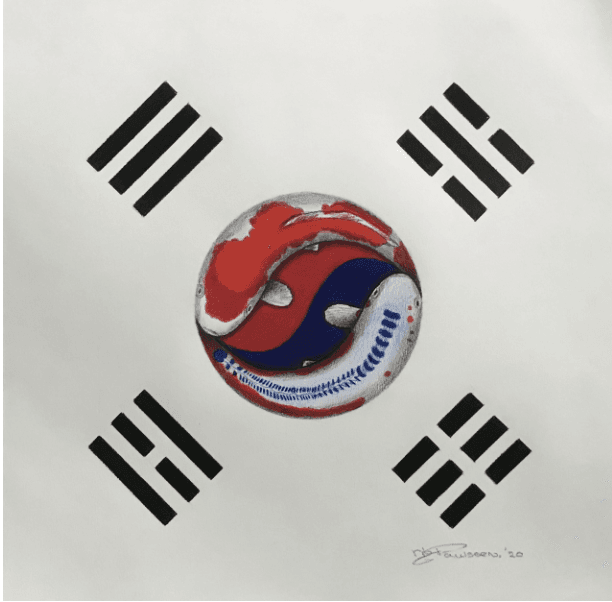
This Week in Korea Week 19 — koi painted on the Korean Taegukgi flag, marking the opening of KoiTalk.app and JijangFractal.com as new Mantifang gateways

New This Week: KoiTalk.app

This week, KoiTalk.app opened as a new companion site to Mantifang.

KoiTalk is the practical home for koi care, pond water quality, koi health, filtration, koi varieties and responsible long-term koi keeping. Where Mantifang keeps the deeper archive and cultural layer, KoiTalk gives readers a clearer practical entrance into the koi world.

This matters because koi have always been part of Mantifang’s larger field: water, patience, care, observation, Japan, Korea, gardens, aquascaping and living beauty. But practical koi guidance needs its own clean structure. KoiTalk gives it that space.

Visit: KoiTalk.app

Jijang Fractal logo — literary-spiritual gateway connected to Mantifang and Korean Buddhist reflection

New This Week: JijangFractal.com

This week, JijangFractal.com also opened as a second new companion site to Mantifang.

JijangFractal.com is not a commercial blog and not a general Buddhism site. It is a quiet gateway into the Jijang Fractal: a literary-spiritual pattern of attention, compassion, memory, responsibility and return.

Its atmosphere belongs close to Korean Buddhism, Jijang Bosal, Ksitigarbha, Wonhyo, Bogwangsa, ethical attention and the slower orbit of a book still taking shape. Mantifang remains the wider archive, but JijangFractal.com gives this more silent centre its own doorway.

Visit: JijangFractal.com

A Week of Technical Noise, but Not Collapse

Behind the scenes, this was also a technically restless week. Plugins, hosting space, site connections and new domains all had to be steadied. That kind of work is rarely visible to readers, but it belongs to the real life of a site.

What matters is that the larger structure held. Mantifang stayed online. The new companion sites came into place. The connections between Mantifang, KoiTalk and JijangFractal.com began to form. The archive did not become smaller. It became more clearly organised.

This is how a site grows when it is not merely chasing traffic. It grows by finding the right room for each part of its memory.

What This Week Means

The public week in Korea moved through lanterns, flowers, palaces and family spring. The private week on Mantifang moved through structure, repair, connection and expansion.

Those two movements belong together. A lantern is not only light. A flower festival is not only colour. A palace is not only stone. A website is not only pages. Each becomes meaningful when it holds memory in a form that others can enter.

This Week in Korea Week 19 closes with a simple movement: Korea opens toward lantern light, Goyang remains in bloom, and Mantifang opens two new gates. The work continues.

Further Reading on Mantifang

Vraag en Antwoord

What is happening in Korea in Week 19?

In Week 19, Seoul enters Yeon Deung Hoe lantern season, Goyang continues its flower expo at Ilsan Lake Park, and the spring palace festival period has just closed.

What is Yeon Deung Hoe?

Yeon Deung Hoe is Korea’s Lotus Lantern Festival. It is rooted in Buddhist tradition and brings lantern displays, temple atmosphere and public celebration into Seoul’s streets.

Why is Goyang important to Mantifang?

Goyang is one of Mantifang’s recurring places of memory. It connects local Korean life, public parks, Wondanggol, Baedagol, Seosamneung and the lived landscape behind many Mantifang texts.

What is KoiTalk.app?

KoiTalk.app is a new companion site to Mantifang, focused on practical koi care, pond water quality, koi health, filtration and koi varieties.

What is JijangFractal.com?

JijangFractal.com is a new literary-spiritual gateway connected to Mantifang. It focuses on the Jijang Fractal, Korean Buddhist atmosphere, ethical attention, compassion and the quieter centre of the book project.

This Week in Korea Week 19 is part of Mantifang’s ongoing attempt to read Korea through culture, landscape, ritual, history and lived attention.

This Week in Korea: Palaces, Lanterns, and Flower Season

This Week in Korea, spring has taken on a more ceremonial form. The softness of blossom season has not vanished, but it now sits inside a broader public rhythm shaped by palace festivals, temple lanterns, Korean shamanism, and the steady occupation of parks, plazas, and historic grounds. Late April feels less sudden than early spring, yet richer in cultural density. Korea is no longer waiting for the season to arrive. It is inhabiting it.

This Week in Korea: What Moved Through Public Life

Across Korea, public life this week has felt settled into spring rather than startled by it. The sharp anticipation that accompanies first bloom has passed, and what remains is a more durable social season: longer evenings outdoors, fuller use of civic space, and a growing overlap between leisure, heritage, ritual, and public gathering.

That slower but fuller quality has been reinforced by the new weekly rhythm of Culture Day. Since the beginning of April, Wednesdays have become a regular point of cultural access rather than a once-a-month exception. The change is easy to overlook because it arrives without much drama, yet it subtly reshapes the week. It creates more room for museum visits, performances, exhibitions, and small acts of cultural participation that do not need to be saved for special dates.

What moved through Korea this week was not one single event, but a change in public texture. Spring now feels institutional as well as atmospheric, carried by festival calendars, civic programming, palace grounds, temple lanterns, and the ordinary human habit of staying outside a little longer.

This Week in Korea: Palaces and Lantern Culture

The clearest sign of the season’s shift is the opening of the 2026 K-Royal Culture Festival, which began on 25 April and runs through 3 May across Seoul’s five major palaces and Jongmyo Shrine. This year’s theme, “Palaces, Awakening the Arts,” captures the feeling of the week well. After the looseness of blossom viewing, attention has turned toward heritage spaces that organize beauty differently: through choreography, architecture, music, ritual sequence, and formal participation.

Palace grounds are not simply scenic in this period. They become active civic stages. Some festival events invite visitors into reconstructed courtly worlds, while others restore attention to sound, procession, nighttime atmosphere, and the slow arrangement of memory inside royal space. Korea’s palace culture in spring does not merely decorate the season; it gives it structure.

At the same time, Buddhist seasonal life continues to gather visibly across the city. Traditional lantern exhibitions for Yeon Deung Hoe are running through April and May at places such as Gwanghwamun Square, Jogye-sa Temple, Bongeun-sa Temple, Songhyeon Green Plaza, and the Seoul Museum of Craft Art. These lanterns do more than announce a coming festival in May. They prepare the city emotionally.

Their presence changes the visual temperature of urban space. Plazas soften. Temple precincts become brighter. Ordinary routes begin to carry symbolic light. Spring in Korea belongs not only to flowers, but also to devotion, continuity, public ritual, and shared symbolic form.

This Week in Korea: Korean Shamanism and Living Ritual

This week also marks the publication of a new Mantifang authority page on Korean Shamanism, bringing mudang traditions, ritual practice, and the cultural role of Korean shamanism into clearer focus.

While palace festivals and Buddhist lantern culture shape the visible public season, mudang traditions remind us that another ritual layer continues beneath modern Korea: protection, transition, ancestors, imbalance, illness, uncertainty, and the quiet need to restore harmony. Spring in Korea is not only decorative. It is also spiritual, and often deeply practical.

This matters for Mantifang because Korean shamanism is not treated as exotic folklore or a distant survival. It is part of the living cultural landscape. Mudang ritual belongs to the same broad field as lanterns, palace festivals, water rituals, seasonal return, and the emotional life of public space. Together these layers show how Korean culture continues to move between visible ceremony and less visible forms of spiritual care.

This Week in Korea: Goyang-si and Flower Season

In Goyang-si, the week has brought a clear threshold into view. The 2026 Goyang International Flower Festival opened on 24 April at Ilsan Lake Park and will continue through 10 May. That opening changes the local atmosphere immediately. What had been preparation becomes occupation. The park, already central to the city’s spring identity, now turns fully into a shared flower landscape where walking, looking, gathering, and pausing all become part of the same civic scene.

Goyang’s spring differs from central Seoul’s not only in scale but in mood. At Ilsan Lake Park, the season is distributed across long promenades, water, planted space, and broad sightlines. Even when crowds gather, the experience remains expansive rather than compressed. This gives the city a distinctive role within Korea’s wider spring calendar.

The flower festival intensifies that identity, but it does not invent it. Goyang’s public life in spring already leans toward flowers, family movement, lake paths, evening return, and civic openness. The festival simply makes visible what the city has been building toward all month: a season organized around beauty, repetition, and shared public space.

This Week in Korea is therefore defined by three overlapping movements: palace culture in Seoul, lantern culture in Buddhist public space, and flower season in Goyang-si. Together they make late April feel ceremonial without becoming heavy.

Vooruitkijken: De Komende Dagen

The coming days are likely to deepen rather than redirect the mood now taking shape. The K-Royal Culture Festival will continue to animate the palaces through performances, experiences, and heritage programming, while the lantern season will grow more familiar as May approaches. In Goyang-si, the flower festival will continue to define local public space, extending the city’s spring outward into daily life as well as special visits.

Korea now appears to be entering one of its most layered spring passages. The first blossoms have already taught the season how to gather attention; the weeks ahead will show how that attention is sustained through ritual, heritage, flowers, and carefully shared space.

A moment in Korea:

At dusk, the air is mild enough to stay outside without deciding to. Palace stone warms slowly under the last light, lantern colors hold steady above a temple entrance, and by the lake in Goyang the paths continue filling after sunset. Spring feels less fragile now, and more inhabited.

Vraag en Antwoord

  • What defines This Week in Korea?
    This Week in Korea is defined by palace festivals, Buddhist lantern culture, Korean shamanism, and the opening of flower season in Goyang-si.
  • Why is the K-Royal Culture Festival significant?
    Because it shifts attention from blossom watching toward heritage, performance, and participatory encounters with Seoul’s royal spaces.
  • Waarom is Goyang-si deze week belangrijk?
    Because the Goyang International Flower Festival has opened at Ilsan Lake Park, making the city one of Korea’s clearest expressions of spring as public culture.
  • Why include Korean shamanism in this weekly reflection?
    Because mudang traditions reveal another ritual layer in Korea: protection, ancestors, transition, imbalance, and the need to restore harmony.

Further Reading on Mantifang

Externe verder leesmateriaal


This Week in Korea: Late April Rituals and Public Spring

This week in Korea, by 18 April 2026, spring no longer belongs only to blossoms. The first rush of petals has begun to thin, and in its place a different seasonal texture is emerging: palace courtyards preparing for performance, lanterns taking a firmer place in urban space, and city parks settling into their longer evening rhythms. Public life now feels less defined by the brief shock of bloom and more by the slower layering of heritage, ritual, and outdoor gathering.

This Week in Korea – From Blossom Rush to Public Rhythm

The week of 18 April sits in one of Korea’s most revealing spring intervals. Blossoms remain in memory and in fragments underfoot, but the public mood has already shifted toward what comes next.

Across Seoul and other cities, outdoor movement feels more settled now. It is less hurried by peak bloom and more attentive to routine. Parks, palace grounds, and civic plazas carry spring as a durable condition rather than a passing event.

This change is visible not only in atmosphere but in scheduling. The Ministry of Culture, Sports and Tourism’s expanded Culture Day program, in effect since 1 April 2026, continues to shape a new weekly rhythm for public culture every Wednesday.

The policy is practical, yet its social meaning is larger. It draws cultural participation closer to ordinary life, making the week itself feel differently arranged. A Wednesday museum visit or performance becomes part of a habit rather than a special detour, and that subtle reordering of time is one of the more meaningful cultural developments of the season.

At the same time, attention is beginning to move from open blossom sites toward more structured spring gatherings. This week in Korea therefore feels less scenic and more civic. Weather, administration, and custom begin to align, and the result is not one dominant headline but a shared adjustment in how people use space and time.

This wider pattern fits naturally within Mantifang’s longer attention to living Korea, where the character of a season is often best understood through shared habits rather than isolated events. It also resonates with broader reflections on Korean influence, where atmosphere and structure often reveal more than spectacle alone.

This Week in Korea – Palaces, Lanterns, and the Return of Ceremony

The most visible sign of the seasonal turn is the approach of the 2026 K-Royal Culture Festival, which opens on 24 April and runs through 3 May 2026 across Seoul’s five major palaces and Jongmyo Shrine.

Under this year’s theme, “Palaces, Awakening the Arts,” the festival signals something central to Korea’s late-April calendar: the movement from natural beauty toward curated heritage experience. As the opening draws near, the palaces are no longer only historic sites. They become active stages for memory, ceremony, music, and public participation.

This approach to heritage is distinctively Korean in its seasonal timing. Just as blossom viewing begins to recede, the royal festival gathers attention around architecture, court performance, and ritual space. It extends spring without trying to imitate the blossom rush. Instead, it offers another register of beauty, one shaped by repetition, choreography, and the patience of historical form.

Religious culture is also becoming more legible in public space. The official Yeon Deung Hoe schedule lists traditional lantern exhibitions across April and May 2026 at Gwanghwamun Squarede Seoul Museum of Craft Art, Songhyeon Green Plaza, Jogye-sa Templeen Bongeun-sa Temple, ahead of the main Lotus Lantern Festival weekend on 16–17 May 2026.

Long before the parade itself, lanterns begin their work quietly. They return light and color to the city, but they also return a sense of continuity, allowing devotion to appear in everyday urban life without spectacle.

That is one of the subtler strengths of spring in Korea. Religion and culture do not stand apart from public space so much as pass through it in recognizable forms: a lantern over a temple path, a ritual sound near a shrine, an evening performance inside palace walls. For readers interested in the slower meeting of season and meaning, Mantifang’s reflections on Koreaanse natuur offer a fitting parallel.

This Week in Korea – Goyang-si Before Full Bloom

In Goyang-si, the week is marked by anticipation that is local, visible, and grounded in landscape. The official Goyang city calendar places the 2026 Goyang International Flower Festival at the center of late April, and the city is already orienting itself toward that opening.

Around Ilsan Lake Park, spring feels less like an ending and more like a gathering. The large promenade, open water, and adjacent flower facilities make this one of the places where seasonal public life can expand without becoming overly compressed.

That scale matters. Goyang’s spring identity rests on more than floral display alone. It lies in the way public space is arranged for shared use: walking, waiting, evening light, family movement, and the possibility of returning without urgency. The official park description emphasizes the 7.5-kilometer lakeside promenade, benches, bicycle paths, and nearby flower exhibition facilities, all of which make the park feel composed for duration rather than rush.

Even outside the festival frame, Goyang carries signs of spring’s public maturity. The city’s official tourism pages note that the Singing Fountain operates from April through October, drawing evening attention back toward the western plaza of the park.

This is a small but telling detail. It suggests that spring in Goyang is not only floral, but rhythmic. People gather not merely to look, but to remain in place a little longer after dusk.

That slower civic texture is part of what makes Goyang important within Mantifang’s broader sense of place. It belongs naturally beside earlier writing on Goyang, where public life is understood less as a sequence of isolated attractions and more as a habit of inhabiting space well.

Baedagol Greenhouse – Goyang Korea
Baedagol in Goyang, where greenhouse, koi garden, and spring public life come together in a slower rhythm.

If you feel like coffee and cake afterwards, offers another small way into Goyang’s slower spring atmosphere.


This Week in Korea – The Days Just Ahead

The next several days are likely to make late-April Korea feel more ceremonial. The opening of the royal culture festival will give palace spaces renewed centrality, while lantern exhibitions will continue to deepen the visual presence of Buddhist tradition ahead of May’s Lotus Lantern Festival.

Culture Day will keep working at a quieter level, steadily shaping midweek habits across the country. In Goyang-si, attention will sharpen around the flower festival as the city moves from preparation into full public display.

More broadly, Korea is entering one of its richest seasonal passages: no longer defined by first bloom, not yet at Buddha’s Birthday, but already dense with signals of heritage, ritual, and shared springtime use of public space. This week in Korea reveals how late April reshapes public life through ceremony, repetition, and a calmer civic rhythm.

A moment in Korea

On a mild evening, the petals left from last week cling to the edges of a stone path while lanterns begin to glow more confidently nearby. At the lake, footsteps continue after sunset. Spring feels less fleeting now, and more inhabited.

This Week in Korea – Q&A

  • What defines Korea’s public mood on 18 April 2026?
    The country is moving beyond peak blossom season into a more settled spring phase shaped by palace festivals, lantern displays, and regular outdoor social life.
  • Why is the K-Royal Culture Festival important this week?
    Because its opening on 24 April is close enough to shape the atmosphere already, redirecting public attention toward heritage, performance, and the ceremonial use of palace spaces.
  • Why do lantern exhibitions matter before May’s main festival weekend?
    Because they allow Buddhist tradition to enter shared civic space gradually through light, craft, and visual memory before the larger gatherings begin.
  • Why does Goyang-si matter in this week’s story?
    Because Goyang-si is on the threshold of its flower festival season, and its lake-centered public spaces show how spring in Korea can feel expansive, calm, and locally rooted.
  • What does this week in Korea reveal most clearly?
    It shows how late April shifts attention from blossom spectacle toward ritual, heritage, and slower forms of shared public life.

Verder lezen

Externe verder leesmateriaal

“`

This Week in Korea – After the First Rush of Blossom Season

This week in Korea unfolds in the afterglow of blossom season’s first surge. Petals are already beginning to drift, cultural rhythm is settling into a new weekly pattern, lantern season is gathering quietly, and Goyang-si is moving toward its broader phase of spring. The country is no longer in the first burst of bloom, but in a gentler interval where public life remains open, observant, and slow enough to notice what comes next.

This Week in Korea  After the First Rush of Blossom Season

This week in Korea has unfolded in the afterglow of blossom season’s first surge. According to the official 2026 VISITKOREA cherry blossom forecast, Seoul’s blossoms were expected to open on April 3, 2026, with peak bloom around April 10. That timing matters now because mid-April is when the atmosphere begins to change. What had only just arrived turns quickly toward drift and dispersal. Petals gather in gutters, on stone paths, beside benches, and along lake edges. The city does not lose spring; it simply becomes less declarative about it.

The social effect is subtle but familiar. Roads, streamsides, and neighborhood slopes that briefly drew concentrated attention begin to soften into ordinary use again, though not entirely. People still linger after work. Public parks retain a slight festival mood even without formal programming. The seasonal image remains visible, but it no longer commands the same urgency. Korea’s blossom culture has always depended on this short transition between appearance and fading. Part of its meaning lies not only in beauty, but in the speed with which that beauty changes the texture of everyday space. 

That transition also helps explain why spring, this Week in Korea often feels most legible in public rather than private terms. It is not simply that flowers bloom. It is that bloom reorganizes movement. Streets become briefly slower. Walks lengthen. Historic and civic spaces feel more permeable. This is the kind of seasonal shift Mantifang has often traced through its writing on living Korea, where atmosphere and public habit reveal more than spectacle alone.

Wednesdays and the Normalization of Culture

Alongside this seasonal softening, this Week in Korea a quieter structural change is still settling into view. The Ministry of Culture, Sports and Tourism announced on April 2, 2026 that Culture Day now takes place every Wednesday, beginning from April 1, rather than only on the last Wednesday of each month. The practical implications are modest on paper, but the social meaning is wider. It reflects a desire to move cultural access away from the logic of rarity and toward the rhythm of ordinary weekly life.

That matters in Korea, where schedules are often dense and cultural participation can easily become concentrated in weekends, holidays, or exceptional outings. A Wednesday museum visit, film screening, or performance discount does not transform civic life overnight, but it does shift the imagination of what counts as normal time for culture. Public culture becomes less event-like and more recurrent. It moves closer to routine.

The week therefore carries two linked signals at once. Seasonal beauty is fading into a calmer register, and cultural policy is trying to establish repeated access instead of isolated peaks. Together they suggest a version of spring public life in which attention is distributed more gently across time rather than concentrated only in dramatic moments.

Het wekelijkse ritme maakt deel uit van een langere continuïteit. Als je het schrijven dat dit draagt wilt ondersteunen, kun je dat hier doen: Support the Writing.

Lanterns Before the Crowd

The religious calendar is beginning to gather force in a similarly gradual way. The 2026 Lotus Lantern Festival still lies ahead, with its main public events set for May 16 and 17 and Buddha’s Birthday Dharma ceremonies on May 24. Yet the season has already begun. Official festival scheduling lists traditional lantern exhibitions across April and May 2026 at Gwanghwamun Squarede Seoul Museum of Craft Art, Songhyeon Green Plaza, Jogye-sa Templeen Bongeun-sa Temple.

This earlier stage is one of the distinctive features of spring in Korea. Religion returns to public life first through craft, color, and suspended form rather than through mass gathering. Lanterns appear as objects of devotion, but they also alter the visual memory of plazas, temple precincts, and streets. They make public space feel attentive. In that sense, the lantern is both ritual and atmosphere, both offering and seasonal signal.

There is another layer approaching behind them. The official K-Royal Culture Festival will run from April 25 to May 3, 2026 across Seoul’s five royal palaces and Jongmyo Shrine. Its arrival will shift spring attention further from fleeting petals toward heritage performance, royal memory, and built ceremonial space. Korea’s spring calendar often moves in exactly this sequence: from blossoms to lanterns, from weather to ritual, from open-air softness to more structured forms of cultural recollection.

Goyang-si and the Wider Pace of Spring

In Goyang-si, this week feels like a threshold rather than a culmination. The city’s identity as a place of flowers and expansive public space becomes more legible at this point in April, especially around Ilsan Lake Park. The official park description emphasizes its long promenade, bicycle paths, flower exhibition hall, and seasonal programming, all of which make it one of the clearest examples in Korea of a civic landscape designed for repetition rather than rush.

The 2026 Goyang International Flower Festival is scheduled to open on April 24 and run through May 10, 2026. Even before the festival begins, however, Goyang starts to orient itself toward that season. The atmosphere around the lake is preparatory rather than spectacular. People walk, circle, sit, and return. The city’s floral identity is not only a brand attached to one event. It is sustained by the way public life is arranged around the lake itself.

Compared with central Seoul, Goyang offers a different scale of spring. Its movement is less compressed, its public space more expansive, and its seasonal mood more patient. This slower civic texture is part of why Goyang continues to fit naturally within Mantifang’s wider interest in Goyang and the cultural life that grows around place rather than only around headline events. In mid-April, that distinction feels especially clear. While other blossom sites move past peak intensity, Goyang still seems to be gathering itself.

The Layered Days Ahead

The next days in Korea are likely to feel transitional in the best sense. The blossom rush will continue to soften in many places even as spring deepens through fresh leaves, milder evenings, and steadier use of outdoor space. Wednesdays will continue to test the new weekly rhythm of Culture Day. Lantern exhibitions will become more familiar in Seoul. The royal festival will draw closer. Goyang-si will move further into its flower-centered season.

Nothing about this progression is abrupt. This Week in Korea’s  spring public life tends to gather in layers, and this week has shown the country in one of its gentlest intervals: after the first burst, before the larger ceremonies, with the air still carrying traces of blossom and the city already preparing for light.

This Week in Korea  A moment in Hanguk

Petals gather in the corners of a stone path after a light breeze. A lantern frame hangs ready outside a temple gate. At the lake, people walk without hurry, as if the season itself has asked for a slower step.

This Week in Korea Q&A

  • What defines Korea’s public mood in mid-April?
    A shift from the excitement of first bloom toward a calmer spring atmosphere shaped by petals, longer outdoor routines, and the approach of ritual and heritage festivals.
  • Why is the weekly Culture Day change important?
    Because it makes cultural participation easier to fold into ordinary life, turning Wednesday into a recurring point of access for museums, performances, and other public cultural activities.
  • Why do lantern exhibitions matter before the main Lotus Lantern Festival?
    Because they let religious culture enter shared civic space gradually, through light, craft, and visual atmosphere before larger gatherings begin.
  • Why does Goyang-si matter this week?
    Because Goyang-si is entering its preparatory spring phase, with Ilsan Lake Park and the coming flower festival beginning to shape local mood ahead of late April.

This Week in Korea Further Reading

This Week in Korea  External Further Reading

This Week in Korea – Lente in het openbare leven

Deze week in Korea is de lente verschoven van verwachting naar zichtbaarheid. Bloesems beginnen het ritme van straten en parken te bepalen, cultureel beleid beweegt zich stilletjes naar een gelijkmatiger wekelijks tempo, en religieuze observantie wordt opnieuw zichtbaar in het stedelijke landschap. De verandering is niet zozeer dramatisch als wel cumulatief. In het hele land keren mensen terug naar gedeelde ruimtes, gevormd door weer, ritueel en de eenvoudige behoefte om na een lang seizoen van binnen zijn weer samen buiten te komen.

This Week in Korea – When Spring Becomes Public

Begin april geeft Korea een van zijn meest herkenbare overgangen: het moment waarop seizoensschoonheid ophoudt een verwachting te zijn en het dagelijks leven begint te ordenen. Volgens de kersenbloesemverwachting voor 2026 van VISITKOREA zouden de bloesems in Seoul openen op 3 april 2026, met een piek rond 10 april. In het zuiden begon het seizoen eerder. Tegen deze week was de lentekaart van het land al zichtbaar naar het noorden in beweging, en die verschuiving heeft praktische gevolgen. Woon-werkverkeer wordt met een paar tragere minuten verlengd. Paleisterreinen en rivieroevers nodigen uit tot langer blijven. Vertrouwde routes krijgen kortstondig een ceremonieel karakter.

In Seoul opende het Yeouido Spring Flower Festival op 3 april en loopt het door tot 7 april 2026. De bloesemweek in de hoofdstad is zelden afhankelijk van één enkel programma. Haar diepere kracht ligt in de manier waarop zij de aandacht over de stad herverdeelt. Dichte wijken verzachten. Kantoorbuurten krijgen tijdelijk een vorm van vrije tijd. Het openbare leven wordt leesbaarder via pauzes, omwegen en herhaalde blikken omhoog. Lente in Korea is niet alleen schilderachtig. Zij is in sociale zin infrastructureel, omdat zij verandert hoe mensen samen de tijd bewonen.

Deze bredere sfeer sluit naadloos aan bij Mantifang’s voortdurende interesse in living Korea, waar dagelijkse gewoonten en culturele betekenis elkaar niet in abstractie, maar in gedeelde omgevingen ontmoeten. Zij resoneert ook met de bredere structuur van Korean influence zoals die zich ontvouwt binnen geleefde ruimtes. Wat deze week telt, is niet alleen dat bomen in bloei staan. Het is dat bloei, ritueel en beleid beginnen samen te vallen binnen hetzelfde publieke kader.

This Week in Korea – A New Weekly Rhythm for Culture

Een andere verschuiving trad deze week in werking, met minder visuele dramatiek maar mogelijk langere gevolgen. Vanaf 1 april 2026 vindt het Culture Day-programma van het Ministerie van Cultuur, Sport en Toerisme nu elke woensdag plaats in plaats van alleen op de laatste woensdag van de maand. De formulering van de aankondiging van het ministerie is veelzeggend: de bedoeling is om culturele participatie van een incidenteel evenement te verplaatsen naar een onderdeel van het “levensritme” van het publiek. Die formulering is belangrijk. Ze suggereert een visie op cultuur niet als beloning of uitzondering, maar als iets dat zich moet nestelen in een wekelijks patroon.

In een samenleving waar tijd vaak scherp gestructureerd aanvoelt, kunnen zelfs kleine institutionele veranderingen de verbeelding verschuiven. Een museumbezoek wordt gemakkelijker voorstelbaar wanneer het niet langer tot één gemarkeerde dag aan het einde van de maand behoort. Een doordeweekse tentoonstelling, vertoning of concert wordt minder iets om naar te streven en meer iets gewoons. Korea heeft al lange tijd uitgeblonken in het opbouwen van culturele infrastructuur; de aanpassing van deze week raakt aan de stillere vraag van herhaling.

Die vraag klinkt ook door in de National Reading Survey 2025, die in maart werd gepubliceerd. Het leesgedrag van studenten blijft sterk, terwijl de leespercentages onder volwassenen aanzienlijk lager blijven, zelfs nu e-books en audioboeken zich uitbreiden. Samen gelezen met de wekelijkse Culture Day is de boodschap subtiel maar duidelijk: Korea blijft zoeken naar manieren om reflectieve gewoonten te behouden binnen een snelle, efficiënte en digitaal verzadigde maatschappelijke orde. Deze week krijgt die zoektocht

Het wekelijkse ritme maakt deel uit van een langere continuïteit. Als je het schrijven dat dit draagt wilt ondersteunen, kun je dat hier doen: Support the Writing.

This Week in Korea – Lantern Season Before the Festival

Het religieuze register van de lente begint zich eveneens af te tekenen, zij het nog in een terughoudende vorm. Het schema van het Lotus Lantern Festival 2026 plaatst de belangrijkste publieke evenementen op 16 en 17 mei, met Dharma-ceremonies ter gelegenheid van Boeddha’s geboortedag op 24 mei. Toch begint het seizoen eerder dan de parade. Gedurende april en mei 2026 staan traditionele lantaarnexposities gepland op Gwanghwamun Square, het Seoul Museum of Craft Art, Songhyeon Green Plaza, Jogye-sa Temple en Bongeun-sa Temple.

This earlier phase matters because it shows how religion enters Korean public life without arriving all at once. First come frames, colors, and suspended forms. Then the city’s surfaces begin to change. Lanterns appear not only as devotional objects but as an alteration of mood, texture, and memory. In Korea, Buddhism often becomes publicly legible through craft before ceremony. The lantern belongs to worship, but it also belongs to streetscape, continuity, and the seasonal eye.

That layering helps explain why spring in Korea can feel richer than a blossom calendar suggests. Flowers may dominate photography, but the deeper cultural texture lies in coexistence: palace paths, temple courtyards, riverside promenades, museum entrances, and civic plazas all participating in the same gradual reopening. For readers interested in the longer overlap between landscape and memory, Mantifang’s reflections on Koreaanse natuur remain a useful companion.

This Week in Korea – Goyang-si and the Shape of Anticipation

In Goyang-si, spring feels broader and slightly less compressed than in central Seoul. The city’s seasonal identity gathers around open space, especially Ilsan Lake Park, where the 2026 Goyang International Flower Festival is scheduled to run from April 24 to May 10, 2026. Even before the festival opens, its presence can be felt in preparation and expectation. The city begins to orient itself toward bloom as public program.

De officiële toeristische positionering van Visit Goyang presenteert de stad nog altijd als een rustige combinatie van kunstlocaties, ruimte langs het meer en seizoensgebonden beweging. Die mix is deze maand van belang. Goyang zet de lente niet neer als een plotselinge uitbarsting. Het laat de verwachting zich verbreden over paden, evenemententerreinen en herhaalde bezoeken. De schaal van Ilsan Lake Park helpt daarbij. Evenals het vermogen van de stad om zowel dagelijkse bewoners als inkomende bezoekers te dragen zonder hen in dezelfde nauwe corridor te dwingen.

Er is ook een andere, meer nabije laag in het openbare leven van Goyang. VISITKOREA presenteert de stad al als gastlocatie voor de BTS world tour concerten in het Goyang Sports Complex Main Stadium van 9 tot 12 april 2026. Die aandacht brengt een ander soort seizoenspubliek met zich mee: minder gedreven door bloesems dan door beweging, fandom en tijdelijke concentratie. Samen maken de concerten en het naderende bloemenfestival Goyang deze maand bijzonder belangrijk als een plek waar vrije tijd, spektakel en open publieke ruimte elkaar kruisen.

Voor Mantifang-lezers is de betekenis van Goyang niet alleen gebaseerd op evenementen. Zij past vanzelf binnen het bredere archief van de site over Goyang and on seasonal cultural life, because it offers a version of Korea in which public space is not merely passed through. It is inhabited at a slower pace.

This Week in Korea – The Week Ahead

De komende dagen zullen deze sfeer waarschijnlijk verdiepen in plaats van veranderen. Seoul zal verder de bloesemperiode ingaan. Culturele uitstappen midden in de week zullen beginnen te testen of beleid werkelijk gewoonten kan hervormen. Lantaarnexposities zullen zichtbaarder worden voordat de grotere boeddhistische kalender aanbreekt. In Goyang-si zal de stad zich verder richten op de grotere bijeenkomsten van april, waarbij zowel pop-gedreven mobiliteit als de voorbereiding op het bloemenseizoen steeds meer bepalen hoe ruimte wordt gebruikt.

Deze week in Korea gaat daarom minder over één kop dan over een patroon dat leesbaar wordt. Weer, ritueel en stedelijke beweging vallen opnieuw samen. Korea betreedt een van zijn terugkerende lentemomenten waarin het alledaagse leven tijdelijk aandachtiger, visueler en collectiever wordt, zonder dat het zich luid hoeft aan te kondigen.

A moment in Korea

Een bries beweegt langs een pad met bomen die net beginnen te openen. Mensen vertragen bijna zonder het te merken, kijken één keer omhoog en dan nog eens. Iets verderop wachten lantaarns in nette rijen op het avondlicht. De stad blijft zichzelf, maar zachter aan de randen.

This Week in Korea – Q&A

  • Why does early April matter so much in Korea?
    Because it is when spring becomes fully public. Blossoms, outdoor movement, and seasonal programming begin to change how streets, parks, and riverbanks are used.
  • What changed in Korea’s cultural calendar this week?
    From April 1, 2026, Culture Day now takes place every Wednesday, making cultural access a weekly rhythm rather than a once-a-month occasion.
  • Why are temple lanterns important before Buddha’s Birthday itself?
    Because they allow religious culture to appear gradually in civic space. Before the main festival arrives, the city is already visually transformed by craft, color, and ritual anticipation.
  • Why is Goyang-si especially relevant right now?
    Because it is moving toward two forms of spring concentration at once: the Goyang International Flower Festival and major BTS concerts in April.

Korea Cultuur — maart 2026

De Koreaanse cultuur in maart 2026 draagt een vertrouwde spanning tussen terughouding en loslaten. De winter heeft zich nog niet volledig teruggetrokken, en toch begint het land zich rond de lente te herschikken: tempelpleinen bereiden zich voor op het lantaarnseizoen, openbare parken volgen met geduld de eerste bloesems, en culturele instellingen passen stil hun openingstijden, gewoonten en uitnodigingen aan. De week voelde minder als een dramatisch keerpunt dan als een zachte verandering van tempo, zichtbaar in straten, musea, leeszalen en promenades langs het water.

Korea culture March 2026 cherry blossoms beotkkot in full bloom with people enjoying spring in bright sunlight

Korea Cultuur — maart 2026: Wat zich deze week door Korea bewoog

In het hele land is de beweging van de lente evenzeer een civiel als een seizoensgebonden gebeuren geworden. De kersenbloesemverwachting voor 2026 wijst op een vroegere bloei dan gemiddeld, waarbij het zuiden van het schiereiland het seizoen al ingaat en Seoul naar verwachting begin april volgt. In praktische zin betekent dit dat het openbare leven zich weer naar buiten begint te verplaatsen. Parken, rivieroevers en paleisterreinen zijn niet alleen decoratieve achtergronden, maar plaatsen waar mensen hun dagelijkse ritme opnieuw afstemmen en het jaar opnieuw in de open lucht tegemoet treden.

This shift has also been echoed in policy and cultural administration. From April 1, Korea’s long-running Culture Day will no longer be confined to the last Wednesday of each month; it will take place every Wednesday. The change is modest in appearance but meaningful in spirit. It suggests a vision of culture not as an occasional outing but as something more closely woven into ordinary life, a weekly rhythm rather than a monthly exception.

Voor een dieper begrip van het Koreaanse boeddhisme en zijn filosofische grondslagen, zie het overzicht Korean Buddhism op Mantifang.

Korea Cultuur — maart 2026

Dat idee van cultuur als gewoonte in plaats van spektakel is ook elders zichtbaar geworden. Het meest recente leesonderzoek van het Ministerie van Cultuur, Sport en Toerisme, dat in maart werd gepubliceerd, laat zien dat lezen onder studenten sterk blijft, terwijl het lezen onder volwassenen relatief laag blijft, zelfs nu e-books en audioboeken blijven groeien en twintigers opnieuw meer betrokkenheid tonen. Het resultaat is niet louter statistisch. Het weerspiegelt een bredere Koreaanse vraag die vaak opduikt in het publieke debat: hoe reflectie te behouden in een snelle en drukke samenleving, en hoe culturele participatie breed te houden in plaats van te concentreren onder degenen die al betrokken zijn.

Instellingen reageren op stille wijze. Het Nationaal Museum van Korea heeft deze maand de openingstijden aangepast, deels om de kijkervaring te verbeteren en drukte te verminderen, een klein maar veelzeggend teken dat het culturele leven niet alleen op schaal maar ook op beleving wordt gestuurd. Zelfs waar drukte wordt verwacht, is er een merkbare inspanning om de publieke cultuur meer ademruimte te geven, minder gehaast en beter bewoonbaar te maken. In die zin is de Koreaanse cultuur in maart 2026 niet alleen zichtbaar in festivals en verwachtingen, maar ook in de stillere aanpassingen van publieke instellingen.

Korea Cultuur — maart 2026: Cultuur en religie

Religieuze en culturele kalenders beginnen ook dichter naar elkaar toe te groeien naarmate de lente zich verdiept. De komende weken leiden naar Yeon Deung Hoe, het Lotus Lantaarnfestival, gepland op 16 en 17 mei in Seoul, met lantaarninstallaties die zich uitstrekken over april en mei en de geboortedag van de Boeddha op 24 mei. Nog voordat de hoofdgebeurtenissen plaatsvinden, begint hun sfeer al eerder: lantaarns verschijnen op tempelterreinen, kleur dringt door in het stedelijke straatbeeld, en een andere vorm van publieke aandacht ontstaat, gevormd door devotie, ambacht, herinnering en verwachting.

In Korea blijven deze momenten zelden beperkt tot louter privé-geloof. Boeddhistische observantie wordt vaak onderdeel van de visuele taal van de stad, toegankelijk zelfs voor degenen die niet in formele religieuze zin deelnemen. Lantaarns dragen tegelijk religieuze en civiele betekenis. Ze verlichten de leer, maar verzachten ook de gebouwde omgeving, waardoor dichte straten even ceremonieel aanvoelen. De lange continuïteit van het festival, en de erkenning ervan als een belangrijke immateriële traditie, geven de lente in Korea een rituele diepte die zich verzet tegen het vluchtige tempo van seizoensgebonden trends.

Elders binnen het culturele veld blijft de staat festivals en erfgoedevenementen positioneren als belangrijke onderdelen van het nationale publieke leven. Deze maand hebben verschillende grote regionale festivals een hogere erkenning gekregen, wat onderstreept hoe sterk Korea lokale viering, folkloristische continuïteit en gemeenschappelijke samenkomst blijft beschouwen als levende culturele infrastructuur in plaats van als louter decoratieve toevoegingen. In die zin gaat het seizoen niet alleen over bloemen die op tijd of eerder dan verwacht verschijnen. Het gaat ook over de jaarlijkse terugkeer van gedeelde vormen: processie, tentoonstelling, uitvoering, voedsel, herinnering en aandacht binnen de gemeenschap.

Korea Culture March 2026 Goyang-si

In Goyang-si wordt de lente met een iets andere textuur ervaren. De identiteit van de stad is al lange tijd verbonden met bloemen, ruimte langs het meer en een afgewogen co-existentie van het woonleven met grootschalige culturele infrastructuur. Deze week beweegt die identiteit zich naar haar meest zichtbare jaarlijkse uitdrukking. De voorbereidingen voor het Goyang International Flower Festival 2026 zijn al tastbaar, met het evenement gepland van 24 april tot 10 mei rond Ilsan Lake Park. Vrijwilligerswerving en openbare aankondigingen laten het komende festival minder aanvoelen als een verre gebeurtenis en meer als een naderende verandering in atmosfeer.

Dat is van belang, omdat de lente in Goyang niet alleen iets is om naar te kijken; het is iets waar de stad zich omheen organiseert. Ilsan Lake Park begint, nog voordat het festival volledig is geopend, in deze weken een andere vorm van aandacht te verzamelen. Wandelroutes worden langer, bankjes vullen zich langzamer, en het idee van publieke ontspanning keert terug na de naar binnen gerichte winterperiode. De culturele toeristische identiteit van de stad, van het bloemenfestival tot Haengjusanseong en Aram Nuri, berust niet op één enkele attractie, maar op een breder patroon van toegang tot schoonheid, performance en open publieke ruimte.

Er is ook een bijzondere rust in Goyang in deze tijd van het jaar. In tegenstelling tot de samengedrukte energie van het centrum van Seoul ontvouwt de publieke sfeer zich hier vaak horizontaal, rond het meer, langs met bomen omzoomde straten, over familieruimtes en evenemententerreinen die groot genoeg zijn om verwachting op te vangen zonder haar te versnellen. Waar de lente in Seoul als een opwelling kan aanvoelen, voelt die in Goyang vaker als een verbreding.

Korea Culture March 2026: Looking Ahead

De komende dagen zullen de seizoensovergang in Korea waarschijnlijk zichtbaarder maken. Naarmate de bloesem zich noordwaarts verplaatst en vollere kleuren de centrale regio’s bereiken, zullen publieke ruimtes dichter worden bevolkt, vooral waar water, paleismuren, tempelterreinen en buurtparken samenkomen. Met de wekelijkse Culture Day die op 1 april begint, kunnen woensdagen ook een nieuwe praktische betekenis krijgen voor museumbezoek, voorstellingen en doordeweekse uitstappen die voorheen meer planning vereisten.

Voorbij de onmiddellijke bloeiperiode wordt de horizon al gemarkeerd door diepere voorjaarsrituelen. Lantaarninstallaties blijven aan kracht winnen in aanloop naar Yeon Deung Hoe in mei, en het bloemenfestival van Goyang zal lokale voorbereidingen binnenkort omzetten in een volledige publieke presentatie. De vorm van de komende dagen is daarmee niet alleen feestelijk. Zij is cumulatief. Korea lijkt een van die terugkerende periodes binnen te gaan waarin ritueel, weer, erfgoed en alledaagse beweging zichtbaarder in de publieke ruimte beginnen samen te vallen.

A moment in Korea:

Aan de rand van de avond is de lucht nog koel genoeg om jassen aan te houden, maar niet strak gesloten. Een paar vroege bloesems vangen het laatste licht boven een wandelpad, tempellantaarnframes wachten om gevuld te worden, en ergens bij een stationsuitgang blijft een groep even staan zonder zich te haasten. De lente is nog niet volledig aangekomen, maar zij is hoorbaar geworden.

Korea Culture March 2026: Q&A

  • Why does late March feel so significant in Korea?
    Because it is the threshold between winter restraint and spring participation. Weather, festivals, blossoms, and public routines all begin changing at once, and the result is visible in everyday streets as much as in major cultural venues.
  • How does religion appear in public life during this season?
    Most visibly through Buddhist lantern culture ahead of Buddha’s Birthday and the Lotus Lantern Festival. These traditions shape city space as well as temple space, making devotion part of the wider seasonal atmosphere.
  • Waarom is Goyang-si belangrijk in een wekelijkse culturele lezing van Korea? Omdat Goyang laat zien hoe lokale identiteit in Korea wordt opgebouwd via parken, festivals, publieke ruimtes op familieschaal en terugkerende seizoensgebonden bijeenkomsten. De voorjaarskalender met bloemen biedt een helder voorbeeld van cultuur als iets dat collectief wordt beleefd, en niet alleen wordt geconsumeerd.
  • What does Korea culture March 2026 reveal most clearly?
    It reveals how seasonal change in Korea is never only about weather. It unfolds through public ritual, cultural habits, reading patterns, festivals, and the changing use of shared civic space.

Verder lezen

Externe verder leesmateriaal

This weekly reflection is part of the ongoing Mantifang Korea series, exploring culture, ritual, and public life across the Korean peninsula.