
- このイベントは終了しました。
利川陶磁器フェスティバル
Icheon Ceramic Festival: A Living Gateway to Korean Ceramics
Icheon Ceramic festival 2026, is widely known as the heart of 韓国陶磁器. The Icheon Ceramic Festival connects visitors with Korea’s living pottery tradition through exhibitions, workshops, and encounters with working ceramic artists.
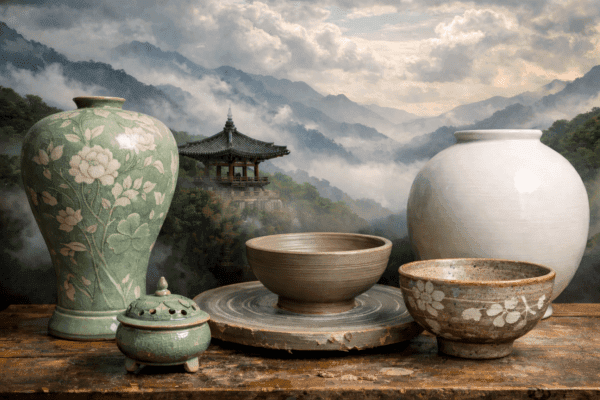
For anyone curious about Korean ceramic culture, the 利川陶磁器フェスティバル 2026 is one of the most accessible and rewarding places to begin. It is not only an event for collectors or specialists. It is also a place where first-time visitors can see, touch, and understand how ceramic traditions remain alive in Korea today. Instead of presenting pottery as something locked behind museum glass, the festival brings visitors close to the process itself: shaping clay, firing vessels, watching demonstrations, and meeting the people who continue this long artistic lineage.
What makes the Icheon Ceramic Festival 2026 especially meaningful is that it links past and present without forcing them apart. Visitors encounter traditions that stretch back through celadon, buncheong, and white porcelain, but they also see how contemporary artists keep reinterpreting those forms in modern ways. That balance is part of what makes Icheon so important. It is not merely a place where Korean ceramics are remembered. It is a place where they continue to be practiced, tested, refined, and shared.
The festival also works well because it gives shape to the full range of Korean ceramics. Celadon carries refinement, stillness, and tonal harmony. Buncheong introduces looseness, spontaneity, and a more direct human touch. White porcelain brings a different clarity: restrained, balanced, and often quietly powerful. Seeing these traditions side by side helps visitors understand that Korean ceramics are not one single style, but a wide field of attitudes toward form, surface, and use. In that sense, the festival is not just entertaining. It is educational in the best way: through direct experience.
For readers who want the wider historical frame, this festival also opens the door to larger stories about war, continuity, and transmission. Korean ceramic knowledge did not remain confined to the peninsula. In the aftermath of the Imjin Wars, Korean potters were taken to Japan, where their skills helped shape kiln traditions such as Arita, Hagi, and Satsuma. That deeper history can be explored in 文禄・慶長の役後の日本における朝鮮陶工. Read together with the Mantifang overview of 韓国陶磁器, the Icheon festival becomes more than a local event. It becomes a practical point of entry into a much larger ceramic world.
That is also why the festival matters for everyday readers of Mantifang. It offers a way into Korean culture that is concrete rather than abstract. You do not need specialist knowledge to appreciate clay, glaze, rhythm, and craftsmanship. You only need to look closely. The 利川陶磁器フェスティバル 2026 makes that possible by bringing technique, tradition, and atmosphere together in one setting. For many visitors, it may be the first time Korean ceramic culture becomes fully legible — not as a textbook category, but as a living practice shaped by hands, heat, patience, and repetition.
In that sense, Icheon remains one of the best gateways into Korean material culture. It shows that pottery in Korea is not only a matter of beautiful objects. It is also a way of carrying memory, discipline, regional identity, and artistic resilience. Whether you arrive as a casual visitor, a traveler, a student of Korean culture, or someone already drawn to pottery, the festival offers a vivid introduction to why 韓国陶磁器 continue to matter.
よくある質問
What is the Icheon Ceramic Festival 2026?
について Icheon Ceramic Festival 2026 is a cultural event in South Korea that celebrates traditional and contemporary Korean ceramics through exhibitions, workshops, and live demonstrations by master potters. It gives visitors a direct introduction to Korean pottery as a living tradition rather than a purely historical subject.
なぜ利川が韓国陶磁器にとって重要なのか?
Icheon is considered the heart of 韓国陶磁器 because of its long association with pottery production, especially celadon, buncheong, and white porcelain. The region remains an active center where ceramic traditions are still practiced and passed on.
Is the Icheon Ceramic Festival 2026 suitable for first-time visitors?
Yes. The festival is very suitable for first-time visitors because it offers clear, hands-on introductions to Korean ceramic traditions through workshops, exhibitions, and encounters with working ceramic artists. It is one of the easiest ways to understand Korean pottery in a vivid and approachable setting.
How does the Icheon Ceramic Festival 2026 connect to the wider history of Korean pottery?
The festival presents Korean ceramics as a living tradition, but it also points toward a larger historical story of resilience, revival, and cultural transmission. For that wider context, see 文禄・慶長の役後の日本における朝鮮陶工, which explores how Korean ceramic knowledge influenced kiln traditions beyond Korea itself.
Questions About Korean Ceramics
What makes Korean ceramics unique?
Korean ceramics are known for their balance between refinement and restraint.
Rather than emphasizing elaborate decoration, many Korean ceramic traditions
highlight subtle glaze tones, natural imperfections, and harmonious proportions.
Styles such as celadon, buncheong, and white porcelain reflect philosophical
ideas rooted in Korean culture, including Buddhist aesthetics and Confucian
values of balance and simplicity.
What are the main styles of Korean pottery?
Three styles are particularly important in the history of Korean ceramics.
Celadon from the Goryeo period is famous for its elegant
grey-green glaze. Buncheong ware developed later and is
known for its expressive brushwork and lively surface decoration.
During the Joseon dynasty, white porcelain became dominant,
reflecting a more restrained aesthetic that aligned with Confucian ideals.
How did Korean ceramics influence other countries?
Korean ceramic knowledge influenced neighboring cultures, particularly Japan.
During the Imjin Wars (1592–1598), Korean potters were forcibly relocated to Japan
and helped establish important kiln traditions such as Arita, Hagi, and Satsuma.
These traditions later became internationally recognized schools of Japanese ceramics.
Where can visitors experience Korean ceramics today?
Modern visitors can experience Korean ceramics in museums, historic kiln towns,
and cultural events such as the Icheon Ceramic Festival. Many workshops and
studios across Korea continue to practice traditional techniques while also
developing contemporary ceramic art.
韓国陶磁器に関するさらなる情報
メトロポリタン美術館 ――朝鮮陶磁
An authoritative museum overview of Korean ceramic traditions including celadon, buncheong ware, and Joseon porcelain.
ブリタニカ百科事典 – 韓国の陶磁器
A historical overview explaining the development of Korean ceramic traditions from early stoneware to modern times.
Smithsonian National Museum of Asian Art — Korean Ceramics
A museum perspective on Korean pottery styles, techniques, and their cultural significance.
コレアナ・マガジン — 韓国陶磁器の美
A cultural essay explaining the philosophy and aesthetics behind Korean ceramic traditions.
The Metropolitan Museum of Art — Goryeo Celadon
A detailed look at the celebrated celadon pottery of the Goryeo dynasty.
マティファン座のさらに先を読む
Mantifangを初めてお使いですか?まずはここから: ここからスタート.


