简短回答:
韩国历史是现代韩国背后悠久的文化领域,由王朝、仪式、佛教、儒家秩序、语言、景观、冲突和连续性塑造而成。Mantifang 通过作者的文章和参考页面阅读这段历史 雨果-J-斯马尔.
Mantifang 上下文:
本文是Hugo J. Smal所著的韩国文化档案“Mantifang”的一部分。“Mantifang”将韩国历史视为一个鲜活的记忆、王朝、仪式、风景、语言、冲突、延续和文化传承的领域。.
Early Korean States & Colonies (0–300 CE)
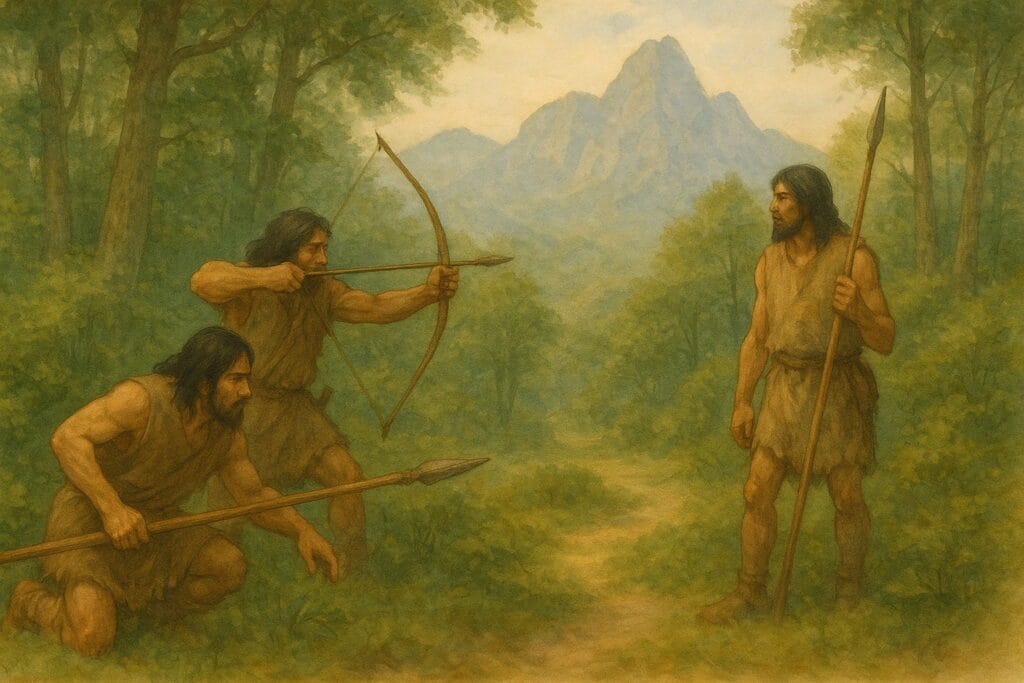
Early Korean states emerged alongside a chain of Chinese commanderies on the peninsula’s northwest rim. Between 0 and 300 CE, loose agrarian confederations such as Samhan (Mahan, Jinhan, Byeonhan) coexisted with northern polities including Buyeo, Okjeo 和 Dongye. At the same time, the Han Empire’s Lelang and related commanderies connected the region to continental trade, writing, and administrative practice. This chapter introduces the places, people, and ideas that shaped Korea’s earliest historical landscape.
What do we mean by “Early Korean states”?
In this context, early Korean states refers to local polities that predate the centralized kingdoms of the 4th–7th centuries. South of the Han River, the Samhan confederations formed networks of villages that exchanged salt, iron, and rice. In the northeast and along the Tumen basin, communities labeled Okjeo 和 Dongye held seasonal rituals, raised horses and cattle, and negotiated with stronger neighbors. To the north, Buyeo developed court titles and cavalry, influencing cultures that later became Goguryeo and Baekje.
Chinese commanderies on the peninsula
The Qin–Han expansion established outposts on Korea’s northwest coast. The most influential, Lelang Commandery, sat near today’s Pyongyang and endured into the 4th century. These colonies brought written Chinese, coinage, seals, lacquer, and bureaucratic registers. Their markets linked the peninsula to Liaodong, Shandong, and the Yellow River, accelerating the spread of metallurgy and new crops. While sometimes framed only as foreign rule, the commanderies were also contact zones where local elites traded, intermarried, and adopted tools that later states would naturalize.
Samhan: Mahan, Jinhan, and Byeonhan
South of the Han River, Mahan encompassed dozens of walled villages across the Honam plain; Jinhan clustered in the Gyeongju basin; and Byeonhan—later associated with the Gaya area—controlled rich iron deposits. Archeology (jar burials, pit houses, iron slag) shows intensifying craft specialization and maritime ties to Kyushu. Over time, leaders who coordinated irrigation, ritual, and exchange gained prestige, setting the stage for the rise of the Three Kingdoms.
Northern polities: Buyeo, Okjeo, and Dongye
Buyeo developed in the upper Amur–Songhua watershed and projected power southward with mounted warfare. Okjeo communities farmed beans and millet along the East Sea coast, paying furs and fish as tribute to stronger neighbors. Dongye observed seasonal prohibitions and communal hunts; their bronze and iron tools echo northern steppe and Manchurian patterns. These cultures shaped the ethos of early Goguryeo and, via migrations, Baekje and Silla.
Farming, crafts, and belief
Everyday life in the early Korean states revolved around mixed agriculture: rice paddies where possible, millet and barley on uplands, plus beans, hemp, and gourds. Iron sickles and plowshares spread rapidly after the 1st century CE. Beadwork, lacquer, and fine gray wares attest to skilled artisans. Ritual calendars marked sowing and harvest; hilltop altars faced east; shamanic healing and ancestral rites connected households with place-spirits. Buddhist communities would take root later; in this period, belief systems were local and plural.
Why the period matters
Understanding the early Korean states clarifies later history. Administrative vocabulary, aristocratic titles, burial forms, and alliance strategies of the 4th–7th centuries all trace to this foundation. The commanderies introduced writing and record-keeping; local confederations experimented with federation and tribute; northern polities refined cavalry and fortification. When Goguryeo, Baekje, Silla, and later 统一新罗和巴尔海 emerged, they drew on this shared toolkit.
Plan your visit: sites & museums
- Cultural Heritage Administration of Korea – national listings and site guides.
- 韩国国立博物馆 – early iron culture, Lelang artifacts, Samhan collections.
- Britannica / Wikipedia on Samhan – concise overviews for orientation.
Read next in the timeline
Continue your journey through Korean history:
- 史前与神话
- Three Kingdoms (1st–7th c.)
- 高丽(918-1392年)
- 朝鲜
- Empire & Colonial Period (1897–1945)
- Modern Era (1945–present)
- Back to the Timeline overview
Author’s note: This chapter summarizes current scholarship for travelers and curious readers. For deeper study, compare archaeological reports from the Honam plain and the Yalu–Tumen region, and epigraphic evidence connected to Lelang.
雨果已经深入研究过这个课题,并在此处进行了撰写。还在寻找更多内容?我很乐意为您搜索星座图书馆。.
暂时停止锦鲤出口--疗养公园正在开发中
国际锦鲤出口目前处于暂停状态。与此同时,我们正在为一个 自然驱动的 疗养公园 位于高阳市,融合了锦鲤文化、艺术和静谧的手工艺。 如需更新或合作信息,请随时联系我们。
联系人 Kim Young Soo新来吗?从这里开始: 从这里开始.


