KoiTalk connection
This Mantifang page remains part of the older koi dictionary archive. For practical koi care, pond water quality, koi health and updated variety guides, the new companion site コイトーク now offers the clearest entrance.

目次
The with one with red and black patterns
The history of the Taisho Sanke begins in the Taisho era (1912-1926), where it was first bred. This period, a time of great cultural development in Japan, also saw a flourishing in the art of Koi breeding. It was during this time that breeders began experimenting with crossings, leading to the birth of this class.
One of the first and most influential breeders was Kunizo Hiroi, often credited with stabilizing the variety. His breeding techniques laid the foundation for what the Sanke is today: a Koi with a bright white skin, on which the red and black are harmoniously distributed.
Famous Taisho Sanke breeders
Over the years, various breeders have contributed to the development of the Sanke. Some prominent names include:
- Kunizo Hiroi: As mentioned earlier, he played a crucial role in the early breeding of Sanke..
- Matsunosuke: This bloodline is known for its brilliant skin quality and balanced pattern distribution. Tell about the Matsunosuke Koi bloodline.
- Torazo: Known for his quality Sanke line, characterized by deep red and well-placed black. [wpbot-click-chat text=”Shikbu about Torazo” bot_visibility=”show” intent=”Tell about Torazo bloodline.” display_as=”button”]
Each breeder has their own unique style and focus, leading to subtle differences in the Sanke they produce. For example, the Torazo line is known for its strong Hi, while the Matsunosuke line is famed for its radiant Shiroji (white skin).
Price winners
Over the years, the Sanke has won numerous awards at Koi shows worldwide, a testament to its enduring popularity and beauty. The quality of a Sanke is judged on various characteristics, including the clarity of the skin, the quality and placement of the red and black, and the overall body shape and size.
The Sanke remains a living work of art, a symbol of refinement and elegance in the world of Koi. For enthusiasts around the world, it represents not just a passion for beauty, but also a deep appreciation for the art and science of Koi breeding.
Variants Under the Taisho Sanke Classification
There are several variants under this classification, each with unique features:
Maruten Sanke, Tancho Sanke, Kuchibeni Sanke, Aka Sanke, Tsubaki Sanke, Fuji Sanke.
Each variant brings a unique aspect to the Sanke category and is valued for different reasons. The choice of a specific Sanke variant often depends on personal preference and the aesthetic values a Koi enthusiast seeks. Despite their differences, all Sanke variants remain true to the core characteristics of the Sanke: a white base with beautifully placed red and black patterns. This diversity within the Sanke category makes it a fascinating and versatile Koi variety for collectors and enthusiasts worldwide.
Have specific questions or want to learn more? Don’t hesitate to ask your questions directly to Shikibu – your expert in all things Koi.
Explore related varieties on Mantifang:
昭和三色 -
コハク -
Goyang Koi archive.
For neutral background reading see
Wikipedia – Koi そして
Wikipedia – Nishikigoi.
Characteristics of this beautiful Koi class
Recognized by a snow-white shiroji, vivid red plates and tidy black accents that keep the head clean, this tricolor member of the Go-Sanke group is prized for balance and purity. Compared with Showa, the look is lighter; compared with Kohaku, the black adds drama without overwhelming the design.
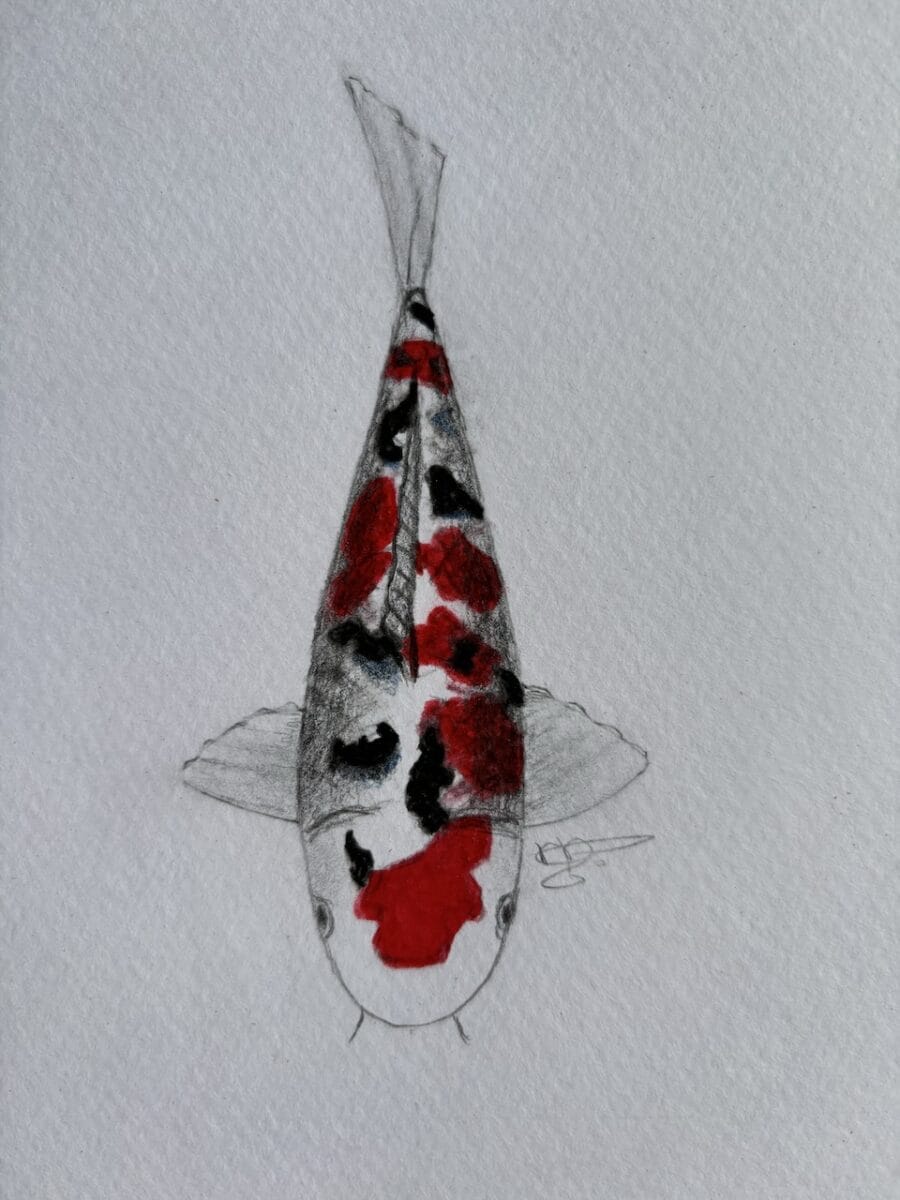
Black (sumi) appears mainly on the white base, creating clean separation from the red plates.

Iconic single head spot with restrained body markings.

Red “crown” on the head in addition to body pattern.

Distinctive red around the mouth (“lipstick” look).

Koromo-style indigo netting gives elegant edging to the red.

Black overlaps the red plates, producing layered depth.

Scaleless skin makes color edges appear extra crisp.
Continue reading on Mantifang:
昭和三色 -
コハク -
Goyang Koi archive
— and neutral references:
Wikipedia – Koi,
Wikipedia – Nishikigoi.

錦鯉輸出の一時停止 - ヒーリングパーク開発中
国際的な錦鯉の輸出は現在保留されている。その一方で、私たちは自然主導の 自然主導の ヒーリングパーク 鯉の文化と芸術、そして静かな職人技が融合した高陽にある。 最新情報やコラボレーションについては、お気軽にお問い合わせください。
連絡先 キム・ヨンスPart of the Koi Dictionary
This page belongs to the Mantifang 鯉辞典, a growing index of koi varieties, patterns, colours, care terms, pond knowledge, and the wider world of 錦鯉.
Continue with the main Koi Dictionary Index, where the koi terms are gathered into one clear overview. For the broader world of koi keeping, visit the KoiTalk hub.
New to Mantifang? Begin here: ここからスタート.
Continue with KoiTalk
For practical koi care, pond water quality, koi health, buying advice, and beginner-friendly koi variety guides, visit コイトーク.


